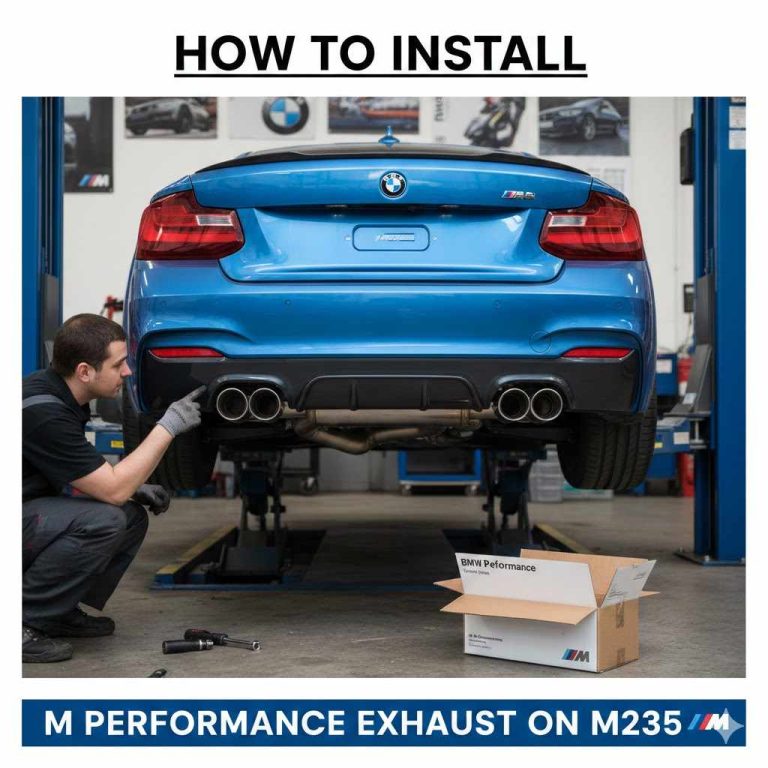
How to Make a Truck Exhaust Sound Like G63
Lots of truck owners want their rides to sound as cool as they look. The G63 AMG has a really famous, deep, and powerful exhaust note that many people admire. Trying to get that sound from a truck can seem like a big task, especially if you’re new to car mods.
But don’t worry! We’re going to break down How to Make a Truck Exhaust Sound Like G63 in a super simple way. We’ll guide you through the steps so you can get that awesome rumble.
Achieving the G63 Truck Exhaust Sound
Many truck enthusiasts dream of replicating the signature sound of the Mercedes-AMG G63. This distinctive exhaust note is characterized by its deep growl, aggressive pops, and a powerful, throaty rumble that commands attention. For those looking to modify their trucks, understanding the components that contribute to this sound is the first step.
It involves more than just swapping out a muffler; it’s about carefully selecting and integrating exhaust system parts to mimic that specific acoustic profile. This section will cover the fundamental principles and parts that create such an impactful exhaust tone.
Understanding Exhaust System Basics
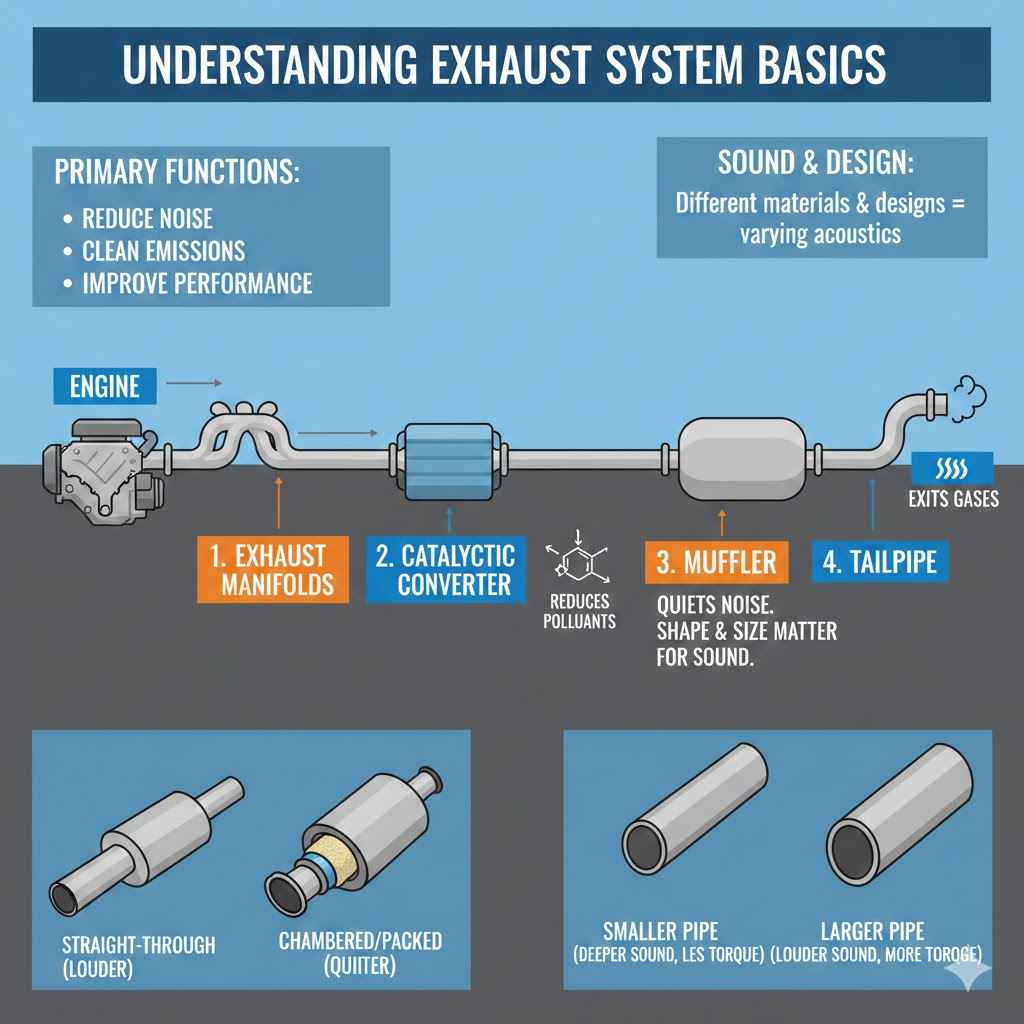
The exhaust system on any vehicle is a network of pipes, mufflers, and catalytic converters that channel exhaust gases away from the engine. Its primary functions are to reduce noise, clean emissions, and sometimes, to improve engine performance. The sound an exhaust makes is a direct result of how these components interact with the exiting gases.
Different designs and materials create different acoustic signatures. Understanding these basics helps in knowing which parts to modify or replace.
A typical exhaust system starts at the engine with exhaust manifolds, which collect gases from the cylinders. These merge into an exhaust pipe, which leads to the catalytic converter, a device that uses a chemical process to reduce harmful pollutants. After the catalytic converter, the exhaust pipe continues to the muffler, the main component responsible for quieting the noise.
Finally, the exhaust gases exit through the tailpipe.
The shape, size, and internal baffling of the muffler are key to its sound-dampening capabilities. A straight-through muffler allows for more noise, while chambers and packing materials absorb sound waves. The diameter of the exhaust pipes also plays a role; larger pipes can lead to a deeper sound but might reduce backpressure, potentially affecting low-end torque if not managed correctly.
The Role of Mufflers and Resonators
The muffler is the heart of your exhaust system’s sound. It’s designed to cancel out sound waves. Think of it like noise-canceling headphones for your car.
Inside, there are chambers and tubes that redirect exhaust gases, causing sound waves to collide and cancel each other out. Different muffler designs create different sounds. Some are made for maximum quietness, while others allow more noise to escape for a sportier sound.
Resonators work a bit differently. They are smaller tubes or chambers that are tuned to specific frequencies. They help to eliminate unwanted buzzing or droning sounds, which can be very annoying on long drives.
A good resonator can clean up the exhaust note, making it sound smoother and more refined, rather than just loud and raspy. They are often used in conjunction with mufflers to achieve a balanced sound.
For the G63 sound, you’re looking for a specific type of muffler and possibly a resonator setup. The G63’s exhaust is known for being loud but also having a certain depth and tone. This usually means a performance muffler that is less restrictive than a stock one but still has some baffling to create that deep rumble.
The specific design can mimic the V8 burble and aggressive notes.
Consider this example: A glasspack muffler is a straight-through design with fiberglass packing. It’s less restrictive and allows more sound, but can be loud and sometimes have a raspier tone. An chambered performance muffler, on the other hand, has internal walls that redirect sound waves, often creating a deeper, more controlled growl, which is closer to what many seek when aiming for a G63-like sound.
Modifying Your Truck’s Exhaust System
Once you understand the basics, you can start thinking about modifications. The goal is to alter the exhaust flow and chambering to achieve a deeper, more aggressive tone similar to the G63. This often involves changing the muffler, adding or removing resonators, and sometimes upgrading the exhaust piping.
It’s important to choose parts that are designed for sound rather than just raw performance, as the G63 sound is about a specific acoustic profile.
When you look at the G63 exhaust, you’ll notice it’s usually a dual exhaust system, often with mufflers positioned on the sides, which can contribute to the sound’s character. Replicating this often means getting a dual-exit exhaust system for your truck, or at least ensuring your chosen muffler can handle the flow for a dual setup if you go that route. The pipe diameter also matters; a slightly larger diameter than stock can sometimes contribute to a deeper tone.
Many companies offer exhaust kits specifically designed to replicate or enhance the sound of performance vehicles. When searching for parts, look for descriptions that mention deep tone, aggressive rumble, or performance sound. Avoid parts labeled only for maximum horsepower, as they might produce a sound that is too high-pitched or raspy, which isn’t the G63 signature.
It’s also worth noting that the engine size and type of your truck will influence the final sound. A V8 engine, like the one in the G63, naturally produces a deeper exhaust note than a V6 or inline-four. While you can’t change your engine, choosing the right exhaust components will help you get as close as possible to that desired rumble.
Choosing the Right Muffler
The muffler is arguably the most critical component for achieving a G63-like sound. You’ll want a performance muffler that is designed to provide a deep, throaty tone without excessive rasp or drone. Many aftermarket mufflers are available, each with its own sonic characteristics.
Some brands are renowned for creating specific sound profiles.
When selecting a muffler, consider the internal design. Straight-through designs offer minimal restriction and are louder, but might not have the refined tone. Chambered mufflers use internal baffles to redirect exhaust gases, creating a deeper sound.
Look for mufflers specifically advertised as providing a V8 rumble or a sportier, aggressive sound. Some performance mufflers are designed to mimic specific vehicle sounds.
For instance, a muffler designed for a muscle car might offer a similar deep tone that can be adapted for a truck. Read reviews and watch videos of these mufflers installed on similar truck models to get a realistic idea of the sound. Don’t be afraid to spend a little more on a quality muffler, as it will make a significant difference in the final sound quality and longevity.
A popular option for achieving a deeper exhaust note is a muffler with a larger body. A larger internal volume allows for more sound-dampening material or more complex baffling, which can contribute to a richer tone. Also, consider the outlet configuration; a dual-outlet muffler can contribute to a more balanced and impressive sound, especially if you plan on a dual-exit exhaust system.
Adding or Removing Resonators
Resonators play a crucial role in fine-tuning the exhaust note. They are designed to cancel out specific sound frequencies, often high-pitched drones or raspy tones, that can be undesirable. The G63’s exhaust is powerful, but it doesn’t typically suffer from annoying cabin drone.
This suggests a carefully balanced system that might involve resonators.
For some trucks, removing the stock resonator might be a simple way to achieve a louder, deeper sound. However, this can also introduce unwanted drone. Alternatively, adding an aftermarket performance resonator can help to achieve the desired tone by filtering out undesirable frequencies while allowing the deep growl to remain.
This is often a more controlled approach to sound modification.
The decision to add or remove a resonator depends heavily on your current exhaust setup and the specific muffler you choose. If you opt for a very aggressive muffler that tends to be raspy, a resonator might be necessary to smooth out the sound. Conversely, if your muffler is already deep and smooth, removing a restrictive factory resonator might be all you need to increase volume and aggression.
Consider a scenario where a truck has a straight-pipe setup after the catalytic converter. This would be very loud and likely have a lot of rasp. Adding a chambered muffler and a resonator designed to complement it would reduce the rasp and introduce a deeper, more controlled growl, bringing it closer to the G63 sound profile.
Advanced Techniques for Sound Enhancement
Beyond basic muffler and resonator changes, other modifications can refine the exhaust note to sound more like a G63. These might include changing the exhaust pipe diameter, optimizing the exhaust manifold, or even considering a full cat-back or axle-back exhaust system. The key is to understand how each of these components affects the sound waves.
Adjusting the exhaust pipe diameter is a delicate balance. Larger pipes reduce backpressure, which can affect low-end torque. However, they can also contribute to a deeper exhaust tone.
For a G63-like sound, a slight increase in diameter, perhaps from 2.5 inches to 3 inches, on a V8 truck, might be beneficial if the rest of the system is tuned for it. This needs careful consideration of your engine’s specific needs.
An axle-back exhaust system replaces only the muffler and tailpipe. This is often the easiest and most cost-effective way to change your exhaust sound. A cat-back system replaces everything from the catalytic converter back, offering more potential for sound customization and performance gains.
For the most dramatic change and closest replication of a G63 sound, a full custom exhaust system might be necessary, built by professionals who understand acoustics.
The G63’s exhaust system is known for its dual side pipes, especially on older models. While replicating this exact layout might be complex, achieving a dual-exit system on your truck can enhance the visual appeal and contribute to a fuller sound. The symmetry of a dual exhaust can sometimes result in a more balanced and resonant tone.
Exhaust Pipe Diameter and Flow
The diameter of your exhaust piping directly influences how exhaust gases flow and, consequently, the sound produced. Stock exhaust pipes are usually sized to meet emissions standards and provide a balance of quietness and efficiency for everyday driving. Performance exhaust systems often feature larger diameter pipes.
Larger diameter pipes allow exhaust gases to exit the engine more freely, reducing backpressure. This can lead to a slight increase in horsepower and torque, particularly at higher RPMs. From a sound perspective, a larger diameter can contribute to a deeper, more resonant exhaust note.
The gases have more space to move, which can produce lower frequency sounds.
However, choosing a pipe diameter that is too large for your engine can be detrimental. Excessive reduction in backpressure can cause a loss of low-end torque, making your truck feel sluggish at lower speeds. It can also result in a raspier or more hollow sound if not properly paired with mufflers and resonators.
It’s often recommended to consult with exhaust specialists or use online calculators to determine the optimal pipe diameter for your specific truck and engine size.
For example, a 5.0L V8 engine might perform well with a 2.75-inch or 3-inch exhaust system. A smaller engine, like a 3.5L V6, might do better with a 2.5-inch system. The G63 uses a powerful V8, so replicating its sound often involves selecting pipe diameters that can handle significant exhaust flow while still creating the desired acoustic properties.
Custom Exhaust Fabrication
For those seeking the ultimate G63 sound, custom exhaust fabrication offers the most control. A professional exhaust shop can design and build a system from scratch, tailored specifically to your truck and your sound preferences. This allows for precise tuning of pipe lengths, muffler types, resonator placement, and outlet configuration.
During a custom fabrication process, specialists will consider your engine type, desired sound character (deep, aggressive, raspy, smooth), and even aesthetic preferences. They can use various types of mufflers, resonators, and piping materials (like stainless steel for durability and sound quality) to achieve the target sound. This is often the most expensive option but provides the best chance of achieving a truly unique and authentic G63-like exhaust note.
A custom exhaust can also be designed to integrate seamlessly with your truck’s chassis and body, ensuring proper clearance and a clean look. The fabricators will use their expertise to select components and bends that minimize unwanted vibrations and drone while maximizing the desired low-frequency growl. It’s a hands-on approach to exhaust tuning.
For instance, a custom exhaust might feature a specific length of straight pipe before the muffler to enhance certain frequencies, or a unique chamber design within the muffler itself to create a particular burble on deceleration. The ability to tweak every aspect of the system is invaluable when trying to replicate a very specific sound like that of a G63.
Case Studies and Examples
Many truck owners have successfully modified their exhaust systems to achieve a deeper, more aggressive sound. While achieving an exact G63 sound is challenging due to the specific V8 engine and engineering of the AMG, many come close. These examples illustrate common approaches and results.
Example 1: Ford F-150 V8 Modification
- Objective: Achieve a deeper, more aggressive V8 rumble.
- Modification:
- Result: The truck gained a significantly louder, deeper, and more aggressive exhaust note. It produced a satisfying rumble on acceleration and a noticeable growl on deceleration, reminiscent of performance V8s, though still distinct from a G63. The drone at highway speeds was minimal due to the stock resonators.
Example 2: Chevrolet Silverado 1500 Exhaust Upgrade
- Objective: Mimic a powerful, throaty exhaust sound.
- Modification: Installed a MagnaFlow touring series muffler and dual exit exhaust tips, removing the stock resonator.
- Result: The sound became much deeper and more resonant. Removing the resonator increased the volume and added a touch of aggression. The MagnaFlow muffler provided a smooth, deep tone without excessive rasp. It offered a more refined performance sound than some other options, getting closer to a controlled G63 character.
These real-world examples show that with the right parts, a noticeable improvement in exhaust sound can be achieved. The specific results will always vary based on the truck’s base engine and the exact components chosen.
Choosing the Right Kit
When you start looking for exhaust kits, you’ll find many brands and types. For a G63 sound, you generally want a performance-oriented kit. These kits are designed to be less restrictive than stock and often have mufflers that produce a deeper tone.
Brands like Borla, MagnaFlow, Flowmaster, and Corsa are popular choices.
When you look at kits, pay attention to their sound ratings. Some brands use terms like “mild,” “moderate,” or “aggressive” to describe the sound level. For a G63-like sound, you’ll likely be looking at “aggressive” or “performance” sound profiles.
Also, check if the kit is a cat-back or axle-back system. A cat-back system replaces more of the exhaust, offering more potential for sound change.
It’s also helpful to watch videos of these kits installed on your specific truck model. Sound can vary greatly between different vehicles. Look for videos that capture the sound at idle, during acceleration, and at highway speeds.
This will give you the best idea of what to expect. Don’t just rely on written descriptions; hearing is believing.
The quality of materials used in the kit also matters. Stainless steel kits tend to last longer and can contribute to a cleaner exhaust note compared to aluminized steel. For a premium sound and appearance, stainless steel is usually the way to go.
DIY vs. Professional Installation
Installing an exhaust system can be a DIY project for those with some mechanical experience. Basic tools like wrenches, sockets, and a jack are usually sufficient. However, working under a vehicle can be dangerous if not done properly.
Safety is paramount, and ensuring the vehicle is securely supported is critical.
If you’re not comfortable working with tools or on your vehicle’s underside, professional installation is highly recommended. Auto repair shops, and especially custom exhaust shops, have the expertise and equipment to install exhaust systems correctly and safely. They can also offer advice on the best system for your desired sound and ensure everything is fitted properly to avoid leaks or rattles.
A professional installation ensures that all connections are sealed tightly, preventing exhaust leaks which can be harmful and affect sound quality. They can also make adjustments if needed, ensuring the exhaust tips are aligned and the system is securely mounted. For complex custom builds or when dealing with intricate systems, professional installation is almost always the best route.
A professional can also identify any underlying issues with your existing exhaust system that might affect the new installation, such as rusted hangers or corroded pipes. Their experience helps in preventing future problems and ensures optimal performance and sound from your new exhaust.
Legal and Practical Considerations
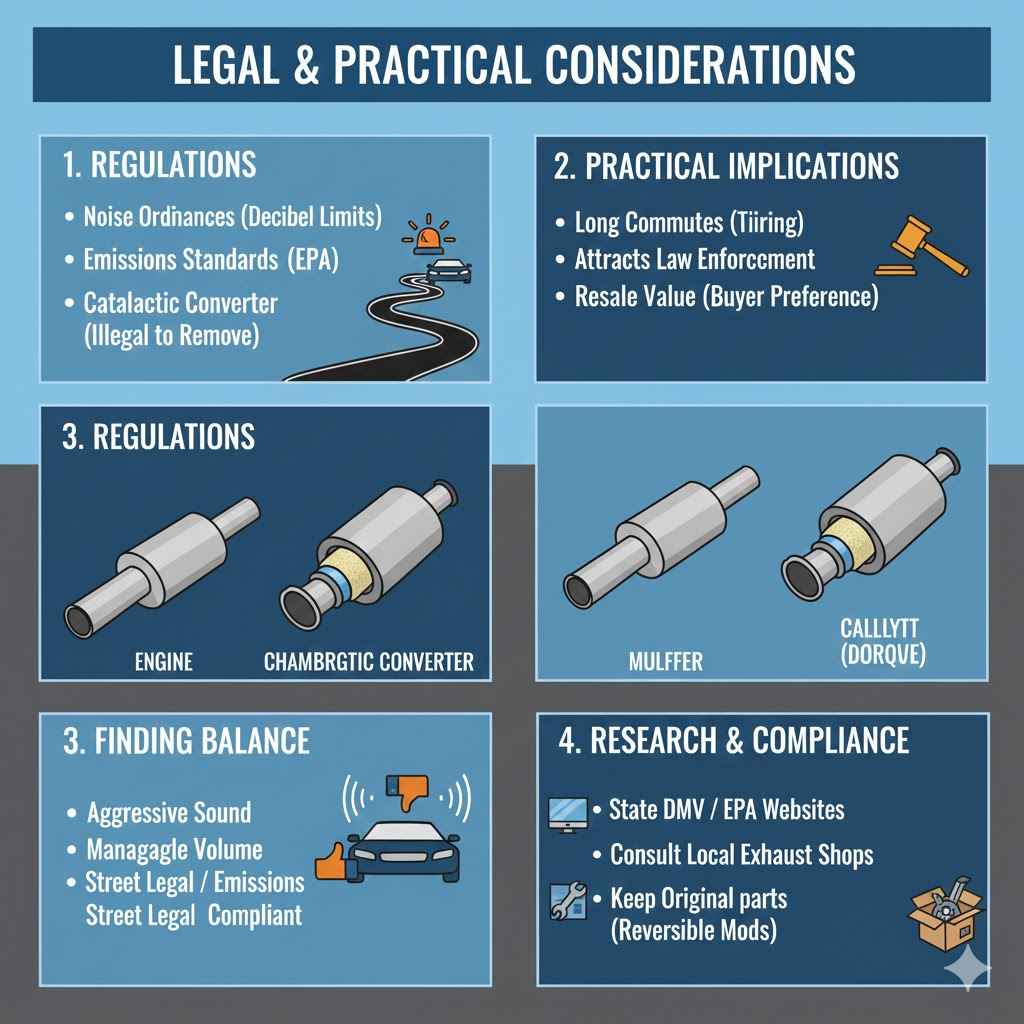
When modifying your truck’s exhaust, it’s important to be aware of local laws and regulations. Noise ordinances and emissions standards vary significantly by state and even by city. An excessively loud exhaust can lead to tickets and fines, regardless of how good it sounds.
Some areas have specific decibel limits for vehicle exhaust noise. Also, modifying or removing catalytic converters is illegal in most places, as it directly impacts emissions. Always ensure that any modifications you make comply with the laws in your area.
This usually means keeping your catalytic converter in place and ensuring your exhaust system isn’t excessively loud.
Beyond legal issues, consider the practical implications for daily driving. A very loud exhaust can be tiring on long commutes or road trips. It can also attract unwanted attention from law enforcement.
A balanced approach is often best, aiming for a powerful and aggressive sound that is still manageable and legal.
Many performance exhaust systems are designed to offer a deep, aggressive sound during acceleration but quiets down to a manageable level at cruising speeds. This is often achieved through carefully designed mufflers and sometimes by retaining stock resonators or adding aftermarket ones that target specific frequencies. This balance is key to enjoying the modified sound without constant annoyance or legal trouble.
Emissions and Noise Regulations
The United States Environmental Protection Agency (EPA) sets standards for vehicle emissions, and state governments enforce these regulations. Most states adhere to EPA guidelines regarding emissions control devices, meaning you generally cannot remove or tamper with your catalytic converter. Doing so can lead to failed emissions tests and significant fines.
Noise regulations are typically managed at the state and local levels. Many municipalities have specific noise ordinances that limit the decibel level of vehicle exhaust. For example, a law might state that exhaust noise cannot exceed 95 decibels.
This can be measured by law enforcement or at specific inspection stations.
Some vehicles, including the G63, are engineered to meet strict noise and emissions standards while still producing a powerful sound. Replicating this sound often involves using aftermarket parts that aim for a similar acoustic character without violating these regulations. Look for exhaust systems that are advertised as “street legal” or “emissions compliant.”
It is crucial to research your local laws before making any exhaust modifications. Websites for your state’s Department of Motor Vehicles (DMV) or environmental protection agency are good resources. If you are unsure, consult with your local exhaust shop, as they are usually knowledgeable about these regulations.
Impact on Resale Value
Modifying your truck’s exhaust system can impact its resale value. While a desirable sound might appeal to some buyers, an overly loud or aggressively tuned exhaust could deter others. Some buyers prefer a stock or milder exhaust sound.
If you plan to sell your truck down the line, consider how your modifications might affect potential buyers. For instance, a full custom exhaust system might be too extreme for some. However, a well-regarded cat-back system from a reputable brand that provides a pleasant, deep tone might actually enhance the truck’s appeal and potentially its value to the right buyer.
It’s also worth noting that some modifications, like removing the catalytic converter, will definitely lower resale value and make it difficult to sell the vehicle legally. Keeping original parts, like the stock muffler, in good condition can be beneficial. If you sell the truck, you can reinstall the original exhaust to appeal to a wider range of buyers.
If you’re concerned about resale value, consider choosing modifications that are reversible. For example, an axle-back or cat-back system can often be removed and
Frequently Asked Questions
Question: How can I make my truck sound like a G63 without changing the engine?
Answer: You can achieve a similar sound by upgrading your exhaust system. This typically involves installing a performance muffler designed for a deep, aggressive tone, and potentially a new exhaust pipe or resonator. Research brands known for producing V8-like sounds.
Question: Is it illegal to make my truck exhaust louder?
Answer: It depends on your local laws. Many areas have noise ordinances that limit how loud your exhaust can be. Modifying or removing your catalytic converter is also usually illegal due to emissions regulations.
Question: What is the best muffler for a deep truck exhaust sound?
Answer: Performance mufflers from brands like Borla, MagnaFlow, or Flowmaster are often recommended for a deep, throaty sound. Look for models specifically designed for aggressive or V8 tones, and check reviews or videos for your specific truck model.
Question: Will changing my exhaust affect my truck’s performance?
Answer: Yes, a performance exhaust system can improve performance by reducing backpressure and allowing the engine to breathe more easily. However, the extent of the gain depends on the entire exhaust system and other engine modifications.
Question: Can I install a G63-style exhaust myself?
Answer: If you have mechanical experience and the right tools, an axle-back or cat-back exhaust system can be a DIY project. However, professional installation is recommended for safety and to ensure proper fitment and sealing.
Conclusion
Replicating the commanding sound of a G63 on your truck is achievable with the right approach. By focusing on performance mufflers, understanding resonator effects, and considering pipe diameter, you can transform your truck’s exhaust note. Explore reputable aftermarket brands, watch installation videos, and always check local laws.
Enjoy the powerful rumble you create.