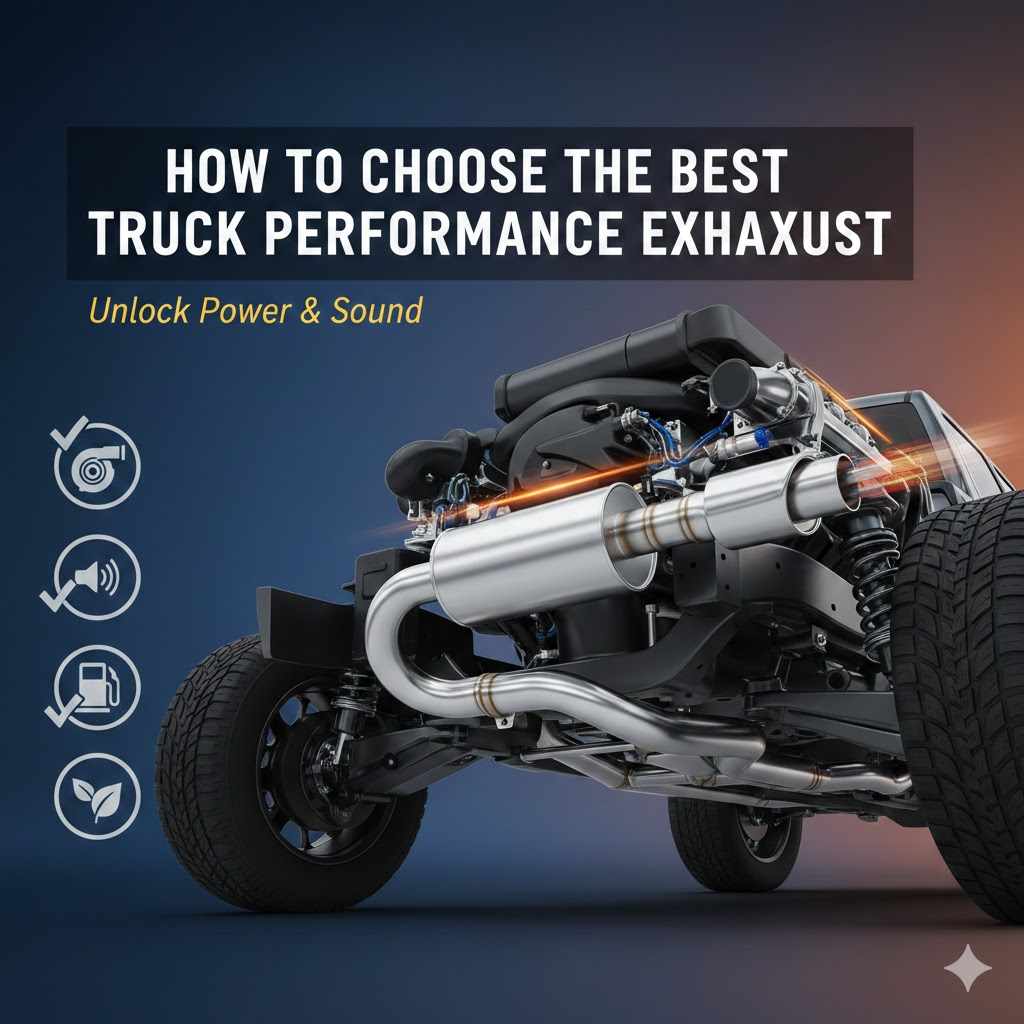
How To Choose The Best Truck Performance Exhaust
Picking the right performance exhaust for your truck can seem tricky, especially if you’re new to the truck scene. There are many options out there, and knowing what makes one better than another for your specific needs can be a puzzle. This guide will make it easy.
We’ll walk you through it step-by-step so you can figure out How to Choose the Best Performance Exhaust for Truck with confidence and get the most out of your vehicle.
Understanding Truck Performance Exhaust Systems
A performance exhaust system for your truck is more than just a shiny tailpipe. It’s a complete overhaul of your truck’s exhaust components, designed to improve airflow, boost engine power, and enhance the sound. When you upgrade from a factory exhaust, you’re looking for better efficiency and a more exciting driving experience.
This section will break down what makes a performance exhaust system different and why it matters for your truck’s overall health and output.
What Is A Performance Exhaust System
Think of it like this: trying to exhale through a narrow straw versus a wide pipe. The wide pipe makes it much easier and faster to get air out. A performance exhaust does the same for your truck’s engine.
It helps the engine expel burnt gases more efficiently, making room for a fresh fuel-air mixture. This improved “breathing” is the foundation for any gains you’ll see.
Key Components Of A Performance Exhaust
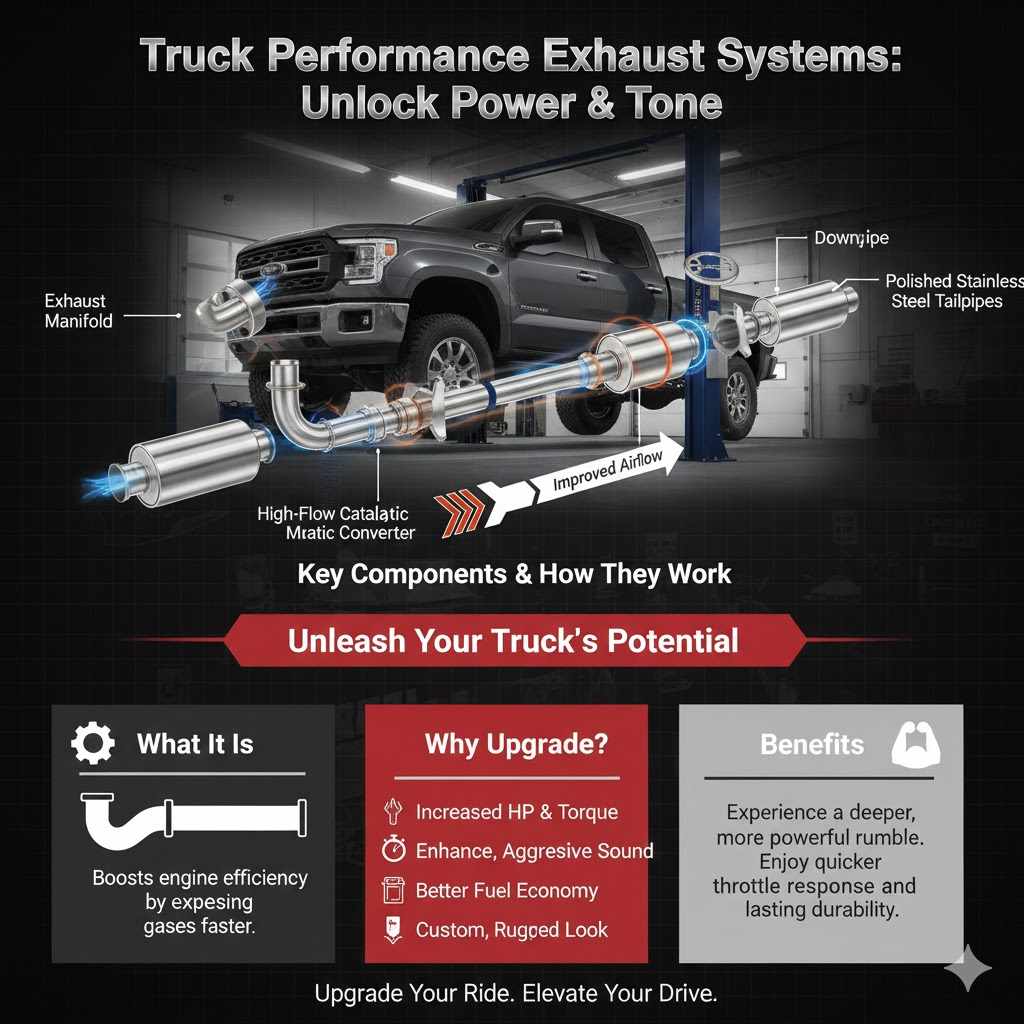
The main parts of a performance exhaust include the exhaust manifold, downpipe, catalytic converter, muffler, and tailpipe. Each plays a role in how well the system performs.
- Exhaust Manifold
This collects exhaust gases from each cylinder and directs them into a single pipe. Performance manifolds often have smoother, more efficient port designs to improve gas flow. - Downpipe
This is the pipe that connects the manifold to the catalytic converter. A larger diameter downpipe allows exhaust gases to exit the engine more quickly. - Catalytic Converter
This device reduces harmful emissions. Performance catalytic converters are designed to be less restrictive than factory ones, allowing better airflow while still meeting emission standards. Some systems might offer a high-flow option or a test pipe for off-road use, which removes the converter entirely. - Muffler
This silences exhaust noise. Performance mufflers are designed to reduce sound with less restriction than stock mufflers, often using a straight-through design or optimized chambering to create a deeper, more aggressive tone without excessive drone. - Tailpipe
This is the final section of the exhaust system that exits at the rear or side of the vehicle. Performance tailpipes are typically made from durable materials like stainless steel and can be polished for a custom look.
Why Upgrade Your Truck’s Exhaust
Upgrading your truck’s exhaust offers several benefits. The most common reason is to increase engine power and torque. Better airflow means more efficient combustion.
This can also lead to improved fuel economy, as the engine doesn’t need to consume as much fuel to produce the same amount of power.
Another major draw is the sound. Stock exhaust systems are often tuned for quiet operation. Performance systems can produce a deeper, more aggressive rumble that many truck owners find appealing.
Finally, aesthetics play a role. A polished stainless steel tip can significantly improve the look of your truck.
Choosing The Right Truck Performance Exhaust System
When you’re ready to upgrade, selecting the perfect performance exhaust involves looking at several factors. You need to consider your truck’s specific needs, your budget, and what you want to achieve with the upgrade. This section will guide you through the decision-making process, helping you weigh the pros and cons of different options.
Performance Goals For Your Truck
What do you want your truck to do better? Are you looking for more horsepower for towing or off-roading? Do you want a more aggressive sound?
Your primary goals will steer your choice.
- Horsepower and Torque Gains
If your main goal is to make your truck faster or more capable for heavy work, you’ll want a system that prioritizes maximum airflow. This usually means larger diameter piping and a less restrictive muffler and catalytic converter. Systems designed for racing or extreme performance will focus heavily on reducing backpressure. - Sound and Tone
The sound of your exhaust is a big part of the driving experience for many. Some systems are designed for a deep, throaty rumble, while others aim for a louder, more aggressive bark. It’s important to consider if you want a system that’s loud all the time or one that’s quieter at cruising speeds but opens up under acceleration. Drone, an annoying resonating sound at highway speeds, is something to watch out for. - Fuel Efficiency
While not the primary goal for most performance exhaust buyers, some systems can indirectly improve fuel economy by allowing the engine to operate more efficiently. However, the gains are usually modest and depend on driving habits. - Towing and Hauling Capabilities
For trucks used for towing, increased torque can be very beneficial. A better-flowing exhaust can help your engine maintain power when under load, reducing strain and improving performance on hills.
Types Of Exhaust Systems Available
There are several configurations of performance exhaust systems, each offering different levels of sound, performance, and ease of installation.
- Axle-Back Exhaust
This is the simplest and most affordable upgrade. It replaces only the muffler and tailpipe. It offers a moderate increase in sound and a small performance bump. It’s a good starting point if you’re new to exhaust modifications. - Cat-Back Exhaust
This system replaces everything from the catalytic converter back, including the mid-pipe, muffler, and tailpipe. It offers a more significant improvement in sound and performance compared to an axle-back. Cat-back systems are very popular because they offer a good balance of benefits and cost, and they usually maintain emissions compliance. - Header-Back Exhaust
This is the most comprehensive upgrade, replacing the entire exhaust system from the engine’s exhaust manifolds all the way to the tailpipe. It provides the greatest potential for performance gains but is also the most expensive and complex to install. Header-back systems often include performance headers, which are designed to collect exhaust gases from each cylinder more efficiently than stock manifolds.
Material And Durability Considerations
The materials used in your exhaust system affect its lifespan, appearance, and performance.
- Mild Steel
This is the most affordable option. However, it’s prone to rust and corrosion, especially in areas with harsh weather or road salt. It typically has a shorter lifespan than other materials. - Aluminized Steel
This is steel that has been coated with aluminum. It offers better corrosion resistance than mild steel but is still not as durable as stainless steel. It’s a good mid-range option for durability and cost. - Stainless Steel (304 Grade)
This is the premium choice. 304 stainless steel is highly resistant to rust and corrosion, making it ideal for long-term durability in all weather conditions. It also has a polished, attractive appearance. While more expensive upfront, it often proves more cost-effective over time due to its longevity. - Stainless Steel (409 Grade)
This is a more budget-friendly stainless steel option. It offers good corrosion resistance, though not as much as 304 grade. It’s commonly used in factory exhaust systems and is a solid choice for a balance of durability and price.
Ease Of Installation And Fitment
Consider how easy the system is to install. Some are bolt-on replacements that require minimal tools and expertise, while others may need welding or more advanced mechanical skills. Always ensure the exhaust system you choose is designed specifically for your truck’s make, model, year, and engine size.
Fitment is crucial. An exhaust system that doesn’t fit correctly can cause leaks, vibrations, or even interfere with other vehicle components. Reputable brands usually provide precise fitment for specific vehicles.
Checking reviews and forums for your truck model can help you find systems known for good fitment.
Sound And Performance Matching Your Truck
The sound and performance your exhaust produces are directly tied to its design. Matching these aspects to your preferences and your truck’s capabilities is key to a satisfying upgrade. This section explores how different exhaust designs influence the sound and power output, helping you make an informed choice.
Understanding Exhaust Sound Profiles
Exhaust sound is subjective, but there are common profiles. These range from a deep rumble to a high-pitched roar. The design of the muffler and the piping’s diameter are the main factors influencing the sound.
- Deep Rumble
This classic truck sound is often achieved with larger diameter pipes and mufflers that allow for good exhaust flow while still dampening some of the higher frequencies. It’s typically described as powerful and throaty. - Aggressive Tone
For those who want their truck to sound as muscular as it looks, an aggressive tone is desired. This often involves a more straight-through muffler design or systems that are less restrictive overall, producing a louder, more potent sound, especially under acceleration. - Mellow Sound
Some drivers prefer a subtle enhancement to the stock sound, avoiding excessive loudness. This can be achieved with mufflers designed to offer a bit more tone but still maintain a respectable level of quietness, especially at cruising speeds. - Drone
This is an unwanted, persistent humming or buzzing sound that can occur at specific RPMs, usually on the highway. Poorly designed systems or those that don’t fit your truck’s specific engine harmonics can cause drone. Reading reviews and looking for systems known to minimize drone is important.
How Muffler Design Affects Sound And Performance
The muffler is the primary component responsible for controlling exhaust sound. Its internal design dictates both the noise level and how much it restricts exhaust flow.
- Chambered Mufflers
These mufflers use a series of internal chambers to redirect exhaust gases. This effectively cancels out sound waves, making them quieter but can also create more backpressure, slightly reducing performance gains. They often produce a deeper, more resonant tone. - Straight-Through Mufflers (Perforated Core)
These mufflers have a perforated inner tube surrounded by sound-absorbing material (like fiberglass packing). Exhaust gases pass through the perforations, and the packing absorbs much of the sound. They offer minimal restriction, leading to better performance, and produce a louder, more aggressive sound. - Resonators
Sometimes used in conjunction with mufflers, resonators are smaller chambers designed to cancel out specific sound frequencies, particularly those that cause drone. They help fine-tune the exhaust note for a cleaner sound.
Understanding Horsepower And Torque Gains
The potential for horsepower and torque gains from a performance exhaust varies significantly. It depends on the entire exhaust system, from the headers to the tailpipe, and how well it works with your truck’s engine and other modifications.
A full cat-back system with a high-flow catalytic converter and a less restrictive muffler can often add 10-25 horsepower and a similar amount of torque, depending on the truck’s engine size and type. Header-back systems, especially those with performance headers, can yield even greater gains, sometimes in the range of 30-50 horsepower for naturally aspirated engines. Turbocharged or supercharged engines may see even more significant improvements as they benefit greatly from reduced exhaust restriction.
The Role Of Catalytic Converters
Catalytic converters are essential for reducing harmful emissions. However, factory catalytic converters can be quite restrictive. Performance catalytic converters are designed with a finer honeycomb structure or a more open cell design that allows exhaust gases to pass through more easily.
There are different types of performance catalytic converters:
- High-Flow Catalytic Converters
These are designed to be less restrictive than stock units while still meeting emissions regulations. They offer a good balance of performance improvement and legality. - “Off-Road” Pipes or Test Pipes
These replace the catalytic converter entirely. They offer the maximum performance gain by completely removing this restriction. However, using them on public roads is illegal in most places due to emissions violations. They are typically used for track or off-road use only.
For example, a 2018 Ford F-150 owner who installed a full cat-back system with a high-flow catalytic converter reported a noticeable improvement in throttle response and a more aggressive exhaust note without any check engine lights. This upgrade allowed their 5.0L V8 engine to “breathe easier,” leading to a slight increase in perceived power during acceleration.
Installation And Maintenance Of Your New Exhaust
Once you’ve chosen the perfect performance exhaust, the next steps involve getting it installed and keeping it in good shape. Proper installation ensures optimal performance and longevity, while regular maintenance keeps it looking and sounding its best. This section covers everything from DIY possibilities to professional installation and essential upkeep.
Professional Installation Vs. DIY
Deciding whether to install the exhaust yourself or have a professional do it depends on your comfort level with tools, your available time, and the complexity of the system.
- DIY Installation
Many cat-back and axle-back systems are designed for bolt-on installation, making them suitable for DIYers with basic tools like wrenches, sockets, and possibly a jack and jack stands. It can save money on labor costs. However, ensure you have a safe working space and understand the process. Always disconnect the battery before starting. - Professional Installation
For header-back systems, or if you’re not confident with mechanical work, professional installation is recommended. Exhaust shops and specialized performance tuning shops have the right tools, lifts, and expertise to ensure the system is fitted correctly, all connections are sealed, and any potential issues are addressed. This guarantees optimal performance and avoids potential damage or leaks.
A common scenario is a truck owner purchasing a bolt-on cat-back system. They might spend an afternoon on their driveway, enjoying the process and learning about their truck’s undercarriage. Another owner might opt for a complex header-back system and take their truck to a reputable performance shop, where experienced technicians can ensure all components are perfectly aligned and sealed, saving them hours of potential frustration.
Common Installation Challenges
Even with straightforward systems, installation can sometimes present challenges.
- Corroded or Stuck Bolts
On older trucks, exhaust bolts can become heavily corroded and difficult to remove. Penetrating oil, heat, and patience are often required. - Alignment Issues
Ensuring the pipes, muffler, and tailpipe are perfectly aligned to avoid rubbing against the chassis or other components can be tricky. This is where professional expertise can be invaluable. - Fitment Variations
Even with systems designed for specific models, slight variations in the truck’s original exhaust hangers or frame can sometimes require minor adjustments.
Maintenance For Longevity And Sound
Keeping your performance exhaust system in top condition will prolong its life and maintain its intended sound.
- Regular Inspections
Periodically check your exhaust system for any signs of rust, cracks, loose clamps, or damaged hangers. Look for exhaust leaks, which can be identified by a puffing sound or soot marks around connections. - Cleaning And Polishing
For stainless steel tips, regular cleaning and polishing will keep them looking shiny and new. Use specific metal polishes to maintain their appearance and protect the surface. - Checking For Leaks
Exhaust leaks can reduce performance, increase noise undesirably, and even be a safety hazard if exhaust fumes enter the cabin. Listen for any unusual hissing or puffing sounds, especially when the engine is cold.
Understanding Emissions And Legality
It’s crucial to be aware of local emissions regulations. Many areas have strict rules about catalytic converters. Removing or tampering with emissions control equipment can result in hefty fines and prevent your truck from passing inspections.
For example, in California, all vehicles must meet stringent emissions standards. Replacing a factory catalytic converter with a test pipe is illegal and will cause the vehicle to fail its smog check. Therefore, most owners in such regions opt for high-flow catalytic converters that are CARB-compliant (California Air Resources Board).
Always research your local laws before purchasing or installing exhaust components, especially catalytic converters.
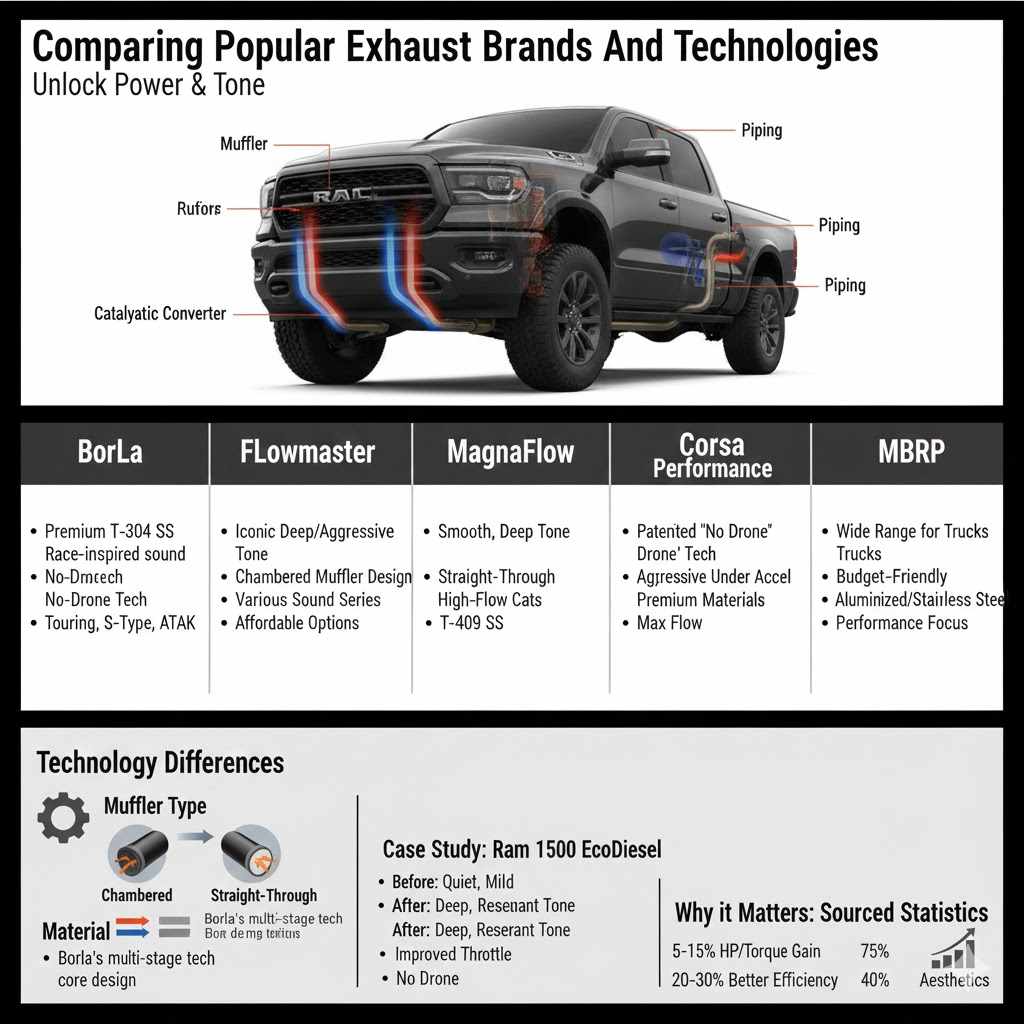
Comparing Popular Exhaust Brands And Technologies
The market for truck performance exhausts is filled with many reputable brands, each with its own strengths and technologies. Understanding these differences can help you narrow down your choices based on quality, sound, and performance. This section provides an overview of some leading manufacturers and the technologies they employ.
Top Exhaust System Brands
Several brands consistently deliver high-quality performance exhaust systems. These companies invest heavily in research and development to offer systems that perform well and sound great.
- Borla
Known for their premium quality and often race-inspired sound, Borla offers a wide range of systems made from T-304 stainless steel. They are highly regarded for their precision fitment and their sophisticated sound management to minimize drone. - Flowmaster
Flowmaster is famous for its distinctive “Flowmaster sound,” which is often characterized by a deep, aggressive tone. They offer various muffler series, each with a different sound profile, making them a popular choice for those prioritizing a strong exhaust note. - Magnaflow
Magnaflow systems are known for their smooth, deep tone and performance gains. They typically use a straight-through muffler design and high-flow catalytic converters. Many Magnaflow systems are made from T-409 stainless steel, offering good durability at a competitive price point. - Corsa Performance
Corsa is renowned for its patented “No Drone” technology. Their systems are engineered to provide an aggressive sound under acceleration without the irritating drone at cruising speeds. They use premium materials and offer excellent performance gains. - MBRP
MBRP offers a broad range of exhaust systems for various trucks, often at more affordable price points than some premium brands. They provide options in aluminized steel and stainless steel, catering to different budgets and durability needs.
Technology Differences In Mufflers And Pipes
Beyond brand names, the technology used in muffler and pipe construction plays a significant role.
For instance, Borla’s “Touring” systems are designed for a mild enhancement of the factory sound, while their “S-Type” offers a more aggressive tone, and “ATAK” systems deliver maximum volume and performance. This is achieved through precise internal designs that manage sound waves.
Magnaflow’s approach often involves a straight-through perforated core wrapped in acoustic insulation. This allows exhaust gases to flow with minimal resistance, boosting power, while the insulation helps to dampen unwanted noise.
Case Study: Impact Of Exhaust Upgrade On A Ram 1500
Consider a scenario where a 2020 Ram 1500 EcoDiesel owner wanted to improve the exhaust note and slightly increase performance without altering emissions equipment. They opted for a Magnaflow cat-back exhaust system.
- Before Upgrade
The stock exhaust was quiet, with minimal engine sound audible from inside the cabin. Performance felt adequate for daily driving but lacked a satisfying growl under acceleration. - Installation
The Magnaflow cat-back system was installed, replacing the factory muffler and tailpipe. The installation was straightforward, taking about two hours. - After Upgrade
The truck now has a noticeably deeper and more resonant exhaust note, especially when accelerating. There is no significant drone at highway speeds. While dyno tests weren’t performed, the owner reported a slight improvement in throttle response and a more engaging driving experience. The use of T-409 stainless steel ensures good longevity for the system.
Sourced Statistics On Exhaust Performance
According to industry reports, performance exhaust systems can offer average horsepower gains of 5-15% for naturally aspirated engines, and potentially more for turbocharged applications. Studies have also shown that reducing exhaust backpressure by 20-30% can translate to tangible improvements in engine efficiency and power output.
A survey of truck owners indicated that the primary motivations for upgrading exhaust systems were an improved sound (75%) followed by performance gains (60%). Aesthetics also played a role for about 40% of respondents. This highlights how personal preference for sound is a major driver in this market.
Frequently Asked Questions
Question: What is the difference between a cat-back and an axle-back exhaust system?
Answer: A cat-back system replaces the exhaust from the catalytic converter to the tailpipe, including the mid-pipe and muffler. An axle-back system only replaces the muffler and tailpipe, making it a less extensive and generally less expensive upgrade.
Question: Will a performance exhaust void my truck’s warranty?
Answer: Generally, modifying your exhaust system will not void your entire truck warranty. However, if a problem arises that can be directly attributed to the aftermarket exhaust (e.g., an exhaust leak causing damage to another component), the manufacturer may deny warranty coverage for that specific issue.
Question: How can I tell if my exhaust system is leaking?
Answer: You might notice a louder than usual exhaust sound, a hissing or puffing noise, reduced engine power, or a smell of exhaust fumes inside the cabin. Soot marks around exhaust joints can also indicate a leak.
Question: Are performance exhaust systems legal everywhere?
Answer: Emissions regulations vary by region. Systems that remove or alter catalytic converters are often illegal for road use. Always check your local laws regarding emissions and noise levels before purchasing and installing an exhaust system.
Question: Can a performance exhaust improve fuel economy?
Answer: In some cases, a well-designed performance exhaust can offer modest improvements in fuel economy by allowing the engine to operate more efficiently. However, this is not always the primary benefit, and aggressive driving styles will negate any potential gains.
Wrap Up
Choosing the best performance exhaust for your truck is about matching your goals for sound, performance, and budget with the right system components and materials. Consider system types like axle-back or cat-back, and materials such as stainless steel for durability. Prioritize brands known for quality and sound profiles you prefer.
Ensuring proper installation and checking local laws will complete your upgrade for a better-sounding, better-performing truck.