Do Spark Plug Wires Need Heat Shields Explained
Many car owners wonder about protecting their spark plug wires. It’s a common question, especially for those new to car maintenance. You might see different parts and wonder if a heat shield is needed for your spark plug wires.
This article will make it simple. We’ll walk through everything step-by-step so you know exactly what to do. You’ll learn why this is important and how to handle it without any fuss.
Understanding Spark Plug Wire Heat Shields
Spark plug wires are vital parts of your engine. They carry high voltage electricity from the ignition system to the spark plugs. Spark plugs then ignite the fuel-air mixture in the engine’s cylinders, making your car run.
This process generates a lot of heat. Because these wires are close to hot engine parts, they can get damaged by extreme temperatures. This is where heat shields come into play.
They act like a protective barrier.
Do Spark Plug Wires Need Heat Shields? Explained simply means we need to look at the risks. Engines get very hot.
Some areas are hotter than others. Spark plug wires can be in these hot spots. Without protection, the heat can harm the wires.
This can lead to problems like a rough running engine or even engine failure.
Heat shields are designed to deflect or absorb heat. This keeps the spark plug wires from overheating. Overheating can cause the wire’s insulation to degrade.
This can lead to electrical shorts. It can also cause the wires to become brittle and crack. A cracked wire can leak electricity.
This leakage means less power reaches the spark plug. It can also create radio interference. So, heat shields help maintain the wires’ integrity and performance.
What Are Spark Plug Wires Made Of
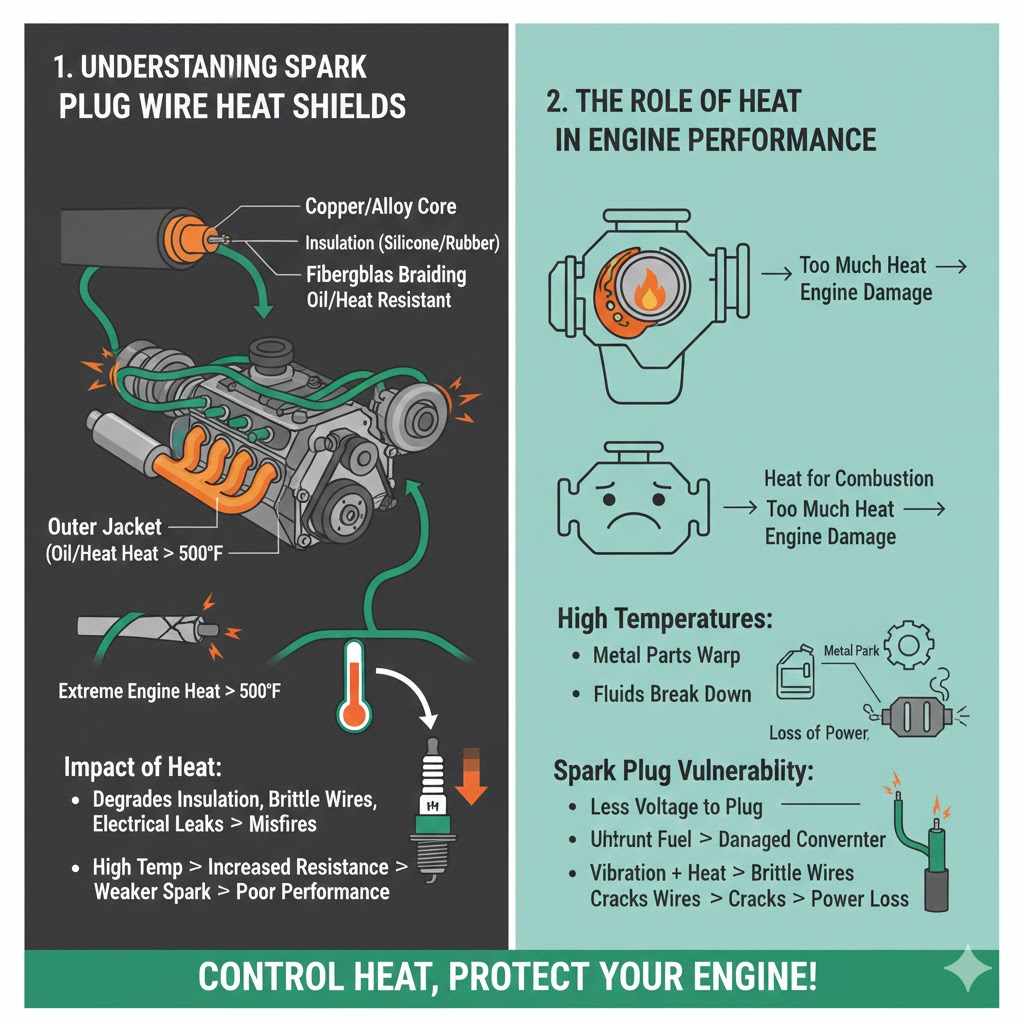
Spark plug wires are built to handle a lot. They are made of several layers. The core is usually copper or a special alloy.
This core carries the electrical current. Around the core is a layer of insulation. This insulation is often silicone or rubber.
It prevents electricity from escaping. Over the insulation, there’s another layer for protection. This might be fiberglass braiding.
Finally, there’s an outer jacket. This outer jacket is tough. It resists oil, heat, and abrasion.
The materials used are chosen for durability.
However, even with these strong materials, extreme engine heat is a challenge. Engine bays are full of components that produce heat. Exhaust manifolds, turbochargers, and the engine block itself are very hot.
The temperature in these areas can easily exceed 500 degrees Fahrenheit. Some high-performance engines can get even hotter. The insulation and jacket of spark plug wires have temperature limits.
Exceeding these limits can degrade them faster than normal.
The quality of the wire also matters. Cheaper wires might use lower-grade insulation. This insulation might break down more quickly under heat.
This is why sometimes replacing wires with better quality ones is recommended. But even the best wires can benefit from extra protection in very hot areas.
The Role of Heat in Engine Performance
Heat is a double-edged sword in an engine. It’s necessary for combustion to happen. But too much heat in the wrong places can cause serious issues.
The entire engine assembly is designed to operate within specific temperature ranges. When temperatures go too high, materials can expand too much. Metal parts can warp or seize.
Fluids like oil and coolant can break down. This reduces their ability to lubricate and cool.
Spark plug wires are particularly vulnerable. They are electrical components. Electrical components are often sensitive to heat.
High temperatures can increase electrical resistance. This means less voltage actually gets to the spark plug. A weaker spark can lead to incomplete combustion.
This results in a loss of power and poor fuel efficiency. It can also cause misfires. Misfires feel like the engine is sputtering or hesitating.
In severe cases, unburnt fuel can enter the exhaust system. This can damage the catalytic converter.
The vibration within an engine also plays a role. As wires heat up and cool down, they expand and contract. Over time, this can cause them to become brittle.
Brittle wires are more likely to crack. A crack in the wire exposes the conductor inside. This allows the electrical current to escape to ground instead of reaching the spark plug.
This is a major cause of ignition system problems. So, controlling heat is key to keeping everything working right.
Why Spark Plug Wires Might Need Heat Shields
The main reason spark plug wires might need heat shields is their proximity to very hot engine components. Think about where spark plugs and their wires are located. They are typically near the exhaust manifold and the turbocharger, if your car has one.
These parts get incredibly hot during normal engine operation. The exhaust manifold, for instance, carries hot gases directly from the engine’s cylinders. Temperatures here can easily reach 800-1000 degrees Fahrenheit.
A turbocharger also gets extremely hot. It’s driven by exhaust gases and compresses air. This process generates significant heat.
If your spark plug wires run close to these hot zones, they are constantly exposed to intense radiant heat. This constant exposure can shorten the lifespan of the wire’s insulation. It can lead to premature failure.
You might notice issues like misfires, rough idling, or a check engine light appearing.
Some vehicles come from the factory with heat shields already installed. This is a strong indicator that the manufacturer recognizes the heat issue. If your car doesn’t have them, and you’re experiencing problems or planning modifications that increase engine heat, it’s wise to consider adding them.
Aftermarket heat shields are available for many makes and models. They are usually easy to install.
Consider this scenario: A car owner notices their engine is running rough. They discover that one of the spark plug wires looks visibly damaged. It’s discolored and feels brittle.
Upon closer inspection, they see that the wire is routed very close to the exhaust manifold. The heat from the manifold has clearly baked the wire over time. Adding a simple heat shield here could have prevented this damage.
Location of Spark Plug Wires
The location of spark plug wires varies depending on the engine design. In a V-type engine (like a V6 or V8), there are two banks of cylinders. Spark plugs and wires are located on both sides of the engine.
In an inline engine (like an inline-4), they are all on one side. Regardless of the configuration, certain areas are consistently hotter.
The exhaust side of the engine is always the hottest. This is because the exhaust manifold is directly connected to the cylinders that are firing. This is where the hot gases are expelled.
Components routed near the exhaust manifold are at the highest risk. These can include spark plug wires, fuel lines, and brake lines. Proper routing and shielding are critical in these areas.
Some modern engines use coil-on-plug ignition systems. In these systems, each spark plug has its own ignition coil directly on top of it. There are no traditional spark plug wires.
This design eliminates the need for spark plug wires and their associated heat concerns. However, many older vehicles and some current models still use spark plug wires. For these, understanding their placement relative to heat sources is important.
If you’re unsure about your wires’ location, consult your vehicle’s service manual. You can also look up diagrams online for your specific car model. Visual inspection is key.
Carefully examine where your spark plug wires run. Note if they are close to any metal parts that get red-hot during operation.
Common Causes of Spark Plug Wire Damage
Heat is a primary culprit, but other factors can also damage spark plug wires. Oil leaks are very common. Engine oil can leak onto spark plug wires.
Oil can degrade the rubber or silicone insulation over time. This makes the wires soft and spongy, which can lead to cracks. It also creates a path for electricity to leak, causing misfires.
Physical damage is another issue. Wires can be rubbed by moving engine parts. They can also be damaged during other engine maintenance.
For example, if a mechanic is working on a different part and accidentally pulls or nicks a wire, it can cause damage. Loose wire looms or incorrect routing can let wires rub against engine components or other wires.
Age itself is also a factor. Over many years, the materials in spark plug wires will naturally degrade. They become brittle and lose their flexibility.
This makes them more prone to cracking, even without extreme heat. Even with regular maintenance, wires eventually need to be replaced.
Environmental factors can play a role too. Road salt and moisture can corrode the metal terminals at the ends of the wires. This can lead to poor electrical connection.
Extreme cold can also make some wire insulation materials more brittle.
One real-life example involved a classic car owner who noticed inconsistent engine performance. After much troubleshooting, it was found that rodent damage had caused tiny pinholes in the spark plug wires. The insulation was chewed, allowing a small amount of electrical leakage.
This was especially noticeable in damp weather. Replacing the wires resolved the issue.
Types of Heat Shields for Spark Plug Wires
Heat shields for spark plug wires come in various forms. The most common type is a reflective shield. These are often made of aluminum or a special reflective fabric.
They are designed to bounce heat away from the wires. Some are wrap-around designs that secure with Velcro or clips. Others are sleeve-like and slide over the wire.
Another type is an insulating shield. These materials are designed to absorb and dissipate heat. They might be made of fiberglass, ceramic, or composite materials.
These shields are often more robust and can withstand higher temperatures than reflective shields alone.
Some aftermarket kits offer a combination of materials. They might include a reflective outer layer with an insulating inner layer. This provides a higher level of protection.
The goal is to keep the spark plug wire’s temperature within its operational limits.
There are also universal kits and application-specific kits. Universal kits are designed to fit a wide range of wires and applications. They might require some cutting or fitting.
Application-specific kits are made for particular car models and engine types. These usually offer a more precise fit.
When choosing a heat shield, consider the specific needs of your vehicle. How hot does your engine get? How close are the wires to heat sources?
What is your budget? For most everyday vehicles, a good quality reflective sleeve might be sufficient. For high-performance or modified engines, a more substantial insulating shield might be necessary.
Materials Used in Heat Shields
The materials used in spark plug wire heat shields are chosen for their ability to resist and deflect heat. Aluminum is a popular choice for reflective shields because it has a high reflectivity. This means it bounces a significant amount of radiant heat back.
Aluminum is also lightweight and relatively inexpensive.
Fiberglass is another common material. It’s used as a fabric or sleeving. Fiberglass has good insulating properties.
It can also withstand high temperatures. It’s often woven into a tight braid for strength and durability. This braided fiberglass can then be coated with reflective materials like aluminum.
This creates a composite shield that offers both reflection and insulation.
Ceramic materials are also used, especially in very high-temperature applications. Ceramic fibers have excellent thermal resistance. They can protect components from extreme heat.
These types of shields are often more expensive but offer superior protection.
Some shields might use a combination of materials. For instance, an inner layer of insulating material might be covered by a reflective outer layer. This layered approach maximizes protection.
The inner layer absorbs some heat, and the outer layer deflects what’s left. This combination is very effective.
The outer jacket of the heat shield also needs to be durable. It should resist oil, fuel, and abrasion. This ensures the shield itself lasts and continues to protect the wires effectively.
Many shields have a tough outer coating to achieve this.
Installation of Heat Shields
Installing heat shields on spark plug wires is generally a straightforward process. Most aftermarket heat shields are designed for easy DIY installation. They usually come in a sleeve form.
You typically slide the sleeve over the spark plug wire.
First, ensure the engine is completely cool. You don’t want to be working around hot engine components. You might need to disconnect the spark plug wire from both the spark plug and the ignition coil.
Some sleeves are designed to slip on from the spark plug end, while others may require removal from the coil end as well.
Once the wire is accessible, slide the heat shield sleeve onto the wire. Position it so that it covers the section of the wire closest to the heat source. Many sleeves have a self-adhering closure, like Velcro, or they might have a clip.
Follow the product’s instructions for securing the shield properly.
If you’re installing multiple shields, do one wire at a time to avoid confusion. Make sure the shield is snug but not so tight that it strains the wire. Reconnect the spark plug wire securely to both the spark plug and the coil.
Ensure there’s no tension on the wire and that it’s routed away from any sharp edges or moving parts.
A common mistake is not covering enough of the wire. The shield needs to extend far enough to effectively protect the most vulnerable section. Always refer to the specific installation instructions provided with your heat shield kit.
Some kits might require cutting the shield to length. Always use safety precautions like wearing gloves and eye protection when working on your car.
Benefits of Using Heat Shields for Spark Plug Wires
The primary benefit of using heat shields is extended lifespan for your spark plug wires. By protecting them from extreme temperatures, you prevent the insulation from degrading prematurely. This means the wires will last longer.
This can save you money in the long run by avoiding frequent replacements.
Improved engine performance is another key benefit. Healthy spark plug wires deliver consistent, strong sparks to the engine. Heat damage can weaken these sparks, leading to misfires and a reduction in power.
Heat shields help ensure that your ignition system operates at its peak efficiency. This translates to smoother acceleration and better overall engine responsiveness.
Reduced risk of engine damage is also a significant advantage. A failing spark plug wire can cause a variety of issues. It can lead to rough idling, stalling, and even engine knocking.
In severe cases, a faulty wire can cause backfires or damage to other engine components like the catalytic converter. Heat shields help prevent these problems by keeping the wires in good condition.
Another advantage is improved fuel economy. When spark plugs fire efficiently, the engine burns fuel more effectively. Misfires caused by damaged wires mean fuel is wasted.
By ensuring proper ignition, heat shields contribute to better fuel efficiency. This is good for your wallet and the environment.
Finally, heat shields can help prevent annoying electrical issues. Damaged wires can leak electrical current. This can interfere with radio signals, causing static or other interference.
It can also trigger fault codes in the vehicle’s computer system, leading to a check engine light. Keeping the wires insulated and protected solves these problems.
Preventing Misfires and Rough Idling
Misfires occur when a spark plug fails to ignite the fuel-air mixture in a cylinder. This can be caused by several factors, and damaged spark plug wires are a common one. If a wire is cracked due to heat exposure, the electrical current can leak out.
This means the spark plug receives insufficient voltage, or none at all.
Rough idling is often a symptom of misfires. When one or more cylinders aren’t firing correctly, the engine’s rhythm is disrupted. It can feel like the engine is shaking or hesitating.
This is because the engine is trying to run on fewer cylinders than it’s designed for. Heat shields help prevent the wires from failing, thus preventing these misfires and the resulting rough idle.
A scenario might be a car that runs fine most of the time but stutters when it gets hot or after a long drive. This could indicate that the spark plug wires are becoming compromised by engine heat. As the engine heats up, the wire insulation might soften or crack further, leading to intermittent misfires.
Adding heat shields can stabilize performance, especially under load or in hot weather.
Many mechanics recommend inspecting spark plug wires during regular maintenance. If they appear worn, brittle, or are routed near hot exhaust components, considering heat shields is a good idea. This proactive step can save drivers from costly repairs and performance issues down the line.
Extending the Life of Spark Plug Wires
Spark plug wires are not meant to last forever. They are wear-and-tear items. However, their lifespan can be significantly extended with proper care and protection.
Heat is one of the harshest enemies of these wires. The insulation, often made of silicone or rubber, can become brittle and crack when constantly exposed to high temperatures.
When insulation cracks, the conductive core inside is exposed. This leads to electrical leakage. It also allows contaminants like oil and moisture to get inside the wire.
This further degrades the wire and can cause short circuits. Eventually, the wire can fail completely, leading to a misfire or no spark at all.
Heat shields act as a buffer. They deflect or absorb the radiant heat from exhaust manifolds and other hot engine parts. This keeps the temperature of the spark plug wires much lower.
Lower temperatures mean the insulation material stays more pliable and less prone to cracking. It slows down the aging process of the wire.
A study by a leading automotive parts manufacturer found that spark plug wires protected by quality heat shields can last up to twice as long as unprotected wires in high-heat environments. This is a significant difference. Replacing spark plug wires can be a labor-intensive job, so extending their life means fewer such jobs.
Think of it like wearing gloves in the cold. Your hands will stay warmer and more comfortable. Heat shields do a similar job for your spark plug wires, keeping them in better condition for longer.
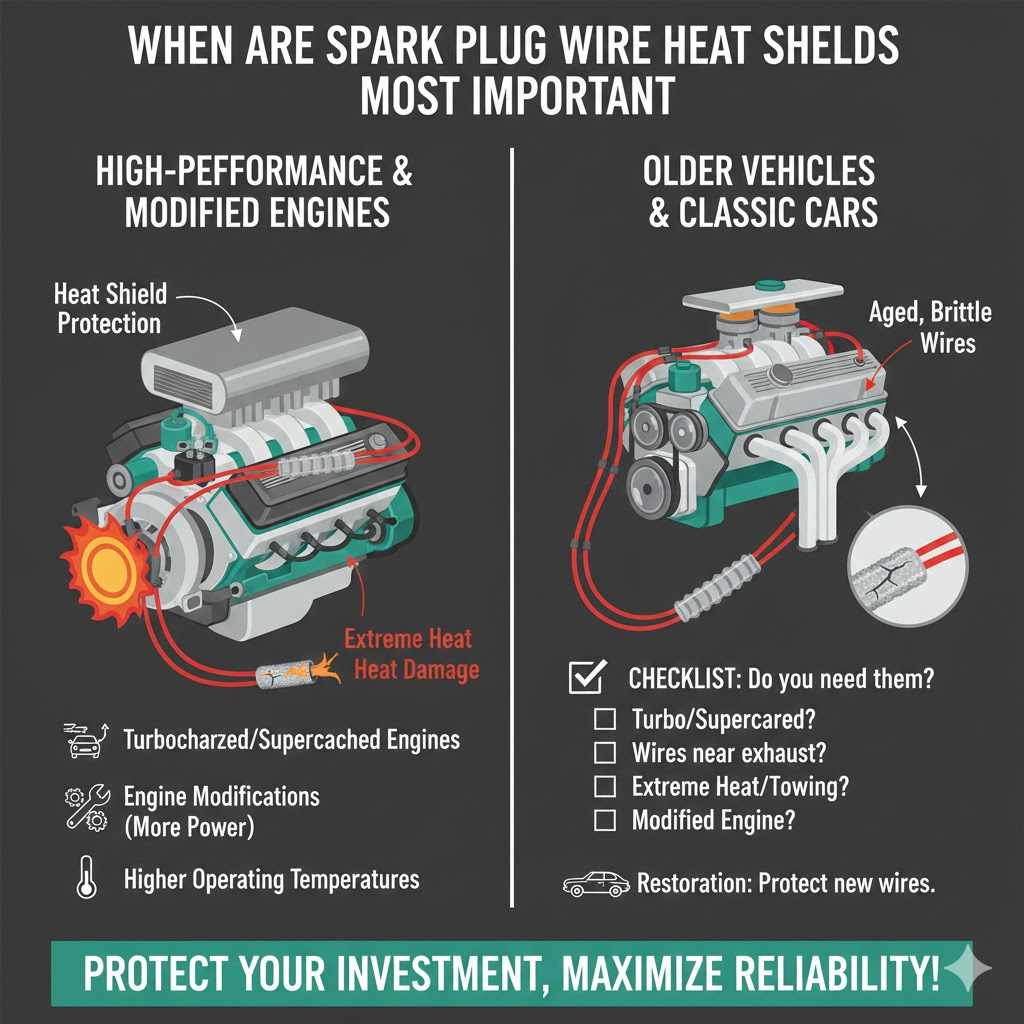
When Are Spark Plug Wire Heat Shields Most Important
Spark plug wire heat shields are most important in certain engine configurations and driving conditions. High-performance vehicles often generate more heat than standard cars. Turbocharged or supercharged engines also run hotter due to forced induction.
If your car falls into these categories, heat shields are highly recommended.
Modifications that increase engine power can also increase heat. For example, upgrading exhaust systems or tuning the engine for more aggressive performance might lead to higher temperatures. In such cases, adding heat shields is a wise preventative measure.
You want to protect your investment and ensure reliability.
Older vehicles can also benefit. Over time, the original insulation on spark plug wires may have degraded. Even if they haven’t failed yet, they might be more susceptible to heat damage.
If you are restoring an older car or simply want to ensure its reliability, consider adding heat shields.
Driving habits can also play a role. Frequent towing, driving in extreme heat, or prolonged periods of high-speed driving can put extra stress on the engine and increase temperatures. In these situations, heat shields provide an extra layer of protection for your spark plug wires.
Here’s a simple checklist to decide if you need them:
- Is your car turbocharged or supercharged?
- Are your spark plug wires routed very close to the exhaust manifold or turbocharger?
- Have you noticed any discoloration or brittleness on your spark plug wires?
- Do you often drive in very hot climates or tow heavy loads?
- Has your engine been modified to produce more power?
If you answer yes to any of these, then spark plug wire heat shields are likely a good idea for your vehicle.
High-Performance and Modified Engines
Engines designed for high performance typically operate at higher temperatures. This is due to increased combustion pressures, more aggressive ignition timing, and often, the use of forced induction like turbochargers or superchargers. These modifications significantly boost engine power but also generate substantially more heat.
In a performance engine, the exhaust gases are hotter and flow at higher volumes. Turbochargers themselves become extremely hot. If the spark plug wires run near these components, they are exposed to much higher temperatures than in a standard engine.
The original insulation might not be designed to withstand this. Heat shields become almost essential in these applications.
When modifying an engine, it’s crucial to consider the impact on heat. Adding a turbocharger, for example, can raise under-hood temperatures dramatically. Without adequate protection for components like spark plug wires, you risk premature failure.
This can lead to costly repairs and unexpected breakdowns.
Many performance parts manufacturers offer heat shields as part of their product lines. These are often designed to work seamlessly with their other performance components. It’s a good idea to research performance-oriented heat shields for your specific application if you have a modified engine.
For example, a custom-built hot rod might have its engine components packed tightly. The exhaust headers can get extremely hot. If the spark plug wires are routed in a straight line from the distributor to the plugs, they might be directly in the path of this heat.
Adding sleeves made of high-temperature ceramic or reflective materials would be a smart move.
Older Vehicles and Classic Cars
Older vehicles and classic cars can present unique challenges when it comes to spark plug wires and heat. Over the years, the rubber or silicone insulation on original spark plug wires can become brittle, dry, and cracked. This makes them much more susceptible to heat damage.
Even moderate engine temperatures can cause them to fail.
When restoring or maintaining an older vehicle, it’s common to replace aging spark plug wires. If the original routing places these wires near hot components like exhaust manifolds, adding heat shields is a very sensible precaution. It’s a relatively inexpensive way to protect new wires and ensure reliable operation.
Some enthusiasts prefer to keep their classic cars as original as possible. In these cases, finding original-style spark plug wire looms and routing can be important. However, even with original parts, the heat issue remains.
If the original design was prone to heat damage, it’s still an issue today. Modern heat shield technology can often be adapted without compromising the classic look.
Consider a classic muscle car that has been beautifully restored. The owner wants it to look authentic.
Frequently Asked Questions
Question: Do all cars need spark plug wire heat shields
Answer: Not all cars need them. Many modern vehicles use coil-on-plug systems, which do not have spark plug wires. For cars that do have wires, heat shields are most important if the wires are routed very close to hot engine parts like the exhaust manifold or turbocharger, or if the engine is high-performance.
Question: Are heat shields difficult to install
Answer: No, most heat shields for spark plug wires are designed for easy DIY installation. They usually slide over the wire and secure with a simple closure like Velcro or a clip. Always follow the specific product instructions.
Question: Can I use aluminum foil as a heat shield
Answer: While aluminum foil can reflect some heat, it is not a suitable or safe alternative to dedicated spark plug wire heat shields. Dedicated shields are made from materials designed to withstand high temperatures, are durable, and are shaped to provide proper coverage and protection without creating electrical shorts or fire hazards.
Question: How do I know if my spark plug wires are damaged by heat
Answer: Signs of heat damage include wires that appear discolored, brittle, melted, or cracked. You might also experience engine misfires, rough idling, poor acceleration, or a check engine light. A visual inspection of the wires for any of these signs is important.
Question: Where can I buy spark plug wire heat shields
Answer: Spark plug wire heat shields are widely available from automotive parts stores, both online and in physical locations. You can also find them on major e-commerce websites. Make sure to choose a product that is compatible with your vehicle’s make and model.
Summary
So, do spark plug wires need heat shields? Often, yes. They protect wires from damaging engine heat.
This is especially true for high-performance engines or when wires are near hot exhaust parts. Heat shields extend wire life, improve engine performance, and prevent costly damage. Adding them is usually a simple DIY job.
Protecting your spark plug wires helps your engine run smoothly and reliably.