Are Cannon Mufflers Illegal? Essential Guide
Most cannon mufflers are not inherently illegal on their own. Legality depends on whether they violate local noise ordinances or emissions regulations. Check your local laws and ensure your cannon muffler meets decibel limits and emission standards to stay compliant.
Tired of wondering if that cool-looking cannon muffler on your ride is going to land you in trouble with the law? It’s a common question, and the answer can be a little confusing. You see them on cars everywhere, and they definitely add a distinct look and sound. But are they actually legal to use? Don’t worry, we’re here to clear the air. This guide will walk you through everything you need to know in simple terms, so you can drive with confidence.
Understanding Cannon Mufflers and the Law
First things first, let’s understand what a “cannon muffler” really is. The term “cannon muffler” isn’t an official automotive designation. It’s more of a slang term used to describe mufflers that are typically very short, straight-through, and often designed for a loud, aggressive exhaust note. Think of those short, stubby mufflers that look like a cannon barrel – hence the name. They’re popular with some car enthusiasts because they can enhance the sound of the engine and sometimes even offer a slight performance gain by reducing exhaust restriction.
However, because they often prioritize sound and a specific aesthetic over noise reduction, they frequently push the boundaries of what’s considered acceptable in terms of noise levels. This is where the “illegal” part of the question usually comes in.
What Makes a Muffler Illegal?
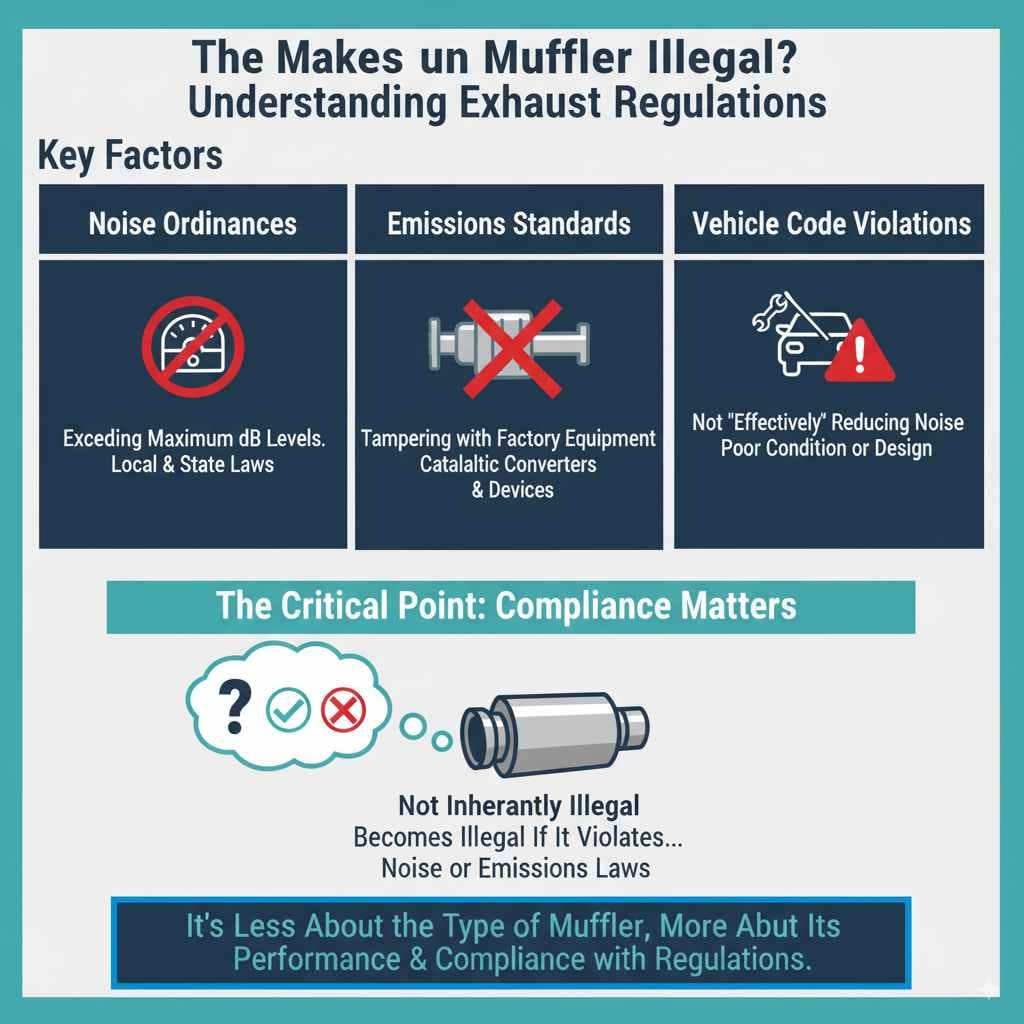
The legality of any exhaust system, including those referred to as cannon mufflers, generally boils down to a few key factors:
- Noise Ordinances: Most cities, counties, and states have laws that set maximum decibel (dB) levels for vehicle exhaust systems. If a muffler makes your car louder than these limits, it can be considered illegal.
- Emissions Standards: While mufflers themselves don’t directly control emissions, modifying or removing factory emissions equipment in conjunction with a new muffler can lead to legal trouble. In most places, it’s illegal to tamper with catalytic converters or other emissions control devices.
- Vehicle Code Violations: Some jurisdictions have specific laws about the type of mufflers allowed, or require mufflers to be in good working condition and effectively reduce noise.
The critical point is that a cannon muffler isn’t automatically illegal just because it’s called a “cannon muffler.” It becomes illegal if its use causes your vehicle to violate specific laws related to noise or emissions. It’s less about the type of muffler and more about its performance and compliance with established regulations.
Are Cannon Mufflers Illegal in My State/City?
This is the million-dollar question, and unfortunately, there’s no single, universal answer. Laws vary significantly from place to place. What’s perfectly fine in one town might get you a ticket in the next.
Here’s how to figure it out for your specific location:
1. Check Your Local Vehicle Code
Your first stop should be your state’s Department of Motor Vehicles (DMV) or equivalent agency. They usually have online resources detailing vehicle equipment regulations. Look for sections on exhaust systems, noise levels, and required equipment.
For example, in California, vehicle exhaust noise is regulated and can lead to citations if your vehicle is too loud. You can often find information on state government websites. A good starting point for understanding vehicle laws is often your state’s legislative website or official government portal.
2. Understand Decibel Limits
Many areas set a maximum decibel level. These limits are often around 95 dB for cars, but this can vary. Some places might have stricter limits, especially in residential areas or at certain times of the day. The Society of Automotive Engineers (SAE) often provides standards that are adopted by many regulatory bodies.
If you’re considering a cannon muffler (or any aftermarket muffler) and want to be sure, you can have your exhaust system professionally tested for decibel levels at an emissions testing facility or a performance shop.
3. Consider Your Vehicle’s Original Emissions Equipment
While we’re focusing on mufflers, it’s important to remember that modifying your exhaust can sometimes involve tampering with emissions equipment. For instance, if a “straight-pipe” exhaust (which essentially removes the muffler and catalytic converter) is referred to as a cannon muffler configuration, it’s almost certainly illegal in most places due to emissions regulations.
According to the U.S. Environmental Protection Agency (EPA), it is illegal to remove or render inoperative any emission control device on a motor vehicle. This includes catalytic converters, which are often part of the factory exhaust system that aftermarket mufflers replace or bypass.
Why the Confusion About Cannon Mufflers?
The confusion often stems from the fact that the very features that make “cannon mufflers” appealing to some – their small size and aggressive sound – are precisely what can make them problematic legally. Manufacturers of these parts may not always make it clear whether their products meet specific legal standards for all regions. They might advertise them as “off-road use only” or “for show” to mitigate liability, even if they could technically be street legal in some areas if they meet noise limits.
Factors Affecting Muffler Legality
Several factors contribute to whether a muffler, including a cannon style, is deemed legal:
| Factor | Description | Impact on Legality |
|---|---|---|
| Noise Level Output | The loudness of the exhaust sound produced. | Exceeding local decibel limits makes it illegal. |
| Emissions Compliance | Whether the muffler is part of a system that meets environmental regulations. | Tampering with catalytic converters or other emission controls makes it illegal. |
| Manufacturer Claims | What the muffler manufacturer states about its compliance. | “Off-road use only” labels suggest it may not be street legal. |
| Local Law Enforcement Interpretation | How police officers in your area enforce exhaust laws. | Subjective enforcement can lead to warnings or citations. |
| Type of Modification | Whether the muffler is a direct replacement or part of a more extensive system change. | Simple muffler replacement is less likely to be illegal than full system changes involving emissions removal. |
Choosing a Street-Legal Muffler
If you want the aggressive look or sound that some enthusiasts associate with cannon mufflers but need to stay legal, consider these options:
| Option | Description | Pros | Cons |
|---|---|---|---|
| Performance Mufflers (Street Legal) | Designed for better flow and sound, but engineered to meet noise regulations. | Improve performance and sound, generally legal. | Can still be louder than stock; look for specific dB ratings. |
| Resonators | These are designed to cancel out certain sound frequencies, reducing pitch and often drone. | Helps fine-tune exhaust sound without adding significant restriction. | Doesn’t reduce overall volume as much as a muffler. |
| “Mild Sport” Mufflers | A compromise between OEM quietness and aftermarket loudness. | Noticeable sound improvement, often within legal limits. | May not be aggressive enough for some enthusiasts. |
| High-Flow Mufflers | Designed to reduce backpressure while still containing sound. | Can enhance performance and sound subtly. | Check manufacturer specifications for noise levels. |
Installation and “Off-Road Use Only” Labels
When purchasing any aftermarket part, especially mufflers with a more aggressive sound profile, you’ll often see “Off-Road Use Only” printed on the packaging or the part itself. This is a legal disclaimer by the manufacturer. It means they are not making any claims about the part’s compliance with street use laws (like noise and emissions) and are shifting the responsibility to the consumer.
Installing something labeled “Off-Road Only” on a vehicle intended for public roads can be risky. If the part causes your vehicle to violate local laws, you’ll be held responsible. This is particularly true if the “off-road” part implies removal or alteration of emissions equipment.
For a successful and legal installation:
- Verify Local Laws: Always confirm your local noise and emissions regulations before purchasing.
- Consult a Professional: A reputable exhaust shop can advise you on compliant options and perform the installation correctly. They know what works and what typically passes inspection in your area.
- Check Manufacturer Specs: Look for mufflers that provide dB ratings or explicitly state street legality in your region.
- Keep Stock Parts: It’s often a good idea to keep your original muffler and emissions equipment. If you ever face an inspection or wish to revert to stock, you’ll have the parts available.
Common Myths and Misconceptions
There are quite a few myths circulating about exhaust systems. Let’s clear up a couple concerning legality:
- Myth: “If it bolts on, it’s legal.” This is not true. Any modification that affects your vehicle’s emissions or noise output must comply with local laws, regardless of whether it’s a bolt-on part.
- Myth: “All performance mufflers are loud and illegal.” Many performance muffler manufacturers design their products to offer enhanced sound and flow while staying within legal decibel limits for street use.
- Myth: “Straight pipes are always the best for performance.” While they offer the least restriction, straight pipes (without mufflers or catalytic converters) are illegal in virtually all areas due to extreme noise and emissions violations.
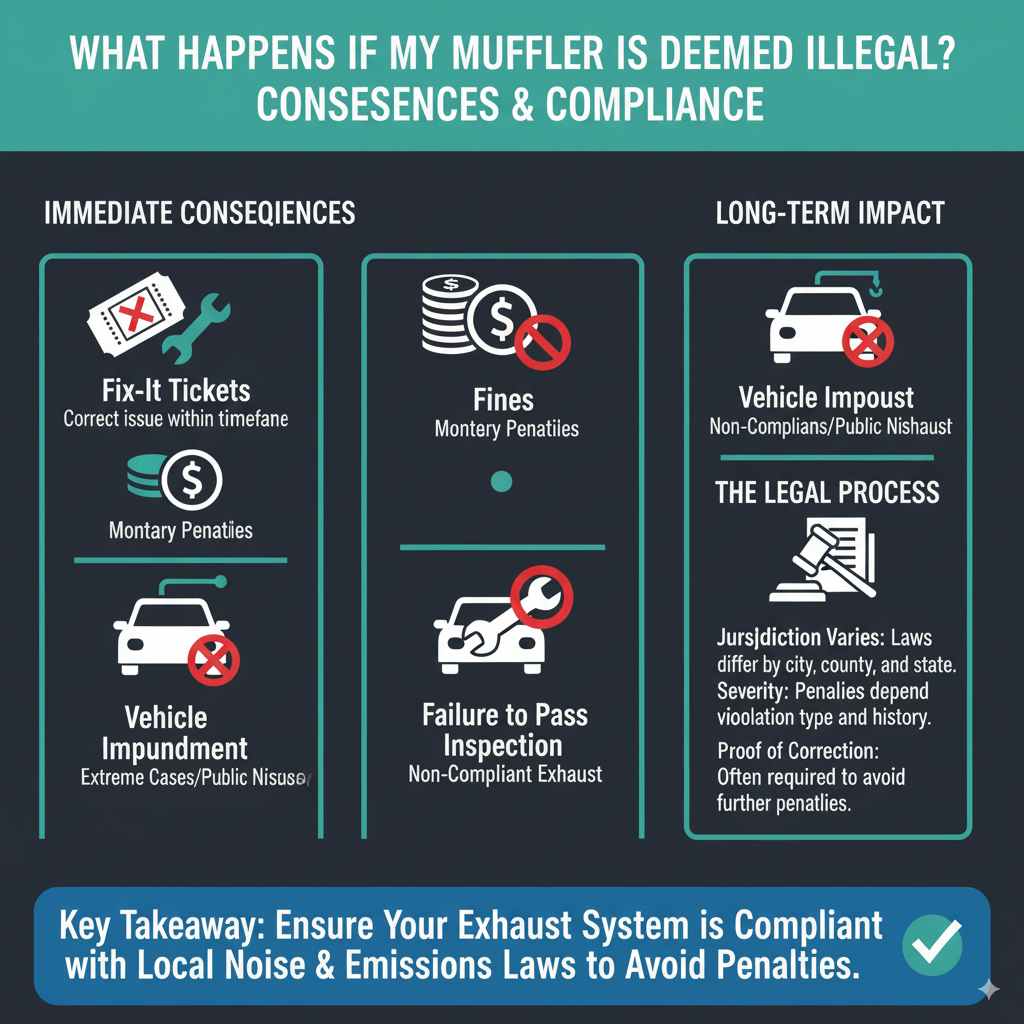
What Happens If My Muffler Is Deemed Illegal?
If a law enforcement officer determines your exhaust system is illegal, you’ll likely face consequences. These can include:
- Fix-It Tickets: A common outcome where you’re given a period to correct the issue and then show proof of correction to the authorities.
- Fines: Monetary penalties can range from minor to substantial, depending on the jurisdiction and the severity of the violation.
- Vehicle Impoundment: In extreme cases, or if the vehicle is deemed a public nuisance, it could be impounded.
- Failure to Pass Inspection: If your state or local area has mandatory vehicle inspections, a non-compliant exhaust system will cause you to fail.
Frequently Asked Questions (FAQ)
Q1: What is a cannon muffler?
A: A “cannon muffler” is a slang term for a short, often straight-through muffler that produces a loud, aggressive exhaust note. It’s popular for its distinctive sound and appearance but can easily exceed legal noise limits.
Q2: Are cannon mufflers illegal everywhere?
A: No, not everywhere. Legality depends on your local noise ordinances and emissions regulations. While many are too loud for street use in most areas, some might technically be legal if they meet decibel limits and don’t tamper with emissions equipment.
Q3: How can I tell if my muffler is too loud?
A: Check your state or local vehicle codes for specific decibel limits. If your exhaust is significantly louder than stock or makes a “rumbling” or “popping” noise under acceleration, it’s likely too loud. Professional testing at a shop can give you an exact measurement.
Q4: What’s the difference between a muffler and a resonator?
A: A muffler’s primary job is to reduce the overall loudness of the exhaust. A resonator is designed to cancel out specific sound frequencies, often to eliminate drone or alter the tone, rather than significantly reduce volume.
Q5: Is it safe to use an “off-road use only” muffler on public roads?
A: It’s risky. Manufacturers label them “off-road only” because they don’t guarantee compliance with street-legal noise and emissions standards. Using one can lead to tickets, fines, or other legal penalties if your vehicle is found to be in violation.
Q6: What should I do if I want a louder exhaust but need to stay legal?
A: Look for “street-legal” performance mufflers from reputable brands. These are designed to offer improved sound and performance while adhering to noise regulations. Consult with an experienced exhaust shop.
Q7: Does my car need a catalytic converter to be legal?
A: Yes, in most places, it is illegal to remove or tamper with your catalytic converter. It’s a crucial part of your vehicle’s emissions control system mandated by environmental laws like those overseen by the EPA.
Conclusion
Navigating the world of aftermarket exhaust components can sometimes feel like a maze, especially when legality is a concern. When it comes to “cannon mufflers,” the key takeaway is that their legality isn’t determined by the name itself, but by their actual performance and compliance with local noise and emissions laws. While their aggressive sound profile makes them prone to violating noise ordinances, it’s always best to consult your local vehicle codes and speak with a qualified exhaust professional.
By understanding the regulations in your area and choosing parts wisely, you can enhance your vehicle’s sound and performance responsibly. Don’t let the fear of an illegal exhaust keep you from enjoying your car. With the right information and careful selection, you can achieve the driving experience you desire while staying on the right side of the law. Drive safe and sound!