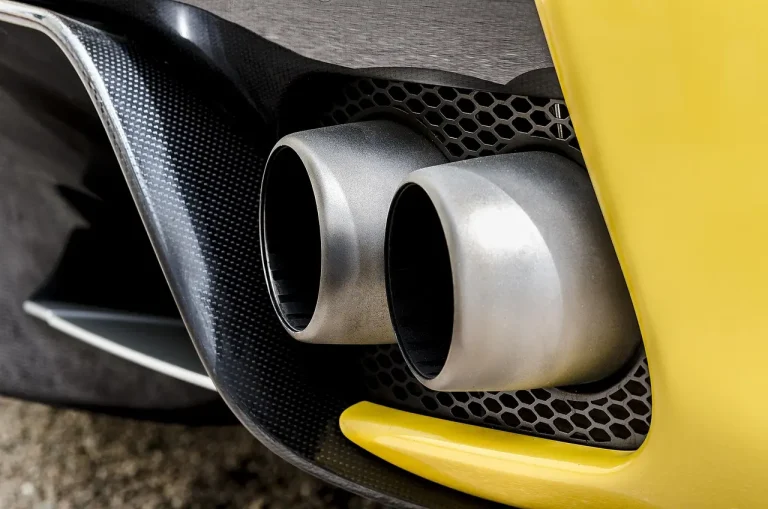
Why Does My Truck Smell Like Exhaust After Driving?
A truck that smells like exhaust after driving usually has a small leak or a cabin-air intake path that opens as heat and airflow rise. If you ignore it, carbon monoxide or other fumes can enter the cab, and that can turn hazardous fast. This guide shows how to tell exhaust from fuel or oil odors, where to look first, and when to stop driving.
Why the smell shows up after driving


Heat soak, rising exhaust pressure under load, and shifting airflow are the main reasons the odor appears after a drive instead of at idle. Parts expand when hot, small gaps open, and underbody air movement can pull fumes toward the cab or engine bay after you stop.
Heat soak and expanding leak points
Exhaust leaks often get worse after components heat up. A manifold crack, gasket seep, flex pipe split, flange leak, muffler seam, or tailpipe joint may seal enough when cold, then open wider once metal expands and the system is fully hot.
That is why a truck can smell fine at startup and then reek after 15 or 20 minutes on the road. The odor may show up after shutdown because heat soak raises engine-bay and underbody temperatures for several minutes.
Pressure changes from speed, load, and towing
At speed, exhaust pulses are stronger and underbody air pressure changes can push odor through gaps that are quiet at idle. Towing, climbing grades, and long highway pulls raise exhaust temperature and backpressure, which can make a small leak obvious.
Turbocharged trucks are more likely to show this pattern at the turbocharger connections and exhaust manifold. Under boost, heat and pressure are both higher, so a crack or gasket leak may only announce itself after a hard pull.
Why parked trucks can smell worse than moving ones
After parking, the truck may smell stronger because heat soak keeps cooking the leak source while airflow around the cab drops. The smell can linger under the hood, then drift through cowl openings, door gaps, or floor pan seams once the vehicle is stationary.
Exhaust smell or something else?
Not every hot odor is true exhaust gas. Exhaust odor usually smells sharp, sooty, or stale, while fuel, oil, and aftertreatment smells have different cues and different urgency. Sorting those apart helps you decide whether the issue is a leak, a fluid drip, or an emissions event.
Exhaust odor vs gasoline odor
Gasoline odor is usually sharper and more raw than exhaust, and it often comes with the smell of unburned fuel. If the odor is strongest near the tank, fuel rail, injector area, or gas cap, treat it as a fuel-system problem first because fire risk is higher.
Exhaust odor tends to come from the front of the truck, under the cab, or out of the tailpipe area. A truck can have a small exhaust leak and still smell clean outside, while a fuel smell after driving can mix with exhaust, so gasoline odor should raise urgency even if the source is not obvious.
Exhaust odor vs burning oil odor
Burning oil often smells like hot grease or smoke rather than exhaust gas. A valve cover gasket leak can drip oil onto hot exhaust parts, then the odor moves through the engine bay and into the cab, where it is easy to mistake for an exhaust leak.
That same pattern can happen with a PCV fault. If crankcase vapor is routed badly, or if blow-by is high, the truck may carry oily fumes into the intake stream and make the cabin smell smoky after a long drive.
Exhaust odor vs diesel regen odor
Diesel trucks can smell different during DPF regeneration. The odor may be hotter, sharper, and more chemical because exhaust temperatures rise to burn soot, and SCR or DEF components can add a distinct ammonia-like or acrid note.
That smell is often strongest after highway driving or towing, and it may fade after the regen ends. A failing aftertreatment system, however, can create a persistent odor that does not match a normal regen cycle.
What is pulling fumes into the cab?
Cabin entry is the part many checks miss. A truck can have a small exhaust leak and still smell clean outside the cab, then pull fumes inside through the HVAC intake, door seals, or body gaps when airflow and pressure shift after driving or parking.
Cabin air intake location and fresh-air mode
The fresh-air intake is usually near the base of the windshield, under the cowl, where outside air enters the HVAC box. If the truck is in fresh-air mode, the blower can draw whatever is near that opening, including fumes from the engine bay or hood edge.
Recirculation can reduce outside air entry, but it does not fix the source. If the smell changes when you switch between fresh air and recirc, that points to an intake or body-entry issue rather than a pure tailpipe problem.
Recirculation, blower speed, and vent settings
Fan speed changes how much outside air gets pulled in. A higher blower setting can pull stronger airflow through a leaky cowl seal or an opening near the firewall, while low speed may let fumes linger longer inside the cab.
If the smell gets worse with the fan on fresh air and better on recirc, the cabin intake path deserves attention. If the odor follows heater operation, inspect the HVAC box, heater inlet area, and any underhood source close to the intake.
Door seals, body gaps, and weatherstripping
Pressure changes while driving can draw fumes through worn weatherstripping, door seals, tailgate gaps, or body seams. A cab that smells fine at idle may pull exhaust through a small leak only after parking, when hot air rises and the vehicle stops moving.
Check the floor plugs, firewall grommets, cab corners, and any spot where the body has been repaired. Even a small opening can move fumes from an underbody leak into the cab if the pressure path lines up.
- Check the cabin mode. Switch between fresh air and recirculation with the fan on low, then medium. If the odor changes fast, the HVAC intake path is part of the problem.
- Inspect hot leak points. Look at the exhaust manifold, gasket, flex pipe, flange, muffler, and tailpipe joints while the engine bay and underbody are still warm. A soot trail or black stain often marks the leak before sound does.
- Scan for fluid drips. Look for oil on the valve cover, fuel wetness near the rail or injector area, and any smell that is stronger near a single underhood spot. A drip onto hot exhaust parts can mimic exhaust odor.
- Check seals and gaps. Inspect door weatherstripping, cowl seals, firewall grommets, and body plugs. If the smell appears after parking, these paths may be pulling fumes inside after airflow changes.
Where an exhaust leak usually starts
The first places to check are the manifold, gasket, flange, flex pipe, muffler, tailpipe, and any turbocharger connection. These are the spots most likely to leak after heat and load rise, and they are also the most likely to send fumes toward the engine bay or cab.
Manifold, gasket, flange, and flex pipe
A manifold crack or gasket leak often shows up as a ticking sound on cold start, then a stronger odor after the truck heats up. Flex pipes and flanges can leak only under load, especially if the pipe moves during acceleration or towing.
Look for soot, rust dust, or black streaks around the joint. Even a tiny leak can fill the underhood area with exhaust gas components such as hydrocarbons, nitrogen oxides, and carbon monoxide.
Muffler, tailpipe, and underbody joints
Leaks farther back can still create a cab smell if the exhaust stream is redirected upward by underbody airflow or a missing hanger. A tailpipe leak near the bed or rear wheel well may travel forward into the cab through pressure changes after driving.
Do not ignore small holes or loose clamps in the midpipe area. A leak that seems “too far back” can still enter the cabin if the truck body has an opening along the floor, bed, or rear cab wall.
Turbocharger and exhaust manifold on boosted trucks
On turbocharged trucks, the turbo inlet, turbine housing, manifold, and downpipe connections carry very hot exhaust. A gasket failure there can smell stronger after a long drive, a hill climb, or a towing pull because exhaust energy is higher.
If boost makes the smell worse, focus on those joints first. A small crack may be invisible from above and only leave a faint soot line or a hot metallic odor after shutdown.
Truck exhaust odor matrix
This matrix separates timing from source, because timing often points to the path. If the odor shows up only after driving, after parking, or only with the heater on, the source is usually more specific than a generic “exhaust leak.”
| Symptom timing | Likely source | Easiest confirmation check | Urgency level |
|---|---|---|---|
| After driving, especially after highway speed | Manifold, gasket, flex pipe, flange, or tailpipe leak opening as heat rises | Look for soot, ticking, or odor strongest near hot joints after shutdown | High |
| After towing or heavy load | Turbocharger connections, manifold crack, exhaust joint under higher pressure | Compare odor after a light drive versus a loaded drive | High |
| Heater on, fresh air mode | Cabin air intake pulling fumes from engine bay or cowl area | Switch to recirculation and see whether the smell drops fast | Medium to high |
| Stop-after-parking odor | Heat soak, body gaps, door seals, firewall openings, or underhood leak | Check seals and floor/firewall openings with the engine off but still warm | Medium |
| Diesel regen odor | DPF regeneration, SCR/DEF smell, or aftertreatment fault | See whether the smell fades after regen ends and if dash messages are present | Medium |
| Gasoline smell after driving | Fuel line, injector, rail, or gas cap leak | Find the strongest odor near the tank, engine bay, or cap area | High |
Why does my truck smell like gas after driving?
A gas smell after driving can point to a fuel leak, an evaporative leak, or fuel vapors escaping where they should stay sealed. That is different from exhaust odor, and it matters because gasoline vapor is a fire risk even if the truck still runs normally.
Fuel line, injector, and rail leaks
Look for wet fittings, a damp rail, or stains near an injector seal. A small seep may only smell after the engine bay heats up, when vapor pressure rises and the odor spreads through the cowl or underhood area.
Loose or damaged gas cap
A loose cap or damaged seal can create a fuel smell after driving, especially after refueling or on a hot day. If the cap does not click or the seal is cracked, fix that before assuming the smell is exhaust.
When fuel odor is a fire risk
If the odor is strong enough to smell near the cab or engine bay, avoid driving until the source is found. Fuel leaks can ignite on hot exhaust parts, and a leak near the rail, injector, or tank deserves prompt attention.
Can exhaust smell mean a leak?
Yes. Exhaust odor often means a leak, but the leak may be in the exhaust system, the engine bay, or the cabin intake path. Oil-burning and emissions smells can also mimic exhaust, so the goal is to find the path, not just the smell.
Valve cover gasket leaks onto hot parts
A valve cover gasket leak can drip oil onto the exhaust manifold, pipe, or turbo heat shield. The burning smell then rides through the truck and can seem like exhaust, especially after a long drive when everything is hot.
PCV faults and crankcase vapor
The PCV system routes blow-by and oil vapor back into the intake. If the valve sticks, hoses crack, or routing is wrong, fumes-like odor can enter the engine bay or intake stream and make the truck smell smoky without a true exhaust leak.
Catalytic converter or diesel aftertreatment odor
A failing catalytic converter can create a sulfur or rotten-egg smell when it overheats or does not clean exhaust properly. On diesel trucks, DPF regeneration or SCR/DEF issues can create a sharper aftertreatment smell that changes with load and temperature.
Picture a half-ton truck that smells fine around town but reeks after a 40-minute tow. If the odor gets stronger after a hill climb and is worst with fresh air on, a turbo connection or exhaust manifold leak is more likely than a gas cap issue.
Say a truck smells like exhaust only after parking in the driveway. If the smell rises near the firewall and drops when the HVAC goes to recirc, the cabin intake or a hot underhood leak is a better lead than the tailpipe.
Frequently asked questions
Why does my truck smell like exhaust after driving?
Heat soak, load, and airflow changes can make a small exhaust leak more noticeable or allow fumes to enter the cab after driving. The most likely spots are the manifold, gasket, flex pipe, flange, muffler, tailpipe joints, or the cabin air intake area near the cowl.
Why is the exhaust smell worse after a long drive?
A long drive raises exhaust temperature and pressure, so leaks that seem minor at idle can become obvious. Turbocharged and towing trucks are especially prone to this because the manifold, turbo connections, and underbody joints run hotter under sustained load.
Can exhaust smell get inside the cab through the HVAC?
Yes. The fresh-air intake can pull outside fumes into the HVAC box, especially in fresh-air mode with the blower on. If the smell drops in recirculation, the intake path, cowl seals, or a nearby underhood leak should move higher on the list.
Is it safe to drive if my truck smells like exhaust?
Not if the smell is strong, getting worse, or accompanied by headache, dizziness, or nausea. Carbon monoxide is a major concern. If the odor seems like fuel instead of exhaust, treat it as a fire risk and avoid driving until it is checked.
How do I tell exhaust smell from fuel or oil smell?
Exhaust smells hot, sooty, and stale. Fuel smells sharper and more raw, while oil often smells burnt or greasy. If the odor changes with the heater, fresh air mode, or a long tow, that points more toward cabin entry or heat-soaked exhaust parts than a simple tailpipe issue.
What parts usually cause exhaust smell after driving?
The most common sources are the exhaust manifold, gasket, flex pipe, flange, muffler, tailpipe joints, turbocharger connections, valve cover gasket drips onto hot parts, and cabin intake leaks. Diesel trucks can also smell from DPF regeneration or aftertreatment faults.