How Much Does Resonator Delete Cost?
A resonator delete usually costs about $100 to $300 at an exhaust shop, but custom routing, stainless bends, or welded-in replacements can push it to about $400 to $700. Bad cuts can cause drone, leaks, or a failed inspection. This guide breaks down shop pricing, labor drivers, and when a different exhaust change costs about the same.
Typical cost range
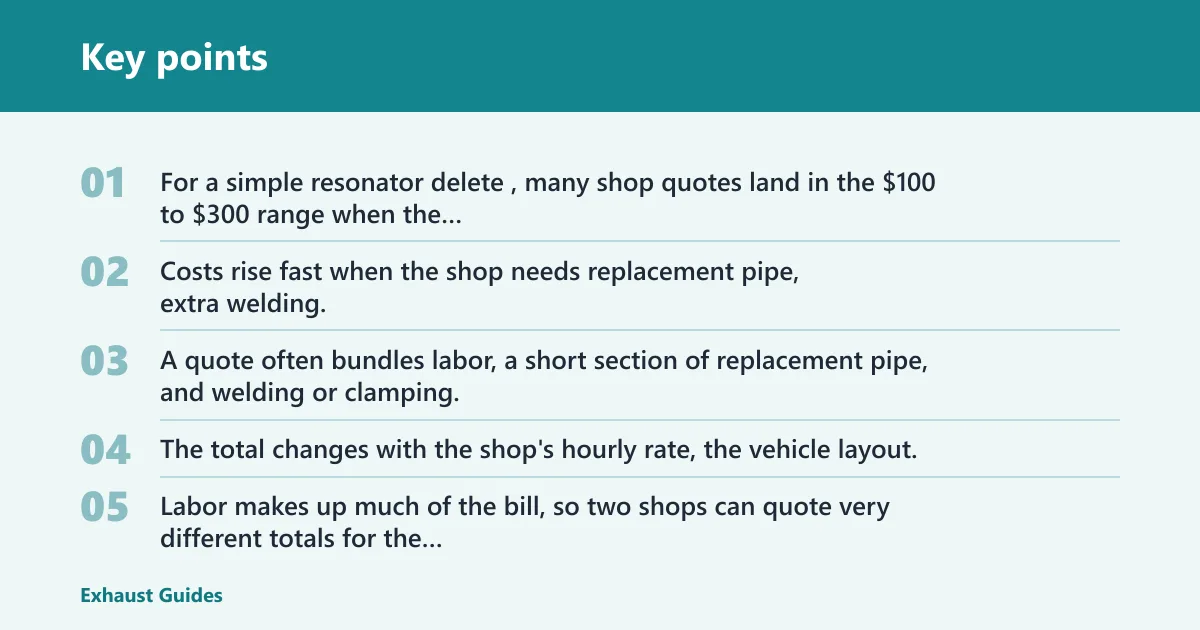


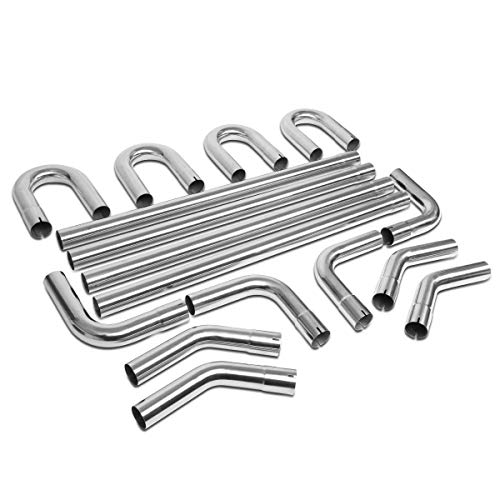
For a simple resonator delete, many shop quotes land in the $100 to $300 range when the exhaust can be cut and rejoined without major surprises. Costs rise fast when the shop needs replacement pipe, extra welding, or more time to fit the new section cleanly to the vehicle.
What the shop quote usually includes
A quote often bundles labor, a short section of replacement pipe, and welding or clamping. The total changes with the shop’s hourly rate, the vehicle layout, and whether the resonator is easy to reach. Labor makes up much of the bill, so two shops can quote very different totals for the same job.
When the number changes fast
The price climbs when bolts are seized, hangers are broken, or rust has thinned the surrounding pipe. A car with tight packaging may need more fabrication time than a roomy sedan. Vehicle make and model matter because some exhaust paths are straightforward while others leave little room for a clean straight section.
Say your compact sedan has an accessible mid-pipe and clean flanges. That job may stay near the low end because the shop can cut, fit, and weld a short replacement section without extra fabrication. Change only one variable, and the price can move quickly.
Resonator delete cost matrix
The table below shows the most useful pricing split: simple cut-and-weld work, a straight-pipe replacement, a custom-fabrication job, and common add-on costs that change the final bill. These are practical shop ranges, not fixed prices.
| Scenario | Typical labor time | Parts needed | Typical cost range |
|---|---|---|---|
| Bolt-on shop cut-and-weld | 0.8 to 1.5 hours | Short replacement pipe, weld consumables, clamps if requested | $100 to $225 |
| Simple straight-pipe replacement | 1 to 2 hours | Measured straight pipe section, hangers or couplers as needed | $150 to $300 |
| Custom fabrication for dual exhaust or tight packaging | 2 to 4 hours | Bent pipe, adapters, extra hangers, weld-in sections | $300 to $700 |
| Add-on costs for seized hardware, rust repair, or inspection rework | 0.5 to 2 extra hours | Penetrating work, new hardware, patch material, rework time | $50 to $250 extra |
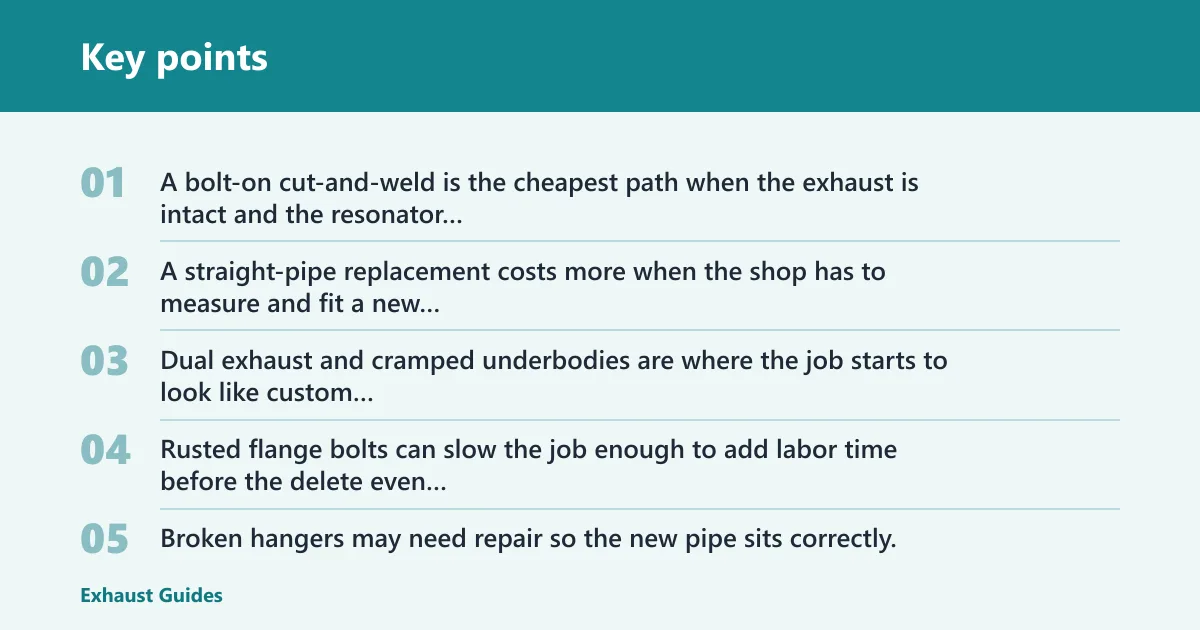
A bolt-on cut-and-weld is the cheapest path when the exhaust is intact and the resonator can be removed without collateral damage. A straight-pipe replacement costs more when the shop has to measure and fit a new section from scratch. Dual exhaust and cramped underbodies are where the job starts to look like custom fabrication pricing.
Failure cases that raise the bill
Rusted flange bolts can slow the job enough to add labor time before the delete even starts. Broken hangers may need repair so the new pipe sits correctly. If the old resonator area is corroded, the shop may have to cut back farther into solid pipe, then build a longer replacement section to keep the exhaust sealed.
What drives the price?
The biggest cost drivers are labor rate, vehicle type, and how much fabrication the exhaust needs. Location matters too. Metro shops often charge more because overhead is higher, while regional competition can pull quotes down. Emissions compliance and noise rules can add cost if the work needs to be revisited for inspection.
Labor rate and shop overhead
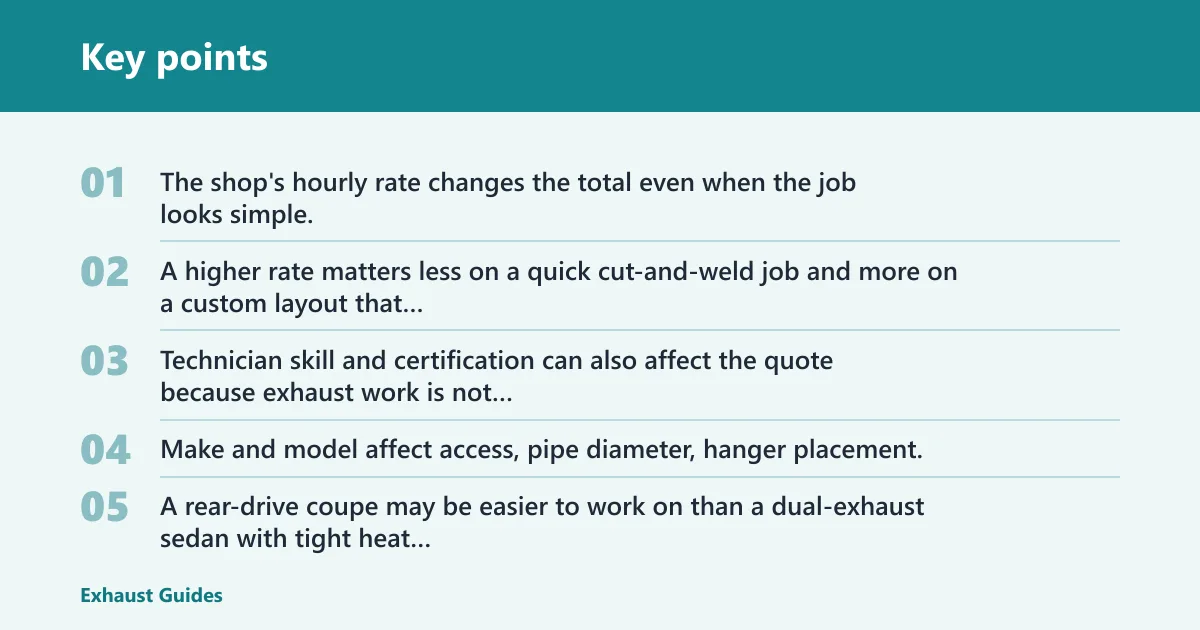
The shop’s hourly rate changes the total even when the job looks simple. A higher rate matters less on a quick cut-and-weld job and more on a custom layout that needs measurement, fitment, and repeated welding. Technician skill and certification can also affect the quote because exhaust work is not always a one-cut task.
Vehicle type and exhaust layout
Make and model affect access, pipe diameter, hanger placement, and the amount of room around the resonator. A rear-drive coupe may be easier to work on than a dual-exhaust sedan with tight heat shielding. Some platforms need custom bends to keep the pipe aligned and clear of suspension parts.
Replacement pipe and fitment
If the shop removes the resonator and needs to replace that section, pipe material and fabrication time matter. Mild steel is usually cheaper than stainless, but the final choice depends on the existing system and the shop’s material stock. Fitting and welding charges can make a small pipe job cost more than expected.
Location variance and quote spread
Location changes pricing in a real way. A city shop with higher rent and payroll will often quote more than a small-town exhaust shop. State or country differences matter too, especially when labor rates and inspection rules are not the same. That is why two nearby shops can give different numbers for the same car.
How much does muffler and resonator delete cost?
A muffler and resonator delete usually costs more than a resonator delete alone because the muffler delete is often priced as a separate operation. When both are combined, the shop may need more pipe, more hangers, and more welding. The total can still stay moderate if the exhaust layout is simple and access is good.
Why the jobs are priced separately
A resonator delete changes tone and volume by removing the resonator section, while a muffler delete removes a different part of the exhaust and often makes the car louder still. Shops usually quote them separately because each cut affects pipe length, hanger position, and sometimes legality or inspection risk in a different way.
When combined work changes the bill
If both parts are removed, the shop may need to build a longer replacement pipe and adjust the exhaust path so it still sits level under the car. That extra work can push the job into custom fabrication pricing. On some vehicles, the combined work costs about the same as a smaller cat-back upgrade.
When does a delete cost more than an alternative?
A delete is not always the cheaper path. If the exhaust needs multiple bends, new hangers, or inspection-friendly parts, the bill can climb close to the price of an axle-back or cat-back system. In those cases, a complete alternative may cost about the same while giving a cleaner fit and less rework risk.
Cat-back pricing versus delete pricing
A cat-back usually replaces more of the exhaust behind the catalytic converter, so the parts bill is higher. But if a resonator delete needs custom pipe and welding, the gap narrows. Once the delete reaches the upper end of the range, a basic cat-back can be the better value for fit, finish, and future resale.
Axle-back pricing versus delete pricing
An axle-back often competes on price with a muffler delete or a combined delete on some cars. If your goal is only a louder tone, the axle-back can land near the same total once labor is included. It also avoids some of the guesswork around cutting and patching the original exhaust.
Suppose a Charger owner wants more sound from a street-driven car and the shop quotes a welded delete with pipe work plus inspection rework. That total can creep close to an axle-back price. At that point, the cleaner bolt-on route may be the easier spend.
Is a resonator delete worth it?
A resonator delete is worth it when you want more exhaust sound and the car can take the work without heavy fabrication. It is less attractive when the price rises toward a cat-back, when local noise ordinances are strict, or when the car is likely to fail an emissions or inspection check.
Best fit for drivers who want more sound
This mod suits drivers who want a louder tone and accept some chance of drone. It can also pair with a muffler delete on some setups, but that combination raises the odds of excessive cabin noise. The gain is vehicle-specific; the same change can sound aggressive on one platform and droney on another.
When the tradeoff is not worth the money
If the shop needs major fabrication, the price can move beyond what a simple sound change should cost. For daily drivers, that is a warning sign. The money may be better spent on a different exhaust setup that keeps the car quieter on the highway and easier to pass inspection.
Street-use limits and inspection risk
Local noise ordinances can make a louder exhaust a bad idea even when the work itself is legal to install. Emissions compliance also matters for street-driven cars, because a failed inspection can mean more repair cost later. Fines are part of the risk in some jurisdictions, so the cheapest quote is not always the lowest real cost.
How much does a muffler delete cost at a shop?
A muffler delete at a shop often costs about the same as, or more than, a simple resonator delete once labor and pipe work are included. The exact quote depends on vehicle layout, the shop’s hourly rate, and whether the shop needs to fabricate a replacement section or reuse existing piping.
What to ask before you approve the work
- Ask whether the quote includes pipe, clamps, and welding.
- Ask what happens if hardware is seized or rusted.
- Ask whether the car will still clear inspection requirements.
- Ask if the shop expects any extra fee for custom bending or hanger repair.
- Ask for the total after labor, not just the starting price.
How to compare quotes without missing added charges
Get multiple estimates from shops, because quote spread can be large on exhaust work. Compare the labor hours, not only the headline price. A lower quote that excludes pipe, welding, or rework can end up higher once the car is on the lift.
Frequently asked questions
How much should a resonator delete cost?
Most straightforward jobs should land around $100 to $300 at a shop, with custom work often running higher. If the car needs a welded replacement section, rust repair, or inspection rework, the final bill can move into the $400 to $700 range.
How much does mid muffler delete cost?
A mid muffler delete usually follows the same pricing logic as a resonator delete: simple cut-and-weld jobs are cheaper, while custom routing costs more. The total depends on where the muffler sits, how much pipe must be replaced, and whether the shop can reuse the original hangers.
How much does a resonator delete cost UK?
In the UK, quotes vary with local labor rates, exhaust material, and whether the job needs welding or custom pipe work. The same factors still apply: vehicle layout, rust, and inspection rules. Because prices vary by region, it is smart to get multiple local estimates.
What affects resonator delete pricing?
The main factors are labor rate, vehicle type, location, and how much fabrication the exhaust needs. Parts cost matters too if the shop has to install a replacement pipe. Noise ordinances and emissions compliance can add indirect cost if the work needs to be changed later.