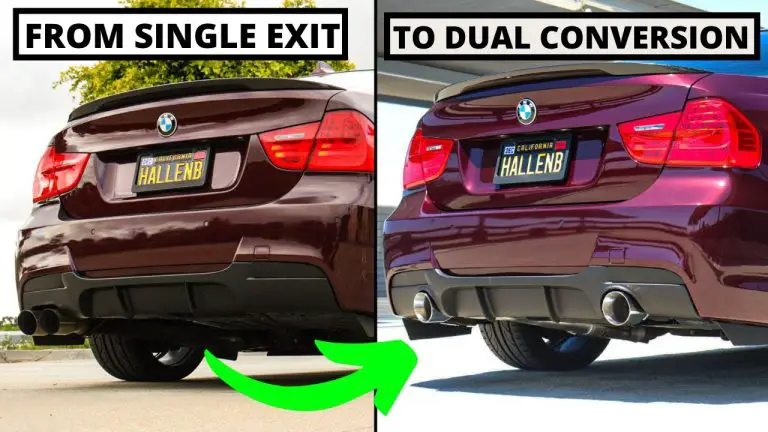
Best Budget Exhaust Upgrades for Beginners (2026): Research Shows
For beginners, the best budget exhaust upgrades are a resonator swap, a bolt-on axle-back, and, on simple single-muffler cars, a muffler delete; choose the cheapest part that keeps factory fitment and limits drone. Bad picks can add drone, fitment headaches, and little real sound gain, wasting money on parts that make daily driving worse. This guide ranks low-cost exhaust upgrades by value, sound, fitment, and drivability so you can choose the safest first step.
Quick comparison
| Product | Badge | Best for | Price | ||
|---|---|---|---|---|---|
 | MagnaFlow Exhaust Products Street Series StainlessMagnaFlow Exhaust Products | Our pick | Cat-Back Exhaust system · Stainless Steel · Street Series | $1,100.00 Price as of 29 Oct 2026 | View |
 | slip on exhaust Stainless Steel Muffler With MeshGeneric | Budget pick | Slip On Muffler · Stainless Steel · Motorcycle GP Exhaust | $59.99 Price as of 29 Oct 2026 | View |
 | Wabuiltown Exhaust Tip 2.5" Inlet 4" Outlet 12" Long, HighWABUILTOWN | Also great | Exhaust Tip · 2.5 Inch Inlet · Stainless Steel | $24.99 Price as of 29 Oct 2026 | View |
Start with the change that solves your goal with the least risk. Sound-only changes sit on the left side of the budget ladder; meaningful flow gains usually start when you replace more of the system from the rear forward.
How we chose
The ranking below favors the smallest spend with the least downside first. Then it moves toward parts that improve flow more, while keeping daily drivability in view.
The main filters are simple: low drone risk, easy bolt-on fitment, clear sound change, and the best chance of a real performance gain for the money. That means a part can rank high for value even if its horsepower gain is modest.
We also separate sound changes from flow changes. A louder exhaust is not automatically faster.
Budget exhaust upgrade tiers
This table shows the practical ladder for a beginner. The key question is not “what is the loudest option?” It is “what gives the biggest change without creating new problems?”
| Budget tier | Best first exhaust upgrade | Expected sound change | Performance upside | Drone risk | Install difficulty | When to stop upgrading |
|---|---|---|---|---|---|---|
| Under $100 | Muffler change or resonator change | Small to moderate, mostly tone shaping | Usually small; mostly sound-oriented unless the stock part is very restrictive | Low to moderate, depending on layout | Moderate if welding is needed | Stop if the car is already loud enough, or if the next step would require cutting and custom work |
| $100-$300 | Axle-back exhaust | Clear rear-section volume increase | Mild; often more sound than power | Low to moderate | Usually easy bolt-on | Stop if you mainly want a cleaner tone and factory-like fitment |
| $300-$700 | Cat-back exhaust | Noticeable increase in volume and tone change | Moderate if the stock system was restrictive | Moderate if pipe sizing is aggressive | Easy to moderate | Stop if the rest of the car is still stock and daily comfort matters more than the last bit of flow |
| $700+ | Higher-end cat-back or move to other bottlenecks | Large, but not always better | Returns diminish fast | Moderate to high if the setup is too free-flowing | Moderate to high | Stop and spend elsewhere unless you are fixing a known restriction, leak, or broken system |
Muffler: best for low-cost sound control
A muffler is the easiest place to change exhaust character without touching the whole system. Stock mufflers prioritize noise reduction over sound quality, and factory exhaust systems often use restrictive piping that creates flow bottlenecks. A better muffler can change tone, but it does not automatically fix a deeper restriction.
Chambered versus low-restriction designs
Chambered mufflers use internal passages to cancel certain frequencies and control volume. Low-restriction designs reduce obstruction more aggressively, which can help flow, but they can also make the exhaust sharper and louder. Mufflers are required by law in virtually every jurisdiction, so a delete is not a smart default choice for a street car.
For a beginner, chambered is usually the safer choice if you want a deeper tone and less cabin annoyance. A low-restriction or high-flow muffler makes more sense when the stock muffler is a clear bottleneck and you still want daily use. Research and product specs often point to a small gain here, not a dramatic jump.
Drone control and backpressure
Drone is the steady, booming cabin resonance that appears at specific road speeds and engine loads. A muffler can reduce it, or create it, depending on internal design. Lower backpressure is not the same thing as better daily driving if the result is cabin drone that never settles down.
A high-flow muffler can suit a daily driver when the engine is larger, the original muffler is very restrictive, or the owner wants a mild sound increase without a full system swap. The tradeoff is that very low restriction can soften low-speed torque feel on some setups, especially if the rest of the exhaust is already large.
When a high-flow muffler makes sense
Use a high-flow muffler when the stock unit is both loud and restrictive in the wrong places, or when a simple rear-section change is the only acceptable budget move. It is less useful if the car already sounds close to your target or if the main restriction sits ahead of the muffler, such as at the catalytic converter or exhaust manifold.
Suppose a 2.0-liter commuter already has a small-diameter factory system, and you want less harshness at highway speed. A better muffler may clean up the tone. It will not turn that car into a strong performer if the rest of the exhaust is still unchanged.
Should you start with a resonator?
Yes, if the main problem is tone rather than volume. A resonator targets specific frequencies, so it can reduce drone and rasp without major flow loss. If your goal is more horsepower, it is usually a weaker first move than fixing the main restrictive parts.
Sound tuning and frequency targeting
Resonators are for refinement. They are especially useful when a cheap exhaust has an annoying midrange buzz or a hollow cabin note. They do not usually create a big power gain on their own, and cutting one out can backfire by making the system louder in the wrong frequency range.
That matters because not every “free-flow” change is free of problems, and some setups are commonly reported to add rasp in the 2,000 to 3,000 rpm range. If a resonator delete makes the car rasp at 2,000 to 3,000 rpm, the result may sound worse every day even if it feels louder on a cold start.
Drone reduction without major flow loss
For many beginners, a resonator swap is the best under-$100 value when the goal is to tame cabin boom. It can preserve most of the factory plumbing while changing the character of the exhaust note. That is why this change is often better than deleting parts blindly.
A resonator delete is only worth considering on cars that are already too quiet and have plenty of sound deadening tolerance. Even then, it can create drone, and it may not produce the clean tone the buyer expected.
Axle-back exhaust: best for easy bolt-on sound
- Made from high-quality stainless steel
- Easy to install with direct bolt-on design
- Lightweight construction with sleek appearance
An axle-back is usually the safest first bolt-on because it replaces only the rear section. It is aimed at sound, not big power. If you want a cleaner exhaust note with low fitment risk, this is often the best value-per-dollar move before a full system.
It costs less than a cat-back because it replaces less hardware. That also means the gain is usually mild. You are paying for sound character and easy installation more than measurable horsepower.
The drawback is obvious: rear-section changes cannot fix a restriction that sits ahead of the axle. On a car that already has decent flow, the difference may be mostly acoustic.
A bolt-on axle-back is also the right place to be cautious about drone. A quiet commuter can become tiring if the rear muffler is too open or the internal tuning is poor. Based on specs and reviews, the better choices keep factory-style fitment and avoid cutting the mid-pipe.
Cat-back exhaust: best for the biggest beginner upgrade
- Stainless steel construction
- Street series performance design
- Complete cat-back exhaust system
A cat-back replaces the exhaust from the catalytic converter back, so it is commonly described as one of the biggest beginner-friendly changes in sound and flow without touching emissions equipment. It is the best step when you want a clear change and can spend more than an axle-back allows.
The tradeoff is cost. A cat-back can be the sweet spot for beginners because the fitment is still usually bolt-on, yet the system change is broad enough to matter. Some custom exhaust upgrades are claimed to add 5-15 horsepower, and customer reports sometimes mention 1-2 MPG improvements, but those results depend heavily on the vehicle and the rest of the setup. SAE engine-flow work and manufacturer whitepapers consistently show that gains depend on the baseline restriction and calibration, not on the exhaust alone.
Mandrel bends matter here because they preserve flow through bends better than crushed bends. The MagnaFlow Street Series cat-back uses stainless steel construction and a performance-focused design. The honest drawback is price: if you are only chasing a small sound change, the return can be weak.
For beginners, a cat-back is most sensible when the stock exhaust is clearly restrictive and you want a single purchase that is still daily-driver friendly. It is less sensible on a small commuter if the factory system is already adequate and the main complaint is just a muted tone.
How do pipe size, cats, and manifolds change the result?
Pipe diameter, catalytic converters, and the exhaust manifold can matter more than the rear muffler choice. Small-diameter restriction can choke flow, but oversizing a system can hurt low-end response on small engines. The best exhaust is matched to the engine size, intended use, and total system layout.
Pipe diameter and engine size matching
Pipe diameter should support the engine, not overwhelm it. A freer pipe can help high-rpm flow, but too much diameter reduces gas velocity and can blunt the low-speed feel that daily drivers rely on. This is why “bigger” is not a universal upgrade.
Mandrel bends help by keeping the cross-section more consistent through turns. Crushed bends pinch flow and can undo part of the value of a better muffler or mid-pipe. If you are comparing two budget systems, the bend quality is part of the result.
Catalytic converter restriction and compliance
The catalytic converter is an emissions device first, and a restriction source second. Removing it is not a beginner upgrade; it creates compliance problems and can trigger a check-engine light. A high-flow converter can be a compromise, but it should be chosen with legal fitment and engine management in mind.
Do not expect the rear exhaust alone to fix a converter bottleneck. If the converter is the real restriction, the cheaper axle-back or muffler change may sound different without moving performance much at all.
Exhaust manifold leaks and header alternatives
The exhaust manifold is another common bottleneck source. Cracks or leaks can cost power and make the engine sound rough long before the rear section matters. A performance header is designed to decrease flow resistance to the right level, but that is not where most beginners should start.
Fix leaks first. A bad manifold gasket or cracked casting can erase the benefit of a new muffler or axle-back. If the manifold is healthy, the next dollar often belongs to the rear of the system or to a different bottleneck entirely.
Which one should you buy?
Choose the cheapest upgrade that solves the actual problem. If you mainly want better sound, start with a muffler or resonator change. If you want a cleaner bolt-on upgrade with minimal risk, choose an axle-back. If you want the biggest beginner step in both sound and flow, move to a cat-back.
Small budget, daily driver: stay under $300 and favor an axle-back or a resonator change. Want sound with minimal risk: choose a bolt-on axle-back or a muffler swap that keeps factory fitment. Want the best flow gain before a tune: a cat-back is the most complete beginner choice.
Stop upgrading exhaust when the next dollar buys less than another part of the car. Tires, brakes, suspension, intake airflow, or a proper tune may matter more once the exhaust is already free of obvious restrictions. A common first-timer mistake is buying a louder muffler for a car that actually has a cracked manifold or a lazy catalytic converter.
Picture a 1.8-liter sedan with a quiet factory exhaust and no drone tolerance. A resonator change or mild axle-back can make sense. Picture a 5.7-liter V8 truck with a heavy stock system and a clearly muted tone; a cat-back may bring a more noticeable change without immediately making the cabin unbearable.
Frequently asked questions
What is the best exhaust?
The best exhaust is the one that fits your engine size, daily use, and budget without creating drone or fitment problems. For most beginners, that means a rear-section change first, not a full custom system. Bigger and louder is not automatically better.
Will a new exhaust improve performance?
Sometimes, but not always. SAE test work and manufacturer engineering notes show that exhaust gains depend on baseline restriction, pipe size, and calibration. On a stock commuter, the change may mainly alter sound; on a restrictive setup, a cat-back or high-flow section can help more meaningfully.
What is the cheapest exhaust upgrade that still feels noticeable?
A resonator or muffler change is usually the cheapest change that owners feel right away. The effect is mostly sound, not power. If the goal is a noticeable rear-end change with less hassle, an axle-back is often the next step up in cost and clarity.
Should I start with a muffler, axle-back, or cat-back?
Start with a muffler or resonator if you want the lowest spend and are mostly chasing sound. Start with an axle-back if you want the easiest bolt-on and cleaner fitment. Start with a cat-back only if you are ready for a higher cost and want a more complete system change.
Will a budget exhaust make my car too loud or droney?
It can. Drone risk rises when the system is too open, the resonator is removed, or the pipe diameter is too large for the engine. The safest street setup usually keeps some muffling and preserves enough frequency control for highway driving.
Do I need a tune after a beginner exhaust upgrade?
Usually no. Most axle-back, muffler, or cat-back changes do not require a tune on a stock car, especially when emissions equipment stays in place. A tune becomes more relevant when other airflow changes, forced induction, or major hardware changes are added together.
Which exhaust parts give the best value for the money?
For sound-per-dollar, mufflers, resonators, and axle-backs are usually strongest. For the most complete beginner upgrade, a cat-back is the best all-around step. If your stock system already flows well, the best value may be to stop and spend the money elsewhere.
What budget exhaust upgrades are safe for a daily driver?
Daily-driver-safe upgrades usually keep emissions equipment, preserve factory-like fitment, and avoid extreme pipe sizing. That means muffler swaps, resonator swaps, and axle-backs are safer than deletes or oversized custom systems. The goal is better tone without turning every commute into noise management.
How can I tell if my stock exhaust is the real bottleneck?
Look for restrictions before buying parts. Cracks, leaks, a crushed section, a very small pipe diameter, or a heavily muffled rear section can all limit flow. If the manifold and catalytic converter are the main bottlenecks, a rear-only upgrade may change sound more than performance.