Exhaust Pipe Repair Cost
Exhaust pipe repair cost usually runs $100-$400 for a weld or patch, $300-$900 for a section replacement, and $700+ for a full system, depending on rust and access. Ignore a leak and you can lose fuel economy, fail emissions, and let exhaust gases seep under the cabin. This guide breaks down prices by repair method, shows when patching is enough, and helps you compare quotes.
Typical cost range
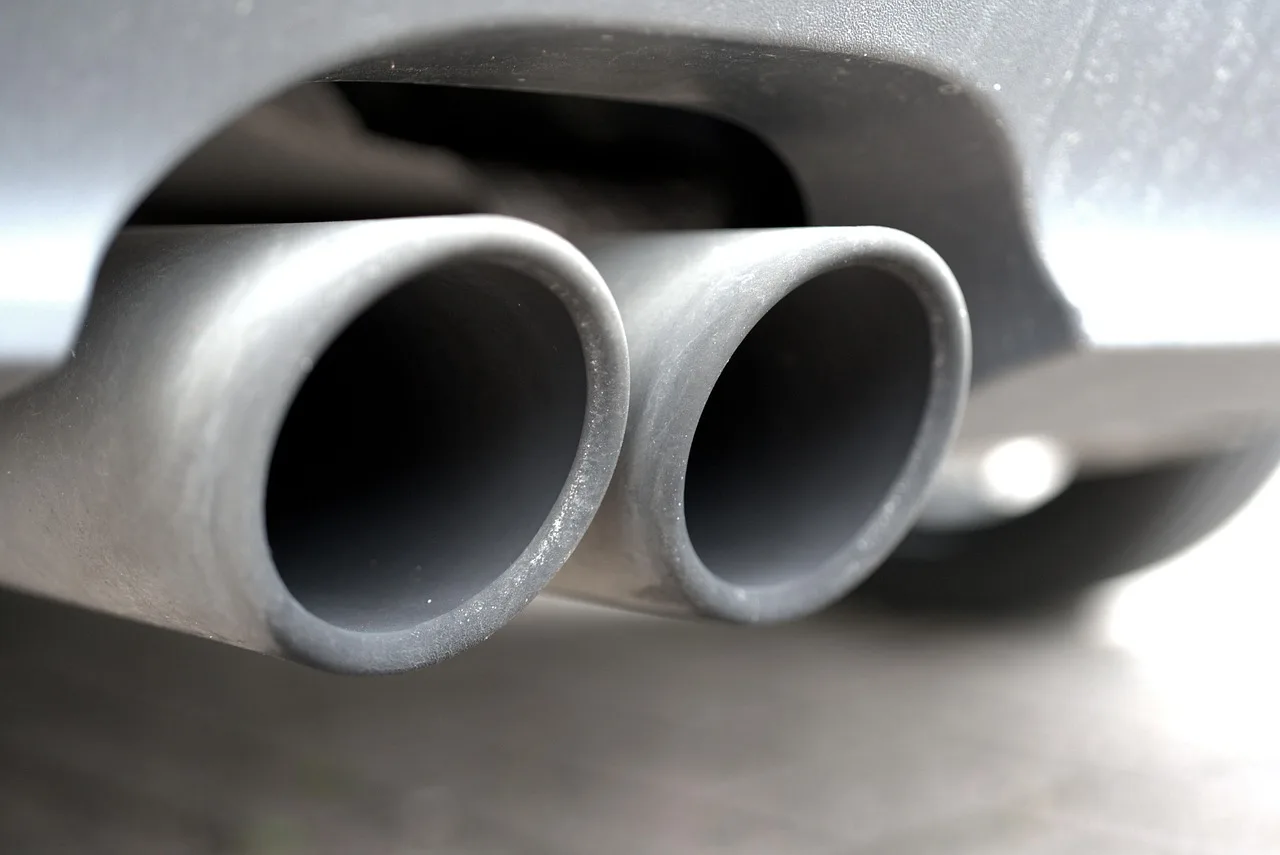

Most passenger-car exhaust pipe repairs fall between about $120 and $750, with a common middle ground near $250–$400 for a simple section replacement or patch. Parts, labor, access, and rust drive the price. Small leaks are cheaper than a full replacement, but damage at flanges, joints, or hangers can push the bill up quickly.
Labor alone often makes up a meaningful share of the quote. Typical labor is about $60 to $180 on average and up to $430 high, while a patch or clamp job usually takes 1–3 hours. That is why the same visible leak can price very differently on a sedan, an SUV, or a truck with tighter underbody access.
Say your compact car has a pinhole leak in a straight section under the floor. A shop may be able to weld the spot or install a sleeve, keeping the repair in the lower price band. If the same leak sits in rusted pipe near a flange, the estimate can jump because the surrounding metal may not hold a repair.
How parts and labor split the bill
Parts may be cheap compared with the time needed to reach, remove, and refit the damaged section. A clamp, sleeve, or short replacement pipe might not cost much on its own, but seized fasteners, corroded hangers, and awkward routing can add labor quickly. Shops also factor in welding gear, exhaust sealing materials, and disposal where needed.
For a straight leak repair, you are often paying for access as much as for the pipe itself. That is why quotes should separate parts, labor, diagnostics, and any extra hardware, instead of hiding them in one line.
Why a small leak can be far cheaper than replacement
A localized crack or seam leak can often be repaired without touching the rest of the system. Once rust spreads into adjacent pipe, flange faces, or hangers, the repair stops being local. At that point, a simple patch may fail early, and a full section replacement becomes the safer buy.
Picture a rear exhaust section with a visible split but solid metal around it. A weld or sleeve may be enough. Picture the same split with flaking scale around the joint and a torn hanger nearby. That is a different job, because the surrounding pipe may not support a durable fix.
Exhaust repair quote table
This table gives you a cleaner way to compare estimates. Match the repair scope first, then compare parts, labor hours, and red-flag conditions. If a quote does not name the scope, it is too vague to judge.
| Repair scope | Expected parts | Labor hours | Total price band | Unsuitable when |
|---|---|---|---|---|
| Weld or patch | Weld material, sealing consumables, small section prep | 1-2 | $75-$400 | Metal is thin, rusted through, or cracked around a flange or hanger |
| Clamp or sleeve | Clamp or sleeve sized to the pipe diameter, gasket or seal material if needed | 1-3 | $100-$350 | Pipe is out of round, badly corroded, or the leak sits in a moving joint |
| Flex-pipe section replacement | Braided flex section, clamps or welding supplies, replacement hardware | 1-2 | $150-$600 | The leak extends into the catalytic-converter area, nearby flanges are damaged, or the pipe is too rusted to splice |
| Full exhaust section replacement | Pipes, resonator or muffler if included, hangers, gaskets, fasteners | 2-4 | $400-$2,500+ | You only need a local repair and the rest of the system is sound |
Use the table as a scope check, not a promise. A quote that bundles a minor leak into a full section replacement may be fair if rust has spread, but it should say why.
Weld or patch repair: where it fits
Weld repair is a common option for cracks, seams, and joint leaks when the surrounding metal is still sound. EGR Performance lists quick leak welds at $75–$150, which fits the lower end of simple repair pricing. If the pipe is thin or perforated beyond the visible crack, welding can become a short-lived fix.
Clamp or sleeve repair: when it fits and when it does not
A clamp or sleeve can work on a small, accessible leak when the pipe diameter matches the part being installed. It is usually a lower-cost alternative to welding and can help when the damage is on a straight section with enough intact pipe on both sides. It is less suitable for crushed, tapered, or heavily rusted pipe.
A sleeve may act as a temporary fix if the pipe wall is weak. It is not a cure for widespread corrosion. If a shop recommends a sleeve, ask whether the pipe is round, how much clean pipe remains, and whether the repair is expected to last or only buy time.
Flex-pipe section replacement: expected range and red flags
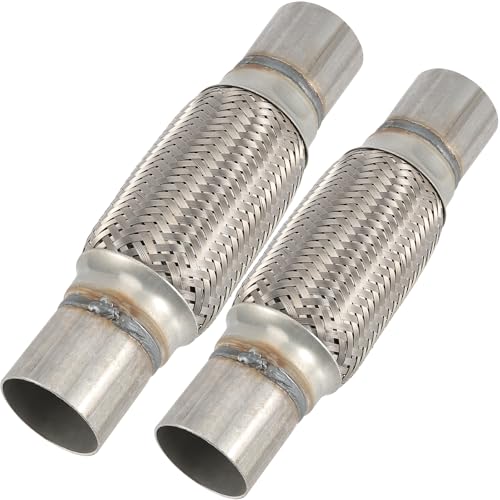
The flex pipe is the braided flexible joint that absorbs movement in the exhaust stream. Current Cost puts flex pipe repair parts and labor at $150-$320, with labor at $60 to $240 and a typical time of 1–2 hours. UseCalcPro lists a leaking flex-pipe section at $200–$600 to splice in a new section, and EGR Performance lists flex pipe swaps at $150–$300.
Flex pipes often sit near the catalytic converter, where heat cycling, corrosion, and vibration can split the braid or crack the welded ends. If the damage extends into nearby pipe or mounting points, a small splice can turn into broader section work. That is where cost climbs.
Full exhaust section replacement: what should be included
Full exhaust section replacement usually means more than the damaged pipe alone. Depending on the layout, it can include cat-back or axle-back sections, plus pipes, resonator, muffler, hangers, gaskets, and fasteners. UseCalcPro prices a full cat-back system replacement at $400 to $2,500.
Do not confuse this with catalytic converter work. The same source lists catalytic converter replacement as a separate $800 to $2,500+ component, which can move the estimate into a much higher bracket. A routine pipe repair should not be quoted as converter replacement unless the converter itself is damaged.
What makes the price change
Several factors can move a quote well outside the basic range. Rust spread, vehicle layout, shop labor rate, and whether the leak is easy to reach all matter. Diagnostics can also be charged separately, especially if the shop has to inspect for multiple leaks or trace noise from a hidden joint.
Rust, corrosion, and spread damage
Localized leaks are cheaper than rust that has spread into flanges, hangers, joints, or adjacent piping. Once corrosion reaches multiple attachment points, a shop may need to cut farther back to find sound metal. That adds both parts and labor, and it can turn a repair into a section replacement.
Vehicle class, engine layout, and access
Sedans usually cost less than SUVs and trucks because the exhaust is often easier to reach. Performance and diesel applications can cost more because of tighter routing, heat shielding, larger pipe diameter, or extra emissions hardware. A transverse engine with a cramped underbody can take longer to service than a straight run on a simple layout.
Labor rate, shop type, and regional pricing
Labor is a major driver. Competitor examples commonly place labor between $60 and $240, and the total can rise in urban areas or dealer settings. A shop with higher posted labor rates may still be the better choice if it can complete the repair faster and with fewer extra hours.
Diagnostic fees and added parts
An exhaust leak inspection may be charged separately. A visual inspection and leak check help identify the exact failure point before parts are ordered. Ask whether the diagnostic fee is waived if you approve the work, and whether the quote includes gaskets, hangers, fasteners, and any broken hardware that must be replaced during removal.
When is a weld, clamp, or sleeve enough?
A weld, clamp, or sleeve is enough when the leak is small, easy to reach, and surrounded by solid metal. It is a sensible answer for isolated cracks, seams, and some joint leaks. It is not a good answer for broad rust, distorted pipe, or damage that has eaten into the mounting points.
Pipe diameter match and fitment checks
Clamp and sleeve repairs depend on a proper diameter match. If the pipe size is wrong, the repair can leak or slip. Ask the shop to confirm the exact diameter and whether the pipe is round enough for the part to seal evenly. A mismatched sleeve can waste money and still leave you with a leak.
Temporary fixes versus longer-term repairs
A sleeve may be fine as a short-term measure when the rest of the pipe is near failure. It may also be a practical choice on a car that needs to stay on the road while you plan a deeper repair. But if corrosion is active, the underlying pipe can fail next to the sleeve.
When does a flex pipe need replacement?
A flex pipe needs replacement when the braided joint splits, the welded ends crack, or the section has rusted through from repeated heat cycling. Because the flex section absorbs movement, vibration often finishes off already weakened metal. Repairing only the visible hole may not solve a failing joint.
Why location near the catalytic converter matters
Flex pipes are often located near the catalytic converter, where heat is high and access can be tight. That location can make both diagnosis and repair more difficult. It also means a leak there can be closer to the cabin side of the vehicle than a rear muffler-area leak, which raises concern.
When welding around a flex joint is a poor bet
Welding around a flex joint is a poor bet when the braid is torn, the ends are rusted, or the pipe has movement that will keep stressing the repair. In those cases, a proper flex section replacement is usually more durable than trying to seal damaged mesh or thin metal.
Can you drive with a leaking exhaust?
You may be able to drive short distances with a minor rear-pipe leak, but it is not something to ignore. Exhaust leaks can cause noise, smell, reduced fuel economy, and check-engine lights. Leaks near the firewall or cabin side are more concerning than rear-pipe leaks because exhaust gases can enter the passenger area.
Noise, smell, and check-engine light clues
A loud ticking, a burnt smell, or a new warning light can point to an exhaust leak. These symptoms do not tell you the exact location, but they do tell you the system needs inspection. If the leak is upstream of emissions sensors, the engine computer may also read the exhaust flow as a fault.
When to stop driving and book a repair
Stop driving and arrange service quickly if you smell exhaust inside the cabin, hear a leak near the firewall, or notice symptoms getting worse under acceleration. A rear muffler-area leak is usually less urgent than a leak near the front of the system, but both deserve inspection before the damage spreads.
How to compare quotes without overpaying
The best quote names the failed part, the repair method, and the included hardware. It should also tell you whether the estimate covers diagnostics, removal, welding or cutting, new pipe or flex section, clamps or sleeves, gaskets, hangers, and any taxes or shop fees. Vague bundles are hard to compare.
- Confirm the exact failure point: pipe, flex section, flange, hanger, or converter-adjacent piping.
- Check whether the quote is for weld, clamp, sleeve, splice-in section, or full replacement.
- Ask for labor hours and labor rate separately.
- Confirm which hardware is included: gaskets, hangers, fasteners, clamps, or sleeves.
- Ask whether diagnostic work is separate or credited if you approve the repair.
- Compare the reason for replacement if the shop wants to go beyond a local repair.
A quote is too vague if it says only “exhaust repair” or “fix leak” without naming the scope. It is also a red flag if the shop skips labor hours, refuses to itemize parts, or will not explain why a local repair is not enough. A clear estimate protects you from paying for more exhaust than the vehicle actually needs.
Frequently asked questions
How much does it cost to get exhaust pipe fixed?
A small leak is usually cheaper than a rusted section, and labor plus access often matter as much as the pipe itself.
How much does exhaust pipe repair cost?
Expect a weld or patch to land at the low end, a clamp or sleeve in a similar bracket when the pipe fits cleanly, and a flex-pipe section replacement higher.
How much does exhaust pipe replacement cost?
A full exhaust section replacement costs much more than a spot repair because it can include pipes, hangers, gaskets, and sometimes a muffler or resonator. The same source lists a full cat-back system replacement at $400 to $2,500, and the total rises if corrosion has spread into adjacent parts.
How much does it cost to fix an exhaust leak?
A simple leak can be fixed with a weld, patch, clamp, or sleeve, while a failed flex section or rusted joint may need replacement.
What makes exhaust pipe repair more expensive?
Rust, corrosion, tight access, higher labor rates, and vehicle type all raise the price. SUVs, trucks, performance cars, and diesel applications often cost more than simple sedans. Diagnostic fees can also add to the bill, especially if the shop has to trace multiple leaks or damaged hangers.