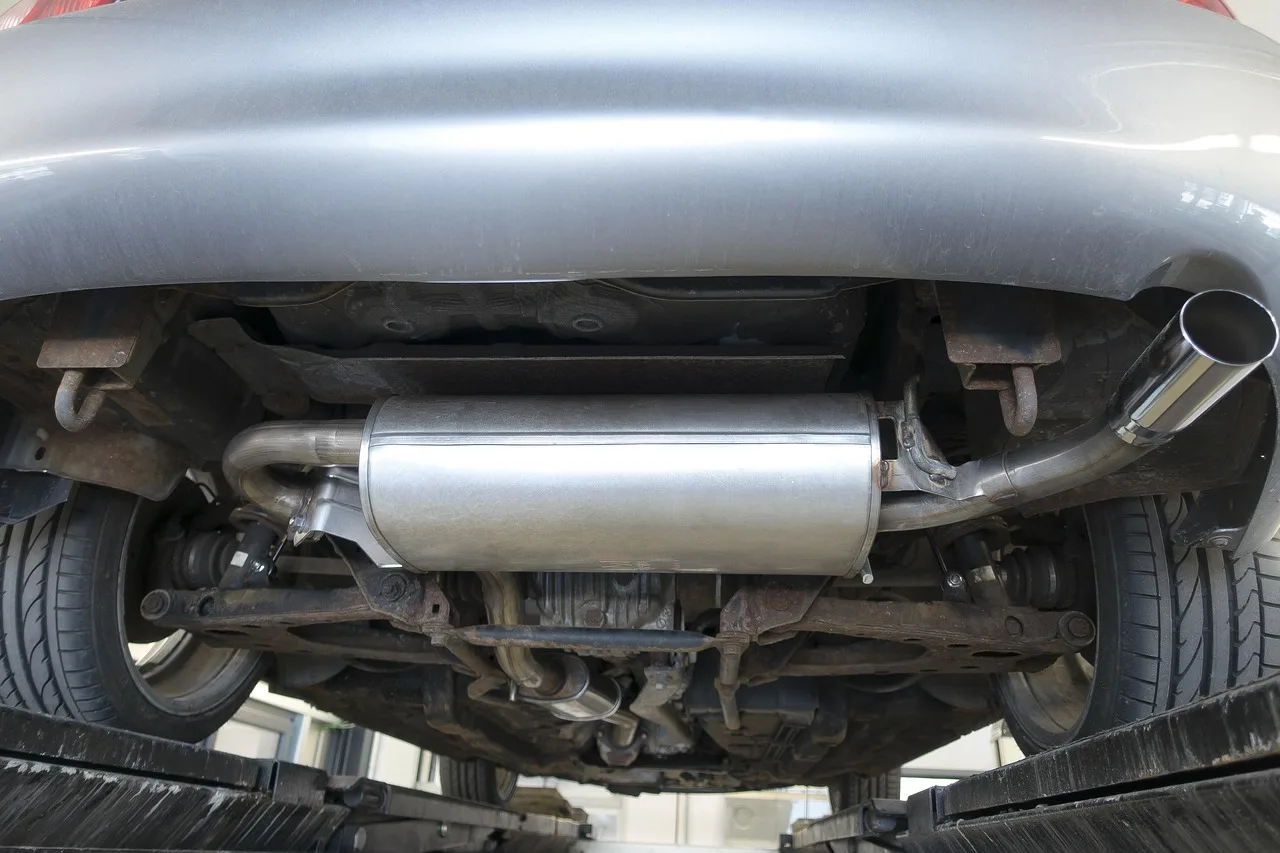
Vehicle Exhaust System Basics
Vehicle exhaust system basics: the exhaust has five main sections: manifold, flex pipe, catalytic converter, muffler, and tailpipe, and faults usually show up as noise near the front, fumes underneath, or a check-engine light. Ignore leaks or converter trouble and you can end up breathing carbon monoxide, failing inspection, or turning a small rust hole into a far pricier repair. This guide maps each part, what tends to fail first, the symptoms each failure causes, and which repairs are urgent versus manageable.
How the exhaust system works from engine to tailpipe
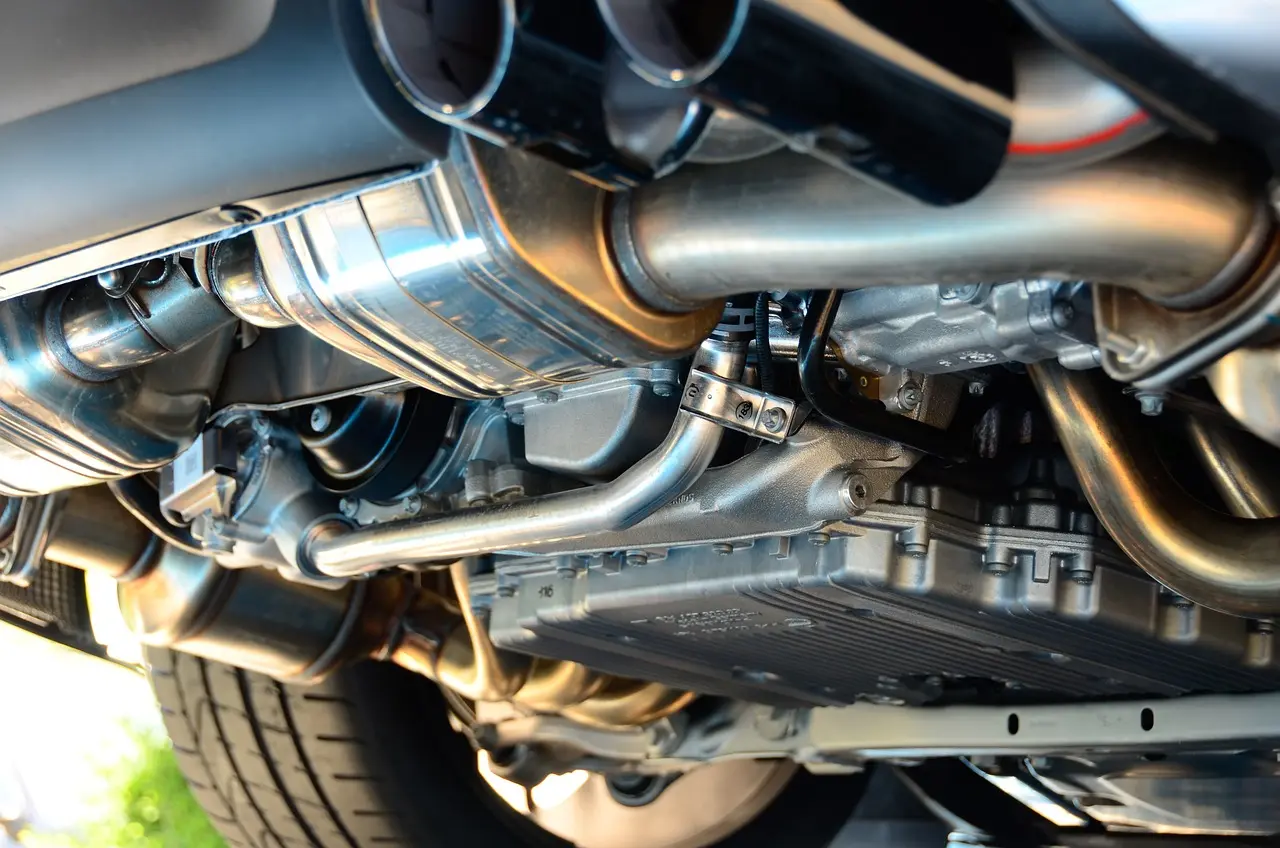


The gas path in order
Burned gases leave each cylinder after combustion and have to be pushed out of the engine, cooled enough to manage, cleaned by emissions parts, and discharged behind the car instead of under the floor. On many passenger vehicles, that flow starts at the exhaust manifold bolted to the cylinder head or, on some layouts, the engine block. The manifold gathers exhaust pulses from each cylinder into one outlet.
From there, gases move into the front pipe or flex pipe. The flex section absorbs engine movement so the rest of the system does not crack from constant rocking and heat cycling. After that comes the catalytic converter. The catalytic converter sits between the exhaust manifold and muffler.
Modern systems often place oxygen sensors around that converter. Modern fuel-injected cars use an oxygen sensor to measure oxygen in exhaust. The upstream sensor sits before the catalytic converter and feeds fuel-control data to the engine computer. The downstream sensor sits after the converter and helps monitor catalyst performance. That sensor layout and catalyst-monitoring role are described in EPA on-board diagnostics guidance and in OEM service information such as Toyota’s repair manuals for catalyst efficiency monitoring and heated oxygen sensor operation (EPA; Toyota Technical Information System).
Behind the converter, some vehicles use a resonator. It may sit before or after the muffler depending on layout. The muffler comes later in the path, and the tailpipe is the final outlet at the rear of the vehicle. If you are trying to visualize layout differences, it helps to compare this page with our guides to catalytic converter symptoms and muffler vs resonator.
What the system controls
Noise control is only one job. EPA consumer guidance and OEM service literature both frame the exhaust as a routing, emissions, heat-management, and noise-control system. It routes hot gases away from the engine bay and passenger area, helps the vehicle meet emissions rules, manages heat under the floor, and keeps sound at a legal level (EPA; Walker Exhaust 101).
That routing job matters because exhaust contains carbon monoxide. The U.S. Consumer Product Safety Commission warns that carbon monoxide is colorless, odorless, and can kill, which is why leaks near the front half matter more than a rust hole at the very end (CPSC). A manifold leak or split near the floor can put fumes where the cabin can draw them in.
The muffler quiets exhaust to acceptable levels. Walker’s technical overview describes the muffler and resonator as noise-control components, while the converter and oxygen sensors serve emissions and monitoring roles rather than simple sound reduction (Walker Exhaust 101).
Where faults change what the driver feels
Location matters. A leak before the upstream oxygen sensor can skew fuel control and trigger drivability issues. A restricted converter can cause lack of power, excess heat, and a glowing under-car hot spot. A rusted rear muffler can be loud without changing how the engine runs. EPA OBD guidance and OEM diagnostics both support that basic split between front-end control faults and rear-end noise faults (EPA; Toyota Technical Information System).
That pattern helps with diagnosis. Front-end ticking on cold start often points to a manifold, gasket, or broken fastener. Mid-car metallic rattling often points to a loose heat shield or damaged catalytic converter substrate. Rear booming usually points to a resonator, muffler, pipe seam, or hanger problem. In my own driveway checks, a true cold-start manifold leak usually ticks hard for the first 20 to 60 seconds, then softens as the metal expands; a loose shield, by contrast, is easier to reproduce by lightly tapping the shield on a fully cold exhaust and listening for the same thin buzz.
What are the main parts of a vehicle exhaust system?
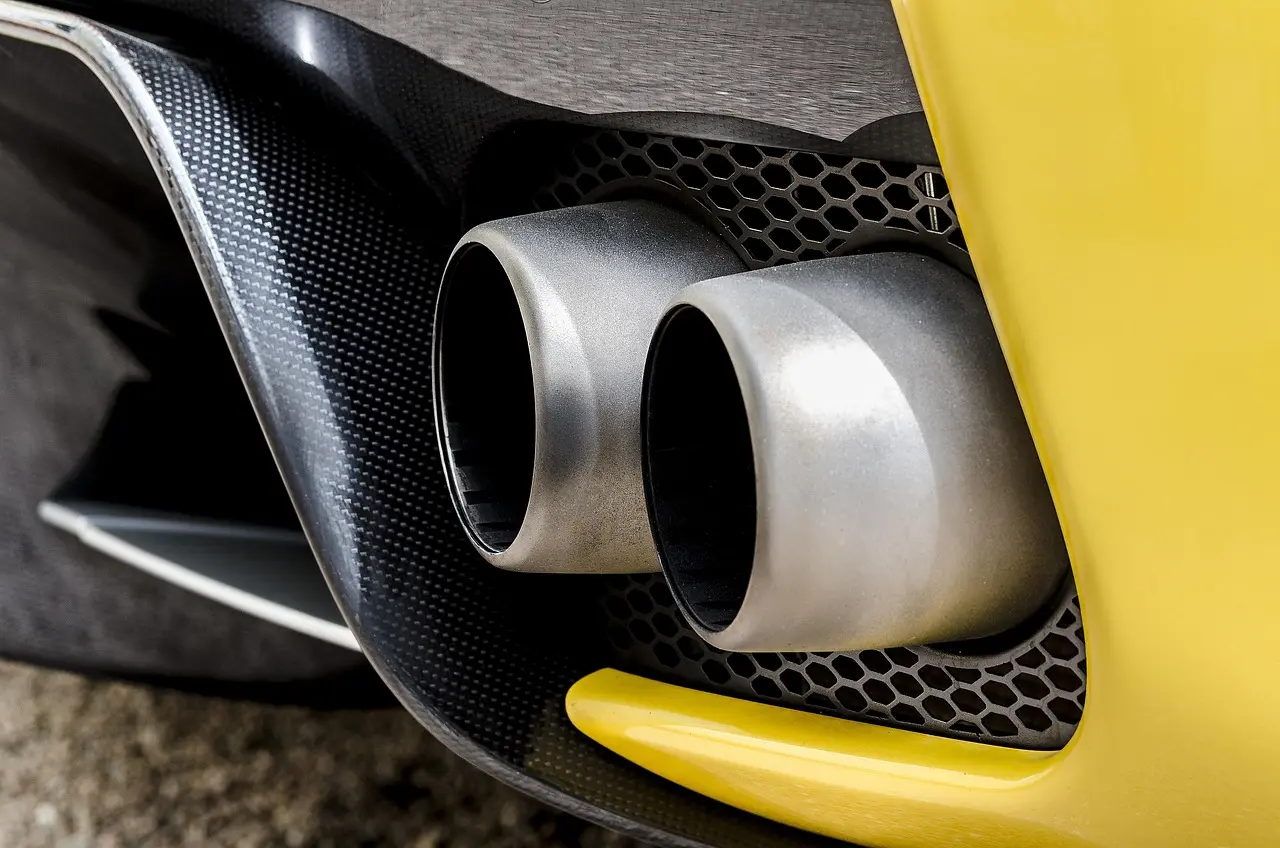
The main exhaust parts are the manifold, front pipe or flex pipe, catalytic converter, oxygen sensors, resonator on some systems, muffler, pipes, tailpipe, heat shields, and hangers. That part list aligns with common OEM parts catalogs and service-manual diagrams from manufacturers such as Toyota and Ford, even though exact packaging varies by engine and platform (Toyota Technical Information System; Ford Owner Information).
Exhaust manifold and front pipe
The manifold is the first hard-working part. It bolts to the cylinder head or engine block and combines exhaust from multiple cylinders into one pipe. Common manifold materials include cast iron and stainless-steel-type constructions depending on engine design; exact alloys vary by manufacturer, so it is safer to check the parts catalog or service information for a specific vehicle rather than assume one material across the board (Toyota Technical Information System).
It lives under severe heat. Repeated hot-cold cycles can crack the casting, warp the sealing face, or loosen bolts. A failed manifold gasket often sounds like a sharp tick near the engine, especially during a cold start.
The front pipe connects the manifold to the next section. On many vehicles, the flex joint is part of that pipe. When the braid or bellows fails, drivers may hear hissing, buzzing, or a deeper leak sound under acceleration. If you want a symptom-by-symptom rundown, our exhaust leak diagnosis guide goes deeper on front-pipe and flex-joint noise.
Catalytic converter and oxygen sensors
The catalytic converter handles emissions treatment. EPA describes three-way catalysts as devices that convert harmful pollutants in engine exhaust, including hydrocarbons, carbon monoxide, and oxides of nitrogen, into less harmful gases when the engine is operating correctly (EPA). That is why converter failure often leads to inspection failure, fault codes, or both.
The oxygen sensors sit before and after the converter. Upstream sensors help the engine computer adjust fuel mixture. Downstream sensors mainly tell the computer whether the converter is doing its job. Mixing those roles together causes bad diagnosis. That sensor split is standard in OBD-II systems and is documented in EPA I/M material and OEM service information (EPA; Toyota Technical Information System).
When an upstream sensor gives a bad signal, fuel economy and drivability can suffer. When a downstream sensor or converter is at fault, the driver may mainly see a check-engine light unless the converter is also restricted or rattling. In the shop, I verify that distinction by checking scan data first: if short- and long-term fuel trims are clearly off and the front sensor signal is lazy or biased, I look upstream; if trims look normal but catalyst efficiency codes repeat, I stop assuming “bad O2 sensor” and inspect the converter and exhaust integrity before replacing parts.
Resonator, muffler, tailpipe, heat shields, and hangers
A resonator is often described as a mini-muffler. It is there to tune sound and remove drone. Some systems place it ahead of the muffler, others behind it.
The muffler is the main chamber that cuts exhaust noise before it reaches the rear of the car. Inside, it may use baffles, perforated tubes, packing, or a combination depending on the design. Rust-through is the usual end-of-life problem, but exact internals differ by muffler type. Noise limits and enforcement are state-specific, so it is better to treat “too loud” as a local compliance issue rather than a universal rule.
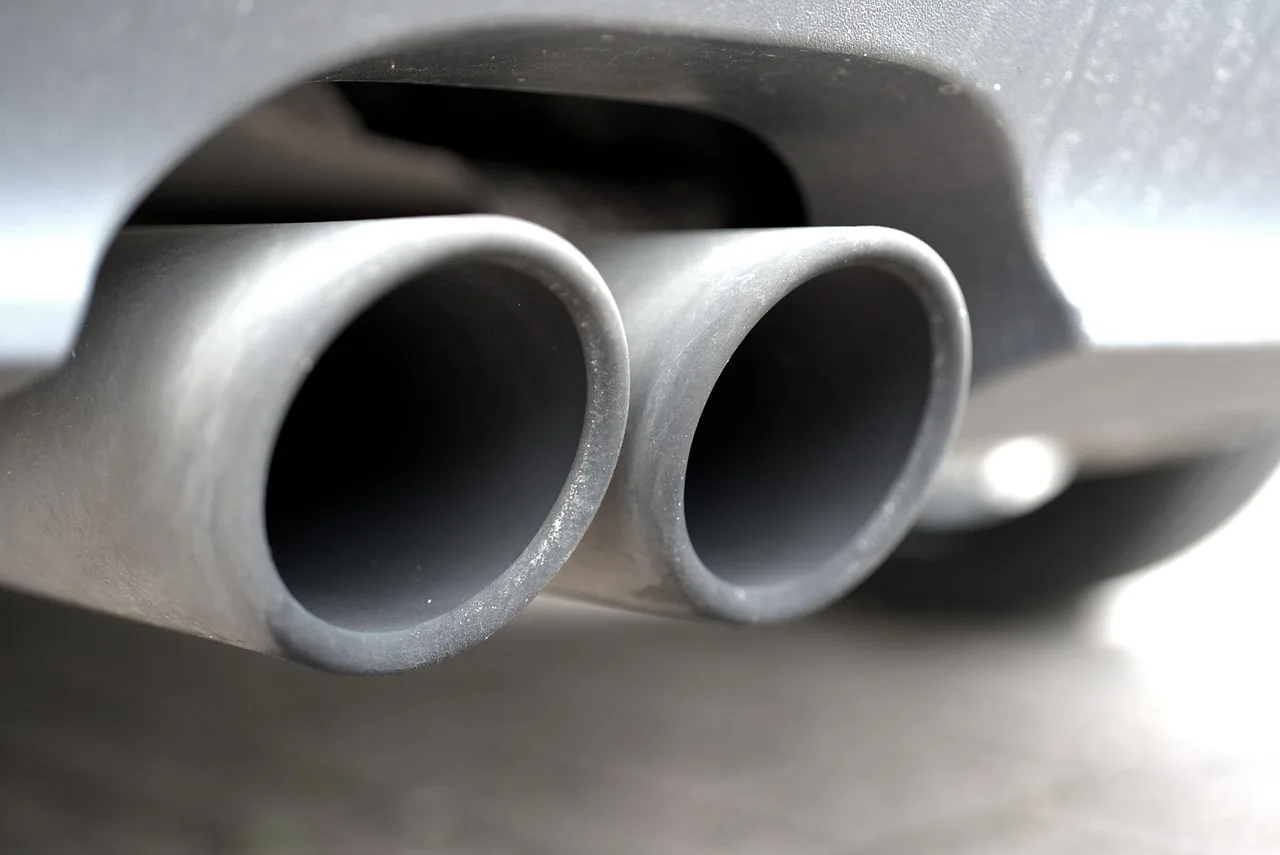
The pipes link each section from the manifold outlet to the rear, carrying hot gas past the converter, resonator, and muffler, while the tailpipe is the last piece that discharges that flow behind the bumper instead of under the floor. Heat shields protect the floor and nearby components from heat, especially near the catalytic converter or muffler. Hangers and rubber mounts support the full weight of the system so it does not sag or strike the body.
What does each exhaust component do, and what fails first?
Each exhaust part has a distinct job, and each tends to fail in a different way first. Manifolds crack or leak at gaskets, converters rattle or restrict, oxygen sensors trigger mixture or efficiency faults, and rear sections usually rust through at seams, flanges, hangers, or low spots where moisture collects. OEM diagnostic trees and aftermarket service references agree on that broad pattern even though the exact weak point depends on the vehicle and climate (Toyota Technical Information System; Walker Exhaust 101).
Front section: manifold, gasket, bolts, and flex pipe
The manifold combines cylinder flow and takes the highest heat load in the system. Common first failures are cracked castings, warped sealing faces, broken studs, or burnt gaskets. The driver usually notices ticking, a sharp puffing sound, or exhaust smell near the engine bay.
The flex pipe is there to absorb movement. Its braid can fray, and the bellows can split. That creates a leak lower in the front section, often heard during throttle input rather than at idle. When I am checking one at home, I wait until the system is stone cold, start the engine, and listen from the side with the hood open and then near the front wheel area. A manifold leak tends to sound higher and closer to the cylinder head; a flex leak tends to sound lower and more obvious when the engine is lightly loaded or blipped.
Emissions section: catalytic converter and oxygen sensors
The catalytic converter changes exhaust chemistry at high temperature. It is often the most expensive part of the system, but exact cost varies widely by vehicle, emissions certification, and whether the converter is integrated into a manifold assembly or sold separately. For owners budgeting the repair, our exhaust repair cost guide covers the usual price drivers.
Common converter failures include substrate breakup, melting from severe overheating, or efficiency loss that sets fault codes. Drivers may notice a sulfur smell, rattling from inside the case, weak acceleration, or excess heat under the floor. EPA and OEM references support those symptoms broadly, but any single symptom on its own is not proof of converter failure because misfires, fuel-control problems, and leaks can cause similar complaints (EPA; Toyota Technical Information System).
Oxygen sensors usually fail electrically, contaminate over time, or respond too slowly. An upstream fault can cause poor fuel economy, rough running, or a strong fuel smell. A downstream fault more often flags catalyst monitoring issues.
Rear section: resonator, muffler, pipes, and tailpipe
The rear half usually fails from corrosion, not heat shock. Resonators and mufflers trap moisture, then cool down and sit wet inside. Seams rust, shells thin, and flanges crumble.
Muffler failure usually changes sound first. The engine may run the same, but the car gets louder, boomier, or raspy. A converter fault is different because it can change power and temperature, not only sound.
Tailpipes and rear pipes also rust from the outside where road salt and grime sit. If the exit is damaged or partly blocked, exhaust can be redirected under the body, which is a bigger issue than a cosmetic tip problem.
Support parts: heat shields and hangers
Heat shields commonly fail by rusting around their small retaining points. The shield itself may still be intact, but it vibrates against the body or exhaust and makes a thin metallic rattle. Annoying, yes. Dangerous, sometimes.
Hangers fail when rubber mounts tear or metal brackets rust off. Then the exhaust sags, bangs the floor, or drags. Temporary wire support may get the vehicle off the road shoulder, but it is not a real repair and should not be treated as one. On a cold system, I usually confirm a shield rattle by pushing gently on each shield edge and tapping nearby sections with a gloved hand; if the exact noise appears without moving the pipe itself, I know I am probably chasing hardware or a rusted mounting point, not a broken converter brick.
How do I know if my exhaust system has a leak or rust problem?
Exhaust leaks and rust problems usually show up as changes in sound, smell, vibration, soot marks, or visible corrosion at seams and hangers. Front leaks tend to sound sharp and carry more fume risk, while rear rust holes are often deeper sounding and may mainly affect noise unless the system is hanging low.
Symptoms that point to front-end leaks
A leak near the manifold often sounds like ticking or tapping that fades as metal expands. A front-pipe or flex leak may hiss or buzz when revved. If the smell is strongest near the firewall or front floor, treat it as higher priority because cabin intake can pull fumes inside.
Black soot around a flange or gasket is a strong visual clue. So is a missing stud, a broken bolt, or a heat shield covered in fresh dark deposits. OEM service procedures commonly use visual evidence, sound location, and scan data together rather than relying on one symptom alone (Toyota Technical Information System).
Symptoms that point to rusted rear sections
Rust at the muffler or resonator usually brings a deeper exhaust note, droning, or a hollow booming sound. You may also hear a flutter at the tailpipe. Rear-section holes rarely trigger fuel-control issues by themselves, but they can fail inspection and get much worse fast once seams split.
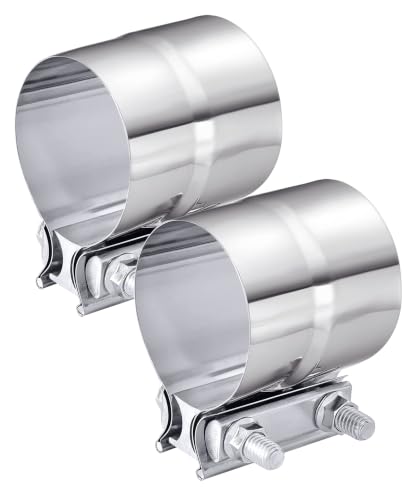
Corroded flanges are common trouble spots. The pipe may be salvageable, but once a flange or hanger mount is gone, repair often turns into section replacement.
Loose shield rattle versus internal part rattle
A loose heat shield usually makes a light tinny rattle that changes with engine speed or when the shield is lightly moved on a cold system. An internal catalytic converter rattle sounds heavier, often like small stones in a can. A muffler with broken internals gives a duller clunk or thump.
Do not guess based on noise alone. Check the location of the sound. Mid-car metallic buzz near the converter area often means shield first, converter second. Rear-body boom usually means muffler, resonator, or hanger. In practice, I also watch when the noise appears: a shield often chatters at a narrow RPM band, while a broken substrate is more likely to rattle on startup, when blipping the throttle, and when tapping the converter shell on a cold exhaust.
Which faults are safety-critical, and which are mostly noise issues?
Safety-critical exhaust faults are leaks near the engine or cabin, dragging sections, severe converter overheating, and any condition that lets fumes collect under the vehicle. Rear rust holes and muffler shell damage are often more about noise and inspection, though they still need repair before the system breaks loose.
High-priority faults
- Leaks ahead of or under the cabin: carbon monoxide risk and heat exposure.
- Broken hangers or dragging pipes: road strike risk, body damage, and possible loss of the system.
- Overheating or blocked converter: lack of power, hot floor, sulfur smell, glowing heat, or stalling.
- Tailpipe blocked or crushed: restricted flow and heat buildup.
Lower-priority but still repairable faults
- Loose heat shield with no heat-contact issue: usually noise and annoyance first.
- Rear muffler rust-through: often sound and inspection trouble more than immediate drivability trouble.
- Cosmetic tailpipe damage: minor unless it redirects gases under the body.
Why the safety split matters
Owners often hear “loud exhaust” and assume all faults rank the same. They do not. A small rear muffler hole can wait a short time for scheduling. A manifold leak under the firewall, a converter that is overheating, or a section dragging on the road needs same-day attention. Carbon monoxide guidance from CPSC and EPA is the reason for that split, not just shop caution (CPSC; EPA).
How materials, climate, and driving pattern change exhaust life
Steel, aluminized steel, and stainless steel
Plain steel is often the cheapest and may be the shortest-lived in wet or salty climates. Exhaust tubing can be made from aluminized steel, which resists corrosion better than plain steel. Stainless steel can last longer where rust is the main concern, though the exact grade, weld quality, and local conditions still matter. Walker and major replacement-parts catalogs describe those common material categories, but lifespan still varies enough that broad rankings are safer than exact promises (Walker Exhaust 101).
Material choice shows up most clearly in the rear half. The manifold lives in extreme heat, so cast iron and stainless-type materials are common there. The pipes, resonator, muffler, and tailpipe see more water, salt, and temperature cycling.
Why short trips hurt exhaust life
Short trips can shorten exhaust life because condensation remains in the system. That one point explains many early muffler failures. The engine starts, water vapor forms inside the exhaust, and the system never gets hot long enough to dry itself fully.
That trapped moisture attacks mufflers, resonators, and low spots in the pipes from the inside out. Rear sections often fail first because they tend to run cooler than the manifold and converter and may hold more condensation after shutdown. That pattern is widely recognized in service practice, but exact service life still depends heavily on climate, route length, and whether the car regularly reaches full operating temperature.
Road salt, humidity, and storage
Road salt speeds corrosion at seams, clamps, flanges, and hangers. Humid storage keeps surfaces damp. Vehicles parked over dirt or grass can stay wetter underneath than those parked on dry pavement. Even a good exhaust material loses the fight faster when moisture sits on it every day.
I removed the old “5 to 10 years” style claim because it sounds precise without being reliable across regions. Actual life swings with climate, trip length, underbody washing habits, engine tune, and whether the vehicle gets fully warmed up on a regular basis. In rust-belt use, I have seen rear sections fail much earlier than owners expected, while highway-driven cars in dry climates can go far longer.
What is the difference between single and dual exhaust routing?
Single exhaust routing uses one main path to the rear, while dual routing splits flow into two branches for part or all of the system. That changes how many pipes, mufflers, resonators, sensors, and tailpipes the vehicle has, and it changes how owners inspect for leaks, rust, and hanger failures.
Single exhaust basics
A single system is simple to package and usually easier to inspect. One manifold outlet or merged front section feeds one converter path and one rear route, though some single systems still use more than one resonator or muffler chamber.
Dual exhaust basics
Dual systems may keep banks separate on V engines, or they may split later for packaging and sound. More parts mean more welds, hangers, shields, and seams to inspect. It does not automatically mean more power in normal street use.
Owner-level diagnosis differences
With dual routing, one side may rust or sag before the other. One muffler may drone while the other stays quiet. If one bank has an upstream sensor issue, the symptoms can be uneven. Inspection is less about theory and more about following each branch from front to rear.
Exhaust diagnostic matrix and under-car inspection checklist
Component-by-component diagnostic matrix
| Component | Function | Common failure mode | Driver symptoms | Safety impact | First check location |
|---|---|---|---|---|---|
| Exhaust manifold | Combines exhaust from cylinders into one outlet | Crack, warped sealing face, failed gasket, broken stud | Cold-start ticking, front-end fumes, soot, louder under load | High if leak is near cabin or wiring | At cylinder head flange and manifold body |
| Flex pipe / front pipe | Connects front section and absorbs engine movement | Split bellows, frayed braid, flange leak | Hiss, buzz, leak noise on throttle, fumes underneath | High if underfloor leak is near cabin area | Below manifold, around braided section and joints |
| Upstream oxygen sensor | Measures oxygen before catalyst for fuel control | Slow response, contamination, circuit fault | Check-engine light, poor fuel economy, rough running | Medium, can affect mixture and converter health | Sensor threaded into pipe before converter |
| Catalytic converter | Reduces carbon monoxide and hydrocarbons and may reduce nitrogen oxides | Efficiency loss, melted or broken substrate, overheating | Check-engine light, sulfur smell, rattle, lack of power | High if overheating or restricted | Converter case, inlet and outlet area, nearby shield |
| Downstream oxygen sensor | Monitors catalyst performance after converter | Faulty signal or heater circuit issue | Check-engine light, usually few driveability symptoms | Low to medium | Sensor after converter |
| Resonator | Tunes sound and removes drone | Rust-through, seam split, internal breakup | Drone, rasp, rear or mid-car noise | Low unless hanging or leaking under cabin | Mid or rear section depending on layout |
| Muffler | Quiets exhaust to acceptable levels | Rust-through, seam failure, internal baffle failure | Loud exhaust, boom, flutter, tailpipe noise | Usually low to medium | Rear canister, seams, inlet and outlet pipes |
| Pipes / tailpipe | Connects sections and routes gases to rear | External rust, crushed section, broken flange | Noise, vibration, visible hole, redirected fumes | Medium if leaking under body or blocked | Low points, bends, flanges, outlet tip |
| Heat shield | Protects floor and nearby parts from exhaust heat | Rust at fasteners, loose shield contact | Metallic rattle, buzz, noise over bumps | Low if only loose, higher if heat protection is lost near floor | Near converter and muffler |
| Hangers / mounts | Support system weight and alignment | Torn rubber, rusted bracket, missing support | Sagging, clunking, pipe contact, dragging | High if system can strike road or body | Each support point from front to rear |
Simple cold-system inspection checklist
- Park on level ground and let the exhaust go fully cold.
- Do not crawl under an unsupported vehicle. Check only what is visible from the side or rear unless the vehicle is safely lifted by a professional.
- Look for visible rust at seams, clamps, flanges, and hanger brackets.
- Check for black soot marks around joints, manifold area, and flex pipe connections.
- Look for broken rubber hangers, sagging pipes, or a tailpipe sitting crooked.
- Inspect heat shields near the converter and muffler for looseness or rusted mounting points.
- Check the tailpipe outlet for crushing, blockage, or damage that points gases under the car.
- Note where the smell or noise is strongest: front, middle, or rear.
- Write down whether the sound is a tick, hiss, rattle, boom, or scrape before booking diagnosis.
What to note before a shop visit
Three details help a shop sort the fault faster: where the sound comes from, whether it changes hot versus cold, and whether a check-engine light is on. Add any sulfur smell, loss of power, floor heat, or signs of dragging. That separates “loud but drivable” from “stop and fix now.” I also note whether the noise happens only on first startup, only under throttle, or even when the car is idling in park; that one detail has saved me more than once from chasing the wrong part.
How often should an exhaust system be inspected for safety?
The exhaust should be inspected whenever there is a sudden change in sound, smell, power, or under-car rattling, and it deserves regular safety checks in rust-prone climates or short-trip use. Salt exposure, condensation, and broken hangers can turn a small issue into a leak or dragging hazard faster than owners expect.
Inspection timing by use and climate
Road-salt areas need more frequent underbody looks than dry climates. Short-trip vehicles also deserve closer attention because they store more condensation in mufflers and pipes. Seasonal tire changes or oil-service intervals are sensible times to add a basic exhaust look if the vehicle is already being raised. If your area requires annual safety or emissions inspection, use that date as the minimum reminder, not the only time you think about the exhaust.
When to stop driving
Stop driving and arrange same-day attention if there are fumes in the cabin, severe power loss with converter heat signs, a section dragging, or a loud front leak near the firewall. Those are safety issues first, comfort issues second.
What owners can check safely
Owners can listen, smell, look for soot and rust, and inspect visible hangers and shields on a cold system. I do that first on any used car I bring home. Smoke testing, scan-tool diagnosis, and full underside tracing are lift jobs. That is especially true when oxygen-sensor faults and converter-efficiency codes are involved.
Frequently asked questions
What does the catalytic converter do in the exhaust system?
The catalytic converter treats exhaust after it leaves the engine. EPA says a three-way catalytic converter reduces hydrocarbons, carbon monoxide, and oxides of nitrogen by converting them into less harmful gases (EPA). When it fails, drivers may notice a check-engine light, sulfur smell, rattling, overheating, or loss of power.
What is the difference between a muffler, resonator, and tailpipe?
The muffler is the main noise-reduction chamber, the resonator tunes tone and removes drone, and the tailpipe is simply the final outlet that sends gases out at the rear. A bad muffler usually makes the vehicle louder, while a damaged tailpipe may redirect fumes and a failed resonator often changes sound quality.
Can a bad exhaust system affect fuel economy or engine performance?
Yes, but it depends on where the fault is. A leak before the upstream oxygen sensor can upset fuel control, and a restricted catalytic converter can cut power badly. A rust hole in the rear muffler often changes sound far more than fuel economy or performance, unless the system is collapsing or dragging.
What materials are exhaust pipes usually made from?
Exhaust pipes are commonly made from plain steel, aluminized steel, or stainless steel. Aluminized steel generally resists corrosion better than plain steel, while stainless steel usually does better where rust is the main concern. Exact durability still depends on grade, weld quality, climate, and trip pattern.
Which exhaust components are most likely to fail first?
Rear mufflers, resonators, flanges, and hangers often fail first because moisture and salt stay there longer and temperatures are lower. Short trips make that worse because condensation remains in the system. Up front, manifold gaskets, flex pipes, and studs are common early failures because of heat cycling and movement.
How does an exhaust system work from the engine to the tailpipe?
Exhaust leaves the cylinders through the manifold, passes through the front pipe and catalytic converter, then moves through a resonator where fitted, a muffler, and finally the tailpipe. Oxygen sensors sit before and after the converter. Along the way, the system manages gases, heat, emissions, and sound.
How can I tell if the rattling sound is a heat shield or the catalytic converter?
A heat shield usually makes a light tinny buzz, while a bad converter substrate usually sounds heavier and more like loose material inside a can. On a cold exhaust, I verify shield noise by lightly moving or tapping the shield and seeing whether it reproduces the same rattle. If the noise seems to come from inside the converter case instead, or comes with power loss and catalyst codes, I treat the converter as the stronger suspect.
Is it safe to drive with an exhaust leak?
Sometimes briefly, but not if the leak is near the engine, under the cabin, or causing fumes inside the car. Front-half leaks carry a much higher carbon-monoxide risk than a small rear muffler hole. If you smell exhaust in the cabin, hear a loud leak near the firewall, or see the system hanging low, stop driving and get it checked.
Will a bad muffler cause a check-engine light?
Usually no. A bad muffler mainly changes sound. Check-engine lights are more often tied to oxygen-sensor faults, catalyst-efficiency faults, leaks that affect sensor readings, or engine problems that damage the converter.
How do shops confirm a manifold leak versus a flex-pipe leak?
They usually combine sound location, visual soot checks, and sometimes smoke testing or lift inspection. In practice, a manifold leak is often sharper and higher near the cylinder head, especially on cold start, while a flex-pipe leak is lower in the system and more obvious on throttle or when the engine rocks.