5.9 Cummins Exhaust Manifold Torque Specs Guide
Getting the right tightness for your 5.9 Cummins exhaust manifold bolts can feel tricky, especially if you’re new to this. You want to make sure everything seals up tight to prevent leaks, but over-tightening can cause big problems. It’s a common spot where folks get a bit unsure.

A-Premium
A-Premium L6 5.9L Exhaust Manifold Kit W/Gaskets…
- [Vehicle Fitment]: Compatible with Dodge Ram 2500 2004-2009 L6 5.9L, Ram 3500 2004-2009 L6 5.9L --- It fits model From 1/04/2004
- [Reference Number]: 674910, 32702141, 5135788AB, 5135788AC
- [Specifications]: ①Color: Natural ②Product Included: with 1x Exhaust Manifold & 6x Manifold Gaskets & 1x Flange Gasket & 4x Bolts…
As an Amazon Associate I earn from qualifying purchases.
This guide is here to make it super simple. We’ll walk you through exactly what you need to do, step by step, so you can get it done right the first time. Let’s look at how to get those torque specs just right.
Understanding 5.9 Cummins Exhaust Manifold Torque Specs
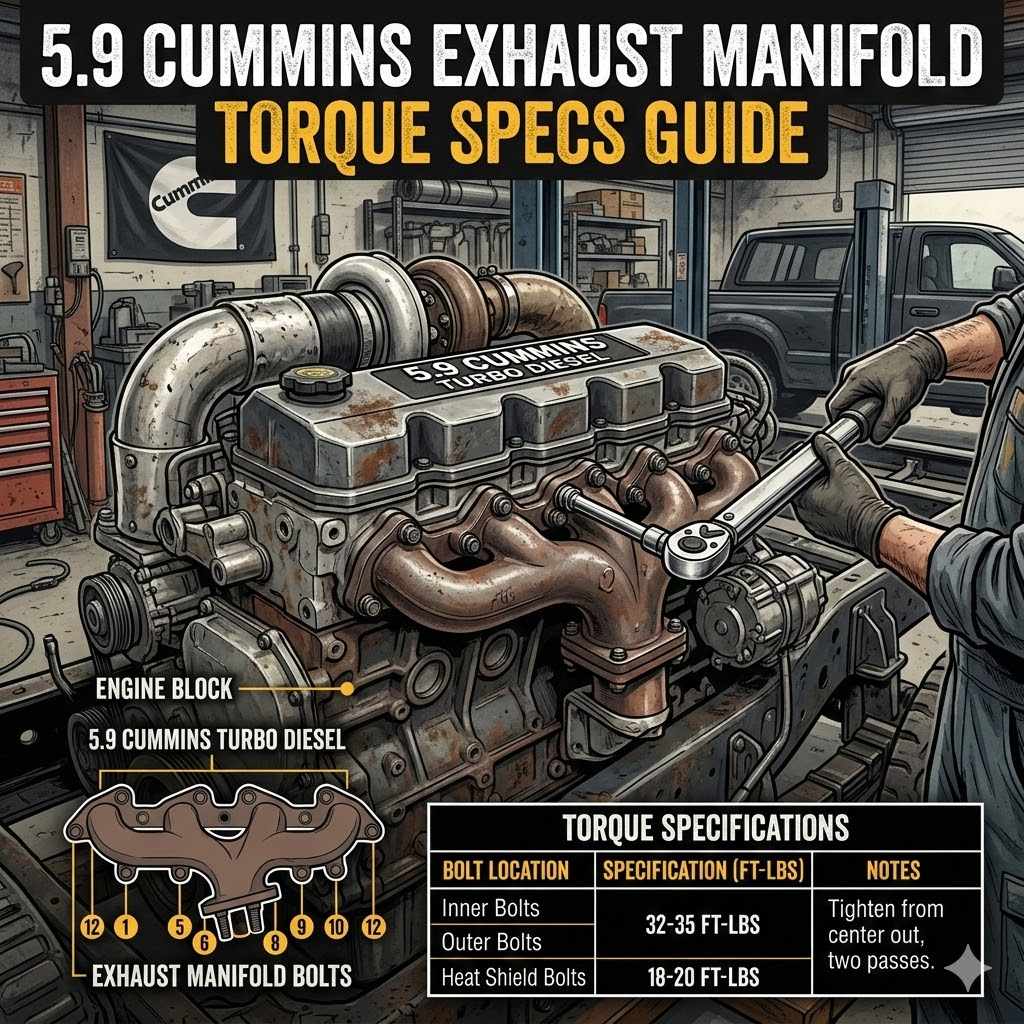
This section explains why exact torque specifications are vital for your 5.9 Cummins exhaust manifold. Getting the bolt tightness just right is key to preventing exhaust leaks, which can cause performance issues and noise. It also helps prevent damage to the manifold and cylinder head.
We will cover the standard torque values and the importance of following them precisely for a reliable repair or replacement. This knowledge helps ensure your engine runs smoothly and efficiently.
Why Exact Torque Matters
The exhaust manifold bolts on a 5.9 Cummins engine need to be tightened to very specific values. This is not a job where “tight enough” will do. If you do not tighten them correctly, you can run into several problems.
These issues can range from minor annoyances like exhaust leaks to major engine damage. Understanding why each spec is important helps you appreciate the process.
Preventing Exhaust Leaks
Exhaust leaks are a common issue when manifold bolts aren’t torqued correctly. A leak means hot exhaust gases escape where they shouldn’t. This can lead to a noticeable puffing sound from your engine.
It also means less power because the exhaust gases aren’t directed properly out of the engine. Leaks can also damage surrounding components due to the intense heat.
Avoiding Manifold and Head Damage
Over-tightening the bolts can actually warp or even crack the exhaust manifold itself. It can also damage the threads in the cylinder head. This is much more expensive to fix than just torquing bolts correctly.
The metal in these parts expands and contracts with heat, so they need to be held with the right amount of pressure, not excessive force.
Ensuring Proper Gasket Sealing
The gasket between the manifold and the cylinder head needs even pressure to seal correctly. If some bolts are too loose and others too tight, the gasket won’t seal uniformly. This creates weak spots where leaks can start.
Even pressure across the entire gasket is crucial for a long-lasting seal.
The Importance of Torque Wrenches
To achieve these precise tightness settings, you absolutely need a torque wrench. This tool allows you to measure the exact amount of rotational force applied to a bolt. Guessing or using standard wrenches will not give you the accuracy needed.
A good torque wrench is an investment in the longevity and performance of your engine.
There are a few types of torque wrenches. A click-type wrench is common; when you reach the set torque, it makes a distinct click. Beam-type wrenches have a needle that moves along a scale to show the torque being applied.
Digital torque wrenches offer electronic readouts and are often very precise. For exhaust manifold work, a wrench that can accurately measure in the range of 20-50 foot-pounds is usually sufficient.
Using a torque wrench correctly is also important. You need to set it to the desired torque value. Then, pull the wrench smoothly and steadily until it clicks or indicates the set torque.
Avoid jerky movements. Also, make sure the wrench is calibrated periodically to ensure its accuracy.