How To Make BMW Performance Exhaust Louder
Many BMW owners want their car to sound as exciting as it looks and drives. Getting that deeper, louder exhaust note is a popular goal. But for those new to car modifications, figuring out how to make a BMW performance exhaust louder can seem tricky.
There are many parts and options to consider. Don’t worry, though. We’ll break it down step-by-step so you can get the roar you want for your BMW.
We will look at what makes an exhaust system louder and how you can achieve that sound.
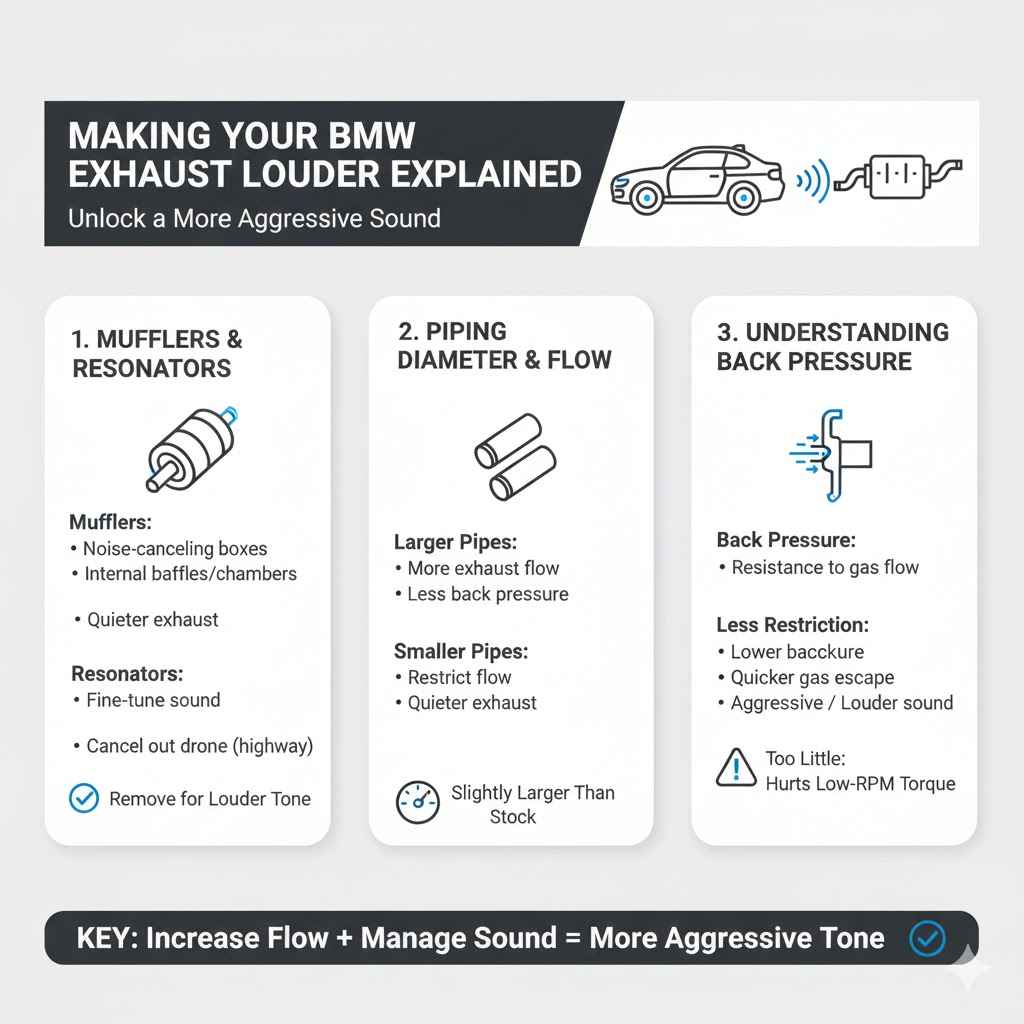
Making Your BMW Exhaust Louder Explained
This section covers the basics of why some exhausts are louder than others and what changes you can make to increase the sound level of your BMW’s exhaust system. We’ll discuss how the factory setup is designed for quietness and what components contribute to exhaust volume. Understanding these elements is the first step to achieving a more aggressive sound.
We will look at the purpose of mufflers, resonators, and piping diameter in controlling sound.
The Role of Mufflers and Resonators
Mufflers are like big noise-canceling boxes on your exhaust. Their main job is to quiet down the loud noises made when your engine burns fuel. They have internal baffles and chambers that bounce the sound waves around, making them weaker.
The more complex the muffler design, the quieter the exhaust will generally be. Different muffler designs can create different sound profiles, from a deep rumble to a high-pitched whine. Some mufflers use packing material like fiberglass to absorb sound.
Others use sound-deadening chambers. The size and design of the muffler are key factors in how loud your BMW’s exhaust will be.
Resonators work a bit differently. They are smaller chambers designed to cancel out specific sound frequencies. Think of them as fine-tuners for your exhaust note.
They help get rid of unwanted droning sounds, especially at highway speeds. Removing or altering a resonator can make the exhaust noticeably louder and change the tone. Some high-performance exhaust systems might even use aftermarket resonators that are less restrictive, allowing more sound to pass through while still managing drone.
For example, many BMW M models come with performance exhaust systems that still include resonators to maintain a refined but sporty sound.
Piping Diameter and Flow
The diameter of your exhaust pipes plays a big role in how loud your BMW’s exhaust system is. Larger pipes allow exhaust gases to flow more freely. This means less back pressure and, generally, a louder sound.
Smaller pipes can restrict the flow of gases. This makes the exhaust quieter. For a louder exhaust, you often want pipes that are slightly larger than stock.
However, going too big can sometimes hurt performance by reducing gas velocity. It’s a balance.
Exhaust gases are hot and moving very fast. When these gases exit the engine, they create sound waves. The path they take from the engine to the back of the car is through the exhaust system.
This system includes the exhaust manifold, catalytic converter, downpipes, mid-pipes, resonators, mufflers, and tailpipes. Each of these parts influences the sound. Changes to any of these can alter the volume and tone.
Understanding Back Pressure
Back pressure is the resistance the exhaust gases encounter as they flow through the exhaust system. A less restrictive exhaust system has lower back pressure. This generally leads to a louder sound.
Think of it like trying to breathe through a small straw versus a wide one. The wider straw is easier to breathe through. In an exhaust system, lower back pressure means gases can escape more quickly.
This quick escape contributes to a more aggressive and louder exhaust note. However, too little back pressure can negatively impact engine performance and torque, especially at lower RPMs. It’s a delicate balance that performance tuners aim to get just right.
Popular Ways To Make A BMW Exhaust Louder
Once you understand the basics, you can explore the common methods people use to increase their BMW’s exhaust volume. This section will cover the most effective and common modifications, explaining what they involve and why they work. We’ll talk about simple bolt-on parts and more involved changes.
This will give you a clear picture of your options for achieving that desired exhaust tone.
Aftermarket Cat-Back Exhaust Systems
When choosing a cat-back system, consider the materials used. Stainless steel is common for its durability and resistance to corrosion. T-304 stainless steel is a popular choice.
The design of the muffler is also important. Some systems use a straight-through muffler design, which offers maximum flow and sound. Others use chambered mufflers for a specific tone.
Brands like Borla, Magnaflow, and Akrapovič are well-known for their BMW exhaust systems.
Benefits of Aftermarket Cat-Back Systems
- Improved Sound QualityAftermarket cat-back systems are specifically tuned to produce a more aggressive and pleasing exhaust note. They often eliminate the restrictive OEM mufflers and resonators, allowing the natural engine sound to be heard more clearly and with greater volume. This results in a deeper tone and a more pronounced growl during acceleration and a satisfying rumble at idle.
Many systems aim to enhance the sporty character of the BMW driving experience.
- Enhanced PerformanceBy reducing back pressure and improving exhaust gas flow, cat-back systems can lead to a slight increase in horsepower and torque. The smoother, larger diameter piping allows the engine to exhale more efficiently. This can translate to better throttle response and a more engaging driving feel.
While the gains might not be dramatic on their own, they contribute to the overall performance package of the vehicle.
- Weight ReductionMany aftermarket exhaust systems are made from lighter materials than the stock components. This can help reduce the overall weight of the vehicle, which in turn can improve handling and fuel efficiency. Some high-performance systems even use titanium, which is significantly lighter than stainless steel.
- Customization OptionsYou can often choose from different muffler designs and tailpipe styles when selecting an aftermarket cat-back system. This allows you to personalize the sound and appearance of your BMW’s exhaust to your preferences. Some systems offer valve control, allowing you to switch between quiet and loud modes.
Performance Muffler Deletes or Straight Pipes
For those seeking the loudest possible sound, muffler deletes are an option. This involves removing the muffler entirely and replacing it with a straight pipe. This offers minimal resistance to exhaust flow, resulting in a very loud and raw exhaust note.
It’s important to note that this modification can be extremely loud and may not be legal in all areas due to noise regulations. It also eliminates any sound dampening, which can lead to significant cabin drone at certain RPMs. This is typically considered an aggressive modification.
A muffler delete is essentially a straight piece of pipe that connects the sections of exhaust pipe where the muffler used to be. This bypasses the muffler’s sound-deadening chambers. The sound produced is direct from the engine and catalytic converter.
For some vehicles, this might be combined with removing resonators as well to maximize volume. However, it’s crucial to check local noise ordinances before considering this modification, as it can lead to tickets or required removal.
Resonator Deletes
Removing the resonators is another way to increase exhaust volume. Resonators are designed to cancel out specific frequencies, so removing them allows more of the engine’s natural sound to pass through. This modification is less extreme than a full muffler delete and can add a more aggressive tone to the exhaust without necessarily making it unbearable.
It’s a common step for drivers who want a noticeable increase in sound but are concerned about excessive loudness or drone.
When resonators are removed, the exhaust gases flow more directly to the muffler. This means less sound is filtered out before reaching the tailpipe. The result is a louder, often raspier sound compared to a stock exhaust.
For many BMW models, the resonators are located in the mid-pipe section. Replacing them with straight pipes is a relatively simple modification. Some people find that a resonator delete alone is enough to achieve the desired sound, while others combine it with other modifications.
Pros and Cons of Resonator Deletes
- ProsA resonator delete is an effective way to make your BMW’s exhaust louder. It can add a deeper tone and more character to the exhaust note. It’s also generally less expensive than a full cat-back system.
For many drivers, it strikes a good balance between increased sound and acceptable noise levels.
- ConsThe primary drawback is the potential for increased cabin drone. Resonators are there to cancel out specific unwanted frequencies, often at cruising speeds. Removing them can mean you hear more of these sounds inside the car.
It’s also crucial to be aware of local noise laws, as removing emissions or sound-dampening components can sometimes lead to legal issues.
Performance Catalytic Converters
While not directly about making the exhaust louder by changing the muffler, modifying or upgrading your catalytic converter can also influence sound. High-flow catalytic converters allow exhaust gases to pass through more easily than stock ones. This reduces back pressure and can contribute to a slightly louder and sportier exhaust note.
They are often used in conjunction with other exhaust modifications to maximize performance and sound gains. It’s important to ensure that any catalytic converter replacement meets emissions regulations in your area.
Catalytic converters are essential for reducing harmful emissions from your engine. They contain a honeycomb structure coated with precious metals that chemically convert pollutants into less harmful substances. Stock catalytic converters can be quite restrictive.
High-flow catalytic converters use a less dense or larger cell structure, allowing exhaust gases to flow more freely. This reduction in restriction can lead to a modest increase in exhaust sound and can complement other exhaust upgrades for a more aggressive tone.
Consider the type of high-flow catalytic converter. Some are “sport” or “high-flow” versions of stock replacements, while others are less restrictive “catless” pipes (which are illegal for road use in most places). For those looking to increase sound and performance while remaining emissions-compliant, a 400-cell count high-flow catalytic converter is a common choice.
This offers a good balance of flow and emissions control.
Technical Considerations For A Louder BMW Exhaust
When you decide to make your BMW’s exhaust louder, there are a few technical points to keep in mind. These ensure you get the sound you want without causing problems. We’ll cover things like material choices, drone, and how different BMW engines respond to exhaust modifications.
This will help you make informed decisions about the best approach for your specific car.
Material and Construction
The materials used in an exhaust system significantly impact its sound and durability. Stainless steel, especially T-304 grade, is a popular choice for aftermarket exhausts due to its corrosion resistance and strength. It can also influence the tone of the exhaust note.
Some higher-end systems use titanium, which is lighter and can produce a distinct, higher-pitched sound compared to stainless steel. The welding quality and the overall construction method also play a role in the system’s performance and longevity.
The thickness of the piping material matters too. Thicker walls can help dampen some sound, while thinner walls might allow more sound to resonate. For a louder exhaust, you might consider systems with less sound-dampening material in their construction.
The internal design of mufflers also varies greatly. Straight-through designs offer maximum flow and volume, while chambered designs use internal baffles to control sound. When looking at how to make BMW performance exhaust louder, the choice of materials and how they are put together is very important.
Managing Drone
Drone is an unpleasant, resonant humming sound that can occur inside the cabin of a car, especially at constant cruising speeds. It happens when certain exhaust frequencies align with the natural resonance of the car’s interior. Many BMW performance exhaust systems, especially those with aggressive modifications like muffler deletes or resonator deletes, can introduce drone.
Managing drone is crucial for a comfortable driving experience.
Manufacturers tackle drone in several ways. Some aftermarket exhausts use Helmholtz resonators, which are small chambers designed to cancel out specific problematic frequencies. Others carefully design their mufflers to absorb or deflect these sounds.
When choosing an exhaust, look for systems that are advertised as “drone-free” or have features specifically designed to combat drone. Reading reviews from other owners of your specific BMW model can provide valuable insight into a system’s drone characteristics. A professional installer can also help identify and address drone issues.
Example Scenario: Drone Management
- Problem: A BMW owner installs a muffler delete to make their exhaust much louder. At highway speeds (around 70 mph), a loud, annoying humming sound fills the cabin.
- Analysis: The muffler delete removed all sound dampening, allowing specific low-frequency exhaust notes to resonate with the car’s interior.
- Solution 1: Install a small, drone-canceling resonator in the mid-pipe section of the exhaust. This resonator is tuned to cancel out the specific frequency causing the drone.
- Solution 2:
- Outcome: With either solution, the drone is significantly reduced or eliminated, making the car much more comfortable for daily driving while still retaining a loud and aggressive exhaust note.
Engine Specifics and Sound Output
Different BMW engines will naturally produce different exhaust sounds. A V8 engine will have a deeper, more resonant tone than a 4-cylinder engine. Turbocharged engines often have a different sound profile than naturally aspirated engines, with the turbocharger sometimes muffling some of the raw exhaust note.
Therefore, what sounds good on one BMW might not be ideal for another. For example, a V10 engine in an M5 will have a inherently more dramatic sound than a 6-cylinder in a 3-series.
When considering how to make BMW performance exhaust louder, it’s important to research exhaust systems designed for your specific engine and model. Many companies offer systems tailored to particular BMW engines, taking into account their unique characteristics. This ensures that the exhaust modification will complement the engine’s natural sound rather than fighting against it.
Some modifications might have a more pronounced effect on a naturally aspirated engine versus a turbocharged one. For instance, downpipes with high-flow catalytic converters can dramatically change the sound of a turbocharged car.
Installation and Legality
Installing an exhaust system can range from a simple DIY job for bolt-on parts to requiring professional help for more complex modifications. It’s important to use proper tools and techniques to ensure a secure and leak-free installation. Leaks in the exhaust system can cause performance issues, reduce sound, and be dangerous due to exhaust fumes entering the cabin.
Always consult your vehicle’s service manual or seek professional advice if you are unsure about any part of the installation process.
Legality is a significant factor. Noise regulations vary by region and country. Removing catalytic converters is illegal in most places for road vehicles, as it defeats emissions control systems.
Many areas also have strict limits on exhaust noise levels, especially for modified vehicles. It’s crucial to research your local laws and choose modifications that comply with them. Failure to do so can result in fines or the requirement to revert the modifications.
Sample Scenario: Legal Exhaust Upgrade
- Goal: A BMW 335i owner wants a louder, sportier exhaust note without violating noise laws or emissions standards.
- Research: The owner researches reputable aftermarket exhaust brands known for quality and compliance with regulations. They discover a specific cat-back exhaust system designed for their model.
- Modification: The owner purchases and installs the cat-back system. This system features larger diameter piping, a less restrictive muffler, and keeps the stock catalytic converters and resonators intact.
- Result: The exhaust sounds noticeably louder and more aggressive, with a sporty growl during acceleration. Crucially, it avoids excessive drone at highway speeds and remains compliant with local emissions and noise regulations.
- Satisfaction: The owner achieves their goal of an enhanced exhaust sound that improves the driving experience without legal repercussions.
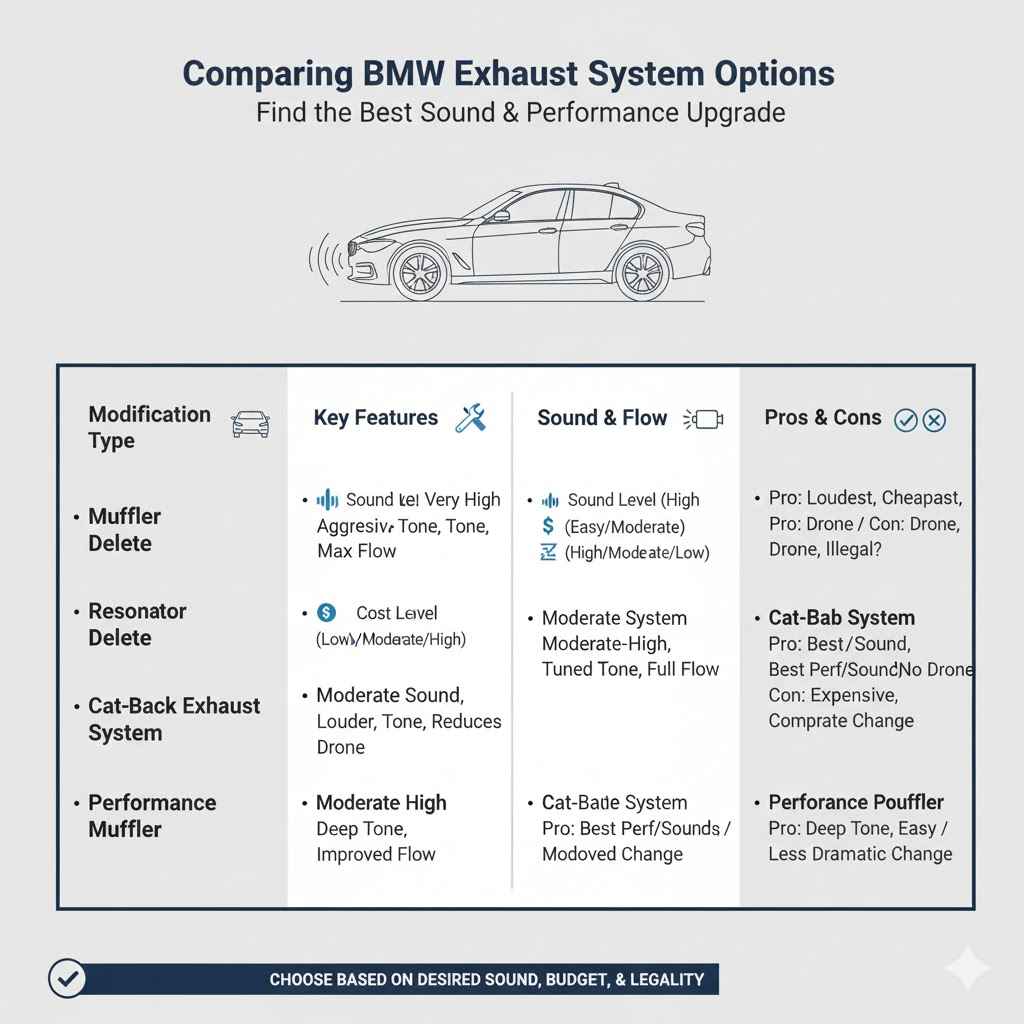
Comparing Exhaust System Options
When looking to make your BMW exhaust louder, different types of systems offer varying levels of sound and performance. This section compares some of the most common choices. Understanding these differences will help you pick the best option for your needs and budget.
We’ll look at how they stack up against each other in terms of sound, cost, and ease of installation.
| Modification Type | Typical Sound Increase | Complexity | Cost (Approximate) | Drone Potential |
|---|---|---|---|---|
| Muffler Delete | Very High | Moderate | Low | High |
| Resonator Delete | Moderate to High | Moderate | Low to Moderate | Moderate |
| Cat-Back Exhaust System | Moderate to High | Moderate | Moderate to High | Low to Moderate |
| Performance Muffler | Moderate | Moderate | Moderate | Low |
Factors Influencing Your Choice
When deciding how to make BMW performance exhaust louder, several factors should guide your choice. The first is your desired sound level. Do you want a subtle enhancement or a dramatic roar?
Your budget is another key consideration, as exhaust systems can range from a few hundred dollars to several thousand. The ease of installation is also important; some systems are bolt-on replacements, while others require welding or professional fitting.
Furthermore, think about the potential for cabin drone. While a louder exhaust is desirable, an annoying drone at cruising speeds can quickly become tiresome. If you plan on tracking your car or value subtle sound control, you might look for systems with valves that allow you to adjust the volume.
Finally, always consider your local laws regarding exhaust noise and emissions. A modification that is legal in one area might not be in another. Researching these aspects beforehand will save you time, money, and potential headaches down the road.
Performance Statistics and Real-World Results
While the primary goal is often sound, many exhaust modifications can also yield performance benefits. A less restrictive exhaust system allows the engine to breathe more freely. This can result in modest gains in horsepower and torque.
For example, a well-designed cat-back system on a BMW might add anywhere from 5 to 15 horsepower, depending on the specific engine and system. While this might not be a massive increase, it can contribute to better throttle response and a more engaging driving experience.
It’s important to manage expectations. Exhaust modifications alone are unlikely to transform your car into a race machine. However, when combined with other tuning efforts, such as an ECU tune or intake modifications, they can contribute to a more potent overall package.
For many BMW owners, the primary driver for exhaust modification is the sound, and the performance gains are a welcome bonus. Real-world results often show that a louder exhaust can make the car feel more powerful, even if the actual dyno numbers are only slightly improved. A study by a popular automotive magazine found that on average, aftermarket exhaust systems for performance sedans showed a 3% increase in peak horsepower.
Frequently Asked Questions
Question: Can I make my stock BMW exhaust louder without buying a new one
Answer: Yes, you can often make your stock BMW exhaust louder by removing or modifying existing components like the muffler or resonators. Common methods include muffler deletes or resonator deletes, which
Question: Will a louder exhaust affect my BMW’s warranty
Answer: In many cases, modifying the exhaust system can potentially void the warranty on the exhaust components or even other parts of the powertrain if the modification is deemed to be the cause of a failure. It’s always best to check your warranty terms and consult with your dealership.
Question: What is the difference between a cat-back exhaust and axle-back exhaust
Answer: A cat-back exhaust system replaces everything from the catalytic converter back to the tailpipe. An axle-back exhaust system only replaces the mufflers and tailpipe section, typically from the rear axle back. Cat-back systems generally offer more significant changes in sound and performance than axle-back systems.
Question: How much does it cost to make a BMW exhaust louder
Answer: The cost varies greatly. Simple modifications like resonator deletes might cost a few hundred dollars for parts and installation. A full, high-quality cat-back exhaust system from a reputable brand can cost anywhere from $1,000 to $4,000 or more, plus installation fees.
Question: Is it legal to remove my catalytic converter for a louder exhaust
Answer: No, removing catalytic converters for a louder exhaust is illegal in most countries for road vehicles. Catalytic converters are emissions control devices, and their removal leads to significantly increased pollution and can result in hefty fines and failure to pass emissions tests.
Conclusion
Making your BMW performance exhaust louder can transform your driving experience. You have several options, from simple deletes to full aftermarket systems. Choose based on your desired sound, budget, and local laws.
A cat-back system offers a balanced upgrade. Muffler or resonator deletes provide maximum loudness. Always consider drone and legality.
Get the roar you want for your BMW.