How To Choose The Best Truck Performance Exhaust
Picking the right performance exhaust for your truck can seem tricky, especially if you’re new to the truck scene. There are many options out there, and knowing what makes one better than another for your specific needs can be a puzzle. This guide will make it easy.
We’ll walk you through it step-by-step so you can figure out How to Choose the Best Performance Exhaust for Truck with confidence and get the most out of your vehicle.
Understanding Truck Performance Exhaust Systems
A performance exhaust system for your truck is more than just a shiny tailpipe. It’s a complete overhaul of your truck’s exhaust components, designed to improve airflow, boost engine power, and enhance the sound. When you upgrade from a factory exhaust, you’re looking for better efficiency and a more exciting driving experience.
This section will break down what makes a performance exhaust system different and why it matters for your truck’s overall health and output.
What Is A Performance Exhaust System
Think of it like this: trying to exhale through a narrow straw versus a wide pipe. The wide pipe makes it much easier and faster to get air out. A performance exhaust does the same for your truck’s engine.
It helps the engine expel burnt gases more efficiently, making room for a fresh fuel-air mixture. This improved “breathing” is the foundation for any gains you’ll see.
Key Components Of A Performance Exhaust
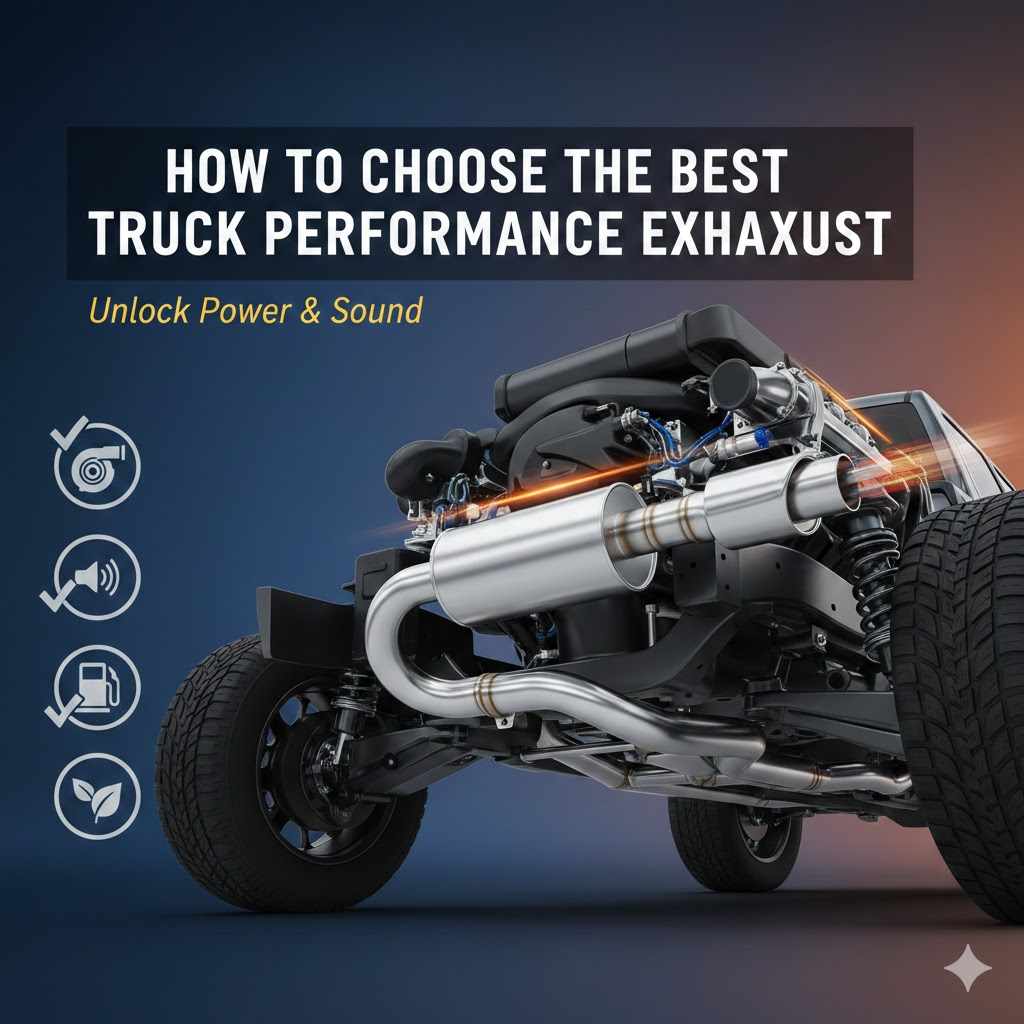
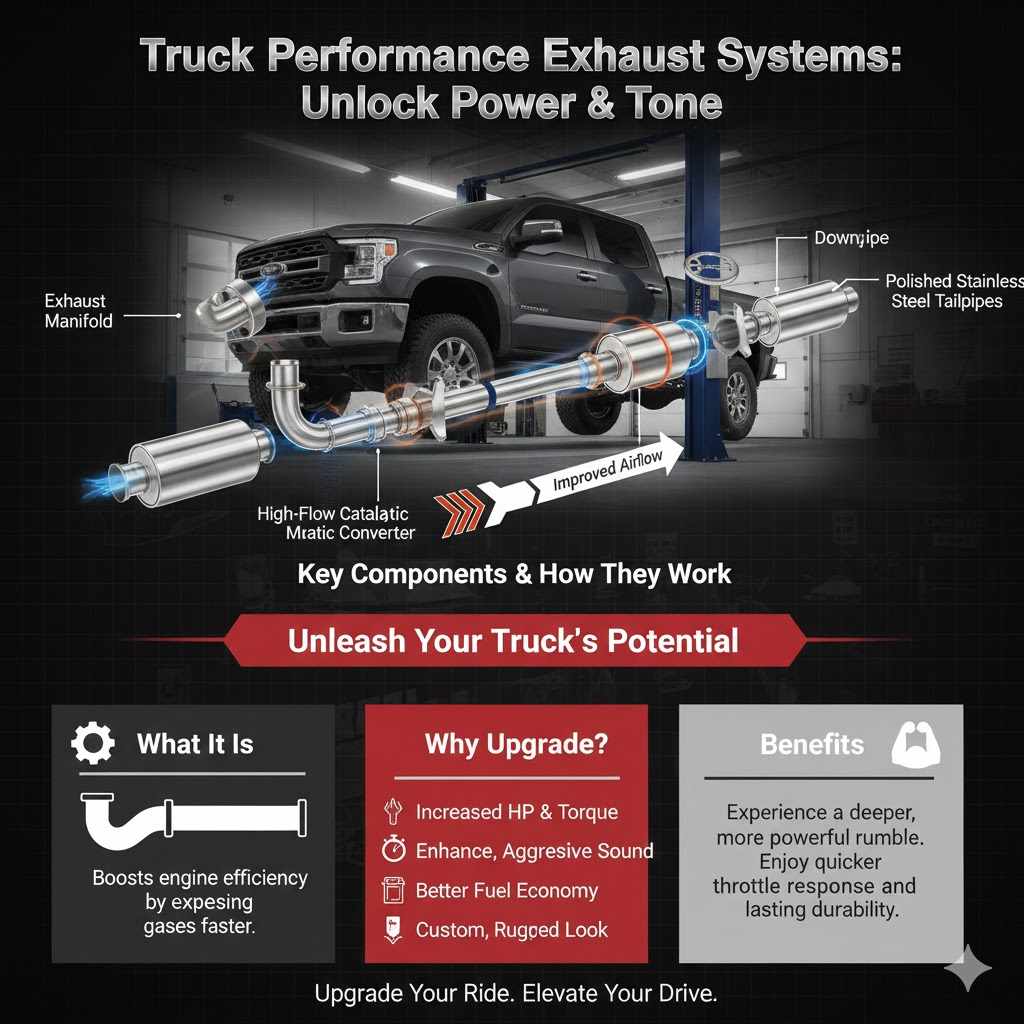
The main parts of a performance exhaust include the exhaust manifold, downpipe, catalytic converter, muffler, and tailpipe. Each plays a role in how well the system performs.
- Exhaust Manifold
This collects exhaust gases from each cylinder and directs them into a single pipe. Performance manifolds often have smoother, more efficient port designs to improve gas flow. - Downpipe
This is the pipe that connects the manifold to the catalytic converter. A larger diameter downpipe allows exhaust gases to exit the engine more quickly. - Catalytic Converter
This device reduces harmful emissions. Performance catalytic converters are designed to be less restrictive than factory ones, allowing better airflow while still meeting emission standards. Some systems might offer a high-flow option or a test pipe for off-road use, which removes the converter entirely. - Muffler
This silences exhaust noise. Performance mufflers are designed to reduce sound with less restriction than stock mufflers, often using a straight-through design or optimized chambering to create a deeper, more aggressive tone without excessive drone. - Tailpipe
This is the final section of the exhaust system that exits at the rear or side of the vehicle. Performance tailpipes are typically made from durable materials like stainless steel and can be polished for a custom look.
Why Upgrade Your Truck’s Exhaust
Upgrading your truck’s exhaust offers several benefits. The most common reason is to increase engine power and torque. Better airflow means more efficient combustion.
This can also lead to improved fuel economy, as the engine doesn’t need to consume as much fuel to produce the same amount of power.
Another major draw is the sound. Stock exhaust systems are often tuned for quiet operation. Performance systems can produce a deeper, more aggressive rumble that many truck owners find appealing.
Finally, aesthetics play a role. A polished stainless steel tip can significantly improve the look of your truck.
Choosing The Right Truck Performance Exhaust System
When you’re ready to upgrade, selecting the perfect performance exhaust involves looking at several factors. You need to consider your truck’s specific needs, your budget, and what you want to achieve with the upgrade. This section will guide you through the decision-making process, helping you weigh the pros and cons of different options.
Performance Goals For Your Truck
What do you want your truck to do better? Are you looking for more horsepower for towing or off-roading? Do you want a more aggressive sound?
Your primary goals will steer your choice.
- Horsepower and Torque Gains
If your main goal is to make your truck faster or more capable for heavy work, you’ll want a system that prioritizes maximum airflow. This usually means larger diameter piping and a less restrictive muffler and catalytic converter. Systems designed for racing or extreme performance will focus heavily on reducing backpressure. - Sound and Tone
The sound of your exhaust is a big part of the driving experience for many. Some systems are designed for a deep, throaty rumble, while others aim for a louder, more aggressive bark. It’s important to consider if you want a system that’s loud all the time or one that’s quieter at cruising speeds but opens up under acceleration. Drone, an annoying resonating sound at highway speeds, is something to watch out for. - Fuel Efficiency
While not the primary goal for most performance exhaust buyers, some systems can indirectly improve fuel economy by allowing the engine to operate more efficiently. However, the gains are usually modest and depend on driving habits. - Towing and Hauling Capabilities
For trucks used for towing, increased torque can be very beneficial. A better-flowing exhaust can help your engine maintain power when under load, reducing strain and improving performance on hills.
Types Of Exhaust Systems Available
There are several configurations of performance exhaust systems, each offering different levels of sound, performance, and ease of installation.
- Axle-Back Exhaust
This is the simplest and most affordable upgrade. It replaces only the muffler and tailpipe. It offers a moderate increase in sound and a small performance bump. It’s a good starting point if you’re new to exhaust modifications. - Cat-Back Exhaust
This system replaces everything from the catalytic converter back, including the mid-pipe, muffler, and tailpipe. It offers a more significant improvement in sound and performance compared to an axle-back. Cat-back systems are very popular because they offer a good balance of benefits and cost, and they usually maintain emissions compliance. - Header-Back Exhaust
This is the most comprehensive upgrade, replacing the entire exhaust system from the engine’s exhaust manifolds all the way to the tailpipe. It provides the greatest potential for performance gains but is also the most expensive and complex to install. Header-back systems often include performance headers, which are designed to collect exhaust gases from each cylinder more efficiently than stock manifolds.
Material And Durability Considerations
The materials used in your exhaust system affect its lifespan, appearance, and performance.
- Mild Steel
This is the most affordable option. However, it’s prone to rust and corrosion, especially in areas with harsh weather or road salt. It typically has a shorter lifespan than other materials. - Aluminized Steel
This is steel that has been coated with aluminum. It offers better corrosion resistance than mild steel but is still not as durable as stainless steel. It’s a good mid-range option for durability and cost. - Stainless Steel (304 Grade)
This is the premium choice. 304 stainless steel is highly resistant to rust and corrosion, making it ideal for long-term durability in all weather conditions. It also has a polished, attractive appearance. While more expensive upfront, it often proves more cost-effective over time due to its longevity. - Stainless Steel (409 Grade)
This is a more budget-friendly stainless steel option. It offers good corrosion resistance, though not as much as 304 grade. It’s commonly used in factory exhaust systems and is a solid choice for a balance of durability and price.
Ease Of Installation And Fitment
Consider how easy the system is to install. Some are bolt-on replacements that require minimal tools and expertise, while others may need welding or more advanced mechanical skills. Always ensure the exhaust system you choose is designed specifically for your truck’s make, model, year, and engine size.
Fitment is crucial. An exhaust system that doesn’t fit correctly can cause leaks, vibrations, or even interfere with other vehicle components. Reputable brands usually provide precise fitment for specific vehicles.
Checking reviews and forums for your truck model can help you find systems known for good fitment.