
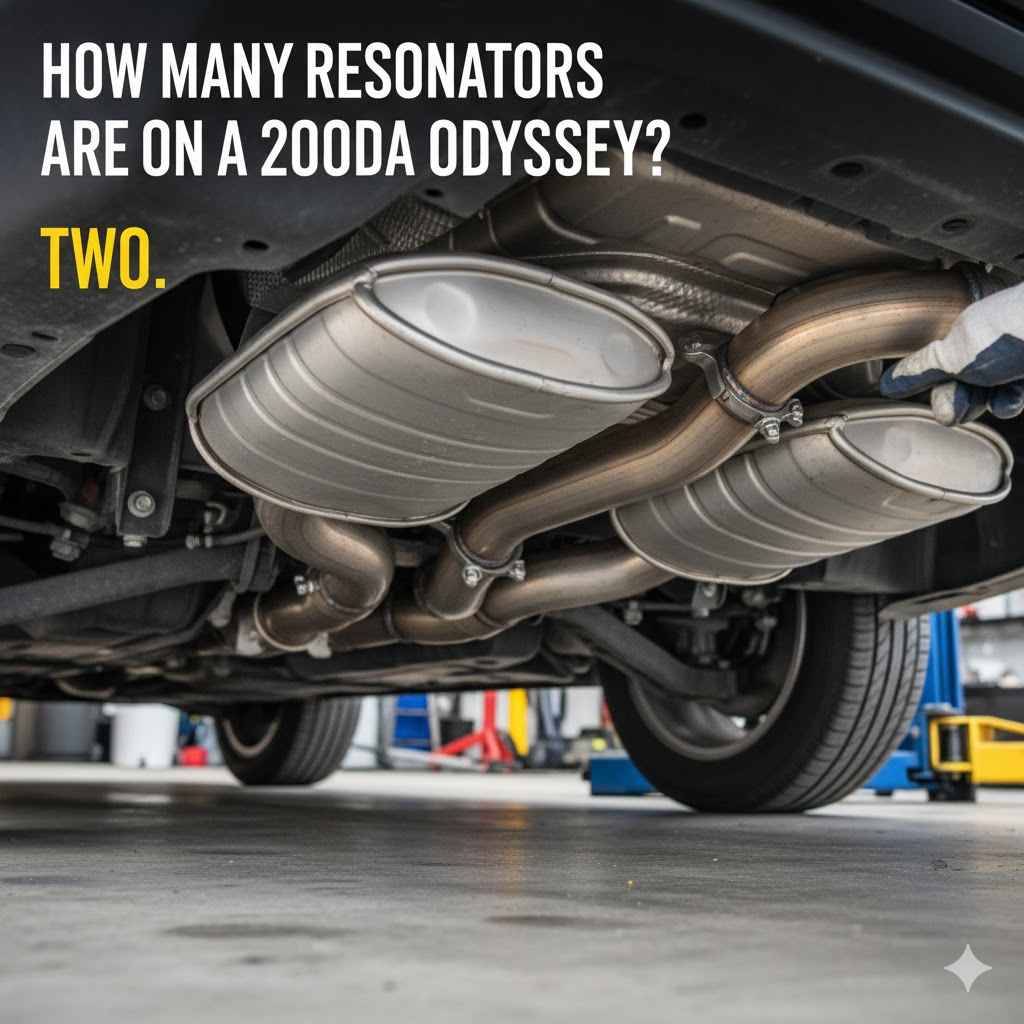
How Many Resonators Are on a 2008 Honda Odyssey
Figuring out the exact number of resonators on your 2008 Honda Odyssey can sometimes feel a bit tricky, especially if you’re new to car maintenance or looking to make some exhaust system changes. It’s a common question that pops up when people are curious about their vehicle’s sound or performance. Don’t worry, we’re here to break it down simply.
We’ll guide you through this step-by-step to give you a clear answer. Get ready to understand your Odyssey’s exhaust setup better.
Understanding Your 2008 Honda Odyssey Exhaust System
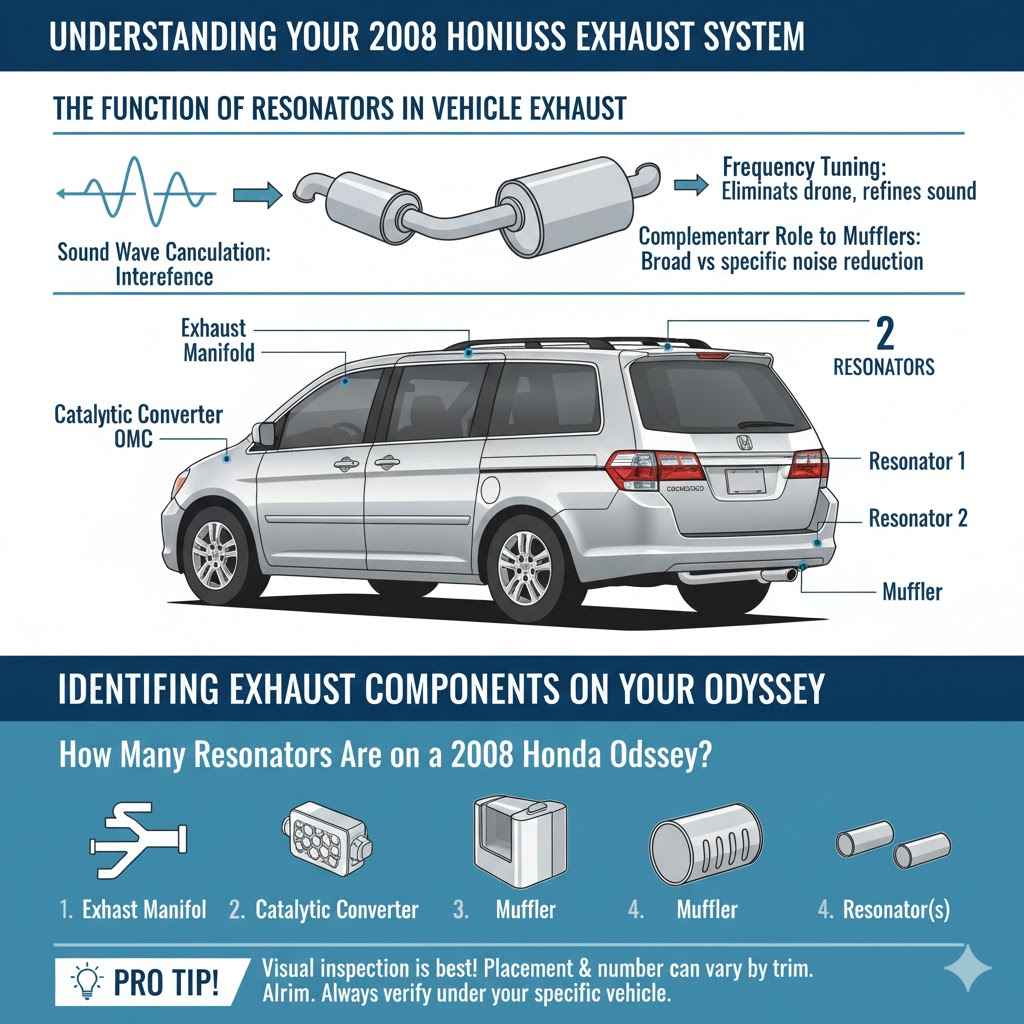
The exhaust system on your 2008 Honda Odyssey plays a crucial role in managing the gases produced by the engine. It’s designed to reduce noise, clean up emissions, and help your engine run efficiently. This system is made up of several key parts, including the exhaust manifold, catalytic converter, muffler, and resonators.
Each of these components has a specific job, working together to ensure your vehicle operates smoothly and quietly.
For many car owners, especially those looking to customize their vehicle’s sound or
The Function of Resonators in Vehicle Exhaust
Resonators are an important part of a vehicle’s exhaust system, and they have a specific function related to sound. Unlike mufflers, which focus on reducing the overall volume of exhaust noise, resonators target specific sound frequencies. They work by using the principles of acoustics, creating chambers or tubes that cancel out certain unwanted sound waves.
This helps to eliminate or reduce any droning or humming sounds that might otherwise be present, especially at certain engine speeds.
Think of a resonator like a musical instrument. Just as a guitar body amplifies certain notes and muffles others to create a pleasing sound, a resonator in an exhaust system is tuned to cancel out irritating, high-frequency noises. This allows the muffler to handle the bulk of the noise reduction, while the resonator refines the sound, making the overall exhaust note smoother and more pleasant.
It’s about fine-tuning the audible output of the engine.
- Sound Wave Cancellation: Resonators use the concept of destructive interference to cancel out specific sound waves. When sound waves enter the resonator chamber, they bounce off the internal surfaces. Some waves are reflected in such a way that they are out of phase with the original waves. This means the peaks of one wave align with the troughs of another, effectively canceling each other out. This process significantly reduces particular types of noise.
- Frequency Tuning: The size and shape of a resonator’s chamber are carefully calculated to target specific sound frequencies. Different engine types and exhaust designs produce different sound characteristics. Engineers design resonators to eliminate the most annoying or undesirable frequencies, often those that cause a resonant drone at highway speeds. This makes the vehicle’s cabin quieter and more comfortable for occupants.
- Complementary Role to Mufflers: While mufflers are designed for broad-spectrum noise reduction, resonators specialize in eliminating specific problematic frequencies. They work together to achieve a refined exhaust sound. Without resonators, a vehicle might still have a noticeable drone even with a well-designed muffler. The resonator adds an extra layer of sound quality control.
Identifying Exhaust Components on Your Odyssey
To answer How Many Resonators Are on a 2008 Honda Odyssey?, you’ll need to be able to identify the different parts of its exhaust system. Typically, the exhaust system starts at the engine with the exhaust manifold, which collects gases from the cylinders. From there, the gases flow through the exhaust pipe to the catalytic converter, which reduces harmful emissions.
After the catalytic converter, you’ll find the muffler, which is the largest component and is designed to reduce overall sound volume.
Resonators are often located before or after the muffler, or sometimes integrated with it. They are usually smaller than the muffler and may appear as a cylindrical or oval-shaped metal chamber with inlet and outlet pipes. The exact placement and number can vary based on the specific trim level or engine configuration of the vehicle.
For a 2008 Honda Odyssey, visual inspection is often the best way to be sure.
- Exhaust Manifold: This part bolts directly to the engine’s cylinder head and collects exhaust gases from each cylinder into a single pipe. It’s usually made of cast iron or stainless steel.
- Catalytic Converter: Located in the exhaust pipe, this device uses precious metals to convert harmful exhaust gases into less harmful substances. It’s a bulky component with a honeycomb structure inside.
- Muffler: This is the primary noise-reducing component. It’s a large, often oval-shaped chamber filled with baffles or sound-absorbing materials to dampen exhaust noise significantly.
- Resonator(s): These are typically smaller chambers or pipes designed to cancel specific sound frequencies. They often look like a small muffler or a section of pipe with chambers.
How Many Resonators Are on a 2008 Honda Odyssey?
Now, let’s get to the main question many drivers have. For a typical 2008 Honda Odyssey, the answer is generally that it comes equipped with two resonators. These are designed to fine-tune the exhaust sound, ensuring a quiet and comfortable ride for you and your passengers.
They work in conjunction with the main muffler to achieve the desired exhaust note that Honda is known for in their minivans.
These resonators are strategically placed within the exhaust system to cancel out specific sound frequencies. By doing this, they help to eliminate any droning or undesirable humming sounds that might otherwise be noticeable, particularly at certain speeds or under acceleration. This focus on acoustic refinement contributes significantly to the overall quietness and refinement of the Odyssey’s driving experience.
Knowing this can be helpful if you’re planning any modifications or repairs to your exhaust system.
Locating the Resonators on Your Vehicle
To confirm the number of resonators on your specific 2008 Honda Odyssey, the most direct method is to visually inspect the exhaust system. You’ll need to safely get under the vehicle. Look for the exhaust pipe that runs from the front of the vehicle, past the engine and catalytic converter, towards the rear.
You will likely see the muffler first, which is the largest component.
Following the exhaust pipe from the muffler towards the front of the vehicle, you should encounter two additional, smaller chambers or sections of pipe that are designed to function as resonators. They will have pipes entering and exiting them, similar to a muffler but typically smaller in size. The exact placement can sometimes vary slightly depending on the original equipment manufacturer’s design for that particular model year and trim.
- Safety First: Always ensure your vehicle is parked on a level surface and securely supported with jack stands before getting underneath it. Never rely solely on a jack.
- Visual Inspection: Trace the exhaust pipe from the engine back. You’ll see the catalytic converter, then usually the muffler. Look for two more distinct chambers or significant pipe sections before the muffler or between the catalytic converter and muffler.
- Component Size and Shape: Resonators are generally smaller than the muffler. They might be cylindrical or somewhat oval, and their purpose is sound frequency tuning, not overall volume reduction like a muffler.
- Exhaust Hangers: The exhaust system is supported by rubber hangers attached to the vehicle’s frame. Observing these can help you follow the path of the pipes and identify the different components.
Why Two Resonators Are Common
The decision to include two resonators in the exhaust system of a vehicle like the 2008 Honda Odyssey is a deliberate engineering choice aimed at optimizing the driving experience. Minivans are often designed with passenger comfort as a high priority, and minimizing noise and vibration is a key part of that. Two resonators allow for a more precise control over the exhaust’s acoustic output, addressing a wider range of potentially bothersome sound frequencies.
One resonator might be tuned to cancel out a specific drone frequency that commonly occurs at highway speeds, while the second resonator could be designed to tackle another set of frequencies that might arise during acceleration or deceleration. This dual-action approach provides a more comprehensive sound-dampening effect, leading to a quieter cabin and a more refined overall feel. It’s a testament to Honda’s attention to detail in creating a comfortable family vehicle.
Consider the typical driving conditions for a minivan. It’s often used for long family road trips where engine noise can become fatiguing. By implementing two resonators, engineers can ensure that the vehicle maintains a low noise level even during extended periods of steady cruising.
This contributes to a more relaxed and enjoyable journey for everyone on board.
- Enhanced Cabin Comfort: The primary benefit of having two resonators is the significant improvement in cabin quietness. By neutralizing specific sound frequencies, they prevent the resonant “drone” that can be particularly noticeable and irritating on long drives. This makes the Odyssey a more pleasant vehicle for passengers, especially children who are sensitive to noise.
- Broader Frequency Control: Having two resonators allows engineers to target a wider spectrum of unwanted sound frequencies. Different engine operating conditions produce different exhaust sounds. Two resonators provide more tuning capability to address these variations, ensuring a consistently smooth and quiet exhaust note across various driving scenarios.
- Balancing Sound and Performance: While reducing noise is crucial, exhaust systems also need to allow for efficient gas flow to maintain engine performance. The design of the resonators, along with the muffler and piping, aims to strike a balance between noise reduction and minimal impact on horsepower and fuel economy. Two carefully designed resonators can achieve this balance effectively.
- OEM Tuning for Specific Vehicles: The number and type of resonators are determined during the vehicle’s development phase. For the 2008 Honda Odyssey, the inclusion of two resonators was deemed the optimal configuration by Honda’s engineers to meet their specific acoustic and performance targets for this minivan.
Potential Variations and What They Mean
While most 2008 Honda Odyssey models come with two resonators, it’s always good to be aware that minor variations can sometimes exist. These can be due to different regional emissions standards, specific trim packages, or even mid-year production changes. However, for this particular model year and vehicle type, two resonators are the standard and most commonly found configuration.
If you are looking to modify your exhaust system, understanding the stock setup is crucial. If you decide to remove or change resonators, you will likely notice a change in the exhaust sound. Removing them often makes the exhaust louder and can introduce a more pronounced drone at certain RPMs.
Replacing them with aftermarket parts will depend on the product’s design, which might aim for a different sound profile or a more performance-oriented flow.
- Trim Levels: Some vehicles have different exhaust configurations based on their trim levels. For instance, a sportier trim might have a slightly different setup, though for minivans like the Odyssey, the focus is usually on consistent quietness across trims.
- Regional Differences: Emissions regulations vary by country and sometimes even by state or province. While this usually affects the catalytic converter more directly, it can occasionally influence muffler and resonator designs to meet specific noise standards.
- Aftermarket Modifications: If your 2008 Honda Odyssey has had aftermarket exhaust work done, the original number of resonators might have been altered. Aftermarket systems often aim for a sportier sound, which might involve removing resonators or using different types.
Impact of Resonators on Exhaust Sound
The presence and design of resonators have a direct impact on the sound your 2008 Honda Odyssey’s exhaust makes. While the muffler is the primary component for reducing overall noise, resonators play a critical role in refining that sound. They don’t just make things quieter; they sculpt the sound, removing specific irritating frequencies that can turn a normal exhaust note into an annoying drone.
Without resonators, or with poorly designed ones, the exhaust might sound louder, but it could also develop an unpleasant resonance, especially when cruising at highway speeds. This is the common “drone” that many drivers dislike. The two resonators on the Odyssey are tuned to target and cancel out these specific sound waves, contributing to the smooth, quiet, and refined exhaust note that is characteristic of this minivan.
The Sound Profile of a Resonator-Equipped Exhaust
A vehicle equipped with properly functioning resonators, like the 2008 Honda Odyssey, will typically have a much smoother and more pleasing exhaust note. The sound will be deeper and less “raspy” or “tinny.” The most noticeable effect is the absence of that low-frequency drone that can become very tiresome on longer drives. You’ll hear the engine’s rumble, but it will be contained and refined, not an intrusive noise.
When you accelerate, the exhaust sound will increase in pitch and volume, but it should remain relatively consistent in quality. This means it won’t suddenly become an overwhelming or unpleasant roar. The resonators ensure that the sound remains controlled and comfortable, even under load.
This attention to acoustic detail is a hallmark of many Honda vehicles, contributing to a premium feel.
- Smoothness and Refinement: The primary characteristic of an exhaust with good resonators is its smoothness. It avoids the harshness or raspiness that can occur with simpler exhaust designs. This creates a more refined sound that is pleasant for both the driver and passengers.
- Absence of Drone: The most significant impact of resonators is their ability to eliminate or significantly reduce the annoying drone effect. This is the constant, low-frequency hum that can be heard inside the cabin, especially at cruising speeds. Resonators cancel these specific frequencies out.
- Controlled Acceleration Sound: While you will hear the exhaust during acceleration, the sound remains controlled. It will be present and noticeable, but it won’t be overwhelmingly loud or unpleasant. This is because the resonators help to manage the sound spectrum even as engine load increases.
- Quiet Idling: At idle, the exhaust sound will be very subdued, contributing to the overall quietness of the vehicle. This is especially noticeable in a minivan, where quietness is a key selling point for passenger comfort.
How Removing Resonators Changes Sound
If you were to remove the resonators from your 2008 Honda Odyssey, you would most certainly notice a change in the exhaust sound. The exhaust would likely become louder overall. More importantly, you would probably experience an increase in the droning sound, particularly at steady highway speeds.
This drone is the sound that the resonators were specifically designed to cancel out.
While some people might seek a louder exhaust for a sportier sound, removing resonators often leads to a sound that is less refined and more intrusive. It’s a common trade-off when modifying exhaust systems. The deeper rumble you might gain could be accompanied by a persistent hum that can be tiring on long trips.
It’s a sound modification that is not always desirable for a family vehicle.
- Increased Volume: The most immediate effect of removing resonators is an increase in the overall loudness of the exhaust. Less baffling and sound-dampening means more of the engine’s noise escapes into the atmosphere.
- Introduction of Drone: The most significant and often undesirable change is the emergence or intensification of exhaust drone. This is that continuous humming sound that can become very irritating on the highway and may even cause fatigue.
- Altered Tone: The exhaust note might also change in character. It could become raspier or have a higher pitch, losing the deep, smooth tone that the resonators helped to create.
- Potential for Performance Changes: While less common with resonator removal on a minivan, in some performance applications, removing resonators can slightly improve exhaust flow and thus engine performance. However, for the Odyssey, the primary impact is on sound.
A real-life example might involve a 2008 Honda Odyssey owner who decided to remove the resonators thinking it would give their minivan a sportier sound. After the modification, they found the exhaust was louder, but the constant drone at 65-75 mph made their daily commute and weekend trips much less enjoyable. They eventually opted to have them reinstalled or
Maintenance and Longevity of Resonators
Resonators, like other parts of your exhaust system, are made of metal and are exposed to heat, moisture, and road debris. Over time, they can degrade or become damaged. Understanding how to maintain them and what to look for can help ensure your 2008 Honda Odyssey continues to run quietly and smoothly.
Typically, resonators are quite durable and can last for many years. However, issues like rust, corrosion, or physical damage from hitting road obstacles can lead to their failure. If a resonator fails, it can result in a louder exhaust note, potential droning, and possibly a decrease in performance or efficiency due to altered exhaust flow.
Signs of Resonator Issues
Several signs can indicate that one or both of the resonators on your 2008 Honda Odyssey might be experiencing problems. The most common symptom is a change in the exhaust sound. If the exhaust suddenly becomes much louder, or if you start to hear a distinct droning or humming noise that wasn’t there before, especially at certain speeds, your resonators could be the culprit.
Other signs might include visible rust or holes in the resonator chamber or pipes. You might also notice exhaust leaks, which can sound like a hissing or puffing noise. In some cases, a failing resonator could even affect engine performance, though this is less common than sound-related issues.
- Increased Exhaust Noise: The most obvious sign is the exhaust getting significantly louder. This happens if the resonator’s internal structure has corroded or broken, or if the outer shell has rusted through.
- Drone or Humming Sounds: If you start hearing a persistent drone, particularly at cruising speeds (like on the highway), it indicates that the resonator is no longer effectively canceling out those specific sound frequencies.
- Exhaust Leaks: You might hear a hissing or puffing sound coming from underneath the vehicle, especially when the engine is running. This suggests a leak in the resonator’s casing or where its pipes connect.
- Visible Rust or Holes: A visual inspection underneath the vehicle might reveal significant rust on the resonator body or actual holes, which would compromise its function and lead to leaks and noise.
- Reduced Performance (Less Common): In severe cases of blockage or damage, a failing resonator could slightly impede exhaust flow, potentially leading to a minor reduction in engine power or fuel efficiency.
Extending the Life of Your Resonators
While resonators are designed to be durable, there are a few things you can do to help prolong their life. Regular inspections of your exhaust system during routine maintenance can catch problems early. Keeping the underside of your vehicle clean, especially during winter months when salt is used on roads, can help reduce corrosion.
Avoiding driving through deep puddles or over large obstacles can prevent physical damage. If you live in an area with harsh weather conditions, consider having your exhaust system treated with a rust-inhibiting spray periodically. These simple steps can help protect your resonators and other exhaust components from premature wear and tear.
- Regular Inspections: Have your mechanic inspect the exhaust system, including the resonators, during oil changes or other routine maintenance. This allows for early detection of rust or damage.
- Underbody Cleaning: Regularly wash the underside of your vehicle, especially after driving on salted roads in winter. This helps remove corrosive elements that can accelerate rust on metal components like resonators.
- Avoid Obstacles: Be mindful when driving over speed bumps, potholes, or other road debris. Hitting these can physically damage the exhaust system, including the resonators.
- Rust Prevention Treatments: In areas with high humidity or heavy road salt usage, consider applying a rust-inhibiting coating to the exhaust system. This can provide an extra layer of protection against corrosion.
DIY Inspection and Replacement Considerations
For those who are comfortable working on their vehicles, inspecting and even replacing the resonators on a 2008 Honda Odyssey can be a manageable DIY project. It requires some basic tools, safety precautions, and a willingness to get your hands dirty. Understanding the process can save you money on labor costs.
Before you start, it’s crucial to have the correct parts. You’ll need to confirm the exact part number for the resonators compatible with your 2008 Honda Odyssey. Then, ensure you have the necessary tools, such as jack stands, a socket set, wrenches, and potentially a cutting tool if the old resonators are rusted in place.
Tools and Safety for DIY Work
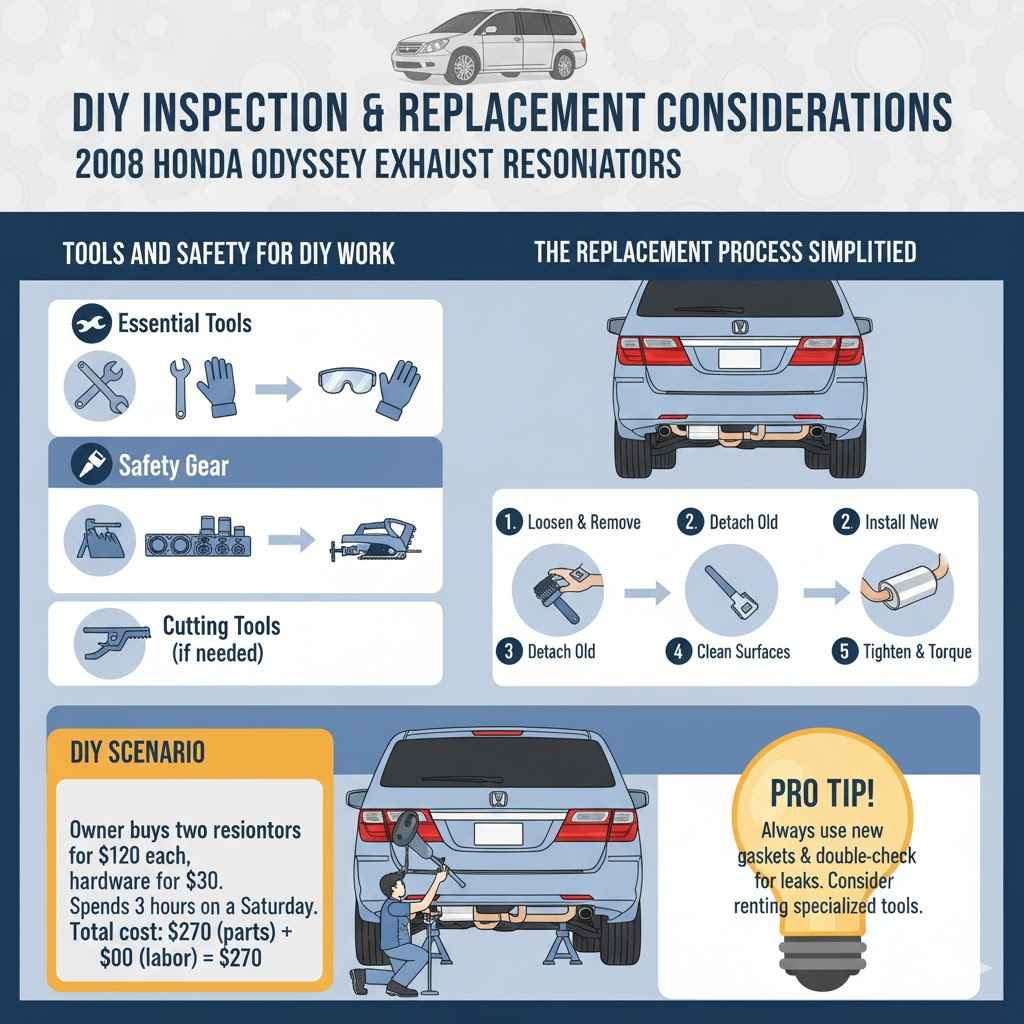
Safety is paramount when working on any part of a vehicle, especially underneath it. Always use sturdy jack stands to support the vehicle; never rely solely on a jack. Wear safety glasses to protect your eyes from debris and gloves to keep your hands clean and protected.
For resonator
- Essential Tools: Floor jack, jack stands (minimum of four for stability), lug wrench, socket set (metric sizes), extensions for sockets, penetrating oil (like PB Blaster), and a torque wrench are generally required.
- Safety Gear: Safety glasses or goggles, work gloves, and sturdy footwear are essential for protecting yourself from injuries and chemicals.
- Cutting Tools (if needed): If dealing with heavily rusted bolts or pipes, a reciprocating saw (Sawzall) or an angle grinder with a metal cutting disc might be necessary. Always use these with extreme caution and appropriate safety measures.
- Replacement Parts: Ensure you have the correct replacement resonators for your 2008 Honda Odyssey, as well as new gaskets, clamps, or bolts as needed.
The Replacement Process Simplified
Once you have gathered your tools and parts, and the vehicle is safely supported, the general process involves loosening and removing the fasteners holding the old resonators in place. This might involve clamps or bolts that connect the resonators to the rest of the exhaust piping.
If the bolts or clamps are rusted, apply penetrating oil and let it soak in. You may need to gently tap the area to help the oil work its way in. Once the old resonators are removed, clean the mating surfaces where the new ones will attach.
Install the new resonators using new gaskets and hardware, tightening fasteners gradually and evenly. Finally, use a torque wrench to ensure they are secured to the manufacturer’s specified torque settings.
- Loosen and Remove: Carefully loosen and remove any clamps or bolts securing the old resonators. If bolts are seized, use penetrating oil and patience.
- Detach Old Resonators: Once fasteners are removed, the old resonators should be free. You might need to gently pry them loose if they are stuck due to rust.
- Clean Mating Surfaces: Before installing new parts, clean the exhaust pipes where the resonators will connect. Remove any rust or old gasket material.
- Install New Resonators: Position the new resonators and secure them with new clamps or bolts. Ensure proper alignment to avoid stress on the exhaust system.
- Tighten and Torque: Tighten all fasteners evenly. Use a torque wrench to tighten bolts to the manufacturer’s specifications for a secure and leak-free installation.
A sample scenario for DIY
Frequently Asked Questions
Question: How many mufflers are on a 2008 Honda Odyssey?
Answer: A 2008 Honda Odyssey typically has one main muffler located towards the rear of the vehicle. This is the primary component responsible for reducing the overall volume of the exhaust noise.
Question: Can I remove resonators to make my Odyssey louder?
Answer: Yes, removing the resonators will generally make your 2008 Honda Odyssey’s exhaust louder. However, it will also likely introduce an undesirable drone at certain speeds, which many owners find unpleasant.
Question: What happens if a resonator rusts through?
Answer: If a resonator rusts through, it will create an exhaust leak. This will make the exhaust significantly louder and may result in a noticeable drone or raspiness in the sound.
Question: Are the resonators the same for all 2008 Honda Odyssey models?
Answer: For the 2008 Honda Odyssey, the two-resonator setup is standard across most models. Minor variations are uncommon but could exist based on specific regional markets or special packages.
Question: How long do resonators typically last?
Answer: Resonators are generally durable and can last for many years, often the lifespan of the vehicle. However, factors like rust, corrosion, and physical impact can shorten their life.
Final Thoughts
Your 2008 Honda Odyssey is equipped with two resonators designed to ensure a quiet and refined exhaust sound. These components work with the muffler to cancel specific frequencies, preventing bothersome drone. Understanding their role helps you appreciate the vehicle’s comfort features.
If you notice changes in exhaust noise, inspecting these resonators is a good step. Regular checks can help maintain that smooth Odyssey ride you expect.


