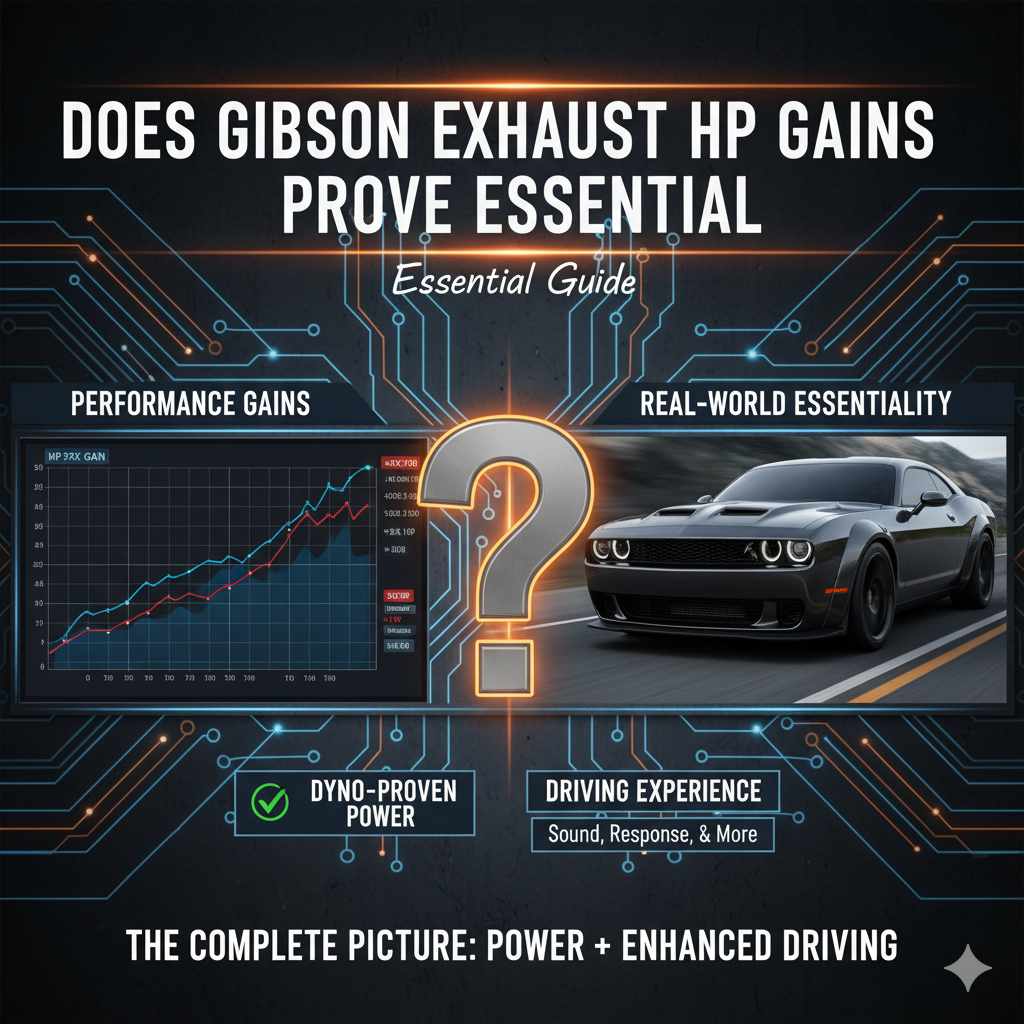
Does Gibson Exhaust HP Gains Prove Essential
For most daily drivers, the advertised horsepower gains from a Gibson exhaust might not be absolutely essential for everyday performance. However, for enthusiasts seeking a more powerful, responsive, and audibly satisfying driving experience, these gains can be a significant and worthwhile upgrade.

GIBSON
Gibson Performance Exhaust Gibson 9532 Super Truck…
- Exits In Front of Rear Tire; w/o Heat shield; Incl. Muffler/Pipes/Stainless Sport Tips
- Superflow Performance Aluminized Muffler, fully welded, Not packed or screened, nothing to blow out
- Superflow Performance Aluminized Muffler, fully welded, Not packed or screened, nothing to blow out
As an Amazon Associate I earn from qualifying purchases.
Hey everyone! If you’ve ever peeked at car parts or heard buddies talk about engine upgrades, you’ve probably bumped into the topic of exhaust systems. It’s a common question: “Do these fancy exhaust systems really make my car go faster?” Specifically, you might be wondering if investing in a Gibson exhaust for those promised horsepower (HP) gains is actually a big deal. It can feel a bit confusing with all the technical talk out there. The good news is, we’re going to break it down simply. We’ll explore if those HP gains are a must-have or just a nice-to-have, and what you can realistically expect. Stick around, and we’ll get your questions answered so you can make the best choice for your ride!
Understanding Exhaust Systems and Horsepower
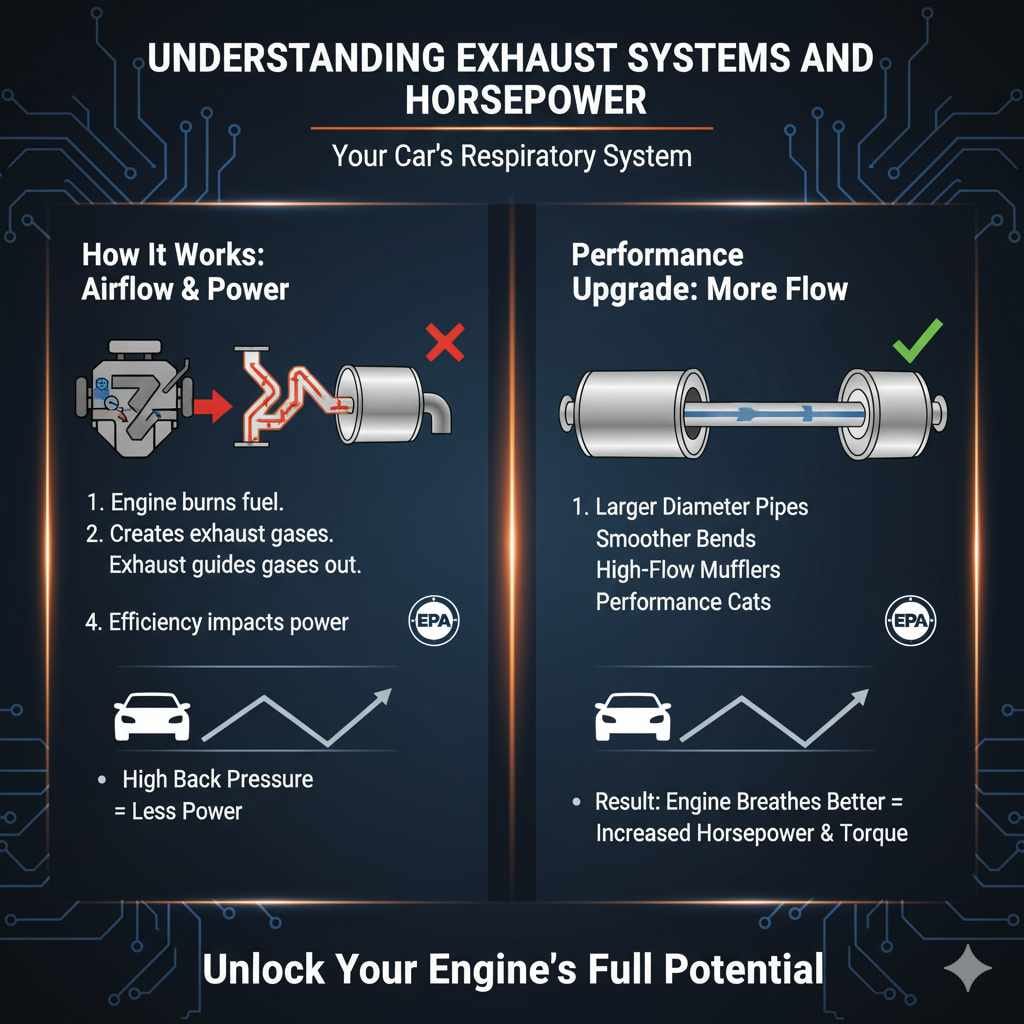
Before we dive into whether Gibson exhaust HP gains are “essential,” let’s quickly cover what an exhaust system does. Think of it as your car’s respiratory system. After your engine burns fuel, it creates exhaust gases. The exhaust system’s job is to safely guide these hot gases away from the engine and out the back of your vehicle. It also helps reduce noise and, importantly for our discussion, can impact how efficiently the engine breathes.
When an engine runs, it sucks in air and fuel, combusts it, and then pushes out the spent gases. The easier it is for the engine to push out those gases, the less work it has to do. This is where exhaust upgrades come in. A less restrictive exhaust system allows gases to exit more quickly and with less back pressure. Less back pressure means the engine can take in a fresher charge of air and fuel for the next combustion cycle, leading to more power – hence, horsepower gains.
How Exhaust Systems Affect Performance
The stock exhaust on most cars is designed with a few priorities: keeping noise down, meeting emissions standards set by government bodies like the Environmental Protection Agency (EPA), and being cost-effective to manufacture. These priorities often mean the system is built with narrower pipes, multiple mufflers, and catalytic converters that can restrict the flow of exhaust gases. This restriction is called “back pressure.”
While some back pressure is necessary for certain engine designs to run smoothly and efficiently (especially at lower RPMs), excessive back pressure can hinder performance. It’s like trying to exhale through a straw – it’s harder to get the air out. When you upgrade to a performance exhaust, like one from Gibson, you’re typically getting:
- Larger Diameter Pipes: More space for exhaust gases to flow.
- Smoother Bends: Less turbulence and resistance.
- High-Flow Mufflers: Designed to reduce noise without choking the exhaust.
- Performance Catalytic Converters (if applicable): Still meeting emissions but with better flow.
By removing these restrictions, the engine can “breathe” more freely. This improved breathing efficiency can translate directly into increased horsepower and torque. Torque is the rotational force your engine produces, which is what gets you moving from a standstill or accelerating. More horsepower and torque mean your car can potentially accelerate faster and feel more responsive.
What Gibson Exhaust Offers
Gibson Performance Exhaust Systems has been in the game for a long time, focusing on creating exhaust solutions for trucks, SUVs, and Jeeps. They’re known for building durable, high-quality systems. When they talk about HP gains, they’re referring to the potential increase in engine power derived from their exhaust products.
Gibson often designs their systems to:
- Improve Exhaust Flow: This is their primary goal for performance.
- Enhance Sound: Many enthusiasts want a more aggressive, satisfying exhaust note.
- Increase Durability: Often using stainless steel to resist rust and corrosion, especially important for vehicles that might see off-road use or harsh weather.
- Provide a Bolt-On Solution: Designed to fit specific vehicles, making installation simpler.
The horsepower gains advertised by Gibson, or any exhaust manufacturer, are usually measured on a dynamometer (a machine that measures engine power). These tests are often done on specific vehicles with particular engine configurations. It’s important to remember that real-world gains can vary based on several factors, which we’ll discuss later.
Gibson’s Approach to Performance
Gibson’s philosophy seems to center around providing a balanced performance upgrade. They aim for a noticeable improvement in power and throttle response without making the exhaust excessively loud or obnoxious for daily driving. They often emphasize the combination of improved flow and a pleasing sound. Their systems are usually designed to work well with the vehicle’s specific engine, aiming for optimal performance across a range of RPMs, not just at the very top end.
Their product lines often include:
| Product Type | Primary Goal | Typical Benefit |
|---|---|---|
| Cat-Back Exhaust Systems | Complete exhaust replacement from the catalytic converter back. | Significant HP/torque gains, improved sound, better flow. |
| Axle-Back Exhaust Systems | Replaces the muffler and tailpipe section. | Noticeable sound improvement, some minor performance gains. |
| Headers/Exhaust Manifolds | Replaces the part that bolts directly to the engine. | Potentially larger HP/torque gains, but more complex installation. |
The “HP gains” you see advertised are usually associated with their more comprehensive systems, like cat-back kits or headers, because these components have the biggest impact on exhaust flow.
Are Gibson Exhaust HP Gains Essential for Your Daily Driver?
This is the million-dollar question, and the answer is: it depends on what you want and what you drive. For someone who uses their car purely for commuting from point A to point B, and isn’t particularly bothered by the stock exhaust sound or performance, the extra horsepower might not feel “essential.” Your car already has enough power to get you where you need to go safely and legally.
However, if you enjoy the feeling of a more responsive engine, appreciate a richer exhaust note, or tow/haul regularly, then those HP gains could certainly enhance your driving experience significantly. Let’s break down who might find them essential and who might not:
Who Might Find Gibson Exhaust HP Gains Essential:
- Enthusiasts: People who love cars and want to get the most out of their vehicle’s performance.
- Towing/Hauling Needs: If you frequently tow a trailer or carry heavy loads, the extra torque and horsepower can make a noticeable difference in acceleration and maintaining speed.
- Off-Roaders: Many trucks and SUVs that see off-road action benefit from better exhaust flow for improved engine “breathing” under demanding conditions.
- Those Seeking a Specific Sound: For many, the performance gain is secondary to the enhanced, sportier sound a performance exhaust provides.
- Drivers of Stock, Underpowered Vehicles: If your vehicle feels sluggish from the factory, a performance exhaust can be one of the more accessible ways to improve its performance.
Who Might Not Find Gibson Exhaust HP Gains Essential:
- Commuters Primarily: If your main goal is fuel efficiency and reliable transportation, and the stock performance is adequate.
- Those Concerned About Noise: While Gibson offers various sound levels, some performance exhausts can be louder than stock, which might be undesirable for daily driving or if local noise ordinances are strict.
- Budget-Conscious Owners: Performance exhaust systems are an investment, and the cost might not be justified if the performance boost isn’t a priority.
- Owners of Already High-Performance Vehicles: Cars that come with high-horsepower engines from the factory may already have well-designed exhaust systems, making the gains from an aftermarket one less significant.
Factors Influencing Real-World HP Gains
It’s really important to understand that the advertised horsepower gains are often under ideal conditions. Several factors can affect how much actual power you feel:
- Vehicle Make and Model: A 5.7L V8 truck will likely see different percentage gains than a 4-cylinder economy car.
- Engine Size and Type: Larger displacement engines often have more potential for improvement.
- Other Modifications: A performance exhaust works best when other systems (like intake and tuning) are also optimized. If you only change the exhaust, the gains might be capped by other restrictions in the engine. For instance, a cold air intake can work synergistically with a performance exhaust. You can learn more about combined effects on automotive intake system benefits.
- Stock Exhaust Design Limitations: How restrictive is the factory system? Some cars have surprisingly decent stock exhausts, meaning aftermarket gains will be smaller.
- Installation Quality: An improperly installed system can lead to leaks or reduced performance.
- Environmental Factors: Temperature, altitude, and humidity can all play a tiny role.
Gibson often provides estimated HP gains for specific applications. For example, on a popular truck model, they might claim a gain of 10-20 horsepower. While that might sound small, torque is also crucial. Often, these systems improve low-end and mid-range torque, which is what you feel during everyday acceleration. A gain of 15 lb-ft of torque can make a vehicle feel significantly peppier.
Installation and What to Expect
One of the great things about many aftermarket exhaust systems, including those from Gibson, is that they are often designed as direct bolt-on replacements. This means they are engineered to fit the mounting points of your vehicle’s original exhaust system, making installation much simpler for those with some mechanical inclination.
DIY Installation vs. Professional Installation
DIY Installation:
- Pros: Saves on labor costs, provides a sense of accomplishment.
- Cons: Requires basic tools, potentially a lift or jack stands for safety, some mechanical knowledge, and time. Exhaust bolts can be stubborn and rusty.
Professional Installation:
- Pros: Done quickly and correctly by experienced technicians, often comes with a labor warranty.
- Cons: Adds to the overall cost of the upgrade.
If you’re new to car modifications, it’s always wise to start with simpler tasks. Changing an exhaust is definitely achievable for a beginner, but safety is paramount. Ensure you have proper support for your vehicle if you lift it and wear appropriate safety gear, like gloves and eye protection. For a more detailed overview of safely working on your car, resources like those found on Popular Mechanics can be very helpful.
The Sound Factor
One of the most immediate and noticeable differences after installing a performance exhaust is the sound. Gibson offers different sound profiles, often categorized from mild to street-legal aggressive. It’s crucial to listen to sound clips of the specific Gibson system for your vehicle if possible. What sounds great to one person might be too loud or have an undesirable tone for another.
Consider your typical driving environment. If you do a lot of highway driving, a loud exhaust can become tiresome due to drone (a constant, irritating humming sound). Gibson aims to minimize this drone in their designs, but it’s still something to be aware of.
Are There Alternatives for Performance Gains?
While a Gibson exhaust is a popular choice for performance and sound, it’s not the only way to potentially increase your vehicle’s horsepower. Here are a few other common upgrades that can complement or replace exhaust modifications:
Complementary Upgrades
- Cold Air Intake (CAI): Replaces the stock airbox with a system designed to draw in cooler, denser air. Cooler air allows for a more efficient burn and can increase horsepower. As mentioned before, pairing a CAI with a performance exhaust is a very common and effective strategy.
- ECU Tuning/Chip Tuning: This involves reprogramming the vehicle’s engine control unit (ECU) to optimize fuel delivery, ignition timing, and other parameters for performance. This can yield significant gains, especially when combined with other hardware upgrades like exhaust and intake.
- Performance Spark Plugs and Ignition Coils: Ensuring a strong, consistent spark can improve combustion efficiency.
Alternative Exhaust Brands
While this article focuses on Gibson, other reputable brands like MagnaFlow, Borla, Flowmaster, and Corsa also offer performance exhaust systems. Each brand has its own philosophy regarding sound, performance characteristics, and materials, so researching and comparing them can be beneficial.
| Upgrade Type | Primary Goal | Typical HP Gain (Estimate) | Considerations |
|---|---|---|---|
| Gibson Cat-Back Exhaust | Improved flow, sound, moderate HP gain. | 5-20 HP | Bolt-on installation, enhanced sound. |
| Cold Air Intake | Better engine breathing, more air in. | 3-15 HP | Can complement exhaust, relatively easy install. |
| ECU Tune | Optimized engine computer settings. | 10-40+ HP (varies greatly) | Can be complex, potential warranty impact, often requires other mods to maximize. |
| Headers | Maximized exhaust flow from engine ports. | 10-30+ HP | More complex installation, potential emissions issues depending on type. |
It’s important to note that combining multiple upgrades often yields better results than a single modification. For example, a Gibson exhaust paired with a cold air intake and a custom ECU tune can unlock significantly more performance than any one of those items alone.
The Verdict: Is It Essential?
So, let’s circle back to our main question: “Does Gibson Exhaust HP Gains Prove Essential?”
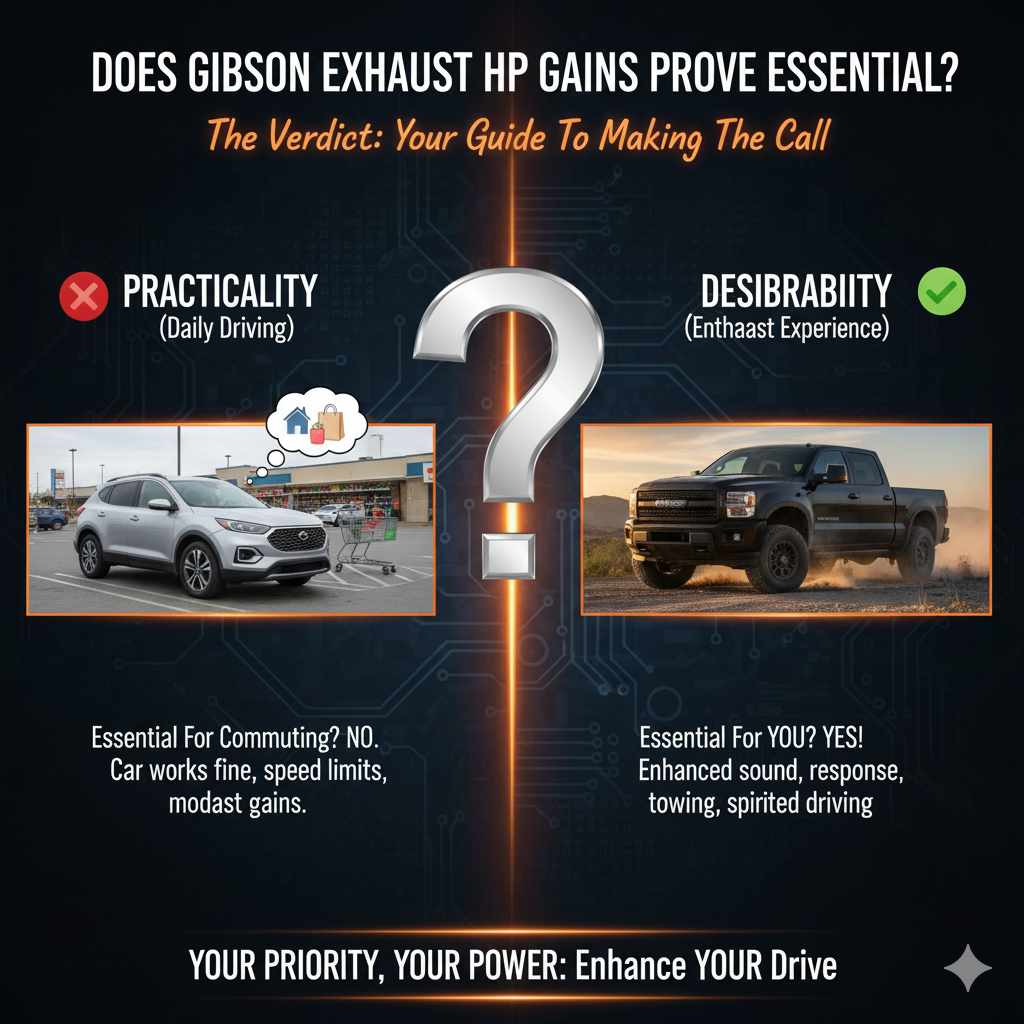
For the vast majority of car owners who use their vehicles for daily commuting, the answer is likely no, not essential. Your car will still get you to work, pick up groceries, and run errands perfectly fine with its stock exhaust. The legal limits of speed and the typical demands of everyday driving mean you might not consistently utilize those extra few horsepower.
However, for those who crave a more engaging driving experience, enjoy the rumble of a performance exhaust, or need that extra bit of grunt for towing, trailering, or spirited driving, then the HP gains from a Gibson exhaust can absolutely be considered highly desirable and a very worthwhile upgrade. They contribute to a more responsive, powerful, and satisfying connection with your vehicle.
Think about it this way: Is having a sports car essential for getting around town? No. But for someone who loves driving, it’s a fundamental part of what makes their automotive experience enjoyable. A performance exhaust can be seen in a similar light – not essential for basic transport, but deeply valuable for enhancing the driving pleasure and capability of your vehicle.
Ultimately, the decision comes down to your personal priorities, your vehicle, and your budget. If you’re looking for a noticeable improvement in performance, sound, and overall driving feel for your truck or SUV, a Gibson exhaust is an excellent option that can deliver tangible results beyond just the numbers on a dyno sheet.
Frequently Asked Questions (FAQ)
Q1: How much horsepower can I realistically expect from a Gibson exhaust on my car?
A1: The horsepower gains vary significantly by vehicle. For many trucks and SUVs, you might see an increase of 5 to 20 horsepower. Gibson usually lists estimated gains for specific applications on their website. Remember, this is often a combination of horsepower and torque.
Q2: Will a Gibson exhaust improve my gas mileage?
A2: It depends on how you drive. By improving engine efficiency, it’s possible to see a slight improvement in fuel economy, especially during steady cruising. However, if the added power encourages you to accelerate harder and drive more aggressively, you might actually use more fuel.
Q3: Is a Gibson exhaust system legal in all areas?
A3: Gibson systems are generally designed to meet EPA standards. However, it’s always a good idea to check your local and state regulations regarding exhaust noise levels and emissions, especially if you’re considering modifications beyond a simple cat-back system.
Q4: Can I install a Gibson exhaust myself?
A4: Yes, many Gibson exhaust systems are designed for direct bolt-on installation, making them suitable for DIY projects. However, you’ll need basic tools, possibly a lift or jack stands for safety, and some mechanical skill. If you’re unsure, professional installation is recommended.
Q5: Will a Gibson exhaust make my truck sound really loud, like a race car?
A5: Gibson offers different sound levels. Many of their systems provide a deeper, more aggressive tone than stock but are designed to avoid excessive loudness or annoying drone, especially on the highway. It’s best to listen to sound clips specific to the system for your vehicle.
Q6: Do I need to tune my car’s computer after installing a Gibson exhaust?
A6: For most cat-back exhaust systems, an ECU tune is not necessary. The system is designed to work with your vehicle’s factory computer. However, if you install headers or other more extensive modifications, a tune might be beneficial or even recommended to optimize performance and avoid check engine lights.
Q7: What’s the difference between a cat-back and an axle-back exhaust?
A7: A cat-back system replaces everything from the catalytic converter back (pipes, muffler, tips). An axle-back system typically only replaces the muffler and tailpipe section. Cat-back systems generally offer more significant performance and sound improvements.
Conclusion
Deciding whether the horsepower gains offered by a Gibson exhaust are “essential” is a personal journey, and it’s reassuring to know there’s no single right answer. For many everyday drivers, the stock system provides perfectly adequate performance. However, for those who desire a more thrilling drive, enhanced responsiveness for towing, or simply a more satisfying engine note, the improvements delivered by a quality aftermarket exhaust like Gibson can indeed be a game-changer. By understanding how exhaust systems work and what Gibson aims to achieve with their products, you can confidently assess if these gains align with your automotive goals. Ultimately, investing in a performance exhaust is about tailoring your vehicle to your driving passion, and that’s a reward in itself, essential or not.
Related pick: Check today's price on Amazon