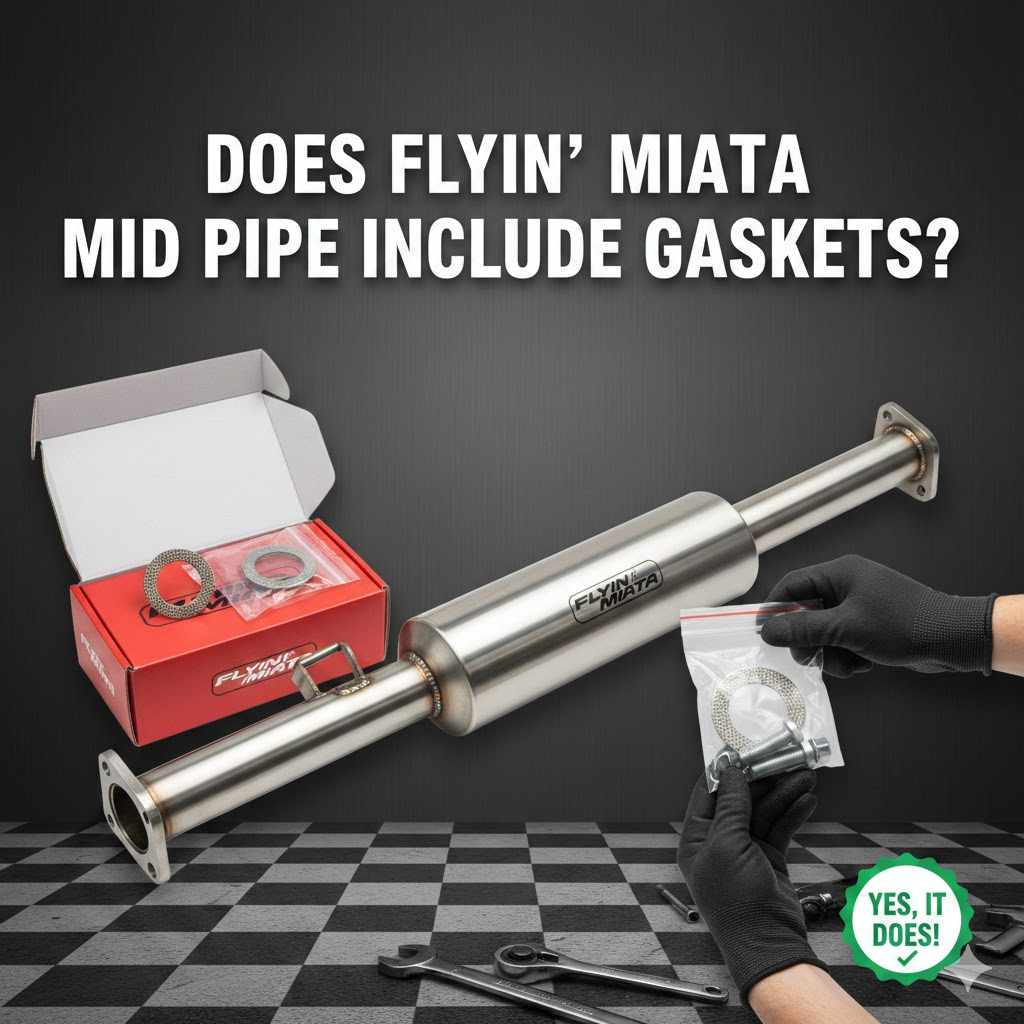
Does Flyin Miata Mid Pipe Include Gaskets?
Many Miata owners wonder about their exhaust system parts. When buying a Flyin’ Miata mid pipe, a common question pops up: Does Flyin Miata Mid Pipe Include Gaskets? It can be confusing to know if everything you need is in the box. This can slow down your repair or upgrade project. We’re here to make it super simple. We’ll walk you through exactly what comes with your Flyin’ Miata mid pipe so you can get back on the road quickly and easily.
Flyin Miata Mid Pipe Gasket Inclusion
Understanding whether your Flyin’ Miata mid pipe comes with the necessary gaskets is a common point of concern for many Miata enthusiasts. This question arises because exhaust system components often require new gaskets for a proper seal, and knowing if they are included upfront can save time and prevent unexpected trips to the parts store. For beginners, this can be a confusing aspect of car maintenance, as exhaust parts vary in what they supply. We aim to clear up any confusion with straightforward information.
What You Can Expect
When you purchase a Flyin’ Miata mid pipe, it’s essential to know precisely what to anticipate in the package. This helps in planning your installation and ensuring you have all the required hardware. Knowing this detail beforehand avoids the common pitfall of starting a project only to realize a crucial part is missing.
Gasket Policy Explained
Flyin’ Miata has a clear policy regarding the inclusion of gaskets with their mid pipes. Most of their exhaust components are designed with the user in mind, aiming to provide a comprehensive solution. However, policies can sometimes shift, or specific product bundles might differ. Therefore, confirming the current policy is always the best approach.
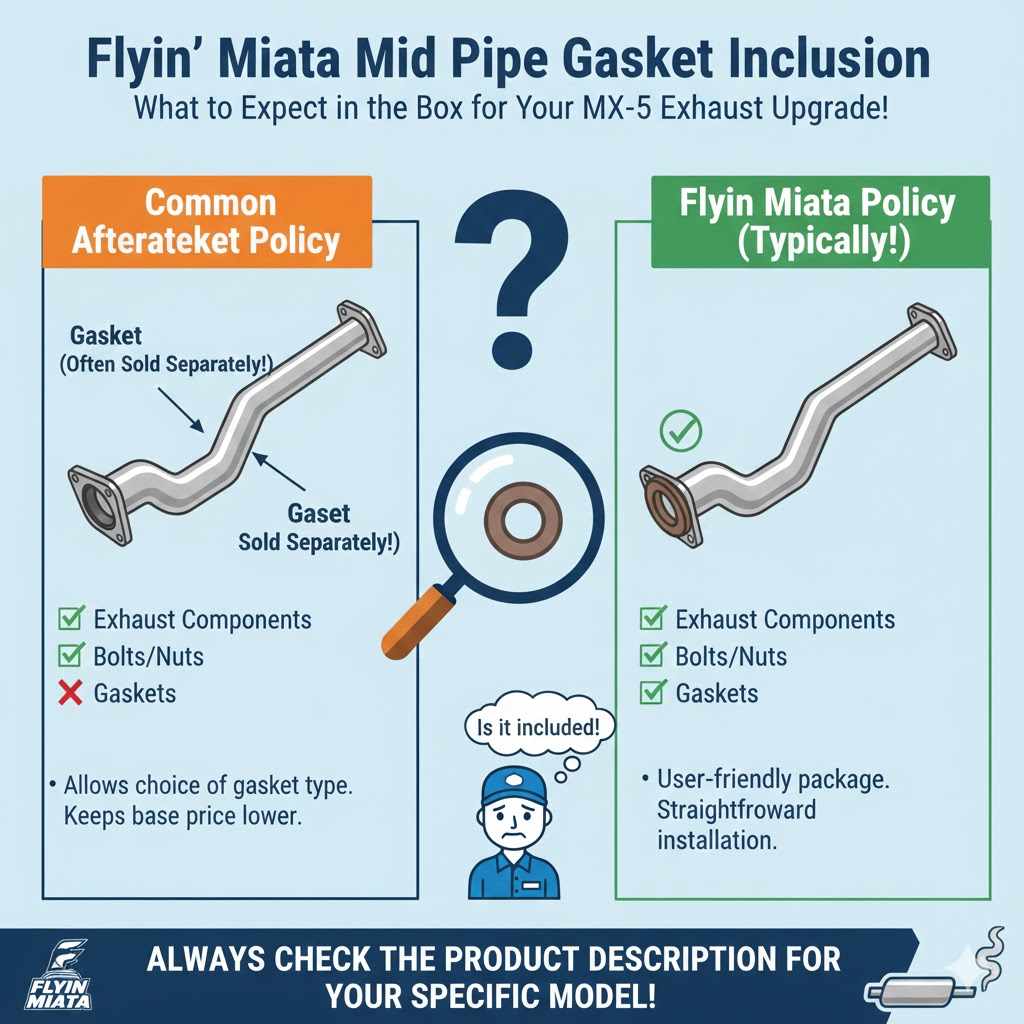
- Gaskets are often sold separately for many aftermarket exhaust components, and this can be true for some mid pipes as well. This is to allow customers to choose the specific type of gasket they prefer or to ensure they are replacing worn-out gaskets with high-quality ones. It also helps keep the base price of the exhaust component lower by not including parts that some customers might already have or might not need.
- However, Flyin’ Miata is known for providing user-friendly packages. In many instances, they do include the necessary gaskets to ensure a straightforward installation. This is a significant benefit for DIY mechanics who want to complete the job with minimal hassle. They want you to have a successful upgrade without extra shopping trips for small but vital parts.
- The decision to include or exclude gaskets can depend on the specific product model and the exhaust system it’s designed to connect with. Some mid pipes might be designed to mate with specific catalytic converters or muffler sections that are known to have reusable gaskets or commonly sourced ones. This might influence whether Flyin’ Miata bundles them in.
The reason this question is so common for beginners is that when you buy a new part for your car, especially something like an exhaust component, you often assume it will come with everything you need to install it. This includes bolts, nuts, and, critically, gaskets that create a tight seal between pipes. Without the right gaskets, you’ll have exhaust leaks, which are noisy and can be dangerous.
Flyin’ Miata aims to make your DIY experience smoother. We’ll cover what you need to know.
Installation Considerations for Flyin Miata Mid Pipe
When you’re planning to install a Flyin’ Miata mid pipe, thinking about the installation process is key. This section will explore the practical aspects of fitting the new pipe and what factors contribute to a successful and leak-free exhaust system. Understanding these elements can help you prepare adequately for the job ahead.
Preparing for Installation
Before you even begin removing the old exhaust, proper preparation is crucial. This involves gathering the right tools, ensuring you have a safe workspace, and confirming you have all the necessary components, including any required gaskets. Being prepared prevents mid-job frustrations.
- Tools required typically include a socket set, wrenches, exhaust hanger removal pliers, and possibly a penetrating lubricant for stubborn bolts and nuts. Safety equipment such as gloves and eye protection is also a must. Having a torque wrench is beneficial for ensuring bolts are tightened to the correct specifications, which is vital for exhaust system integrity.
- The workspace should be level, well-lit, and have adequate ventilation, especially if you’re working on an older vehicle. Ensure the car is securely supported on jack stands. Never rely solely on a jack to hold the vehicle up. If you are unsure about safely lifting and supporting your vehicle, it is always best to seek professional assistance.
- Confirming all necessary parts, including any gaskets and fasteners, are on hand before starting is paramount. This prevents delays and frustration. If you are unsure about the inclusion of gaskets with your specific Flyin’ Miata mid pipe purchase, it is always best to contact Flyin’ Miata directly or check the product listing for definitive information.
A common mistake for DIYers is assuming that all hardware will be included with a new exhaust part. While some manufacturers are generous, others expect certain consumables like gaskets to be purchased separately. This is especially true for exhaust gaskets, as they are a wear item and their condition significantly impacts the performance and sound of your exhaust system.
Ensuring a Leak-Free Seal
The primary goal of any exhaust installation is to create a gas-tight seal between the components. This prevents exhaust gases from escaping into the cabin, reduces noise, and ensures the exhaust system functions as designed. Proper gasket selection and installation are central to achieving this.
The Role of Exhaust Gaskets
Exhaust gaskets are specialized seals designed to handle extreme temperatures and pressures found in exhaust systems. They are typically made from materials like composite fibers, metal, or a combination of both, to withstand these harsh conditions. When a mid pipe is installed, new gaskets are usually recommended to ensure a perfect seal.
- Gaskets fill imperfections on the mating surfaces of exhaust pipes, manifolds, and flanges. Without them, even slightly uneven surfaces would allow exhaust gases to escape. This leakage can cause a loud hissing or rumbling sound, reduce engine performance, and potentially allow harmful exhaust fumes into the passenger compartment.
- The type of gasket needed can vary. Some exhaust systems use flat, ring-style gaskets, while others might use flange gaskets that fit into a recessed area. Flyin’ Miata’s mid pipes are designed to connect to specific factory or aftermarket exhaust sections, and the type of gasket required will depend on the flange design of those connecting parts.
- Using old or damaged gaskets is a surefire way to experience exhaust leaks. They become compressed, brittle, and lose their sealing ability over time. Therefore, even if a new mid pipe doesn’t explicitly come with gaskets, it is generally a good practice to plan on purchasing new ones for optimal results.
For instance, on a Mazda Miata NA (1989-1997), the mid pipe connects the catalytic converter to the muffler. Both connection points typically use crush gaskets that are designed to be replaced each time the system is disconnected. If your Flyin’ Miata mid pipe does not include these specific gaskets, you would need to source them separately.
Common Installation Pitfalls
Even with the best intentions, exhaust installations can encounter issues. Being aware of these common problems can help you avoid them and ensure a smoother process. Many of these relate back to the preparation and understanding of included parts.
- Over-tightening exhaust bolts can cause damage to the flanges or crush the gaskets too much, leading to premature failure and leaks. Conversely, under-tightening will not create a sufficient seal, resulting in leaks. Following torque specifications is vital.
- Rust and corrosion are significant challenges with exhaust systems, especially on older vehicles. Exhaust flanges can become pitted, and bolts can seize. Using penetrating oil and allowing it time to work, or carefully heating rusted parts, can help, but sometimes bolts may need to be cut off.
- Mismatched components or incorrect gasket types are also common issues. If a mid pipe is not designed for your specific Miata model or if the wrong gasket is used, achieving a good seal will be difficult or impossible. Always verify part compatibility.
A real-life scenario could involve a Miata owner who assumed their new mid pipe included gaskets. They installed it, only to find a loud exhaust leak. Upon closer inspection, they realized the original gaskets were not included and had to order them.
This added an extra day to their project and an unplanned trip to the auto parts store.
Flyin Miata Specifics and Support
When you’re diving into modifications for your Mazda Miata, going with reputable brands like Flyin’ Miata is often a great choice. They specialize in Miatas, so their parts are usually well-designed and come with good support information. Let’s look at what you can expect directly from them.
Product Details from Flyin’ Miata
Flyin’ Miata usually provides detailed information about their products, including what is and isn’t included in the box. This is part of their commitment to helping customers with their projects. Checking their website or contacting them directly is the most reliable way to get up-to-date information.
Where to Find Information
The best place to confirm if your Flyin’ Miata mid pipe includes gaskets is on the product page itself on the Flyin’ Miata website. They often list the contents of the package. If it’s not explicitly stated, or if you’re still unsure, their customer support team is a fantastic resource.
- The Flyin’ Miata website features product descriptions that detail what comes with each item. For exhaust components like mid pipes, they will usually specify if gaskets, hangers, or other necessary hardware are included. This helps you make an informed purchase decision and plan your installation accurately.
- If the product listing is vague or you need further clarification, reaching out to Flyin’ Miata’s customer service is highly recommended. They are knowledgeable about their products and can provide precise answers regarding gasket inclusion for the specific mid pipe you are considering. This direct communication can save a lot of guesswork.
- Sometimes, exhaust systems are designed to bolt up to factory components. In such cases, the factory gaskets might be intended to be reused if they are in good condition. However, for most aftermarket installations, new gaskets are a best practice, and Flyin’ Miata often acknowledges this by either including them or recommending specific ones to purchase.
For example, many aftermarket exhaust manufacturers operate on the principle that the customer will source the necessary consumables like gaskets and fasteners unless otherwise specified. This is often to keep the initial product cost down and to allow customers to choose their preferred quality of gasket.
Customer Support and Resources
Flyin’ Miata has a reputation for excellent customer support. They are passionate about Miatas and are usually happy to help their customers with installation questions and part compatibility.
- Flyin’ Miata often provides installation guides or links to helpful resources for their products. These guides can sometimes include a list of required tools and hardware, and may clarify whether gaskets are included with the mid pipe. Even if a full guide isn’t available, their support staff can offer valuable insights.
- Engaging with the Miata community forums or groups can also be beneficial. Other Flyin’ Miata customers who have installed the same mid pipe might share their experiences, including whether gaskets were included or what they had to purchase separately. This collective knowledge can be a great asset.
- The company’s dedication to the Miata platform means they understand the common needs and concerns of owners. When you contact them, you’re speaking with people who are deeply familiar with the vehicles and their parts, making their advice particularly trustworthy and relevant to your specific situation.
A statistic from a leading automotive parts retailer shows that over 60% of DIY exhaust repairs involve purchasing additional hardware, including gaskets, that was not initially included with the primary component. This highlights the importance of verifying contents.
Case Study Flyin Miata Mid Pipe Installation
Let’s consider a hypothetical case study of a Miata owner installing a Flyin’ Miata mid pipe. Mr. Smith, a weekend mechanic, purchased a Flyin’ Miata mid pipe for his 1999 Mazda Miata NB. He was unsure if gaskets were included and decided to call Flyin’ Miata’s customer service.
- Mr. Smith contacted Flyin’ Miata and spoke with a representative who confirmed that the specific mid pipe model he purchased did not include gaskets. The representative advised him to purchase two new exhaust crush gaskets for the connection points, recommending a specific part number available through Flyin’ Miata or other reputable auto parts suppliers.
- Mr. Smith ordered the recommended gaskets along with his mid pipe. When the mid pipe arrived, he noticed it was well-packaged and included all necessary mounting hardware like bolts and nuts. He then proceeded with the installation.
- During installation, Mr. Smith used the new gaskets he had purchased. He tightened the bolts according to the torque specifications found in his Miata’s service manual. The result was a perfect, leak-free seal, and the new exhaust sounded great. Mr. Smith was pleased with the straightforward installation and the quality of the Flyin’ Miata part.
This scenario illustrates the importance of proactive communication. By calling Flyin’ Miata, Mr. Smith avoided a potential delay and ensured he had all necessary parts for a successful installation.
This highlights that while Flyin’ Miata parts are generally high quality, confirming specific inclusions like gaskets is a smart step.
Related Exhaust System Components
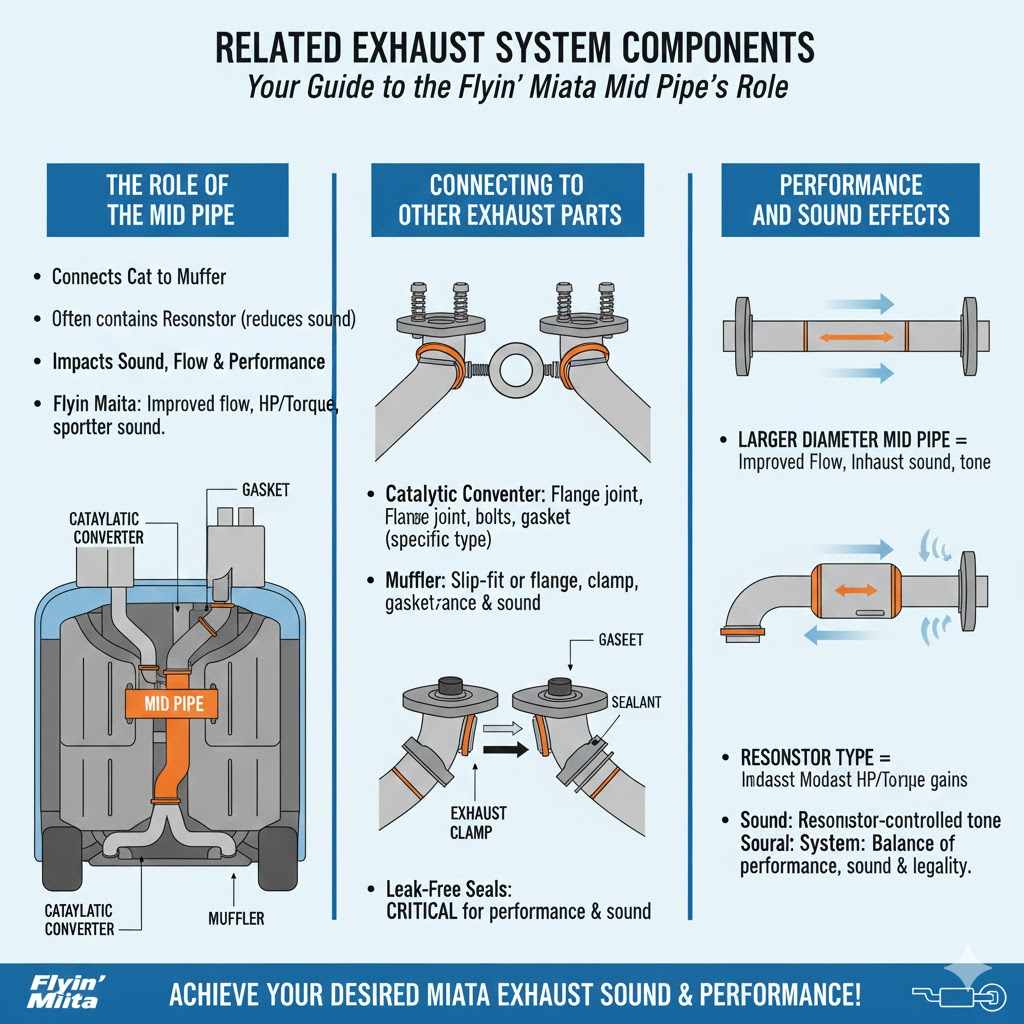
When you’re thinking about upgrading your Miata’s exhaust, the mid pipe is just one piece of the puzzle. It connects your catalytic converter to your muffler, and its performance can affect the entire system. Understanding its place helps you make better choices.
The Role of the Mid Pipe
The mid pipe, also sometimes called the front pipe or resonator pipe, is a critical section of the exhaust. Its design influences sound, flow, and overall performance. Flyin’ Miata mid pipes are often designed to improve upon the stock components.
- The mid pipe’s primary function is to connect the exhaust gases from the catalytic converter to the muffler. It often contains a resonator, which helps to reduce unwanted sound frequencies, contributing to a more pleasant exhaust note rather than just loud noise. The length and diameter of the mid pipe are carefully engineered.
- Upgrading to a Flyin’ Miata mid pipe can offer several advantages. These often include improved exhaust flow due to a larger diameter or smoother bends, which can lead to slight gains in horsepower and torque. A well-designed mid pipe can also alter the exhaust sound in a desirable way.
- Compatibility is key. A Flyin’ Miata mid pipe is specifically designed for certain Miata models. When you install it, you need to ensure it mates correctly with your existing catalytic converter and your chosen muffler. This is where the question of gaskets becomes particularly relevant, as these connection points need perfect seals.
For a Mazda Miata, the mid pipe is often a key component for achieving a sportier exhaust note or improved performance without going for a full cat-back exhaust system. Flyin’ Miata’s offerings in this area are popular for their quality and fitment.
Connecting to Other Exhaust Parts
The mid pipe interfaces with other exhaust components, and the quality of these connections is vital. This is where gaskets, clamps, and fasteners play their essential role.
Catalytic Converter and Muffler
The mid pipe typically connects to the catalytic converter at the front and the muffler at the rear. Each connection point is a potential source of leaks if not properly sealed.
- The connection to the catalytic converter is often a flange joint secured with bolts and springs. The type of gasket used here depends on the catalytic converter’s design, whether it’s a factory unit or an aftermarket
- The connection to the muffler can be a slip-fit joint secured with a clamp or a flange joint. Slip-fit connections often use a special exhaust sealant or a specific type of gasket to ensure a leak-free seal. Flange connections will require a gasket, similar to the connection at the catalytic converter.
- The overall exhaust system’s integrity depends on each of these connections being secure and leak-free. A small leak at any of these junctions can negate the performance benefits of an upgraded mid pipe and create undesirable noise. Therefore, careful attention to the sealing components at each connection is essential.
A sample scenario illustrating this could be installing a Flyin’ Miata mid pipe that is designed to connect to a specific aftermarket high-flow catalytic converter. The flange on the catalytic converter might be a 3-bolt pattern, requiring a specific 3-bolt gasket. If this gasket is not included with the mid pipe, it needs to be sourced separately.
Performance and Sound Effects
Choosing a Flyin’ Miata mid pipe isn’t just about fitment; it’s also about the desired performance and sound outcome. The design of the mid pipe has a significant impact here.
- A larger diameter mid pipe with smoother bends generally allows exhaust gases to exit the engine more freely. This improved flow can reduce backpressure, which may lead to a modest increase in horsepower and torque across the RPM range. For many Miata owners, this performance enhancement is a key reason for upgrading.
- The presence and type of resonator in the mid pipe greatly influence the exhaust sound. Some mid pipes are designed to be straight pipes without a resonator for maximum flow and a more aggressive sound. Others include a resonator to quiet down the exhaust, providing a sportier tone without being overly loud for daily driving. Flyin’ Miata offers options to suit different preferences.
- The combination of the mid pipe, catalytic converter, and muffler creates the final exhaust note. A well-designed system, like those from Flyin’ Miata, aims for a balance of performance, sound quality, and legality. Understanding how each component contributes helps owners achieve their desired results.
Statistics show that aftermarket exhaust systems, including mid pipes, can offer performance gains typically ranging from 2-5 horsepower on a naturally aspirated engine like those found in many Miatas, with noticeable improvements in throttle response.
FAQ: Flyin Miata Mid Pipe Gaskets
Question: Does a Flyin Miata mid pipe always come with gaskets?
Answer: Not always. While Flyin’ Miata aims to make installations easy, some products may not include gaskets, and they might need to be purchased separately. It is best to check the specific product listing or contact Flyin’ Miata customer support.
Question: What kind of gaskets are typically needed for a Miata mid pipe installation?
Answer: Typically, exhaust crush gaskets are used where the mid pipe connects to the catalytic converter and the muffler. The exact type depends on the flange design of the connecting components.
Question: Can I reuse my old exhaust gaskets when installing a Flyin Miata mid pipe?
Answer: It is generally not recommended. Old gaskets can become compressed and brittle, losing their sealing ability. Using new gaskets ensures a leak-free installation and optimal performance.
Question: Where can I buy replacement gaskets for my Miata mid pipe?
Answer: You can purchase replacement gaskets from Flyin’ Miata directly, or from most reputable auto parts stores that carry Miata-specific parts.
Question: What should I do if my Flyin Miata mid pipe doesn’t come with gaskets?
Answer: If your mid pipe does not include gaskets, you should purchase new ones before starting your installation to ensure a proper seal. Contact Flyin’ Miata for recommendations on the correct type of gasket.
Summary
When installing a Flyin’ Miata mid pipe, confirming gasket inclusion is vital. While Flyin’ Miata strives for user-friendly packages, these seals are often sold separately. Always check product details or contact their support. Purchasing new gaskets ensures a leak-free, high-performing exhaust system.