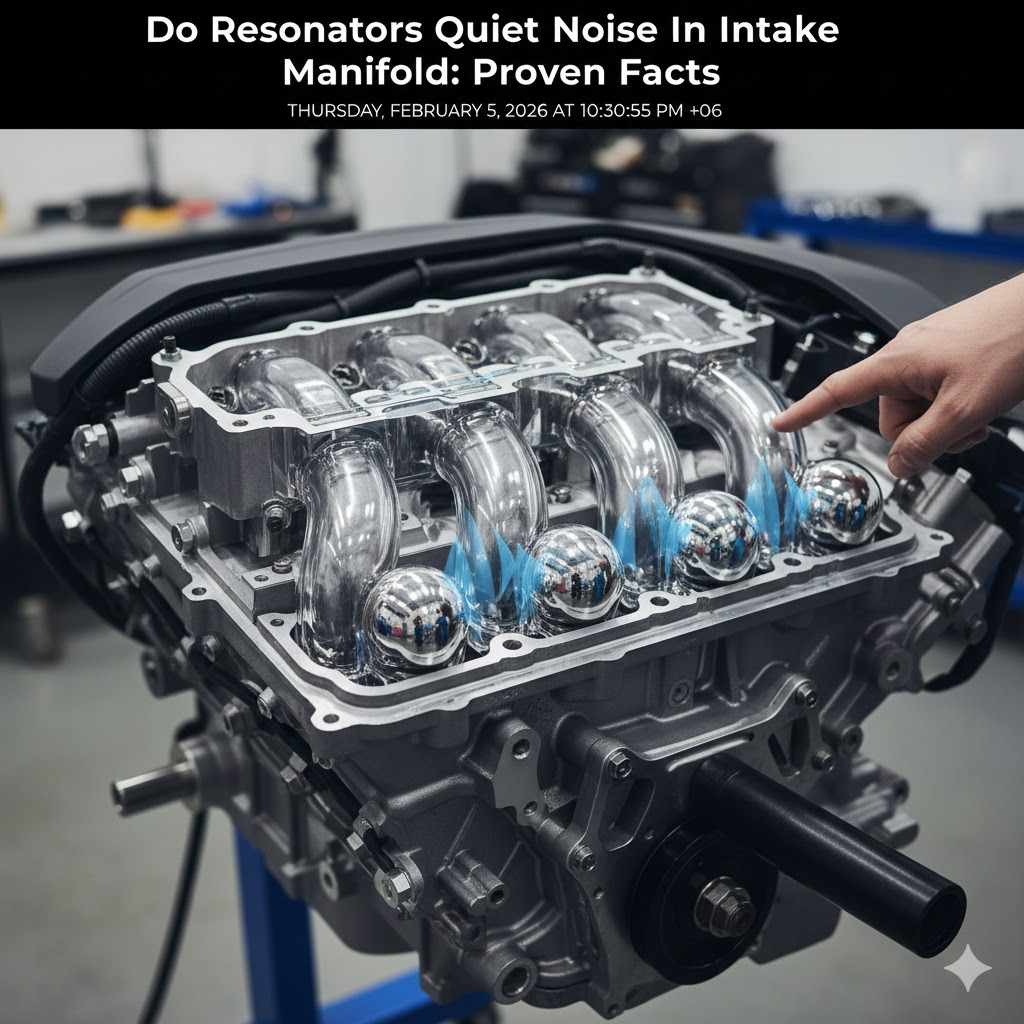
Do Resonators Quiet Noise In Intake Manifold: Proven Facts
Yes, resonators are specifically designed to quiet noise in the intake manifold. They act like a silencer, targeting and canceling out the loud humming or droning sound the engine makes as it pulls in air. This creates a quieter, more pleasant driving experience without hurting your car’s performance.
Have you ever noticed a deep humming sound from your engine when you accelerate? Sometimes it’s a satisfying roar, but other times it can be an annoying drone that fills the cabin. Many drivers wonder where this sound comes from and if it’s normal. Often, this noise is perfectly natural, coming from the air rushing into your engine. But why isn’t it deafeningly loud on most cars?
The answer lies in a clever but often overlooked part: the intake resonator. It’s the unsung hero of a quiet and comfortable ride. In this guide, I’ll walk you through exactly what an intake resonator is, how it silences that intake noise, and what you need to know before considering any changes. Let’s unravel this mystery together and give you the confidence to understand your car better.
What Exactly Is an Intake System?
Before we dive into the resonator, let’s quickly talk about the intake system. Think of it as your car engine’s respiratory system. Its main job is to draw clean, fresh air from outside and deliver it to the engine’s cylinders. This air is essential for burning fuel and creating power.
The main parts of a simple intake system include:
- The Air Filter: This cleans the air, stopping dust and debris from entering your engine.
- The Intake Tube: A large plastic or rubber tube that channels the air from the filter toward the engine.
- The Throttle Body: A valve that opens and closes to control how much air enters the engine, based on how hard you press the gas pedal.
- The Intake Manifold: This part distributes the air evenly to each of the engine’s cylinders.
As air rushes through these tubes and chambers at high speed, it creates sound waves—just like blowing into a large pipe. This is where the intake resonator comes into play.

Introducing the Intake Resonator: Your Engine’s Noise Canceler
An intake resonator is a specially designed plastic chamber that is connected to the intake tube, typically between the air filter and the throttle body. It might look like a strange, bulky box with no obvious purpose, but its function is pure acoustic science. It doesn’t filter air or add power; its one and only job is to cancel out specific, undesirable sound frequencies.
How does it work? It uses a principle of physics known as Helmholtz resonance. You’ve actually experienced this yourself if you’ve ever blown across the top of a bottle to make a humming sound. The bottle’s chamber and neck create a specific tone.
An intake resonator is engineered in the same way. Automakers identify the exact frequency of the most annoying intake drone—which usually happens at a specific engine speed (RPM)—and design the resonator’s size and shape to produce an opposite sound wave. When the engine’s sound wave meets the resonator’s sound wave, they cancel each other out. The result is a much quieter engine sound inside your car.
Intake Resonator vs. Exhaust Resonator: What’s the Difference?
This is a very common point of confusion for beginners. Both parts are called “resonators,” but they live in completely different systems and do very different jobs. Understanding the distinction is key to knowing your car.
Here’s a simple breakdown to clear things up:
| Feature | Intake Resonator | Exhaust Resonator |
|---|---|---|
| Location | In the engine bay, on the plastic intake tubing before the engine. | Under the car, as part of the metal exhaust pipe after the engine. |
| Purpose | To quiet the “whooshing” or “droning” sound of air being sucked into the engine. | To quiet the harsh, raspy sounds of exhaust gases leaving the engine. It refines the exhaust note. |
| Material | Almost always made of molded plastic. | Made of steel or stainless steel to withstand high heat. |
| Noise Target | Low-frequency intake drone. | Mid-to-high-frequency exhaust rasp and drone. |
In short, the intake resonator quiets the sound of air coming in, while the exhaust resonator quiets the sound of fumes going out. They never cross paths.
The Big Question: Should You Remove Your Intake Resonator?
One of the most popular first modifications car enthusiasts consider is an “intake resonator delete.” This involves removing the resonator box and replacing that section of the intake tube with a straight pipe. People do this for a couple of main reasons: to get a louder, more aggressive engine sound or because they believe it improves performance.
But is it a good idea for you? Let’s weigh the pros and cons.
Pros and Cons of an Intake Resonator Delete
| Pros (Potential Benefits) | Cons (Potential Downsides) |
|---|---|
| Increased Induction Noise: Your engine will sound noticeably louder and more aggressive, especially during acceleration. Many people enjoy this sportier sound. | Annoying Cabin Drone: The sound that was canceled out will now be present. This can lead to a constant, tiresome humming noise inside the car, especially at highway speeds. |
| Cleaner Engine Bay: Removing the bulky plastic box can make the engine bay look simpler and less cluttered. | No Real Performance Gain: Despite popular belief, removing the resonator rarely adds any noticeable horsepower. Modern intakes are designed for good flow even with the resonator attached. |
| Inexpensive Modification: A resonator delete pipe is usually a very cheap and easy part to install. | Potential for Hot Air Intake: If not done properly, the new intake setup could draw in hot air from the engine bay, which can actually hurt performance. |
Debunking the Horsepower Myth
Let’s talk more about performance. The idea that removing the intake resonator unlocks hidden horsepower is one of the most persistent myths in the car community. While it seems logical that removing a chamber would smooth out airflow, the reality is more complex.
Automotive engineers at companies like Ford, Toyota, and Honda spend thousands of hours and millions of dollars designing intake systems. They use advanced computer modeling to ensure the engine gets the air it needs efficiently. The resonator is carefully placed so that it does its acoustic job without creating a significant restriction.
In a standard passenger car, the air filter, throttle body, and the diameter of the intake tubing are the real limits on airflow. Removing the resonator might change the sound, but the amount of air reaching your engine will be virtually identical. Any power gain measured on a dynamometer is typically within the margin of error—less than one or two horsepower, which you will never feel from the driver’s seat.
Why Automakers Install Resonators in the First Place
If resonators don’t add power and cost money to make, why does nearly every modern car have one? The answer is simple: customer comfort. Car manufacturers are obsessed with something they call NVH, which stands for Noise, Vibration, and Harshness.
NVH is a measure of how pleasant a car is to drive and ride in. A car with low NVH feels smooth, quiet, and luxurious. A car with high NVH feels noisy, shaky, and cheap. The humming drone from an engine’s intake is a major source of unwanted noise, and it’s a key NVH challenge.
The intake resonator is a brilliant, low-cost solution to this problem. It allows engineers to give the car a quiet, refined feel that appeals to the vast majority of buyers. While an enthusiast might love hearing every sound the engine makes, the average person driving to work or taking their family on a trip wants a peaceful ride.
How to Find the Intake Resonator on Your Car
Curious to see what this part looks like on your own vehicle? It’s usually very easy to spot. Here is a simple step-by-step guide to help you find it.
- Safety First: Make sure your car is turned off, the engine is cool, and the vehicle is in park with the parking brake engaged.
- Open the Hood: Securely prop the hood open so it won’t fall.
- Locate Your Airbox: Find the large plastic box that holds your engine’s air filter. It’s usually on one side of the engine bay and has a large tube coming out of it.
- Follow the Intake Tube: Trace this large tube as it runs from the airbox toward the main part of the engine.
- Spot the Resonator: Look for another, often irregularly shaped, hollow plastic box attached to the side of this main intake tube. It will have no wires or sensors connected to it. That’s your intake resonator! Its size and shape will vary greatly depending on your car’s make and model.
On some trucks, it might be a very large chamber to cancel out powerful, low-frequency sounds, while on a small compact car, it might be a much smaller and simpler box.
What If Your Intake Resonator Is Damaged?
Since intake resonators are made of plastic, they can become brittle over time and crack, especially in areas with extreme temperature changes. A broken resonator can cause a few problems.
- Loud, Unusual Noises: If the resonator has a crack or hole, it can no longer cancel sound waves properly. You might hear a loud sucking or whistling noise from your engine bay.
- Vacuum Leaks: If the crack is located after the Mass Airflow (MAF) sensor, it can allow unmetered air to enter the engine. This can confuse the car’s computer, leading to a rough idle, poor performance, and potentially a Check Engine Light.
- Engine Damage Risk: In a worst-case scenario, a large crack could allow unfiltered air, water, or debris to get sucked directly into your engine, which could cause serious damage.
If you suspect your resonator is damaged, it’s a good idea to have it inspected. Replacing it is often straightforward and ensures your engine is breathing clean, properly measured air.

Frequently Asked Questions (FAQ)
1. Is an intake resonator the same thing as a muffler?
No, they are completely different. An intake resonator is on the air intake system (before the engine) and is usually made of plastic to quiet air induction noise. A muffler is part of the metal exhaust system (after the engine) and is designed to quiet the sound of the exhaust.
2. Will removing my intake resonator void my car’s warranty?
It could. While it won’t void your entire warranty, a manufacturer could deny a warranty claim for any issue they can link to the modification. For example, if your engine has a problem related to the air/fuel mixture, they might blame the modified intake.
3. Is an intake resonator the same as an intake silencer?
Yes, the terms “resonator” and “silencer” are often used interchangeably to describe the same part. Its technical name is a Helmholtz resonator, but “silencer” is a common nickname because that’s what it does.
4. Do aftermarket cold air intakes have resonators?
Most do not. Aftermarket cold air intakes are designed for performance and sound, so they typically replace the entire stock intake system—including the resonator—with a smooth, straight tube. This is a primary reason why cold air intakes make the engine sound much louder.
5. Can I just plug the hole if I remove the resonator?
It’s not recommended. Simply plugging the hole can disrupt the intended airflow and create turbulence inside the intake tube. The proper way to do a “resonator delete” is to replace the entire section with a smooth pipe of the same diameter.
6. Is the loud intake noise after removing a resonator bad for my engine?
The noise itself is not harmful at all. It’s just the natural sound of your engine breathing. The only potential harm comes from an improper installation of a delete kit that might cause an air leak or allow hot air into the engine.
7. How much does it cost to replace a broken intake resonator?
The cost can vary widely depending on your car. The part itself might range from $50 to over $200. Labor is usually minimal, as it’s often a simple part to access and replace, typically taking less than an hour.
Conclusion: The Quiet Performer in Your Engine Bay
So, do resonators quiet noise in the intake manifold? Absolutely. They are a purpose-built component, expertly engineered to cancel out specific droning frequencies and give you a quieter, more comfortable ride. They don’t steal horsepower or restrict airflow in any meaningful way; they simply perform their acoustic duty in the background.
Whether you choose to keep yours or remove it for a more aggressive sound is a personal choice. Now you have the facts to make an informed decision. Understanding these small but important parts not only makes you a smarter car owner but also deepens your appreciation for the incredible engineering that goes into every vehicle on the road. Your car is full of these clever solutions, and the intake resonator is a perfect example of one working silently to make your drive better every day.