Do Carbureted Engines Have Oxygen Sensors? Essential Guide
No, traditional carbureted engines do not have oxygen sensors. Oxygen sensors are a key component of modern fuel-injected systems, working with the vehicle’s computer to precisely control the air-fuel mixture. Carburetors, on the other hand, rely on mechanical methods for fuel delivery, making oxygen sensors unnecessary for their operation.
Ever wondered if your classic car with a carburetor has the same fancy electronic parts as newer vehicles? It’s a common question, especially when you’re looking at things like exhaust systems or engine performance. Many car owners feel a bit puzzled when they hear about modern engine tech like oxygen sensors and wonder if their older, carbureted ride has them too. Don’t worry, this is a perfectly normal thing to be curious about! Understanding this difference is key to knowing how your engine works. We’ll break it down simply and clearly. Let’s dive in and clear up this common confusion, so you’ll feel much more confident about your car’s mechanics.
Carburetors vs. Fuel Injection: A Simple Difference
To understand why carbureted engines don’t have oxygen sensors, we first need to grasp the basic difference between carburetors and modern fuel injection systems. Think of them as two different ways of getting fuel into your engine to mix with air. One is like a carefully controlled drip, and the other is more like an old-fashioned misting spray.
The Heart of the Matter: What is a Carburetor?
A carburetor is a mechanical marvel that’s been around for a long time. Its main job is to mix air and fuel in the correct ratio so that the engine can run smoothly. It does this using a venturi, which is a narrow part of the carburetor. As air rushes through this narrow passage, it speeds up, creating a low-pressure area. This low pressure then draws fuel from a fuel bowl through tiny jets, atomizing it and mixing it with the incoming air. The engine’s intake manifold then pulls this air-fuel mixture into the cylinders to be burned.
Carburetors are pretty simple in design. They have moving parts like floats, needles, and jets that physically control the fuel flow. Their adjustment often depends on external factors like temperature and altitude, and they aren’t constantly adapting in real-time. Early carburetors were quite basic, and as automotive technology advanced, they became more complex but still relied on mechanical principles.
Meet the Modern System: Fuel Injection
In contrast, fuel injection systems are electronic. Instead of a carburetor mixing air and fuel before it enters the engine, fuel injection systems use injectors. These are like tiny, electronically controlled spray nozzles. They spray a precise amount of fuel directly into the intake manifold or even directly into the combustion chamber itself. This process is managed by the Engine Control Unit (ECU), also known as the powertrain control module (PCM).
The ECU is the brain of the operation. It receives data from various sensors scattered throughout the engine and then tells the fuel injectors exactly how much fuel to spray and when. This allows for incredibly precise control over the air-fuel mixture. This precision leads to better fuel economy, lower emissions, and improved engine performance across a wider range of conditions.

Why Carburetors Don’t Need Oxygen Sensors
Now that we understand the core difference, it becomes clear why oxygen sensors aren’t part of a traditional carbureted setup. The oxygen sensor’s primary role is to measure the amount of unburned oxygen remaining in the exhaust gas. This tells the ECU how efficiently the fuel was burned.
Here’s the breakdown:
- Fuel-Controlled System: Carburetors control fuel delivery mechanically. They don’t have a sophisticated electronic brain like an ECU.
- Limited Feedback: Because there’s no ECU to interpret signals and make adjustments, there’s no need for a sensor to tell the ECU about the exhaust gas composition.
- Pre-set Mixture: Carburetors are designed to provide a relatively fixed air-fuel ratio. While environmental factors can affect this ratio, the carburetor itself doesn’t have a way to continuously self-correct based on exhaust feedback.
Imagine trying to give instructions to someone who can’t hear you versus someone who can. The carburetor is like the person who can’t hear; it operates based on its internal mechanics. The fuel-injected system is like the person who can hear; it receives constant feedback (from sensors like the oxygen sensor) and adjusts its actions accordingly.
What are Oxygen Sensors and What Do They Do?
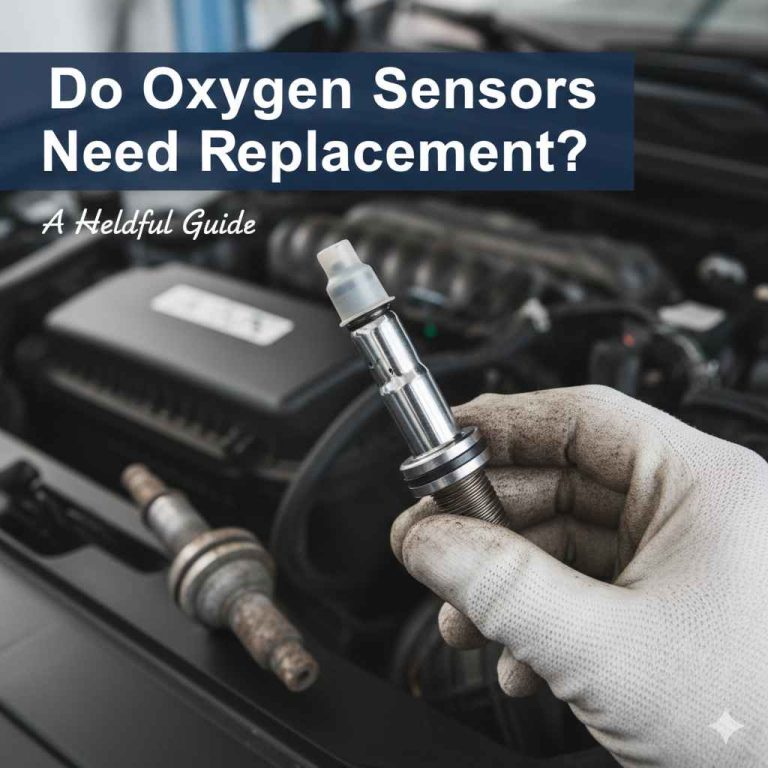
Even though your carbureted car likely doesn’t have one, it’s good to know what an oxygen sensor is and why it’s so important in modern vehicles. Think of it as the exhaust system’s detective, constantly sniffing for clues about how well the engine burned its fuel.
An oxygen sensor, also known as a lambda sensor (λ sensor), is typically located in the exhaust manifold or in the exhaust pipe before the catalytic converter. Its main function is to measure the concentration of oxygen in the exhaust gases leaving the engine. This measurement is crucial because the amount of oxygen present directly indicates whether the air-fuel mixture being burned in the cylinders was too rich (not enough air for the amount of fuel) or too lean (too much air for the amount of fuel).
How an Oxygen Sensor Works
The most common type of oxygen sensor is called a Zirconia sensor. It works based on a difference in oxygen concentration between the exhaust gas and the ambient air. The sensor has a ceramic element made of zirconium dioxide. One side of this element is exposed to the exhaust gas, and the other side is exposed to the outside air (often through a small vent in the sensor’s wiring or housing).
- Oxygen Difference Creates Voltage: When there’s a difference in oxygen levels between the exhaust and the outside air, a voltage signal is generated across the ceramic element.
- Rich Mixture: If the engine is running rich (too much fuel, not enough air), there will be very little oxygen left in the exhaust. This creates a high voltage signal (typically around 0.9 volts).
- Lean Mixture: If the engine is running lean (too much air, not enough fuel), there will be a lot of oxygen left in the exhaust. This creates a low voltage signal (typically around 0.1 volts).
- Ideal Mixture (Stoichiometric): The ideal air-fuel ratio, known as stoichiometric, burns fuel most efficiently and produces the least harmful emissions. At this point, the sensor rapidly switches between high and low voltage signals.
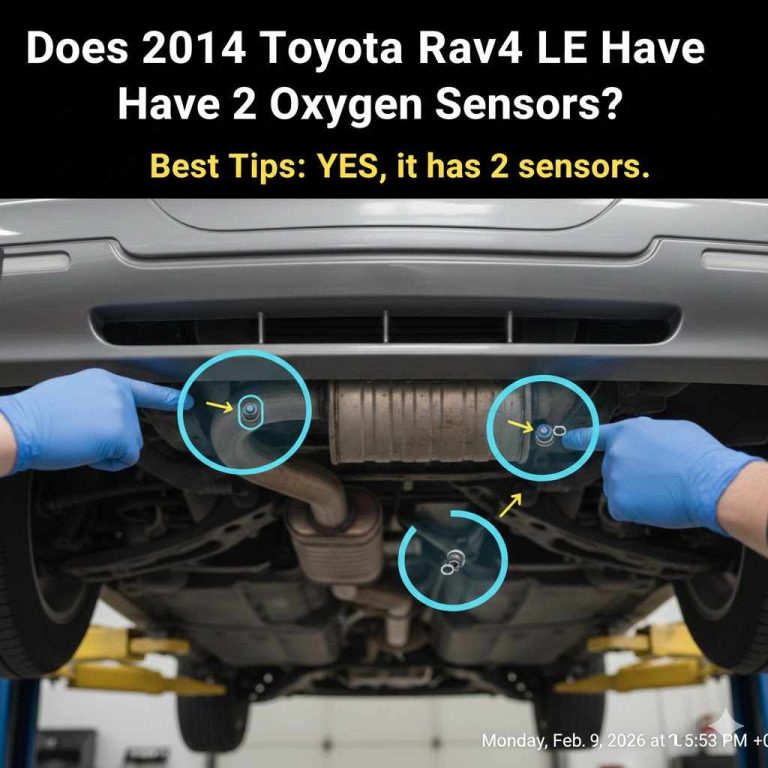
Modern vehicles often have multiple oxygen sensors. Usually, there’s one sensor before the catalytic converter (an upstream sensor) and one after it (a downstream sensor). The upstream sensor primarily monitors and helps control the engine’s air-fuel mixture. The downstream sensor monitors the effectiveness of the catalytic converter itself.
The Role of the ECU
The ECU receives the voltage signal from the oxygen sensor. Based on this “reading,” the ECU makes real-time adjustments to the fuel injection system. If the sensor reports a rich mixture, the ECU will reduce the amount of fuel injected. If it reports a lean mixture, the ECU will increase the fuel injected. This constant back-and-forth process, called “closed-loop operation,” allows the engine management system to maintain the optimal air-fuel ratio for performance, fuel economy, and emissions control, regardless of changing engine conditions or environmental factors.
You can learn more about how exhaust gas sensors work from resources like the U.S. Department of Energy, which discusses advanced vehicle technologies and their impact on efficiency and emissions. (https://www.energy.gov/)
What About Aftermarket Carburetors and Modifications?
Sometimes, people swap their original fuel injection systems for carburetors to simplify things, reduce cost, or achieve a certain classic look and feel. Other times, they might upgrade their existing carburetor. In these cases, the simple truth remains: a carbureted system, whether stock or aftermarket, does not inherently require or utilize an oxygen sensor.
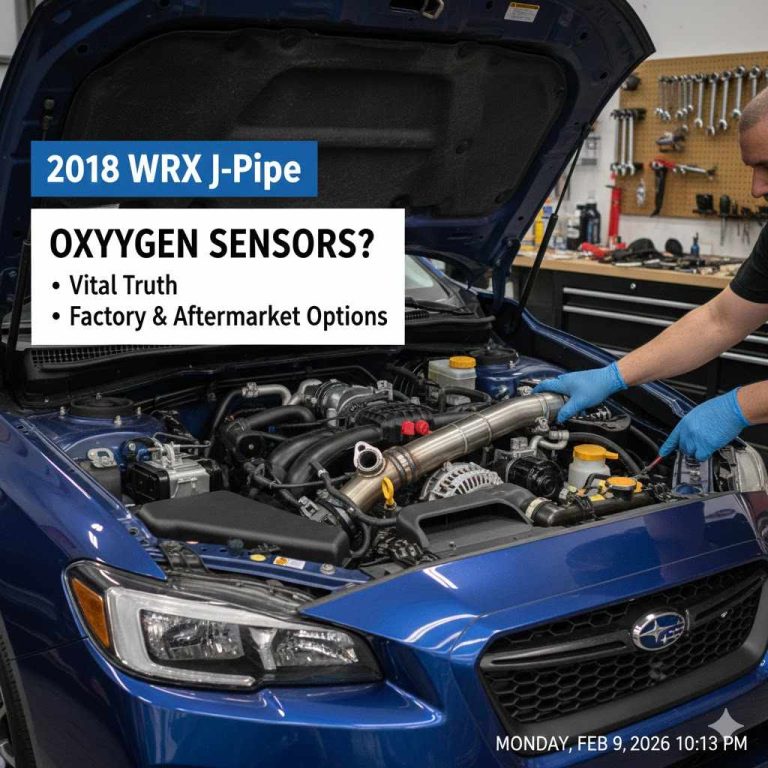
However, if you’re considering modifying a vehicle that originally had fuel injection and are installing a carburetor instead, you might encounter a situation where the exhaust system still has a bung (a threaded hole) for an oxygen sensor. This bung is a relic of the original system and serves no purpose with a carburetor.
Options for Exhaust Bungs on Carbureted Cars
If you have an exhaust system designed for a vehicle with an oxygen sensor but are running a carburetor, you have a couple of easy options:
- Oxygen Sensor Plug: The simplest solution is to get an “oxygen sensor plug” or “bung plug.” This is a bolt that screws directly into the bung, sealing it off and preventing any exhaust leaks. They are readily available and inexpensive. You can often find them at auto parts stores or online.
- Exhaust Shop: If you don’t want to deal with it yourself, any reputable exhaust shop can easily weld a simple block-off plate over the bung or remove it entirely and weld in a smooth section of pipe. This is a good option if you’re having other exhaust work done.
- DIY Welding: If you’re comfortable with welding, you can also create your own plug. However, this requires proper welding equipment and skills to ensure a leak-free seal.
It’s important to plug or remove any unused O2 sensor bungs to prevent exhaust leaks, which can cause performance issues, noise, and potentially lead to failed emissions tests (though carbureted cars often have different testing procedures).
Can You Add an Oxygen Sensor to a Carbureted Engine?
While a traditional carburetor doesn’t use an oxygen sensor, it is technically possible to install one and use it for monitoring purposes, but it won’t control the carburetor itself.
Here’s how that might work and why you’d do it:
- Air-Fuel Ratio (AFR) Gauge: The most common reason someone might install an oxygen sensor on a carbureted engine is to connect it to an aftermarket Air-Fuel Ratio (AFR) gauge. This gauge displays a reading of the air-fuel mixture in real-time.
- Tuning and Optimization: For performance enthusiasts who have meticulously tuned their carburetors, an AFR gauge can be an invaluable tool. It allows them to see if the carburetor is running too rich or too lean under different driving conditions (e.g., idle, cruising, wide-open throttle). This feedback can help them make more informed adjustments to carburetor jets, power valves, or other tuning components.
- Wider Band O2 Sensors: Typically, performance applications use a “wideband” oxygen sensor and a dedicated controller/gauge. Unlike the “narrowband” sensors used by ECUs (which primarily just tell rich/lean/stoichiometric), wideband sensors provide a much more detailed numerical reading across a broader range of air-fuel ratios.
Important Note: Even with an AFR gauge and a wideband sensor, the oxygen sensor and gauge are still just monitoring tools for tuning. They do not actively control the carburetor. The carburetor remains a mechanical device, and adjustments are made manually by the driver or mechanic based on the information provided by the gauge.
To install this setup, you would need:
- A wideband oxygen sensor.
- A bung welded into the exhaust pipe to mount the sensor.
- A wideband controller and gauge.
- Wiring to connect the sensor to the controller and gauge.
This is a modification for those who want to fine-tune their carbureted engine’s performance and aren’t afraid of a little extra instrumentation.
Table: Carbureted vs. Fuel-Injected Systems & Oxygen Sensors
To quickly summarize the key differences:
| Feature | Carbureted Engine | Fuel-Injected Engine |
|---|---|---|
| Fuel Delivery Method | Mechanical mixing of air and fuel via venturi effect. | Electronic spraying of fuel via injectors, controlled by ECU. |
| Air-Fuel Ratio Control | Fixed mechanical settings, can be affected by environment; requires manual tuning. | Dynamic, real-time adjustment based on sensor data and ECU programming. |
| Oxygen Sensor Use | No (unless used for aftermarket AFR monitoring). | Yes, essential for ECU to monitor and control air-fuel mixture. |
| ECU (Engine Control Unit) | No. | Yes, the “brain” of the system. |
| Emissions Control | Generally higher emissions; harder to meet strict standards. | Significantly lower emissions; easier to meet strict standards. |
| Fuel Efficiency | Generally lower than well-tuned fuel injection. | Generally higher than carbureted systems. |
Troubleshooting Common Issues Related to Carburetors (and what NOT to look for!)
When you own a car with a carburetor, you’ll likely encounter some common troubleshooting scenarios. It’s important to know where to look, and equally important, where not to look.
Common Carburetor Issues:
- Engine Won’t Start: Could be fuel delivery issues (clogged jets, no fuel in bowl, bad fuel pump), ignition problems, or a vacuum leak.
- Rough Idle: Often due to incorrect idle speed adjustment, vacuum leaks, or dirty/clogged carburetor passages.
- Hesitation or Stumbling: Can be caused by an accelerator pump issue, lean/rich mixture, or ignition timing problems.
- Poor Fuel Economy: Usually indicates a carburetor running too rich, or other engine issues like vacuum leaks or drag.
- Engine Flooding: Too much fuel entering the cylinders. This is often caused by a faulty float needle and seat, or a stuck float.
Where NOT to Look (for Carburetor Issues):
This is where our main topic comes in! If you’re experiencing any of the above issues on a car with a properly functioning carburetor setup, do NOT waste your time:
- Checking for Oxygen Sensor Codes: Your car doesn’t have one, so it can’t have a code related to it.
- Looking for an Oxygen Sensor in your Exhaust: Unless it was a very unusual aftermarket addition for AFR monitoring, you simply won’t find one.
- Trying to Diagnose with an ECU Scanner: Carbureted cars don’t have an ECU or OBD-II port for engine diagnostics in the way modern cars do. You’ll need to rely on mechanical troubleshooting.
Focus your troubleshooting efforts on the carburetor itself, the fuel delivery system (fuel pump, lines, filter), the ignition system (spark plugs, wires, distributor, timing), and vacuum lines throughout the engine bay. Resources like the SAE International (Society of Automotive Engineers) offer vast technical resources, though for beginners, specialized automotive repair manuals for your specific vehicle are often more practical.

FAQs About Carburetors and Oxygen Sensors
Q1: Do all older cars have carburetors?
A: Most cars produced before the mid-1980s used carburetors. However, some manufacturers started phasing in fuel injection earlier than others, so there’s some overlap. Generally, if your car is from the 1970s or earlier, it’s very likely carbureted. Cars from the mid-80s to early 90s can be either carbureted or fuel-injected; you’d need to check your specific vehicle.
Q2: If my car has a carburetor, does it use an ECU?
A: No, traditional carbureted engines do not use an Engine Control Unit (ECU) or Powertrain Control Module (PCM) to manage engine functions in the same way modern fuel-injected cars do. Carburetors are mechanical devices that operate without complex electronic control.
Q3: Can I swap a carburetor onto a fuel-injected car?
A: Yes, it’s a common modification, often done on older vehicles that originally had fuel injection but are being converted to a simpler, more traditional setup. However, it requires careful planning, as you’ll need to remove the fuel injection components, potentially modify the fuel system (carburetors often use lower fuel pressure), and ensure proper linkages and ignition timing.
Q4: My exhaust has a hole in it where a sensor used to be. Is that an oxygen sensor?
A: If your car originally had fuel injection and you’re now running a carburetor (or vice-versa), that hole is likely for an oxygen sensor. You’ll need to plug it with an oxygen sensor plug or have it professionally sealed to prevent exhaust leaks.
Q5: What’s the main benefit of fuel injection over carburetors?
A: The primary advantages of fuel injection are improved fuel economy, lower emissions, better performance across a range of temperatures and altitudes, and more precise engine control generally leading to smoother operation and easier starting.