Are Aftermarket Mufflers Legal for Street Use?
Aftermarket mufflers can be street legal if they stay within local noise limits and do not interfere with emissions equipment; a muffler delete is often illegal in some areas. EPA anti-tampering guidance, CARB aftermarket-parts rules, and state vehicle-code noise limits all matter. Get it wrong and you can face tickets, failed inspections, or a forced revert before you can drive the vehicle legally. This guide explains the legality checklist for mufflers, cat-back systems, and deletes so you can judge a setup before you buy it.
- Before you buy: confirm the vehicle’s factory emissions setup, the state noise rule, and whether the listing is a replacement part, modified part, or race-only part.
- For California: verify whether CARB approval applies to the exact part and application; replacement mufflers and many cat-back systems are not the same as emissions-related modified parts.
- For street use: treat any race-only labeling, converter delete, or unclear compliance claim as a red flag.
- For inspections: check whether the setup could fail a safety inspection, emissions inspection, or roadside noise stop.
Aftermarket muffler legality basics
Street legality turns on three checks: emissions equipment, noise rules, and the vehicle’s intended use. A muffler can be sold as a replacement part, a modified part, or a racing-only part, and those categories do not carry the same street-use risk. EPA anti-tampering rules are the federal baseline, while state vehicle codes and local ordinances handle much of the noise enforcement.
Do not assume a part is legal because it bolts on. A fitment listing says the pipe matches the car; it does not prove the part clears state law, a local decibel limit, EPA emissions requirements, or an inspection station’s rules.
Street use versus race-only use
For street use, the safest parts are usually the ones that keep catalytic converters and other emissions controls intact and stay within local noise limits. Race-only exhaust systems are different. They are legal only when the vehicle is adequately identified as a racing vehicle, so they are not a street-use shortcut under EPA anti-tampering guidance.
That matters because a part can be sold legally and still be wrong for a road car. The label tells you the intended use category, not your state’s final answer.
Why state law and local noise rules both matter
State law gives the baseline, but city and county noise ordinances can still stop a setup in practice. A muffler that passes one county’s rules may still draw a ticket in another place if the exhaust sound exceeds a decibel limit or triggers local enforcement under roadside checks. Vehicle-code and DMV guidance in states such as California, Florida, New York, and Texas can differ on how noise equipment is enforced, so the local rule set matters as much as the part itself.
Federal emissions rules still matter too. Even if a part fits, it cannot lawfully defeat emissions equipment rules that apply to the vehicle. EPA anti-tampering guidance is the starting point for that check.
Muffler, resonator, and catalytic converter
A muffler reduces exhaust sound. A resonator changes exhaust tone and can also trim noise. A catalytic converter is emissions equipment and is not just another sound-control part. That distinction matters because legality problems usually start when buyers confuse noise control with emissions control, especially when checking EPA anti-tampering rules or CARB applicability.
Suppose a sedan gets a straight pipe where the muffler used to be, but the catalytic converter stays in place. The noise risk rises sharply, yet the emissions question is different from a converter-delete case. Keep those issues separate when you compare parts.
Are aftermarket mufflers legal?
Yes, sometimes. Aftermarket exhausts can be legal only if they are sold and installed in a way that meets applicable state law, local noise rules, and emissions requirements. The legal answer depends on the exact muffler, the vehicle, and where it will be driven.
What usually makes a muffler legal
A muffler is usually lower risk when it is designed as a replacement part, keeps the original emissions equipment in place, and does not push the vehicle past the local noise limit. That is why cat-back systems often draw less legal risk than a muffler delete. In California, buyers should verify CARB applicability only when the part is an emissions-related modified part or an application that needs an Executive Order; a routine replacement muffler or many cat-back systems may not need an EO if they do not alter emissions equipment.
For a replacement part, CARB’s standard is specific: the part must have the same emissions effect as the original equipment part. If the vehicle was originally equipped with catalysts, those catalysts must be retained for replacement-part compliance.
When a muffler becomes a legal risk
Risk rises when the part removes sound-control hardware, changes the emissions path, or is sold or marketed for off-road or racing use. A muffler delete usually raises noise-law risk, and it can also trigger emissions or inspection issues depending on the vehicle and state.
Another problem is installation. A dealer or shop may mount a part that looks fine on the box but fails local law once fitted. That can leave the buyer with a ticket, an inspection failure, or a repair bill to reverse the change.
How to read a product listing
Check the listing for three phrases: replacement part, modified part, or racing-only part. Then look for any mention of catalysts, emissions controls, or an Executive Order if the part is sold for California use. If the listing only advertises fitment and sound, keep looking. If the part is described as emissions-related, verify CARB applicability before installation; if it is a replacement muffler or cat-back system, focus first on noise compliance and the vehicle’s original emissions layout.
- Look for the intended use category first.
- Check whether catalysts stay in place.
- Look for state-specific compliance language.
- Assume race-only means no street use.
Emissions rules to check before buying
Emissions equipment is the first legal filter. A muffler can be loud and still be legal in one place if the emissions system remains intact, but once catalytic converters or connected controls are altered, the legal risk climbs fast. EPA anti-tampering rules are the federal baseline; CARB adds a stricter California-specific check where applicable.
Replacement parts and emissions equipment
CARB defines replacement parts as parts with the same emissions effect as the original equipment part. That is the buyer-friendly way to think about legality: if the original vehicle had catalysts, those catalysts must stay; if a motorcycle or ATV originally had no catalyst, all emission controls must be reconnected and functioning properly.
That is why some exhaust parts are safer as replacement parts than as modified parts. The emissions effect must match the original setup, not just the catalog description.
Cat-back systems versus muffler deletes
A cat-back exhaust usually starts after the catalytic converter, which makes it a lower-risk street mod than a muffler delete. The converter and related emissions controls remain in place, so the legal issue often shifts to noise rather than emissions.
A muffler delete removes the sound-control device itself. That often makes the vehicle louder, and loud enough to run into local noise ordinances, inspection failures, or traffic stops. It is a common source of legal trouble because it solves one problem by creating another.
Why catalytic converter removal is a red flag
Catalytic converter removal is a major legal risk because the converter is emissions equipment, not a noise accessory. If the converter is gone, the vehicle may fail inspection and may no longer qualify as a compliant replacement-part installation under EPA and state rules.
That is the cleanest line to remember: muffler rules and converter rules are related, but they are not the same rule. Do not treat a converter delete as if it were only a sound change.
California CARB and EO rules
California is stricter than many other states. CARB sets tight aftermarket exhaust compliance expectations, and some aftermarket exhausts are allowed only when an Executive Order has been issued. For California buyers, paperwork is part of the part, but the EO question is not automatic for every muffler; it depends on whether the part changes emissions behavior or falls into a CARB-regulated aftermarket category.
What CARB approval means
CARB approval signals that a modified exhaust part has been reviewed for California use under that state’s standards. It does not mean every exhaust part is approved. It means the part has to fit the approval path CARB uses, which is stricter than many generic online claims.
When the listing says “California legal” without more detail, that is not enough. You still need the actual approval reference, and you need to confirm that the vehicle and engine family match the approval.
How an Executive Order applies
In California, some aftermarket exhausts are legal only when an Executive Order has been issued. The EO is the document trail that shows the part has been approved for that specific compliance path. Without it, the part may be a street-use risk even if the fitment is correct.
That is especially important for modified parts. The seller’s description can be vague, but the EO reference should be specific enough for a buyer to verify before installation.
Why California buyers need extra paperwork
California buyers should ask for the EO number, the exact application range, and any installation limits. A part that works on one year of a model may not be approved for another. If the part is a replacement part, confirm that the emissions effect matches the original equipment part and that catalysts remain in place where required. If the part is only a replacement muffler or cat-back system, verify the state noise rule and inspection requirements first, then confirm CARB only if the product is being sold as an emissions-related modified part.
What is legal in Florida may get you pulled over in California, especially if the part is louder than the local limit or lacks the paperwork California expects for a modified emissions-related part.
Muffler legality by vehicle type
Vehicle type changes the risk profile. Cars, motorcycles, and trucks do not always face the same inspection path, enforcement pattern, or aftermarket choices, so do not apply one rule to every platform.
Cars
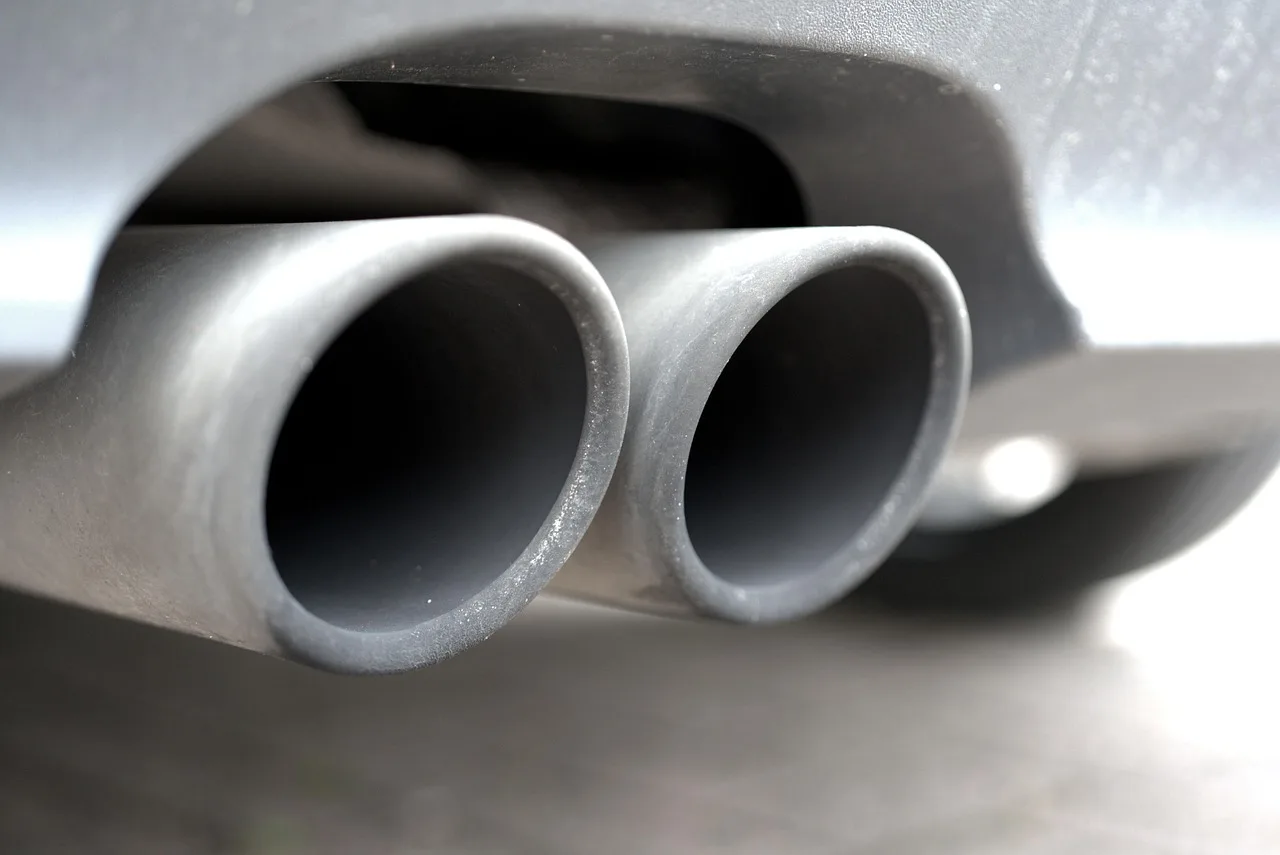
Cars are the most common aftermarket muffler market, which makes the noise and inspection issues easier to spot. Cat-back systems are often the lower-risk choice because the catalytic converters stay in place. A muffler delete on a street-driven car is much more likely to draw attention under noise rules or inspection checks.
Say your sedan keeps the factory converters but swaps to a cat-back system with a deeper tone. That may be workable if it stays within local noise limits. Swap to a straight pipe, and the same car can become a noise and inspection problem fast.
Motorcycles
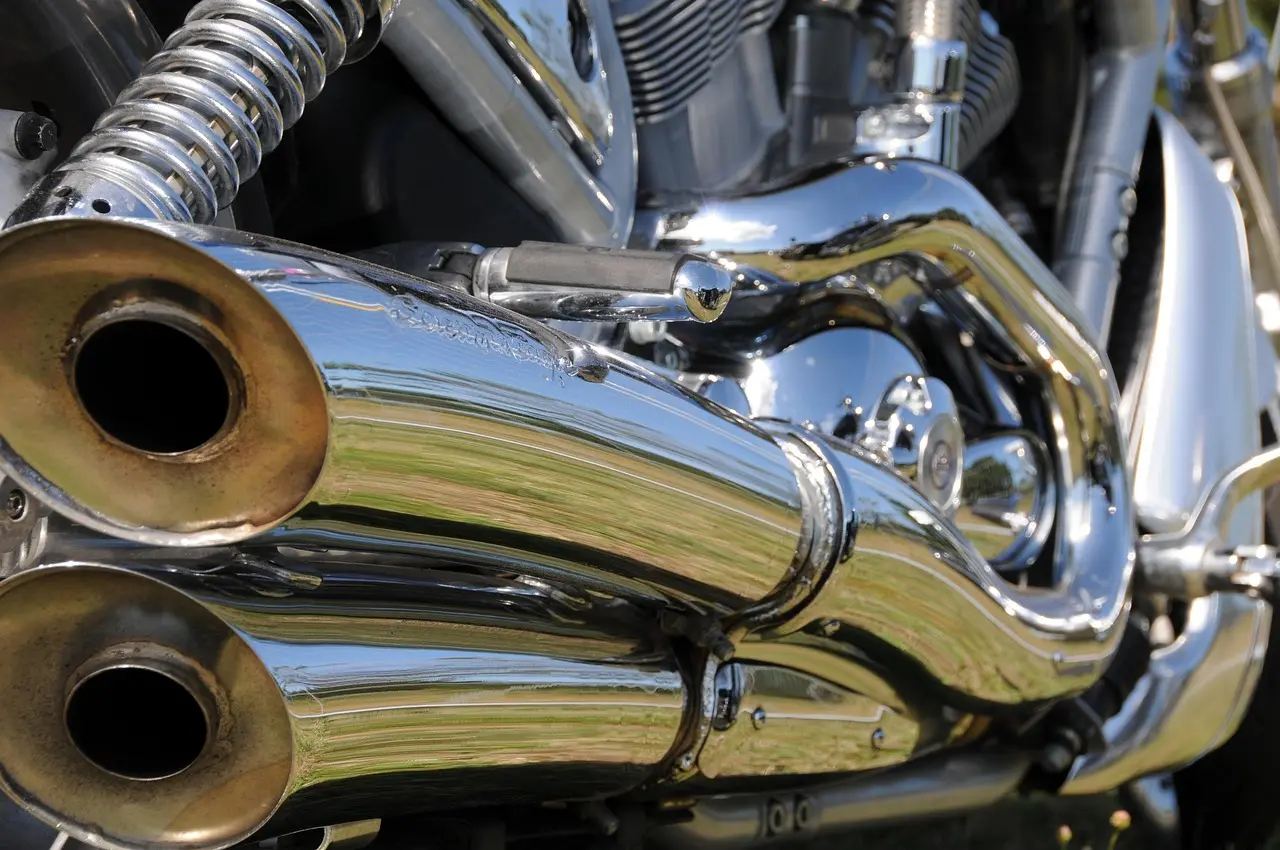
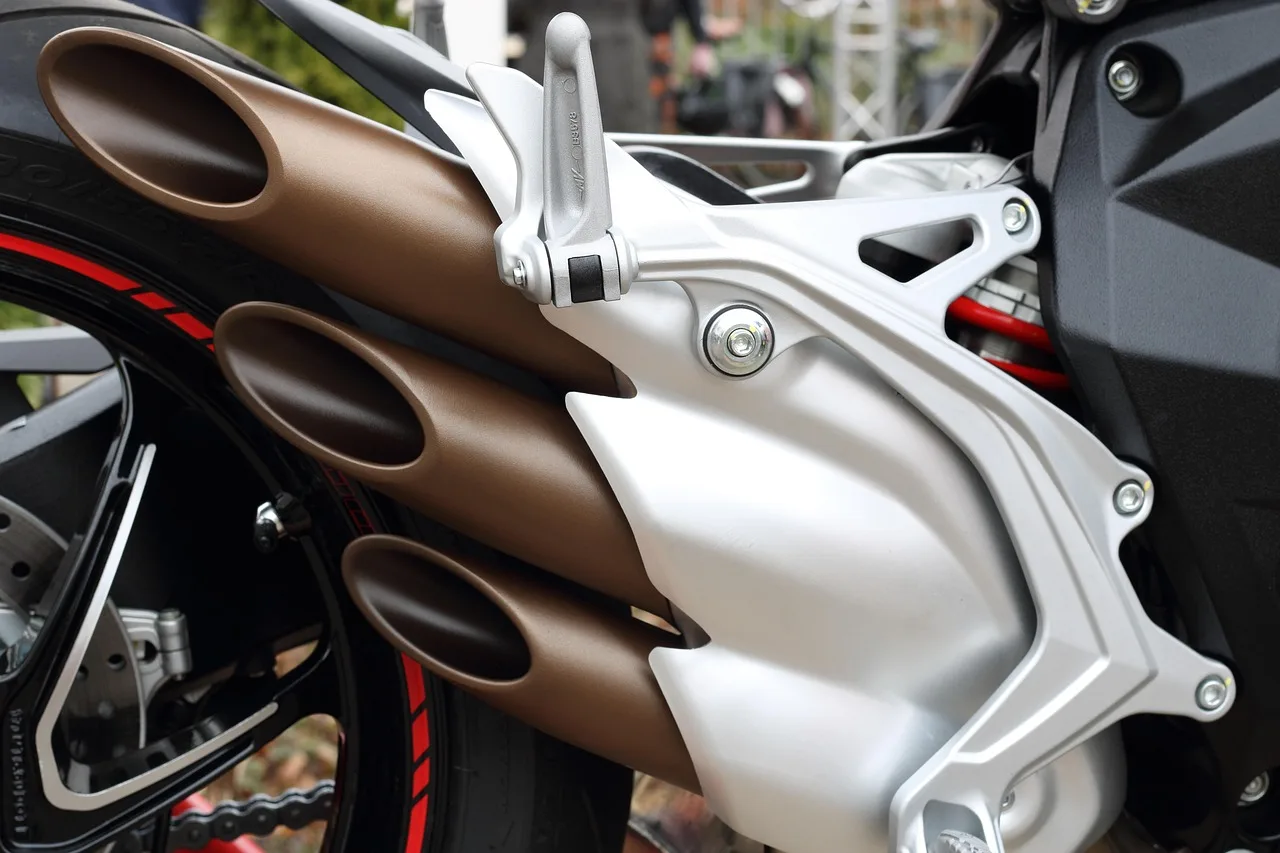
Motorcycle exhaust rules can be stricter in practice because a louder pipe is more noticeable in traffic and during roadside checks. The emissions question also matters. If the bike originally had catalysts, those catalysts must be retained for replacement-part compliance under EPA and state rules.
If the motorcycle or ATV originally had no catalyst, all emission controls must be reconnected and functioning properly. That makes the exact factory configuration part of the legality check, not just the model year.
Trucks
Trucks often see more towing and commercial use, which can make shop-installed exhaust changes more tempting. The legal check does not change: keep emissions equipment intact, verify local noise rules, and avoid race-only parts for street use.
Truck owners should pay extra attention to inspection rules and dealer installation paperwork. A lift, tire change, or exhaust change can turn a routine check into a failure if the setup violates local standards.
Muffler legality checklist
Use this checklist before buying. It turns legal guesswork into a short set of verifiable questions. If any answer is uncertain, treat the part as a street-use risk until you verify it.
| Use case | Emissions equipment retained | Muffler type | EO needed? | Inspection risk | Noise-law risk | Race-only red flags | What to verify before buying |
|---|---|---|---|---|---|---|---|
| Car | Yes, catalysts and related controls stay in place | Cat-back or replacement muffler | No for a typical replacement muffler; yes if sold as a California-regulated modified exhaust | Low to medium if the vehicle keeps factory emissions hardware | Medium if sound rises above the local limit | Any “for off-road use only” or “racing only” label | State noise rules, inspection rules, and whether the listing is a replacement part or modified part |
| Motorcycle | Yes, or all original controls reconnected if no catalyst existed | Slip-on muffler or full-system exhaust | Maybe, depending on whether the part is a California-regulated modified exhaust | Medium to high if the bike fails noise or emissions checks | High if the exhaust is substantially louder than stock | Race pipes, decat claims, or any part sold only for closed-course use | Factory emissions setup, local noise limits, and any California EO reference |
| Truck | Yes, with catalysts intact where originally equipped | Cat-back, replacement muffler, or delete kit | No for a basic replacement muffler; yes if the part alters emissions-related configuration in California | Low for a compliant cat-back; high for a delete or unclear kit | Medium to high if the system is louder than the local rule allows | Delete kits, race-only labels, or missing compliance language | Inspection rules, dealer installation policy, and whether the part is street-use legal in your state |
-
Confirm the use case.
Check whether the part is sold for street use, replacement use, modified use, or racing only. If the listing says racing-only, do not treat it as street legal. -
Check emissions hardware.
Verify that catalytic converters stay in place when the vehicle originally had them. If the vehicle did not originally have a catalyst, make sure all emission controls will be reconnected and functioning properly. -
Review the noise rule.
Look up state noise limits and local noise ordinances before you buy. A part can be legal in one state and still be a ticket risk in the next county. -
Ask for compliance proof.
For California, request the Executive Order number and match it to the exact vehicle application. If the seller cannot provide that, treat the part as not verified. -
Plan the inspection path.
Check whether the part could fail an annual inspection, roadside inspection, or dealer service check. If a shop installs the part, ask whether the installation changes the warranty or inspection outcome.
A common first-timer mistake is buying a loud “bolt-on” muffler and assuming the clamp-on design makes it legal. The hardware can be easy to install and still fail the noise rule, fail inspection, or trigger a stop if the local ordinance limits exhaust sound by decibel level or officer discretion.
Frequently asked questions
Is it illegal to have no muffler?
Often yes, especially for street use. Many states and localities require a working muffler or similar noise-control device, and a muffler delete can increase the chance of a ticket or inspection failure. The exact answer depends on state law, local noise ordinances, and how loud the vehicle is in practice.
Is it illegal to remove your muffler?
Removing the muffler is frequently illegal for street use when it causes the vehicle to exceed noise limits or violate inspection rules. It can also create dealer-installation and enforcement problems if the vehicle no longer meets local standards. The muffler itself is not the only issue; the resulting sound level matters too.
Are aftermarket exhausts legal?
Yes, some are legal. Aftermarket exhausts can be legal only if sold as replacement parts, modified parts, or racing-vehicle parts, and they still have to satisfy emissions and noise rules. A part that fits may still be illegal if it removes catalysts, ignores local ordinances, or is meant only for racing.
Are muffler deletes legal?
Usually they are high risk and often illegal for street use. A muffler delete removes the sound-control device, so noise violations become more likely, and some vehicles may also run into inspection or emissions problems. The legal outcome depends on state and local rules, but the risk is usually much higher than with a cat-back system.
Is cutting off your muffler illegal?
Often yes, if the vehicle is used on public roads and the change violates noise or inspection requirements. Cutting off the muffler is functionally similar to a delete, and the legality turns on the same issues: sound level, emissions equipment, and local enforcement. The fact that the car still runs does not make the modification legal.
Why are loud mufflers legal?
They are not always legal, but some are allowed because the law often sets a noise limit rather than banning loud sound outright. If the exhaust stays within that limit and the emissions system remains compliant, a louder muffler can be legal. Local ordinances still control the final answer.
Do mufflers wear out?
Yes. Mufflers can corrode, rust through, or lose internal baffles over time, which can make the vehicle louder and may create legal problems if the sound now exceeds local limits. A worn muffler is not just a maintenance issue; it can become an enforcement issue if it stops doing its job.