
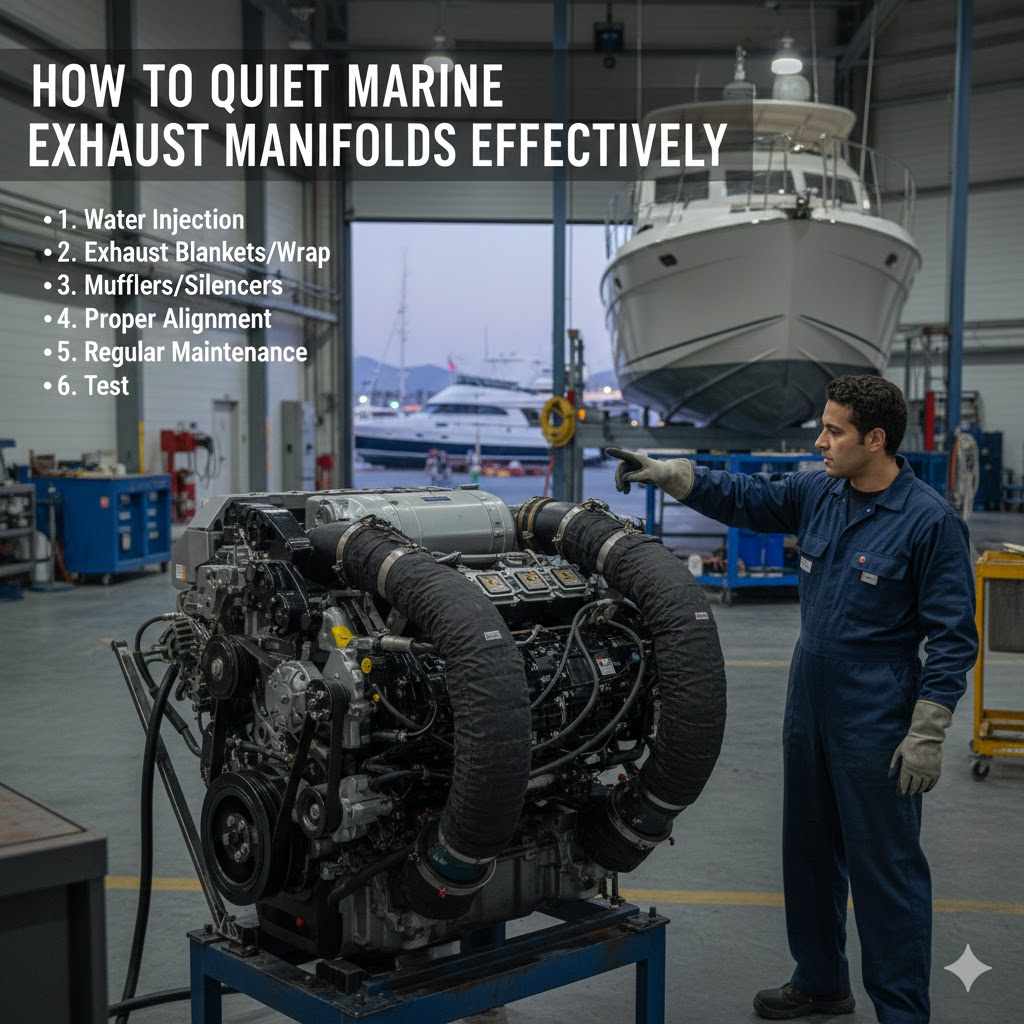
How to Quiet Marine Exhaust Manifolds Effectively
Many boat owners find dealing with noisy marine exhaust manifolds a bit tricky. It’s a common issue that can really spoil a peaceful day on the water. Beginners often feel unsure where to start when they want to know How to Quiet Marine Exhaust Manifolds Effectively.
But don’t worry, we’ll walk you through it step by step with simple explanations and clear actions so you can enjoy a quieter boating experience soon.
Understanding Marine Exhaust Manifold Noise
Marine exhaust manifolds are a key part of your boat’s engine system, channeling hot exhaust gases from the engine to the exhaust system. While they are essential, they can also be a significant source of noise. This noise often comes from vibrations, exhaust leaks, or the general design of the manifold. Addressing this noise effectively requires a good understanding of why it’s happening in the first place. We’ll explore the common culprits and what makes them so loud.
How Exhaust Manifolds Create Noise
Exhaust manifolds can become noisy for several reasons. One primary cause is exhaust leaks. When exhaust gases escape from a crack or a bad gasket, they create a loud, often hissing or popping sound.
Another significant factor is vibration. The engine’s constant running can cause the manifold to vibrate, and this vibration can be amplified by other parts of the boat, leading to a droning or rattling noise.
The design of the manifold itself also plays a role. Some manifolds are made from thinner materials or have designs that don’t inherently dampen sound well. As exhaust gases rush through, they create turbulence and pressure waves, which are essentially sound waves.
Without proper baffling or insulation, these waves escape and contribute to the overall noise level.
Finally, the condition of the exhaust system connected to the manifold is important. A damaged muffler or corroded exhaust pipes can also contribute to noise. Think of it like a leaky pipe in your house; it’s not just the pipe but also the pressure behind the water that causes the sound.
In a boat’s exhaust, it’s the pressure of the exhaust gases.
- Exhaust Leaks
This is perhaps the most common reason for loud exhaust manifold noise. Over time, metal can corrode or crack, and gaskets can degrade. A small leak might seem insignificant, but it can produce a surprisingly loud and distinctive popping or sputtering sound as hot exhaust gases escape under high pressure. - These leaks not only cause noise but can also reduce engine efficiency and potentially cause damage if not addressed.
- Vibration and Resonance
Engines vibrate, and this vibration is transferred to attached components like exhaust manifolds. If the manifold isn’t properly secured or if it’s resonating with other parts of the boat’s structure, it can create a deep, rumbling noise or even a metallic rattling sound. This can be particularly noticeable at certain engine RPMs. - Manifold Design and Material
The way an exhaust manifold is designed and the material it’s made from can greatly influence noise levels. Thicker, heavier materials tend to absorb more sound than thinner ones. Complex internal passages designed for airflow can sometimes create more turbulence and noise if not managed correctly. - Older designs might not incorporate modern sound-dampening features.

Effective Methods for Quieting Exhaust Manifolds
Now that we know why marine exhaust manifolds can be noisy, let’s explore some proven ways to make them quieter. These methods range from simple fixes to more involved modifications, ensuring there’s a solution for most situations. We will cover practical steps you can take.
Sealing Exhaust Leaks
Fixing any leaks in your exhaust system is the first and most important step in quieting your marine exhaust manifolds. Leaks allow hot gases to escape prematurely, creating loud noises and reducing efficiency. A thorough inspection of the manifold, exhaust pipes, and connections is essential to find these problem areas.
For minor leaks, sometimes tightening the bolts that hold the manifold to the engine or the exhaust pipe can solve the problem. If tightening doesn’t work, or if you see visible cracks or damage, it’s time to replace the faulty parts. This often involves replacing gaskets, which are seals between metal components.
High-temperature exhaust sealant can also be used to help seal small gaps, but it’s not a long-term fix for significant damage.
Always use marine-grade gaskets designed for high heat and exhaust systems. These are specifically made to withstand the harsh marine environment and the extreme temperatures of exhaust gases. Failure to use the correct parts can lead to recurring leaks and noise.
- Inspect for Cracks and Damage
Visually examine the entire exhaust manifold and connecting pipes. Look for any signs of rust, corrosion, or obvious cracks. Pay close attention to the areas where the manifold connects to the engine block and where the exhaust pipe attaches to the manifold. - Small cracks, even hairline ones, can become larger over time and significantly increase noise levels.
- Replace Gaskets
Gaskets are crucial for creating a seal between the manifold and the engine or exhaust components. Over time, these can dry out, crack, or become compressed, leading to leaks. When replacing gaskets, ensure you use high-quality, marine-grade exhaust gaskets designed for your specific engine model and temperature requirements. - Clean the mating surfaces thoroughly before installing the new gasket.
- Use High-Temperature Sealant
For very minor leaks or as a supplementary measure after replacing gaskets, a high-temperature exhaust sealant can be applied. This sealant is designed to withstand the extreme heat of exhaust gases. It’s important to note that sealant should not be relied upon as the sole solution for significant leaks or cracks, as it may not hold under continuous high pressure and heat.
Adding Sound Insulation
Once leaks are addressed, adding sound insulation is a highly effective way to further quiet your marine exhaust manifolds. This involves wrapping the exhaust system with materials designed to absorb or block sound waves. It’s like putting a blanket around a noisy appliance to make it quieter.
There are specialized marine exhaust wrap products available. These wraps are made from materials like fiberglass or ceramic fibers that are resistant to high temperatures. They work by insulating the hot exhaust gases and absorbing the vibrations and sound waves produced by the engine.
Proper installation is key to maximizing their effectiveness.
Some boat owners also consider adding sound-deadening mats to the surrounding bulkheads or engine compartment walls. While these don’t directly insulate the manifold, they can help prevent the noise from being reflected and amplified within the boat’s structure. This creates a much more peaceful environment on deck and below.
- Marine Exhaust Wrap
This is a popular and effective method for reducing noise. Exhaust wrap is typically made of heat-resistant fiberglass or ceramic material. It’s wrapped tightly around the exhaust manifold and pipes. - The wrap acts as a thermal and acoustic barrier, absorbing engine noise and preventing heat from radiating outwards, which also improves safety.
- Sound-Deadening Mats
Applying sound-deadening mats to the engine room walls and bulkheads can significantly reduce the noise that enters the cabin or cockpit. These mats are usually made of dense foam or rubber compounds that absorb sound vibrations. They are applied using strong adhesives and can be cut to fit around engine components and wiring. - Insulating Blankets
For more severe noise issues, specialized insulating blankets designed for marine exhaust systems can be used. These are custom-fitted covers that go over the entire manifold and a portion of the exhaust pipe. They offer a higher level of sound and heat insulation compared to wraps, providing a substantial reduction in noise.
Muffler Upgrades and Modifications
The muffler is arguably the most critical component for controlling exhaust noise. If your boat’s muffler is old, damaged, or simply not designed for quiet operation, upgrading it can make a huge difference. A good muffler acts like a sound trap, baffling the exhaust gases and significantly reducing the noise that escapes into the atmosphere.
When choosing a new muffler, look for marine-specific models. These are built to handle the corrosive marine environment and are designed with sound reduction in mind. Some high-performance mufflers might offer less noise reduction, while touring or cruising models prioritize quiet operation.
Consider the backpressure the muffler might introduce, as too much can affect engine performance.
In some cases, modifications to an existing muffler might be possible, but this is often best left to professionals. Trying to modify a muffler yourself without the right knowledge could result in a less effective system or even damage.
- Selecting the Right Muffler
Mufflers vary greatly in their design and effectiveness. For quieter operation, look for mufflers with a larger volume and more internal baffling. These designs are better at breaking up sound waves. - Marine-specific mufflers are essential, as they are constructed from corrosion-resistant materials and designed for the marine environment.
- Importance of Backpressure
A crucial consideration when upgrading a muffler is backpressure. The engine needs a certain amount of backpressure to run efficiently. A muffler that is too restrictive can create excessive backpressure, hindering performance and potentially damaging the engine. - It’s important to choose a muffler that provides adequate silencing without impeding exhaust flow.
- Professional Installation and Tuning
While some muffler replacements can be a DIY project, consulting a marine mechanic is often recommended. They can help you select the appropriate muffler for your engine and ensure it’s installed correctly. They can also tune the engine to compensate for any changes in backpressure, ensuring optimal performance and noise reduction.
Engine Mounts and Vibration Dampening
Sometimes, the noise from your exhaust manifolds isn’t just coming from the manifold itself, but from how it’s vibrating and transferring that vibration to the rest of your boat. Worn or inadequate engine mounts can allow the engine to vibrate excessively, which in turn makes the entire exhaust system, including the manifolds, shake more than it should.
Checking and potentially replacing your engine mounts is a vital step in comprehensive noise reduction. These mounts are rubber or composite components designed to absorb engine vibrations. When they degrade, they lose their dampening capabilities.
This allows more engine shake to reach the hull and other components, amplifying sounds.
Beyond engine mounts, there are other vibration dampening solutions. Using flexible exhaust connectors between the manifold and the rest of the exhaust system can absorb some of the movement. These connectors act like a flexible joint, preventing the engine’s vibration from directly transferring to the rigid exhaust pipes.
- Assessing Engine Mount Condition
Engine mounts are designed to isolate the engine’s vibrations from the boat’s hull. Over time, the rubber in these mounts can degrade, crack, or compress, reducing their effectiveness. Inspect your engine mounts for any signs of wear, cracking, or sagging. - If they appear damaged, replacing them is a priority for overall boat comfort and noise reduction.
- Benefits of Flexible Exhaust Connectors
A flexible exhaust connector, often called a bellows or hose, is installed between the exhaust manifold and the rigid exhaust pipe. This flexible section allows for engine movement and vibration without transferring it directly to the fixed exhaust system. It acts as a shock absorber for the exhaust, significantly reducing rattle and vibration noise. - Proper Alignment of Exhaust System
Ensuring the exhaust system is correctly aligned is also important for vibration dampening. Misalignment can put stress on the manifold and connections, leading to leaks and increased noise. If the exhaust system is not aligned properly, it can vibrate against other parts of the boat or cause premature wear on components.
Advanced Soundproofing Techniques
For boaters seeking the ultimate in quiet operation, more advanced soundproofing techniques can be employed. These go beyond basic wraps and mats to create a truly serene experience. This often involves creating a more sealed and insulated engine compartment.
This can include adding sound-blocking materials to the engine room walls, ceiling, and floor. Materials like mass-loaded vinyl (MLV) are very effective at blocking sound transmission. MLV is dense and heavy, acting as a barrier that prevents sound waves from passing through.
It’s often used in conjunction with sound-absorbing materials for maximum effect.
Proper ventilation for the engine compartment is crucial when adding soundproofing. You need to ensure that the engine still receives adequate airflow to prevent overheating, while also minimizing noise escape. This might involve using baffled vents or specialized sound-trapping air intakes.
This comprehensive approach can transform the noise level on your boat.
- Mass-Loaded Vinyl (MLV) Applications
Mass-loaded vinyl is a heavy, flexible sound barrier material. When applied to the engine room bulkheads and ceiling, it effectively blocks airborne sound from escaping. MLV is often used as a layer in a multi-layer soundproofing system, placed between the hull or existing panels and a sound-absorbing material. - Sound-Absorbing Foams and Panels
Complementing MLV, acoustic foam or specialized sound-absorbing panels can be installed to further enhance noise reduction. These materials are designed to capture and dissipate sound waves, preventing them from reflecting and echoing within the engine compartment. They are typically installed on surfaces where MLV is not practical, such as irregular shapes or internal engine room walls. - Baffled Vents and Air Intakes
When soundproofing an engine compartment, it’s essential to maintain proper ventilation for cooling. Baffled vents and specialized sound-trapping air intake systems allow air to flow in and out while significantly reducing the amount of noise that can escape. These are designed with internal pathways that break up sound waves, similar to how a muffler works.
Case Studies and Real-World Results
To illustrate the effectiveness of these methods, let’s look at some examples.
Case Study 1: The Weekend Cruiser’s Transformation
A 30-foot sport cruiser owner, frustrated by the constant drone of his twin gasoline engines, decided to tackle his exhaust noise. The primary issue was identified as leaks at the exhaust manifold gaskets and a general lack of insulation. After replacing the gaskets and wrapping the manifolds and a portion of the exhaust pipes with high-temperature marine exhaust wrap, the noise level dropped noticeably.
The owner reported a more pleasant cruising experience, with conversations on deck becoming much easier without shouting. The vibrations also felt reduced.
Case Study 2: The Angler’s Quieter Pursuit
An avid angler fishing from a 25-foot center console experienced loud popping sounds from his exhaust during trolling speeds. An inspection revealed a small crack in one of his exhaust manifolds. After the cracked manifold was professionally repaired and resealed, the popping sounds were eliminated.
He also opted to install a new, larger volume muffler designed for quiet operation. The result was a significantly quieter trolling experience, allowing him to better hear his sonar and communicate with fellow anglers.
Example Scenarios
- Scenario A: The Rattling Engine
Your boat’s engine runs smoothly, but there’s a persistent metallic rattle that seems to come from the exhaust area, especially at cruising speeds. This could indicate loose exhaust manifold bolts or engine mounts that have lost their dampening ability. A first step would be to check and tighten all exhaust manifold bolts. - If the rattle continues, inspect the engine mounts for signs of wear and consider replacing them. Adding flexible exhaust connectors can also help isolate the vibration.
- Scenario B: The Loud Roar at Full Throttle
When you push your engine to full throttle, the noise becomes an unbearable roar. This often points to an undersized or ineffective muffler. While the exhaust manifolds themselves might not be the primary source of the loudness, their connection to a poorly performing muffler amplifies the overall sound. - Upgrading to a larger, marine-specific muffler with better baffling designed for your engine’s horsepower is the most effective solution here.
Statistics on Marine Exhaust Noise Reduction
Several studies and anecdotal evidence point to significant noise reductions achievable through proper exhaust manifold treatment.
| Method | Typical Noise Reduction (dB) | Notes |
|---|---|---|
| Sealing Exhaust Leaks | 5-10 dB | Essential first step, addresses sharp noises. |
| Exhaust Wrap | 3-7 dB | Reduces radiated heat and drone. |
| Muffler Upgrade | 10-20 dB | Most impactful for overall exhaust roar. |
| Engine Mounts/Flex Connectors | 2-5 dB | Reduces vibration transfer and rattle. |
| Full Soundproofing | 15-25+ dB | Comprehensive engine room treatment. |
A study by the National Marine Manufacturers Association found that implementing proper exhaust system silencing techniques can reduce engine noise levels by as much as 25 decibels. This is a substantial decrease, making a significant difference in perceived loudness.

Frequently Asked Questions
Question: How often should I inspect my marine exhaust manifolds for leaks?
Answer: It is recommended to inspect your marine exhaust manifolds for leaks at least once a year, or before each boating season. More frequent checks might be necessary if you notice any unusual noises or smell exhaust fumes.
Question: Can I use automotive exhaust wrap on my marine engine?
Answer: While automotive exhaust wrap might seem similar, it is not recommended for marine use. Marine exhaust systems operate under different conditions and require specialized, high-temperature and corrosion-resistant materials.
Question: What is the difference between a marine muffler and a standard muffler?
Answer: Marine mufflers are specifically designed to withstand the corrosive marine environment and are often larger with more internal baffling for enhanced sound reduction. They also incorporate features to prevent water from entering the exhaust system.
Question: Will quieting my exhaust manifolds affect my engine’s performance?
Answer: Generally, addressing exhaust leaks and adding proper insulation will not negatively affect performance; in fact, it can improve it by ensuring the engine is not losing power through leaks. However, choosing an overly restrictive muffler could potentially impact performance by increasing backpressure.
Question: How much does it typically cost to quiet marine exhaust manifolds?
Answer: Costs can vary widely depending on the method. Sealing leaks might only cost the price of gaskets. Exhaust wraps are relatively inexpensive.
Muffler upgrades can range from a few hundred to over a thousand dollars, while professional soundproofing can be a significant investment.
Summary
Effectively quieting marine exhaust manifolds involves a multi-faceted approach. Start by diligently sealing any exhaust leaks with appropriate marine-grade gaskets. Next, consider adding sound insulation like exhaust wraps or sound-deadening mats. Upgrading your muffler is often the most impactful step for overall noise reduction. Don’t overlook the role of engine mounts and flexible connectors in dampening vibrations. For maximum quietness, explore advanced soundproofing techniques for your engine compartment. These steps will lead to a much more enjoyable and peaceful boating experience.


