How to Add Diesel Exhaust Fluid to BMW 328d: Essential Guide
Adding Diesel Exhaust Fluid (DEF) to your BMW 328d is a simple process. Locate the DEF tank, typically on the passenger side of the trunk, open its cap, and pour in the DEF using a dedicated, sealed container. This guide provides easy-to-follow steps to ensure proper DEF filling and keep your emission system running smoothly.
Hey there, fellow BMW 328d owners! If you’ve ever seen a “Low DEF Fluid” warning on your dashboard, you might feel a little worried. Don’t be! It’s a common thing for diesel cars like yours. Keeping your Diesel Exhaust Fluid (DEF) topped up is crucial for your car’s emission system to work correctly. This means cleaner air and a happy, compliant BMW. It might sound technical, but I promise it’s something you can easily handle yourself. In this guide, I’ll walk you through exactly how to add DEF to your BMW 328d, step by step. We’ll make sure your car runs smoothly and keeps those pesky warning lights off.
Why Your BMW 328d Needs Diesel Exhaust Fluid (DEF)
Your BMW 328d, like many modern diesel vehicles, uses a system called Selective Catalytic Reduction (SCR) to significantly reduce harmful nitrogen oxide (NOx) emissions. DEF is the magic ingredient that makes this system work. When the SCR system injects DEF into your exhaust stream, it reacts with the NOx and converts it into harmless nitrogen and water. This helps your car meet strict environmental regulations and keeps it running clean. Without enough DEF, your car’s performance might be limited, and eventually, it might not start at all, as a way to prevent further emissions.
Understanding DEF and Its Importance
Diesel Exhaust Fluid, often just called DEF, is a mixture of urea and deionized water. It’s not a fuel additive and should never be put into your diesel fuel tank. It has its own separate tank. Think of it as a crucial fluid for your car’s exhaust treatment, much like oil is for its engine. Maintaining the correct DEF level is vital for several reasons:
- Emission Control: It’s the primary component in the SCR system that cleans up exhaust gases.
- Regulatory Compliance: It ensures your BMW 328d meets environmental standards.
- Preventing Drivetrain Limits: Most modern diesels will limit engine power or even refuse to start if the DEF level is critically low.
- Smooth Operation: A well-maintained DEF system contributes to overall engine performance.
The DEF fluid itself is stable and safe to handle, but it’s important to keep it clean. Contamination can damage the SCR system, leading to costly repairs. That’s why using the right kind of DEF and handling it properly is key.

What You’ll Need: Tools and Supplies
Gathering everything you need beforehand makes the process quick and stress-free. Here’s what you should have on hand:
- Diesel Exhaust Fluid (DEF): Make sure it’s a high-quality, AUS 32 or ISO 22241 compliant DEF. You can find this at most auto parts stores, truck stops, and even some larger retail stores. It usually comes in containers ranging from 1 gallon to 2.5 gallons (about 4 to 10 liters).
- Sealed DEF Container/Nozzle: Most DEF containers come with a built-in or attachable nozzle designed specifically for DEF. Using a dedicated DEF filling system prevents contamination and makes pouring easier. Avoid using funnels that haven’t been used exclusively for DEF.
- Gloves (Optional but Recommended): While DEF is generally safe, it can dry out your skin. Wearing gloves keeps your hands clean.
- Paper Towels or Rags: For any minor drips or spills.
- Owner’s Manual: Always a good reference for specific details about your BMW 328d.
Step-by-Step Guide: Adding DEF to Your BMW 328d
Adding DEF to your BMW 328d is designed to be straightforward. Follow these steps carefully:
Step 1: Locate the DEF Tank
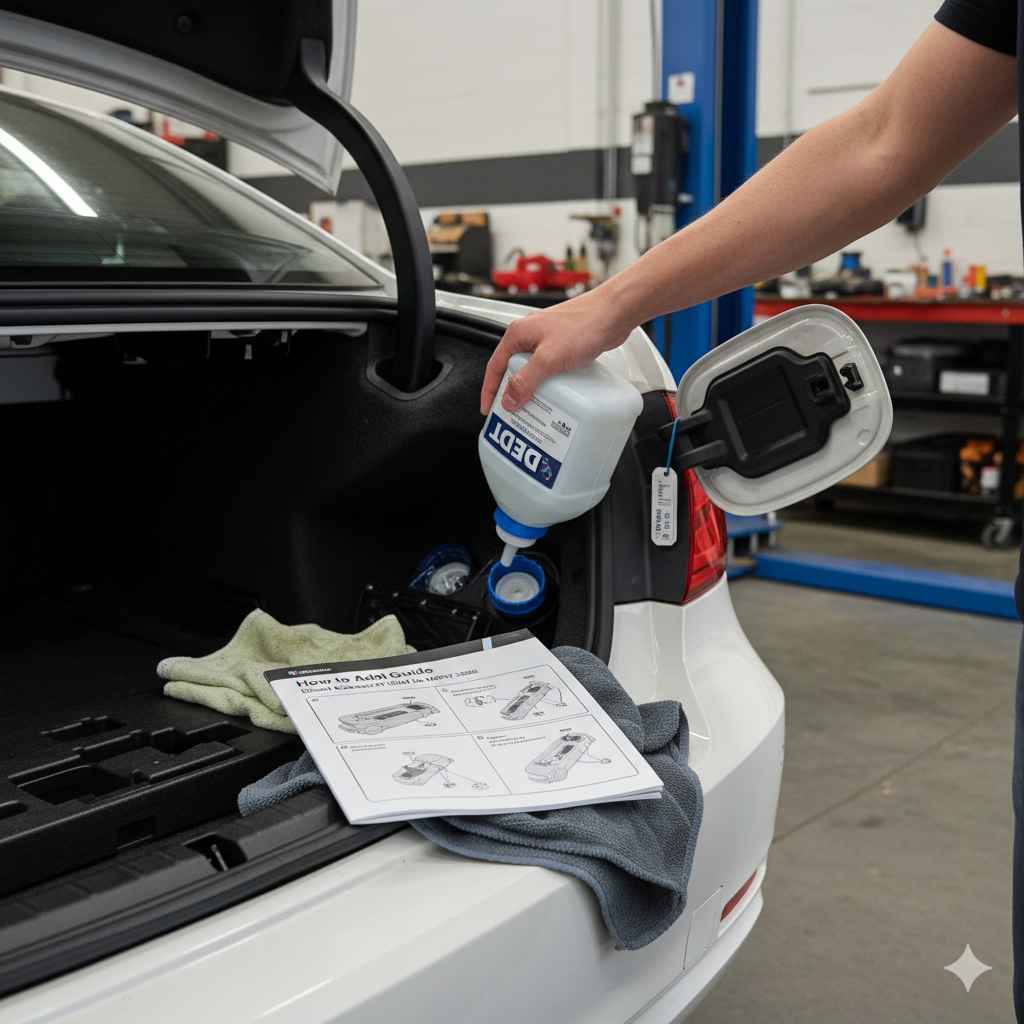
The DEF tank in your BMW 328d is typically located in the trunk, usually on the passenger side. You might need to lift or remove a floor panel to access it. Refer to your owner’s manual if you’re unsure. The DEF filler neck is usually blue and might have a cap with the DEF symbol on it.
Important Note: The DEF filler neck is often located right next to the diesel fuel filler neck. Be extremely careful not to confuse the two. Putting DEF in your diesel tank will cause significant engine damage. Conversely, putting diesel fuel into your DEF tank is also a problem.
Here’s a visual guide to help you identify the DEF filler:**
| Location | Description | Visual Cue |
|---|---|---|
| Trunk, Passenger Side | Underneath a removable floor panel. | Look for a blue cap or filler neck, separate from the black diesel fuel cap. |
Step 2: Prepare the DEF Container
If your DEF is in a jug, ensure the nozzle is properly attached. Many systems are designed as a single unit for ease of use and to minimize spills. Make sure the nozzle is clean and free from any dirt or debris.
Step 3: Open the DEF Tank Cap
Carefully twist open the cap of the DEF tank. It should come off easily. If it feels stuck, don’t force it. Check your owner’s manual for any specific instructions. You’ll see the opening where the DEF will be poured.
Step 4: Insert the DEF Nozzle
Gently insert the DEF nozzle into the filler neck. The nozzles are usually designed to fit snugly, preventing accidental insertion into the diesel fuel tank. Some systems might have a locking mechanism or require a slight twist to secure the nozzle.
Step 5: Dispense the DEF
Slowly and steadily pour the DEF into the tank. Most DEF containers are designed to stop dispensing automatically when the tank is full or when the pressure is too high, preventing overfilling. Do not try to force more DEF in after it stops. If you are using a larger refillable container, pour carefully and stop when the tank is full to avoid spills.
Step 6: Remove the Nozzle and Secure Caps
Once you’ve finished pouring, carefully remove the DEF nozzle. You might want to have a rag ready to catch any drips. Replace the cap on the DEF tank securely. Also, make sure the diesel fuel cap is properly secured.
Step 7: Close the Trunk and Start Your Car
Close the trunk lid and any panels you may have moved. Start your BMW 328d. The car’s system needs a moment to recognize that the DEF has been refilled. The “Low DEF Fluid” warning should go off after a short period of driving, usually within a few minutes. Some systems might display the DEF level on the iDrive screen or instrument cluster.
Carrying and Storing DEF: Best Practices
Proper storage and handling of DEF ensure its quality and longevity. Here are some important points:
- Temperature: DEF should ideally be stored between 12°F (-11°C) and 86°F (30°C). It can freeze at lower temperatures, but it won’t be permanently damaged. Once thawed, it’s still usable. Avoid prolonged exposure to direct sunlight and extreme heat.
- Cleanliness: Keep the DEF container sealed when not in use. Contamination from dirt, oil, or other fluids can ruin the DEF and potentially harm your SCR system. Always use dedicated DEF filling equipment.
- Longevity: DEF has a shelf life. Check the expiration date on the container. It’s best to use DEF before its expiration date, especially if stored improperly.
- Disposal: Dispose of empty DEF containers responsibly according to local regulations.
For more information on DEF standards and handling, the U.S. Environmental Protection Agency (EPA) provides guidance on diesel emission control technologies and fluids.
How Much DEF Does Your BMW 328d Need?
The amount of DEF your BMW 328d requires depends on several factors, including your driving habits, the DEF tank size, and how low the current level is. Your car will typically alert you when the DEF level is getting low, often giving you a substantial range (hundreds of miles) before it becomes critical.
General Guidelines:
- Small Top-Up: If you get an early warning, adding 1 to 2 gallons (4 to 8 liters) is often sufficient to clear the light and provide a comfortable buffer.
- Full Refill (Rarely Needed): You generally won’t need to perform a full refill unless the tank is completely empty, which is uncommon as the car gives ample warning. Most owners will top up their DEF when the warning appears, usually adding one standard 2.5-gallon (10-liter) jug.
- Tank Size: While specific capacities can vary slightly by model year, BMW 328d models typically have a DEF tank capacity in the range of 4 to 5 gallons (approximately 15 to 19 liters).
It’s a good idea to purchase DEF when you see the first warning. Many auto parts stores sell 2.5-gallon (10-liter) jugs, which are convenient for car owners. If you drive many highway miles, you might need to top up more frequently than city drivers.
When to Add DEF: Reading Your Dashboard Warnings
Your BMW 328d is equipped with an sophisticated system to inform you about the DEF level. Pay attention to these warnings:
- Early Warning: You’ll typically see a message like “Low DEF Fluid. Refuel within X miles.” This gives you plenty of time to find a place to buy DEF. Take this seriously and plan to refuel within the indicated mileage.
- Progressive Warnings: As the DEF level drops further, the warnings may become more frequent or display a shorter remaining range.
- Critical Warning: At a very low level, the car might indicate that the engine will not restart after shutting down. This is the point of no return, and you must add DEF to be able to start your car again.
It’s always best practice to add DEF at the first sign of a low-level warning to avoid any inconvenience. You can usually check the DEF level through your iDrive system or the instrument cluster, even when no warning is present.
Common Mistakes to Avoid
While adding DEF is simple, a few common mistakes can lead to problems. Being aware of these can save you a lot of trouble:
- Putting DEF in the Diesel Tank: This is the most critical mistake. DEF is not fuel and will severely damage your fuel system and engine. Always double-check you are using the blue DEF filler cap, not the black diesel fuel cap.
- Using the Wrong Fluid: Ensure you are buying actual Diesel Exhaust Fluid (AUS 32 or ISO 22241 certified). Do not substitute with water, windshield washer fluid, or other liquids.
- Contamination: Avoid introducing any dirt, debris, or other fluids into the DEF tank or your DEF container. Use only dedicated DEF nozzles and clean containers.
- Overfilling: Most DEF containers and systems are designed to prevent overfilling. If you force more in, you risk damage.
- Ignoring Warnings: Don’t delay refilling when you receive the low DEF warnings. Running out completely can lead to your car being undrivable.
Troubleshooting Common DEF Issues
Sometimes, even after refilling, a warning light might persist, or you might encounter other issues. Here are a few common troubleshooting tips:
DEF Warning Light Stays On
If you’ve added DEF and the warning light remains on after driving for a reasonable distance (e.g., 15-20 minutes or starting the car a few times), it could indicate:
- Insufficient Amount Added: The system might require a minimum amount of DEF to register the refill. Try adding another pint or so.
- Faulty Sensor: The DEF level sensor in the tank might be malfunctioning.
- SCR System Issue: There might be an underlying problem with the SCR system itself, such as a clogged injector or a faulty NOx sensor.
In these cases, it’s best to consult your BMW dealer or a qualified mechanic specializing in diesel vehicles. They have the diagnostic tools to identify the exact problem. For more on SCR system troubleshooting related to the EPA’s information on SCR systems and DEF can be helpful.
DEF Fluid Freezing
DEF can freeze at temperatures below 12°F (-11°C). Your BMW’s SCR system is designed to handle this. The tank and lines are heated to thaw the DEF when needed. You don’t need to do anything special, but avoid trying to add DEF to a frozen tank. Wait for it to thaw naturally.
Error Messages Related to SCR System
Any error messages specifically mentioning the SCR (Selective Catalytic Reduction) system warrant attention. These can range from catalyst efficiency to sensor failures. These often require professional diagnosis.
Benefits of Regular DEF Maintenance
Keeping up with your BMW 328d’s DEF levels offers significant advantages:
- Ensures Compliance: Your car will continue to meet emissions standards, avoiding potential fines or issues during inspections.
- Maintains Performance: No unexpected power reductions or inability to start your vehicle.
- Extends Component Life: A properly functioning SCR system, with adequate DEF, helps protect the catalytic converter and other exhaust components.
- Peace of Mind: No worrying about unexpected travel interruptions due to low DEF.
- Environmental Responsibility: You’re actively contributing to cleaner air by ensuring your vehicle’s emission control system operates at its best.
When to Call a Professional
While refilling DEF is a DIY task, there are times when professional help is necessary. You should contact a BMW dealer or a qualified diesel mechanic if:
- The DEF warning light does not clear after refilling and driving.
- You receive persistent “SCR System Fault” messages.
- You suspect DEF has been accidentally added to the diesel fuel tank or vice-versa.
- You encounter unusual noises or performance issues that you suspect are related to the exhaust system.
- The DEF tank or filler neck appears damaged.
These professionals have specialized diagnostic tools and expertise to accurately identify and fix complex issues within the SCR system, ensuring your BMW remains in optimal condition.

Conclusion
As you can see, adding Diesel Exhaust Fluid to your BMW 328d is a straightforward maintenance task that you can confidently handle yourself. By following these steps, understanding the importance of DEF, and avoiding common pitfalls, you’ll keep your 328d running smoothly, cleanly, and reliably. Remember to always use quality DEF, handle it with care to avoid contamination, and pay attention to your dashboard warnings. This simple act of maintenance is key to ensuring your diesel BMW performs at its best and contributes positively to our environment. Happy motoring, and don’t hesitate to tackle this essential maintenance!
Frequently Asked Questions (FAQ)
How often do I need to add DEF to my BMW 328d?
You typically need to add DEF when your car alerts you that the fluid is low. The frequency depends heavily on your driving style and the amount of highway versus city driving. Some owners might add DEF every few months, while others might go longer. Your car will provide ample warning before it becomes critical.
Can I put DEF in my fuel tank by mistake?
It’s a critical mistake to avoid. The DEF filler neck is usually blue and separate from the black diesel fuel filler. If you accidentally put DEF in your diesel tank, do NOT start the engine. Contact a professional immediately. If you accidentally put diesel into the DEF tank, it’s less immediately catastrophic but will still require professional cleaning.
Where can I buy Diesel Exhaust Fluid?
DEF is widely available at most auto parts stores (like AutoZone, O’Reilly, Pep Boys), truck stops, hypermarkets (like Walmart, Target), and even some gas stations that cater to diesel vehicles. It’s usually sold in 1-gallon or 2.5-gallon jugs.