How Far Past Bumper Should Exhaust Tips Stick Out
Wondering about exhaust tip placement? You’re not alone. Many car owners ask, How Far Past the Bumper Should Exhaust Tips Stick Out? It’s a common question because getting it just right makes your car look great.
It can seem tricky at first, especially if you’re new to car mods. But don’t worry, we’ll walk through it step by step to make it super simple. Let’s find out the best way to position your exhaust tips.
Proper Exhaust Tip Extension Beyond Bumper
Figuring out how far your exhaust tips should stick out from the bumper is a popular topic for car enthusiasts. It’s not just about looks; proper placement can also affect performance and even safety. Many beginners find this a bit confusing, wondering if there’s a strict rule or just a general guideline.
This section will cover the key factors that determine the ideal exhaust tip extension, giving you a clear picture of what works best for your vehicle.
Understanding Exhaust Tip Functionality
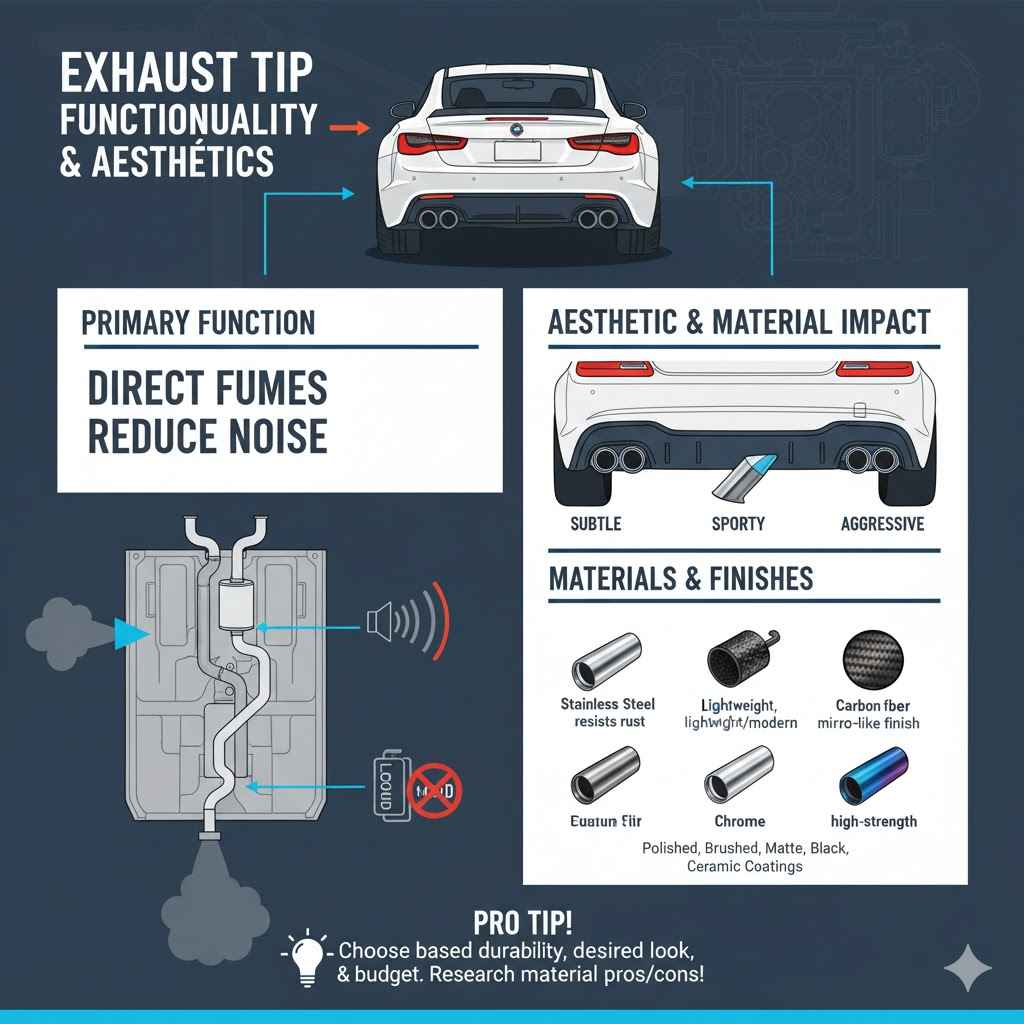
Exhaust tips are the shiny, often visible, end of your car’s exhaust system. Their primary function is to direct exhaust fumes away from the vehicle’s body and occupants. Beyond this basic purpose, they also play a significant role in the overall aesthetic of a car.
Many people upgrade their exhaust tips to improve the look of their vehicle, giving it a sportier or more aggressive stance. The size, shape, and how far they extend can drastically change a car’s appearance.
The material of an exhaust tip is also important. Common materials include stainless steel, chrome-plated steel, titanium, and carbon fiber. Each offers different benefits in terms of durability, weight, and appearance.
Stainless steel is popular for its resistance to rust and corrosion, while carbon fiber is prized for its lightweight properties and modern look. The finish, such as polished, brushed, or matte, also impacts the visual appeal and how it complements the rest of the car’s design.
Material Considerations for Durability and Appearance
Choosing the right material for your exhaust tips is vital for both their lifespan and how they look. Stainless steel is a common choice because it holds up well against the elements, including rain, salt, and road grime. This makes it less likely to rust or corrode over time.
Chrome-plated steel offers a bright, mirror-like finish that many find attractive. However, the chrome plating can chip or peel if not cared for properly.
Titanium is a premium option, known for being very lightweight and incredibly strong. It can also develop a unique blue or purple coloration when heated by exhaust gases, which some owners like. Carbon fiber tips are a favorite for performance-oriented builds due to their low weight.
They also provide a sleek, high-tech look. However, carbon fiber can be more susceptible to fading or damage from extreme heat or impacts compared to metals.
When considering materials, think about your climate and how you use your car. If you live in an area with harsh winters and road salt, a corrosion-resistant material like high-grade stainless steel is a smart choice. If weight reduction is a priority for performance, titanium or carbon fiber might be worth the investment.
Ultimately, the best material will balance durability, aesthetics, and your budget.
Impact of Tip Shape and Size on Exhaust Flow
The shape and size of your exhaust tips can have a subtle impact on how your exhaust gases flow. Wider tips can sometimes allow exhaust gases to exit more freely, potentially leading to a slight improvement in engine efficiency or a deeper exhaust note. Rolled tips, where the edge of the tip is curved inward, can offer a cleaner look and may help create a specific sound profile.
Straight-cut tips are often chosen for a more aggressive appearance.
However, it’s important to understand that exhaust tips are typically a cosmetic upgrade. For most daily drivers, the effect on performance is minimal. The main exhaust system, including the catalytic converter and muffler, has a much larger influence on exhaust flow and engine performance.
Exhaust tips primarily serve to enhance the visual appeal of the rear of the vehicle. Their size should generally be proportionate to the vehicle’s overall size and the bumper design.
Choosing tips that are too large can look out of place and may even hinder airflow. Conversely, tips that are too small might appear insignificant and fail to make the desired visual statement. When selecting sizes, consider how they will look from different angles, not just head-on.
Measure the existing exhaust pipe and the space available in your bumper cutout to ensure a good fit and a pleasing visual balance.
Legal and Safety Guidelines for Exhaust Tip Placement
When it comes to exhaust tips, there are rules to follow to keep things safe and legal. These guidelines ensure that exhaust fumes are safely vented away from your car and don’t become a hazard to you, your passengers, or other drivers. Most regulations focus on preventing the exhaust from being directed downwards or too close to the ground, where it could cause issues.
The main concern is making sure exhaust gases are channeled away from the vehicle’s interior. If tips are too short or poorly positioned, fumes could enter the cabin, which is not only unpleasant but can also be dangerous due to carbon monoxide. So, the extension past the bumper plays a role in this.
Ensuring the tips extend sufficiently helps in dispersing the fumes into the open air effectively.
Regulations on Exhaust Discharge
Many countries and local municipalities have laws dictating how exhaust systems should function and discharge fumes. These regulations are primarily for safety and environmental reasons. The core idea is to ensure that exhaust gases are directed away from the passenger cabin and do not create hazards on the road.
For example, some laws might specify that exhaust pipes cannot point directly downwards or horizontally if they are too close to the ground.
While specific regulations can vary, a common principle is that the exhaust tip should extend beyond the body of the vehicle to allow for proper dispersion of fumes. This prevents gases from being trapped under the car or recirculating into the cabin. If your exhaust tips are flush with the bumper or slightly recessed, you might be inadvertently drawing exhaust fumes back into the vehicle, especially at lower speeds or when stopped.
Some areas also have noise regulations. While exhaust tip placement doesn’t directly control noise levels, modifications that significantly alter the exhaust note might be subject to specific rules. It’s always a good idea to check your local vehicle codes to ensure your exhaust system, including the tips, complies with all applicable laws.
Preventing Under-Vehicle Fume Buildup
Proper exhaust tip extension is crucial for preventing fumes from building up under your vehicle. When exhaust gases are released too close to the bumper or underbody, they can get trapped in the aerodynamic flow around the car. This trapped gas can then be drawn into the cabin through ventilation systems or even small leaks in the car’s floorpan.
Carbon monoxide is a colorless, odorless gas produced by burning fuel. Inhaling it can cause headaches, dizziness, and in high concentrations, can be fatal. By ensuring your exhaust tips extend adequately beyond the bumper, you create a buffer zone.
This allows the hot exhaust gases to mix with fresh air and disperse more widely, significantly reducing the risk of them entering the passenger compartment.
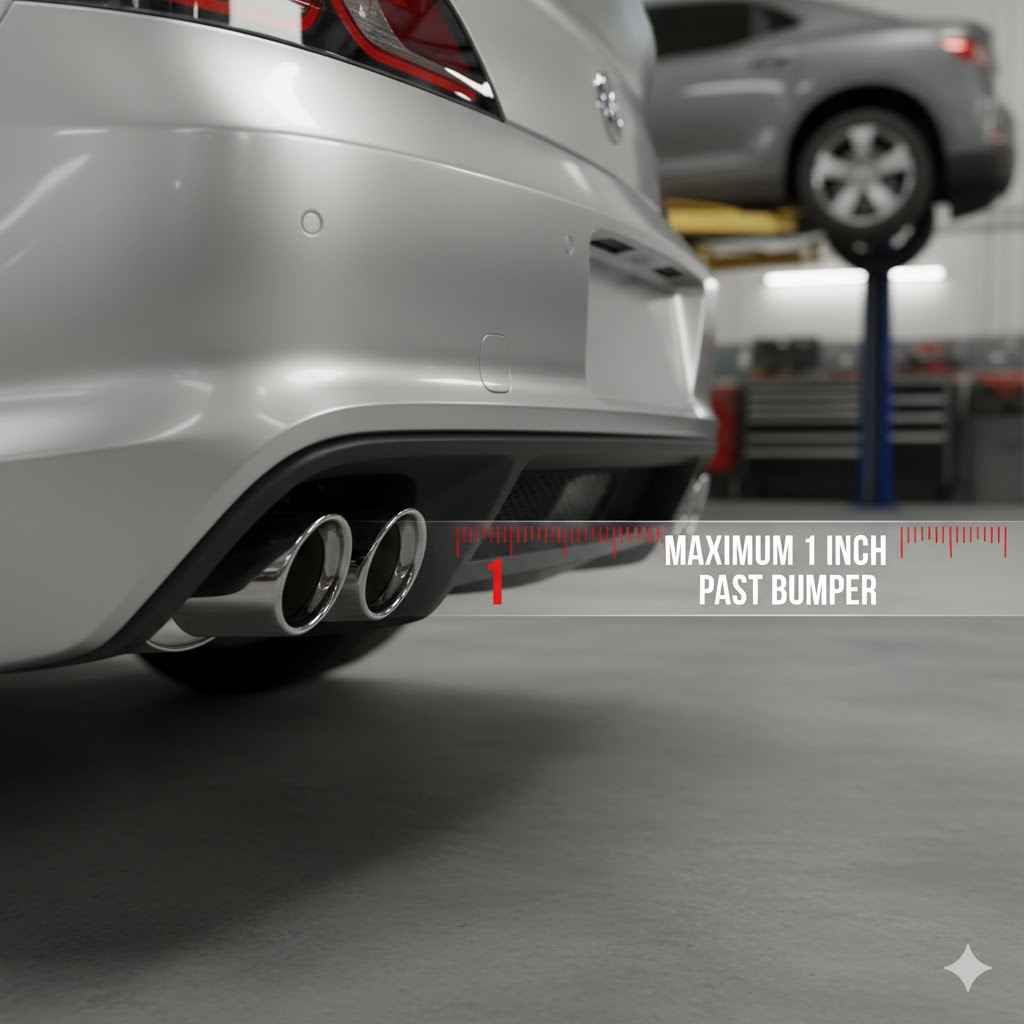
A general guideline is that the exhaust tip should extend at least an inch or two past the bumper’s rear-most point. However, this can vary based on the bumper’s design. For cars with large, complex rear diffusers or bumper extensions, this measurement might need to be adjusted to ensure effective fume dispersion.
Determining the Ideal Exhaust Tip Extension
Deciding how far your exhaust tips should stick out involves a mix of aesthetics, practicality, and safety. There isn’t one single answer that fits every car. What looks good and works well depends on the specific vehicle, its bumper style, and your personal preferences.
We’ll explore the factors that help you find that perfect balance.
Aesthetic Considerations and Visual Balance
Visually, exhaust tips that extend too far can look awkward, like they’re an afterthought. Conversely, tips that are too short or tucked away might not be noticeable enough or could look like they don’t belong. The goal is to achieve a look that complements the car’s design, making the rear end appear more finished and aggressive.
A common aesthetic approach is to have the tip’s end align with or slightly extend past the plane of the bumper. For a more subtle look, many prefer the tips to be flush or just barely visible. For a sportier or more performance-oriented appearance, a slight extension, perhaps 1-3 inches, is often favored.
This gives the impression of a powerful engine and a well-designed exhaust system.
The shape and diameter of the tips also play a role in visual balance. Wider tips might need to extend less to appear substantial, while narrower tips might benefit from a bit more extension. Consider the overall lines of your car.
Does the bumper have sharp angles or smooth curves? The exhaust tip placement should ideally echo these design cues.
Imagine looking at the rear of a sports car. Often, the exhaust tips are prominent, clearly visible, and extend just enough to look purposeful. They aren’t so far out that they seem tacked on, but they are far enough to be a distinct design element.
This balance is what many aim for.
Practicality and Clearance Issues
Beyond looks, you need to think about practical matters. How much clearance do you have? You don’t want your exhaust tips to be so long that they scrape on speed bumps, driveways, or the ground when you go over uneven terrain.
This can cause damage to the tips, the exhaust system, and even the bumper itself.
It’s also important to consider the exhaust system’s hangers and mounting points. When you install new tips, they are attached to the existing exhaust pipes. The length of these pipes and the flexibility of the hangers will influence how much you can adjust the tip’s position.
If the exhaust pipe is very short, you might have less room to maneuver the tip to achieve your desired extension.
A good rule of thumb is to ensure there’s enough clearance between the tip and any moving parts, like suspension components, or potential road hazards. For most cars, extending the tips by 1 to 3 inches past the bumper is a safe bet. However, always measure your specific vehicle and consider your typical driving conditions.
If you plan on lowering your car or driving in areas with challenging road conditions, it’s wise to err on the side of caution and not extend the tips too far. A slightly shorter extension might save you from costly repairs down the line.
Measuring and Mocking Up Your Fitment
Before you make any permanent changes, it’s a great idea to measure and mock up the fitment of your new exhaust tips. This means you’ll temporarily position the tips where you think they should go and see how they look. You can use measuring tape to check the extension and step back to get a good visual impression.
To mock up, you can use things like cardboard tubes or even just hold the tips in place (if possible and safe to do so) to get an idea. Pay attention to how they look from different angles and distances. This is also a good time to check for clearance issues.
Can you easily fit your fingers between the tip and the bumper? Does it look like it might hit anything when the suspension moves?
Consider the height of the tips within the bumper cutouts as well. Are they centered vertically? Do they look balanced with the rest of the car’s rear design?
Taking pictures of your car with the mock-up tips can help you see it from a more objective perspective. This visual planning step is crucial for achieving a professional-looking result and avoiding any regrets later.
For example, if you have dual exhaust tips, ensure they are spaced evenly and extend at the same distance from the bumper. Uneven placement can be very noticeable and detract from the overall appearance. This careful planning ensures you get the look you want while avoiding practical problems.
Installing and Adjusting Exhaust Tips
Once you’ve decided on the perfect extension, the next step is installation. This process can range from simple to more complex depending on the type of tips you choose and your car’s existing exhaust system. We’ll cover the common methods and how to make adjustments.
Types of Exhaust Tip Mounting
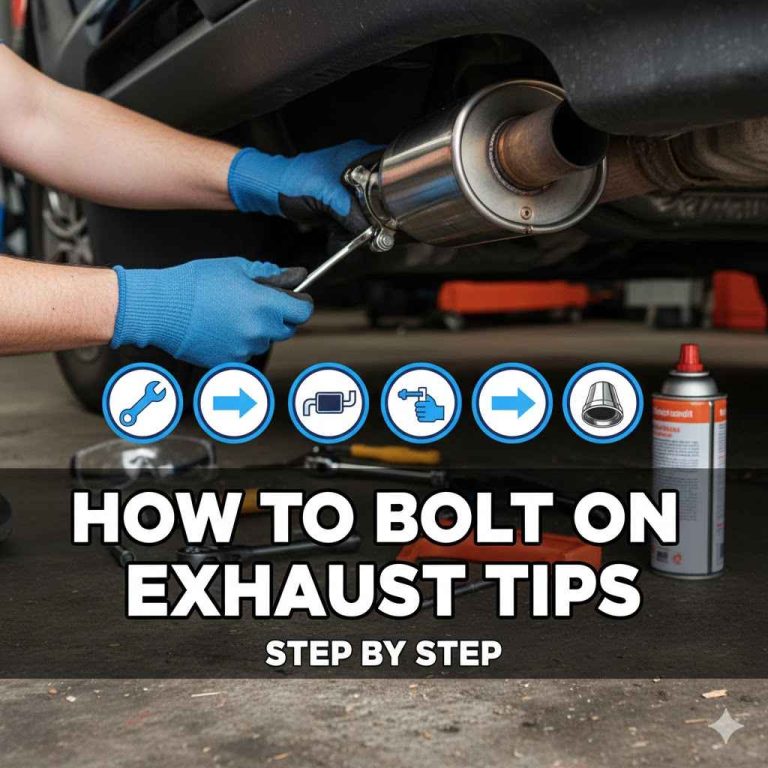
Exhaust tips are generally attached in one of two main ways: clamp-on or weld-on. Clamp-on tips are the most common for aftermarket upgrades and are designed for DIY installation. They use bolts to tighten a sleeve around the existing exhaust pipe, creating a secure fit without needing welding equipment.
Weld-on tips require professional welding to permanently attach them to your exhaust pipe. This method offers the most secure and permanent bond. It’s often preferred by those seeking a very robust installation or when specific custom positioning is required that clamps might not allow.
For clamp-on tips, proper alignment is key before tightening. You’ll want to ensure the tip is centered in its cutout or at the desired position relative to the bumper. For weld-on tips, the welder will handle precise positioning before fusing the parts.
Regardless of the method, ensure the connection is airtight to prevent exhaust leaks.
Step-by-Step Installation Process (Clamp-On)
Here’s a general guide for installing clamp-on exhaust tips:
- Ensure your exhaust system is cool to the touch before starting.
- Clean the end of your existing exhaust pipe. This ensures a good grip for the clamp.
- Slide the exhaust tip over the end of the exhaust pipe.
- Position the tip to your desired extension and centering.
- Align the clamp mechanism over the connection point.
- Tighten the clamp bolts evenly. Do not overtighten, as this can crush the pipe or damage the tip.
- Check the tip’s stability by gently trying to wiggle it.
- Repeat for any additional tips.
After installation, it’s wise to start the engine and check for any exhaust leaks. You might hear a hissing sound if there’s a leak. If so, re-tighten the clamp or check for any obstructions.
Adjusting for the Perfect Fit
Sometimes, even after initial installation, the tips might not be perfectly aligned or positioned. With clamp-on tips, you can usually loosen the clamp bolts slightly to make minor adjustments. Slide the tip in or out, or adjust its angle, until it looks just right.
If the exhaust pipe itself is not positioned correctly relative to the bumper, you might need to adjust the exhaust hangers. These rubber or metal components suspend the exhaust system under your car. By slightly bending or repositioning them (if adjustable), you can shift the entire exhaust pipe, and thus the tips, to achieve better alignment with the bumper cutouts.
This is where patience pays off. Take your time, step back frequently to view your work from a distance, and make small adjustments. It’s better to spend a little extra time ensuring the perfect fit than to settle for something that looks off.
A well-placed exhaust tip enhances your car’s appearance significantly.
Common Pitfalls to Avoid
When upgrading your exhaust tips, several common mistakes can detract from the final look or even cause issues. Being aware of these pitfalls can help you avoid them and achieve a professional-looking result.
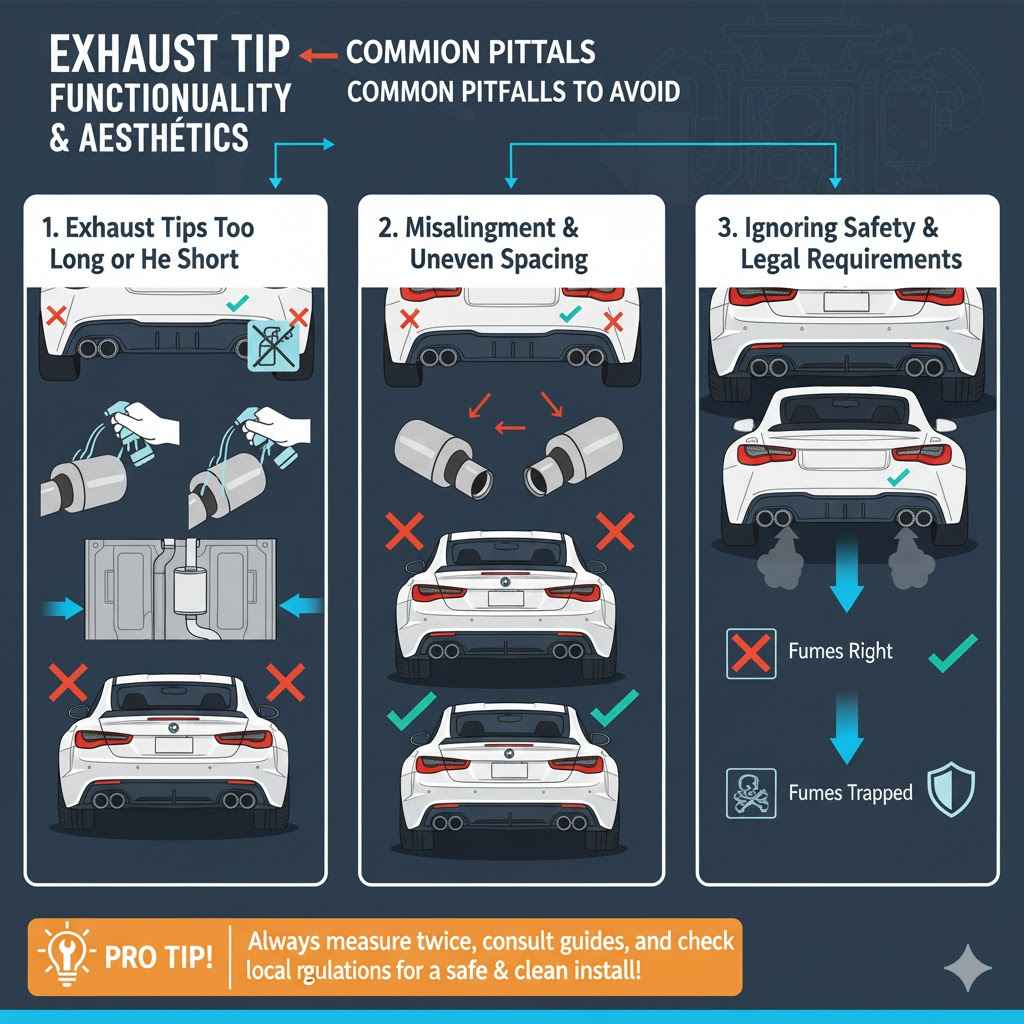
Exhaust Tips Too Long or Too Short
As discussed, placement is key. Tips that extend too far past the bumper can look awkward and are more susceptible to damage from road debris or scraping. On the other hand, tips that are too short or recessed can look unfinished and may not effectively disperse exhaust fumes, potentially drawing them back into the cabin.
It’s about finding that sweet spot. For most vehicles, the tip should end at or slightly beyond the bumper’s plane. Think about the overall visual proportions.
If your car has a large, prominent bumper, you might be able to get away with a slightly longer extension. For sleeker designs, shorter extensions often look better.
Misalignment and Uneven Spacing
One of the most noticeable flaws is misalignment. Exhaust tips that are not centered vertically or horizontally within bumper cutouts can make a car look poorly modified. If you have dual exhaust tips, uneven spacing between them or an unequal extension from the bumper is also very apparent.
Always measure carefully and check from multiple angles.
Consider using a level or string lines to ensure your tips are perfectly aligned with the car’s body lines. If you’re unsure, it might be worth consulting a professional installer to ensure a factory-like finish. Getting this right makes a huge difference in the overall aesthetic appeal.
Ignoring Safety and Legal Requirements
Never compromise on safety or legality. Ensure your exhaust tips are positioned so that fumes are effectively dispersed away from the vehicle. Avoid configurations that could direct exhaust gases downwards close to the road or towards flammable materials.
Always check your local regulations to ensure compliance.
Remember, the primary purpose of the exhaust system is functional. While appearance is important, it should not come at the expense of safety. Proper extension helps ensure that your vehicle meets emissions and safety standards and that the occupants remain safe from harmful gases.
Frequently Asked Questions
Question: What is the general rule for how far exhaust tips should stick out
Answer: A good general rule is for exhaust tips to extend about 1 to 3 inches past the rear bumper. This provides a balance between a stylish look and proper dispersion of exhaust fumes away from the vehicle.
Question: Can exhaust tips be too long
Answer: Yes, exhaust tips can be too long. If they extend too far, they can look awkward, be prone to damage from scraping, and may not fit the overall aesthetic of the car.
Question: Should exhaust tips be flush with the bumper
Answer: Some people prefer their exhaust tips to be flush with the bumper for a cleaner, more integrated look. However, for better fume dispersion and a more prominent appearance, a slight extension is often recommended.
Question: Do exhaust tip extensions affect car performance
Answer: For most daily drivers, the extension length of exhaust tips has a negligible effect on performance. The primary impact is on the vehicle’s appearance and how exhaust gases are directed away from the car.
Question: Are there legal issues with exhaust tip placement
Answer: Yes, there can be legal issues. Regulations often require exhaust fumes to be discharged safely away from the vehicle’s cabin and the road. Extremely short or improperly angled tips may violate these laws.
Final Thoughts
Getting your exhaust tips to stick out just right is about blending style with smart placement. Aim for 1 to 3 inches past the bumper for a good look and safe fume dispersal. Measure carefully, consider your car’s design, and avoid common mistakes like uneven spacing or tips that are too long or short.
Your car will look great and function safely.