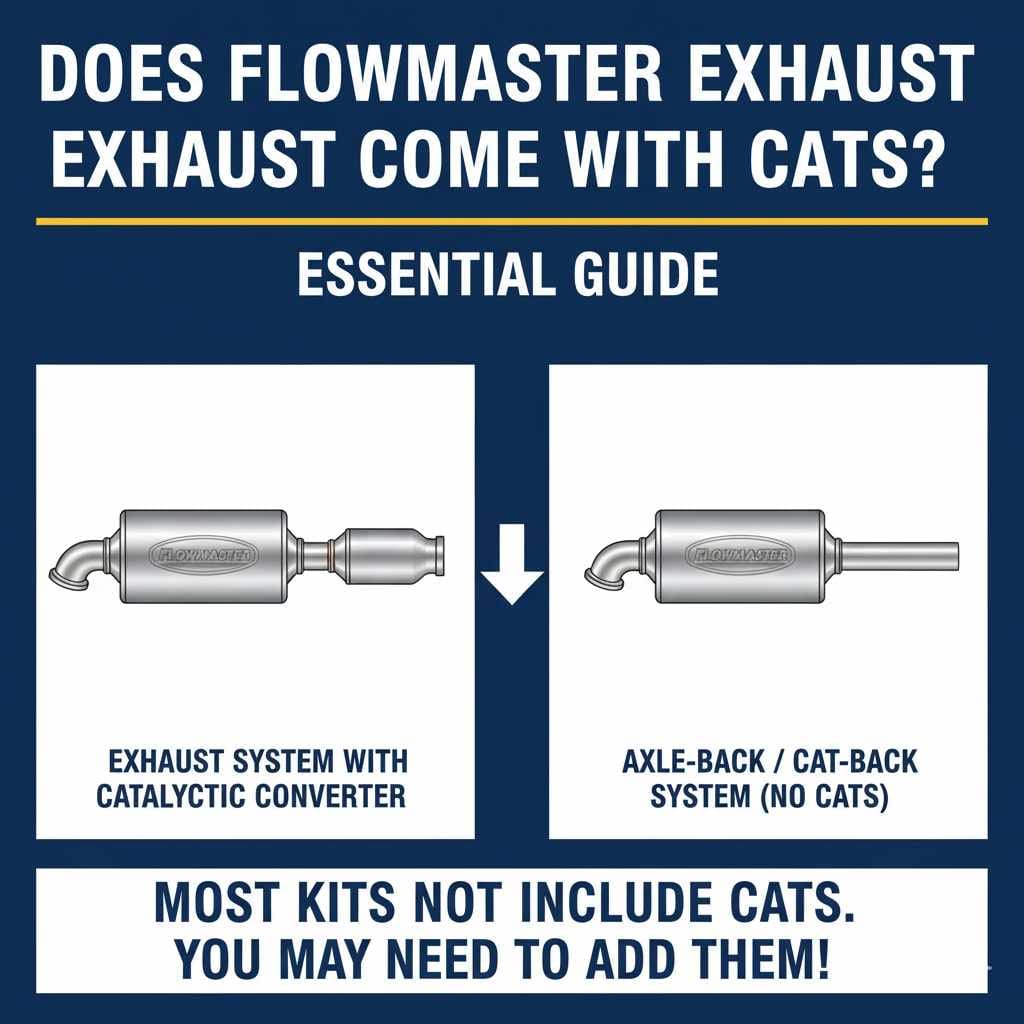
Does Flowmaster Exhaust Come With Cats: Essential Guide
Does Flowmaster Exhaust Come With Cats? Generally, no. Flowmaster exhaust systems are performance components designed to replace or enhance your existing exhaust. While they often work with your factory catalytic converter, Flowmaster mufflers and kits typically do not include catalytic converters themselves. You usually need to purchase these separately or retain your vehicle’s original ones.
Does Flowmaster Exhaust Come With Cats? An Essential Guide for Car Owners
Ever wondered if that sleek Flowmaster exhaust system you’re eyeing will come with all the necessary bits, like the catalytic converter? It’s a common question, and understandably so! Upgrading your car’s exhaust can be exciting, but figuring out what’s included can feel like a puzzle. Don’t worry; I’m here to simplify it for you. We’ll break down exactly what Flowmaster offers, what a catalytic converter does, and what you need to know to make the right choice for your ride. Let’s get your exhaust system figured out, step by step!
Understanding Your Exhaust System: The Basics
Before we dive into Flowmaster and catalytic converters, let’s quickly touch on what makes up a typical exhaust system. Think of it as your car’s way of breathing out. It starts at your engine, collecting exhaust gases and guiding them away from your cabin, all while trying to clean them up and quiet things down.
Key parts include:
- Exhaust Manifold/Headers: Collects exhaust gases from the engine cylinders.
- Catalytic Converter: This is a crucial part for emissions control. It uses special metals to convert harmful exhaust gases into less harmful ones.
- Muffler: The part that reduces the noise from your engine. This is often what people upgrade for a sportier sound, and where brands like Flowmaster shine.
- Pipes: Connect all these components and channel the exhaust out the back of your car.
- Resonator (Optional): Sometimes included to further tune the exhaust sound, often to eliminate unwanted drones.
Flowmaster is a very popular brand known for its mufflers and cat-back exhaust systems. They offer a distinct, aggressive sound that many enthusiasts love. However, it’s important to know that when you buy a Flowmaster muffler or an exhaust kit, you’re usually getting the components that replace or upgrade the muffler, pipes, and sometimes tips, not necessarily the catalytic converter.

What is a Catalytic Converter and Why Does It Matter?
Your catalytic converter, often called a “cat,” is a vital part of your car’s emissions system. It’s a metal canister usually located in the exhaust pipe between the engine and the muffler. Its job is to significantly reduce the pollution coming out of your tailpipe.
Inside the converter are precious metals like platinum, palladium, and rhodium. These metals act as catalysts, meaning they help chemical reactions happen without being used up themselves. These reactions transform harmful pollutants:
- Carbon Monoxide (CO) into Carbon Dioxide (CO2)
- Unburned Hydrocarbons (HC) into Carbon Dioxide (CO2) and Water (H2O)
- Nitrogen Oxides (NOx) into Nitrogen (N2) and Oxygen (O2)
According to the U.S. Environmental Protection Agency (EPA), catalytic converters can reduce smog-forming pollutants by more than 90%!
Why is this important for your exhaust upgrade?
- Legality: In most places, it is illegal to remove or tamper with your catalytic converter. They are essential for meeting emissions standards.
- Performance: While performance exhaust parts aim to improve flow, a clogged or failing catalytic converter can actually hurt performance.
- Sound: The catalytic converter also plays a role in muffling sound, though its primary purpose is emissions.
Does Flowmaster Exhaust Include Catalytic Converters?
Now, let’s get to the main question: Does Flowmaster exhaust come with cats?
The straightforward answer is typically no. Flowmaster primarily sells:
- Replacement Mufflers: These are designed to bolt in place of your factory muffler, offering a different sound and potentially better exhaust flow. They assume you are retaining your original catalytic converter(s).
- Cat-Back Exhaust Systems: These kits replace everything from the catalytic converter back – the mid-pipe, muffler, and tailpipe. They are designed to work with your existing catalytic converter.
- Axle-Back Exhaust Systems: These replace only the muffler and tailpipe section. Again, they are designed to connect to your factory system, including the catalytic converter.
You will rarely, if ever, find a standard Flowmaster muffler or cat-back system that includes a catalytic converter. If you require a new catalytic converter, it will usually need to be purchased separately. Some specialized kits might offer options for high-flow catalytic converters, but these are typically advertised as such and are often an add-on or a premium package.
Why Flowmaster Doesn’t Typically Include Catalytic Converters
There are several practical reasons for this:
- Vehicle Specificity: Catalytic converters are designed to fit a specific location and angle within an exhaust system for optimal performance and emissions control. A universal muffler or cat-back kit can’t predict the exact mounting points on every vehicle.
- Cost: Catalytic converters contain expensive precious metals. Including them would significantly increase the cost of the exhaust system.
- Emissions Regulations: Manufacturers must ensure that any replacement catalytic converter meets strict emissions standards for the vehicle it’s intended for. It’s a complex regulatory area.
- Focus on Performance: Flowmaster’s core business is enhancing sound and performance, primarily through their muffler technology and exhaust piping.
When Would You Need a New Catalytic Converter?
A catalytic converter is designed to last the life of your vehicle. However, they can fail. Here are common reasons and symptoms:
- Age and Mileage: Over time, the internal “honeycomb” structure can become clogged with carbon deposits, or the precious metals can become less effective.
- Engine Misfires or Rich Fuel Mixtures: Unburned fuel entering the converter can overheat and damage it.
- Physical Damage: Road debris can strike and damage the converter.
- Contamination: Using leaded fuel (rare now) or certain fuel additives can poison the catalyst.
Signs of a failing catalytic converter:
- Check Engine Light: This is the most common indicator. Codes like P0420 (Catalyst System Efficiency Below Threshold) often point to a converter issue.
- Reduced Engine Performance: Sluggish acceleration, loss of power, and decreased fuel economy.
- Rotten Egg Smell: Especially noticeable after the engine warms up, indicating a sulfur buildup.
- Rattling Noise: The internal ceramic structure can break apart and rattle inside the converter housing.
- Failed Emissions Test: The most definitive sign that your converter isn’t doing its job.
What to Consider When Upgrading Your Flowmaster Exhaust
If you’re planning an exhaust upgrade with Flowmaster, here’s what you should think about:
1. Your Goal: Sound, Performance, or Both?
Flowmaster offers different muffler series (e.g., Series 40, Series 50, Super 44) that produce varying sound levels, from aggressive to moderate. Cat-back systems are designed for better flow, which can offer minor performance gains, especially when paired with other engine modifications.
2. Keeping or Replacing Your Catalytic Converter
For most street-driven vehicles, you will keep your factory catalytic converter. If your converter is failing or you’re building a dedicated performance vehicle where emissions aren’t a concern (and it’s legal in your area to remove it – which is rare and often not recommended), you might consider high-flow aftermarket converters. These are different from stock converters and are legal in some regions/situations for off-road use.
3. Local Laws and Emissions Testing
This is crucial. Before buying anything, check your local regulations regarding exhaust modifications and emissions testing. Tampering with or removing catalytic converters can lead to hefty fines and your vehicle failing inspection. The State Emissions Testing Requirements can vary significantly.
4. What Type of Flowmaster System?
- Muffler Only: Simplest and most affordable. Replaces just the muffler.
- Axle-Back: Replaces muffler and tailpipe. Usually a bit more involved than just a muffler swap.
- Cat-Back: Replaces everything from the catalytic converter back. Offers the most potential for sound and performance tuning in a kit form.
5. Installation
Many Flowmaster systems are designed for bolt-on installation, making them suitable for DIY projects with basic tools. However, some may require cutting or welding, especially if you’re fitting a universal muffler or dealing with rusted sections. If you’re not comfortable with the installation, professional help is recommended.
Flowmaster Systems vs. Catalytic Converters: A Comparison
To make it super clear, let’s look at a comparison:
| Feature | Flowmaster Muffler/Cat-Back System | Catalytic Converter |
|---|---|---|
| Primary Function | Sound enhancement and exhaust flow improvement | Emissions reduction |
| Typical Inclusion in Flowmaster Products | Yes (is the product) | No (usually factory original or purchased separately) |
| Components | Muffler, pipes, tips | Ceramic honeycomb structure coated with precious metals in a metal casing |
| Legality | Generally legal, but specific designs might face restrictions in some areas (e.g., extreme loudness) | Mandatory for road vehicles in most regions; removal is illegal and environmentally harmful |
| Effect on Emissions | Minimal direct effect, but improved flow can indirectly help efficiency. Some older designs without proper emissions considerations could affect testing. | Essential; converts harmful gases to less harmful ones. |
| Effect on Sound | Significant (this is their main appeal) | Muffles exhaust noise to some extent |
| Common Failure | Rust, internal baffles breaking down | Clogging, internal honeycomb breakdown, catalyst poisoning |
DIY Installation Tips: What You Might Need
If you’re planning to install a Flowmaster muffler or cat-back system yourself, here are some things to keep in mind and tools you might need:
Essential Tools:
- Socket Set and Wrenches: For unbolting the old system and bolting on the new one.
- Penetrating Oil: Your best friend for freeing rusted exhaust bolts. Let it soak!
- Jack and Jack Stands: Crucial for safety! Never work under a car supported only by a jack. Ensure they are rated for your vehicle’s weight. Consult NHTSA guidelines for safe vehicle support.
- Gloves and Safety Glasses: Protect your hands and eyes from rust, sharp edges, and debris.
- Exhaust Hanger Pliers or Tool: To safely remove the rubber exhaust hangers.
- Measuring Tape: To ensure proper alignment.
Optional Tools (Depending on the Job):
- Band Saw or Reciprocating Saw: If you need to cut the old exhaust pipes.
- Welder: If your new system requires welding or if you’re fabricating custom hangers.
- Torque Wrench: To tighten bolts to the manufacturer’s specifications.
Step-by-Step (General):
- Safety First: Park on a level surface, engage the parking brake, and use jack stands.
- Locate Hangers: Identify where your current exhaust system is held up.
- Loosen or Cut: Loosen the bolts connecting sections or cut the pipe before the section you’re replacing.
- Remove Old System: Carefully lower the old exhaust, using your tool to detach hangers as needed.
- Prepare New System: Apply anti-seize compound to any slip-fit connections to make future removal easier.
- Install New System: Fit the new muffler/system, aligning it with hangers and connecting pipes.
- Secure System: Reattach hangers and tighten all connections.
- Final Check: Ensure everything is aligned, securely fastened, and has adequate clearance from the chassis and fuel lines.
- Start Engine: Check for leaks and listen for the new sound!

FAQ: Your Questions Answered
Q1: Will a Flowmaster muffler fit my car without modification?
Many Flowmaster mufflers are universal, meaning they might require some modification (cutting or adapting pipes) to fit perfectly. However, Flowmaster also offers direct-fit “bolt-on” mufflers and complete systems (like cat-backs) designed for specific vehicle makes and models, which usually require little to no modification.
Q2: Can I remove my catalytic converter if it’s clogged and replace it with straight pipe?
In most places, removing your catalytic converter and replacing it with straight pipe is illegal for road vehicles. It’s also harmful to the environment. If your converter is clogged, the correct solution is to replace it with a new OEM or EPA-approved aftermarket catalytic converter. Check your local laws diligently.
Q3: What’s the difference between a muffler and a catalytic converter?
A muffler primarily reduces the noise produced by the engine’s exhaust gases. A catalytic converter’s main job is to clean up those exhaust gases by converting harmful pollutants into less harmful substances through chemical reactions.
Q4: How do I know if my catalytic converter needs replacing?
Common signs include a check engine light (especially P0420 code), a significant loss of engine power or acceleration, a rotten egg smell from the exhaust, or a failed emissions test. A rattling sound from the converter housing can also indicate it’s failing.
Q5: Can I buy a Flowmaster system that includes a catalytic converter?
Typically, no. Flowmaster’s standard exhaust systems (mufflers, axle-backs, cat-backs) are designed to work with your vehicle’s existing catalytic converter. If you need a new catalytic converter, it must usually be purchased separately from Flowmaster or another reputable manufacturer.
Q6: Are high-flow catalytic converters a good option?
High-flow catalytic converters are designed to allow exhaust gases to pass through more easily, potentially improving performance and sound compared to a stock converter. However, their legality varies by region, and they can be more expensive. Always ensure any aftermarket converter you buy meets the emissions standards for your specific location and vehicle.
Q7: If I buy a Flowmaster cat-back exhaust, do I need to do anything to my catalytic converter?
No. A cat-back system is designed to connect directly to your existing catalytic converter. You don’t need to modify or replace your catalytic converter just to install a cat-back Flowmaster exhaust, assuming your converter is in good working order.
Conclusion: Making the Right Choice for Your Exhaust
So, to wrap things up: when you’re looking at Flowmaster exhaust systems, remember that the brand is renowned for its mufflers and complete exhaust kits designed to enhance your vehicle’s sound and performance. However, these products generally do not include catalytic converters. Your factory catalytic converter is a critical component for emissions control, and it’s usually something you’ll retain when installing a Flowmaster system unless you’re embarking on a specialized build and have carefully researched local regulations and the availability of compliant aftermarket converters.
Always confirm what’s included when purchasing any exhaust component. If you need a new catalytic converter, that’s a separate purchase. By understanding these distinctions, you can confidently choose the right Flowmaster products, ensure your vehicle remains compliant and environmentally responsible, and enjoy that signature Flowmaster sound. Happy motoring!