Does Corsa Exhaust Get Louder After Break-In? Essential Guide
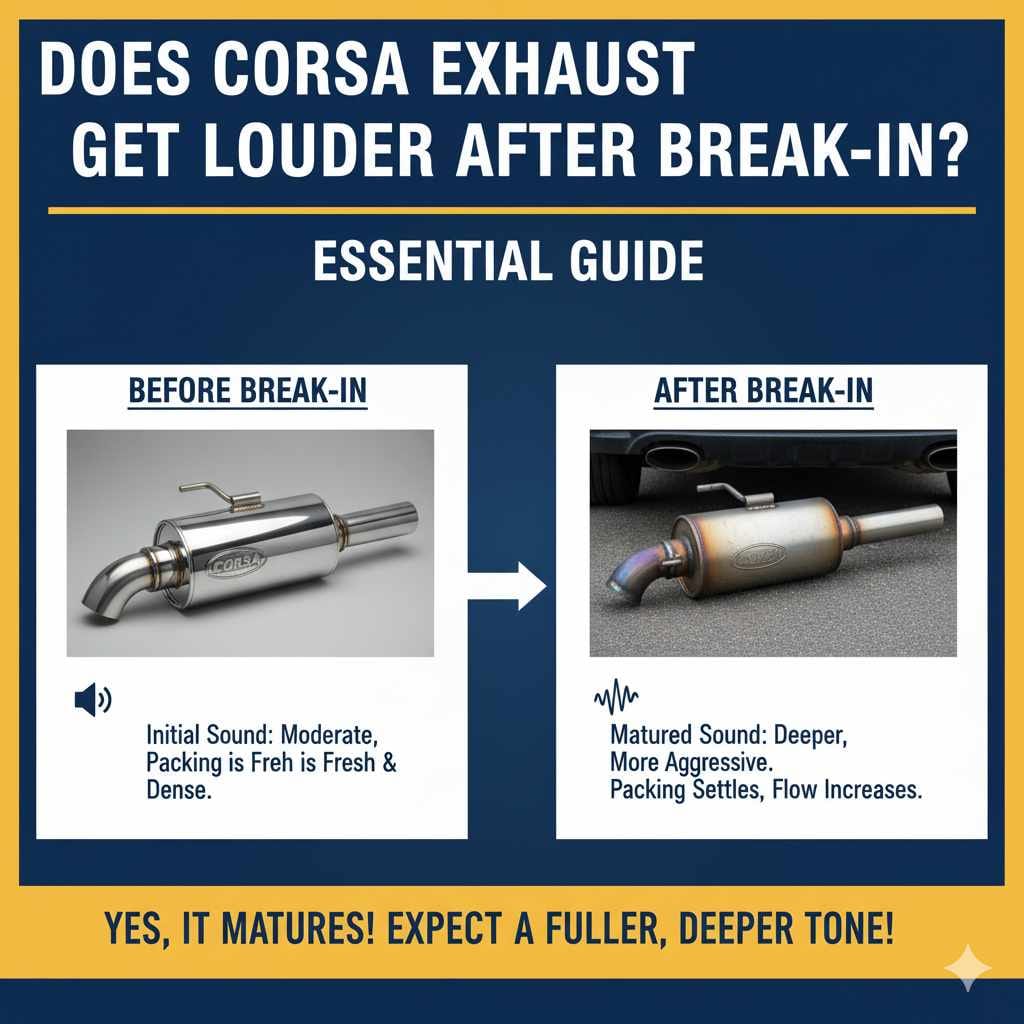
Yes, Corsa exhausts generally do get slightly louder and deeper after a break-in period. This subtle change is normal and expected as the packing materials inside the muffler settle, and the entire system adapts to heat cycles. Don’t worry; it’s a good sign your Corsa is performing as it should!

Corsa
CORSA EXHST Exhaust Tip Kit
- Stainless steel construction
- Mandrel bent tubing
- 400 Series stainless steel construction
As an Amazon Associate I earn from qualifying purchases.
Hey there, fellow car enthusiasts! Have you recently installed a Corsa exhaust system and noticed a change in its sound over time? It’s a common question many car owners ask: does a Corsa exhaust get louder after break-in? It can be a little confusing when your brand-new exhaust sounds a bit different after a few weeks. This article is here to clear things up, explain what’s happening, and assure you that this is a normal, even healthy, part of your exhaust system’s life. We’ll walk through exactly why this happens and what you might expect, making sure you feel confident about your Corsa’s performance.
Understanding Exhaust Break-In: What’s Really Happening?
When you get a new exhaust system, like a Corsa, it’s not quite at its peak performance or sound from the very first moment. Think of it like a new pair of shoes – they need a little time to mold to your feet and become truly comfortable. Your exhaust system works similarly, especially the mufflers and resonators. Inside these components are materials designed to control sound and heat. These materials, often fiberglass packing or specific baffling structures, are brand new and a bit stiff.
The break-in period allows these internal components to “settle in.” Heat from the exhaust gases and the vibrations generated during driving help these materials loosen up and become more effective at their jobs. This settling process results in a subtle, but noticeable, change in the exhaust note. It’s usually a deepening of the tone and a slight increase in volume, moving from a taut, perhaps slightly restrained sound, to a richer, fuller tone that unleashes the exhaust’s full character.
Why a Corsa Exhaust Specific Break-In?
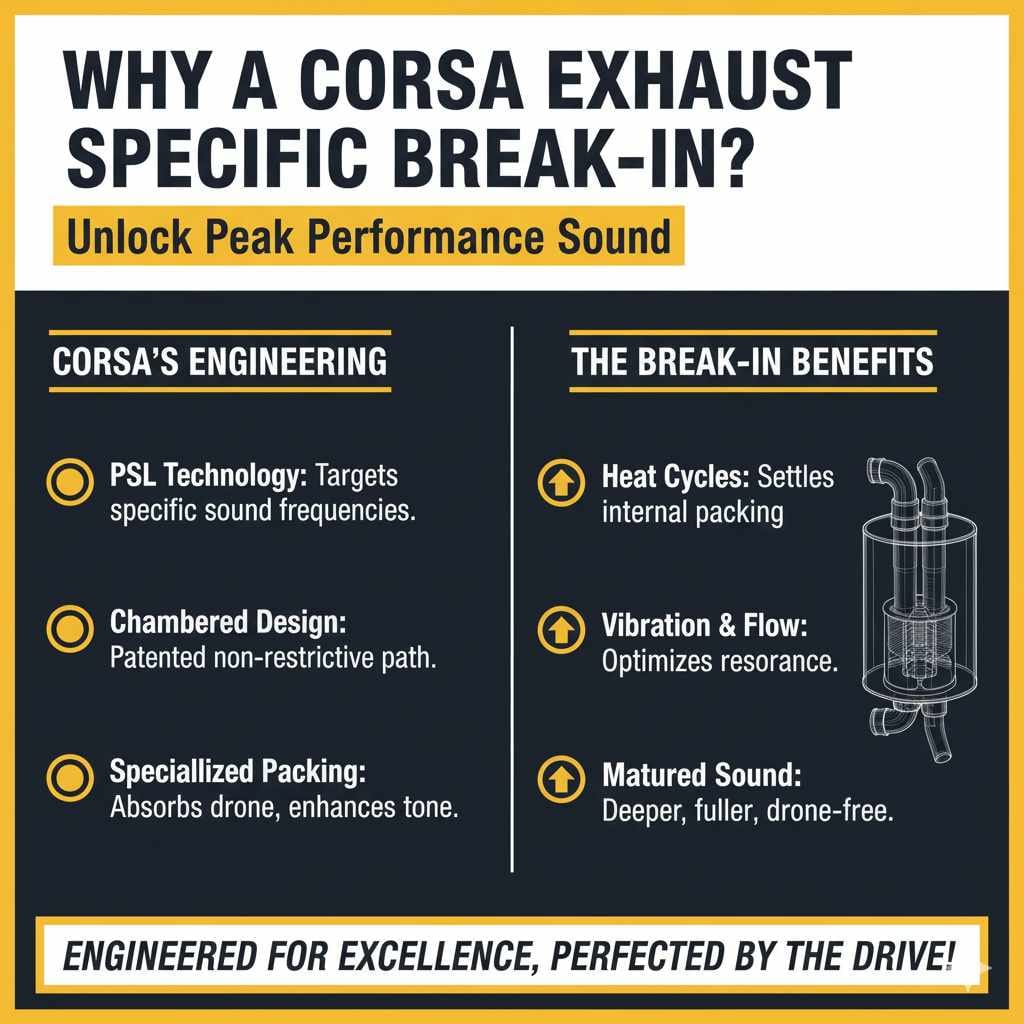
Corsa is known for its Performance Sound level (PSL) technology, which aims to deliver a specific, targeted sound experience without drone. Their systems are engineered with precision, often using reflective or straight-through designs combined with specialized packing. This engineering means that while the sound is more controlled than many aftermarket exhausts, it still benefits from a break-in period. The internal baffles and packing are designed to resonate and absorb sound frequencies in a particular way, and these elements perform optimally once they’ve gone through a few heat cycles and vibrations. Corsa’s focus on eliminating drone means any changes during break-in are typically positive, enhancing the desired sporty tone rather than introducing unwanted raspiness.
The Science Behind Sound Changes
Exhaust sounds are essentially sound waves traveling through air. Inside your muffler, these waves are manipulated. For systems with packing material (common in Corsa’s design to manage specific frequencies and drone), the packing is initially dense. As heat cycles occur, the fibers in the packing can expand and contract, becoming more pliable. This increased pliability allows sound waves to pass through more freely or be absorbed in a slightly different manner, leading to a richer, more resonant sound.
For systems that rely more on baffling and chamber design, the metal components themselves can expand slightly with heat. This subtle expansion and contraction can alter how sound waves reflect and interact within the chambers, contributing to a deeper, fuller sound. It’s a bit like tuning an instrument; small adjustments can significantly change the overall tone. You can learn more about the physics of sound and how exhaust systems work by exploring resources from organizations like the University of New South Wales Physics, which offers in-depth explanations of acoustics.
How Long Does the Corsa Exhaust Break-In Period Last?
The break-in period for a Corsa exhaust isn’t a precise science with a strict deadline for every single vehicle. However, most enthusiasts and manufacturers agree that you’ll start to notice the most significant changes within the first few hundred miles of driving. Generally, you can expect the primary “settling” to occur between 200 to 500 miles (approximately 320 to 800 kilometers). This is when the internal components are most dynamically adapting to their working environment.
Some users report subtle continuous changes even beyond 500 miles, but these are usually much less pronounced. The initial break-in period is where the most noticeable evolution of the exhaust note will happen. It’s important to remember that driving conditions can influence this. Consistent highway driving with steady warm-ups and cool-downs might accelerate the process compared to very short, stop-and-go trips. It’s also worth noting that driving style can play a role; using different RPM ranges during the break-in period can help ensure all parts of the exhaust system are properly cycled.
Typical Stages of Break-In
Here’s a general timeline of what you might experience:
- 0-50 Miles: The exhaust might sound a bit quieter or more “muted” than expected. This is the fresh, tightly packed material stage. You might hear some initial exhaust pops or burbles as new seals and connections bed in.
- 50-200 Miles: You might start to notice the sound becoming slightly more defined. The volume might increase a touch, and the tone can begin to deepen.
- 200-500 Miles: This is prime break-in territory. The exhaust note should become noticeably richer, deeper, and fuller. The volume will likely settle at its optimal level for your system.
- 500+ Miles: The sound should be consistent now, with any further changes being extremely subtle. This is the sound your Corsa exhaust is designed to provide.
Factors Influencing Exhaust Sound Evolution
While the break-in itself is a primary reason for sound changes, other factors can also contribute to how your Corsa exhaust sounds over time:
1. Temperature Fluctuations
Every time your exhaust system heats up and then cools down, the metal components expand and contract. This constant thermal cycling can influence how the exhaust gases flow and how the internal packing material behaves. Over many cycles, this can lead to very gradual changes in sound. The importance of understanding thermal expansion in materials can be found in engineering resources, such as those provided by The American Society for Nondestructive Testing (ASNT), which explains its impact on various applications.
2. Driving Conditions and Style
How you drive plays a role. Frequent cold starts and short trips mean the exhaust doesn’t get fully heated to its operating temperature consistently. This can prolong the break-in period. Driving your car more actively, with varied RPMs and longer drives that allow the exhaust to reach optimal temperature, can help the break-in process occur more effectively. A gentle approach generally leads to the best settling of materials.
3. Ambient Temperature
Interestingly, the temperature of the air outside can also subtly affect exhaust sound. Colder air is denser, which can sometimes make exhaust notes sound a bit sharper or more pronounced. Warmer, less dense air might make the sound seem slightly more mellow. This isn’t part of the break-in process itself but can make you perceive changes in sound from one season to another.
4. Other Exhaust Components
While the muffler is the primary component affecting sound, the catalytic converter, resonator, and piping all contribute to the overall tone. If any of these components are also new or have undergone recent work, they might also experience slight changes in their acoustic properties as they settle in. For instance, a new catalytic converter can sometimes affect backpressure and sound until it’s fully “seated” into its operational parameters.
Is the Sound Change Significant?
For most Corsa exhaust systems, the change in sound after break-in is subtle and positive. It’s not usually a dramatic increase in volume that would startle you or raise concerns from neighbors or law enforcement. Instead, it’s a refinement of the sound.
Imagine going from a clear, defined voice to a voice with a bit more richness and resonance. That’s often the kind of change you can expect. The goal of a Corsa exhaust is to provide an aggressive, sporty sound when you accelerate but remain quiet and drone-free during cruising speeds. The break-in process enhances this intended sound profile, making it fuller and more satisfying.
It’s rare for a well-installed Corsa system to become excessively loud or raspy after break-in. If you experience a drastic, unwanted change, it might be worth investigating potential issues like leaks or incorrect installation.
Tools and Tips for Monitoring Your Exhaust’s Break-In
You don’t need special tools to monitor your exhaust break-in, but a little attention can be helpful. Listening during different driving scenarios is key.
Recommended Listening Scenarios:
- Cold Start: Listen to the sound right after you start the engine when it’s cold.
- Warm-Up: Pay attention as the engine warms up and the exhaust system heats up.
- Acceleration: Notice how the sound changes when you gently accelerate through different RPM ranges.
- Cruising: Most importantly, listen while driving at a steady speed on the highway. This is where drone is most noticeable, and Corsa systems are designed to excel here.
Simple Checks You Can Do:
- Visual Inspection: Periodically, when the exhaust is cool, look for any signs of unusual soot build-up or leaks around the flanges and connections.
- Tap Test (with caution): Once the system is completely cold, you can gently tap different parts of the muffler shell. You might notice a slightly different resonance after the break-in period, indicating the internal packing has settled.
If you’re interested in understanding more about exhaust system components and their functions, reputable automotive aftermarket sites often have detailed explanations. For instance, understanding the role of mufflers and resonators can be crucial for appreciating sound changes. Resources that offer detailed product breakdowns can be very informative.
When to Worry: Signs of a Problem, Not a Break-In
While the sound change during break-in is normal, there are a few signs that might indicate something isn’t right. These aren’t related to the natural settling of materials but could point to installation issues or component problems:
- Excessive Rattling or Banging: If you hear loud metallic rattling or banging sounds that weren’t there initially, it could be a loose hanger, a heat shield issue, or even an internal muffler baffle coming loose.
- Significant Drone at Cruising Speeds: Corsa systems are specifically engineered to eliminate drone. If you start experiencing a persistent, annoying hum or vibration at highway speeds, it might suggest an installation issue, a leak, or perhaps that a specific resonance isn’t being managed correctly by the system for your particular vehicle and engine setup.
- Obvious Leaks: Look for black sooty areas around exhaust joints, flanges, or welds, especially if accompanied by a hissing or puffing sound. Leaks can drastically alter sound and reduce performance.
- Sudden, Drastic Volume Increase: A gradual deepening is normal. A sudden jump in loudness that sounds “unrefined” or “raspy” could indicate a problem.
- Check Engine Light: While not directly related to sound, if installing a new exhaust triggers your check engine light, it’s essential to get it diagnosed. This could be due to an oxygen sensor being disturbed or affected, or an improper fitment causing exhaust flow issues.
If you notice any of these symptoms, it’s best to stop driving and have the exhaust system inspected by a qualified mechanic or the shop that installed it. Often, these issues can be resolved with minor adjustments or repairs.
Table: Common Exhaust System Changes Post Break-In
To help visualize the typical evolution of your Corsa exhaust’s sound, here’s a table outlining common observations:
| Sound Characteristic | Initial Sound (New System) | Sound After Break-In (200-500 Miles) | Possible Implications |
|---|---|---|---|
| Volume | Slightly reserved, might seem quieter than expected. | Slightly increased, sounds more present and robust. | Normal settling of internal packing. |
| Tone/Pitch | Can be slightly higher-pitched or more ‘crisp’. | Deeper, richer, more resonant. | Packing material loosens, allowing fuller sound waves. |
| Note Clarity | Well-defined but perhaps less ‘full’. | More complex and satisfying, with a deeper growl under acceleration. | System components have stabilized and are working optimally. |
| Drone at Cruise | Ideally minimal to none, as per Corsa’s design. | Remains minimal to none, system fully effective. | This is Corsa’s standout feature; persistent drone indicates an issue. |
| Burble/Pop on Decel | May be present but less pronounced. | Slightly more noticeable or satisfying, depending on the specific system. | Normal characteristic of performance exhausts once settled. |
Tips for Maximizing Your Corsa Exhaust’s Performance and Sound
Once your Corsa exhaust has gone through its break-in period, you’ll want to keep it sounding and performing its best. Here are some tips:
- Regular Visual Inspections: Look for rust, damage, or loose components periodically. A quick check every oil change can save you a headache later.
- Keep it Clean: While the inside of the exhaust isn’t something you clean directly, keeping the exterior pipes and tips clean with appropriate automotive cleaners will prevent corrosion and keep your car looking sharp.
- Avoid Harsh Chemicals: Use automotive-specific cleaners. Harsh industrial chemicals can damage the finish, especially on polished or coated tips.
- Proper Driving Habits: Continue to drive your vehicle in a manner that allows the exhaust system to heat up properly. This helps prevent moisture buildup and internal corrosion.
- Address Leaks Promptly: If you ever notice or suspect an exhaust leak, get it fixed ASAP. Leaks can lead to reduced performance, increased cabin noise, and potential safety hazards due to fumes entering the cabin. The U.S. Environmental Protection Agency (EPA) provides valuable information on vehicle emissions and safety, underscoring the importance of a sealed exhaust system.
- Consider a Cat-Back System: If you’re looking to optimize sound and performance further, ensure you are aware of the benefits of a full cat-back system. These systems replace the entire exhaust from the catalytic converter back, offering the most comprehensive sound and performance enhancement.

Frequently Asked Questions (FAQ)
Can a Corsa exhaust get too loud after break-in?
Generally, no. Corsa systems are engineered to deliver a specific, performance-oriented sound without being excessively loud or obnoxious. The sound change is typically a positive refinement, not a runaway increase in volume. If your exhaust becomes significantly louder to an uncomfortable degree, it might indicate an issue like a leak or a problem with the muffler internals, rather than a normal break-in effect.
What is the difference between Corsa and other aftermarket exhausts regarding break-in?
Corsa focuses heavily on eliminating drone and delivering a refined, aggressive sound. Their proprietary technologies mean that while they still go through a break-in period similar to other high-quality exhausts, the end result is typically a more controlled and targeted sound. Cheaper or less sophisticated exhausts might experience more drastic changes, sometimes including unwanted raspiness or drone, during their break-in.
Do I need to do anything special during the break-in period?
No special procedures are usually required. The best approach is to simply drive your car normally. Vary your RPMs and try to take some longer drives to ensure the exhaust system gets up to full operating temperature regularly. Avoid constant short trips where the exhaust doesn’t fully heat up and cool down.
Will a Corsa exhaust affect my car’s performance?
Yes, many Corsa exhaust systems are designed to improve exhaust flow, which can lead to small but noticeable gains in horsepower and torque. This is often achieved through larger diameter piping, smoother bends, and less restrictive muffler designs. The break-in period helps the system achieve its optimal flow characteristics.
How can I tell if my Corsa exhaust is broken in?
You’ll know it’s broken in when the sound has settled into a consistent tone. The initial subtle changes will stop, and the exhaust will have its characteristic Corsa sound – deeper, richer, and without the slight stiffness it had when new during acceleration, while remaining quiet and drone-free at cruising speeds.
Can the break-in period affect fuel economy?
While the primary effect of break-in is on sound and performance refinement, a slight improvement in fuel efficiency could be observed as the exhaust system reaches its optimal flow. However, this difference is usually very minor and not the main purpose of the break-in process. Consistent driving habits are far more impactful on fuel economy.
Conclusion
So, to wrap things up, does a Corsa exhaust get louder after break-in? Yes, it gets slightly richer and fuller, which is a normal and expected evolution. That subtle deepening of the tone as you drive those first few hundred miles is a positive sign that your Corsa system is settling in and performing as engineered. It’s the sound maturing, much like a fine wine or a well-tuned instrument finally hitting its stride. By understanding this process, you can appreciate the subtle changes and ensure your Corsa exhaust brings you the best possible driving experience for years to come. Always remember to keep an eye out for any unusual sounds in case of a problem, but for the most part, enjoy the refined performance and sound of your Corsa exhaust!
Related pick: Check today's price on Amazon