Do Harley Davidsons Come With Vance And Hines Exhaust: Essential Guide
Do Harley-Davidsons Come With Vance & Hines Exhaust? The short answer is: generally, no, new Harley-Davidsons do not come equipped with Vance & Hines exhaust systems as standard from the factory. While Vance & Hines is a highly respected aftermarket brand for Harley exhaust, they are typically an upgrade chosen by owners after purchase, not an original equipment manufacturer (OEM) fitment.

Vance & Hines
Vance & Hines 450 Slip-On Exhaust for…
- Flush Muffler Outlets Match Stretched Saddlebag Cutouts
- Large 4.5-inch Round Mufflers
- Sleek Matte Black Finish
As an Amazon Associate I earn from qualifying purchases.
When you first think about the iconic rumble of a Harley-Davidson, you might imagine a specific sound. Many riders associate that deep, throaty tone with Vance & Hines. It’s a very common question for new riders or those dreaming of their first Harley: “Do Harley-Davidsons come with Vance & Hines exhaust straight from the factory?” It’s easy to get confused because Vance & Hines is such a popular choice for upgrades, and you hear them on so many Harleys. But the truth is, the vast majority of new Harley-Davidsons roll off the assembly line with a stock exhaust system designed to meet emissions and noise regulations. This guide will help clear up any confusion and explain what exhaust options Harley owners typically have. We’ll walk you through why Vance & Hines is so popular and what you need to know about aftermarket exhausts for your V-twin.
Why Vance & Hines is So Popular for Harley-Davidsons
Vance & Hines has built a legendary reputation in the motorcycle world, especially among Harley-Davidson enthusiasts. For decades, they’ve been synonymous with performance and that unmistakable Harley sound. Many riders consider a Vance & Hines exhaust to be the quintessential upgrade for their bike. This popularity stems from several key factors:
- Iconic Sound: Vance & Hines systems are engineered to produce a deep, resonant, and often louder exhaust note than stock. This “Harley sound” is a massive part of the riding experience for many, and Vance & Hines delivers it exceptionally well.
- Performance Gains: Beyond just sound, these exhaust systems are designed to improve engine performance. By allowing the engine to breathe more easily, they can contribute to increased horsepower and torque.
- Quality and Durability: Vance & Hines products are known for their high-quality materials and construction. They are built to withstand the rigors of riding and last for many years.
- Aesthetics: They offer a wide range of styles, from classic chrome to sleek black finishes, and different pipe designs that can dramatically change the look of a Harley-Davidson.
- Brand Heritage: Vance & Hines has a long history of racing and developing high-performance parts for Harley-Davidson motorcycles. This heritage lends a certain prestige and trust to their brand.
Because of these reasons, many Harley owners choose to upgrade their stock exhaust to a Vance & Hines system shortly after purchasing their bike, or even order them as dealer-installed accessories. This often leads to the misconception that they come standard.

Understanding Harley-Davidson Stock Exhausts
When you buy a new Harley-Davidson, it comes with an exhaust system that is designed primarily to meet strict government regulations. These exhaust systems are built with several considerations in mind:
- Emissions Standards: Modern motorcycles, including Harleys, must comply with environmental regulations regarding emissions. This often means stock exhausts include catalytic converters and baffles that limit the exhaust gases’ flow and reduce pollutants. You can learn more about emissions standards from the Environmental Protection Agency (EPA).
- Noise Regulations: Similarly, noise levels are regulated to reduce overall sound pollution. Stock exhaust systems are designed to be as quiet as possible while still allowing the engine to run effectively. This usually involves significant baffling inside the pipes.
- Cost-Effectiveness: While high-quality, stock exhausts are designed for reliability and function, they are also produced in massive quantities to keep the overall cost of the motorcycle down. They prioritize meeting requirements over delivering peak performance or a desired sound.
- Broad Appeal: The stock exhaust must appeal to a wide range of riders, from those who prefer a more subdued sound to those who will inevitably upgrade.
While perfectly functional, stock Harley exhausts are often heavier, less visually appealing, and certainly don’t produce the rich, deep sound that many riders crave. This is precisely why the aftermarket, and brands like Vance & Hines, thrive in the Harley-Davidson community.
What is an Aftermarket Exhaust?
An aftermarket exhaust is any component or system that is not manufactured by the original vehicle manufacturer (in this case, Harley-Davidson). For your exhaust, this means headers, mufflers, or full exhaust systems produced by companies like Vance & Hines, Bassani, Rinehart Racing, and many others. These companies specialize in designing and manufacturing performance parts that often offer:
- Improved sound
- Better performance
- Lighter weight
- Unique styling
They are designed as replacements or additions to the stock system, allowing riders to customize their motorcycle to their preferences.
How to Identify Your Harley-Davidson’s Exhaust
It’s surprisingly easy to tell if your Harley-Davidson has a Vance & Hines exhaust or a stock one. Here are a few simple checks:
Visual Inspection
- Branding: Vance & Hines pipes almost always have the brand name or logo stamped or etched onto the muffler or tip. Look for a small Vance & Hines nameplate, a laser-etched logo, or distinctive lettering. Stock Harley exhausts will typically have Harley-Davidson branding, or sometimes no branding at all.
- Muffler Shape and Size: Vance & Hines offers many different styles. Some are larger and more cylindrical, others are sleeker and tapered. Compare the shape, length, and diameter of your mufflers to images of stock Harley exhausts and Vance & Hines models online.
- Finish: While both can come in chrome or black, Vance & Hines often has a specific finish quality or design (like their 2-into-1 systems or their popular “short shots”).
Sound Test
This is often the most telling sign. Stock exhausts are generally much quieter and have a more muted tone. Vance & Hines exhausts are famous for their louder, deeper, and more aggressive sound profile. If your bike has a distinct rumble and bark that commands attention, it’s more likely to be an aftermarket system.
Documentation and VIN Decoder
If you have the original paperwork or purchase receipt for the motorcycle, it might list any specific accessories or upgrades, including the exhaust system. You can also use a VIN (Vehicle Identification Number) decoder. While VIN decoders might not always list aftermarket parts, they can help identify the original factory specifications of your bike. If the original spec doesn’t mention Vance & Hines, it’s likely not a factory fitment.
Harley-Davidson Exhaust Options: What You Need to Know
When you decide to upgrade your Harley-Davidson’s exhaust, you’ll find a vast array of options. Vance & Hines is just one of many excellent brands, but their systems are a benchmark for many riders. Here’s a breakdown of what to expect:
Types of Exhaust Systems
Harley-Davidson exhausts typically come in a few configurations:
- Slip-on Mufflers: These replace only the mufflers (the rear part of the exhaust) and are the simplest upgrade. They bolt directly onto the existing header pipes. This is a popular choice for riders who want a better sound without a complete system overhaul.
- Full Exhaust Systems: These replace the entire exhaust from the engine’s exhaust ports all the way back. This includes the header pipes and mufflers. Full systems offer the greatest potential for performance gains and the most significant change in sound and aesthetics.
- 2-Into-1 Exhausts: In this configuration, the two header pipes from the cylinders merge into a single, larger muffler. These systems are often favored for their performance characteristics, as they can help scavenge exhaust gases more efficiently, leading to better low-end torque.
- 2-Into-2 Exhausts: This is the more traditional setup, where each cylinder has its own header pipe running to its own muffler. This configuration is often chosen for its classic look and associated sound.
Popular Vance & Hines Models for Harley-Davidson
Vance & Hines offers a wide range of exhaust models tailored to different Harley-Davidson models and rider preferences. Some of their most sought-after lines include:
- ShortShots Staggered: Known for their aggressive styling and loud, raw sound. They usually feature staggered pipes for a classic drag-pipe look.
- Big Radius: These pipes feature a sweeping, large-radius bend, creating a distinctive look. They are often praised for their deep tone and strong performance.
- Hi-Output: Designed for maximum performance, these systems often have a larger diameter muffler and a more open-ended design to reduce back pressure.
- Power Duals: These are 2-into-1 header systems with distinct styling, designed to improve performance and deliver a throaty sound, often paired with Vance & Hines mufflers.
- Competition Series: Typically lighter and more performance-oriented, often with a matte black finish for a modern, aggressive look.
Other Reputable Aftermarket Brands
While Vance & Hines is a top contender, these other brands are also highly respected in the Harley-Davidson community:
- Rinehart Racing: Known for their deep, resonant sound and high-quality chrome finishes.
- Bassani: Offers a range of performance-oriented pipes with a distinctive look and sound.
- Kuryakyn: A well-known accessory brand that also offers exhaust solutions.
- Screamin’ Eagle: Harley-Davidson’s own performance parts division. While not “aftermarket” in the strictest sense, they offer upgrades that go beyond stock.
Legal and Regulatory Considerations
When upgrading your exhaust, it’s crucial to be aware of the laws and regulations in your area. This is an area where many riders encounter difficulties if they aren’t careful.
- Noise Ordinances: Many cities and states have strict noise limits for vehicles. Loud exhaust systems, especially those without proper baffling or emission control, can lead to tickets and fines.
- Emissions Laws: Federal and state laws mandate emissions standards for motorcycles. Removing catalytic converters or modifying exhaust systems in ways that increase emissions can be illegal. In the United States, the EPA sets these standards. Aftermarket parts are often sold with a disclaimer stating they are for “off-road use only” or “competition use” unless they have been specifically certified by the EPA or CARB (California Air Resources Board) for street use.
- State Inspections: If your state requires emissions or safety inspections, a non-compliant exhaust system can cause you to fail.
It’s always best to research the specific laws in your region. For instance, California has some of the strictest emissions regulations in the U.S., overseen by CARB.
Choosing Street-Legal Options
Many manufacturers offer exhaust systems that are designed to be compliant with noise and emissions regulations for street use. These often still provide an improved sound and performance over stock, but they may have internal baffles or catalytic converters that keep them within legal limits. When purchasing an aftermarket exhaust, look for:
- EPA Stamped: Indicates compliance with EPA standards.
- CARB Approved: Specifically legal for use in California and other states that adopt CARB standards.
- “For Competition Use Only” or “Off-Road Use Only”: If an exhaust has this disclaimer, it means it is not legal for use on public roads and may also be illegal for sale or installation in certain areas.
Installation Considerations
Installing an aftermarket exhaust system on your Harley-Davidson can be a rewarding DIY project for some, but it’s important to know your capabilities. If you’re not mechanically inclined, it’s often best to leave this to a professional.
DIY Installation: What to Expect
Tools You Might Need:
- Socket wrench set
- Torque wrench (essential for proper tightening)
- Screwdrivers (Phillips and flathead)
- Allen wrenches
- Penetrating oil (for stubborn bolts)
- Safety glasses and gloves
- New exhaust gaskets (often recommended)
- A lift or jack stands to safely elevate the bike
General Steps (vary by system):
- Preparation: Ensure the bike is cool. Safely support the motorcycle and remove any parts that obstruct access to the exhaust (like saddlebags or heat shields).
- Remove Stock Exhaust: Loosen and remove the bolts connecting the existing exhaust to the engine and any mounting brackets. Carefully detach the old system.
- Install New Gaskets: If you’re installing a full system, replace the exhaust port gaskets on the engine.
- Mount New System: Attach the new header pipes and mufflers according to the manufacturer’s instructions. Hand-tighten all bolts initially.
- Torque Bolts: Once everything is in place, systematically tighten all bolts and clamps to the manufacturer’s specified torque values using a torque wrench. This is critical for preventing leaks and ensuring stability.
- Final Check: Reinstall any removed parts. Start the bike and check for exhaust leaks (listen for hissing or popping sounds).
Always refer to the specific installation manual provided with your Vance & Hines or chosen aftermarket exhaust system.
Professional Installation
Hiring a qualified motorcycle mechanic or a Harley-Davidson dealership to install your exhaust offers peace of mind. They have the specialized tools, experience, and knowledge to ensure the job is done correctly, including proper torque specifications and any necessary tuning adjustments. This is especially important if you’re installing a full system that significantly alters the exhaust flow.
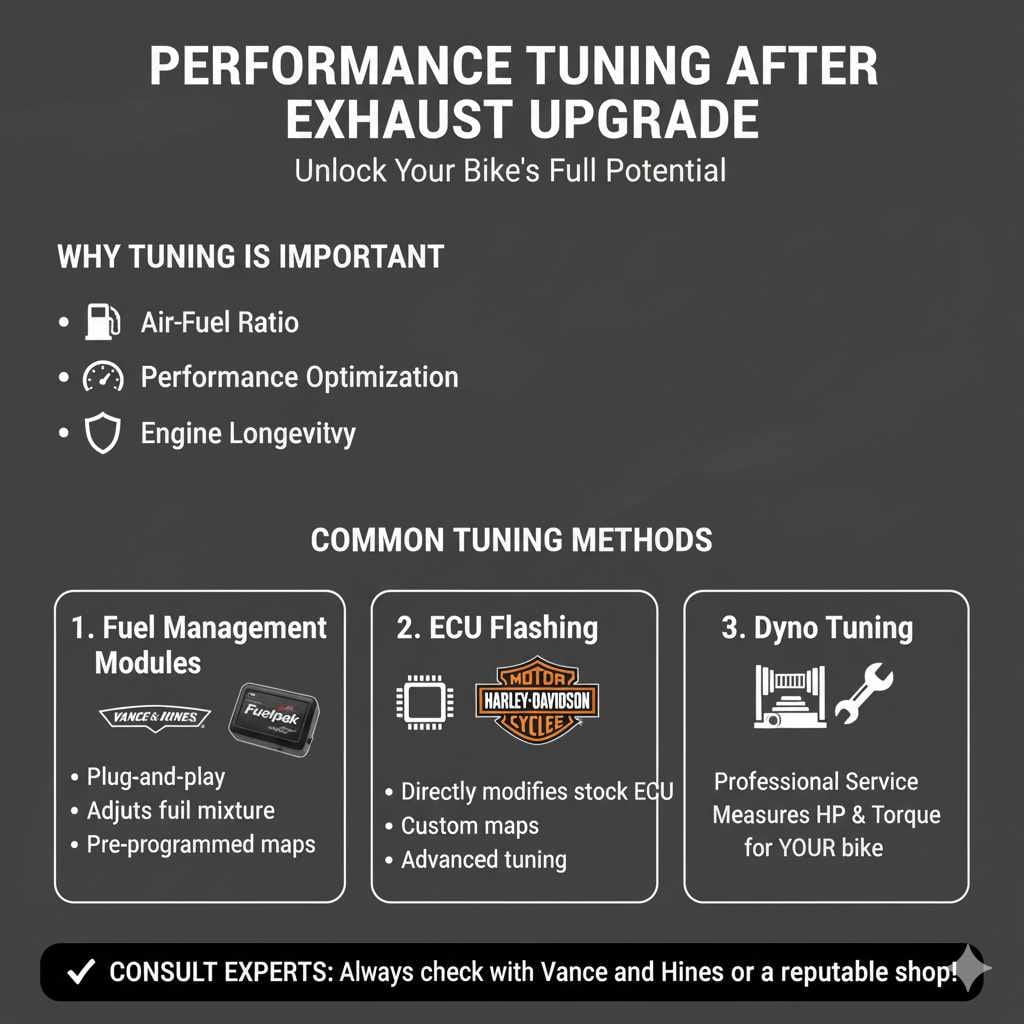
Performance Tuning After Exhaust Upgrade
When you change your exhaust system, especially if you opt for a full system or mufflers that significantly reduce backpressure, you might need to adjust your motorcycle’s fuel mapping. Modern Harley-Davidsons use fuel injection systems that are calibrated to work with the stock exhaust.
Why Tuning is Important
- Air-Fuel Ratio: A new exhaust can change how easily the engine expels gases. This affects the amount of air entering the engine relative to the fuel. If the air-fuel ratio is off, it can lead to poor performance, reduced fuel economy, overheating, and even engine damage.
- Performance Optimization: Proper tuning allows you to get the most out of your new exhaust and engine. It ensures optimal power delivery, smoother acceleration, and better throttle response.
- Engine Longevity: Running too lean (too much air, not enough fuel) can cause the engine to run hotter, potentially damaging internal components over time.
Tuning Methods
Vance & Hines and other manufacturers often recommend specific tuning solutions to complement their exhaust systems. Common methods include:
- Fuel Management Modules: Devices like the Vance & Hines Fuelpak are designed to plug into your motorcycle’s wiring harness and adjust the fuel mixture without requiring extensive reprogramming. They are pre-programmed for specific exhaust and engine combinations.
- ECU Flashing: This involves reprogramming the bike’s Engine Control Unit (ECU) with a custom map tailored to your new exhaust and other modifications. This is often considered the most comprehensive tuning method. Tools like the Harley-Davidson Screamin’ Eagle Pro Street Tuner are used for this.
- Dyno Tuning: This is a professional service where a mechanic uses a dynamometer (a machine that measures horsepower and torque) to fine-tune the fuel and ignition maps specifically for your bike on a highly accurate load-bearing system. This provides the most customized and optimized tune.
It’s wise to consult with Vance & Hines or a reputable performance shop to determine the best tuning solution for your specific bike and exhaust setup. You can find resources on engine tuning from organizations like the SAE (Society of Automotive Engineers), though their content is often highly technical.
Frequently Asked Questions About Harley-Davidson and Vance & Hines Exhausts
Q1: Do all Harley-Davidson models come with the same stock exhaust?
No, stock exhaust systems vary by model and year. Harley-Davidson designs exhausts to meet specific performance and regulatory needs for each motorcycle platform. Newer models, especially California-compliant ones, will have more sophisticated emissions control components integrated into their stock exhausts compared to older models.
Q2: Can I buy a new Harley with a Vance & Hines exhaust already on it?
While not standard from the factory, it’s possible to purchase a new Harley-Davidson that has a Vance & Hines exhaust installed as a dealer-added accessory or through customization programs. You would typically need to arrange this with the dealership at the time of purchase.
Q3: Is it legal to remove the catalytic converter from my Harley exhaust?
In most places, removing a catalytic converter from a street-legal vehicle is illegal. Catalytic converters are essential emission control devices. Removing them can result in fines and failure of emissions inspections if your area requires them. Always check local and federal regulations before removing emission control components.
Q4: Will a Vance & Hines exhaust void my Harley-Davidson warranty?
Modifying an exhaust system might affect your manufacturer’s warranty, particularly for issues related to the engine or exhaust components. Harley-Davidson, like most manufacturers, reserves the right to deny warranty claims if a modification is deemed to have caused the failure. Exhaust systems sold as “off-road use only” are more likely to void a warranty. It’s best to consult your Harley-Davidson dealer or warranty documentation for specifics.
Q5: How much does a Vance & Hines exhaust cost for a Harley-Davidson?
The cost varies significantly based on the model and type of exhaust. Slip-on mufflers might range from $400 to $800, while full exhaust systems can cost anywhere from $700 to $1,500 or more. Installation costs would be additional if you have it done by a professional.
Q6: Do I always need to tune my bike after installing a Vance & Hines exhaust?
For slip-on mufflers that don’t drastically alter backpressure, tuning might not be strictly necessary, though it can still offer performance benefits. However, for full exhaust systems or any upgrade that significantly changes the airflow, tuning is highly recommended or even essential for optimal performance, fuel efficiency, and engine health.
Conclusion: Personalizing Your Harley Sound and Performance
So, to circle back to our main question: do Harley-Davidsons come with Vance & Hines exhausts straight from the factory? Generally, no. While Harley-Davidson equips its bikes with functional and compliant stock exhaust systems, Vance & Hines represents a world of customization and enhanced riding experience that goes beyond the standard offering. Their systems are a popular choice for riders looking to imbue their Harleys with that classic, powerful sound and to unlock additional performance. Understanding the differences between stock and aftermarket exhausts, being aware of legal requirements, and considering the need for tuning are all vital steps in the journey. Whether you’re aiming for a deeper rumble, more horsepower, or just a different look, the aftermarket world, with Vance & Hines leading the charge for many, offers a clear path to personalizing your V-twin. Your Harley is an extension of you, and its exhaust is a key part of its voice and performance. By making informed choices, you can ensure your ride sounds and performs exactly how you want it to.
Related pick: Check today's price on Amazon