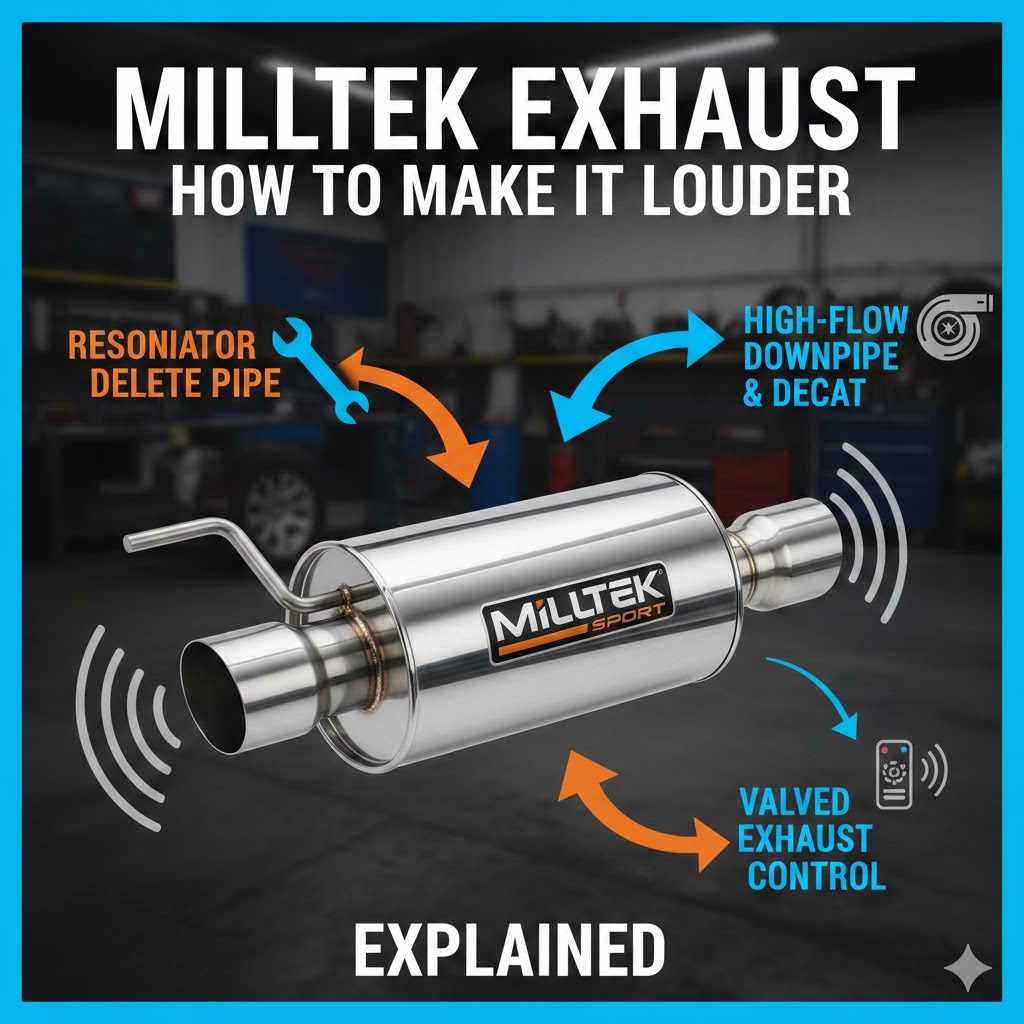
How to Make Milltek Exhaust Louder Explained
Many car owners love the sporty sound of a performance exhaust. When you have a Milltek system, you might wonder about making it even louder. This can seem a bit tricky if you’re new to car modifications.
You might worry about doing something wrong or making your car sound bad. Don’t worry! This guide will show you simple ways to get that deeper, louder exhaust note you’re looking for.
We will break down each step so it’s easy to follow.
Understanding Milltek Exhaust Sound Levels
Milltek exhausts are known for their quality and their distinct sound profiles. They offer different systems, and the loudness can vary quite a bit. Some are designed for a subtle, sporty growl, while others aim for a more aggressive note.
The factory Milltek sound is often a balance between performance and everyday usability. Many people start with a Milltek because they want a better sound than stock but are unsure how to get more volume if they desire it later.
Understanding the base sound your specific Milltek system produces is the first step. This involves knowing which model you have. Milltek offers various lines like Sport, Race, and even Cat-Back systems.
Each line has different sound characteristics. A Sport system will naturally be quieter than a Race system. Knowing this helps set realistic expectations for what you can achieve.
Milltek Exhaust System Components
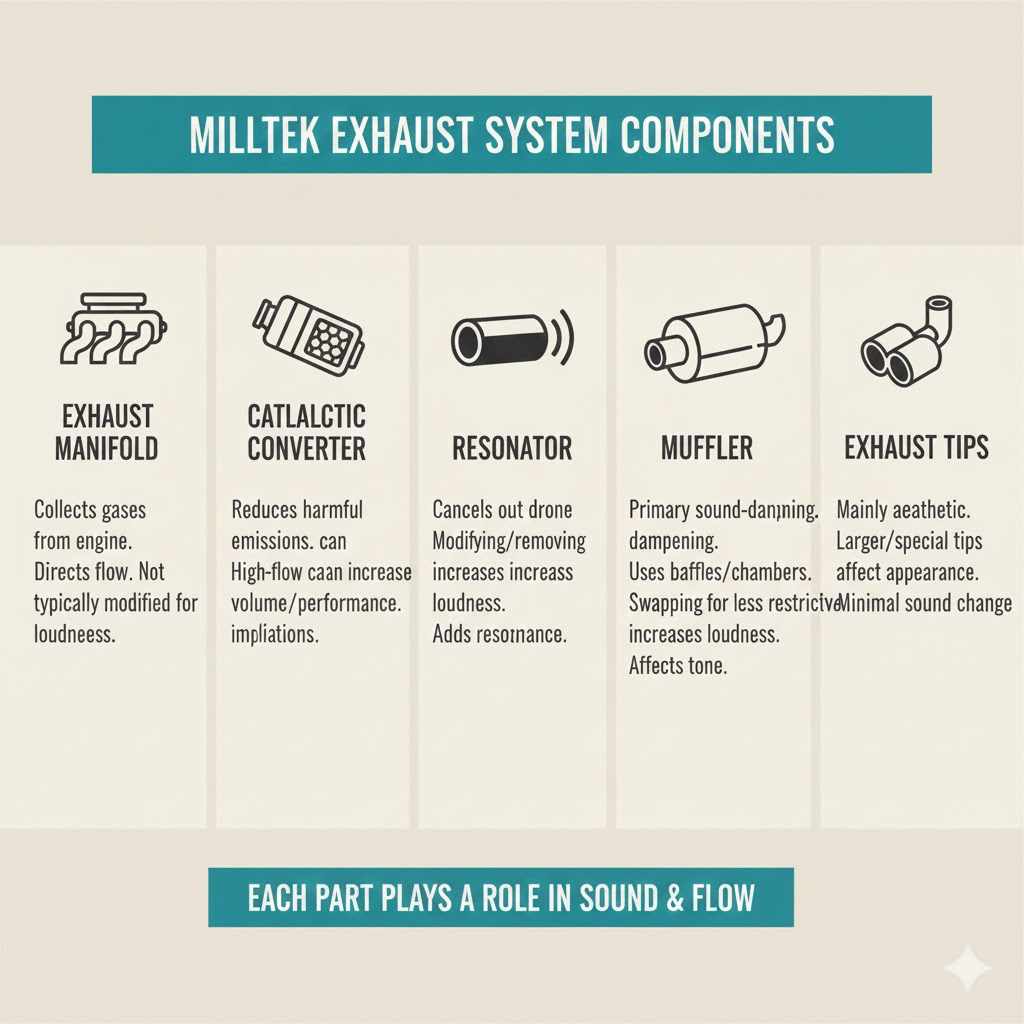
A Milltek exhaust system is made up of several parts. These include the exhaust manifold, catalytic converter, resonator, muffler, and exhaust tips. Each piece plays a role in how the sound is produced and controlled.
- Exhaust Manifold This part collects exhaust gases from the engine cylinders. It helps direct them into the rest of the exhaust system. While it affects flow, it’s not typically modified to change loudness.
- Catalytic Converter Its main job is to reduce harmful emissions. Some aftermarket exhausts might offer higher-flow catalytic converters. These can slightly increase volume and improve performance.
- However, changing this can have legal implications and affect emissions.
- Resonator This component is designed to cancel out specific sound frequencies, especially drone. Removing or modifying the resonator is a common way to make an exhaust louder. It will also increase the exhaust’s overall tone and might introduce more resonance.
- Muffler The muffler is the primary sound-dampening component. It uses baffles and chambers to reduce exhaust noise. Swapping a quieter muffler for a less restrictive one is a direct way to increase loudness.
- Some mufflers are designed for sound volume, while others focus on tone.
- Exhaust Tips While tips don’t change the sound much, larger or specially designed tips can affect the exhaust’s appearance and sometimes the way sound exits. They are more about aesthetics than volume.
The Role of Backpressure in Exhaust Sound
Backpressure refers to the resistance the exhaust gases encounter as they move through the exhaust system. A certain level of backpressure is necessary for engine performance and can influence exhaust tone. Too much backpressure can hinder engine power and make the exhaust quieter.
Too little can lead to a loss of low-end torque and make the exhaust note too raspy or unrefined.
Understanding backpressure helps explain why modifications work. When you reduce restrictions in the exhaust, you decrease backpressure. This allows exhaust gases to flow more freely.
This freer flow often results in a louder sound because less noise is being muffled. However, aggressively reducing backpressure without considering the engine’s needs can sometimes lead to undesirable effects, like a droning sound or a loss of power at lower RPMs.
For example, a car with a very restrictive, stock muffler will have high backpressure. This muffles the sound significantly. When a performance muffler with less restriction is installed, backpressure decreases, and the exhaust note becomes noticeably louder and more aggressive.
Milltek systems are engineered to balance this, but for those seeking maximum volume, understanding backpressure is key.
Common Modifications for a Louder Milltek Exhaust
Making a Milltek exhaust louder often involves modifying or replacing certain parts to reduce restrictions. The goal is to let the exhaust gases flow more freely, which naturally increases the sound output.
Replacing the Muffler or Resonator
The muffler and resonator are the primary components that quiet down an exhaust system. Swapping them out is one of the most effective ways to increase the sound.
Muffler Deletes or Performance Mufflers Some people choose to remove the muffler entirely for maximum loudness. This is known as a muffler delete. However, this can result in an extremely loud and potentially unpleasant sound.
A better approach for many is to
A performance muffler uses a less restrictive internal design compared to a stock muffler. Instead of complex baffles and chambers that absorb sound waves, performance mufflers often use straight-through perforated tubes surrounded by sound-absorbing material. This allows exhaust gases to pass through with minimal resistance, carrying more sound energy.
For instance, a muffler designed for a sports car might have a larger diameter and a simpler internal structure to allow for a bolder exhaust note.
Resonator Deletes or Straight-Pipe Resonators Similar to mufflers, resonators are designed to cancel out specific sound frequencies. Removing the resonator will make the exhaust louder and can change the tone of the exhaust note. It often introduces more of a “growl” or “roar.” Straight-piping the resonator means replacing it with a simple pipe, allowing exhaust gases to pass through unimpeded.
When you remove a resonator, you are essentially removing a sound-canceling device. This allows the raw exhaust pulses from the engine to travel more directly to the muffler and exit the tailpipe. The effect is a more pronounced, unfiltered sound.
For example, a car that has a slight drone at highway speeds might have that drone amplified if the resonator is removed without careful consideration. However, for many drivers, the gain in aggressive sound is worth it.
When considering these modifications, it’s important to think about the overall sound. Simply removing a component might make it louder, but it could also lead to unwanted noise like droning at highway speeds. Many aftermarket companies offer “performance” versions of these parts that offer increased volume without sacrificing too much comfort.
Installing a Cat-Back Exhaust System Upgrade
A cat-back exhaust system replaces everything from the catalytic converter back to the exhaust tips. This is a popular upgrade for people who want a noticeable change in sound and performance.
A cat-back system is designed to improve exhaust flow and sound. It often features larger diameter piping, a more free-flowing muffler, and sometimes the removal or replacement of the resonator. Because it replaces a significant portion of the exhaust, it has a greater impact on sound volume and tone compared to just changing the muffler or resonator.
Milltek themselves offers various cat-back systems. If you have a Milltek cat-back and want it louder, you might be looking at their “Race” or “Unvalved” options if available for your specific car model. These are engineered for maximum sound output.
The key benefit here is that these systems are designed as a complete package, so the parts work together for optimal performance and sound. They are usually made from high-quality stainless steel for durability.
| Component | Effect on Sound Volume | Considerations |
|---|---|---|
| Stock Milltek Muffler | Moderate | Designed for balance, good everyday sound. |
| Performance Muffler | High | Louder, more aggressive tone, potential for drone. |
| Muffler Delete | Very High | Loudest option, significant drone risk, may be too much for daily driving. |
| Stock Resonator | Reduces volume and drone | Helps smooth out the exhaust note. |
| Resonator Delete | Moderate to High Increase | Adds growl and aggression, can increase drone. |
| Cat-Back Upgrade (Race Spec) | High to Very High | Complete system for significant sound change, engineered for flow. |
Advanced Techniques and Considerations
For those seeking the ultimate in exhaust volume and tone, there are more advanced techniques. These often involve deeper modifications or a thorough understanding of exhaust dynamics. It’s important to approach these with caution and research.
Hollow Muffler Modification
Some enthusiasts modify their existing muffler to make it louder. This is often done by drilling holes into the muffler’s internal baffling or completely hollowing it out. This effectively removes the sound-dampening material and allows exhaust gases to pass through with much less resistance.
Process Description The process typically involves cutting open the muffler, removing or modifying the internal baffles, and then re-welding it shut. This is a more invasive procedure than simply swapping parts. It requires welding skills and tools.
Imagine a stock muffler filled with baffles and chambers designed to bounce sound waves around, reducing their energy. To hollow it out, you would cut the muffler open, take out these sound-absorbing structures, and then seal it back up. This leaves a straight pipe inside, allowing exhaust gases to exit quickly with minimal muffling.
While this makes the exhaust very loud, it can also lead to a harsh, raspy sound and significant drone.
Results and Risks The result is a significantly louder exhaust note. However, this modification can also lead to excessive drone at certain RPMs, which can be very annoying during everyday driving. There’s also the risk of altering the engine’s backpressure in undesirable ways, potentially affecting performance.
It’s crucial to understand that this is an irreversible modification to your existing part.
When you hollow out a muffler, you are removing the very parts designed to absorb sound. This means the exhaust noise is no longer softened. The sound that comes out is much raw and unfiltered.
For example, a car that previously had a deep rumble might now sound more like a straight-piped V8, which can be thrilling for some but unbearable for others during long drives.
Performance Headers and Exhaust Manifolds
While typically focused on engine performance, performance headers can also influence exhaust sound. They replace the stock exhaust manifold, which collects exhaust gases from the cylinders. Performance headers are designed for better gas flow.
Headers are bent tubes that route exhaust gases from each cylinder to a collector. Performance headers are engineered with smoother bends and optimized lengths for each runner. This allows exhaust gases to exit the engine more efficiently.
As gases flow out with less resistance, the engine can breathe better. This improved flow can contribute to a louder and sometimes more aggressive exhaust note. The sound produced by headers is often described as sharper or more immediate.
Some headers are designed with specific tube lengths or diameters that can resonate at certain frequencies, affecting the exhaust note. For instance, equal-length headers tend to produce a more consistent, smoother tone, while unequal-length headers might create a more complex or aggressive sound. When paired with a less restrictive cat-back system, the overall loudness can increase significantly.
However, headers are a more complex modification and can be expensive.
Exhaust Cut-Outs or Valves
Exhaust cut-outs are devices installed in the exhaust system that can be opened or closed. When closed, exhaust gases flow through the muffler and resonator, providing a quieter, street-legal sound. When opened, they bypass these sound-dampening components, allowing for a much louder, track-day sound.
These systems can be electronically controlled, allowing the driver to switch between modes with the push of a button. This offers the best of both worlds: a quiet exhaust for daily driving and a loud, aggressive exhaust for when you want to let loose. The cut-out section is essentially a bypass pipe with a flap or valve inside.
When the valve is open, exhaust gases go directly through the cut-out pipe instead of the muffler.
Electric exhaust valves, often integrated into performance exhaust systems like some Milltek offerings, provide similar functionality. They are typically located within the muffler or mid-pipe. The valve opens or closes based on driver input or pre-set parameters.
For example, a performance exhaust might have a valve that opens above a certain RPM or under heavy acceleration, unleashing a more potent sound. This level of control provides great flexibility.
Achieving Your Desired Sound with Milltek
When you’re aiming to make your Milltek exhaust louder, the key is to find a modification that matches your specific goals for sound and driving experience. Not all loud exhausts are pleasant to listen to for extended periods.
Assessing Your Current Milltek System
Before making any changes, it’s helpful to know exactly what Milltek system you have. Check your receipts or look for identifying marks on the exhaust components themselves. Knowing if you have a Sport, a Race, or a specific Cat-Back model will give you a baseline for what to expect.
For instance, if you have a Milltek Sport Cat-Back system, it’s likely designed for a refined, sportier sound rather than extreme loudness. You might be looking for a moderate increase in volume. On the other hand, if you already have a Milltek Race system, it’s probably quite loud already, and you might be considering more subtle tweaks or perhaps a different brand if you seek an even more extreme sound.
The good news is that Milltek parts are generally well-engineered.
Choosing the Right Modifications for Your Car
Consider how you use your car. If it’s a daily driver, you probably want to avoid excessive drone that can be tiring on long trips. Modifications like straight-piping the entire system might be too much for everyday comfort.
For a Noticeable Increase in Volume Replacing the muffler with a less restrictive performance muffler is a good starting point. This offers a significant sound upgrade without the extreme loudness or potential drone of a muffler delete.
A performance muffler uses different internal designs than a stock muffler. Instead of complex baffles, it might use a straight-through perforated pipe with sound-absorbing packing. This design allows exhaust gases to pass through more freely, resulting in a louder sound.
Many aftermarket muffler manufacturers offer different “stages” of loudness, allowing you to pick one that suits your preference.
For a More Aggressive Tone and Increased Growl Removing the resonator or replacing it with a performance resonator that offers less restriction can make a big difference. This often adds a deeper growl to the exhaust note.
Resonators are designed to cancel out specific sound frequencies, often the “drone” that can be annoying at cruising speeds. By removing or modifying the resonator, you allow more of the engine’s natural sound to come through. This can result in a sportier, more aggressive tone.
However, it’s important to be aware that this modification can also increase the likelihood of experiencing drone.
For Maximum Sound and Performance A full cat-back exhaust system upgrade to a “Race” or “Unvalved” version from Milltek (if available for your vehicle) is often the most comprehensive solution. These systems are engineered to work together for maximum sound and flow.
A cat-back system
It’s also wise to check local regulations regarding exhaust noise levels. Some areas have strict rules about how loud a vehicle’s exhaust can be.
Sample Scenario for Loudness Enhancement
Let’s consider a scenario for a driver who wants to make their Milltek Sport cat-back exhaust louder.
Current System The car has a Milltek Sport cat-back exhaust, which provides a pleasant, mild sport sound. The driver wants more volume and a more aggressive note, especially during acceleration.
Option 1 Resonator Delete The driver decides to perform a resonator delete. This involves removing the factory resonator and replacing it with a straight pipe. This is a relatively inexpensive modification and is reversible.
Result: The exhaust note becomes noticeably louder and gains a more pronounced growl. The drone at highway speeds increases slightly but is manageable for daily driving. The overall sound is now more aggressive and satisfying during spirited driving.
Option 2 Performance Muffler Swap Alternatively, the driver could choose to
Result: This modification typically results in a significant increase in loudness, often more than a resonator delete. The tone is usually deeper and more resonant. The specific results depend heavily on the chosen muffler’s design and quality.
Some drivers might still experience some drone, but performance mufflers are often designed to minimize this.
Choosing between these options depends on the driver’s budget, desire for loudness, and tolerance for potential drone. A resonator delete is a simpler, more direct approach to increasing volume. A performance muffler swap offers a more engineered solution for sound quality and volume.
Legal and Practical Considerations
When modifying your exhaust, it’s essential to consider the legal implications and practical aspects. These can impact your ability to drive your car on public roads and the overall satisfaction you get from the modification.
Local Noise Ordinances and Emissions Laws
Many cities and states have specific laws about vehicle noise levels. An exhaust that is too loud can result in tickets and fines. It’s crucial to research these regulations in your area before making significant exhaust modifications.
These laws are in place to maintain public peace and prevent excessive noise pollution. They often specify a maximum decibel level that an exhaust system can produce, measured at a certain distance from the vehicle. Some areas might also have regulations on the type of modifications allowed, particularly concerning catalytic converters, as these affect emissions.
For example, if your local ordinance states that exhaust noise cannot exceed 95 decibels at 50 feet, a muffler delete might push you well over that limit. Checking these regulations beforehand can save you a lot of trouble and money in the long run. It’s always better to err on the side of caution.
Impact on Emissions and Inspections
Modifying your exhaust, especially removing or altering the catalytic converter, can have significant impacts on your vehicle’s emissions. This is a major concern for legal road use and environmental impact.
The catalytic converter is designed to transform harmful exhaust gases into less harmful ones. Removing or replacing it with a “test pipe” or a high-flow cat that doesn’t meet emissions standards can cause your car to fail emissions tests required in many regions. This means you won’t be able to register your vehicle.
Furthermore, some modifications can lead to the illumination of the “check engine” light. This is because the car’s computer monitors the exhaust system’s performance, including the efficiency of the catalytic converter. Altering it can trigger error codes.
If your vehicle requires regular emissions testing, ensuring your exhaust modifications comply with these standards is paramount.
The Risk of Drone and How to Mitigate It
One of the most common complaints about loud aftermarket exhausts is drone. This is a persistent, low-frequency humming or buzzing sound that can occur at specific RPMs, often during cruising or highway driving. It can be incredibly annoying and make driving unpleasant.
What Causes Drone Drone is often caused by the exhaust pulses creating resonance within the exhaust pipes and body of the car. When certain frequencies align, they can create a continuous, intrusive sound. Removing mufflers or resonators, which are designed to absorb these frequencies, can exacerbate drone.
Think of a musical instrument like a guitar. When you pluck a string, it vibrates and produces a sound. If the guitar’s body isn’t designed well, that sound might resonate and become boomy.
In an exhaust system, the exhaust pulses are like the plucking of the string. Without proper muffling or resonation, these pulses can cause the exhaust pipes and even the car’s chassis to vibrate at specific frequencies, creating the drone.
Mitigation Strategies To reduce drone, you can consider adding a secondary resonator or a specific type of muffler designed to combat drone. Some exhaust manufacturers offer “drone-canceling” resonators.
A drone-canceling resonator works differently from a standard resonator. Instead of simply absorbing sound, it’s designed with a specific chamber that creates an opposite sound wave. This opposite wave cancels out the problematic drone frequency, resulting in a smoother exhaust note.
These are often installed in the mid-pipe section of the exhaust system.
Choosing Quieter Performance Parts When selecting aftermarket parts, look for descriptions that mention “refined sound,” “controlled loudness,” or “minimal drone.” Brands often offer different stages or options within their product lines. A slightly less aggressive muffler or the inclusion of a well-designed resonator can make a world of difference for daily comfort.
For example, if Milltek offers a “Sport” version and a “Race” version of an exhaust, the Sport version is likely engineered to be louder than stock but quieter and more refined than the Race version, which prioritizes maximum volume and sound. Choosing the Sport version and then potentially adding a resonator delete might give you the desired volume without the harshness of a full muffler delete.
It’s also helpful to watch videos of exhaust systems on similar cars to get an idea of how they sound in real-world conditions, including highway speeds.
Professional Installation vs. DIY
Deciding whether to install exhaust modifications yourself or have a professional do it is an important choice. Each has its own pros and cons.
DIY Installation Doing it yourself can save money on labor costs. If you have basic mechanical skills, access to the right tools (like jacks, stands, wrenches, and possibly cutting or welding equipment), and a good understanding of automotive systems, you can tackle many exhaust modifications.
For simpler tasks like swapping a muffler or resonator, it can be quite straightforward. However, mistakes can happen. If you don’t have proper support for the vehicle, you risk injury.
Improperly fitted exhaust components can also lead to leaks, which affect performance and sound. Ensure you have the correct replacement parts and follow reliable guides or tutorials.
Professional Installation A professional exhaust shop has the specialized tools, experience, and expertise to ensure the job is done correctly and safely. They can advise on the best parts for your car and goals, and they can ensure proper fitment and sealing.
If you are considering complex modifications like welding, intricate pipe bending, or installing exhaust cut-outs, professional installation is highly recommended. They can also help you understand local noise and emissions laws. While it costs more, professional installation often provides peace of mind and guarantees a quality result.
For a premium exhaust system like Milltek, ensuring it’s fitted correctly is key to its performance and longevity.
For most exhaust modifications aimed at increasing loudness, especially if it involves welding or custom fabrication, professional installation is the safer and more reliable route. This ensures optimal performance and minimizes the risk of issues down the line.

Frequently Asked Questions
Question: Can I make my Milltek exhaust louder without changing any parts?
Answer: Generally, no. To significantly increase the loudness of an exhaust system, you usually need to reduce its sound-dampening capabilities. This typically involves modifying or replacing components like the muffler or resonator.
Question: Will making my Milltek exhaust louder affect my car’s performance?
Answer: In many cases, making an exhaust louder by reducing restrictions can also improve exhaust flow, potentially leading to slight performance gains. However, aggressive modifications without proper tuning can sometimes negatively impact performance, especially at lower RPMs.
Question: Is it legal to remove my Milltek resonator?
Answer: Legality depends on your local noise ordinances and emissions regulations. Some areas prohibit resonator deletes, while others may allow them if the vehicle still meets noise and emissions standards. Always check your local laws.
Question: How can I tell if my Milltek exhaust has a drone?
Answer: Drone is a persistent humming sound, typically noticeable at steady cruising speeds or on the highway. If you experience a constant, low-frequency vibration or noise that becomes tiring, it’s likely drone.
Question: What’s the difference between a muffler delete and a performance muffler?
Answer: A muffler delete removes the muffler entirely for maximum loudness, often resulting in extreme noise and drone. A performance muffler is designed to be louder than stock but with a more controlled and often refined sound, aiming to reduce unwanted drone.
Summary
Making your Milltek exhaust louder involves reducing its sound-dampening components. Common methods include upgrading the muffler, removing the resonator, or installing a full cat-back system. Always consider local laws and the potential for drone.
Professional installation can ensure the best results.