Do 6 Engines Have 1 Exhaust Pipe? Essential Answer
Do 6-cylinder engines have one exhaust pipe? The quick answer is: not always, but many do! While a single exhaust pipe is common, 6-cylinder engines can have one, two, or even more depending on the vehicle’s design and performance goals. We’ll break down why this is and what it means for your car.
Hey there, car adventurer! Ever popped the hood or peered under your car and wondered about all those pipes? It’s easy to get a little lost when you’re first learning about how your car works. You might be looking at your 6-cylinder engine and seeing just one tailpipe, or maybe two, and you’re curious if that’s how it’s supposed to be.
Don’t worry, you’re not alone. This is a super common question, and understanding it is part of knowing your car better. Think of your exhaust system as your engine’s way of breathing out. It’s important for how your car runs and even how it sounds!
We’re going to take the mystery out of exhaust pipes on 6-cylinder engines. We’ll explore why some have one, some have two, and what makes the difference. By the end of this, you’ll have a clear picture and feel more confident about your car’s exhaust system.
Understanding Your Engine’s Exhaust System
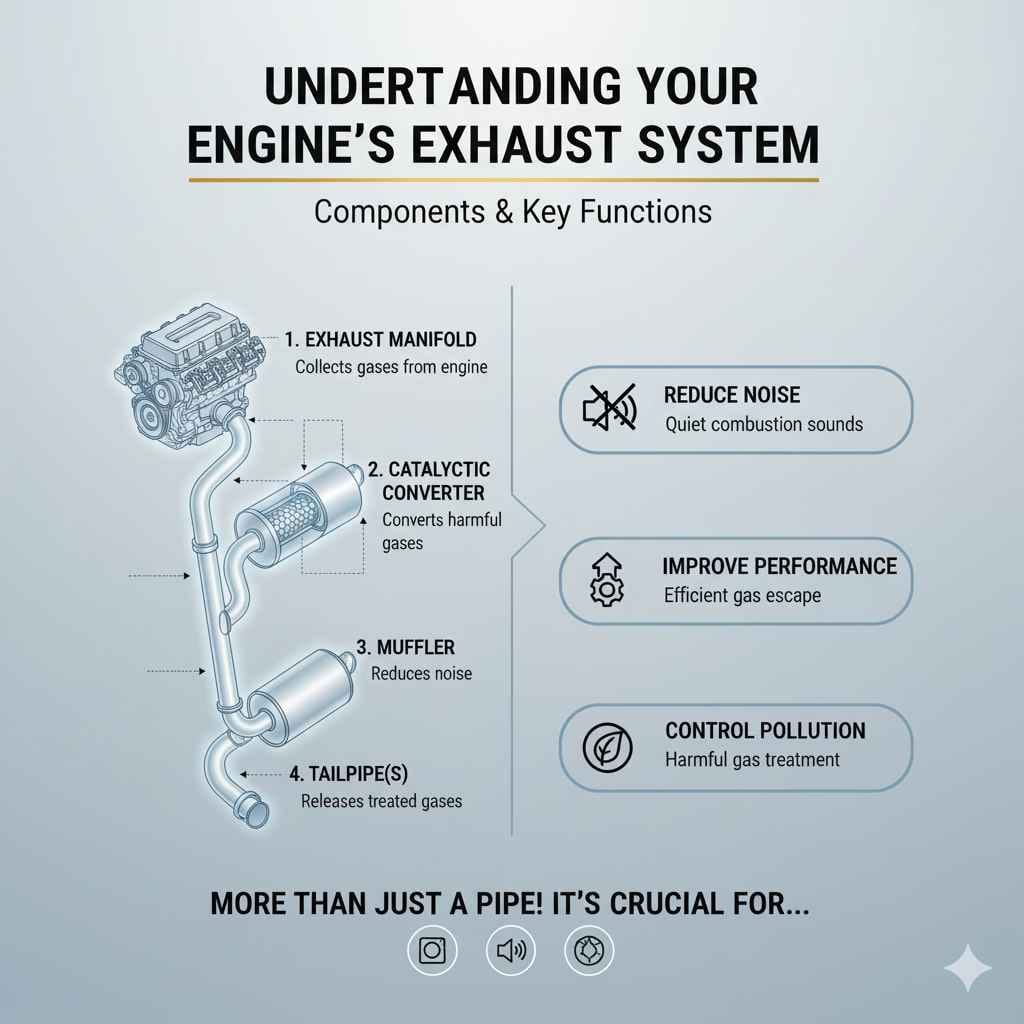
Before we dive into the specifics of 6-cylinder engines, let’s quickly cover the basics of an exhaust system. Its main job is to safely channel harmful exhaust gases from the engine out into the atmosphere. But it does more than just that!
It also helps to:
- Reduce noise coming from the engine combustion.
- Improve engine performance by helping gases escape efficiently.
- Control pollution through components like the catalytic converter.
The exhaust system typically includes components like the exhaust manifold, catalytic converter, muffler, and tailpipe(s). The number of tailpipes is what often catches people’s attention.
The Basics: Why Do Cars Have Exhaust Pipes?
Every internal combustion engine needs to expel burnt gases, also known as exhaust. These gases are a byproduct of burning fuel and air inside the cylinders to create power. Without a way to get these gases out, the engine wouldn’t run efficiently, and harmful fumes would build up.
The exhaust manifold is the first part of the system. It collects exhaust gases from each cylinder. From there, the gases travel through pipes to other components like the catalytic converter (which cleans the gases) and finally to the muffler (which quiets the noise). The tailpipe is the visible end of this journey, letting the gases escape.
So, to be clear, your engine needs an exhaust system to function. The question is really about how many outlets (tailpipes) this system has.
So, Do 6-Cylinder Engines Have 1 Exhaust Pipe?
Here’s the essential answer, broken down for clarity:
No, a 6-cylinder engine does not always have just one exhaust pipe. While it’s common for many 6-cylinder vehicles to have a single tailpipe exiting the rear, it is equally common for them to have dual tailpipes. Some performance-oriented vehicles with 6-cylinder engines might even feature more complex exhaust setups.
The number of exhaust pipes is determined by a few key factors, including:
- Vehicle Design and Manufacturer Choice: The engineers decide on the exhaust configuration to meet performance, sound, and styling targets.
- Engine Layout: While we’re focusing on 6-cylinder engines, how those cylinders are arranged (inline-6 vs. V6) can influence exhaust manifold and pipe routing.
- Performance Goals: Dual exhaust systems are often chosen for better performance and a sportier sound.
- Cost and Simplicity: A single exhaust system is generally cheaper to manufacture and install than a dual system.
In simple terms, think of it like this: the engine needs to get its exhaust out. A single pipe can do that job. But two pipes can sometimes do it even better, especially if the engine is designed to push out a lot of exhaust or if the car maker wants a specific look or sound.
Why the Confusion? Inline-6 vs. V6 Engines
The arrangement of a 6-cylinder engine also plays a role. There are two main types:
- Inline-6 (I6): The six cylinders are arranged in a straight line. This configuration is known for its smooth operation. For an I6, you might see two exhaust manifolds, one for each bank of three cylinders, which can then merge into a single pipe or continue as dual pipes.
- V6: The six cylinders are arranged in two banks of three, forming a “V” shape. This layout is more compact. A V6 typically has two exhaust manifolds, one for each bank of cylinders. These can then either come together into a single pipe system or be designed to have two separate tailpipes.
Often, the exhaust gases from each bank of cylinders in a V6 are kept separate for a while before merging, or they might remain separate all the way to dual tailpipes. This separation can help improve scavenging (the process of pulling exhaust gases out of the cylinders) and can contribute to a more aggressive exhaust note. An inline-6 might also have two manifolds that can lead to either a single or dual exhaust.
So, while the engine has 6 cylinders, the exhaust system isn’t simply a 1-to-6 split. It’s about how the exhaust gases are collected and routed.
Single vs. Dual Exhaust Systems on 6-Cylinder Engines
Let’s break down the advantages and considerations for each type of system on a 6-cylinder engine.
Single Exhaust Systems
A single exhaust system is the simpler and often more common setup. It uses one main pipe to carry exhaust gases from the manifold(s) all the way to a single muffler and tailpipe.
Pros of Single Exhaust:
- Cost-Effective: Less piping, fewer components mean lower manufacturing costs for the car maker, which can translate to a lower purchase price for you.
- Simpler Maintenance: With fewer parts, troubleshooting and repairs can sometimes be more straightforward.
- Weight Savings: Generally lighter than dual systems.
- Fuel Efficiency: While not a huge difference, a well-designed single exhaust can be optimized for fuel economy.
Cons of Single Exhaust:
- Potential Performance Limitation: For higher-output engines, a single pipe might become a bottleneck, restricting the flow of exhaust gases compared to a dual system. This can slightly reduce horsepower.
- Less Aggressive Sound: Typically produces a quieter, less sporty exhaust note.
Dual Exhaust Systems
A dual exhaust system uses two separate pipes, often originating from the two exhaust manifolds of a V6 engine (or sometimes from a single manifold split). These can run independently or merge before the muffler, but usually they lead to two distinct tailpipes.
Pros of Dual Exhaust:
- Improved Performance: By providing a less restrictive path for exhaust gases, dual exhaust can allow the engine to “breathe” better, potentially leading to a slight increase in horsepower and torque, especially at higher RPMs. This is because the gas has less resistance.
- Sportier Sound: Dual exhaust systems are often designed to produce a deeper, more aggressive, or sportier exhaust note.
- Aesthetic Appeal: Many drivers find the look of dual tailpipes more appealing or performance-oriented.
- Better Scavenging: In some designs, dual pipes can help pull exhaust gases from cylinders more effectively.
Cons of Dual Exhaust:
- Higher Cost: More components and complex routing mean higher manufacturing costs.
- Increased Weight: Two pipes and associated hardware add more weight to the vehicle.
- More Complex Maintenance: More parts mean more potential points of failure and potentially more complex repairs.
Performance Implications: Does it Really Matter for a 6-Cylinder?
For a typical daily driver with a 6-cylinder engine, the difference in performance between a single and a dual exhaust system is often subtle. Manufacturers tune these systems to optimize for a balance of performance, fuel economy, emissions, and noise levels for the average driver.
However, if you have a 6-cylinder engine in a performance car, or if you’re looking to get the most out of your engine, a dual exhaust system can offer tangible benefits. The reduced backpressure (resistance to exhaust flow) can allow the engine to operate more freely.
According to engineering principles, reducing backpressure is key to improving volumetric efficiency – how well the engine can fill its cylinders with air and fuel. A more efficient engine can produce more power. For a thorough look into exhaust tuning and its impact on performance, resources like SAE International offer in-depth technical papers on exhaust system design.
How to Identify Your Exhaust System
Checking your car’s exhaust setup is pretty simple. You don’t need to be a mechanic to do it!
Visual Inspection:
The easiest way is a visual check:
- Locate the Tailpipe(s): Safely park your car on a level surface and ensure the engine is off and cool. Look at the rear of your vehicle.
- Count Them: How many pipes are visible poking out from under the bumper?
- If there’s one, you likely have a single exhaust (or a system that merges into one tailpipe).
- If there are two distinct pipes, you have a dual exhaust system.
- Check Underneath (Optional): If you want to be absolutely sure, you can look underneath the car from the rear. Sometimes a single pipe might split into two near the back, or two separate pipes might merge into one muffler. For V6 engines, you’ll often see two exhaust manifolds coming from the engine, and you can trace their path.
Remember to always prioritize safety. If you’re unsure or uncomfortable, it’s best to have a trusted mechanic take a look.
Can a 6-Cylinder Engine Have More Than Two Exhaust Pipes?
While less common for standard passenger vehicles, it’s technically possible. Some highly specialized or modified performance vehicles might feature unique exhaust routing, such as:
- Quad Exhaust: Four tailpipes, often seen on high-performance cars for aesthetic and sometimes functional reasons (e.g., to handle the exhaust from a more powerful engine or as part of an active exhaust system).
- Custom Setups: Enthusiasts sometimes create custom exhaust systems for unique sound or performance characteristics.
However, for the vast majority of 6-cylinder cars you’ll encounter, the options are generally a single exhaust or a dual exhaust system.
Table: Single vs. Dual Exhaust Systems for 6-Cylinder Engines
Here’s a quick summary comparison:
| Feature | Single Exhaust System | Dual Exhaust System |
|---|---|---|
| Number of Tailpipes | One | Two (or four in some performance variants) |
| Typical Cost | Lower | Higher |
| Performance Gain (General) | Standard for everyday driving | Potential for slight increase |
| Exhaust Sound (General) | Quieter, less aggressive | Deeper, sportier |
| Complexity | Simpler | More complex |
| Weight | Lighter | Heavier |
| Common On | Most everyday sedans, SUVs, and trucks | Performance sedans, sports cars, some luxury vehicles |
Troubleshooting Common Exhaust Issues With Your 6-Cylinder
Whether you have one or two tailpipes, exhaust systems can develop problems. Here are a few common issues and what to look for:
1. Exhaust Leaks
Symptoms: A loud, hissing, or rumbling noise from under the car, especially when the engine is cold. You might also smell exhaust fumes inside the cabin. This is a critical safety concern. A leaking catalytic converter can release harmful gases.
Cause: A hole or crack in a pipe, a failed gasket, or a rusty connection.
Check: Visually inspect pipes for rust or damage. Listen for unusual noises.
2. Rattling or Clunking Noises
Symptoms: A rattling sound that might come and go, or a clunking noise over bumps.
Cause: A loose exhaust hanger, a heat shield that has come loose, or a damaged muffler internal component.
Check: Park on a level surface, let the exhaust cool, and gently try to shake the pipes. If there’s significant movement or noise, a hanger or heat shield might be loose.
3. Reduced Engine Performance or Fuel Economy
Symptoms: The car feels sluggish, has less power, or is using more fuel than usual.
Cause: A clogged catalytic converter (often due to internal failure), a muffled pipe, or a leak in the system that’s affecting air/fuel mixture sensors.
Check: This can be harder to diagnose without proper tools. A failing catalytic converter is a common culprit for these symptoms. You can learn more about catalytic converter function from resources like the Environmental Protection Agency (EPA) regarding emissions control.
4. Corroded or Damaged Tailpipe(s)
Symptoms: The visible tailpipe looks severely rusted, has holes, or is hanging loosely.
Cause: Rust and corrosion are natural enemies of exhaust systems, especially in areas with road salt or high humidity.
Check: Look for obvious signs of rust, holes, or detachment.
Safety First: Exhaust fumes contain carbon monoxide, a colorless, odorless, and poisonous gas. If you ever suspect an exhaust leak that allows fumes into the cabin, stop driving the vehicle and have it inspected immediately. Driving with exhaust leaks can be dangerous.
Maintenance Tips for Your Exhaust System
Keeping your exhaust system in good shape can prevent costly repairs and ensure your car runs smoothly and safely.
- Regular Visual Inspections: Make it a habit to look at your exhaust system when you’re doing other under-car checks. Look for obvious rust, dents, or loose parts.
- Listen for Changes: Pay attention to any new noises. A change in your car’s exhaust sound is often the first sign of a problem.
- Address Minor Issues Promptly: Don’t let small rust spots or loose hangers go unchecked. They can lead to bigger problems, like a pipe breaking off.
- Consider Your Driving Habits: Short trips where the exhaust doesn’t get fully heated can lead to more moisture buildup and condensation, increasing the risk of internal corrosion. Longer drives help boil off this moisture.
- Professional Check-ups: Have your mechanic inspect the exhaust system during your regular maintenance service.

Frequently Asked Questions (FAQ)
Q1: Will a dual exhaust system automatically make my 6-cylinder car faster?
A1: Not necessarily “faster” in a dramatic way for everyday driving. It can offer a slight performance improvement by allowing the engine to breathe better, reducing resistance. However, the overall performance of your car depends on many factors, and the exhaust is just one part of the puzzle.
Q2: Can I tell if my car has a 6-cylinder engine just by looking at the exhaust pipes?
A2: No, you cannot definitively tell the engine size from the exhaust pipes alone. A 4-cylinder, 6-cylinder, or even an 8-cylinder engine could potentially have a single exhaust pipe, and many 6-cylinder engines have dual exhaust. You can usually find the engine size information in your car’s owner’s manual or on a sticker under the hood.
Q3: Is a quiet exhaust better than a loud one?
A3: For a street-legal vehicle, a system that meets local noise regulations is ideal. The “best” sound is subjective and depends on driver preference. Excessively loud exhausts may not be legal in many areas. Performance can be maintained with a well-designed system that isn’t overly loud.