
Best Diesel Exhaust Cleaners for DPFs (2026): We Compared
Use a DPF-safe cleaner for light soot, a forced-regeneration process for heavier soot, and a shop clean or replacement when ash has filled the filter. Pick the wrong product, and you waste money while the warning light stays on, fuel use rises, and regen faults can turn a recoverable filter into an expensive repair. This guide matches cleaner type to the failure mode, so you can choose the right fix before you spend on parts or labor.
Quick comparison
| Cleaner type | Application method | Compatible failure mode | Removal required | Post-clean regen needed | Key limitation | Ideal buyer | Price | ||
|---|---|---|---|---|---|---|---|---|---|
 | LIQUI MOLY Pro-Line Diesel Particulate Filter PurgeLiqui Moly | Closed-system purge fluid | Soot loading in a recoverable DPF | Usually yes | Yes, if the system still allows it | Won’t fix ash or sensor faults | Buyer with soot-heavy but still serviceable filter | $36.47 Price as of 6 Nov 2026 | View |
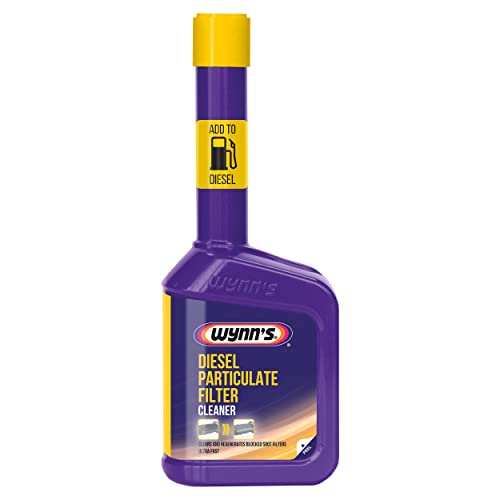 | Wynn’s 28263 Diesel Particulate Filter CleanerWynn’s | Fuel additive | Light soot control and routine maintenance | No | Usually just normal driving/regen | Too mild for heavy restriction or ash | Owner wanting the easiest maintenance step | $21.99 Price as of 6 Nov 2026 | View |
 | MotorPower Care DPF Foam CleanerMotorPower Care | Sensor-port foam spray | Higher soot load when access is available | No | Yes, commonly paired with forced regen | Needs port access; ash still remains | DIYer with a recoverable filter and sensor access | $27.99 Price as of 6 Nov 2026 | View |
 | MotorPower Care DPF Flush LiquidMotorPower Care | Off-vehicle flush liquid | Severe soot cleanup before ash becomes the main issue | Yes | Often after reinstall, if the system calls for it | More labor; not a substitute for cracked hardware repair | Buyer or shop wanting a deeper clean than spray gives | $54.99 Price as of 6 Nov 2026 | View |
The trade-off is straightforward: fuel additives are easiest and cheapest for maintenance, spray cleaners work better when soot loading is already higher, and off-vehicle cleaning is the real answer when ash has filled the DPF. A warning light alone does not tell you which one to buy. Sensor faults should be verified with a scan tool before you choose a cleaner.
How we chose
We compared four factors that change the result: whether the product targets soot or ash, whether it fits a DPF or only a diesel catalyst path, how it is applied, and whether it pairs with a scan-tool readout or forced regeneration. We also check the limits of each option.
Technical guidance from OEM service information and major diesel references is consistent on the key points: soot can be burned during regeneration, ash cannot; forced regen has prerequisites such as adequate fuel level, correct coolant and exhaust temperatures, and no blocking faults; and differential-pressure or exhaust-temperature sensor errors can imitate a clogged filter. Those distinctions matter more than brand claims.
Compatibility matters. A cleaner for a DOC or catalytic converter is not the same as a DPF product, and diesel exhaust fluid is a separate SCR-system fluid, not a soot cleaner. Price and convenience matter too, but only after the failure mode is identified. For a broader system overview, see the closed diesel particulate filter path and how it differs from the diesel exhaust fluid system.
Diesel exhaust cleaner decision table
| Symptom pattern | Likely deposit type | Best cleaner category | Expected outcome | When to stop and diagnose |
|---|---|---|---|---|
| Short trips, mild power loss, regen light comes and goes | Light soot loading | Fuel additive | May help a normal drive cycle burn soot more fully | Stop if soot load stays high after a regen attempt or codes point to sensors |
| Persistent restriction, repeated regen request, scan tool shows rising differential pressure | Heavy soot loading | Spray cleaner plus forced regeneration | Can reduce soot enough to restore flow if the filter is not ash-capped | Stop if pressure stays high, regen aborts, or exhaust temperature data looks inconsistent |
| High mileage, repeated regenerations, low power even after soot cleaning | Ash buildup | Off-vehicle cleaning service | Removes noncombustible ash and restores flow better than add-on cleaners | Stop if the filter is cracked, melted, or the housing is damaged |
| Warning light with no clear restriction, odd temperature readings, or implausible pressure data | Possible sensor fault | Diagnose first, cleaner second | Cleaner may do nothing if the readings are false | Test the differential pressure sensor, exhaust gas temperature sensors, and fault codes before buying cleaner |
Fuel additive: best for routine soot control
Fuel-tank diesel exhaust cleaner additives are the maintenance pick for light to moderate soot. Dose them into the fuel, then use the vehicle during normal driving so the engine can burn cleaner and the DPF can complete regeneration more easily. In OEM and service guidance, that is the zone where additives can help: soot reduction, not ash removal.
They fit routine use better than emergency cleanup. Most are aimed at diesel vehicles, though the label still matters because some formulas are written for common rail diesels and some are broader fuel-system cleaners with DPF support. They do not remove ash, and they will not rescue a filter that is already heavily restricted.
What to expect after a drive cycle
After dosing, the best-case result is a smoother regen and a lower soot load reading on a scan tool after normal driving. If the warning lamp is on because the filter is packed with ash or because a pressure sensor is lying, the additive will not clear the problem. That is why service manuals treat soot loading, ash loading, and sensor faults as separate diagnoses.
Picture a van that does school runs and delivery stops all week. If the scan tool shows moderate soot loading and the differential pressure rises mainly at higher RPM, a tank additive can be a reasonable first step before a longer highway drive. It is a maintenance aid, not a cure for a blocked filter.
Spray cleaner: best for targeted DPF cleanup
- Cleans through the O2 or temperature sensor port
- Works on diesel, gas, and hybrid vehicles
- Penetrates soot and carbon buildup
MotorPower Care DPF Foam Cleaner suits a more targeted cleanup when access through an oxygen or temperature sensor port is possible. Based on the product details, it is built to work without removing the filter, which helps when the issue looks worse than routine soot but does not yet justify full removal.
The drawback is practical: you need access to the sensor port, and the process usually works best when paired with a forced regeneration afterward. It also depends on the filter still being structurally sound. If ash is the real problem, spray alone may temporarily improve flow by loosening soot, but ash buildup requires mechanical removal.
Access, rinse, and regen
This type of cleaner is sprayed into the DPF path, then the vehicle usually needs a drain, purge, or rinse step depending on the kit directions. The exact procedure varies by product, but the logic is the same: loosen soot, clear what you can, then use heat to finish the job.
- Confirm the DPF is not cracked or melted.
- Access the correct sensor port.
- Apply the cleaner exactly as directed.
- Drain or purge the loosened residue if the product calls for it.
- Run a forced regeneration only if temperatures, fuel level, and safety conditions are within spec.
- Recheck soot load and differential pressure afterward.
How it pairs with forced regeneration
Forced regeneration raises exhaust temperature high enough to burn soot that the engine could not clear during normal driving. A scan tool or dash command may start it, but not all vehicles support forced regeneration via the dash, and some require a scan tool or OEM-specific procedure. The system still needs the right operating conditions. Low fuel level, active fault codes, or a failed temperature sensor can stop the process. OEM procedures also commonly require acceptable coolant temperature, no active DPF-related DTCs, and verified sensor inputs before the regen will begin.
Safety matters. Regeneration can create very high exhaust temperatures, so the vehicle should be parked where heat and fumes are not a risk. If the scan tool shows implausible exhaust gas temperature readings before the attempt, fix that fault first. A bad sensor can mimic a clogged filter, which is why service manuals and diagnostic guides warn against cleaning a system that is lying to you.
LIQUI MOLY Pro-Line DPF Purge: best for closed-filter maintenance
- Dissolves typical DPF contamination
- For closed diesel particulate filters
- Aims to restore driving characteristics
Liqui Moly Pro-Line DPF Purge is a maintenance-oriented cleaner for a closed diesel particulate filter. Its stated goal is to dissolve typical DPF contamination and restore driving characteristics, which makes it a better fit for soot-laden filters that still respond to cleaning.
The drawback is scope. It is not the right answer for ash-heavy filters or for a DPF that is already physically damaged. It also depends on proper application and on the rest of the emissions system working well enough to complete regen.
Where it fits best
Use this kind of product when scan data points to soot loading and the filter is still recoverable. It is best when the vehicle has not crossed into the ash-dominant stage, which usually happens after long service intervals and many regeneration cycles. Service references from Bosch, Cummins, and multiple OEM maintenance guides consistently separate soot burn-off from ash accumulation; only the former is an in-vehicle regen target.
Suppose a diesel pickup shows a moderate differential pressure rise and a soot load that stays high after ordinary highway driving. A purge fluid can be a logical next step before removal, but only if the temperature sensors and pressure readings are believable.
Wynn’s 28263 Diesel Particulate Filter Cleaner: best for soot-focused maintenance
- Reduces soot formation during combustion
- Clears blocked soot filters
- Supports filter regeneration without dismantling
Wynn’s 28263 Diesel Particulate Filter Cleaner is positioned as a soot-focused option that supports regeneration without dismantling the filter. That makes it a sensible maintenance pick when the vehicle still completes regen cycles but needs help reducing soot formation.
The drawback is the same one shared by most tank or chemical cleaners: it works poorly once ash has built up enough to choke the filter. If the warning light stays on after a successful regen attempt, you need diagnosis, not another dose.
Maintenance use and limits
This type of cleaner is best for drivers who want a routine soot-control step rather than an emergency fix. It is easier to add during scheduled service or before a long drive, but it is not a substitute for cleaning a loaded filter by hand or off the vehicle.
MotorPower Care DPF Flush Liquid: best for severe soot cleaning
- Dissolves and removes soot deposits
- Works with all DPF types listed
- Reusable in a closed container
MotorPower Care DPF Flush Liquid is the most aggressive of the listed cleaner products because it is a reusable flush liquid for shop or DIY use. Based on the published details, it is aimed at deep cleaning soot and carbon, which makes it more suitable for severe soot buildup than for simple maintenance.
The drawback is that it is a process product, not a quick pour-in fix. It is best when access, containment, and time are available. If the filter is ash-loaded, a flush can improve flow only partway because ash does not behave like soot. That is consistent with service literature from DPF manufacturers and aftermarket technical references: only soot is combustible in a regen cycle.
Shop-style use and restraint
This cleaner belongs in cases where a targeted spray or additive is not enough, but the DPF still seems structurally sound. It can make sense before paying for removal, especially when soot appears to be the main restriction and the vehicle has not shown signs of cracked substrate or melted channels. Improper use, including overfilling or skipping the correct drain procedure, can damage the DPF or sensors.
Off-vehicle cleaning service: best for ash buildup
Off-vehicle DPF cleaning is the strongest option when ash is the problem. The filter must be removed, then a shop cleans it in a controlled process that can restore flow better than fuel additives or spray products can. OEM and supplier references are aligned here: ash is noncombustible residue, so the fix is cleaning or replacement, not regen.
The drawback is cost and downtime. A shop clean often costs more than a bottle of additive or a can of spray, but it is the route that actually addresses noncombustible ash. If the filter is full of ash, no chemical cleaner in the tank will fix it.
Removal, flow restoration, and cost range
Removal is required because ash sits in the filter matrix and does not burn off in a normal regen. Shops use specialized equipment to wash or blow out the deposit, then check flow again. The practical result is better than any on-car cleaner when restriction is severe.
Common prices vary widely by vehicle and region, so it is safer to compare quotes than to rely on a single number. What matters is whether the shop confirms ash removal and flow restoration, not just a rinse that leaves the restriction in place.
What diesel exhaust cleaner products actually work
Fuel additives, spray cleaners, and off-vehicle cleaning can all work, but they work on different failure modes. Additives are for light soot and maintenance. Spray cleaners are for stronger soot cleanup when you can access the sensor port. Off-vehicle cleaning is the real fix for ash buildup and severe restriction.
The cleaner that works is the one matched to the deposit. If the DPF is full of ash, a stronger bottle is usually the wrong purchase. If a sensor has failed, no cleaner will correct the reading.
Do diesel exhaust cleaners fix a clogged DPF or just help maintenance?
They do both, but only within limits. A maintenance additive may help a filter that is soot-loading but still regenerating. A spray cleaner can help a more clogged filter if ash is not the main issue. Once ash has filled the DPF, cleaning usually needs removal or a shop service.
That is the threshold many buyers miss. If soot is the issue, cleaner can help. If ash is the issue, cleaner usually becomes a temporary delay rather than a repair. Cummins, Ford, and generic diesel service literature all draw the same line: soot can be regenerated; ash must be removed.
Should I use an additive, aerosol, or off-vehicle cleaner?
Use an additive when the goal is routine soot control and you want the easiest, lowest-intervention option. Use an aerosol or foam cleaner when the restriction is higher and you can reach the DPF through the sensor port. Use off-vehicle cleaning when ash buildup or severe clogging is likely.
A common first-timer mistake is buying the cheapest option for a warning light without checking the soot load. If the scan tool shows high differential pressure and the vehicle keeps aborting regen, the aerosol or a shop clean is usually a better match than a tank additive.
How often should I use diesel exhaust cleaner products?
Use them as maintenance, not as a fixed calendar cure. Tank additives are the only type that makes sense on a regular basis, and even then they should track use pattern, short-trip driving, and the manufacturer’s instructions. Spray cleaners and shop service should be used when data says the filter needs attention.
If the vehicle completes passive or active regeneration normally, frequent cleaner use is usually unnecessary. If the warning light returns often, the real issue may be driving pattern, a sensor fault, or a DPF that has moved beyond chemical help.
Can a cleaner clear a diesel exhaust warning light?
Sometimes, but not by itself. A cleaner can clear a light only if the light is tied to soot loading that can still be burned or washed out. If the fault is a bad differential pressure sensor, a failed exhaust gas temperature sensor, or a blocked filter full of ash, the light will stay on until the real fault is fixed. Some aftermarket cleaners may also temporarily suppress the light by altering sensor readings, which can mask the underlying issue.
That is why scan data matters. Look at soot load, differential pressure, and temperature behavior before buying any product. A warning light is a symptom, not a diagnosis.
What is the difference between DPF cleaner and diesel exhaust fluid?
DPF cleaner targets soot and sometimes carbon deposits in or around the diesel particulate filter. Diesel exhaust fluid is a separate fluid for the SCR system, where it helps reduce NOx emissions. It does not clean soot from the DPF, and it is not interchangeable with a cleaner.
DEF can freeze in cold weather, which affects storage and system behavior, but that has nothing to do with soot removal. If the dashboard warns about DEF level or SCR faults, a DPF cleaner will not solve that issue. Major parts references and OEM service documentation treat DEF, DPF soot loading, and sensor faults as separate systems with separate faults.
Are diesel exhaust cleaner products safe for turbo and sensors?
They can be safe when used exactly as directed, but misuse can cause problems. Fuel additives are generally the least invasive. Spray and flush products need the correct port, the correct quantity, and a proper rinse or drain step. Too much liquid or a blocked sensor path can create new faults.
Sensor access is part of the safety check. If the differential pressure sensor hose is clogged or an exhaust gas temperature sensor is already suspect, clean or replace that part before blaming the DPF. Wrong readings can make a healthy filter look blocked.
What symptoms mean cleaning will not work and parts need replacement?
Cleaning is unlikely to help when the filter is cracked, melted, or packed with ash past the point of recovery. A cracked or melted DPF may require replacement even if ash is not the primary issue. It also will not help if pressure readings and temperature readings remain implausible after wiring and sensor checks. In those cases, diagnosis or replacement is the better path.
If forced regeneration fails repeatedly, soot load does not drop, and the warning light returns with the same fault codes, stop buying cleaners. The problem may be a sensor, a damaged DPF, or another engine fault that is creating excess soot.
Which one should you buy?
Choose a fuel additive if the vehicle still regenerates and the issue looks like light soot from short trips. It is the simplest and cheapest maintenance option, and it works best before the filter becomes heavily loaded.
Choose a spray cleaner if the scan tool suggests higher soot loading, the filter is still recoverable, and you can access the sensor port safely. It is the middle ground between routine maintenance and a shop visit.
Choose professional off-vehicle cleaning if ash buildup is likely, if the filter has high mileage, or if repeated regen attempts have already failed. At that point, chemical cleaners are usually too late to do the full job.
Say your diesel sedan keeps showing a DPF light after city driving, but live data still shows moderate soot load and no sensor faults. Start with a fuel additive and a proper drive cycle. Suppose a work truck has a high differential pressure reading, failed regen attempts, and 140,000 miles on the same filter. That pattern points toward ash and a shop clean, not another bottle.