OEM vs Aftermarket Oxygen Sensors: Which Is Better?
OEM oxygen sensors are the safest pick when you need exact fit and stable fault-code behavior. Choose aftermarket only when the exact OE part number matches and the brand has a solid record on that application. A poor match can trigger repeat codes, slow switching, fuel-trim drift, and parts swapping you do not need. This guide compares OEM and aftermarket sensors by failure risk, fitment accuracy, and diagnostic behavior.
| Factor | OEM | aftermarket oxygen sensors | Winner |
|---|---|---|---|
| Fitment accuracy | Vehicle-specific connector, lead length, and sensor type are usually matched to the OE spec. | Direct-fit can match well; universal units often need connector work and wiring adaptation. | OEM |
| Diagnostic stability | Usually the safer pick for upstream fuel-control sensors and repeat-code cases. | Can be stable when the exact application is matched, but quality and calibration vary. | OEM |
| Purchase flexibility | Usually higher price and narrower supply through dealer or OE channels. | More brand and price options, including direct-fit and universal versions. | aftermarket oxygen sensors |
| Best use case | Late-model vehicles, wideband AFR sensors, and hard-to-diagnose repeat faults. | Older narrowband systems, simple downstream replacements, and proven direct-fit matches. | Tie |
OEM vs aftermarket oxygen sensors: the core trade-off
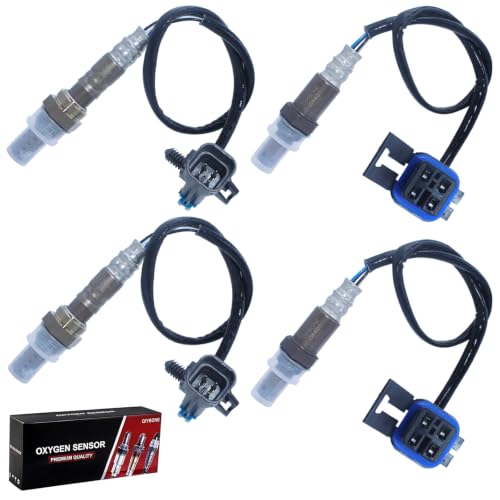

The core difference is not price alone. OEM sensors are built to match the vehicle’s original connector style, lead length, sensor type, and signal strategy, while aftermarket oxygen sensors can range from excellent direct-fit parts to generic replacements that need adaptation.
That matters because the engine computer watches sensor behavior, not the package label. If the wrong sensor switches too slowly, heats up too slowly, or reports in a format the car does not expect, you can get fuel-trim drift, repeat codes, or a check engine light that comes back after a reset.
Fitment and signal type decide most outcomes
An oxygen sensor is not one universal part. Upstream O2 sensors are located before the catalyst and feed air-fuel control, so they generally need a fast switching response. Downstream O2 sensors are located after the catalyst and are used for catalyst-efficiency monitoring, so they may switch more slowly and should not be treated as interchangeable.
Sensor type matters too. A narrowband oxygen sensor uses a simple voltage switching strategy and is commonly found on older vehicles. A wideband AFR sensor measures air-fuel ratio with a different signal strategy and is commonly used on newer engines; using the wrong type is not a good substitute, even if the connector can be forced to fit.
📊 StorageReview gives one example of a 4TB OEM upgrade costing an additional $2,159. Source: Storagereview.
Which oxygen sensor type are you replacing?
The right replacement depends on the exact sensor location and signal type. Upstream O2 sensors, downstream O2 sensors, narrowband oxygen sensors, and wideband AFR sensors do different jobs, so the safest choice changes with the application. Matching the OE part number matters more as systems become more sensitive.
Upstream O2 sensor
Upstream sensors sit pre-catalyst and influence fuel trim. They need quick response, stable heater performance, and correct signal behavior because the engine control module uses them to adjust mixture on the fly.
Downstream O2 sensor
Downstream sensors mainly monitor catalyst efficiency. They are usually less demanding than upstream units, but the connector, lead length, and heater circuit still need to match the vehicle exactly.
Narrowband oxygen sensor
A narrowband oxygen sensor is usually the budget-friendly replacement category on older systems. It outputs a simple switching voltage around stoichiometric operation, so a quality direct-fit aftermarket part can be acceptable when the OE match is exact.
Wideband AFR sensor
A wideband AFR sensor is more expensive than a narrowband sensor and uses a different signal strategy. Because it supports air-fuel ratio measurement rather than simple switching, exact replacement is more important and the wrong substitute can cause persistent drivability and code issues.
Are aftermarket oxygen sensors reliable?
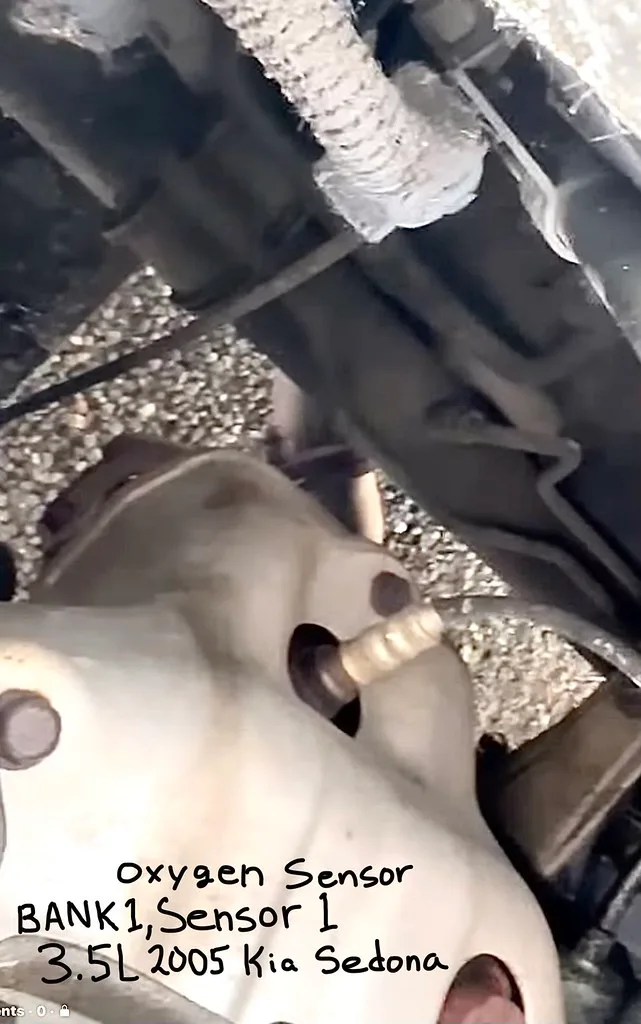
Yes, some are reliable, but only when the part is the correct type and the quality tier is strong. Direct-fit aftermarket oxygen sensors from reputable manufacturers can work well on many vehicles, while universal sensors are a riskier choice because connector style, lead length, and calibration can miss the OE target.
Quality differences matter more than the label on the box. An aftermarket sensor that fits physically may still have a heater circuit, switching rate, or signal calibration that the vehicle does not like, especially on newer engines and wideband AFR applications.
Direct-fit versus universal
Direct-fit sensors come with the correct connector and a lead designed for a specific application. Universal sensors may save time only if you can match the wiring and signal strategy exactly, which is not the case on many modern vehicles.
Quality tiers and calibration differences
Not all aftermarket oxygen sensors are built to the same standard. Some are close to OE behavior; others are acceptable only in low-risk applications. Calibration differences matter because the engine computer expects a particular switching pattern and heater warm-up behavior.
Connector and lead match
Fitment accuracy is often where aftermarket parts fail first. The connector style, wire count, plug keying, and lead length need to line up with the original sensor, or you may create a repair that looks complete but still triggers a fault code.
Oxygen sensor decision matrix
| Vehicle age | Sensor type | OEM-premium worth it | Aftermarket acceptable | Red-flag conditions |
|---|---|---|---|---|
| Older vehicles | Narrowband oxygen sensor | Usually no, unless the original part has unusual connector or lead requirements. | Yes, if direct-fit and the heater rating matches the OE part. | Repeat codes, poor idle after install, connector mismatch. |
| Mid-age vehicles | Upstream O2 sensor | Often yes for fuel-trim stability and fast switching response. | Sometimes, if the brand has a strong OE match and exact application listing. | Fuel trim drifts, sluggish switching, wrong sensor type. |
| Newer vehicles | Wideband AFR sensor | Usually yes; signal strategy is less forgiving. | Only if the part is a verified exact match from a reputable line. | Persistent codes, driveability changes, heater faults after warm-up. |
| Any age | Downstream O2 sensor | Worth it when the OE connector or lead layout is hard to match. | Often acceptable for a proven direct-fit replacement. | Universal splice-in parts, bad connector fit, catalyst-monitor codes. |
Why this matrix points in different directions
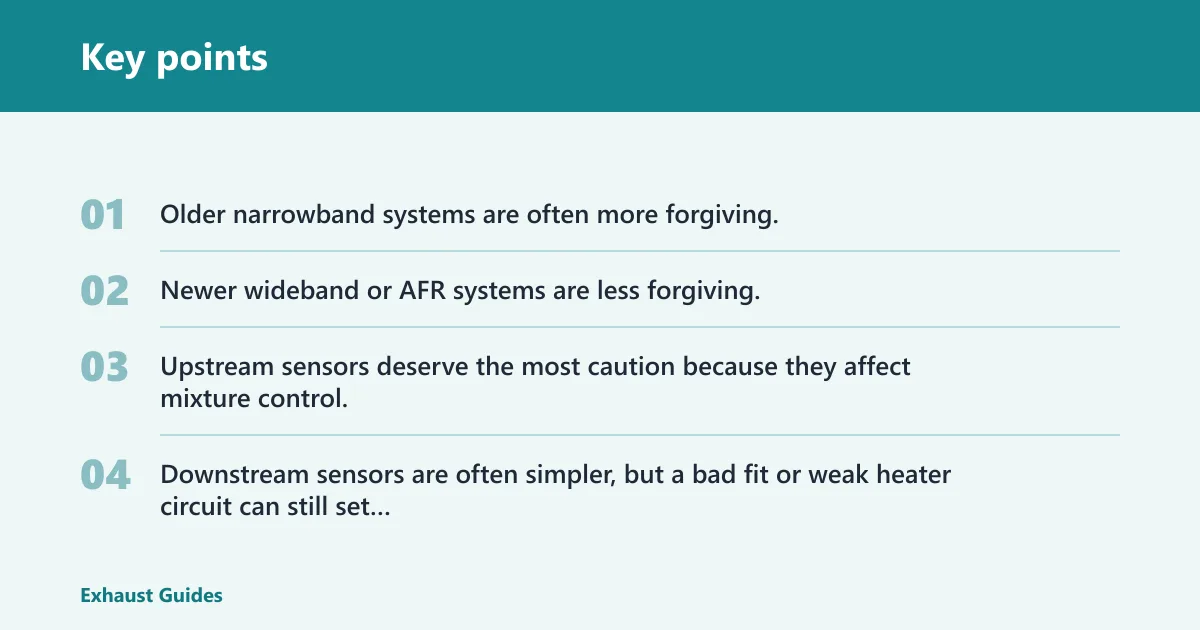
Older narrowband systems are often more forgiving, so a reputable direct-fit aftermarket sensor can be a practical choice. Newer wideband or AFR systems are less forgiving, and the wrong part can create a diagnostic loop that looks like a vehicle problem but is really a replacement mismatch.
Upstream sensors deserve the most caution because they affect mixture control. Downstream sensors are often simpler, but a bad fit or weak heater circuit can still set a code and send you back into the parts aisle.
Will the wrong sensor cause repeat codes?
Yes. A wrong or low-quality replacement can trigger repeat codes through heater-circuit faults, slow switching, incorrect connector fit, or a signal that does not match the vehicle’s expected strategy. That is especially common on upstream sensors and wideband AFR applications, where the control system is looking for very specific behavior.
If the light came back after replacement, do not assume the new sensor is automatically good. Confirm the exact part number, inspect the wiring, and review live data before swapping another part.
Heater circuit faults
The heater circuit helps the sensor reach operating temperature quickly. If the heater resistance, wiring, or connector compatibility is off, the engine may set a code during cold start or during the first warm-up cycle, and emissions performance can suffer before the sensor ever reports correctly.
Slow switching and fuel trims
Use a scan tool to watch short-term and long-term fuel trim, plus sensor switching or cross-count behavior. Slow response on an upstream sensor can push trims away from normal and can make the computer think the mixture is wrong even when the engine itself is fine.
Scan tool checks
A scan tool is the best first step because it confirms live data, code history, and whether the sensor is responding at all. A multimeter is useful for basic voltage checks, heater resistance checks, and wiring verification, but it cannot confirm every sensor problem by itself.
A common first-timer mistake is…
…replacing a downstream sensor because the code name mentions oxygen sensor, then discovering the actual fault was an upstream heater issue. The code cleared for a short drive, then returned because the real failure point was still present and the new part was not the real fix.
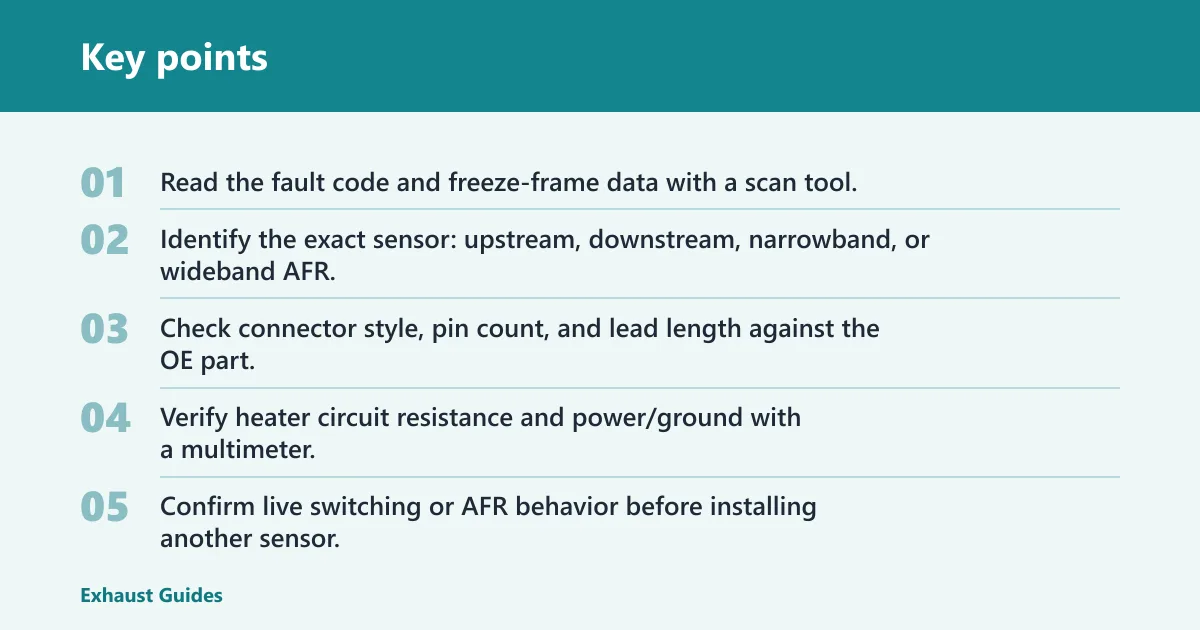
- Read the fault code and freeze-frame data with a scan tool.
- Identify the exact sensor: upstream, downstream, narrowband, or wideband AFR.
- Check connector style, pin count, and lead length against the OE part.
- Verify heater circuit resistance and power/ground with a multimeter.
- Confirm live switching or AFR behavior before installing another sensor.
Choose OEM if… / Choose aftermarket oxygen sensors if…
OEM is the safer choice when exact fit and diagnostic stability matter most. Reputable aftermarket oxygen sensors are practical when the application is simple, the part is a direct-fit match, and the brand has a proven track record for that vehicle type.
Choose OEM if…
- You are replacing an upstream O2 sensor on a newer vehicle.
- You are replacing a wideband AFR sensor.
- The original part has a specific connector, lead length, or OE calibration that is hard to match.
- You already have repeat codes after an earlier replacement.
Choose aftermarket oxygen sensors if…
- The vehicle uses a straightforward narrowband oxygen sensor.
- You can match the exact OE part number with a direct-fit listing.
- The downstream sensor is simple and the connector match is exact.
- You are buying from a known line with application-specific coverage.
Is paying more for OEM worth it?
Yes, when the vehicle is emissions-sensitive, the sensor is hard to reach, or the system is prone to repeat faults. Paying more can be worth it if the cost of a second repair, another scan session, or a failed emissions check would erase the savings from a cheaper part.
Dealer or OE-channel supply can also matter when you need exact vehicle-specific fitment. Some sellers even sort OEM parts by brand and by VIN, and one inventory source lists Acura, Audi, BMW, Ford, GM, Honda, Hyundai, Infiniti, Jaguar, Kia, Land Rover, Lexus, Mazda, Mitsubishi, Mopar, Nissan, Porsche, Subaru, Toyota, Volkswagen, and Volvo. That kind of catalog structure helps when the sensor family is easy to confuse.
For parts sourcing, the premium case is strongest when the sensor is tied to a precise OE spec and the car is sensitive to calibration differences. By contrast, a retail alternative can be far cheaper in some categories; one example from StorageReview showed a 4TB OEM upgrade costing an additional $2,159 versus a retail 4TB SSD alternative priced at $349. The point is not that oxygen sensors cost those amounts, but that OE pricing can be materially higher when exact match matters.
Frequently asked questions
Is an OEM oxygen sensor better than aftermarket?
OEM is usually better when you need exact fit, OE connector matching, and the lowest chance of repeat codes. Aftermarket oxygen sensors can be good in the right application, but the part has to match the sensor type, lead length, and heater behavior closely.
Will an aftermarket O2 sensor trigger a check engine light?
It can, if the part is the wrong type, the heater circuit is off, or the connector and lead do not match cleanly. A check engine light can also return if the sensor responds too slowly for the engine computer’s expected switching pattern.
Do OEM oxygen sensors last longer?
Not always by design alone, but OEM sensors often have a lower mismatch risk and better application fit, which can make them feel more durable in service. Lifespan depends on heat, contamination, vehicle age, and whether the sensor is upstream or downstream.
Are aftermarket oxygen sensors as good as OEM?
Some direct-fit aftermarket oxygen sensors are close enough for many older narrowband and downstream jobs. They are less convincing as a universal answer for upstream or wideband AFR applications, where signal behavior and calibration differences matter more.
Can I use a universal oxygen sensor instead of OEM?
Only when you can verify connector compatibility, lead routing, heater requirements, and signal type. Universal sensors are a bad bet for many modern vehicles, and they are especially risky on wideband AFR systems or on cars that already showed repeat fault codes.
Which brand makes the best oxygen sensor replacement?
There is no single best brand for every vehicle. The safer rule is to choose a brand that lists the exact OE application, connector style, and sensor type for your car, then verify live data with a scan tool after installation.