How to Remove Graves Exhaust DB Killer
Figuring out How to Remove Graves Exhaust DB Killer can sometimes feel like a puzzle, especially if you’re new to working on your motorcycle. You might wonder if it’s tricky or if you need special tools. Don’t worry, it’s usually a straightforward process that most people can handle with a little guidance.

Qualirey
Qualirey Pest Control Exhaust Pipe Attachment, Killing…
- Protect Your Garden from Moles: Kill rodents such as moles, gophers and voles by introducing car exhaust into underground caves. P…
- Fit for Both Thick and Thin Exhaust Pipes: This upgraded pipe attachment made two sizes in one, fit for pipe in 2"-2.4"/3"-3.5" di…
- Adaptive Vehicles: Fit for multiple vehicles such as trucks, tractors, old cars and even small engines like lawn mowers. Attention…
As an Amazon Associate I earn from qualifying purchases.
This guide will walk you through each step clearly and simply, so you can get your exhaust sounding just right. Let’s get started so you can enjoy your ride to the fullest.
Understanding Graves Exhaust DB Killer Removal
This section explains what a Graves exhaust DB killer is and why someone might want to remove it. We’ll talk about the purpose of these baffles and the common reasons bikers look into removing them for their Graves exhaust systems. It’s all about understanding the basic function before we get to the actual steps.
What is a DB Killer?
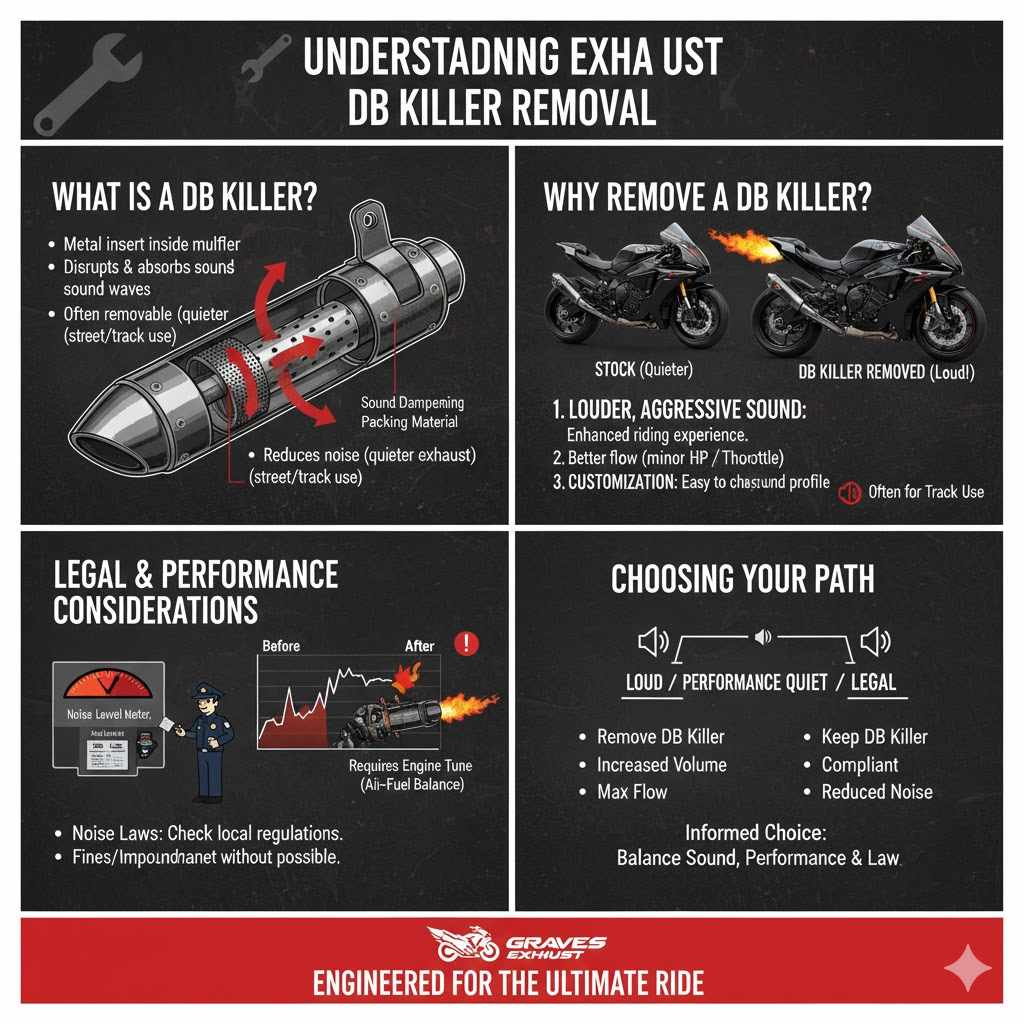
A DB killer, also known as a baffle or sound insert, is a component designed to reduce the noise produced by an exhaust system. It’s typically a metal tube or a series of perforated plates installed inside the muffler. The shape and material of the DB killer help to dampen the sound waves.
This makes the exhaust quieter.
Many motorcycle exhaust systems come with a removable DB killer. This allows riders to choose between a quieter street ride and a louder, more aggressive sound for track days or off-road use. The primary goal is noise reduction.
It helps meet legal noise regulations and makes the motorcycle more pleasant for everyday riding.
The Graves exhaust brand is known for performance parts. Their systems often include a DB killer option. This gives riders flexibility.
They can change the exhaust note to suit their preferences or local laws. Knowing what this part does is the first step to safely removing it.
Why Remove a DB Killer?
People often want to remove the DB killer from their Graves exhaust for a few key reasons. The most common is to achieve a louder and more aggressive exhaust note. Many riders feel a sportbike or performance motorcycle sounds better with a deeper, more resonant exhaust sound.
This sound can also enhance the riding experience, making it more thrilling.
Another reason is for increased performance. While the difference might be small for many street bikes, removing a restrictive DB killer can sometimes allow the engine to breathe more freely. This can lead to minor gains in horsepower and throttle response.
Riders seeking every bit of performance might consider this. However, it’s important to note that significant performance gains usually require more than just removing the baffle.
Some riders also find the process of removing and reinstalling the DB killer to be a simple way to customize their bike. It’s a relatively easy modification that can change the character of the motorcycle. For track days where noise limits are stricter, they might remove it.
For street riding, they might put it back in to be compliant. This gives them control over their bike’s sound profile.
Legal and Performance Considerations
It’s really important to know that removing a DB killer can make your exhaust much louder. In many places, there are laws about how loud a motorcycle can be. Riding with an excessively loud exhaust can lead to tickets or even having your bike impounded.
Always check your local laws before making any changes.
Also, while some people believe removing the baffle boosts performance, this isn’t always the case. For some exhaust systems, the baffle is designed to work with the rest of the exhaust. Removing it without retuning the engine might actually hurt performance or cause the engine to run poorly.
The engine’s air-fuel mixture might become unbalanced.
For optimal results, if you remove the DB killer and notice performance changes, consider getting a professional tune for your motorcycle’s engine. This ensures the engine runs efficiently and safely. It helps make sure you get the best performance possible from your exhaust modification.
Tools and Preparation for Removal
Before you even think about removing the DB killer, it’s smart to get everything ready. Having the right tools and preparing your workspace will make the job much easier and faster. We’ll cover what you’ll likely need and how to get your motorcycle and the exhaust ready for the task.
Essential Tools You’ll Need
For removing a Graves exhaust DB killer, you typically won’t need a huge number of tools. Most often, a few basic hand tools will do the trick. The exact tools can depend on how the DB killer is secured on your specific Graves exhaust model.
The most common fastener is a small screw. This screw often holds the DB killer in place from the outside of the exhaust tip. For this, you will likely need a small Phillips head screwdriver.
Sometimes, it might be a hex screw, so a set of Allen wrenches (also called hex keys) is a good idea. Make sure you have a few different sizes.
If the screw is a bit stubborn or rusted, a small amount of penetrating oil can help loosen it. You might also want a shop rag to clean up any grease or dirt. Having a flashlight can be helpful too, especially if the exhaust is dark or hard to see into.
Keeping these simple tools handy ensures you’re prepared.
Preparing Your Motorcycle
It’s a good idea to let your motorcycle cool down completely before you start working on the exhaust. Exhaust pipes can get extremely hot, and working on a hot system can cause serious burns. Wait at least an hour, or until the pipes are cool to the touch.
Safety first!
Make sure your motorcycle is parked on a level surface. Using the kickstand is usually fine, but if you have a center stand, that’s even better for stability. You want the bike to be steady and not wobble while you’re working.
This prevents accidents and makes the job easier.
Clear the area around the exhaust. Remove any clutter or tools that you aren’t using. This keeps your workspace tidy and reduces the chance of tripping or losing small parts.
Having enough light is also important, so work in a well-lit garage or outdoors.
Inspecting the DB Killer Fastening
Before you try to unscrew anything, take a good look at how the DB killer is attached. On most Graves exhausts, you’ll see a small screw or bolt on the very end of the muffler tip. This is the primary way the DB killer is held in place.
Carefully examine this screw. Is it a Phillips head, a flathead, or a hex bolt? Knowing this will help you grab the right tool.
Sometimes, the screw might be hidden behind a decorative cap, or it might be slightly recessed. Make sure you can see it clearly.
If the screw looks rusted or worn, it might be difficult to turn. This is where a bit of penetrating oil can be very helpful. Apply a small amount and let it soak for a few minutes before attempting to unscrew it.
This simple inspection step can save you a lot of frustration later on.
Step-by-Step Guide: How to Remove Graves Exhaust DB Killer
Now for the main event! This part walks you through the actual process of removing the DB killer from your Graves exhaust. We’ll break it down into simple, easy-to-follow steps.
Remember to take your time and work carefully.
Step 1 Locating and Removing the Fastening Screw
The very first physical step is to find that little screw that’s holding the DB killer in. Look at the very end of your Graves exhaust muffler. You should see a single screw.
It’s usually pretty small. Grab the correct screwdriver or Allen wrench for it.
Gently a tiny bit of penetrating oil can be a lifesaver. Apply it, wait a few minutes, and try again.
Once the screw is loose enough, carefully unscrew it the rest of the way. Keep track of it! It’s a very small part, and it’s easy to lose.
Put it somewhere safe, like in a small container or your pocket. You’ll want to put this back later if you decide to re-install the DB killer.
Step 2 Gently Removing the DB Killer
With the screw removed, the DB killer should now be free to come out. However, it might be a snug fit. It’s designed to stay in place securely.
You might need to gently wiggle it or tap it lightly to loosen it from the exhaust pipe.
Try to grab the end of the DB killer with your fingers. If it’s too hot or difficult to grip, you can use a pair of pliers. Be careful not to scratch or damage the exhaust pipe or the DB killer itself.
Gently pull it straight out from the muffler.
Sometimes, the DB killer might be a bit stuck due to carbon buildup or heat expansion over time. If it’s really stubborn, you can try giving the end of the exhaust a few very light taps with a rubber mallet. This vibration can help break any seal.
Again, be gentle and patient.
Step 3 Inspecting the Exhaust After Removal
Once the DB killer is out, take a moment to look inside the exhaust pipe. You want to make sure there are no metal shavings or debris left behind. This is important for the performance and sound of your exhaust.
Use your flashlight to see clearly. If you notice any little bits of metal or dirt, you can try to blow them out with compressed air if you have it. Otherwise, a clean rag might help you reach in and clean the opening.
Just be careful not to push anything further into the exhaust system.
Check the area where the DB killer was. Make sure the opening is clean and smooth. This ensures that the exhaust gases can flow freely.
It also makes it easier if you decide to put the DB killer back in later. A clean opening helps everything fit together properly.
Step 4 Reassembling (Optional)
If you’ve decided to keep the DB killer out, then you’re done with the removal process! You won’t need to reassemble anything related to the DB killer. You might just want to put the screw you removed somewhere safe, in case you ever change your mind.
However, if you’re just testing things out, or if you need to reinstall the DB killer for legal reasons or personal preference, the reassembly is simple. Just slide the DB killer back into the muffler tip. Make sure it’s seated properly.
Then, take the screw you removed earlier and screw it back into its original hole. Tighten it firmly, but don’t overtighten it. You don’t want to strip the threads.
Once the screw is back in, the DB killer is secured again.
Troubleshooting Common Issues
Even with clear steps, sometimes things don’t go exactly as planned. This section covers some common problems you might run into when trying to remove a Graves exhaust DB killer and how to fix them. Don’t let a small hiccup stop you.
The Screw Is Stripped or Stuck
If the screw head is stripped or feels like it’s going to break if you turn it further, don’t panic. You have a few options. First, try using a rubber band over the screw head before putting your screwdriver in.
This can sometimes give the screwdriver enough grip to turn a slightly damaged screw.
If that doesn’t work, you might need a screw extractor kit. These kits have special bits that can bite into a damaged screw head and help you remove it. Follow the kit’s instructions carefully.
Another option is to carefully use a Dremel tool with a cutting disc to cut a new slot into the screw head. Then you can use a flathead screwdriver.
For a screw that’s just stuck and won’t budge, use more penetrating oil. Let it soak for a longer time, perhaps overnight. Gentle tapping with a hammer on the screwdriver handle while you try to turn it can also help break the bond.
Patience is key here.
DB Killer Won’t Come Out
If the DB killer is stuck tight inside the exhaust pipe, it might be due to carbon buildup or rust. Try spraying a bit of penetrating oil around the edges where the DB killer meets the pipe. Let it sit for a while to seep in.
You can also try gently tapping around the end of the exhaust with a rubber mallet. The vibrations can help loosen it. If you can get a grip on it, try twisting it back and forth slightly as you pull.
This can help break the seal.
Never try to force it with excessive force, as you could damage the exhaust. If it’s extremely difficult, consider taking it to a local motorcycle shop. They have specialized tools and experience that can help remove stubborn parts without causing damage.
Damaging the Exhaust Pipe
It’s easy to accidentally scratch or dent the exhaust pipe if you’re not careful. Always use the right tools for the job. Make sure your screwdrivers and wrenches fit the screws properly.
A loose tool can slip and damage the surface.
When you’re tapping the exhaust, use a rubber mallet, not a metal hammer. If you don’t have a rubber mallet, you can place a piece of wood between the hammer and the exhaust pipe. This will cushion the blows and prevent damage.
If you do happen to get a small scratch, it might be something you can live with. For deeper scratches or dents, you might consider looking into exhaust repair kits or having it professionally polished. Prevention is always the best approach, so be mindful of your surroundings and tools.
The Sound and Performance After Removal
Once you’ve successfully removed the DB killer, you’ll notice a significant change in your motorcycle’s sound. This is often the primary reason people undertake this modification. We’ll discuss the typical sound changes and how it might affect your bike’s performance.
Changes in Exhaust Note
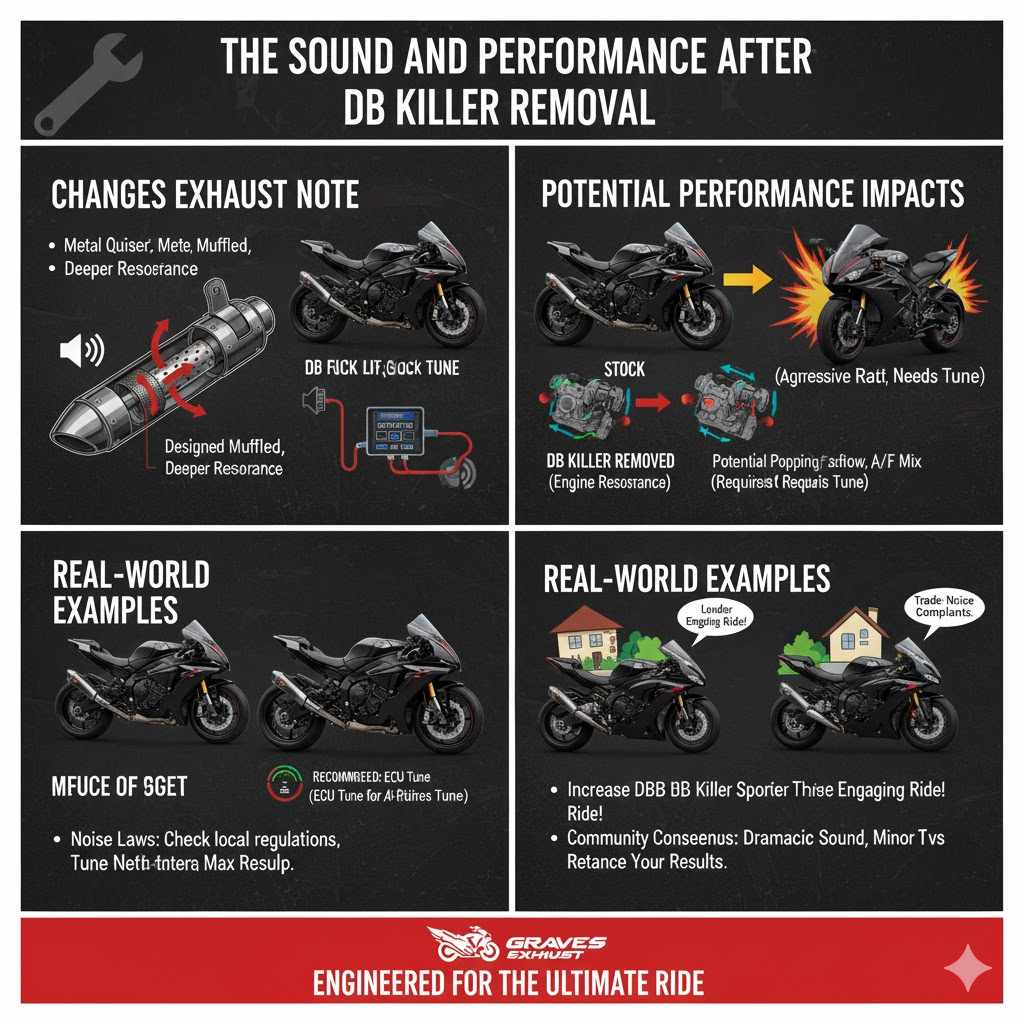
Expect a much louder and more aggressive sound from your Graves exhaust after removing the DB killer. The exhaust note will likely become deeper, with more resonance and growl. It will sound more like what many people associate with a performance motorcycle.
The sound will have less muffling. This means the engine’s natural exhaust pulses will be more audible. You’ll hear more of the exhaust’s mechanical sound and less of the sound-dampening effect.
For some riders, this is the desired outcome, enhancing the overall riding experience.
However, be aware that the volume can be quite substantial. In urban areas or near residential zones, a very loud exhaust can draw unwanted attention and may be considered impolite. It’s a trade-off between sound intensity and legal compliance.
Potential Performance Impacts
Removing a DB killer from a performance exhaust like Graves’ can have a subtle impact on performance. In many cases, the exhaust system is designed to work efficiently with the baffle in place. The baffle can help tune the backpressure of the exhaust.
When you remove it, the engine might run differently. Some riders report a slight improvement in throttle response, especially at higher RPMs. This is because the engine can expel exhaust gases more freely with less restriction.
However, it’s not uncommon for some engines to actually run worse without the proper backpressure. The air-fuel mixture can become too lean, which is not good for the engine. If you experience any popping, backfiring, or a noticeable loss of power, it’s a strong indicator that your engine needs to be retuned.
A custom ECU flash or a fuel controller can help optimize performance after this modification.
Real-World Examples
Many sportbike enthusiasts share their experiences online. For instance, a rider with a Yamaha R6 found that removing the DB killer from their Graves exhaust gave it a much sportier sound that matched the bike’s aggressive styling. They reported a noticeable increase in throttle response at higher speeds, making track days more enjoyable.
Another rider on a Kawasaki Ninja ZX-10R removed the baffle and found the bike’s overall engine note was much more satisfying. They noted that while they didn’t experience significant horsepower gains, the sound made the riding experience more engaging. They did, however, get a few noise complaints from neighbors.
A common theme across many forums is that the change in sound is very dramatic. For bikes designed for performance, the removal of the DB killer often aligns with the bike’s aggressive nature. It’s a popular modification for those seeking a more visceral connection to their machine.
Frequently Asked Questions
Question: Is it legal to remove the DB killer from my Graves exhaust?
Answer: The legality depends on your local laws regarding motorcycle noise levels. Many areas have strict regulations, and removing the DB killer often makes an exhaust too loud, leading to fines. Always check your local ordinances before removing it.
Question: Will removing the DB killer void my Graves exhaust warranty?
Answer: It’s possible that modifying the exhaust, including removing the DB killer, could void any warranty on the exhaust system itself. It’s best to check the terms of your warranty or contact Graves Motorsports directly for clarification.
Question: How difficult is it to reinstall the DB killer?
Answer: Reinstalling the DB killer is usually just as simple as removing it. You just slide it back into place and secure it with the screw you removed. It’s a reversible modification.
Question: Can I remove the DB killer without special tools?
Answer: In most cases, yes. You typically only need a basic Phillips head screwdriver or an Allen wrench, depending on the type of screw used. These are common household tools.
Question: What if my Graves exhaust doesn’t have a visible screw for the DB killer?
Answer: Some exhaust models might have different fastening methods. It could be a retaining clip, a welded bracket, or the DB killer might be designed to be pressed in very tightly. In such cases, you might need to research your specific Graves exhaust model or consult a professional.
Summary
Removing the Graves exhaust DB killer is a straightforward process for most riders. You’ll need basic tools like a screwdriver or Allen wrench. Prepare your bike by ensuring it’s cool and stable.
Carefully remove the retaining screw and gently pull out the DB killer. You’ll experience a significantly louder and deeper exhaust note, and potentially minor performance improvements. Always consider local noise laws and the possibility of engine retuning for optimal results.
Related pick: Check today's price on Amazon