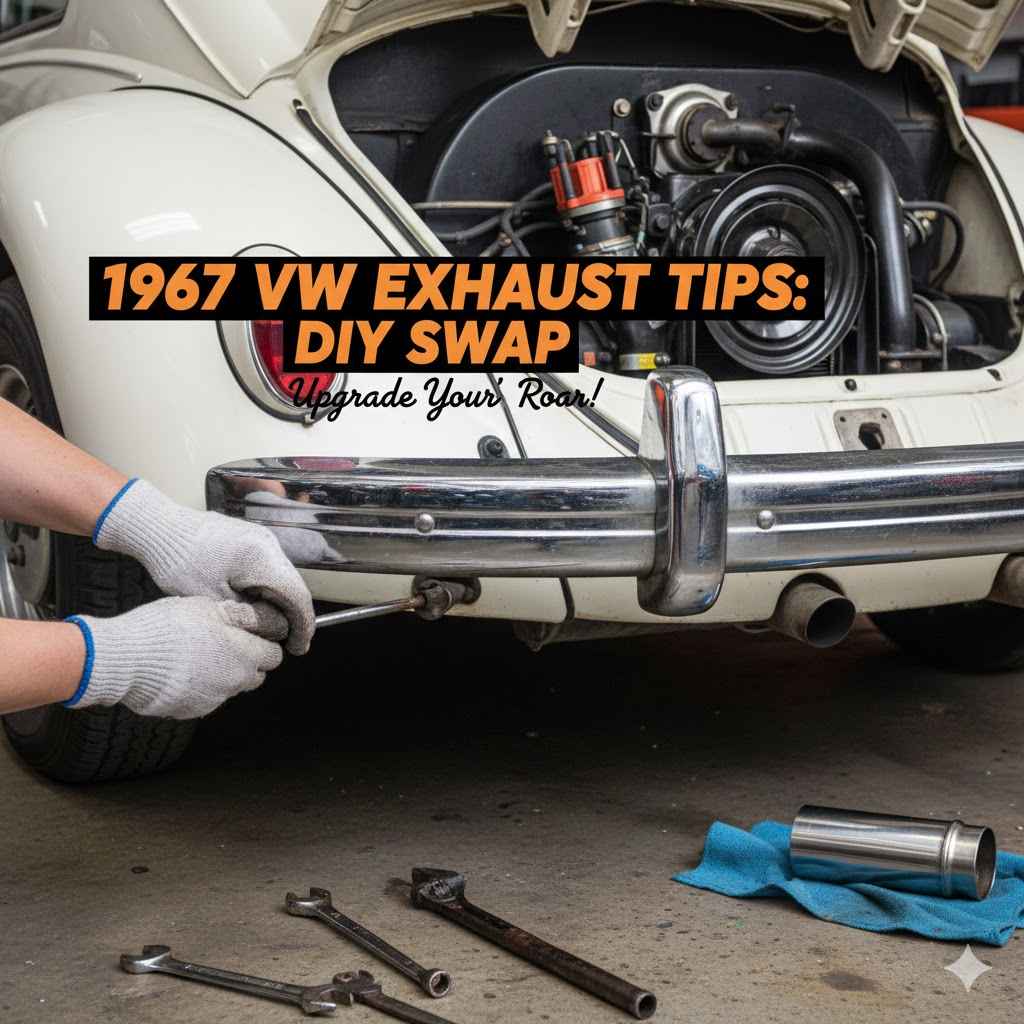
How to Change 1967 VW Exhaust Tips
Lots of people love working on their old Volkswagen cars. Sometimes, though, a job like How to Change 1967 VW Exhaust Tips can seem a little tricky if you haven’t done it before. You might wonder if you have the right tools or if it’s too hard.
Don’t worry, it’s totally doable! We’re going to walk through it step-by-step so you can get your VW sounding and looking great. Get ready for some simple instructions that will make this task easy to handle.
Your Guide How to Change 1967 VW Exhaust Tips
This section will show you the straightforward way to swap out the exhaust tips on your 1967 Volkswagen. We’ll cover what you need before you start, how to safely get the old tips off, and how to put the new ones on so they fit perfectly. It’s all about making sure you have a clear path to success without any confusion.
You’ll learn the essential parts and why they matter for a good result.
Gathering Your Tools and Parts
Before you begin anything, it’s smart to have all your tools and new exhaust tips ready. This saves you from stopping in the middle of the job to find something. Having everything in one spot makes the process much smoother.
It’s like getting your kitchen ready before you start cooking; everything is where you need it.
- New Exhaust Tips: Make sure you buy tips that are made for a 1967 VW. They should be the right size and shape to fit your car’s exhaust pipes. Some might be a slip-on style, while others may require clamping or even welding. It’s best to check what fits your specific model. For a 1967 VW, you often find tips designed to mimic the original look or slightly sportier versions that bolt right on.
- Wrench Set or Socket Set: You’ll likely need wrenches or sockets to remove any clamps or bolts holding the old tips in place. Common sizes might be 8mm, 10mm, or 13mm, but it’s good to have a range available.
- Penetrating Oil: Old exhaust systems can get rusty. Spraying a penetrating oil, like WD-40 or PB Blaster, on any bolts or clamps beforehand can make them much easier to loosen. Let it soak for a bit.
- Gloves and Safety Glasses: Protect your hands from grease and sharp edges. Safety glasses are a must to keep your eyes safe from any falling debris or rust.
- Jack and Jack Stands (Optional but Recommended): If your car is low or you need better access, a jack and jack stands are helpful. Always use jack stands to support the car safely; never work under a car supported only by a jack.
- Wire Brush: Once the old tips are off, you might want to clean up the exhaust pipe where the new tips will go. A wire brush can remove rust and dirt.
Having these items ready means you’re prepared for the job. It reduces frustration and helps you finish faster. It’s better to have one extra tool than to need one and not have it.
Removing the Old Exhaust Tips
Taking off the old tips is usually the simplest part. The goal is to gently detach them without damaging the exhaust pipes. Most 1967 VW exhaust tips are held on with a clamp.
Some older models might have them directly attached, but for most, a clamp is the fastener.
First, locate the clamp that secures the exhaust tip to the exhaust pipe. It’s usually right where the tip begins to flare out. If you’re using a jack, make sure the car is stable on jack stands before getting underneath.
Spray some penetrating oil on the clamp’s bolts or nuts. Let it sit for a few minutes to work its way into the rust. Then, use your wrench or socket to loosen and remove the bolts.
You might need to turn them counter-clockwise. Sometimes, the clamp itself might be rusted onto the tip or pipe. In such cases, you might need to carefully cut the clamp off with a hacksaw or a rotary tool if it won’t budge.
Be careful not to cut into the exhaust pipe itself.
Once the clamp is loose or removed, try to wiggle the exhaust tip off the pipe. If it’s stuck, a gentle tap with a rubber mallet or the handle of your wrench might help. Avoid hitting it too hard, as you don’t want to bend the exhaust pipe.
If the tip is rusted onto the pipe, you might need to work it back and forth more. Sometimes, rotating it while pulling can help break the rust seal. Remember, patience is key here.
Forcing it too much could lead to bigger problems.
After the old tip is off, set it aside. You can inspect the end of your exhaust pipe for any damage or excessive rust.
Attaching Your New Exhaust Tips
Putting on the new tips is the reverse of taking off the old ones, but with a bit more care to get them aligned just right. You want them to look straight and even.
First, clean the end of your exhaust pipe. Use a wire brush to remove any rust, dirt, or old gunk. A clean surface helps the new tip fit better and makes a tighter seal.
Make sure there are no sharp edges left that could cut you.