
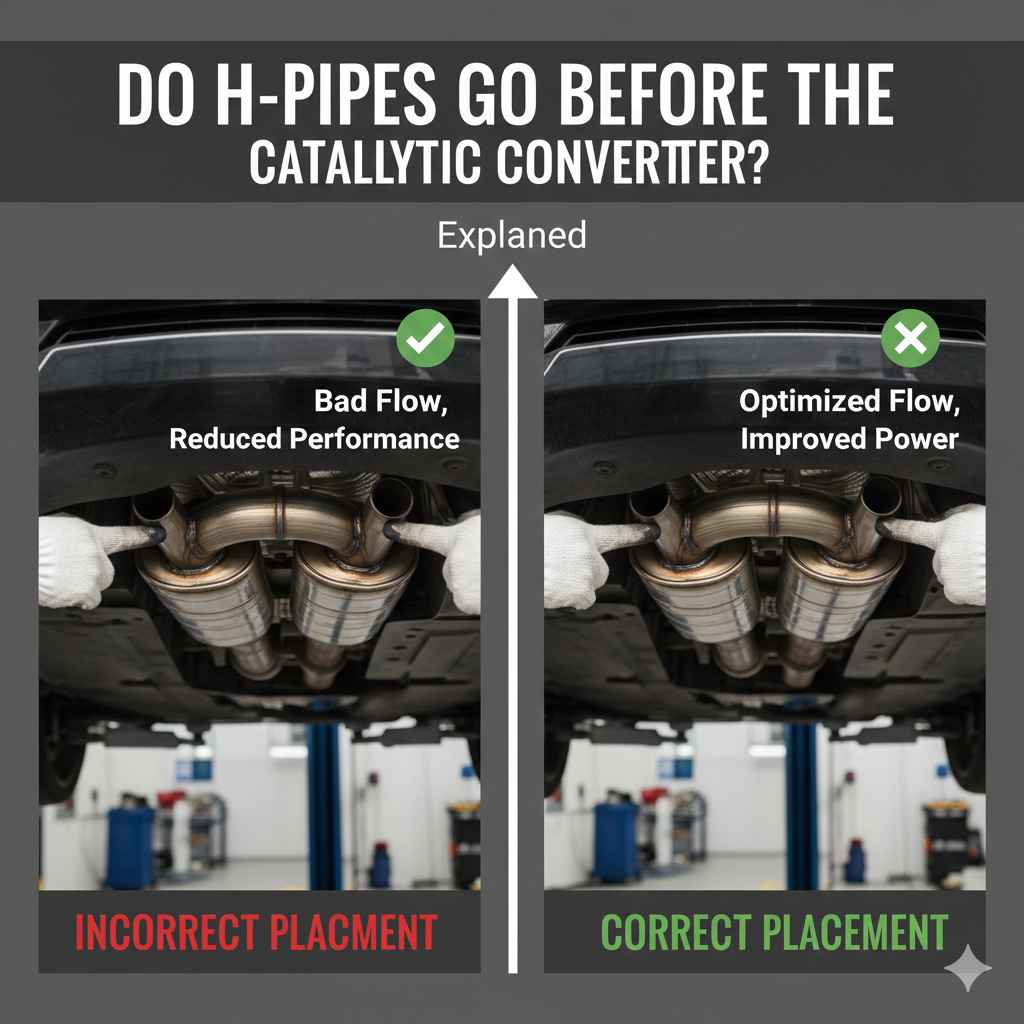
Do H-Pipes Go Before the Catalytic Converter? Explained
Figuring out where car parts go can be tricky, especially when you’re starting with exhaust systems. Many people are puzzled by the question: Do H-Pipes Go Before the Catalytic Converter? It’s a common question for anyone getting into car modifications or repairs. Don’t worry; it’s easier to grasp than you might think. This guide will break down the placement of an H-pipe, showing you exactly where it should go. We’ll explore the ‘why’ and the ‘how,’ making sure you have all the information you need to get it right. Let’s get started.
The Role of H-Pipes in Exhaust Systems
H-pipes are a key component in exhaust systems, and they play a vital role in improving engine performance and sound. They connect the exhaust pipes from both sides of the engine, allowing exhaust gases to equalize and flow more efficiently. This equalizing effect can boost horsepower and torque, especially in engines with a split exhaust system. The placement of an H-pipe is crucial for maximizing its benefits, and it’s essential to know where it should be positioned to avoid any performance issues. Understanding the purpose of an H-pipe is the first step in determining its correct placement in relation to other exhaust components.
What is an H-Pipe?
An H-pipe is a section of exhaust piping that connects the exhaust pipes from the left and right sides of a vehicle’s engine. It’s called an “H-pipe” because it looks like the letter “H” when viewed from the side. This simple design is surprisingly effective. Its main function is to balance the exhaust pressure between the two sides of the engine. This balancing act can lead to several performance improvements, especially in V-shaped engines, like V6s and V8s.
Pressure Equalization: When exhaust gases exit the engine, they create pressure. The H-pipe helps equalize this pressure between the exhaust banks.
Engine performance and sound are directly influenced by the equalization of exhaust pressure. When pressure is balanced, the engine’s exhaust cycle becomes more efficient. This efficiency translates to better performance, making the engine run smoother and with increased power output. The sound changes as well, sometimes resulting in a deeper, more refined tone as the exhaust gases combine and interact within the H-pipe.
Improved Engine Performance: By equalizing pressure, the H-pipe can improve the engine’s scavenging effect. This means the engine is better able to clear out exhaust gases and draw in fresh air and fuel.
The scavenging effect is a key benefit of using an H-pipe in an exhaust system. Improved scavenging leads to enhanced engine breathing and better overall efficiency. As the engine breathes more effectively, it can produce more power and respond quicker to throttle input. This results in an engine that runs more efficiently and delivers a more satisfying driving experience. This is especially true at lower and mid-range RPMs.
Enhanced Exhaust Sound: An H-pipe can also change the sound of the exhaust. By allowing exhaust gases to mix, it creates a unique sound that is often perceived as smoother and less raspy than exhaust systems without an H-pipe.
The H-pipe influences the overall tone of the exhaust, which is a significant aspect for many car enthusiasts. The mixing of exhaust gases within the H-pipe results in sound waves that cancel each other out, leading to a smoother and more refined exhaust note. Compared to systems without an H-pipe, the sound is often deeper and less abrasive, which contributes to an enhanced auditory experience.
Material and Construction: H-pipes are typically made from stainless steel or aluminized steel to withstand high temperatures and resist corrosion. The design and material choices impact the pipe’s durability and performance.
The selection of materials and the method of construction are crucial for the H-pipe’s longevity. Stainless steel is often preferred because it offers excellent corrosion resistance and can endure extreme temperatures without deteriorating. Aluminized steel is a more budget-friendly alternative that also provides good resistance to rust. The H-pipe’s design, including the pipe’s diameter and the angle of its curves, impacts its ability to efficiently channel exhaust gases. A well-constructed H-pipe will provide reliable performance over time.
H-Pipe vs. Other Exhaust Components
H-pipes often work in concert with other exhaust components like catalytic converters, resonators, and mufflers. Understanding how these parts interact is crucial for a properly functioning and sounding exhaust system. For instance, the placement of the H-pipe relative to the catalytic converter is a common point of discussion. The goal is to optimize performance and adhere to any regulations. Knowing the differences helps in designing or modifying a complete exhaust system.
Catalytic Converters: These are emission control devices that reduce harmful pollutants in the exhaust. They must be placed in a specific spot to function correctly.
Catalytic converters reduce the presence of hydrocarbons, carbon monoxide, and nitrogen oxides. These converters are placed near the engine because they need high temperatures to work effectively. By positioning the catalytic converter after the H-pipe (or sometimes before, depending on the setup), you can ensure that the engine’s emissions are reduced properly. The exhaust gases need to pass through the catalytic converter, so the placement affects the overall performance and emissions output of your vehicle.
Resonators: Resonators are used to fine-tune the exhaust sound. They can eliminate unwanted tones.
Resonators play a vital role in shaping the sound of the exhaust system. They are designed to manage sound waves, canceling out certain frequencies to reduce drone and enhance the exhaust note. The placement of a resonator after an H-pipe can significantly alter the sound produced, adding a layer of refinement and a more pleasing exhaust tone. This arrangement is particularly useful in creating a more subtle or more aggressive sound profile, which is perfect for personalized vehicle audio settings.
Mufflers: Mufflers are the primary sound-dampening components of the exhaust system. They are designed to reduce noise.
Mufflers are often the last stage of the exhaust system. They are designed to considerably reduce the noise levels produced by the engine. Placed after the H-pipe and resonator (if any), they serve as the final filter for the exhaust sounds, providing a comfortable and acceptable sound level for road use. The choice and position of mufflers affect the overall noise output and the quality of the exhaust note.
Headers: Headers collect exhaust gases from the engine’s exhaust ports and direct them into the exhaust system.
Headers are the initial components that connect directly to the engine’s cylinder heads. They play a vital role in extracting exhaust gases efficiently, contributing to improved engine performance. Headers are designed to collect exhaust gases, which then flow downstream to the H-pipe and other components. The design and construction of the headers are critical in optimizing the engine’s performance, as they affect exhaust flow and backpressure, which helps with performance.
Placement: Do H-Pipes Go Before the Catalytic Converter?
Generally, an H-pipe is positioned before the catalytic converter in the exhaust system. This placement allows the exhaust gases from both sides of the engine to merge before entering the catalytic converter. This merging can help to balance exhaust flow and create a more efficient engine. However, there are exceptions and specific scenarios to consider. Understanding the reasons behind this placement will help to make smart decisions. The correct order ensures the catalytic converter is functioning and emissions are being managed effectively.
The Standard Arrangement
In most exhaust system configurations, the H-pipe is located upstream of the catalytic converter. This positioning promotes the mixing of exhaust gases, improving the efficiency of the engine. The H-pipe evens out the pressure before the gases enter the converter. This is the typical setup for performance and emission control. The standard setup is designed for optimal engine function and also to meet emission standards.
Mixing and Equalization: The H-pipe helps to mix exhaust gases, resulting in a more uniform flow before they reach the catalytic converter. This can improve the efficiency of the catalytic converter.
The main goal of the H-pipe’s position is to improve exhaust gas mixing, ensuring a consistent flow to the catalytic converter. As gases mix, the exhaust is more evenly distributed, increasing the catalytic converter’s efficiency. This even distribution helps the catalytic converter to perform optimally in reducing emissions. A proper mix can enhance the catalytic converter’s capacity to process pollutants effectively, helping your vehicle to meet emission standards.
Catalytic Converter Efficiency: By receiving a more balanced exhaust flow, the catalytic converter can operate more efficiently, effectively reducing harmful emissions.
The catalytic converter’s effectiveness relies on the uniformity of the gases that flow through it. An H-pipe positioned upstream contributes to a balanced exhaust flow, enabling the catalytic converter to efficiently convert pollutants into less harmful substances. This is key for ensuring your vehicle runs cleanly and meets emission standards. The result is a system that works in harmony to reduce pollutants effectively and maintain compliance with regulations.
Performance Benefits: The H-pipe can contribute to improved engine performance by optimizing exhaust flow and scavenging.
An H-pipe contributes to better engine performance through improved exhaust flow and enhanced scavenging. It provides balanced exhaust pressure which allows the engine to breathe better, clearing out used gases and bringing in fresh fuel and air more efficiently. With the enhanced exhaust flow provided by the H-pipe, the engine can produce more power and respond faster to your driving commands. This is especially noticeable at lower engine speeds and mid-range RPMs.
Sound Considerations: The H-pipe’s placement can influence the exhaust sound. Before the catalytic converter, the sound changes will be more noticeable.
The placement of an H-pipe before the catalytic converter also influences the exhaust sound. By positioning it earlier in the exhaust system, the H-pipe affects how the exhaust gases merge and interact, resulting in a unique sound profile. This allows for a deeper and more refined tone before the gases are further processed by the catalytic converter and the muffler. The effect is a more pronounced change in exhaust sound compared to systems where the H-pipe is placed after the catalytic converter.
Exceptions and Considerations
While the standard is to place the H-pipe before the catalytic converter, there are situations where this arrangement may vary. These exceptions may relate to specific engine designs, emission regulations, or the desired exhaust sound. In some cases, the positioning of the H-pipe can be after the catalytic converter. These situations are important to understand. You must consider the specific needs and goals when designing or modifying an exhaust system.
Engine Design: Some engine designs may benefit from a different H-pipe placement based on exhaust port configuration or internal design.
Different engine designs can benefit from specific H-pipe placements. Engine configurations, such as those with unique exhaust port designs, might perform better with an H-pipe located differently than the standard setup. The location affects the efficiency of exhaust flow. Knowing the design characteristics of the engine allows you to optimize the performance by choosing the best location.
Emission Regulations: Local emission regulations may influence the placement of components, dictating the order of the H-pipe and catalytic converter.
Emission regulations may sometimes influence the order of exhaust components like the H-pipe and catalytic converter. Regulations often enforce the strict placement of the catalytic converter to ensure it effectively removes pollutants from the exhaust. In areas with strict emission controls, it is necessary to consider and adhere to the guidelines set by environmental agencies. This ensures that the vehicle meets local emission standards and avoids legal issues.
Performance Objectives: If the priority is a specific exhaust sound, the position of the H-pipe might be altered to achieve it.
The exhaust sound is a major factor in exhaust system design. The position of the H-pipe affects sound characteristics. If the goal is a unique or distinct sound, the H-pipe might be placed differently to achieve the desired tone. Placement modifications can include an aggressive or a more subtle sound. If the goal is a refined exhaust tone, careful consideration is needed.
Aftermarket Modifications: During aftermarket upgrades, the H-pipe location is often decided depending on space and other system requirements.
When aftermarket upgrades occur, the location of the H-pipe can depend on space and other system requirements. The size and shape of the H-pipe and other components are factors in this setting. Careful planning and measurement are needed to ensure that all components integrate. By thinking about space constraints and component compatibility, one can ensure an effective, efficient, and great-sounding exhaust system.
Step-by-Step Guide for H-Pipe Installation
Installing an H-pipe requires careful planning and execution. This section covers all aspects. The steps below provide a clear and organized approach. Following the proper procedures ensures the H-pipe functions correctly, enhancing performance and sound.
Preparation and Planning
Before you start, gather all necessary tools and safety gear. The first step involves checking all local regulations regarding exhaust modifications. Planning also includes assessing the vehicle’s current exhaust system and deciding where the H-pipe will go. Proper preparation saves time and potential headaches. It ensures a safe and successful installation.
Gather Tools: You will need tools such as a jack and jack stands, wrenches, sockets, a pipe cutter or saw, a welding machine (if applicable), safety glasses, and gloves.
Make sure you have all the necessary tools before you start. This includes items like a jack and jack stands, which are important for safety. You’ll need wrenches, sockets, and a pipe cutter or saw to make precise cuts. A welding machine is needed if you want to weld the H-pipe in place. Safety glasses and gloves are essential. Having these tools ready saves you time and ensures a smooth installation.
Safety First: Always work in a well-ventilated area. Use jack stands to support the vehicle after lifting it. Wear safety glasses and gloves throughout the process.
Safety is the first step. Make sure you work in a well-ventilated space to avoid inhaling harmful fumes. When you lift the vehicle, use jack stands. Wear safety glasses and gloves to protect your eyes and hands. Taking these precautions protects you during the installation process and reduces the risk of injury.
Inspect the Exhaust System: Examine the existing exhaust system. Check for any damage or rust. Make a plan for where the H-pipe will fit.
Examine the existing exhaust system to find any damage or rust. Note where the H-pipe can fit. Consider the components and plan the placement of the H-pipe in relation to the catalytic converter and other parts. Knowing the design is critical for achieving optimal performance. Careful planning sets the stage for a smooth installation. Planning prevents any unnecessary delays.
Check Regulations: Research local regulations. These could affect the placement of the H-pipe and catalytic converter.
Local regulations affect the placement of the H-pipe and the catalytic converter. Make sure your installation meets all emission and sound standards. You should understand the standards that apply. By knowing these rules, you can make sure your exhaust system is compliant, which protects your vehicle from legal issues.
Installation Steps
The installation of the H-pipe involves specific steps. These include cutting the existing exhaust pipes and connecting the H-pipe. Depending on the method, you might need welding or clamps. The goal is to ensure a tight, secure fit. Careful execution is key. It ensures the exhaust system functions correctly and safely.
Lift and Secure the Vehicle: Raise the vehicle and secure it with jack stands. Make sure it is stable.
Before beginning the installation, lift the vehicle off the ground. Place jack stands in the appropriate locations to make sure the vehicle is steady and won’t move. Proper support is crucial for your safety and access to the exhaust system.
Cut the Exhaust Pipes: Use a pipe cutter or saw to cut the exhaust pipes at the point where the H-pipe will be installed.
Use a pipe cutter or saw to cut the exhaust pipes in the location where the H-pipe will be installed. Make accurate cuts to ensure a perfect fit. Remove any existing components. Measure the exhaust system before cutting to ensure a snug fit and prevent any unnecessary issues.
Position the H-Pipe: Place the H-pipe in the right spot, lining it up with the cut pipes. Ensure it’s level and aligned.
Position the H-pipe, lining it up with the cut pipes. Double-check that the H-pipe is aligned correctly with the existing system. The alignment is essential for efficient exhaust flow. Proper positioning also makes the subsequent welding or clamping steps easier.
Connect the H-Pipe: Use clamps or welding to connect the H-pipe to the existing exhaust pipes. Make sure all connections are sealed properly.
Choose your method for connecting the H-pipe. Use exhaust clamps for a clamp-on design, or weld the H-pipe in place if your equipment and experience allow. For welding, make sure the welds are solid. Clamps must be tightened properly to prevent leaks. Securing the connection guarantees the integrity of the exhaust system, preventing exhaust leaks and ensuring optimal performance.
Check for Leaks: After installation, start the engine and listen for any leaks. Look for exhaust escaping from any connections.
After installing the H-pipe, start the engine to check for leaks. Listen and watch carefully for any exhaust that escapes from the joints or connections. If leaks are detected, inspect the joints and correct any issues. Ensuring an airtight seal prevents any problems and makes the exhaust system work efficiently.
Troubleshooting Common Issues
During the H-pipe installation, several issues may arise. These issues can include improper alignment or exhaust leaks. Quick troubleshooting can help resolve these problems and ensure a smooth installation process. Addressing these potential problems ensures the exhaust system performs correctly and offers the benefits of the H-pipe.
Exhaust Leaks: If you find exhaust leaks, check the connections. Tighten clamps or add welds as necessary to seal the connections.
Exhaust leaks are a common problem. If you notice any, check all connections carefully, like those at clamps or welds. Make sure that the clamps are properly tightened, and inspect all weld areas for any gaps. If leaks persist, you may need to tighten or replace the clamps. Good sealing is essential to stop exhaust leaks. Prevent leaks to improve performance and stop hazardous emissions from escaping.
Improper Alignment: If the H-pipe does not align properly, adjust the position of the pipes or the H-pipe itself. Make sure all components fit correctly.
Alignment problems might occur if the H-pipe is not aligned properly with the existing exhaust system. If this occurs, loosen the clamps or reposition the H-pipe until the components align. Precise alignment is crucial for exhaust flow. Make sure that all components are correctly fitted, as a misaligned exhaust system can harm performance and can cause additional problems.
Fitment Issues: If the H-pipe does not fit correctly, check the measurements and compare them to the exhaust system. You may need to replace components.
Fitment issues can also arise, particularly if the H-pipe is the wrong size. Double-check measurements against the exhaust system’s specifications to ensure a good fit. You might need to change the H-pipe or other components to match your vehicle’s specifications. Proper fitment prevents performance issues, such as air leaks or exhaust restriction. If the components fit well, this will ensure the exhaust system runs correctly.
Sound Issues: If the exhaust sound is not what you expected, review the placement. The H-pipe, catalytic converter, and muffler affect sound.
The sound might not match your expectations. Review the whole system, particularly the position of the H-pipe, catalytic converter, and muffler. The way these components are set up directly influences exhaust sound. Changing the positioning of these components can alter the exhaust sound. Remember, the exhaust sound is unique to each setup, so you might need to try different setups to achieve the desired sound.
Frequently Asked Questions
Question: Can I install an H-pipe myself?
Answer: Yes, installing an H-pipe is possible for those with some mechanical skill. Following the steps can help with a successful project. However, welding may require experience.
Question: Does an H-pipe improve fuel economy?
Answer: An H-pipe can contribute to improved engine efficiency, potentially leading to a small improvement in fuel economy, but results may vary.
Question: Will an H-pipe make my car louder?
Answer: An H-pipe can change the exhaust sound. It often produces a smoother, deeper tone. The loudness is affected by the muffler.
Question: Are there any legal restrictions on installing an H-pipe?
Answer: Yes, your location and local laws apply. Always check and obey local and federal emission regulations.
Question: What materials are H-pipes made of?
Answer: H-pipes are typically made from stainless steel or aluminized steel to withstand high temperatures and resist corrosion, with stainless steel offering superior durability.
Final Thoughts
The correct placement of an H-pipe relative to the catalytic converter usually means the H-pipe comes first. This order promotes effective exhaust mixing and contributes to engine performance. However, there may be instances where the arrangement differs due to factors like engine design or local rules. Properly installing an H-pipe involves planning, careful execution, and addressing any problems. Knowing what an H-pipe is, understanding its role, and how it works with other parts of the exhaust system is key. Remember, the main goal is to improve the vehicle’s performance. By following the guide, you can improve your car. That is the essence of car improvement.


