Do Exhaust Tips with Straight Pipe Diesels Make a Difference? Proven
For straight-piped diesel trucks, exhaust tips themselves offer minimal proven performance gains. Their primary impact is on sound and aesthetics. True performance changes come from the straight pipe setup, not just the tip.
Hey there, fellow diesel enthusiasts! Are you wondering if slapping on a fancy exhaust tip to your straight-piped diesel truck will really make your beast roar louder or perform better? It’s a common question many of us have when looking to customize our rides. You see those big, shiny tips and think, “This must do something more!”
The exhaust system on any vehicle, especially a powerful diesel, is a hot topic for upgrades. When you go “straight pipe,” you’re already making a pretty big change. So, does adding just a tip to that setup make any real difference you can feel or hear beyond what the straight pipe already does? Let’s dive in and separate the myths from the proven facts, keeping things simple and clear. We’ll get to the bottom of what exhaust tips truly contribute to a straight-piped diesel.
Understanding Straight Pipes and Exhaust Tips on Diesels
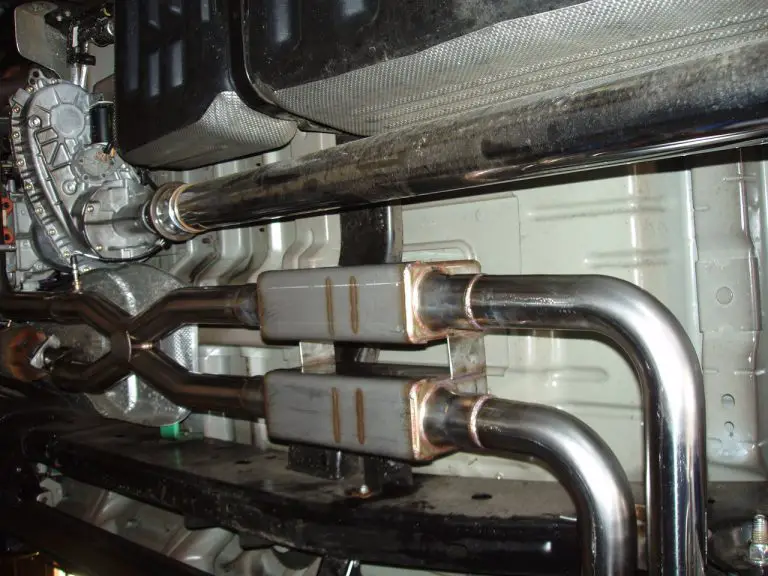
Before we talk about tips, let’s quickly recap what we mean by a “straight pipe” on a diesel truck. Essentially, removing the muffler and often the catalytic converter or diesel particulate filter (DPF) creates a straight pipe setup. This allows exhaust gases to flow much more freely and directly from the engine out of the truck. For diesels, this often results in a deeper, louder exhaust note and can sometimes lead to slight performance improvements due to reduced backpressure. It’s a popular modification for sound and perceived power gains.
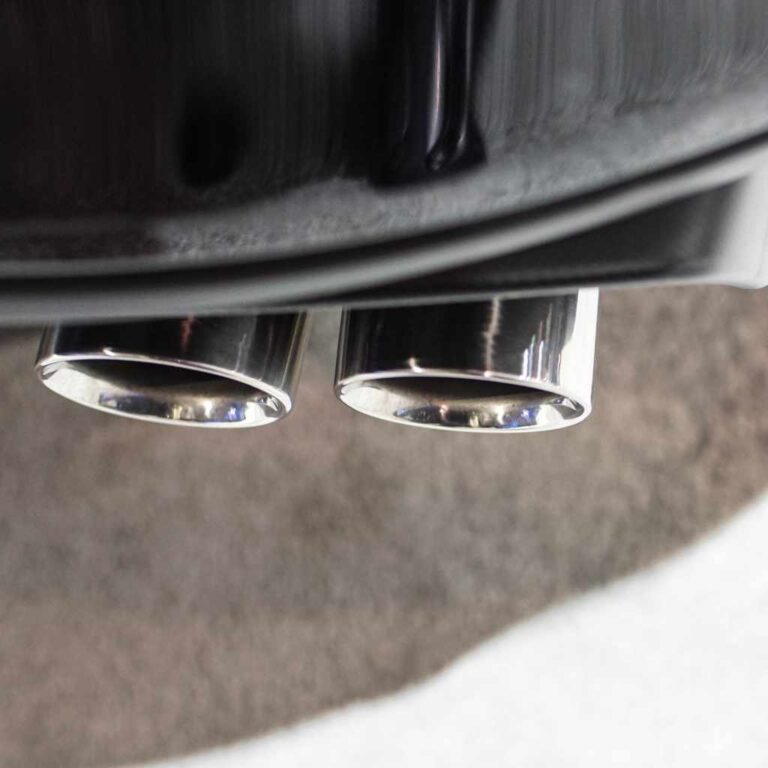
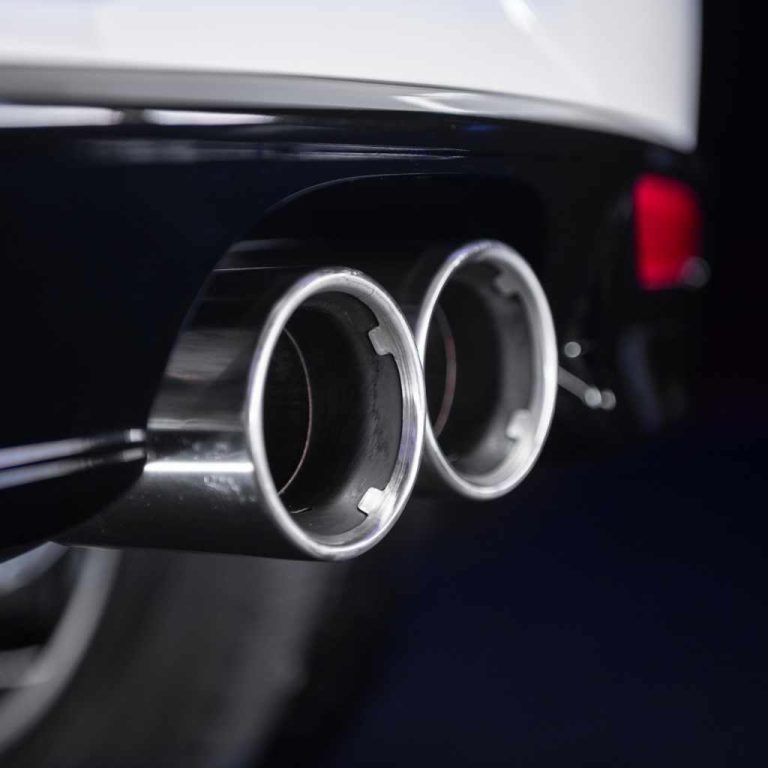
An exhaust tip, on the other hand, is the final piece at the very end of your exhaust system. It’s like the stylish cap on a pen. Its main job is to finish off the exhaust pipe’s appearance and, to some extent, direct the flow of exhaust gases away from the vehicle’s body. They come in all sorts of sizes, shapes, and materials, letting owners personalize their truck’s look.
So, when we combine these two – a straight pipe diesel with a new exhaust tip – we’re talking about a setup that already has a wide-open path for exhaust. The question is, does the final little piece, the tip, add anything significant to that already freed-up flow?

How Exhaust Systems Work (The Simple Version)
Your diesel engine produces hot exhaust gases when it burns fuel. These gases need to go somewhere! An exhaust system’s job is to safely route these gases away from the engine and the cabin. It also helps to quiet things down and, in newer trucks, reduce emissions.
A traditional system includes:
- Exhaust Manifold: Collects gases from each cylinder.
- Downpipe: Connects the manifold to the rest of the system.
- Catalytic Converter / DPF: Treats exhaust gases to reduce harmful pollutants (often removed in straight pipe setups).
- Muffler: Reduces noise by baffling the exhaust gases.
- Resonator: Further tunes the exhaust sound, often smoothing out raspiness.
- Tailpipe: Carries the gases to the rear of the vehicle.
- Exhaust Tip: The decorative end.
In a straight pipe diesel, the muffler and often the catalytic converter/DPF are removed. This drastically reduces the restrictions. The path becomes much straighter and wider for the gases to escape.
The Role of Backpressure
Backpressure is the resistance to exhaust flow. Think of it like trying to blow air through a narrow straw versus a wide pipe. More resistance (backpressure) can actually be beneficial in some gasoline engines for tuning the engine’s performance at certain RPMs. However, for most diesel engines, especially those modified for performance, lower backpressure is generally desirable because it allows the turbocharger to spool up faster and the engine to breathe more easily. This can lead to better throttle response and more power.
Straight piping significantly reduces backpressure. Now, where does the tip fit into this? The exhaust tip is the very last point of restriction before the gases exit into the atmosphere. If the rest of the system is already a wide-open straight pipe, the tip’s impact on backpressure is usually minimal, especially compared to the massive reduction from removing the muffler.
Do Straight Pipe Diesels With Exhaust Tips Make a Difference?
Let’s get straight to the point: For a diesel truck that is already “straight-piped” (meaning the muffler and often emissions equipment are removed for a free-flowing exhaust), the exhaust tip itself makes very little to no measurable difference in terms of performance (horsepower, torque, fuel economy). The significant change in exhaust flow and backpressure happens when you remove the restrictive components like the muffler.
The “difference” you might notice with a new tip on a straight-piped diesel is primarily:
- Sound: While the straight pipe is the main driver of loudness, different tip designs can subtly alter the tone or resonance of the exhaust note. Some might make it slightly deeper, others might introduce a hint of rasp. However, this is usually a subtle change compared to the overall volume achieved by going straight pipe.
- Aesthetics: This is where exhaust tips shine. They are undeniably the most visible part of the exhaust system for many people. A large, polished, or uniquely shaped tip can dramatically change the look of the rear of your truck, giving it a more aggressive or custom appearance.
What about exhaust tip size?
This is a popular discussion point. Does a larger diameter exhaust tip allow exhaust gases to escape faster and thus add power? In theory, a larger opening means less resistance. However, on an already straight-piped diesel, the exhaust gases are already flowing into a very large diameter pipe (the straight pipe itself) before they even reach the tip.
The exhaust piping diameter leading up to the tip is the primary factor in exhaust flow. If you have a 5-inch straight pipe, putting a 5-inch or even a 6-inch tip on it will offer virtually no performance benefit. The exhaust flow is already unimpeded. If you were to put a much smaller tip on a large straight pipe, that could create a bottleneck and hinder performance, but this is not typically what people do when upgrading.
What about exhaust tip length and shape?
Similar to size, the length and shape of the tip have marginal effects on performance when added to a straight pipe. Some shapes, like rolled or slash-cut tips, are primarily for looks. While terminal velocity and flow dynamics are complex, the minuscule length of a tip and its exit shape, when placed at the end of a wide-open pipe, do not typically create enough of a measurable change in engine performance to be considered a “difference” in the way most people mean it (i.e., more power you can feel).
The primary function of the tip material and construction in a straight-piped diesel is to act as a durable, finished endpoint and to contribute to the visual appeal.
Proven Performance vs. Perceived Differences
When we talk about “proven” differences, we mean measurable gains in horsepower, torque, or fuel efficiency. Exhaust tips, when added to an already straight-piped diesel, do not demonstrably offer these. Dyno tests and real-world driving experiences generally show flat lines for performance metrics when only the tip is changed on a de-muffled exhaust system.
Table: Impact of Exhaust Tip on Straight-Piped Diesel Performance
Here’s a simple breakdown of what you can expect:
| Modification | Impact on Horsepower/Torque | Impact on Sound | Impact on Aesthetics | Typical Cost |
|---|---|---|---|---|
| Removing Muffler (Straight Pipe) | + | Slight to moderate increase possible | ++ | Significant increase in volume, deeper tone | – | No change unless pipe is visible | $$ |
| Adding Aftermarket Exhaust Tip to Straight Pipe | 0 | Negligible to no change | + | Subtle alteration of tone/resonance | +++ | Significant visual enhancement | $-$$ |
As you can see, the exhaust tip’s score is highest in aesthetics, with only a minor potential for sound alteration. Performance remains essentially unchanged.