
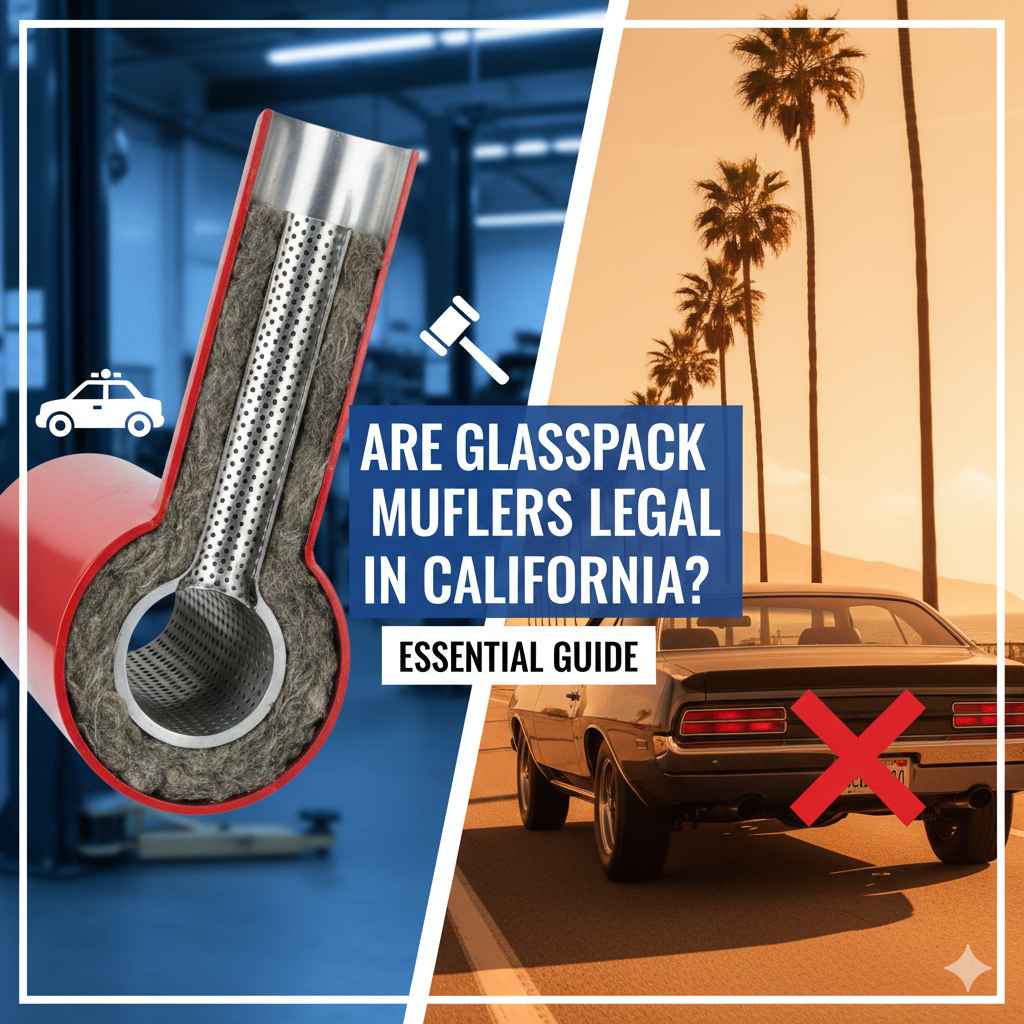
Are Glasspack Mufflers Legal In California? Essential Guide
Glasspack mufflers are generally not legal for use on street-driven vehicles in California due to strict noise and emission regulations enforced by the California Air Resources Board (CARB). Always check current noise limits and ensure any exhaust modification complies with state laws to avoid tickets and failed inspections.**

JEGS
JEGS 30286 - Glasspack Muffler [2.500 in.…
- JEGS - Glasspack Muffler [2. in. Inlet/Outlet]
- CORROSIVE-RESISTANT RED PAINT FINISH that is suitable up to 600 degrees Fahrenheit
- REDUCES POWER-ROBBING BACK PRESSURE while delivering a crisp sound
As an Amazon Associate I earn from qualifying purchases.
Thinking about upgrading your car’s sound with a classic glasspack muffler? It’s an exciting modification that promises a deep, throaty rumble. However, if you live in the Golden State, you need to pause before you install one. California has some of the toughest vehicle laws in the nation regarding noise and exhaust emissions. This confusion is common because what sounds great in a garage might get you a costly ticket on the road. Don’t worry! As your trusted automotive guide, I’m here to cut through the red tape. We will clearly explain California’s rules, what glasspacks are, and the steps you can take to keep your ride sounding awesome while staying completely legal. Let’s demystify the legality of glasspack mufflers in California together.
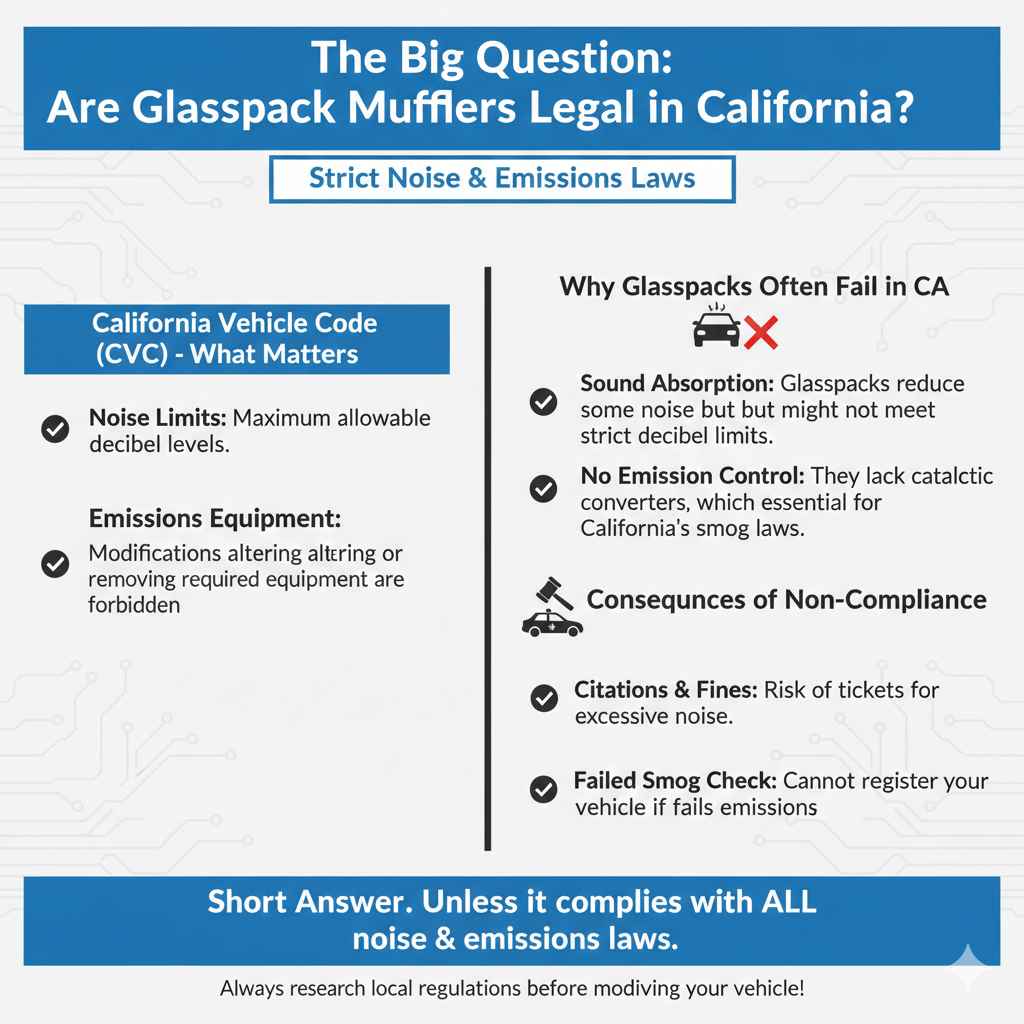
The Big Question: Are Glasspack Mufflers Legal in California?
This is the million-dollar question for every California car enthusiast. The short answer, unfortunately, leans toward no for most street-driven vehicles equipped with glasspacks as the primary silencing device. California’s approach to vehicle modifications is very strict, focusing heavily on noise pollution control alongside air quality regulations.
To understand why, we need to look at what the state cares about most:
- Noise Limits: California vehicle code specifies maximum allowable decibel levels for vehicles. Standard mufflers are designed to keep noise below these limits.
- Emission Equipment: While glasspacks primarily deal with sound, any modification that alters or removes required emissions equipment is strictly forbidden.
If you install a glasspack muffler that causes your car to exceed the legal decibel limit, you are risking a citation. We will explore the specifics of the California Vehicle Code (CVC) that addresses this moving forward.
What Exactly is a Glasspack Muffler?
Before diving into the laws, let’s ensure we are on the same page about the hardware. A glasspack muffler is one of the simplest and oldest designs for aftermarket mufflers.
The Anatomy of Simplicity
Unlike complex modern mufflers that use baffles, chambers, and resonators to cancel out sound waves, a glasspack is incredibly straightforward. Think of it as a straight pipe within a shell.
- The Outer Shell: This is the main body, usually made of steel.
- The Inner Core (Perforated Pipe): Sound waves travel through small holes in this central pipe.
- The Packing Material: High-temperature sound-deadening material, often fiberglass or steel wool, packs the space between the inner core and the outer shell.
When sound leaves your engine, it travels down the pipe. Instead of being forced through chambers that muffle it, the sound waves pass through the fiberglass packing. This material absorbs some of the high-frequency noise, resulting in a louder, deeper, and more aggressive tone compared to stock mufflers. Because they offer very little back pressure, they are often favored for performance applications—but this simplicity is also what makes them problematic under California law.
California’s Stance on Exhaust Noise: The Decibel Dilemma
The core issue concerning the legality of your glasspack isn’t usually the material (glass/fiberglass) itself, but the resulting noise level. California enforces specific limits to reduce traffic noise, especially in urban areas.
Key California Vehicle Code Sections
While the specific enforcement often focuses on noise, understanding the relevant laws helps explain why off-the-shelf glasspacks often fail inspection or result in tickets. The California Department of Motor Vehicles (DMV) and the California Highway Patrol (CHP) enforce these rules.
One crucial standard is related to vehicle noise limits. While testing procedures can be complex, generally, most passenger vehicles must operate under specified decibel levels, often tested at specific RPMs (revolutions per minute).
For a look at the underlying environmental and safety concerns driving these regulations, you can reference the California Air Resources Board (CARB) website, which oversees vehicle compliance and standards.
Understanding “Excessive Noise”
If your glasspack makes your car noticeably louder than stock, especially under acceleration, it risks being deemed “excessively noisy.” The law generally prohibits any modification that causes the exhaust to be louder than the manufacturer’s specifications.
| Muffler Type | Typical Sound Profile | Likelihood of CA Issue |
|---|---|---|
| Stock (OEM) | Quiet, engineered for compliance | Very Low |
| High-Performance Chambered Mufflers | Deeper tone, moderate volume increase | Moderate (Depends on specific model) |
| Glasspack Mufflers | Loud, deep rumble, minimal sound reduction | High |
The Emissions Component: CARB Compliance
California is extremely rigorous about tampering with emission control equipment. While a muffler is primarily for sound, modifying the exhaust system—especially if it involves removing factory resonators or catalytic converters—will lead to an automatic failure during the smog check inspection.
The “Original Equipment” Mandate
If the installation of your glasspack requires removing or bypassing any factory-installed component designed to reduce air pollution, your vehicle will not pass the required biennial smog inspection. Even if the glasspack itself is installed after the catalytic converter, if the overall system setup violates any part of the CARB regulations for passenger vehicles, you are in violation.
For a modification to be considered 50-state legal (and thus CA legal), it must usually carry an Executive Order (EO) number from CARB, certifying that it does not negatively impact emissions or noise. Standard glasspack mufflers rarely carry these necessary EO numbers.
When Can a Glasspack Potentially Be Legal in California?
While the odds are stacked against the typical glasspack setup, there are very narrow circumstances where you might legally install one. These exceptions usually revolve around the age of the vehicle or the vehicle’s intended use.
1. Historical or Modified Vehicle Exemptions (Pre-1975 Rule)
California has exemptions for vehicles considered “historical” or “collector” vehicles. If your vehicle was manufactured prior to 1975, the emission standards are significantly different, and the noise rules can sometimes be interpreted more leniently, though noise laws still apply.
2. Off-Road Use Only
If your vehicle is strictly used for off-road racing, competition, or private property use, the rules are different. However, the moment that vehicle touches a public street, highway, or road, it must comply with CVC noise and emission standards.
3. Specific Aftermarket Mufflers with CARB EO Numbers
Some high-performance muffler brands do manufacture systems that are certified by CARB. These systems use advanced engineering to achieve performance gains and sound enhancement while adhering strictly to the noise limits. If you choose a performance muffler that explicitly states it is “CARB EO Approved” for your specific vehicle model, you are generally safe. These are engineered to mimic the sound profile you might want without the excessive volume of a basic glasspack.
How to Check Your Current Exhaust Setup
If you already have a glasspack or are considering buying one, performing a self-check can help you gauge your risk level before getting pulled over or failing smog.
Step-by-Step Compliance Check
- Identify Vehicle Age: Is your car newer than 1975? If yes, strict compliance is necessary.
- Locate the Muffler: Determine if the glasspack replaced the original muffler entirely, or if it was added downstream (e.g., as a secondary resonator).
- Inspect for Emissions Tampering: Check visually that all factory catalytic converters and sensors are still in place and undisturbed. This is vital for smog.
- Listen Under Load: Have a friend drive your car past you at about half throttle in a quiet neighborhood. Does it sound significantly louder than standard traffic? If yes, you are likely exceeding noise limits.
- Search for EO Numbers: If you purchased a performance muffler, look on the muffler body or accompanying paperwork for a CARB Executive Order (EO) number. If you find one, you’re probably fine regarding emissions/tampering.
Alternatives to Glasspacks That Are CA Legal
The good news is that you don’t have to sacrifice a great sound entirely. Automotive manufacturers and aftermarket companies understand the need for better sound and performance while complying with the law. Here are safer, legal alternatives to the traditional, untamed glasspack.
1. Chambered Resonance Mufflers
These are often marketed as “classic sound” mufflers. They use internal chambers, similar to a traditional muffler, but are tuned to produce a much more aggressive tone than stock. They are designed to manage sound volume to stay closer to legal limits, though you must still verify the specific model’s compliance.
2. High-Flow Mufflers with Sound Dampening Cores
Many modern performance mufflers use stainless steel packing (like a glasspack) but wrap it heavily in thick sound-deadening matting and utilize a restrictive outer shell. This offers the performance benefit (less back pressure) while significantly suppressing the overall volume to meet CVC standards.
3. Adding an Exhaust Resonator
If you must use a glasspack (perhaps as a secondary component), you can install a high-quality, large chambered resonator before or after the glasspack. The resonator acts as a volume dampener, absorbing the harshest frequencies and bringing the overall sound level down to a compliance range. This setup is essentially creating a custom, legal muffler assembly.
4. Cat-Back Systems with EO Approval
The safest bet is purchasing a complete cat-back exhaust system from a reputable brand that specifically advertises CARB EO compliance for California models. These systems are engineered to provide performance and sound enhancements within the legal framework.
When buying any part, always ask the vendor directly: “Is this system CARB EO approved for street use in California?” If they hesitate or say no, do not buy it for daily driving.
The Risks of Running an Illegal Exhaust System
Knowing the risks involved can help you make an informed decision. Getting pulled over for an illegal exhaust in California is more than just an annoyance; it can be expensive and time-consuming.
1. Fix-It Tickets (Corrective Notices)
The most common outcome is a “fix-it ticket,” officially known as a Corrective Notice (CVC 40000 series). The officer notes the violation (e.g., excessive noise or modified exhaust), and you must have the vehicle corrected (remove the glasspack and install a compliant muffler) and inspected by law enforcement within a set time frame (usually 30 days). If you fail to correct it, the fine increases significantly.
2. Immediate Infraction Fines
If the noise is deemed extremely excessive or if the officer suspects tampering with emission equipment (like removing cats), they can issue a direct citation with an immediate fine, bypassing the “fix-it” stage. These fines can quickly total hundreds of dollars.
3. Smog Check Failure
If your vehicle is due for its biennial smog check, any non-CARB-approved exhaust modification can cause an immediate failure, regardless of how well your engine runs. This prevents you from renewing your registration.
| Violation Type | Typical Penalty | Resolution Required |
|---|---|---|
| Excessive Noise (Primary Glasspack) | Corrective Notice (Fix-It Ticket) or Immediate Fine | Install compliant muffler |
| Missing/Tampered Emissions Equipment | High Fine & Mandatory Smog Failure | Restore original equipment or install EO-approved parts |
| Failure to Correct (Fix-It Ticket) | Increased Fine/Court Appearance | Proof of correction and inspection |
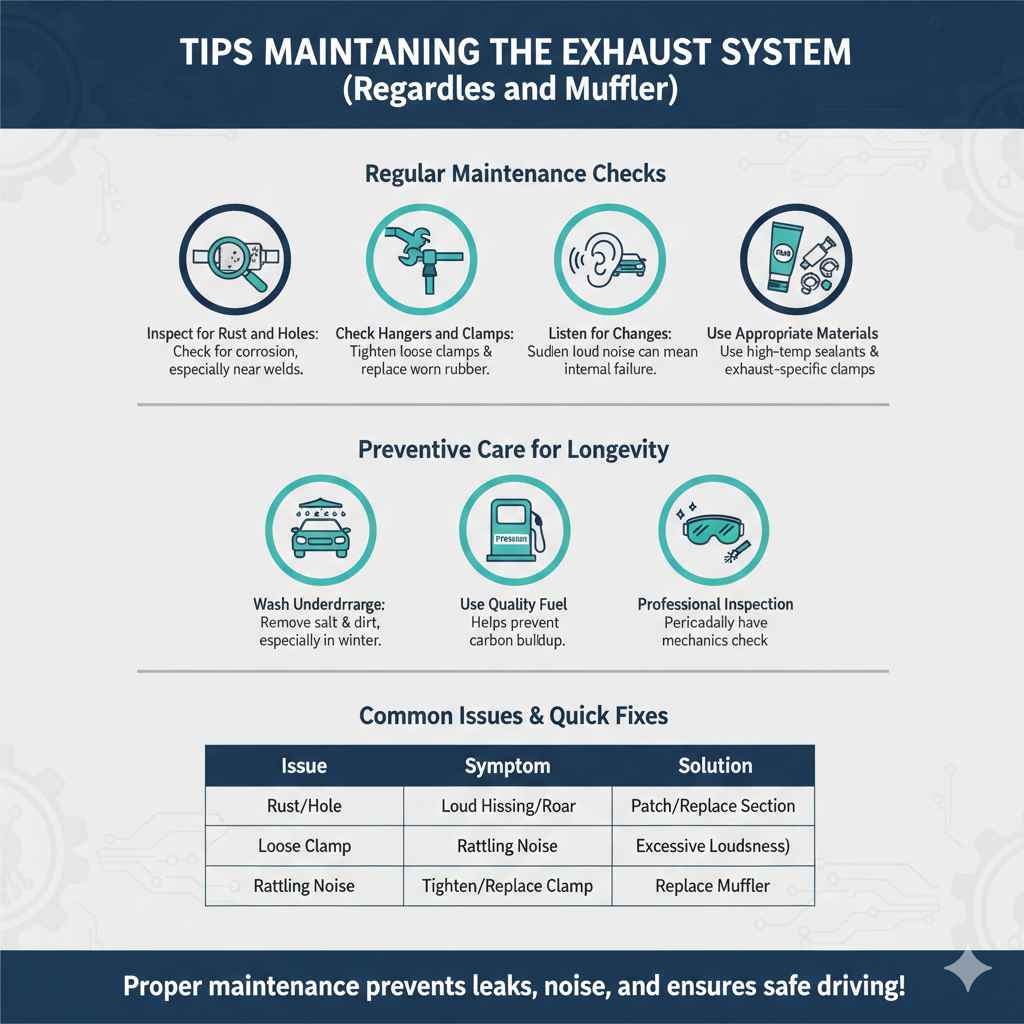
Tips for Maintaining Your Exhaust System (Regardless of Muffler)
Whether you stick with your stock setup or opt for a legal performance upgrade, proper care ensures longevity and prevents premature failure that could lead to leaks or noise issues.
Regular Maintenance Checks
- Inspect for Rust and Holes: Always look underneath your car periodically for any rust spots, especially near welds or connections. Even a small hole can significantly increase volume and potentially cause a leak that affects performance.
- Check Hangers and Clamps: Rattles are often not the muffler itself, but loose hangers or clamps vibrating against the chassis. Tighten or replace worn rubber hangers immediately.
- Listen for Changes: If your car suddenly sounds much louder than usual, pull over safely. The packing material inside a glasspack can sometimes blow out or shift over time, turning it into a near-straight pipe overnight.
- Use Appropriate Materials: If you are welding or patching, always use high-temperature exhaust sealant and exhaust-specific clamps, as standard hardware will quickly fail due to the heat and vibration.
Frequently Asked Questions (FAQ) about CA Exhaust Legality
Q1: Can I just run a glasspack for a week and then take it off before smog?
A: While you can temporarily remove it, the odor and noise associated with running illegal exhaust parts can still attract attention from law enforcement even if you aren’t due for smog immediately. Furthermore, the installation or removal might leave visual evidence.
Q2: Does the law apply equally to old classic cars and new cars?
A: New cars (generally post-1975) must meet very high emissions and noise standards. Older vehicles (pre-1975) are exempt from certain emissions requirements but are still subject to the universal CVC noise regulations regarding excessive noise.
Q3: What is the exact decibel limit I must stay under in California?
A: The specific limits can vary based on the vehicle type, year, and testing distance, but generally, passenger vehicles must stay below around 95-100 dB when tested under specific protocols set by the state. It’s safer to choose a known compliant muffler than to attempt measuring yourself.
Q4: If I only use a glasspack as a resonator after the main muffler, is that legal?
A: It depends entirely on the combined sound output. If the total sound level of your system, even with the added resonator, exceeds the legal limit, it is still illegal. You must measure the final output.
Q5: If I buy a muffler online that says “For Off-Road Use Only,” can I use it legally on the street in California?
A: No. If a part is labeled “For Off-Road Use Only,” it means it has not been tested or certified by CARB for street use. Installing it on a vehicle driven on public roads in California is illegal and carries the same risks as any other non-compliant part.
Q6: Where can I find the list of approved aftermarket exhaust parts?
A: The official source is the CARB Executive Order (EO) database. You can search by manufacturer, product, or vehicle application to confirm if an aftermarket system has the necessary approval number.
Conclusion: Making the Smart Choice for Your California Ride
Navigating exhaust laws in California can feel like navigating a minefield, especially when trying to achieve that classic, muscular sound provided by a glasspack muffler. As your automotive mentor, my advice is clear: for street-driven vehicles in California, traditional glasspacks present too high a risk of fines and inspection failures.
Your best path forward is choosing quality over simplicity. Invest in a high-performance muffler system that explicitly carries a CARB Executive Order (EO) number. This ensures you get enhanced sound, potentially better flow, and the peace of mind that you are fully compliant with the state’s strict noise and emission standards. By selecting EO-approved parts, you protect your wallet, avoid unnecessary trips to the police station for correction checks, and ensure your vehicle remains legally registered. Enjoy the journey of upgrading your vehicle safely and smartly!
Related pick: Check today's price on Amazon


