How Many Resonators Are on a 2008 Honda Odyssey
Figuring out the exact number of resonators on your 2008 Honda Odyssey can sometimes feel a bit tricky, especially if you’re new to car maintenance or looking to make some exhaust system changes. It’s a common question that pops up when people are curious about their vehicle’s sound or performance. Don’t worry, we’re here to break it down simply.
Northeastern Exhaust
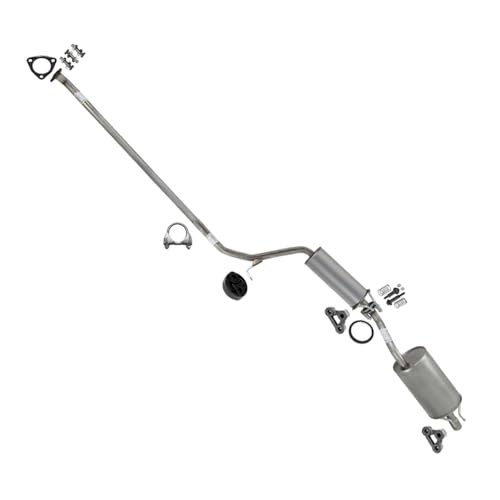
Exhaust Resonator Muffler Kit Compatible for Honda…
- COMPATIBLE WITH: Honda Civic 2006 2007 2008 2009 2010 2011 1.8L, Models
- STAINLESS STEEL 409 GRADE: Our Exhaust Part/Exhaust System Kit/Assembly is meticulously engineered from durable stainless steel, e…
- OPTIMIZED EXHAUST FLOW: Designed to enhance exhaust flow, the Exhaust Part/Exhaust System Kit/Assembly minimizes back pressure, po…
As an Amazon Associate I earn from qualifying purchases.
We’ll guide you through this step-by-step to give you a clear answer. Get ready to understand your Odyssey’s exhaust setup better.
Understanding Your 2008 Honda Odyssey Exhaust System
The exhaust system on your 2008 Honda Odyssey plays a crucial role in managing the gases produced by the engine. It’s designed to reduce noise, clean up emissions, and help your engine run efficiently. This system is made up of several key parts, including the exhaust manifold, catalytic converter, muffler, and resonators.
Each of these components has a specific job, working together to ensure your vehicle operates smoothly and quietly.
For many car owners, especially those looking to customize their vehicle’s sound or
The Function of Resonators in Vehicle Exhaust
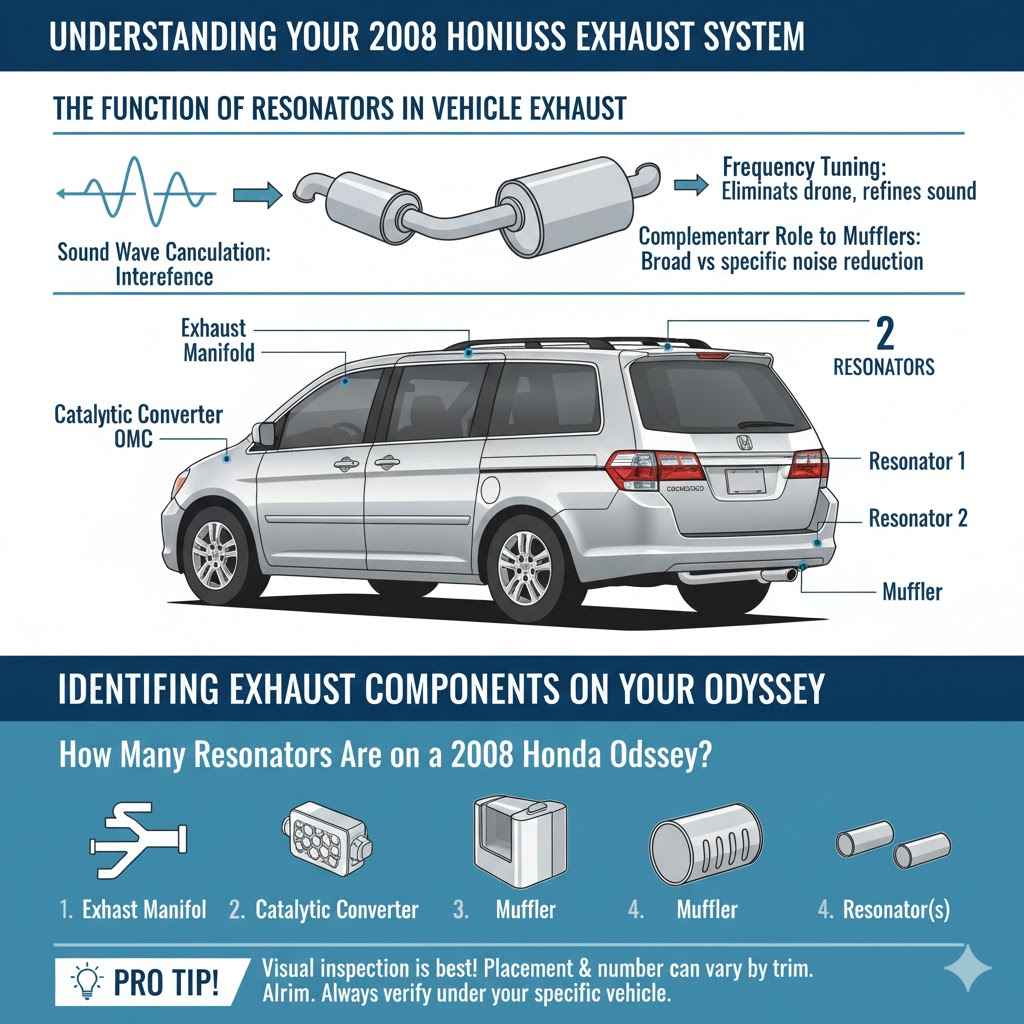
Resonators are an important part of a vehicle’s exhaust system, and they have a specific function related to sound. Unlike mufflers, which focus on reducing the overall volume of exhaust noise, resonators target specific sound frequencies. They work by using the principles of acoustics, creating chambers or tubes that cancel out certain unwanted sound waves.
This helps to eliminate or reduce any droning or humming sounds that might otherwise be present, especially at certain engine speeds.
Think of a resonator like a musical instrument. Just as a guitar body amplifies certain notes and muffles others to create a pleasing sound, a resonator in an exhaust system is tuned to cancel out irritating, high-frequency noises. This allows the muffler to handle the bulk of the noise reduction, while the resonator refines the sound, making the overall exhaust note smoother and more pleasant.
It’s about fine-tuning the audible output of the engine.
- Sound Wave Cancellation: Resonators use the concept of destructive interference to cancel out specific sound waves. When sound waves enter the resonator chamber, they bounce off the internal surfaces. Some waves are reflected in such a way that they are out of phase with the original waves. This means the peaks of one wave align with the troughs of another, effectively canceling each other out. This process significantly reduces particular types of noise.
- Frequency Tuning: The size and shape of a resonator’s chamber are carefully calculated to target specific sound frequencies. Different engine types and exhaust designs produce different sound characteristics. Engineers design resonators to eliminate the most annoying or undesirable frequencies, often those that cause a resonant drone at highway speeds. This makes the vehicle’s cabin quieter and more comfortable for occupants.
- Complementary Role to Mufflers: While mufflers are designed for broad-spectrum noise reduction, resonators specialize in eliminating specific problematic frequencies. They work together to achieve a refined exhaust sound. Without resonators, a vehicle might still have a noticeable drone even with a well-designed muffler. The resonator adds an extra layer of sound quality control.
Identifying Exhaust Components on Your Odyssey
To answer How Many Resonators Are on a 2008 Honda Odyssey?, you’ll need to be able to identify the different parts of its exhaust system. Typically, the exhaust system starts at the engine with the exhaust manifold, which collects gases from the cylinders. From there, the gases flow through the exhaust pipe to the catalytic converter, which reduces harmful emissions.
After the catalytic converter, you’ll find the muffler, which is the largest component and is designed to reduce overall sound volume.
Resonators are often located before or after the muffler, or sometimes integrated with it. They are usually smaller than the muffler and may appear as a cylindrical or oval-shaped metal chamber with inlet and outlet pipes. The exact placement and number can vary based on the specific trim level or engine configuration of the vehicle.
For a 2008 Honda Odyssey, visual inspection is often the best way to be sure.
- Exhaust Manifold: This part bolts directly to the engine’s cylinder head and collects exhaust gases from each cylinder into a single pipe. It’s usually made of cast iron or stainless steel.
- Catalytic Converter: Located in the exhaust pipe, this device uses precious metals to convert harmful exhaust gases into less harmful substances. It’s a bulky component with a honeycomb structure inside.
- Muffler: This is the primary noise-reducing component. It’s a large, often oval-shaped chamber filled with baffles or sound-absorbing materials to dampen exhaust noise significantly.
- Resonator(s): These are typically smaller chambers or pipes designed to cancel specific sound frequencies. They often look like a small muffler or a section of pipe with chambers.
How Many Resonators Are on a 2008 Honda Odyssey?
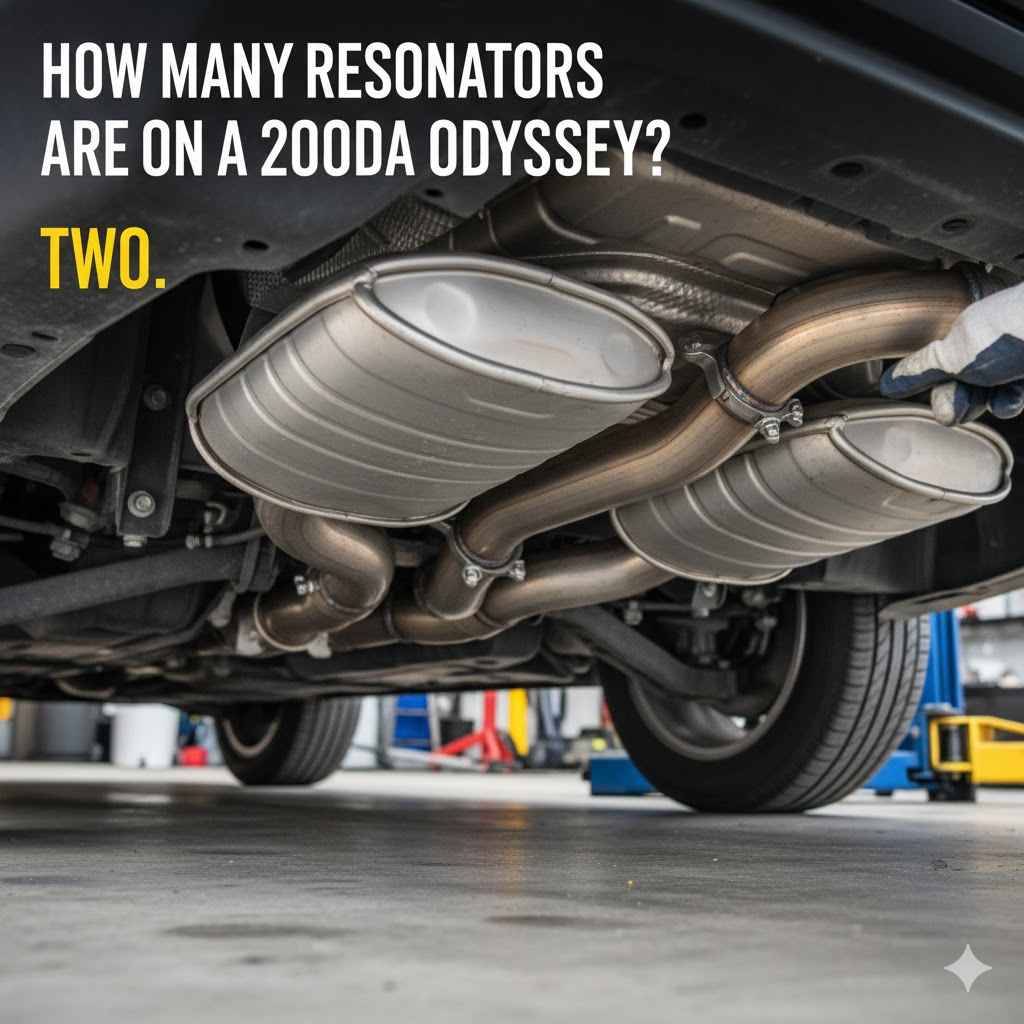
Now, let’s get to the main question many drivers have. For a typical 2008 Honda Odyssey, the answer is generally that it comes equipped with two resonators. These are designed to fine-tune the exhaust sound, ensuring a quiet and comfortable ride for you and your passengers.
They work in conjunction with the main muffler to achieve the desired exhaust note that Honda is known for in their minivans.
These resonators are strategically placed within the exhaust system to cancel out specific sound frequencies. By doing this, they help to eliminate any droning or undesirable humming sounds that might otherwise be noticeable, particularly at certain speeds or under acceleration. This focus on acoustic refinement contributes significantly to the overall quietness and refinement of the Odyssey’s driving experience.
Knowing this can be helpful if you’re planning any modifications or repairs to your exhaust system.
Locating the Resonators on Your Vehicle
To confirm the number of resonators on your specific 2008 Honda Odyssey, the most direct method is to visually inspect the exhaust system. You’ll need to safely get under the vehicle. Look for the exhaust pipe that runs from the front of the vehicle, past the engine and catalytic converter, towards the rear.