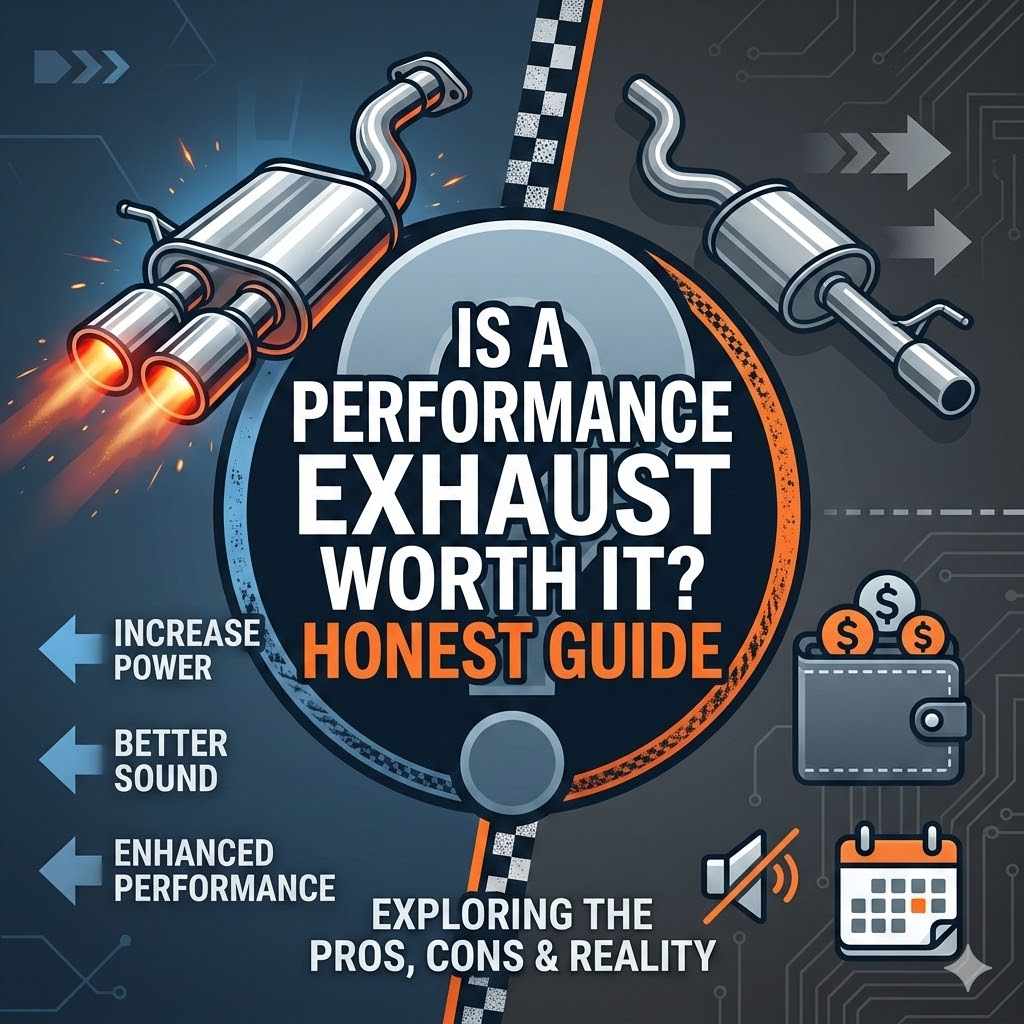
Is A Performance Exhaust Worth It Honest Guide
Thinking about upgrading your car’s exhaust? You might wonder, Is a Performance Exhaust Worth It? Honest Guide.
It’s a common question for people new to car mods. There’s a lot of info out there, and it can seem tricky. Don’t worry, though!
We’ll break it down simply. This guide will help you figure out if a performance exhaust is right for your car and your wallet. We’ll look at what it does and what you can expect.
What Is A Performance Exhaust System
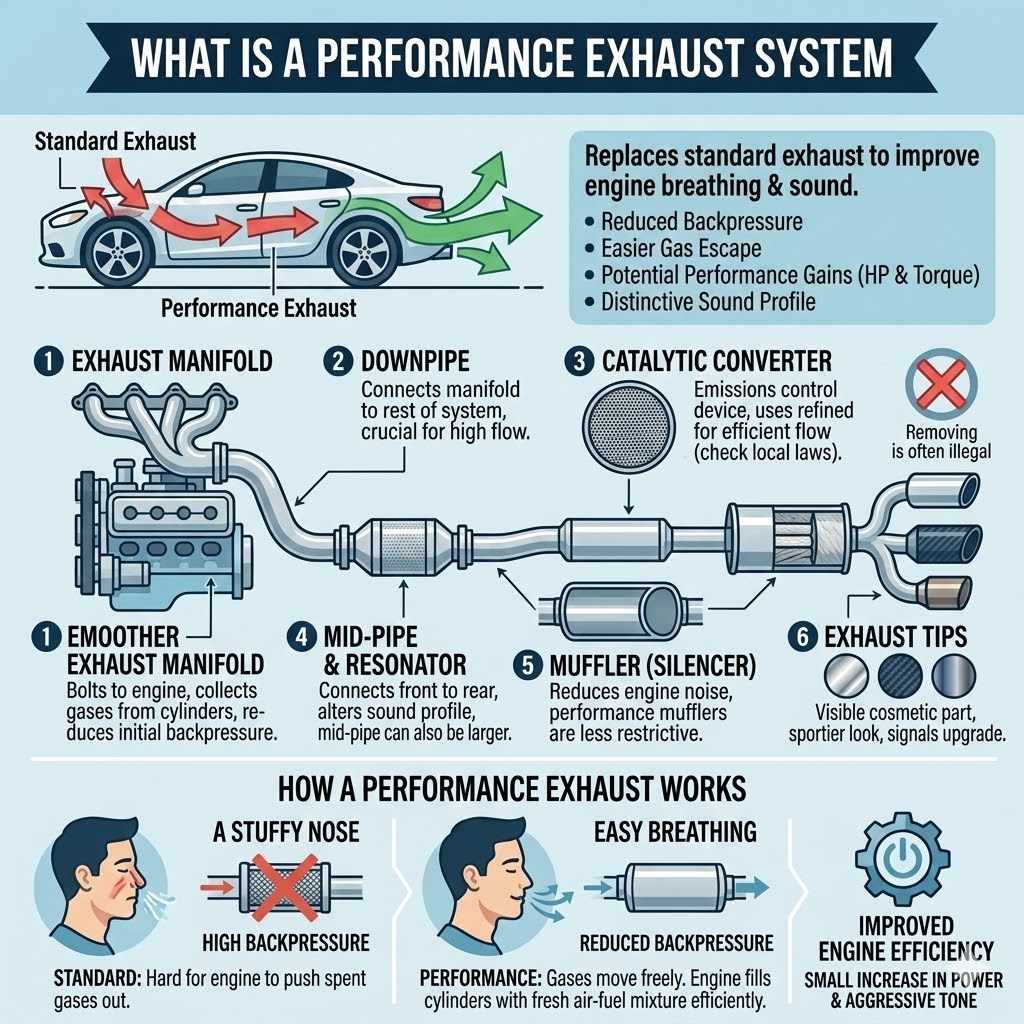
A performance exhaust system is a set of parts that replace your car’s standard exhaust. Its main job is to let gases escape your engine more easily. This can lead to a few different outcomes for your car.
We will explore how these systems are different from regular ones and why people choose them.
Components Of A Performance Exhaust
A performance exhaust system isn’t just one piece. It’s made up of several parts that work together. Each part plays a role in how your engine breathes and sounds.
Exhaust Manifold
The exhaust manifold bolts directly to the engine’s cylinder head. It collects exhaust gases from each cylinder and directs them into a single pipe. In a performance system, this part is often designed to be less restrictive.
It has smoother bends and larger diameters to help gases flow out faster. This can reduce backpressure, which is the resistance gases face when leaving the engine. Less backpressure means the engine can expel exhaust more efficiently.
This improved flow can lead to slight gains in horsepower and torque. Some manifolds are also made from lighter, stronger materials like stainless steel. This helps them last longer and reduces overall vehicle weight, which is always a plus for performance.
Downpipe
The downpipe connects the exhaust manifold to the rest of the exhaust system. It’s a critical area for flow. A performance downpipe is usually larger in diameter and has smoother curves than a stock one.
This allows exhaust gases to exit the manifold with less effort. If the car has a catalytic converter, the downpipe will connect to it. Some performance downpipes might use a high-flow catalytic converter or remove it altogether.
Removing the catalytic converter is often illegal and can cause your car to fail emissions tests. It also significantly changes the exhaust note. The material is typically stainless steel for durability.
Catalytic Converter
The catalytic converter is an emissions control device. It uses precious metals to convert harmful gases like carbon monoxide and nitrogen oxides into less harmful ones. Stock catalytic converters are designed to be effective but can be restrictive.
Performance catalytic converters are available. They use a finer honeycomb structure or more efficient catalyst materials. This allows exhaust gases to pass through more freely while still cleaning them up.
Some performance systems might use a “high-flow” catalytic converter. This offers a balance between emissions control and reduced restriction. It’s important to check local laws regarding catalytic converters, as removing or altering them can have legal consequences.
Mid-Pipe And Resonator
The mid-pipe connects the front section of the exhaust to the rear muffler. It might contain a resonator. A resonator is a chamber designed to cancel out certain sound frequencies.
It helps to reduce unwanted drone or raspiness in the exhaust note. Performance systems may use a resonator that is designed differently to alter the sound profile. Some might opt for a resonator delete pipe for a louder exhaust.
The mid-pipe itself can also be made with a larger diameter for better flow. The length and design of the mid-pipe can influence the overall tone and volume of the exhaust sound.
Muffler (Silencer)
The muffler’s job is to reduce the noise produced by the engine. It uses chambers and baffles to quiet down the exhaust gases. Stock mufflers are very effective at noise reduction.
Performance mufflers are designed to be less restrictive. They often use a straight-through design with packing material. This allows gases to flow more easily while still muffling some of the sound.
The design of the performance muffler greatly affects the exhaust’s tone and volume. Some are designed for a deep rumble, while others might be louder and more aggressive. The choice of muffler is a big factor in the sound experience.
Exhaust Tips
Exhaust tips are the visible part of the exhaust system at the rear of the car. They come in many shapes, sizes, and finishes. While largely cosmetic, larger or specially shaped tips can slightly influence exhaust flow.
Performance tips often look sportier. They can be made of polished stainless steel, carbon fiber, or titanium. They are a way to customize the look of your car’s rear end and signal that it has an upgraded exhaust system.
How A Performance Exhaust Works
The core idea behind a performance exhaust is to improve the engine’s ability to expel exhaust gases. Think of it like breathing. A stuffy nose makes it hard to breathe.
Similarly, a restrictive exhaust makes it hard for the engine to push out spent gases. This resistance is called backpressure. A performance exhaust aims to reduce this backpressure.
By using larger diameter pipes, smoother bends, and less restrictive mufflers and catalytic converters, exhaust gases can move more freely. This means the engine doesn’t have to work as hard to push them out. When the engine works less to expel gases, it can fill its cylinders with a fresh air-fuel mixture more efficiently on the next cycle.
This improved efficiency can translate into a small increase in power. It also changes the sound your car makes. The gases exiting faster and with less obstruction create a deeper, more aggressive tone.
Benefits Of A Performance Exhaust
Upgrading your car’s exhaust can offer more than just a cool sound. There are several advantages that might make you consider the change. We will go over what these benefits are and how they might impact your driving experience.
Improved Engine Performance
One of the main draws of a performance exhaust is the potential for increased horsepower and torque. When exhaust gases can escape the engine more easily, the engine doesn’t have to fight against as much resistance. This reduced backpressure allows the engine to “breathe” better.
A less restricted exhaust means the engine can expel spent gases faster. This frees up the cylinders to take in more fresh air and fuel on the intake stroke. More air and fuel mean a bigger explosion in the cylinder, which generates more power.
While a full cat-back system might give a few horsepower, it’s usually more noticeable when combined with other engine modifications like an intake or a tune. These gains are often in the range of 5-15 horsepower for many common vehicles.
The torque improvements are also important. Torque is the rotational force that gets your car moving. By improving exhaust flow, the engine can produce more torque, especially at lower RPMs.
This can make your car feel more responsive when you accelerate. It means you might not need to rev the engine as high to get the same acceleration. For daily driving, this can make the car feel peppier and more enjoyable to drive.
It’s not always a massive difference, but it’s often enough to be felt.
Enhanced Exhaust Note
This is often the most noticeable and desired benefit for many car enthusiasts. A performance exhaust system significantly changes the sound your car makes. Stock exhausts are designed to be quiet.
They use mufflers and resonators that absorb and cancel out a lot of the engine’s natural noise. Performance systems reduce this sound dampening. This allows more of the engine’s inherent exhaust note to be heard.
The resulting sound is typically deeper, more aggressive, and more satisfying. You’ll hear a distinct rumble at idle and a more pronounced growl when you accelerate. The specific sound depends heavily on the type of exhaust system, the muffler design, and the car’s engine.
Some systems are designed for a throaty V8 rumble, while others might produce a higher-pitched, sportier sound for smaller engines. It transforms the auditory experience of driving, making it more engaging and exciting.
Weight Reduction
Factory exhaust systems can be surprisingly heavy. They are often made from thick steel to ensure durability and noise reduction. Performance exhaust systems are frequently constructed from lighter materials such as stainless steel or titanium.
Stainless steel is lighter than the mild steel often used in stock systems, and titanium is even lighter. Titanium systems are premium and can shave off a significant amount of weight. Reducing the overall weight of a vehicle is a key aspect of performance tuning.
Less weight means the engine has less mass to move. This can lead to improved acceleration, better handling, and even slightly better fuel economy.
For example, a stock exhaust system might weigh around 40-60 pounds. A performance cat-back system made from stainless steel could weigh 20-30 pounds. A full titanium system could weigh as little as 10-15 pounds.
This weight saving, though seemingly small in the grand scheme of a car’s total weight, contributes to a more nimble feel. It’s especially noticeable when combined with other weight-saving modifications. Every bit of weight reduction helps the car perform better overall.
Improved Fuel Efficiency
This benefit is a bit more nuanced and depends on how you drive. With a less restrictive exhaust, the engine doesn’t have to work as hard to expel gases. This means it uses fuel more efficiently when cruising.
If you are driving gently, you might notice a slight improvement in miles per gallon (MPG). The engine runs more freely, requiring less effort and therefore less fuel for a given task.
However, if the louder sound encourages you to accelerate harder and more often, you will likely see a decrease in fuel economy. The increased sound can be intoxicating, leading to more spirited driving. So, while the potential for better fuel economy exists, it’s often offset by the temptation to enjoy the new sound.
It’s a trade-off that depends on driver behavior. For someone who drives mostly highway miles and maintains a steady speed, the benefit might be realized. For someone who enjoys spirited driving, the opposite might be true.
Aesthetic Appeal
Performance exhaust systems often come with stylish exhaust tips. These tips can be larger, polished, or made from exotic materials like carbon fiber or titanium. They are a visible sign that the car has been modified for performance.
The design of the tips can complement the overall look of the vehicle, giving it a more aggressive or sporty appearance.
Many enthusiasts choose performance exhausts not just for sound and performance, but also for the visual enhancement. A well-designed exhaust tip can make a significant difference to the rear-end styling of a car. It’s a relatively simple modification that can have a big impact on the car’s perceived sportiness.
The visual aspect is an important part of customizing a vehicle to reflect the owner’s taste and passion.
Disadvantages And Considerations
While the benefits are appealing, it’s also important to know the downsides. Performance exhausts are not for everyone, and there are several factors to consider before making the purchase.
Cost
Performance exhaust systems can be expensive. A basic cat-back system can range from $300 to over $1,000, depending on the brand, materials, and vehicle. Full turbo-back systems or those made from high-end materials like titanium can cost significantly more, sometimes exceeding $2,000 or $3,000.
You also need to factor in installation costs if you aren’t doing it yourself. Professional installation can add another $100 to $300 or more. For some vehicles, particularly luxury or exotic cars, the cost can be even higher.
It’s crucial to budget for the entire project, including any potential unforeseen issues. This upfront cost can be a major hurdle for many people.
Noise Levels And Drone
While many people want a louder exhaust, there’s a fine line between a pleasing sporty note and an annoying, overwhelming noise. Some performance exhausts can be excessively loud, especially at highway speeds. This can lead to an uncomfortable driving experience, making it difficult to have conversations or enjoy music inside the car.
A common issue with louder exhausts is “drone.” Drone is a low-frequency, resonant sound that occurs at specific RPM ranges, often during cruising on the highway. It can be very irritating and tiring over long distances. Manufacturers try to minimize drone with careful design, but it’s not always successful.
What one person finds acceptable, another might find unbearable. It’s important to listen to sound clips or reviews specific to your car model before buying.
Legality And Emissions
In many regions, there are strict regulations regarding exhaust systems, particularly concerning noise levels and emissions. Removing or modifying catalytic converters is often illegal and can result in hefty fines and your vehicle failing emissions tests. Some areas have specific decibel limits for exhaust noise.
It’s essential to research your local laws and ensure that the performance exhaust system you choose complies with them.
Many performance exhaust systems are designed to work with the stock catalytic converter or a high-flow version. However, some aftermarket “cat-back” systems might be marketed as “off-road use only” if they are intended to be used without a catalytic converter. Always verify the legality of any exhaust modification in your specific location.
Ignorance of these laws is not a valid defense.
Potential For Decreased Low-End Torque
While performance exhausts are often associated with increased horsepower, they can sometimes lead to a decrease in low-end torque. This happens if the exhaust is too “open” or has too large a diameter for the engine’s displacement. A certain amount of backpressure is actually beneficial for low-RPM torque production.
By drastically reducing backpressure, especially with a system not specifically tuned for the engine, you might notice the car feels less responsive from a standstill or at very low speeds.
This effect is more pronounced on smaller engines or naturally aspirated engines. Turbocharged engines are generally less affected by exhaust modifications in this regard, as the turbocharger helps to create its own backpressure. The ideal scenario is an exhaust system that balances improved flow at higher RPMs without sacrificing too much low-end grunt.
Choosing a system designed for your specific car model and engine type is crucial to avoid this issue.
Impact On Resale Value
While some buyers might appreciate a performance exhaust, many potential buyers prefer a stock vehicle. An aftermarket exhaust, especially if it’s very loud or has a distinctive look, might alienate a portion of the market. This could make your car harder to sell or force you to lower your asking price.
Some people choose to keep their stock exhaust and reinstall it when selling the car. This can preserve the car’s original condition and appeal to a wider range of buyers. If you plan to sell your car within a few years, consider how the modification might affect its resale value.
For collectible or enthusiast cars, a well-chosen performance exhaust might even add value, but this is the exception rather than the rule.
Is A Performance Exhaust Worth It Honest Guide For Different Drivers
The decision of whether a performance exhaust is worth it really depends on who you are and what you want from your car. There’s no single answer that fits everyone. Let’s look at some common driver types and how an exhaust might fit their needs.
The Daily Commuter
For someone who primarily uses their car for daily commuting, a performance exhaust might not be the best investment. The main goal for a commuter is reliability, comfort, and fuel efficiency. While a performance exhaust can offer slight improvements in fuel economy, the potential for increased noise and drone could detract from the driving experience.
The added cost might not justify the minimal performance gains that won’t be felt in stop-and-go traffic. If a quieter, more comfortable ride is a priority, sticking with the stock exhaust is usually the best choice.
However, if the commuter really desires a sportier sound and is willing to pay for a system that is specifically designed to minimize drone, it could still be a consideration. Many reputable brands offer systems that are louder than stock but still reasonably quiet and comfortable for long drives. It’s all about choosing the right product and managing expectations.
The Weekend Enthusiast
This driver often uses their car for pleasure drives, weekend trips, or occasional track days. For them, the enhanced sound and the feeling of improved performance are often high priorities. A performance exhaust can make these drives more exciting and engaging.
The deeper rumble or sportier growl can significantly enhance the emotional connection to the car. The slight increase in power and torque can also be more noticeable and enjoyable during spirited driving.
For the weekend enthusiast, the cost of a performance exhaust is often seen as an investment in their hobby. They are more likely to tolerate a bit more noise or a more aggressive sound profile. The aesthetic appeal of sportier exhaust tips is also a strong motivator.
The ability to turn heads and enjoy the symphony of the engine is a key part of the experience.
The Performance Builder
This driver is focused on maximizing their car’s performance for track days, autocross, or drag racing. For them, every bit of power and weight reduction counts. A performance exhaust is often a foundational modification in a larger build.
It’s chosen not just for sound, but for its ability to complement other engine modifications like cold air intakes, upgraded turbochargers, and engine tuning (ECU remapping).
In this context, a performance exhaust is definitely “worth it” because it directly contributes to measurable performance gains. Drivers in this category might opt for systems that prioritize flow and power over noise reduction, sometimes even removing catalytic converters (where legal and for off-road use only) to maximize gains. The weight reduction aspect is also a significant advantage for track-focused vehicles.
The Eco-Conscious Driver
For a driver whose primary concern is environmental impact and fuel economy, a performance exhaust is generally not a worthwhile upgrade. While some systems might offer minor MPG improvements under specific driving conditions, the overall impact on emissions can be negative if not carefully chosen. Furthermore, the temptation to drive more aggressively due to the sound could easily negate any fuel-saving benefits.
Drivers focused on eco-friendliness might instead look at modifications that genuinely improve MPG, such as aerodynamic upgrades, low rolling resistance tires, or more efficient driving techniques. For this driver, the primary goal is to minimize their environmental footprint, and a louder, performance-oriented exhaust system is usually counterproductive to that aim.
Choosing The Right Performance Exhaust
If you’ve decided that a performance exhaust might be right for you, the next step is choosing the best one. This involves research and understanding what to look for.
Research Brands And Materials
There are many reputable brands in the aftermarket exhaust industry. Some well-known names include Borla, MagnaFlow, Corsa, Borla, Flowmaster, and Akrapovič. Each brand has its own philosophy regarding sound, performance, and materials.
For example, Corsa is known for its drone-canceling technology, while Borla offers a wide range of sound levels. MagnaFlow often focuses on a balance of performance and affordability.
Materials matter. Stainless steel is a popular choice because it’s durable, corrosion-resistant, and offers good performance at a reasonable price. Titanium is significantly lighter and more exotic but also much more expensive.
Mild steel is often used for budget options but is prone to rust over time. Consider the climate you live in; if you’re in an area with a lot of salt on the roads, stainless steel or titanium is highly recommended.
Listen To Sound Clips And Reviews
Sound is subjective, so it’s crucial to hear what an exhaust sounds like before you buy it. Many manufacturers provide sound clips or videos on their websites and YouTube. Look for videos that showcase the exhaust on your specific car model and engine.
Pay attention to how it sounds at idle, during acceleration, and during cruising. Listen for any signs of drone. Reading user reviews can also provide valuable insights into real-world sound characteristics and any potential issues.
Don’t rely solely on one video. Watch several from different angles and with different drivers. Sometimes, the microphone used in a video can alter the perceived sound.
Try to find videos recorded with good quality audio equipment. If possible, try to hear a car with the exhaust you’re considering in person. This is the best way to gauge the sound accurately.
Consider System Type Cat-Back Vs Turbo-Back
Performance exhaust systems are generally categorized into two main types: cat-back and turbo-back (or turbo-downpipe). A cat-back system
A turbo-back system replaces everything from the turbocharger’s downpipe all the way to the tips. This includes the downpipe, catalytic converter (or a high-flow version), mid-pipe, muffler, and tips. Turbo-back systems offer the most potential for performance gains, especially on turbocharged cars, as they reduce restrictions much earlier in the exhaust flow.
However, they are also more expensive and have a greater potential impact on emissions and legality. For most drivers looking for an improved sound and some performance benefits, a cat-back system is usually sufficient and more practical.
Check For Drone Canceling Technology
If you’re concerned about drone, look for systems that specifically advertise drone-canceling technology. Manufacturers achieve this through various methods, such as specific resonator designs or using patented technologies. Brands like Corsa are well-known for their drone-reducing systems.
Research how the technology works and look for independent reviews that confirm its effectiveness.
Drone can be a deal-breaker for many people, especially those who drive long distances. Even a slight drone can become incredibly annoying over time. Investing in a system that has proven drone-canceling capabilities can save you a lot of headaches and make your driving experience much more pleasant.
Always read reviews that specifically mention the cruising experience at highway speeds.
Installation And Maintenance
Once you’ve chosen your system, proper installation and maintenance are key to its longevity and performance.
Professional Installation
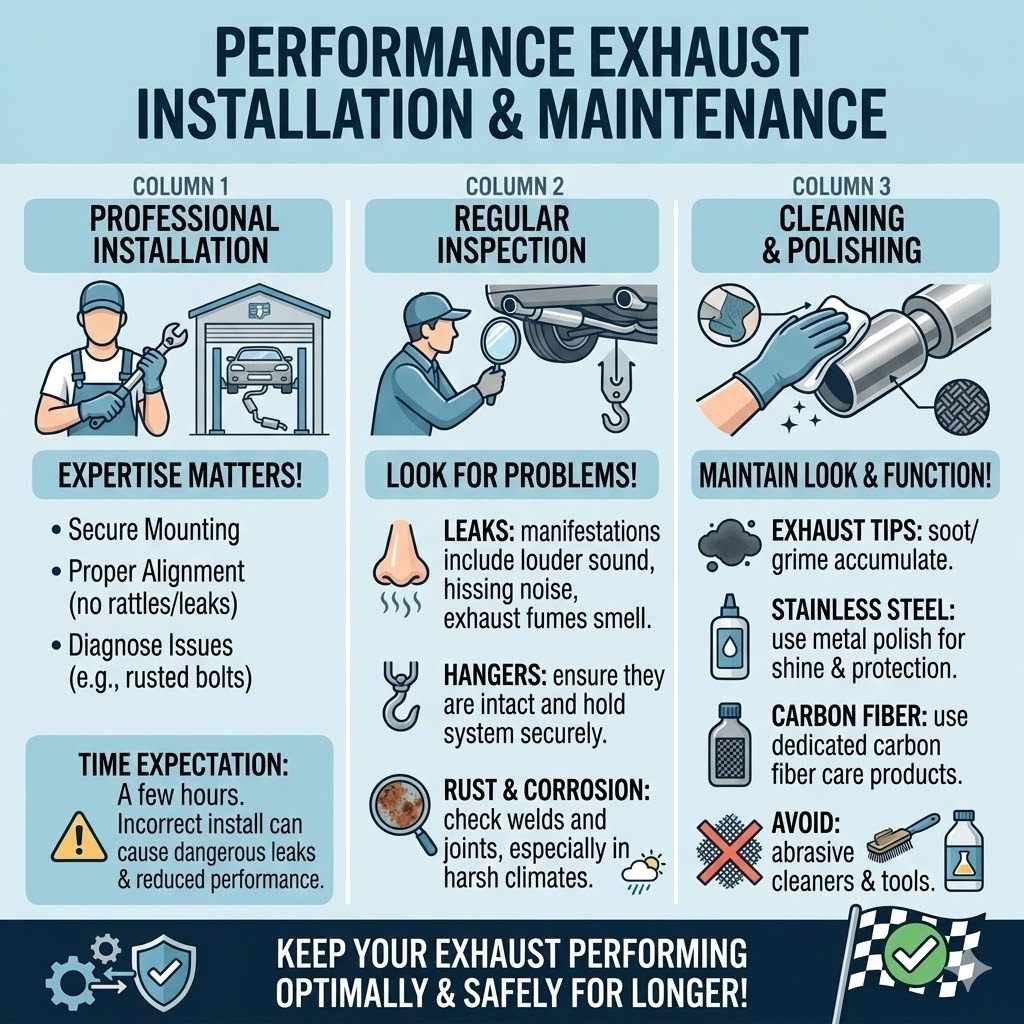
While some experienced DIYers can install an exhaust system, it’s often best left to a professional. Exhaust systems are typically made of heavy metal components that need to be securely mounted. Proper alignment is crucial to prevent rattles, leaks, or stress on other parts of the car.
A professional mechanic has the tools and experience to ensure the system is installed correctly and safely.
They can also help diagnose any issues that might arise during installation, such as rusted bolts or damaged hangers. Incorrect installation can lead to leaks, which reduce performance and can be dangerous due to exhaust fumes entering the cabin. Expect installation to take a few hours.
Regular Inspection For Leaks And Damage
Even with professional installation, exhaust systems can develop issues over time. Regularly inspect your exhaust system for any signs of leaks. Leaks can manifest as a louder-than-normal exhaust sound, a hissing noise, or even a smell of exhaust fumes inside the car.
Check the hangers that support the exhaust to ensure they are intact and holding the system securely.
Look for any signs of rust or corrosion, especially on the welds and pipe joints. If you live in an area with harsh weather conditions, this is even more important. Addressing small issues early can prevent more significant problems and ensure your exhaust system functions optimally and safely.
Cleaning And Polishing
To keep your performance exhaust looking its best, regular cleaning is recommended. Exhaust tips, in particular, can accumulate soot and grime. Use a dedicated exhaust cleaner or a mild degreaser to clean the tips.
For stainless steel, a metal polish can restore shine and protect the surface. For carbon fiber tips, use products designed for carbon fiber care.
Avoid abrasive cleaners or tools that can scratch the finish. Keeping the exhaust system clean not only improves its appearance but also helps to prevent corrosion. A well-maintained exhaust system will look and perform better for longer.
Frequently Asked Questions
What is the main difference between a stock and a performance exhaust
Answer: A stock exhaust is designed for quiet operation and emissions control, often using restrictive mufflers and catalytic converters. A performance exhaust prioritizes better airflow and sound, using less restrictive components to potentially increase power and create a sportier engine note.
Will a performance exhaust void my car’s warranty
Answer: It depends on the manufacturer and the specific warranty. While a performance exhaust itself might not automatically void the entire warranty, if it causes damage to other engine components, the manufacturer could deny a warranty claim related to that damage. It’s best to check your warranty terms or consult with your dealership.
How much horsepower can I expect from a performance exhaust
Answer: The horsepower gains vary greatly depending on the car, engine, and the specific exhaust system. A cat-back system might add anywhere from 5 to 15 horsepower. A full turbo-back system on a turbocharged car, especially when combined with tuning, can yield more significant gains, potentially 20-50 horsepower or more.
Is a performance exhaust legal in all areas
Answer: No, legality varies by region. Many areas have regulations on exhaust noise levels and emissions. Modifications that remove or alter catalytic converters are often illegal and can cause your vehicle to fail emissions testing.
Always research your local laws before making modifications.
Can a performance exhaust improve my car’s acceleration
Answer: Yes, a performance exhaust can improve acceleration by allowing the engine to breathe more freely, potentially increasing horsepower and torque. This can result in quicker response and faster acceleration, especially when the system is well-designed for your specific vehicle and engine.
Final Thoughts
So, Is a Performance Exhaust Worth It? Honest Guide shows it depends on your priorities. If you seek a more thrilling sound, a touch more power, and a sportier look, it can be a great upgrade.
But be mindful of cost, potential noise issues, and local laws. Choose wisely based on your driving style and what you truly want from your car.