How To Measure Vance & Hines Exhaust For Harley
Figuring out the right size for your Vance & Hines exhaust on a Harley can seem tricky at first. Many riders, especially those new to customizing their bikes, wonder about the exact measurements. You might be asking yourself, “How do I even start to measure this?” This guide is here to make it super simple.

TDZ MOTO
2 Bone Link Blocks And 4 Bolts…
- Color:Galvanize
- Manufacturer Grade:Grade 21989
- Head Style:Hex
As an Amazon Associate I earn from qualifying purchases.
We’ll walk through each step together so you can confidently get the right fit for your Harley’s new pipes.
Understanding Exhaust Pipe Dimensions For Your Harley
Knowing the correct dimensions for your Vance & Hines exhaust is super important for a good fit and optimal performance on your Harley-Davidson motorcycle. It’s not just about how it looks; it’s also about how it connects to your engine and how the gases flow out. Getting these measurements right means your exhaust system will work as it should, making your bike sound great and run smoothly.
This section breaks down why measuring is key and what basic things you need to think about before you even pick up a measuring tape.
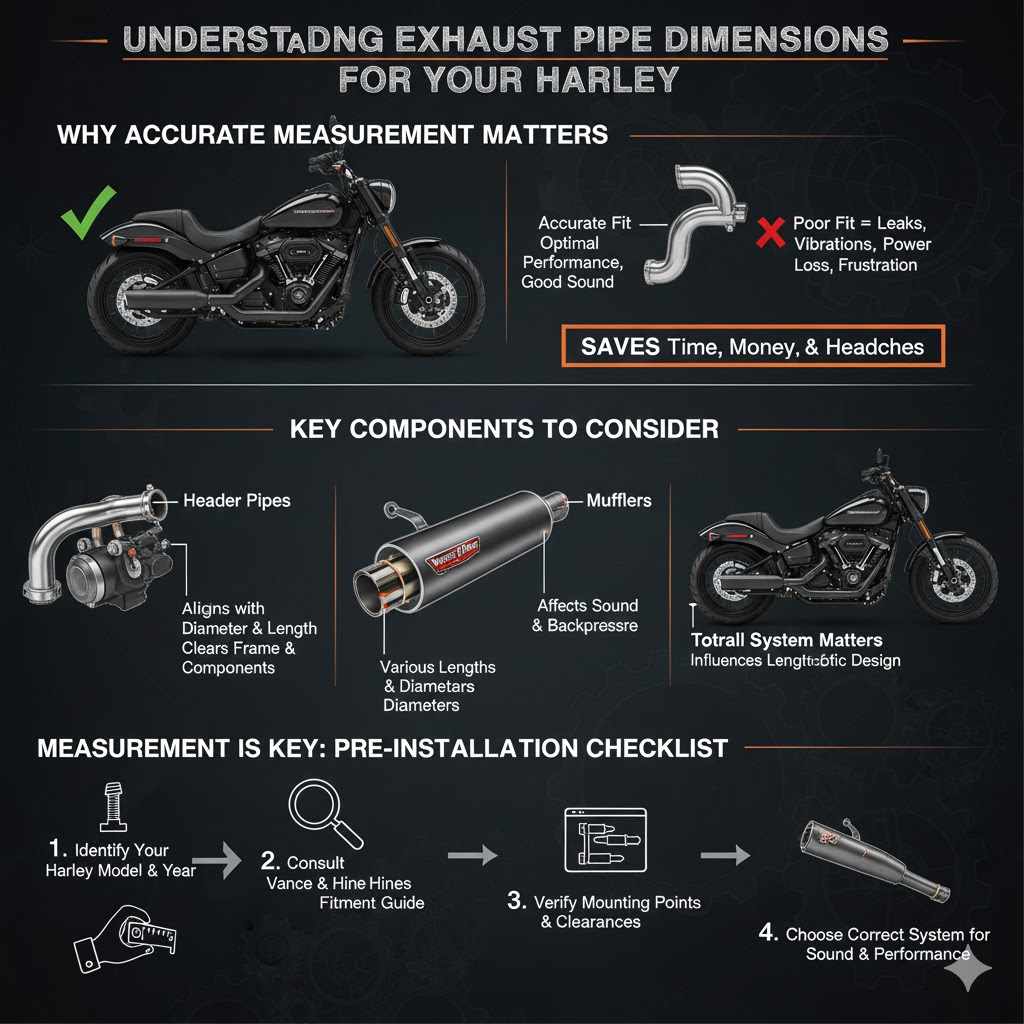
Why Accurate Measurement Matters
When you’re looking to install a new Vance & Hines exhaust on your Harley, accuracy in measurement is everything. A system that’s too long or too short can cause all sorts of problems. It might not mount correctly, leading to leaks or vibrations.
A poorly fitting exhaust can also affect how your engine breathes, hurting its performance and fuel economy. Think of it like buying clothes; if they don’t fit right, they just won’t work well.
For Vance & Hines exhaust systems, there are specific points that need to be measured to ensure compatibility with your Harley model. These aren’t just random numbers; they correspond to the mounting points on your motorcycle’s frame, the exhaust ports on your engine, and the overall space available under your bike. Getting these details correct upfront saves you time, money, and the frustration of dealing with parts that don’t fit.
Key Components to Consider
When you’re thinking about installing a Vance & Hines exhaust on your Harley, there are a few main parts of the exhaust system you’ll need to be aware of. These are the pipes themselves, the mufflers, and the mounting hardware. Each of these has different sizes and shapes that need to match your bike.
- Header Pipes These are the pipes that come directly from your engine. Their diameter and length are critical. They need to perfectly align with your engine’s exhaust ports. If they don’t connect well, you can lose power, and exhaust gases might escape where they shouldn’t. This can cause a loud, unpleasant noise and reduce engine efficiency. The shape also matters, as they need to clear your motorcycle’s frame and other components.
- Mufflers These are the parts that reduce the noise from your engine. They come in various lengths and diameters. The muffler’s size affects both the sound and the backpressure of the exhaust system. Backpressure is important because it helps your engine run efficiently. Vance & Hines makes many different muffler styles, and their dimensions are designed for specific sound profiles and performance gains.
- Overall System Length Beyond individual parts, the total length of the exhaust system is important. This affects how the exhaust gases exit your motorcycle and can influence the overall backpressure. A system that’s too long might create too much backpressure, while one that’s too short might not offer enough. This is why Vance & Hines designs their systems for specific Harley models, ensuring the length is correct.
How To Measure Vance & Hines Exhaust For Harley Components
This is where we get hands-on with your measuring tape. To truly know how to measure Vance & Hines exhaust for Harley motorcycles, you need to focus on specific parts of the existing system and the areas where the new one will go. We’ll go through each step, making sure you have all the tools and know-how.
It’s not complicated, and with a little patience, you’ll have the exact measurements you need.
Measuring Existing Exhaust Pipes
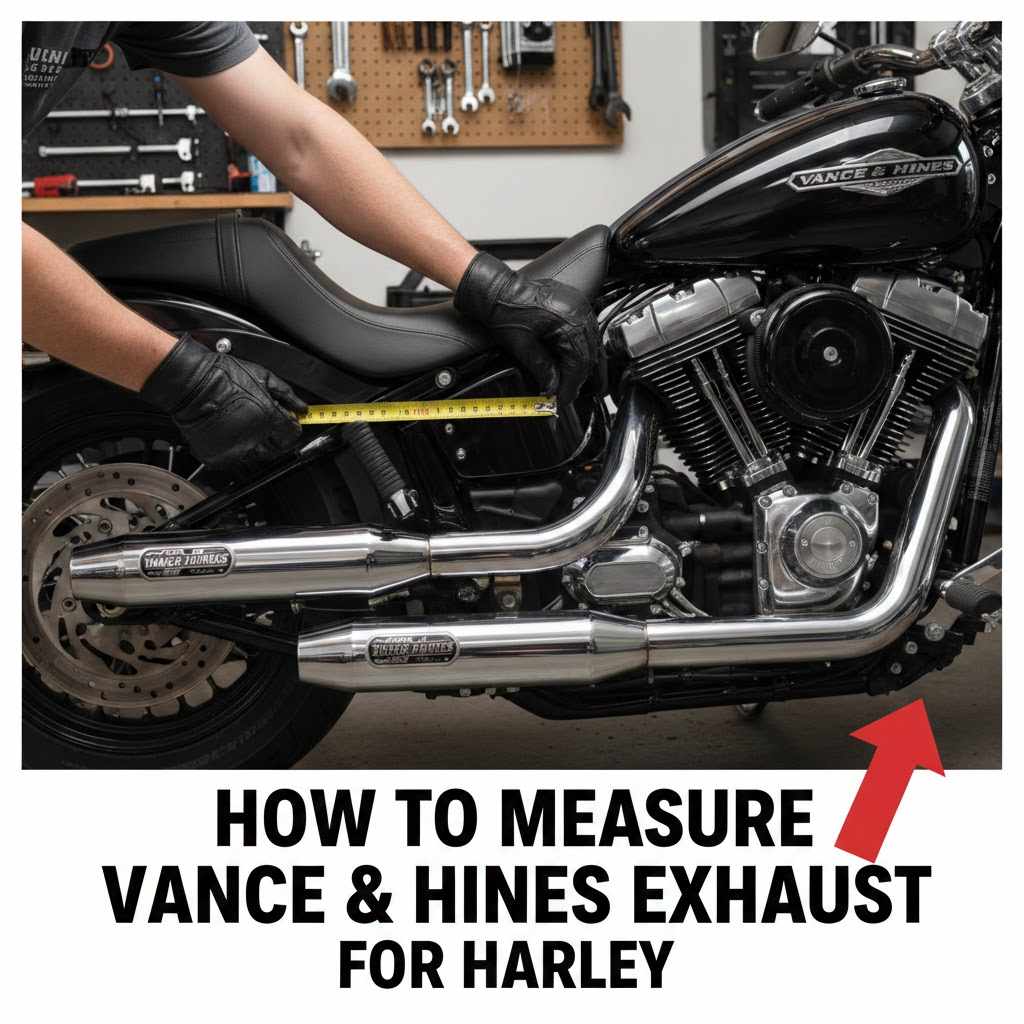
Before you buy a new Vance & Hines exhaust, it’s a good idea to measure your current pipes. This helps you understand the general size range you might be dealing with and gives you a baseline. You’ll need a flexible measuring tape or a string and a ruler for curved parts.
Start by measuring the diameter of your header pipes. These are the pipes that come from the engine. Measure across the widest part of the pipe.
If you have a flexible tape measure, you can wrap it around the outside and read the circumference, then divide by pi (approximately 3.14) to get the diameter. Or, you can measure the straight distance across the opening. Do the same for the muffler section.
Next, measure the length of the entire exhaust system from where it connects to the engine to the very end of the muffler. For curved pipes, lay a string along the curve and then measure the string with a ruler. Note any bends or unusual shapes, as these affect clearance.
Measuring Mounting Points and Clearance
Accurate measurements of your Harley’s mounting points and the clearance around the exhaust area are critical. This ensures the new Vance & Hines system will fit without hitting anything. You’ll need a reliable measuring tape.
Locate the bolts or brackets where your current exhaust system is attached to the motorcycle’s frame or engine. Measure the distance between these points. Also, measure the space available around these areas.
You need to know how much room you have for the new pipes to pass by.
Pay close attention to the ground clearance. You don’t want your new exhaust to be too low, or it could scrape the ground when you lean into a turn or go over a bump. Measure from the lowest point of your current exhaust to the ground.