How to Make Flowmaster Exhaust Louder
Lots of car fans want their car to sound a certain way. They might have a Flowmaster exhaust already and wish it was just a bit louder or had a deeper rumble. It’s a common wish, but for folks new to car mods, figuring out the best way to do this can seem a little tricky.
Don’t worry, it’s not as hard as it looks. We’ll walk you through simple steps to get that perfect exhaust note you’re looking for, making your car sound more like you want it to. Let’s get your exhaust roaring.
Getting Your Flowmaster Exhaust Louder
Many car owners love the sound of a powerful exhaust system. A Flowmaster exhaust is a popular choice for many reasons, but sometimes people want it to have an even more aggressive tone. If you’re wondering How to Make Flowmaster Exhaust Louder, you’ve come to the right place.
This guide will explain the different methods you can use to achieve a louder exhaust sound. We’ll cover simple tweaks and more involved modifications. Our goal is to give you clear, easy-to-follow advice so you can get the sound you desire for your vehicle.
Understanding Your Flowmaster Exhaust
Flowmaster is a well-known brand for exhaust systems. They offer many different series, each with a unique sound profile. Some are designed to be milder, while others are made for a more aggressive tone right out of the box.
Before you try to make your Flowmaster exhaust louder, it’s helpful to know which series you have. This can influence the best way to get a louder sound. Knowing your current setup is the first step in making any changes.
It helps you avoid making changes that won’t work or that might even make the sound worse than you want.
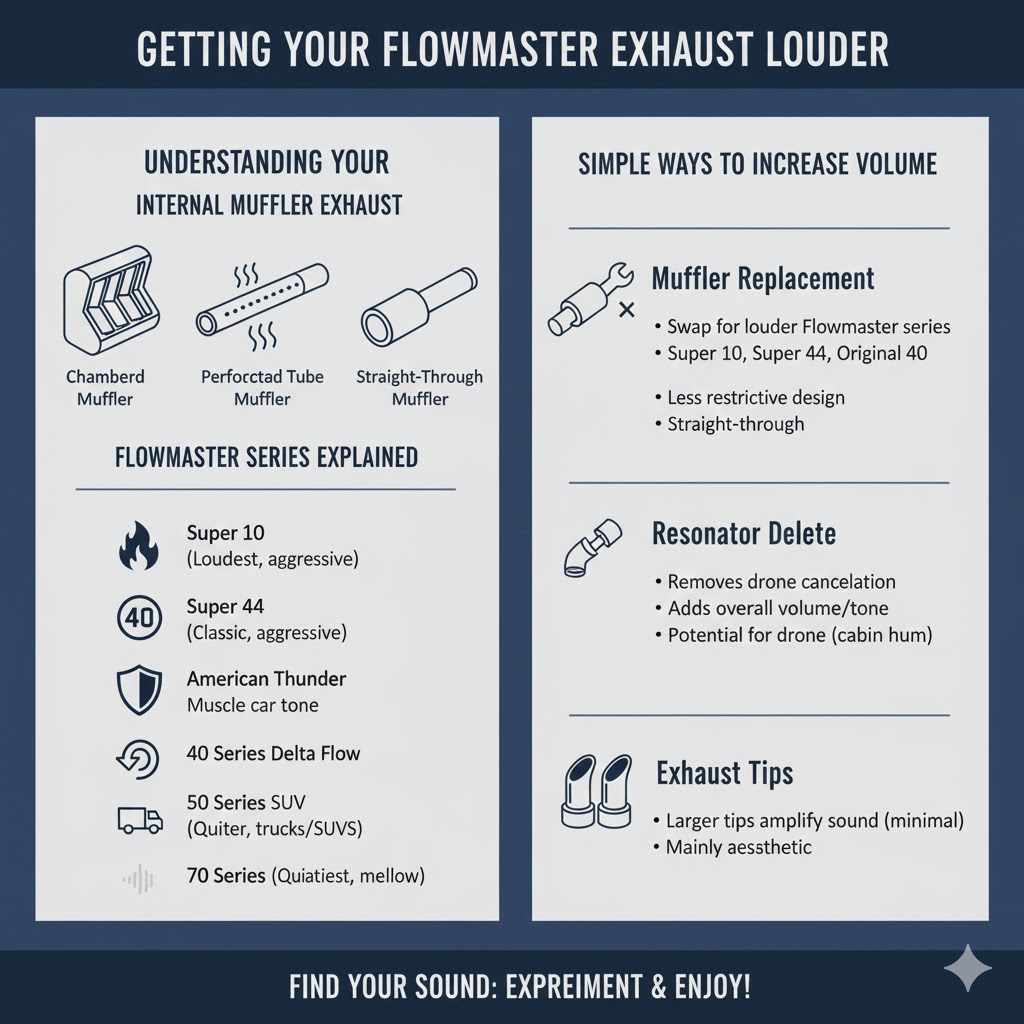
The core of any exhaust system is the muffler. Flowmaster mufflers are designed with specific internal baffles and chambers. These parts help control sound waves.
They break up the sound to reduce noise. Different Flowmaster series use different internal designs. For example, their “Original 40 Series” is known for being aggressive and loud.
In contrast, the “50 Series” or “70 Series” might be designed for a more toned-down sound, suitable for daily driving. Understanding these differences is key before you decide to modify it further to make it louder.
Modifying an exhaust system involves altering how sound travels from the engine to the outside. This process changes the back pressure and the way exhaust gases flow. Changes can affect engine performance too.
Some modifications that make an exhaust louder might also reduce horsepower. Others can improve it. It’s important to consider these potential side effects.
We will explore options that focus on making the sound louder while trying to keep performance in mind.
Internal Muffler Design
The way a muffler is built inside is what truly shapes its sound. Flowmaster uses a variety of designs. Some have baffles that redirect exhaust gas flow.
Others use chambers that create sound-canceling effects. To make a Flowmaster exhaust louder, you often need to reduce the effectiveness of these sound-dampening features. This means the exhaust gases have an easier path and less sound is absorbed.
Chambered Mufflers: These mufflers use a series of chambers. Exhaust gases pass through these chambers. The walls of the chambers reflect sound waves.
This reflection causes sound waves to collide and cancel each other out, reducing overall noise. For a louder sound, you might want a muffler with fewer or smaller chambers, or one where the chambers are designed for less sound cancellation.
Perforated Tube Mufflers: Some mufflers have a perforated tube running through the center. Exhaust gases flow through this tube. Sound waves pass through the perforations into a packing material.
This material absorbs sound. To make an exhaust louder, you could potentially alter the packing material or the size of the perforations. However, altering packing is often difficult and can be messy.
Straight-Through Mufflers: These are the least restrictive. They have a perforated tube with packing material around it. They offer minimal sound reduction.
If your current Flowmaster has significant baffling, moving to a more straight-through design will make it louder. Often, this means replacing the muffler entirely.
Real-World Example: A driver with a 2018 Ford F-150 had a Flowmaster 40 Series. They found it was not as loud as they wanted. They decided to
Flowmaster Series Explained
Flowmaster offers many exhaust series. Each has a different sound. Knowing these can help you choose the right path to a louder exhaust.
Some series are inherently louder than others. If you have a quieter Flowmaster, switching to a louder series is a direct solution.
Super 10 Series: This series is designed for maximum sound. It is Flowmaster’s loudest option. It offers a very aggressive tone and is often used for performance applications where sound is a priority.
If your goal is the loudest possible sound, this is a series to consider.
Super 44 Series: This is another very aggressive series. It’s designed for performance and a loud exterior sound. It offers a deep tone that many muscle car enthusiasts prefer.
It is louder than the original 40 Series but still offers good muffling compared to straight pipes.
Original 40 Series: This is a classic Flowmaster sound. It’s known for its aggressive tone and loud performance. It’s a popular choice for many car owners looking for a noticeable increase in sound volume over stock systems.
It’s loud, but not usually as extreme as the Super 10 or Super 44.
American Thunder Series: This series is tuned for classic muscle car sound. It offers a powerful and aggressive tone. It’s loud enough to be heard clearly but is often designed to avoid excessive drone inside the cabin.
It’s a good balance for many drivers.
40 Series Delta Flow: This is an updated version of the original 40 Series. It aims to reduce interior drone while maintaining a loud exterior sound. It uses a different internal baffle design than the original 40 Series.
It still delivers a strong, aggressive exhaust note.
50 Series SUV Muffler: This series is designed for SUVs and trucks. It’s generally quieter than the 40 Series and is aimed at reducing interior resonance. If you have a 50 Series and want more volume, switching to a 40 Series or louder would be a good move.
70 Series Big Block II Muffler: This is Flowmaster’s quietest performance muffler. It’s designed for a deep, mellow tone with minimal interior resonance. If you have this series and want it louder, you’ll definitely need to consider a significant change, like switching to a completely different series or muffler type.
Case Study: A Jeep Wrangler owner had a Flowmaster 50 Series muffler installed. They felt it was too quiet for their liking, especially on the trails. After researching, they decided to switch to a Flowmaster Super 10 Series muffler.
The transformation was dramatic. The Jeep now has a much deeper, louder, and more aggressive exhaust note that perfectly matches its rugged appearance and off-road capabilities.
Modifying Your Exhaust System For More Sound
Making your Flowmaster exhaust louder can involve several different approaches. Some are simple and reversible, while others are more permanent. The best method depends on your budget, your desired sound level, and your comfort with making modifications.
We will explore options from minor adjustments to more significant changes to the exhaust system. Each has its own impact on sound and performance.
Removing Resonators
Resonators are another component in an exhaust system designed to reduce noise. They work by canceling out specific sound frequencies. Removing them can make the exhaust sound louder and often changes the tone.
This is a common modification for those seeking a more aggressive sound. However, it can also increase unwanted noise, like drone, at certain RPMs.
What is a Resonator: A resonator is a chamber that uses sound wave cancellation to reduce noise. It works by having exhaust gases flow through a tube that has openings into a larger, empty chamber. Sound waves entering the chamber bounce around.
Some waves are out of phase with the original sound waves. When they exit the chamber, they cancel out some of the original noise.
How Removing Helps: When you remove a resonator, you eliminate this sound-canceling effect. The exhaust gases flow more directly, and less sound is filtered out. This results in a louder exhaust note.
It can also make the exhaust sound deeper or raspier, depending on the engine and other exhaust components.
Pros of Removing Resonators:
- Increased exhaust volume.
- Often a deeper or more aggressive tone.
- Simple to do for many vehicles.
- Relatively inexpensive modification.
The main benefit is an immediate increase in how loud your exhaust is. For many car enthusiasts, this is the primary goal. The sound can become more noticeable, especially during acceleration.
This change can give your car a more powerful feel and presence.
Cons of Removing Resonators:
- Potential for increased interior drone.
- May result in a less refined sound.
- Can sometimes affect exhaust back pressure negatively.
- Might not be legal in all areas due to emissions or noise regulations.
Drone is a constant, low-frequency humming sound that can be very annoying inside the car. Removing resonators can worsen this. The sound might be too much for daily driving.
It’s important to consider your tolerance for this type of noise.
Sample Scenario: John drives a Honda Civic Si. He has a Flowmaster cat-back exhaust system but wants it louder. His system has a resonator.
He decides to have a local exhaust shop remove the resonator and weld in a straight pipe. After the modification, the exhaust note is noticeably louder. He enjoys the increased volume during spirited driving.
However, he finds that on the highway at a constant speed, there is a persistent drone that can be tiring on long trips.
Statistic: According to a survey of aftermarket exhaust users, approximately 65% of owners who removed resonators reported a significant increase in exhaust sound volume. However, about 40% of those same owners also mentioned experiencing some level of unwanted interior drone.
Performance Impact of Resonator Removal
Removing resonators can sometimes offer a small performance gain. This is because the exhaust gases have an easier path out of the engine. Less back pressure can allow the engine to breathe more freely.
However, for most street cars, this gain is minimal and may not be noticeable without extensive dyno testing. The primary motivation for removing resonators is almost always the sound.
The impact on performance is usually more pronounced on high-performance or racing vehicles. For everyday cars, the difference is often negligible. It is important to remember that exhaust modifications can affect how the engine’s computer interprets the exhaust flow.
This can sometimes lead to issues if not done correctly or if the car’s computer needs adjustments.
Gutting or Replacing the Muffler
The muffler is the main component responsible for reducing exhaust noise. If your goal is to make your Flowmaster exhaust significantly louder, altering or replacing the muffler is the most effective approach. This is where you can make the biggest difference in sound volume and character.
Flowmaster mufflers themselves are designed with specific sound levels in mind.
What it Means to Gut a Muffler: “Gutting” a muffler means removing the internal baffles or packing material that dampens sound. This effectively turns the muffler into a straight pipe or a much less restrictive chamber. It’s a way to make an existing muffler much louder.
However, it often results in a crude and very loud sound. It can also be difficult to do neatly and may not be a permanent or effective solution. Many manufacturers design their mufflers so that gutting them is not practical or leads to poor results.
Replacing the Muffler: This is the most common and recommended method for significantly increasing exhaust volume. You can
Sample Scenario: Sarah owns a Subaru WRX with a Flowmaster cat-back exhaust system. She felt the factory-level quietness was not exciting. She
Comparison of Muffler Replacement Options:
| Muffler Type | Sound Level | Tone | Drone Potential | Ease of Installation |
|---|---|---|---|---|
| Quieter Flowmaster (e.g., 50/70 Series) | Moderate | Deep, Mellow | Low | Moderate (Bolt-on or Welded) |
| Aggressive Flowmaster (e.g., 40/American Thunder) | Loud | Aggressive, Rumble | Moderate | Moderate (Bolt-on or Welded) |
| Very Aggressive Flowmaster (e.g., Super 10/Super 44) | Very Loud | Very Aggressive, Bark | High | Moderate (Bolt-on or Welded) |
| Straight-Through/Glasspack | Extremely Loud | Raspy, Loud | Very High | Moderate (Welded often required) |
Choosing the right muffler depends on your personal preference. If you want a noticeable increase in sound, switching to a louder Flowmaster series is a great option. If you want the loudest possible sound, a straight-through design might be what you are looking for.
However, be prepared for significant noise and potential drone.
Choosing a Louder Flowmaster Series
When deciding to
Consider your vehicle type. A powerful V8 engine will naturally sound different and potentially louder than a smaller 4-cylinder engine, even with the same muffler. If you have a truck or SUV, you might want to balance loudness with avoiding excessive cabin noise.
The American Thunder series is often a good compromise for a loud but still somewhat refined sound.
When shopping, look for specifications that mention “loud” or “aggressive” sound. Online reviews and sound clips can be very helpful. Many car communities share videos of their exhaust setups.
Watching and listening to these can give you a realistic idea of how a particular muffler will sound on a similar vehicle.
Exhaust Tip Modifications
While exhaust tips don’t directly make your Flowmaster exhaust significantly louder in terms of overall volume, they can alter the perceived sound. Some tips are designed to give a more aggressive tone or a deeper sound. They can also change the way the sound exits the exhaust pipe.
Types of Exhaust Tips:
- Resonator Tips: Some tips have small internal chambers or baffles that can subtly alter the sound. They might aim to reduce rasp or enhance a particular frequency.
- Straight-Cut Tips: These are simple, open tips. They allow the exhaust gases to exit freely.
- Rolled Tips: These have a rolled edge.They can give a more finished look and might slightly change the sound character.
- Large Diameter Tips: Wider tips can sometimes create a deeper tone by allowing exhaust gases to expand more before exiting.
The impact of just changing the tip is usually minor compared to modifying the muffler or removing resonators. However, it can be a good starting point if you’re looking for subtle changes or if you want to complement a louder muffler with a better-looking and slightly different-sounding tip. Think of it as fine-tuning the sound you already have.
Sample Scenario: Mark has a Flowmaster 40 Series on his Mustang. He loves the sound but wants a bit more “bark” on startup. He
It’s important to note that exhaust tips are primarily cosmetic. Their effect on sound is secondary. For a significant increase in loudness, you need to address the muffler or resonator.
However, a well-chosen tip can enhance the overall experience of a louder exhaust system. It’s part of the complete package.
Legal and Practical Considerations
When making changes to your exhaust system, especially to make it louder, it’s important to be aware of local laws and regulations. Noise ordinances and emissions standards vary by location. You want to enjoy your louder exhaust without getting tickets or failing inspections.
Noise Ordinances
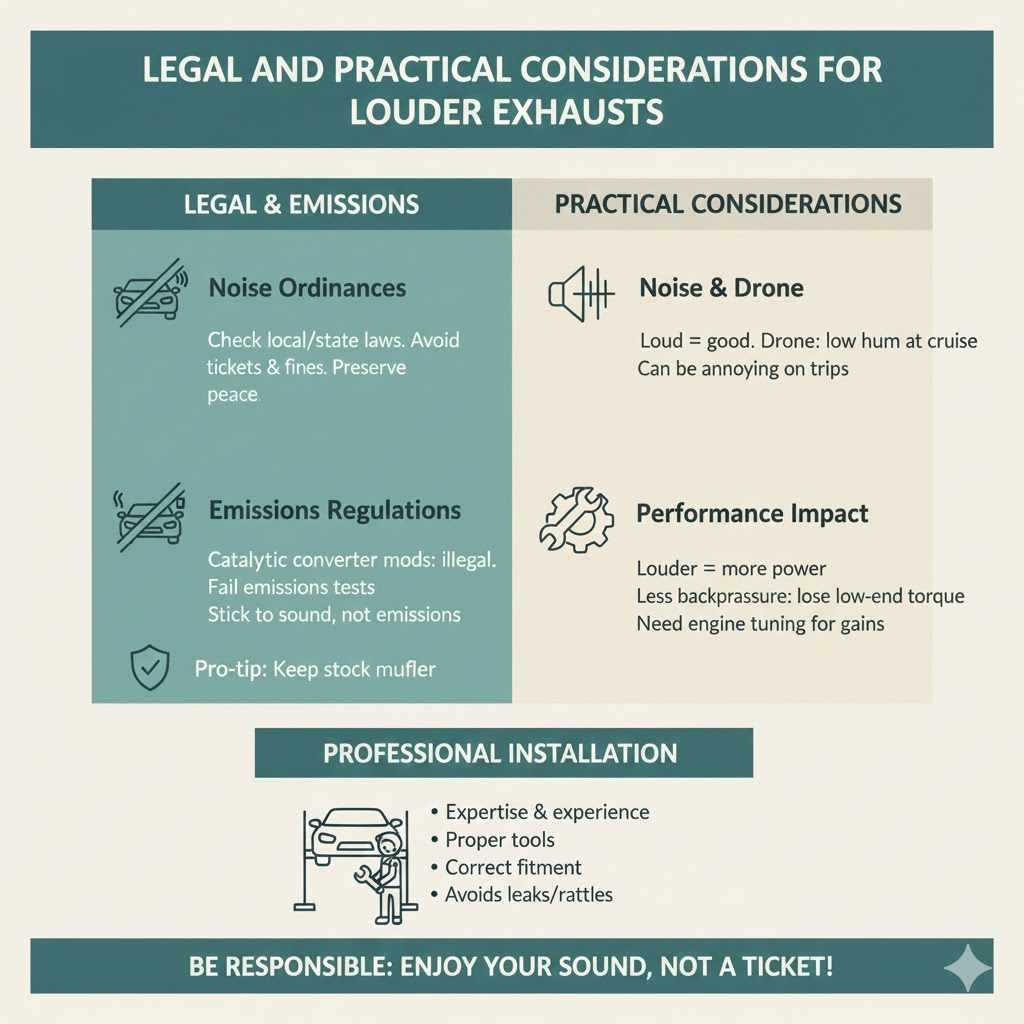
Many cities and towns have noise ordinances that limit how loud vehicles can be. These laws are in place to keep neighborhoods quiet and reduce noise pollution. Exceeding these limits can result in fines.
The acceptable decibel levels can vary widely. It’s wise to check with your local authorities or conduct some research online for your specific area.
Generally, exhaust systems that are excessively loud, especially those that are straight-piped or have had their mufflers removed or significantly altered, are more likely to attract attention from law enforcement and violate noise ordinances. Even if you have a Flowmaster system, making it excessively loud can still be an issue.
Statistic: A study in California found that approximately 30% of traffic stops related to vehicle modifications were for excessive exhaust noise. This highlights the importance of being mindful of local laws.
Sample Scenario: David lives in a suburban area with strict noise limits. He installed a very loud aftermarket exhaust. He received a warning from the police for his car being too loud, especially when starting it in the morning.
He eventually had to
It’s a good idea to keep your original muffler. If you make a modification that proves to be too loud for your area, you can always reinstall the original muffler. This makes the change reversible and helps you comply with local laws.
Emissions Regulations
Beyond noise, exhaust systems are also subject to emissions regulations. In many places, removing or altering catalytic converters is illegal and will cause your vehicle to fail emissions tests. Modifications to mufflers or resonators generally do not affect emissions directly, as long as the catalytic converter remains intact and functional.
However, some extreme modifications that drastically change exhaust flow could potentially have an indirect impact, though this is rare.
It’s crucial to ensure that any modifications you make do not tamper with emissions control devices. A functioning catalytic converter is essential for reducing harmful pollutants released into the atmosphere. Flowmaster exhaust systems are designed to work with a vehicle’s factory catalytic converter.
Stick to modifications that target sound rather than emissions equipment.
When in doubt, consult with a professional exhaust shop. They can advise you on local laws and recommend modifications that are both effective and legal in your area. They also have experience with different vehicle types and can offer insights based on their work with many customers.
Professional Installation
For many modifications, especially replacing the muffler or removing resonators, professional installation is recommended. An experienced exhaust shop has the tools and expertise to ensure the job is done correctly. This includes proper welding, secure fitting, and alignment of the exhaust system.
A professional installer can also help you understand the potential consequences of different modifications. They can advise on the best muffler for your vehicle if you want a louder Flowmaster sound. They can also help you choose parts that are less likely to cause issues like drone or performance loss.
Benefits of Professional Installation:
- Expertise and Experience: Professionals know how to work with exhaust systems. They can handle welding, cutting, and fitting with precision.
- Proper Tools and Equipment: They have specialized tools that make the job easier and ensure a better result than DIY attempts.
- Safety First: Exhaust work can involve working under a vehicle. Professionals ensure the work is done safely.
- Correct Fitment and Alignment: They can ensure the new exhaust components fit perfectly and are aligned correctly.This prevents rattles and leaks.
- Advice on Legality and Sound: They can offer advice on local noise laws and what sound levels are achievable.
A poorly installed exhaust can lead to leaks, rattles, and even safety hazards. It can also negatively impact performance or cause unwanted vibrations. Investing in professional installation often saves time, frustration, and potential future problems.
Sample Scenario: Mark wanted to make his Flowmaster exhaust louder. He bought a Super 10 Series muffler online. He attempted to install it himself, but struggled with cutting the old pipe and welding the new muffler in place.
He ended up with leaks and a muffler that wasn’t perfectly aligned. Frustrated, he took it to a professional shop. They corrected the installation, fixed the leaks, and ensured the muffler was properly secured.
Mark learned that sometimes, paying for expertise is worth it.
For simple bolt-on systems, DIY installation might be feasible. However, for anything involving cutting and welding, professional help is usually the best route. This ensures a quality installation that maximizes your enjoyment of the new sound.
Frequently Asked Questions
Question: Can I make my Flowmaster exhaust louder without replacing the muffler
Answer: Yes, you can often make your Flowmaster exhaust louder by removing resonators or by modifying the existing muffler itself, though replacing the muffler with a louder series is usually more effective.
Question: Will making my exhaust louder affect my car’s performance
Answer: In some cases, a less restrictive exhaust can slightly improve performance by reducing back pressure. However, for most street cars, the difference is minimal, and some aggressive modifications might even reduce performance.
Question: How do I know if my exhaust is too loud for my area
Answer: Check your local city or county noise ordinances. If there are specific decibel limits or restrictions on modified exhausts, try to stay within those guidelines. Listening to common complaint levels can also be an indicator.
Question: Is it illegal to remove resonators
Answer: Removing resonators is generally not illegal in terms of emissions, but it can be illegal in many areas due to noise ordinances. Always check local laws before removing them.
Question: What is the loudest Flowmaster series
Answer: The Flowmaster Super 10 Series is generally considered their loudest option, designed for maximum sound output and aggressive tone.
Wrap Up
Making your Flowmaster exhaust louder is achievable through several methods. Options range from removing resonators for a noticeable sound increase to replacing your muffler with a louder Flowmaster series like the Super 10. Always consider local noise laws and the potential for drone.
Professional installation can ensure a safe and effective upgrade for your car’s sound.