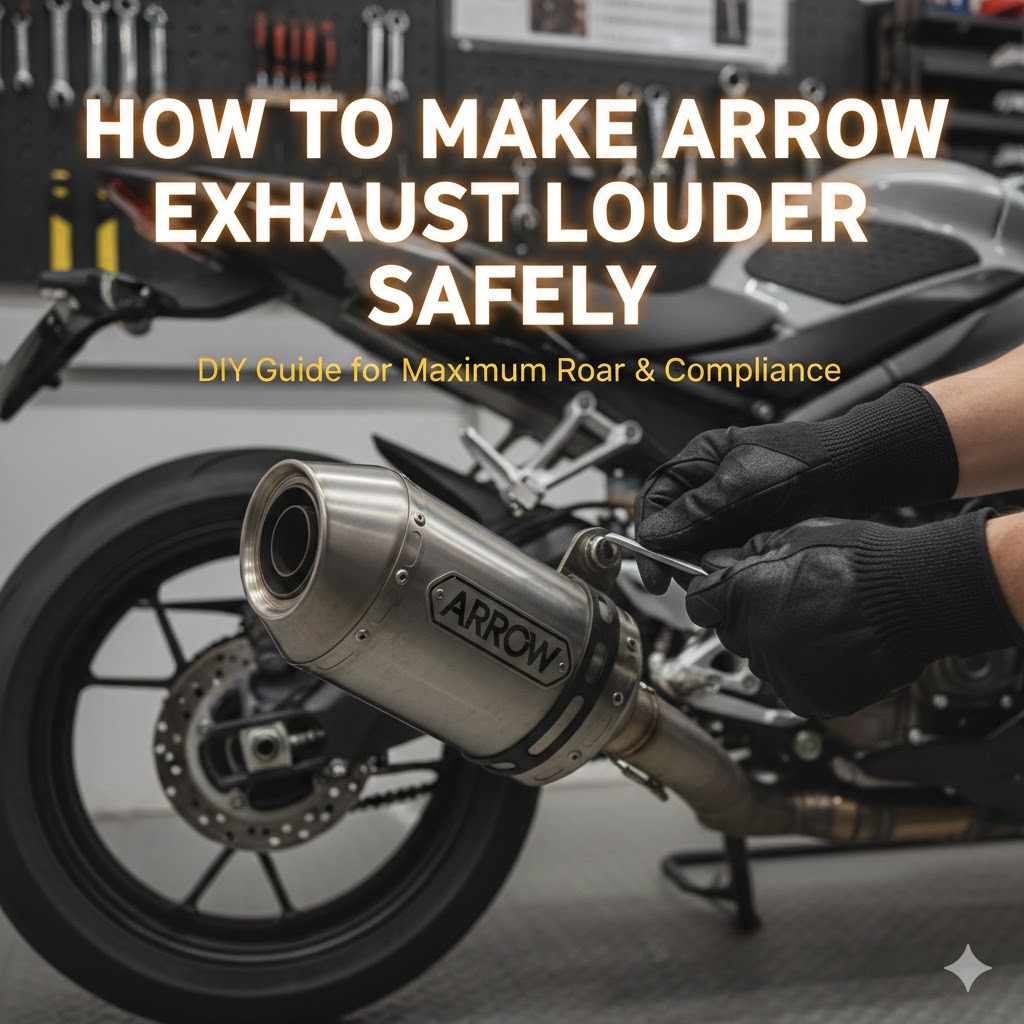
How to Make Arrow Exhaust Louder Safely
Many motorcycle riders love the sound of their bike’s exhaust. Sometimes, the stock sound might be too quiet for their taste. This is where the desire to learn How to Make Arrow Exhaust Louder Safely comes in.
It can seem a bit tricky for beginners because they worry about damaging their bike or making it too loud, which can cause trouble. But don’t worry! This guide will show you simple steps to get that deeper, sportier sound you want without any risk.
We will cover easy methods and what to look out for.
Understanding Arrow Exhaust Systems
Arrow is a well-known brand for performance exhaust systems. These systems are often designed to improve your motorcycle’s performance, sound, and looks. When people ask about making an Arrow exhaust louder, they usually mean they want to enhance its existing sporty tone.
It’s important to know that not all exhausts are created equal, and modifications need to be done thoughtfully. This section will help you understand the basic parts of an Arrow exhaust and why some might be quieter than others, setting the stage for safe sound enhancement.
Components of an Arrow Exhaust
An Arrow exhaust system typically consists of several key parts. The header pipe connects directly to your engine’s cylinders. This pipe leads to the mid-pipe, which then connects to the muffler, also known as the silencer.
The muffler is the main component responsible for reducing exhaust noise. Inside the muffler are baffles and packing materials that absorb sound waves.
The design of these internal baffles plays a significant role in the exhaust’s sound profile. Some Arrow systems come with removable baffles, which offer a direct way to adjust the sound level. Others have a fixed design, requiring different approaches for sound modification.
Understanding these parts helps you know where to focus your efforts when trying to increase the volume.
Factory vs. Aftermarket Arrow Systems
Arrow produces both original equipment manufacturer (OEM)
If you have a quieter Arrow exhaust, it might be an OEM replacement or a model designed for specific emissions regulations. Making these louder safely often involves understanding their construction. If you have an aftermarket Arrow performance exhaust, it might already be quite loud, and further modifications could be excessive or even illegal.
This distinction is vital for a safe and effective approach.

Safe Ways to Increase Arrow Exhaust Volume
When you want your Arrow exhaust to produce a more commanding sound, safety is the number one priority. This isn’t just about avoiding damage to your motorcycle; it’s also about keeping it legal and not disturbing your neighbors excessively. We will explore methods that enhance the sound without compromising the exhaust’s integrity or your riding experience.
These techniques focus on airflow and sound wave management, aiming for a richer tone rather than just raw, uncontrolled noise.
Understanding Exhaust Baffles
Exhaust baffles are internal structures within the muffler designed to dampen sound waves. They work by creating turbulence and absorbing sound energy. Some Arrow exhausts come with removable baffles, often secured by a bolt or screw.
Removing these baffles is the most straightforward way to make an exhaust louder, as it allows exhaust gases to flow more freely and with less sound suppression.
When considering baffle removal, always check your local noise regulations. Some areas have strict limits on how loud a vehicle’s exhaust can be. If your Arrow exhaust has a removable baffle, look for a bolt on the end of the muffler.
Removing this bolt and then carefully sliding out the baffle is usually the process. Be prepared for a noticeable increase in volume and a deeper tone.
Caution: If your baffle is welded or bolted internally and not easily accessible, attempting to force its removal can damage the muffler. Always refer to your Arrow exhaust’s manual or contact their support for specific instructions related to your model. Some aftermarket mufflers also have a packing material around the perforated core.
Over time, this packing can degrade, leading to a louder, sometimes raspier sound. Replacing this packing is another way to affect the sound, though it’s more about restoration than intentional amplification.
Exhaust Packing and Repacking
Many performance mufflers, including some Arrow models, use sound-absorbing packing material around the perforated core. This material, often fiberglass or steel wool, helps to quiet the exhaust note. Over time and with heat, this packing can burn out or degrade, leading to a loss of sound-dampening capability and a potentially louder, raspier exhaust.
Repacking your Arrow muffler involves disassembling the muffler can, removing the old packing material, and installing fresh packing. This is a common maintenance task that can also subtly alter the sound. Fresh packing can restore a muffler’s intended sound profile, making it slightly quieter or deeper depending on the type of packing used.
Some riders experiment with different densities or types of packing to achieve a specific sound characteristic.
To repacking a muffler, you will typically need to remove the muffler from the bike. Then, look for rivets or bolts that hold the end cap or casing together. Carefully pry or unscrew these to access the internal core and packing.
Remove all old, degraded material. Wrap the new packing material snugly around the perforated core. Reassemble the muffler, ensuring all parts are securely fastened.
This process can sometimes make the exhaust sound a bit deeper and more controlled, even if it also increases volume slightly.
Decibel Killer Inserts
A decibel killer, sometimes called a dB insert or sound insert, is a small device that fits into the exit of your muffler. It’s essentially a smaller baffle that further restricts exhaust flow and sound. While it’s designed to make an exhaust quieter, some people have found that certain types of inserts, or even modifying an existing insert, can alter the exhaust note in a way they prefer.
However, this is generally counterproductive if your goal is a louder exhaust.
The primary purpose of a decibel killer is to reduce noise levels. For those aiming for a louder exhaust, it’s usually best to avoid these. If your Arrow exhaust came with one, removing it would be the first step.
If it didn’t, and you’re looking for more volume, this is not the path to take. However, for context, these inserts often have small holes or chambers that force exhaust gases to take a more circuitous route, creating more sound absorption before exiting.
There are also aftermarket “loud inserts” or “performance inserts” available for some exhaust models. These are designed to achieve a louder sound while still offering some level of restriction compared to a completely open pipe. If your Arrow exhaust is relatively quiet and does not have a removable baffle, exploring a performance insert specifically designed for your Arrow muffler model could be an option.
Always ensure the insert is compatible with your Arrow exhaust to avoid damage or poor performance.
Technical Considerations for Louder Exhausts
Modifying your Arrow exhaust for increased volume involves more than just removing parts. It affects how your engine breathes. Understanding these technical aspects ensures you enhance the sound safely and effectively, without negatively impacting your motorcycle’s performance or longevity.
We’ll look at how changes in exhaust backpressure and air-fuel mixtures are critical for a smooth ride and a great sound.
Backpressure and Its Role
Backpressure is the resistance to exhaust gas flow within the exhaust system. A stock exhaust system is designed to provide a specific level of backpressure that optimizes engine performance for everyday riding. Removing baffles or making the exhaust system more free-flowing reduces backpressure.
This can lead to a louder sound because exhaust gases escape more easily.
However, too little backpressure can cause problems. It can lead to a loss of low-end torque, making your bike feel sluggish at lower RPMs. It can also cause the engine to run hotter.
For some engines, especially those not tuned for it, a significant drop in backpressure without other modifications can lead to performance issues. It’s a delicate balance. Arrow engineers their systems to work with specific engines, so drastic changes require careful thought.
If you significantly reduce backpressure, you might notice your motorcycle struggles to idle smoothly or hesitates when you open the throttle. This is a sign that the engine isn’t getting the optimal amount of resistance it needs to operate efficiently. For example, a sportbike designed for high-RPM power might benefit slightly from reduced backpressure, but a cruiser might suffer from a loss of low-speed pulling power.
Air-Fuel Ratio Adjustments
When you make an exhaust system louder by reducing backpressure, you are essentially changing how the engine breathes. This change can affect the air-fuel ratio, which is the precise mix of air and fuel the engine burns. If the exhaust flows too freely, the engine may run lean, meaning it has too much air and not enough fuel.
A lean condition can cause the engine to overheat, leading to serious damage.
Modern motorcycles often have fuel injection systems that try to compensate for exhaust changes. However, these systems have limits. If you make your Arrow exhaust significantly louder, you might need to adjust the fuel mapping.
This is often done using an aftermarket fuel controller or by re-flashing the motorcycle’s engine control unit (ECU). These adjustments ensure the engine gets the correct amount of fuel for the increased airflow, preventing lean conditions and maintaining optimal performance.
A lean mixture can be identified by popping or backfiring from the exhaust, especially on deceleration. It can also cause a noticeable drop in engine power and an increase in engine temperature. To illustrate, imagine an engine is like a person breathing.
If you suddenly make it much easier for them to exhale, they might start breathing too fast and shallow, becoming winded. An ECU reflash or fuel controller helps them breathe at a controlled, healthy pace.
Statistics show that improper air-fuel ratios can decrease engine lifespan by up to 20% due to increased heat and stress. Some sources suggest that around 75% of aftermarket exhaust installations benefit from ECU tuning to optimize performance and prevent engine damage. This highlights the importance of considering the air-fuel mixture when modifying your exhaust for sound.
Impact on Performance
While many riders associate a louder exhaust with better performance, this isn’t always the case. Performance gains from exhaust modifications are usually achieved through a combination of factors, including increased airflow and optimized backpressure. Simply making an exhaust louder doesn’t automatically mean more horsepower.
In fact, some modifications that increase volume might actually decrease performance if not done correctly.
For example, if you remove baffles from a stock-style Arrow exhaust without any other tuning, you might lose low-end torque. This means your bike might feel weaker when you’re starting from a stop or riding at low speeds. The sound might be louder, but the actual acceleration could be worse.
High-performance Arrow exhaust systems are engineered to balance sound and power, often with specific designs that improve both.
If you have a performance Arrow exhaust and want it louder, you might be looking at a very specific type of modification, or it might already be at its optimal loud setting. For those with quieter Arrow exhausts, the goal is often to achieve a sportier, more engaging sound. This can sometimes be accompanied by minor performance improvements if the airflow is enhanced correctly.
However, significant horsepower gains typically require a full system exhaust (headers, mid-pipe, and muffler) along with ECU tuning.
Understanding Arrow Exhaust Systems
Arrow is a well-known brand for performance exhaust systems. These systems are often designed to improve your motorcycle’s performance, sound, and looks. When people ask about making an Arrow exhaust louder, they usually mean they want to enhance its existing sporty tone.
It’s important to know that not all exhausts are created equal, and modifications need to be done thoughtfully. This section will help you understand the basic parts of an Arrow exhaust and why some might be quieter than others, setting the stage for safe sound enhancement.
Components of an Arrow Exhaust
An Arrow exhaust system typically consists of several key parts. The header pipe connects directly to your engine’s cylinders. This pipe leads to the mid-pipe, which then connects to the muffler, also known as the silencer.
The muffler is the main component responsible for reducing exhaust noise. Inside the muffler are baffles and packing materials that absorb sound waves.
The design of these internal baffles plays a significant role in the exhaust’s sound profile. Some Arrow systems come with removable baffles, which offer a direct way to adjust the sound level. Others have a fixed design, requiring different approaches for sound modification.
Understanding these parts helps you know where to focus your efforts when trying to increase the volume.
Factory vs. Aftermarket Arrow Systems
Arrow produces both original equipment manufacturer (OEM)
If you have a quieter Arrow exhaust, it might be an OEM replacement or a model designed for specific emissions regulations. Making these louder safely often involves understanding their construction. If you have an aftermarket Arrow performance exhaust, it might already be quite loud, and further modifications could be excessive or even illegal.
This distinction is vital for a safe and effective approach.

FAQ Frequently Asked Questions
Question: Can I make my Arrow exhaust louder by removing the DB killer?
Answer: Yes, if your Arrow exhaust has a removable DB killer (also known as a baffle or silencer insert), removing it is a common and effective way to make the exhaust louder. Always check your local laws to ensure the resulting noise level is legal.
Question: Will making my Arrow exhaust louder affect my bike’s performance?
Answer: It can. Making an exhaust significantly louder often reduces backpressure. While this can sometimes improve high-RPM performance, it can also lead to a loss of low-end torque and potentially cause the engine to run lean, which may require an ECU reflash or fuel controller for optimal performance and engine health.
Question: Is it legal to make my Arrow exhaust louder?
Answer: The legality depends entirely on your local noise ordinances and traffic laws. Many places have strict limits on vehicle exhaust noise. You must research and comply with the regulations in your specific area.
Question: How do I know if my Arrow exhaust has a removable baffle?
Answer: Most Arrow exhausts designed for sound modification will have an easily accessible baffle. Look for a bolt on the end cap of the muffler. If you see a bolt securing a component that looks like it might be removable, it’s likely a baffle.
Always consult your exhaust’s manual or the manufacturer’s website if unsure.
Question: What’s the difference between a baffle and exhaust packing?
Answer: A baffle is a structural component inside the muffler designed to restrict sound waves and airflow. Exhaust packing is a sound-absorbing material (like fiberglass) that surrounds the perforated core inside the muffler, further muffling the sound. Removing baffles usually makes a much bigger difference in volume than repacking.
Summary
Learning How to Make Arrow Exhaust Louder Safely involves understanding your exhaust’s components, like baffles and packing. You can safely increase volume by removing removable baffles or repacking the muffler with fresh material. Always consider how these changes affect backpressure and the air-fuel ratio, potentially requiring engine tuning for optimal performance.
Critically, check and abide by local noise laws and practice respectful riding etiquette to avoid fines and ensure community harmony.