How to Add Diesel Exhaust Fluid: Essential Guide
Adding Diesel Exhaust Fluid (DEF) is simple! Locate the DEF tank filler, usually near your fuel cap, open it, and pour in fresh DEF using a clean, designated container. Ensure you use the correct fluid to keep your diesel engine running cleanly and efficiently.
As a diesel owner, you might have noticed a new cap near your fuel filler, often blue. This is for Diesel Exhaust Fluid, or DEF. It’s a key part of modern diesel emissions systems, helping to reduce harmful pollutants. If your vehicle needs DEF, adding it is a straightforward maintenance task. Don’t let unfamiliarity stop you; this guide will break it down into easy steps. We’ll cover everything you need to know to do it yourself, keeping your diesel vehicle in top shape.
Why Your Diesel Needs Diesel Exhaust Fluid (DEF)
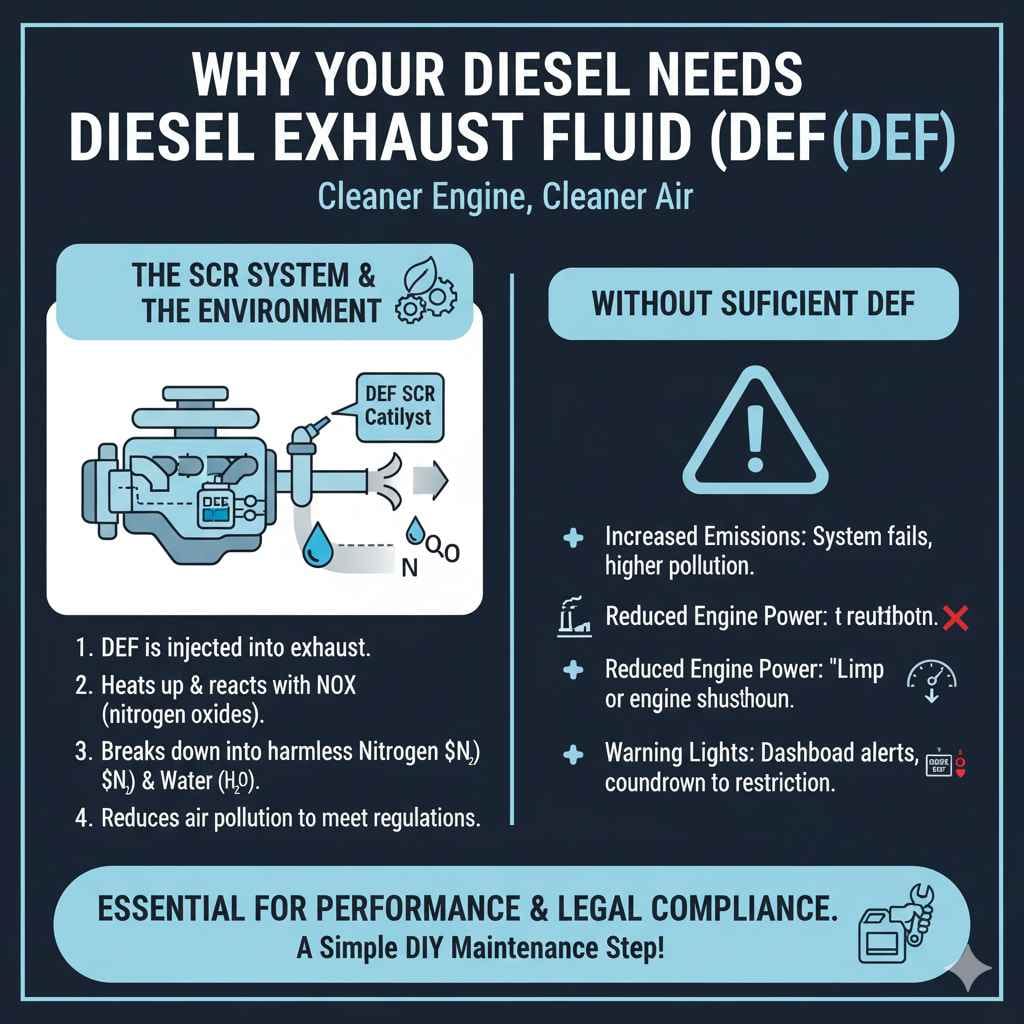
Modern diesel engines are designed to be cleaner and more efficient than older models. A big reason for this is the Selective Catalytic Reduction (SCR) system. This system uses DEF to treat the exhaust gases exiting your engine. When DEF is injected into the exhaust stream and heated, it reacts with nitrogen oxides (NOx) and breaks them down into harmless nitrogen and water vapor. NOx is a major air pollutant, and SCR technology is crucial for meeting strict environmental regulations.
Without sufficient DEF, your vehicle’s SCR system cannot function correctly. This can lead to a few things:
- Increased Emissions: The system won’t be able to reduce NOx levels effectively, resulting in higher pollution.
- Reduced Engine Power: Many modern diesels are programmed to enter “limp mode” or even shut down entirely if the DEF level gets too low, to comply with emissions laws.
- Warning Lights: Your dashboard will likely display a warning light indicating low DEF levels, and eventually, a countdown to when the engine will be restricted.
Adding DEF is not just a suggestion; it’s a necessary maintenance step to keep your diesel truck or car running smoothly and legally on the road. It’s a simple process that you can easily handle yourself, saving time and potential dealership service fees.
Understanding Your Vehicle’s DEF System
Before you add DEF, it’s good to know a little about where it goes and how it works. The core of the system is the DEF tank. This tank stores the fluid and is usually found:
- Near the diesel fuel tank.
- Underneath the vehicle.
- In the trunk or cargo area for some passenger cars.
On many diesel trucks and SUVs, like a Range Rover, you’ll find the DEF filler cap right next to the diesel fuel cap. This makes it easy to remember which is which. Passenger cars might have the DEF filler in the trunk or a dedicated compartment. Check your vehicle’s owner’s manual if you’re unsure of its exact location.
The DEF fluid itself is a mixture of urea and de-ionized water. It’s important to use only DEF that meets the ISO 22241 standard. This ensures the fluid is pure enough not to damage your SCR system. Never put DEF in your diesel fuel tank or diesel fuel in your DEF tank – mixing them can cause serious and expensive damage to your vehicle’s emissions system.
What You’ll Need: DEF Filling Essentials
Gathering the right supplies before you start makes the process much smoother and cleaner. Here’s what you’ll need:
- Diesel Exhaust Fluid (DEF): Make sure it’s high-quality DEF that meets ISO 22241 standards. You can buy it in various sizes, from small bottles and jugs to larger containers.
- A Clean Funnel or Dispensing Spout: Most DEF containers come with a built-in spout or a separate one you can attach. If not, use a funnel that has only ever been used for DEF to avoid contamination.
- Gloves (Optional but Recommended): DEF is non-toxic, but it can dry on your skin and may cause mild irritation for some. Gloves help keep your hands clean.
- Paper Towels or Rags: For wiping up any small drips.
- Your Vehicle’s Owner’s Manual: Always a good reference for specific instructions for your make and model.
Important Note on DEF Purity: Contaminated DEF is the leading cause of SCR system failure. This is why it’s crucial to use clean containers and never mix DEF with anything else. Dirt, fuel, or even tap water can damage expensive components like the DEF injector or the catalytic converter.
Step-by-Step Guide: How to Add Diesel Exhaust Fluid
Adding DEF is a straightforward process. Follow these steps carefully to ensure you do it right:
Step 1: Locate the DEF Filler Cap
As mentioned, the DEF filler is usually found near the diesel fuel filler cap. On many vehicles, it will be a separate cap, often blue, with a DEF symbol. Consult your owner’s manual if you cannot find it.
Step 2: Open the DEF Filler Cap
Carefully unscrew and remove the DEF filler cap. Place it somewhere clean where it won’t get dirty or lost. If your vehicle is equipped with a system that prevents adding DEF when the engine is on, ensure your engine is turned off.
Step 3: Prepare Your DEF Container
If your DEF comes in a jug with a spout, ensure it’s securely attached. If you’re using a separate funnel, make sure it’s clean and designated only for DEF use.
Step 4: Add the DEF
Carefully insert the spout or funnel into the DEF filler opening. Slowly pour the DEF into the tank. Avoid overfilling. Most vehicles have an automatic shut-off feature on the filler neck, but still pour slowly. The tank capacity varies by vehicle, but often ranges from 4 to 7 gallons (about 15 to 26 liters).
Step 5: Close the DEF Filler Cap Securely
Once you’ve added the desired amount of DEF, remove the funnel or spout. Replace the DEF filler cap and ensure it is screwed on tightly. This seals the tank and prevents contamination.
Step 6: Start Your Vehicle and Allow System Initialization
Start your engine. Your vehicle’s computer needs to recognize that DEF has been added. This process usually takes a few minutes. You might see a message on your dashboard indicating DEF has been added or the system is initializing. It’s often recommended to drive your vehicle for a short period (a few miles or minutes) to allow the system to fully register the refill. Your owner’s manual will provide specific details.
Safety First: Always handle DEF away from open flames, as it is a combustible fluid. While non-toxic, avoid ingesting it or getting large amounts in your eyes. If contact occurs, rinse thoroughly with water.
DEF Tank Capacity and Refill Intervals
The frequency with which you need to add DEF depends on several factors, including your vehicle’s DEF tank size and your driving habits. Larger tanks and more highway driving generally mean longer intervals between refills.
A typical DEF tank might hold anywhere from 4 to 7 gallons (approximately 15 to 26 liters) for a light-duty truck or SUV. For many passenger cars that use DEF, the tanks are considerably smaller, sometimes less than 1 gallon (around 3-5 liters).
To give you an idea, here’s an approximate refill interval chart:
| Vehicle Type | Typical DEF Tank Size (Gallons/Liters) | Approximate Refill Interval Miles/Kilometers | Approximate Refill Interval Months |
|---|---|---|---|
| Light-Duty Pickup Truck/SUV | 4-7 gallons (15-26 L) | 5,000 – 10,000 miles (8,000 – 16,000 km) | 3-6 months |
| Medium-Duty Truck | 8-15 gallons (30-57 L) | 7,000 – 12,000 miles (11,000 – 19,000 km) | 4-8 months |
| Passenger Car (Diesel) | Less than 1 gallon (3-5 L) | 2,000 – 4,000 miles (3,000 – 6,500 km) | 1-3 months |
Note: These are general estimates. Your vehicle’s dashboard will typically alert you when the DEF level is getting low, usually starting with a visual warning and then potentially an audible chime as the level drops further. It’s wise to refill once you get the first warning, rather than waiting for a critical level.
When adding DEF, it’s often recommended to purchase enough to typically fill the tank, or at least a significant portion of it, to ensure optimal system performance. However, you can safely add smaller amounts if needed before a long trip.
Troubleshooting Common DEF Issues
While adding DEF is usually straightforward, you might encounter a few minor issues. Here’s how to handle them:
- DEF Warning Light Stays On: If you’ve added DEF and the warning light doesn’t clear after driving for a bit, ensure the cap is on tight. Sometimes, the system needs a specific driving cycle or distance to reset. If it persists, consult your owner’s manual or a mechanic, as there might be an issue with the sensor or SCR system.
- Spilled DEF: DEF is water-soluble and generally harmless to paintwork if wiped up quickly. If it dries, it can leave a white residue. Clean the affected area with water and a rag. Avoid getting DEF on sensitive electronic components.
- DEF Freezing: DEF can freeze at temperatures below 12°F (-11°C). Modern vehicles are equipped with a heating system for the DEF tank and lines to prevent this. If you live in a very cold climate, ensure your vehicle’s heating system is functioning correctly. The system will typically prevent you from adding DEF if it’s frozen solid.
- “AdBlue” vs. “DEF”: You might see “AdBlue” on DEF containers. AdBlue is a European brand name for DEF that meets the ISO 22241 standard. If your vehicle uses DEF, you can use products labeled AdBlue as long as they meet the same standard.
For more detailed information on SCR systems and DEF, the DieselNet provides comprehensive technical resources, though it can be quite detailed.
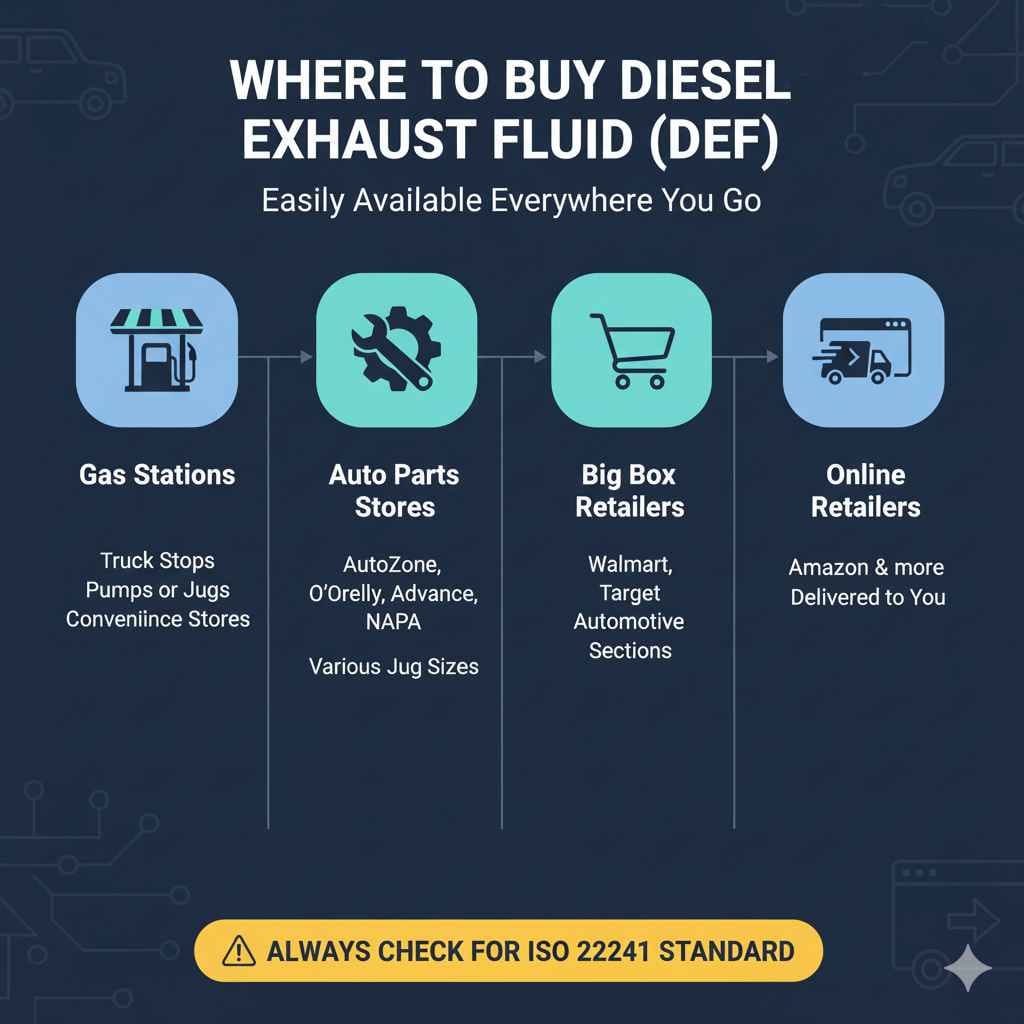
Where to Buy Diesel Exhaust Fluid (DEF)
Finding DEF is easier than ever. It’s widely available at most places that sell fuel and automotive supplies. You can typically purchase DEF at:
- Gas Stations: Many truck stops and larger gas stations have DEF available at the pump, often in a dedicated dispenser, or in jugs on shelves in their convenience stores.
- Auto Parts Stores: Stores like AutoZone, O’Reilly Auto Parts, Advance Auto Parts, and NAPA sell DEF in various jug sizes.
- Big Box Retailers: Stores like Walmart and Target often have DEF in their automotive sections.
- Online Retailers: Amazon and other online stores also offer DEF for delivery.
When purchasing, always check the label to ensure it states that it meets the ISO 22241 standard. This is your guarantee that the fluid is safe for your vehicle’s SCR system.
Frequently Asked Questions (FAQ) About Adding DEF
1. How often do I need to add DEF?
This depends on your vehicle’s DEF tank size and how much you drive. Most vehicles will alert you on the dashboard when the DEF level is low, typically giving you hundreds of miles of warning. For many trucks, this means refilling every few months or every few thousand miles.
2. What happens if I run out of DEF?
If you run out of DEF, your vehicle’s engine performance will be progressively reduced, and it may eventually shut down completely to prevent exceeding emissions limits. You will need to add DEF to restart the vehicle and clear the warning. Always keep your DEF tank topped up to avoid this.
3. Can I put DEF in my diesel fuel tank by mistake?
No, and you should never do this! Putting DEF in your diesel fuel tank can cause severe damage to your fuel injection system and engine. Similarly, never put diesel fuel in your DEF tank.
4. How much DEF should I add?
It’s generally best to fill the DEF tank when you add fluid, as long as you have enough DEF with you. However, you can safely add any amount. The vehicle’s level sensor will detect it. Your dashboard display will update the fluid level accordingly.
5. Is DEF dangerous?
DEF is not toxic. It’s a solution of urea and de-ionized water. However, it can be irritating to the skin and eyes, and it’s combustible. Always use it as directed, avoid ingesting it, and keep it away from open flames.
6. Can I buy DEF in bulk?
Yes, some commercial truck stops and specialized suppliers offer DEF in bulk. For passenger cars and light-duty trucks, however, buying DEF in jugs from retail outlets is the most common and convenient option.
7. My DEF warning light is on, but I just refilled. What do I do?
First, ensure the DEF filler cap is securely tightened. If it is and the light remains on after driving a few miles, consult your owner’s manual. It might require a specific driving cycle to reset the sensor, or there could be an issue with the DEF sensor or SCR system itself.
Conclusion
Adding Diesel Exhaust Fluid is a vital part of maintaining your modern diesel vehicle. By understanding its purpose and following these simple, step-by-step instructions, you can confidently perform this essential maintenance yourself. Remember to always use certified ISO 22241 DEF, keep your filling equipment clean, and pay attention to your vehicle’s dashboard warnings.
Regularly topping up your DEF tank ensures your diesel engine runs efficiently, meets emissions standards, and avoids any performance restrictions. This small act of maintenance will help protect your investment and keep your diesel vehicle on the road, performing at its best for years to come. Happy driving!