Do I Need a Jet Kit With a Slip-On Exhaust? Essential Guide
Do I need a jet kit with a slip-on exhaust? Often, no. For most street-driven motorcycles, a slip-on exhaust alone usually doesn’t require a jet kit. However, the answer can change depending on your specific bike, altitude, and other modifications. We’ll break down when you might need one and why.
Getting a new exhaust for your motorcycle can be exciting! It can change the sound, look, and even how your bike feels. Many people start with a “slip-on” exhaust because it’s usually simpler to install than a full system. But then a question pops up: Do I need to change anything else, like the “jet kit,” to make it work right? It can sound confusing, especially if you’re new to this. Don’t worry, we’re here to clear things up. We’ll walk through exactly what a slip-on exhaust is, what a jet kit does, and when you really need to consider using one. By the end, you’ll know exactly what to do for your bike to keep it running smoothly and safely.
Understanding Slip-On Exhausts
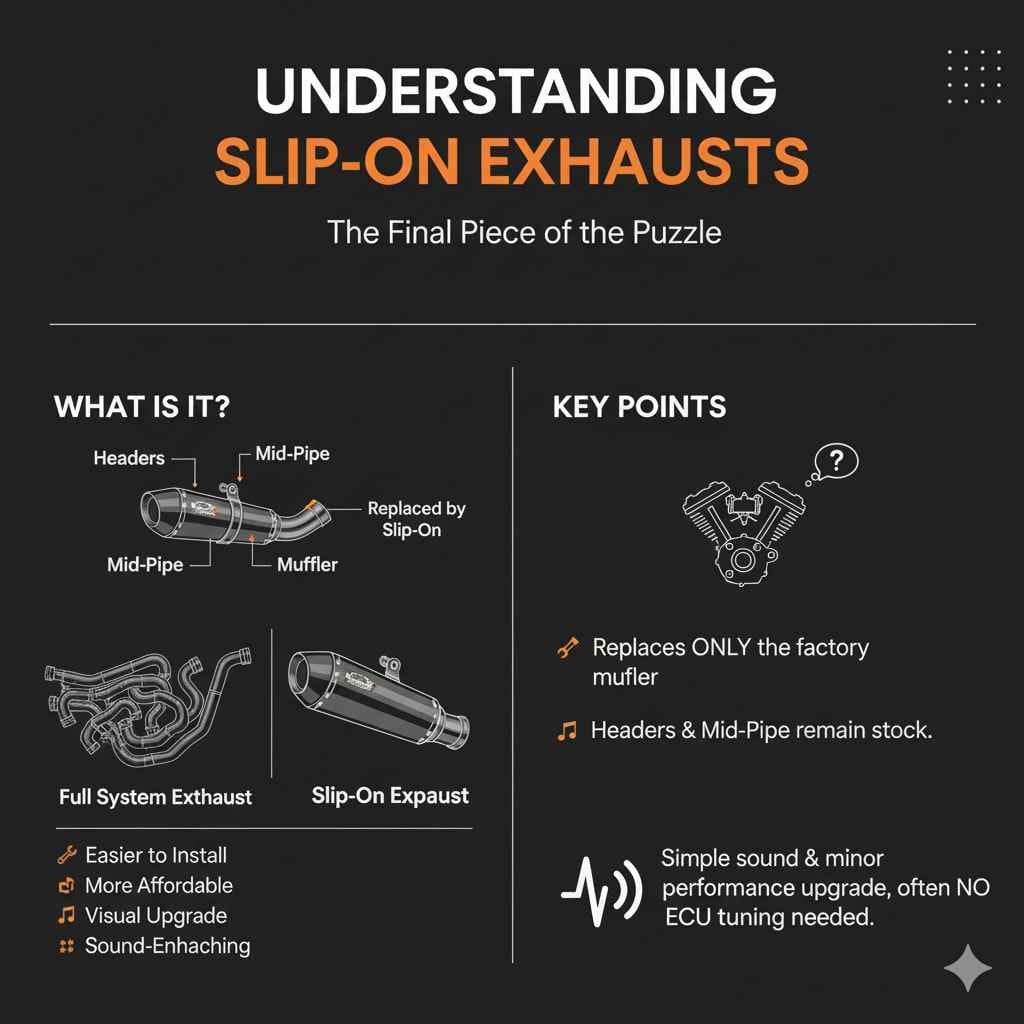
A slip-on exhaust, also called an “muffler delete” or “axle-back” in some areas, is a part of your bike’s exhaust system that replaces the factory-installed muffler. Think of it as the final piece of the puzzle that handles silencing the engine’s noise.
When you get a slip-on, you’re typically removing the stock muffler and attaching the new one directly. This is different from a “full exhaust system,” which replaces everything from the engine’s exhaust ports all the way to the tailpipe.
Why do people choose slip-ons? They’re often:
- Easier to install: Usually, it’s just a few bolts and clamps.
- More affordable: They cost less than a full system.
- Visually appealing: Aftermarket slip-ons often look sleeker and more aggressive.
- Sound-enhancing: They typically produce a deeper, louder, and sportier exhaust note.
When you just swap out the muffler, the rest of the exhaust pipes (the headers and the mid-pipe) stay the same. This is a key point because it means the engine’s exhaust gases still have to pass through the original pipes before reaching your new slip-on. This is why, for many bikes, a slip-on alone is often a simple performance and sound upgrade without needing further engine tuning.
What is a Jet Kit and Why Does it Matter?
Now, let’s talk about jet kits. Jet kits are performance tuning components, usually for motorcycles with older-style carburetors. They don’t apply to most modern bikes that use fuel injection.
If your bike has a carburetor, it mixes fuel and air to create the right mixture for the engine to burn. A jet is a small brass fitting with a precise hole, controlling how much fuel gets into this mixture.
A jet kit typically includes:
- New main jets (for higher engine speeds)
- New pilot jets (for idle and low speeds)
- Modified jet needles (for mid-range performance)
- Stronger or lighter springs for the carburetor slides
- Other small parts to adjust fuel flow
When Do You Need a Jet Kit?
You usually only need a jet kit if you’ve made significant changes to your bike’s exhaust or air intake system. These changes affect how much air can get into the engine and how easily exhaust gases can leave.
- Full Exhaust Systems: These systems allow exhaust gases to flow much more freely. This means the engine can take in more air but might not get enough fuel to match, leading to a lean condition.
- High-Flow Air Filters: If you install an air filter that lets more air into the engine, you’ll also need to adjust the fuel supply.
- Changes in Altitude: At higher altitudes, the air is thinner, meaning less oxygen. Carburetors need to be adjusted to reduce the fuel amount for proper running. Jet kits can help achieve this.
The goal of a jet kit is to re-tune the carburetor to compensate for these changes, ensuring the engine gets the optimal fuel-air mixture. This is crucial for smooth running, proper power delivery, and preventing engine damage from running too lean (too much air, not enough fuel).
You can learn more about how carburetors work and how they are tuned from resources like the Classic Tractors website, which details the principles of carburetor function applicable to many engines.
Slip-On Exhausts vs. Carburetor Tuning
Here’s where we connect the two: a slip-on exhaust might affect your bike’s engine performance enough to warrant carburetor adjustments, but it’s usually not a guarantee.
Why a slip-on alone often doesn’t require a jet kit:
- Minimal Flow Change: A slip-on muffler is designed to be a direct replacement for the stock muffler. While it might allow slightly more exhaust gas flow than the stock one, the change isn’t usually drastic enough to significantly impact the engine’s “breathing.
- Headers Remain Stock: The most restrictive part of the exhaust system is often the headers and the catalytic converter (if present). Since these are left untouched with a slip-on, the overall resistance to exhaust gas flow doesn’t change dramatically.
- Fuel-Injection Systems: Most modern motorcycles use fuel injection. These systems have sensors that constantly monitor engine conditions and automatically adjust the fuel mixture. They are very adaptable and can usually handle the small changes brought by a slip-on without needing manual tuning or a jet kit.
When a Slip-On Might Suggest Tuning
There are a few scenarios where adding a slip-on muffler could create enough of a change that you might notice performance issues or want to optimize. This is especially true for older bikes with carburetors.
- Significant Factory Restrictions: If your bike’s stock exhaust is exceptionally restrictive (e.g., heavily baffled muffler or a very restrictive catalytic converter), removing it for a less restrictive slip-on could lead to a noticeable increase in exhaust flow.
- Combined Modifications: If you’re installing a slip-on alongside other modifications like a high-flow air filter or rejetting the carb for another reason, then the slip-on contributes to the overall change in airflow.
- Older Carbureted Bikes: Carburetors are less forgiving than fuel injection. Small changes in air/fuel mixture can have a more pronounced effect. Some older bikes might run slightly “off” after just a slip-on.
- High Altitude Operation: As mentioned, if you ride often at high altitudes, your bike will naturally run richer (more fuel than needed) due to thinner air. A slip-on might slightly exacerbate this if it opens up the exhaust flow more than expected.
It’s also worth noting that some slip-on manufacturers might recommend jet kits even for simple installations. This can be for a few reasons, including ensuring optimal performance for all riding conditions and altitudes, or simply to sell more products. Always check the manufacturer’s specific recommendations for your chosen slip-on.
Signs Your Bike Might Need Tuning After a Slip-On
Even if you’re told you probably don’t need a jet kit, it’s important to listen to your bike. Your engine will tell you if something isn’t right with the fuel-air mixture.
Here are some common signs that your bike might be running too lean (too much air, not enough fuel) or too rich (too much fuel, not enough air) after a slip-on installation:
Signs of a Lean Condition (More likely with slip-ons if you have carburetors)
- Engine Surging: The engine speed fluctuates up and down, especially at steady throttle.
- Hesitation/Misfiring: The engine sputters or misses, particularly when you accelerate.
- Overheating: A lean mixture burns hotter than a proper mixture, potentially leading to higher engine temperatures.
- Poor Throttle Response: The bike feels sluggish or unresponsive when you twist the throttle.
- Popping/Backfiring on Deceleration: You might hear distinct pops or backfires from the exhaust when you let off the throttle. This is often a sign of unburnt fuel igniting in the hot exhaust system. Some popping can be normal with aftermarket exhausts, but excessive amounts are a concern.
- Engine Dies at Idle: The engine may stall when coming to a stop or when idling.
Signs of a Rich Condition (Less common with just a slip-on, more with full systems or other mods)
- Black Smoke from Exhaust: This indicates unburnt fuel is being expelled.
- Smell of Gasoline: A strong fuel oder might be present.
- Sluggish Acceleration: The engine struggles to rev up.
- Fouled Spark Plugs: Spark plugs might appear black and sooty.
Many of these symptoms stem from the engine not getting the right amount of air mixed with its fuel. If you notice these, it’s time to investigate further. A properly adjusted fuel mixture is essential for both performance and the longevity of your engine. For more details on engine health and diagnostics, resources from reputable automotive institutions can be helpful, such as those found on The University of Iowa’s Center for Energy and Environmental Education (CEE), which often covers engine emissions and efficiency principles.
When to Consider a Jet Kit (or Fuel Controller)
The decision about a jet kit boils down to your bike, your environment, and your modifications.
Consider a Jet Kit If:
- Your bike is carbureted: This is the primary condition. Fuel-injected (FI) bikes don’t use jet kits.
- You installed a full exhaust system: This significantly opens up exhaust flow.
- You installed a high-flow air filter AND a full exhaust: This is a common recipe for needing tuning.
- You frequently ride at significantly different altitudes: A jet kit can help optimize performance across varied air densities.
- You notice significant performance issues (like those listed above) after just a slip-on: This indicates the slip-on made a bigger difference than anticipated.
- The slip-on manufacturer explicitly recommends it for optimal performance.
You Likely DO NOT Need a Jet Kit If:
- Your bike has fuel injection (FI): Your bike automatically adjusts fuel.
- You are only installing a basic slip-on muffler.
- You ride at a consistent, low altitude and notice no negative symptoms.
- You have a full exhaust system but are happy with the performance and don’t notice any issues (though always check for lean conditions!).
What About Fuel-Injected Bikes?
For bikes with fuel injection, the concept of a “jet kit” doesn’t apply. Instead, if significant modifications like a full exhaust system are made, tuning is done through an ECU (Engine Control Unit) flash or by using an aftermarket fuel controller. These devices allow precise adjustments to the fuel mapping that the bike’s computer uses.
A fuel controller, like those from Dynojet, intercepts signals between the ECU and the injectors. This allows you to fine-tune the fuel mixture, much like a jet kit does for carburetors, but in a more sophisticated way for modern bikes. For a slip-on exhaust alone, fuel-injected bikes rarely need these tuning devices, as the stock ECU can usually compensate.
DIY vs. Professional Installation/Tuning
Deciding whether to tackle jetting yourself or have a professional do it depends on your comfort level and tools.
DIY Tuning (For Carburetors):
Pros:
- Saves money on labor costs.
- Builds valuable knowledge and skills for future maintenance.
- Offers the satisfaction of doing it yourself.
Cons:
- Can be time-consuming and frustrating if you’re inexperienced.
- Requires specialized tools (carburetor synchronizer, feeler gauges, sometimes a vacuum gauge).
- There’s a risk of incorrectly tuning your carburetor, which can lead to poor performance or engine damage.
- Requires access to a workshop and potentially a dynamometer for precise tuning, though many rely on feel and careful testing.
Recommended Tools for Carb Jetting:
- Screwdrivers (various sizes, including carburetor-specific ones)
- Wrenches/sockets
- Carburetor cleaner
- Shop rags
- New jets from the kit
- Pliers
- (Optional but recommended) Carburetor synchronizer
- (Optional) Vacuum gauge
- Service manual for your specific bike
Professional Tuning:
Pros:
- Ensures correct tuning by experienced technicians.
- Saves you time and potential headaches.
- Often uses advanced tools like dynamometers for precise results.
- Peace of mind knowing it’s done right.
Cons:
- Can be expensive, especially if a dynamometer session is included.
- You rely on someone else’s schedule.
If your bike has fuel injection, professional tuning (ECU flashing or dyno tuning with a fuel controller) is almost always the recommended route. While some advanced users might explore DIY ECU flashing, it carries significant risks if done incorrectly.
For reliable tools and parts, consider reputable suppliers. For example, high-quality tools can often be found through established retailers such as The Home Depot’s Hand Tools section, or specialized automotive tool suppliers.

Table: Slip-On Exhaust Impact on Tuning Needs
To help visualize when tuning might be a good idea, here’s a table summarizing the impact of a slip-on exhaust based on common motorcycle types and modifications.
| Motorcycle Type | Modification | Likely Need for Jet Kit/Tuning | Notes |
|---|---|---|---|
| Modern Fuel-Injected (FI) Bike | Slip-On Exhaust Only | No | Stock ECU usually compensates. |
| Slip-On + High-Flow Air Filter | Potentially (ECU Flash/Fuel Controller) | Less likely than with carburetors, but possible. | |
| Older Carbureted Bike | Slip-On Exhaust Only | Unlikely to Very Unlikely | Monitor for lean symptoms. |
| Slip-On + High-Flow Air Filter | Likely | Significant change in airflow. | |
| Full Exhaust System | Likely to Very Likely | Major change in exhaust flow. | |
| Any Bike (FI or Carbureted) | Significant altitude changes + exhaust mods | Possibly (Jet Kit for carb, ECU tune for FI) | Altitude affects air density. |
Frequently Asked Questions (FAQs)
Q1: What is the simplest way to tell if my bike needs rejetting after a slip-on?
A1: Listen to your bike. Look for signs like engine hesitation, surging, or excessive popping on deceleration, especially when the engine is warm. If it runs smoothly and pulls well throughout the RPM range, it’s likely fine. A quick check of spark plugs (clean and tan/brown color) is also a good indicator for carbureted bikes.
Q2: My bike is fuel-injected. Do I need a “jet kit” or something similar for a slip-on?
A2: No, fuel-injected motorcycles do not use jet kits, as they don’t have carburetors. For a slip-on exhaust alone, your bike’s stock fuel injection system can almost always adjust automatically. Significant changes like a full exhaust system with block-off plates might benefit from an ECU flash or a fuel controller, but this is rare for just a slip-on.