Are MBRP Exhaust Good? Proven Performance
MBRP exhausts are a great choice for many car owners looking for improved performance and a satisfying exhaust note without breaking the bank. They offer a good balance of quality, sound, and power gains.

MBRP
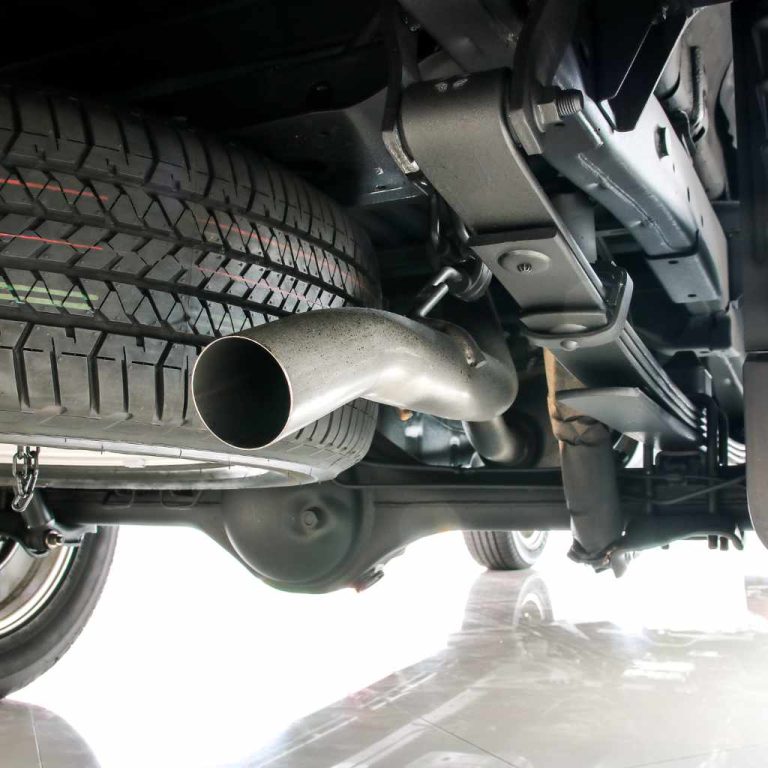
MBRP Catback Exhaust AL
- Material: Aluminized, Cat-Back exhaust
- Tubing diameter: 3 in.
- Exit: Single Side
As an Amazon Associate I earn from qualifying purchases.
Upgrading your car’s exhaust can feel like a big step, especially if you’re new to car modifications. You might be wondering if MBRP exhausts are worth the investment. Many car owners, just like you, want to get more sound and power from their vehicles without dealing with complicated setups or confusing terms. It’s totally understandable to want clear answers before you spend your hard-earned money. The good news is, you’ve come to the right place! We’re here to break down what MBRP exhausts are all about, their benefits, and help you decide if they’re the right fit for your ride. We’ll cover their performance advantages, sound quality, and what makes them a popular choice for so many drivers.
What Exactly is an MBRP Exhaust System?
MBRP stands for “Modern, Bold, & Reliable Performance.” That pretty much sums up what they aim to deliver! MBRP is a Canadian company that has been making aftermarket exhaust systems for a wide range of vehicles since 1996. They focus on creating performance exhaust parts that give drivers a noticeable bump in power, a more aggressive engine sound, and often, better fuel efficiency. They are well-known for producing exhaust systems that are designed to be a direct fit for your vehicle, meaning most of their kits can be installed without needing custom fabrication. This makes them a really attractive option for DIYers and those looking for a straightforward upgrade.
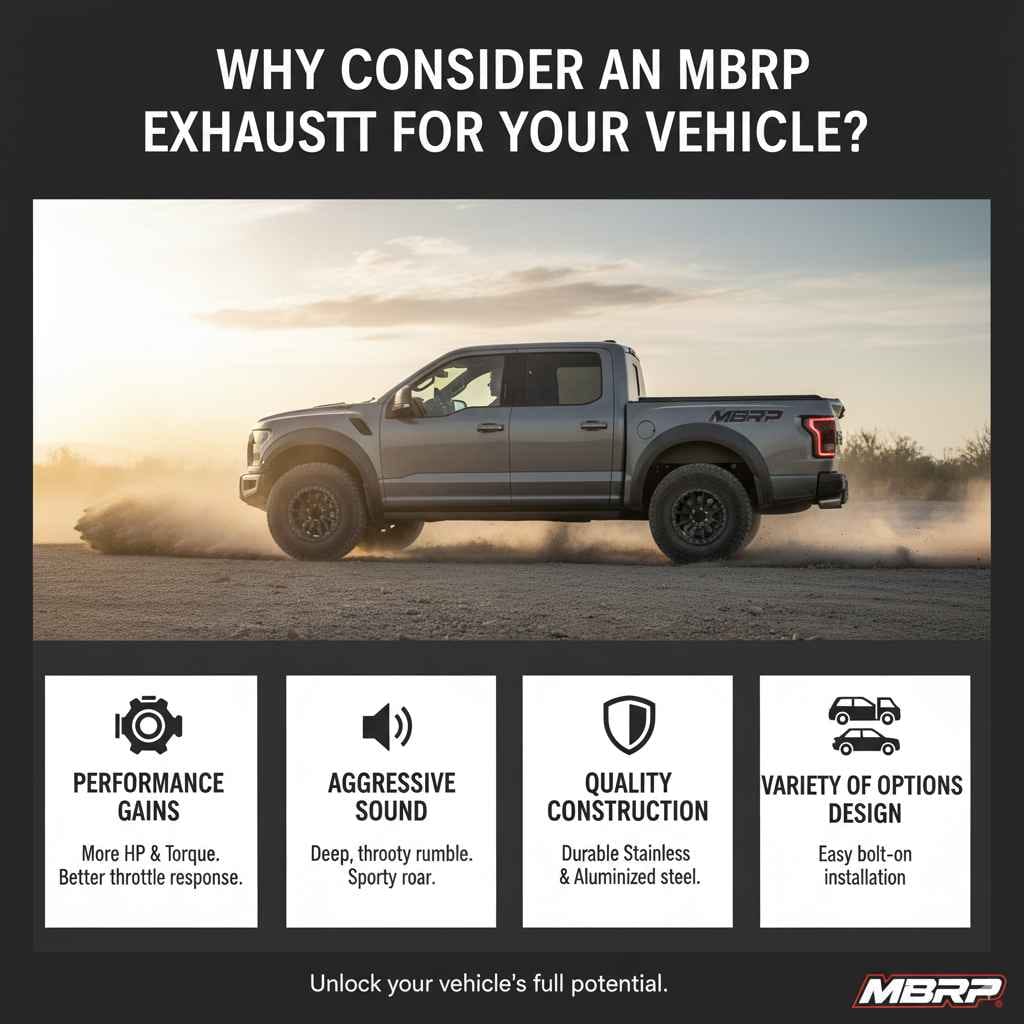
Why Consider an MBRP Exhaust for Your Vehicle?
When you’re thinking about an aftermarket exhaust, you’re usually looking for a few key things: better sound, more power, and maybe improved looks. MBRP exhaust systems aim to deliver on all these fronts. They’re designed to replace your stock exhaust, which is often built for quiet operation and emissions rather than performance.
Here’s a quick look at some of the main reasons people choose MBRP:
Performance Gains: By reducing restrictions in the exhaust flow, MBRP systems can help your engine breathe easier. This often translates to a small but noticeable increase in horsepower and torque.
Aggressive Sound: If you want your vehicle to sound more powerful and sporty, MBRP offers a range of sound profiles, from a deep, throaty rumble to a more aggressive, performance-oriented roar.
Quality Construction: MBRP uses durable materials like stainless steel and aluminized steel to ensure their exhaust systems can withstand the rigors of daily driving and various weather conditions.
Direct Fit Design: Many MBRP kits are designed as direct bolt-on replacements for your factory exhaust, which simplifies the installation process.
Variety of Options: They offer systems for a huge number of makes and models, from trucks and SUVs to sports cars and muscle cars.
How Do MBRP Exhausts Improve Performance?
This is where the real magic happens! Your car’s exhaust system is like its lungs. If those lungs are constricted, it’s harder for the engine to take in air and expel exhaust gases efficiently. MBRP exhaust systems work by improving this process.
Reduced Backpressure
Exhaust gases are produced by your engine during combustion. These gases need to escape. A restrictive exhaust system creates “backpressure,” which is like trying to exhale through a small straw. This backpressure fights against the engine’s pistons, costing it power.
MBRP systems are designed with larger diameter pipes, smoother bends, and often a less restrictive muffler. This drastically cuts down on backpressure, allowing the engine to expel gases much more easily.
Better Airflow
When exhaust gases can leave the engine more freely, the engine can also take in more fresh air. This improved “breathing” is crucial for combustion. More air combined with more fuel leads to a more powerful explosion within the engine cylinders, directly resulting in more horsepower and torque.
Engine Efficiency
While the primary goal is often performance, a less restrictive exhaust can also indirectly help with fuel efficiency. When the engine doesn’t have to work as hard to push out exhaust gases, it can sometimes use less fuel. This effect can vary greatly depending on driving style and the specific vehicle.
Understanding MBRP Exhaust Series: What’s the Difference?
MBRP offers different series of exhaust systems, and knowing these differences can help you choose the right one for your needs and budget. They use different materials and construction methods, which affect durability, sound, and cost.
Here’s a general breakdown of their common series:
| Series Name | Material | Typical Sound Profile | Durability | Best For | Price Range (General) |
|---|---|---|---|---|---|
| Pro Series (T409 Stainless Steel) | T409 Stainless Steel | Aggressive, Deep Rumble | Excellent (Resists rust well) | Enthusiasts wanting maximum durability and performance sound. | $$$ |
| Installer Series (Aluminized Steel) | Aluminized Steel | Deep Tone, Noticeable | Good (Protective coating, but can rust over time in harsh climates) | Budget-conscious buyers, everyday drivers wanting a sound upgrade. | $$ |
| XP Series (T304 Stainless Steel) | T304 Stainless Steel | Deep, Powerful, Sporty | Superior (Highly resistant to corrosion and rust) | Those seeking premium quality, extreme durability, and a refined performance sound. | $$$$ |
| Race Series (Muffler Delete or Modified Muffler) | Varies (Often T409 or T304 Stainless) | Very Aggressive, Loudest | Varies, but built for performance | Track use or those who want the loudest possible sound (may not be street legal in all areas). | $$ – $$$ |
Aluminized Steel: This is a carbon steel coated with aluminum. It’s affordable and offers decent corrosion resistance, making it a popular choice for budget-friendly performance. However, in very wet or corrosive environments, it can eventually rust. The MBRP Installer Series typically uses this material.
T409 Stainless Steel: This is a magnetic stainless steel that offers good corrosion resistance and is stronger than aluminized steel. It’s a step up in durability and often found in MBRP’s Pro Series. It’s a great balance of performance, sound, and longevity.
T304 Stainless Steel: This is a premium, non-magnetic stainless steel known for its exceptional corrosion resistance and durability. It’s highly resistant to rust, even in harsh climates. MBRP’s XP Series often uses this material for those who want the absolute best in longevity and appearance.
When choosing, consider your climate (if you live somewhere with a lot of salt on the roads, stainless steel is often a better long-term investment) and your budget.
Sound Quality: What to Expect from MBRP
One of the biggest draws of an aftermarket exhaust is the sound. MBRP exhausts are known for producing a satisfying, aggressive tone that many drivers crave. The exact sound will depend on several factors:
The Vehicle: The engine size, configuration (V6, V8, inline-4), and exhaust manifold design all play a role in how an exhaust sounds.
The MBRP Series: As mentioned, different series have different muffler designs and pipe diameters, which affect the tone and volume. Race Series systems, for example, often have limited muffling for maximum sound output.
Muffler Design: MBRP offers systems with different muffler types. Some are designed for a deep, resonant rumble, while others aim for a sharper, sportier note.
Material and Pipe Diameter: Larger pipes and smoother bends generally contribute to a deeper, less raspy sound.
Many MBRP exhaust systems are engineered to provide a noticeable upgrade in sound without being overwhelmingly loud or producing an annoying drone at highway speeds. However, “loud” is subjective! It’s always a good idea to search for sound clips of your specific vehicle model with the MBRP exhaust system you’re interested in on platforms like YouTube to get a real-world idea of the sound.
MBRP Exhaust Installation: A Beginner-Friendly Guide
One of MBRP’s selling points is that many of their systems are designed for a “direct fit.” This means they are engineered to bolt onto your existing exhaust hangers and connect to the factory exhaust manifold or catalytic converter. This makes installation much more approachable for beginners.
Here’s a general overview of what’s involved. Keep in mind that this is a simplified guide, and you should always refer to the specific installation instructions that come with your MBRP exhaust kit.
Tools You’ll Likely Need:
Safety Glasses and Gloves: Essential for protecting yourself.
Socket Set and Wrenches: You’ll need various sizes to remove old bolts and install new ones.
Breaker Bar: Useful for loosening stubborn, rusted bolts.
Penetrating Oil (like WD-40): Spray this on old bolts and nuts the day before installation to help loosen them.
Exhaust Hanger Pliers or Pry Tool: To safely remove the exhaust from its rubber hangers.
Jack and Jack Stands: Never work under a car supported only by a jack. Ensure the vehicle is on a level surface and securely supported. For trucks and higher vehicles, you might not need these, but always prioritize safety.
Torque Wrench: For tightening bolts to the manufacturer’s specifications.
Wire Brush: To clean up mounting surfaces before reinstalling.
Optional: Grinder or Saw: In rare cases, if bolts are completely seized, you might need to cut off old exhaust components.
General Installation Steps:
1. Preparation and Safety First:
Park your vehicle on a level surface.
Ensure the engine and exhaust are completely cool.
Put on your safety glasses and gloves.
If lifting the vehicle, use jack stands securely.
2. Locate and Remove Old Exhaust:
Identify the sections of your factory exhaust system.
Spray penetrating oil on all bolts and hangers connecting the exhaust sections. Let it soak.
Start unbolting the exhaust system, usually working from the rear towards the front. You might need to remove clamps, bolts, or nuts holding sections together and at the hanger mounts.
Use your exhaust hanger tool to gently pry the rubber hangers off the exhaust pipes. The system will slowly lower.
3. Clean and Prepare:
Once the old exhaust is removed, use a wire brush to clean the surfaces where new clamps or bolts will attach. This ensures a good seal.
4. Install New MBRP System:
Follow the MBRP instructions precisely. They usually involve assembling sections of the new exhaust and hanging them up using the provided hardware or your original hangers.
Start by loosely attaching the system without tightening everything down fully.
5. Align and Adjust:
Once all sections are hanging, begin to gently adjust them to ensure proper alignment. You want to make sure the exhaust isn’t touching the chassis or suspension components, which can cause noise and rattles.
Check that the tips are positioned correctly at the rear of the vehicle.
6. Tighten Everything Down:
Once you’re happy with the alignment, start tightening all clamps and bolts. Work your way from front to back, ensuring a snug fit.
Use a torque wrench for any critical fasteners, especially where the exhaust connects to the engine.
7. Final Check:
Double-check that all clamps are tight and all components are securely in place.
Lower the vehicle if it was on jack stands.
8. Start Up and Listen:
Start the engine and listen for any exhaust leaks (hissing sounds).
Check for any unusual rattles or vibrations.
Take a short test drive to confirm everything sounds and feels right.
Important Note: If you’re uncomfortable with any part of this process, it’s always best to have a professional install the exhaust. Many auto service centers can easily handle this type of upgrade.
Are MBRP Exhausts Legal?
This is a crucial question, and the answer can be a bit nuanced. MBRP offers various exhaust systems, some of which are street-legal and designed to meet emissions standards, while others are intended for off-road use only.
Street-Legal Systems: These systems are designed to work with your vehicle’s existing emissions control equipment, such as the catalytic converter. They aim to improve performance and sound without violating regulations. When purchasing, look for products that are explicitly labeled as “CARB-compliant” or “street-legal.”
Off-Road or Race Systems: These systems often bypass or remove emissions control devices, like catalytic converters, or use significantly less restrictive mufflers to maximize performance and sound. These are not legal for use on public roads in most jurisdictions because they do not meet emissions standards. Using these on public roads can result in fines or failure to pass emissions tests. You can learn more about emissions standards from the U.S. Environmental Protection Agency (EPA).
Always double-check the product description and your local laws and regulations before purchasing and installing an MBRP exhaust system. MBRP themselves often provide information on their website about the legality of specific systems for different regions.
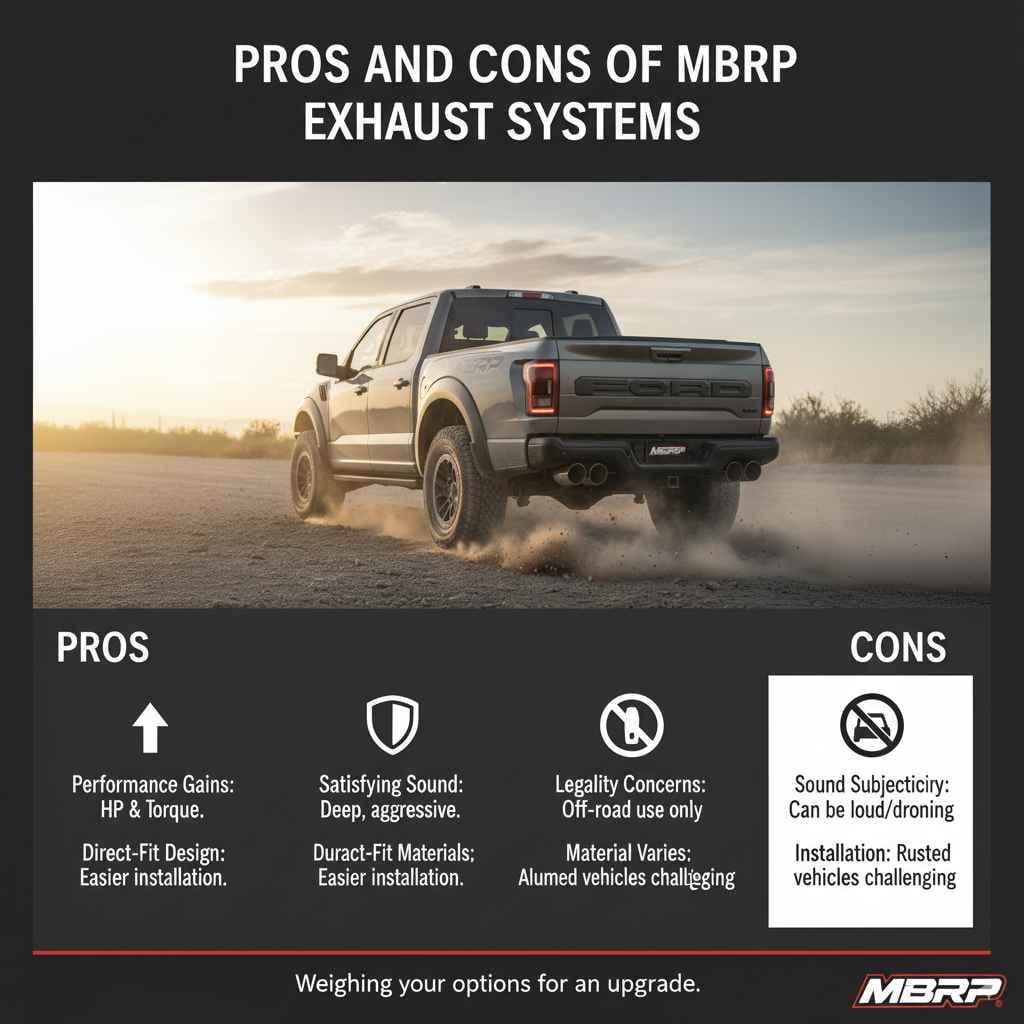
Pros and Cons of MBRP Exhaust Systems
Like any automotive upgrade, MBRP exhausts have their advantages and disadvantages. Understanding these can help you make a well-informed decision.
Pros:
Proven Performance Gains: Many users report noticeable improvements in throttle response, horsepower, and torque.
Satisfying Sound: Offers a range of aggressive and deep exhaust notes that appeal to many enthusiasts.
Durable Materials: Available in various stainless steel grades and aluminized steel, offering good longevity depending on the series.
Direct-Fit Design: Simplifies installation for many popular vehicle models, reducing labor costs if you opt for professional installation.
Wide Vehicle Coverage: MBRP offers systems for a vast array of trucks, SUVs, muscle cars, and more.
Good Value for Money: Often considered a more affordable yet high-quality option compared to some premium brands.
Cons:
Sound Can Be Subjective: What one person finds appealing, another might find too loud or droning. Always research sound clips for your specific application.
Potential for Drone: Some systems, especially those with less muffling, can create an annoying drone at certain RPMs on the highway.
Legality Concerns: Some MBRP systems are designed for off-road use only and are not street-legal due to emissions or noise regulations.
Installation Challenges: While often direct-fit, very old or rusted vehicles can still present significant installation challenges.
Material Durability Varies by Series: Aluminized steel, while affordable, will not last as long as stainless steel in harsh climates.
Frequently Asked Questions About MBRP Exhausts
Are MBRP exhausts worth the money?
Yes, for many drivers, MBRP exhausts are absolutely worth the money. They offer a great balance of performance gains, improved sound, and quality construction for their price point. You get a noticeable upgrade without the premium cost associated with some other brands.
Do MBRP exhausts increase horsepower?
MBRP exhausts are designed to reduce backpressure and improve exhaust flow, which can lead to measurable horsepower and torque gains. While the exact increase varies by vehicle and specific MBRP system, most users report a positive difference in performance, often in the range of 5-15 horsepower.
What’s the difference between MBRP Pro Series and XP Series?
The main difference lies in the materials and durability. The Pro Series typically uses T409 stainless steel, which offers excellent corrosion resistance. The XP Series uses T304 stainless steel, which is a premium grade known for superior corrosion and rust resistance, making it ideal for harsh climates or if you want extreme longevity.
Can I install an MBRP exhaust myself?
Many MBRP exhaust systems are designed as direct bolt-on replacements and can be installed by a confident DIYer with basic tools and mechanical knowledge. However, installation can be challenging on older vehicles with rusted bolts, so if you’re unsure, professional installation is recommended.
Will an MBRP exhaust make my truck sound better?
MBRP exhausts are renowned for their sound quality. They typically produce a deep, aggressive, and satisfying tone that many truck owners desire. The specific sound will vary based on your truck’s engine and the particular MBRP system you choose. Listening to sound clips online for your specific truck model is highly recommended.
Are MBRP exhaust systems legal in California?
Legality in California (and other regions with strict emissions laws) depends heavily on the specific MBRP system. Systems designed for street use must be CARB-compliant and retain the factory catalytic converter. MBRP often labels their street-legal systems. Off-road or race-only systems are not legal for use on public roads in California.
Related pick: Check today's price on Amazon