Are Employers Responsible For Employees Driving At Work
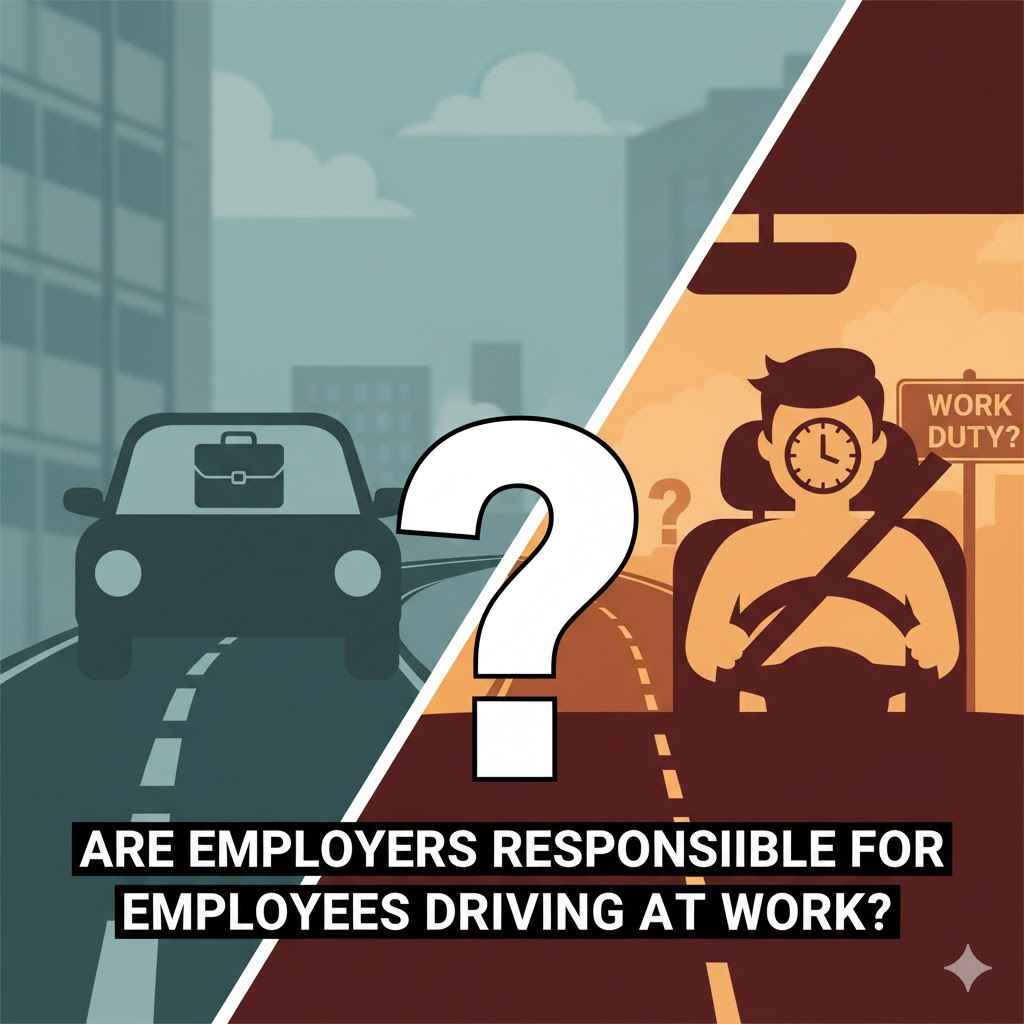
Thinking about who’s on the hook when work driving goes wrong can feel a bit confusing, especially if you’re new to business. You might wonder, are employers responsible for employees driving at work? It’s a common question because it involves safety and money.
Don’t worry, this is a simple guide to help you figure it out. We’ll walk through it step by step so you can feel confident about what you need to know.
When Employers Are Responsible For Employees Driving At Work
This section looks at the situations where a company could be held responsible if an employee gets into an accident while driving for work. It covers the main reasons why this happens and what the law generally says. We will explore the core principles that link a business to its employees’ actions on the road when those actions are part of their job duties.
Understanding these links is key for any business owner or manager.
Employer Liability For Employee Driving
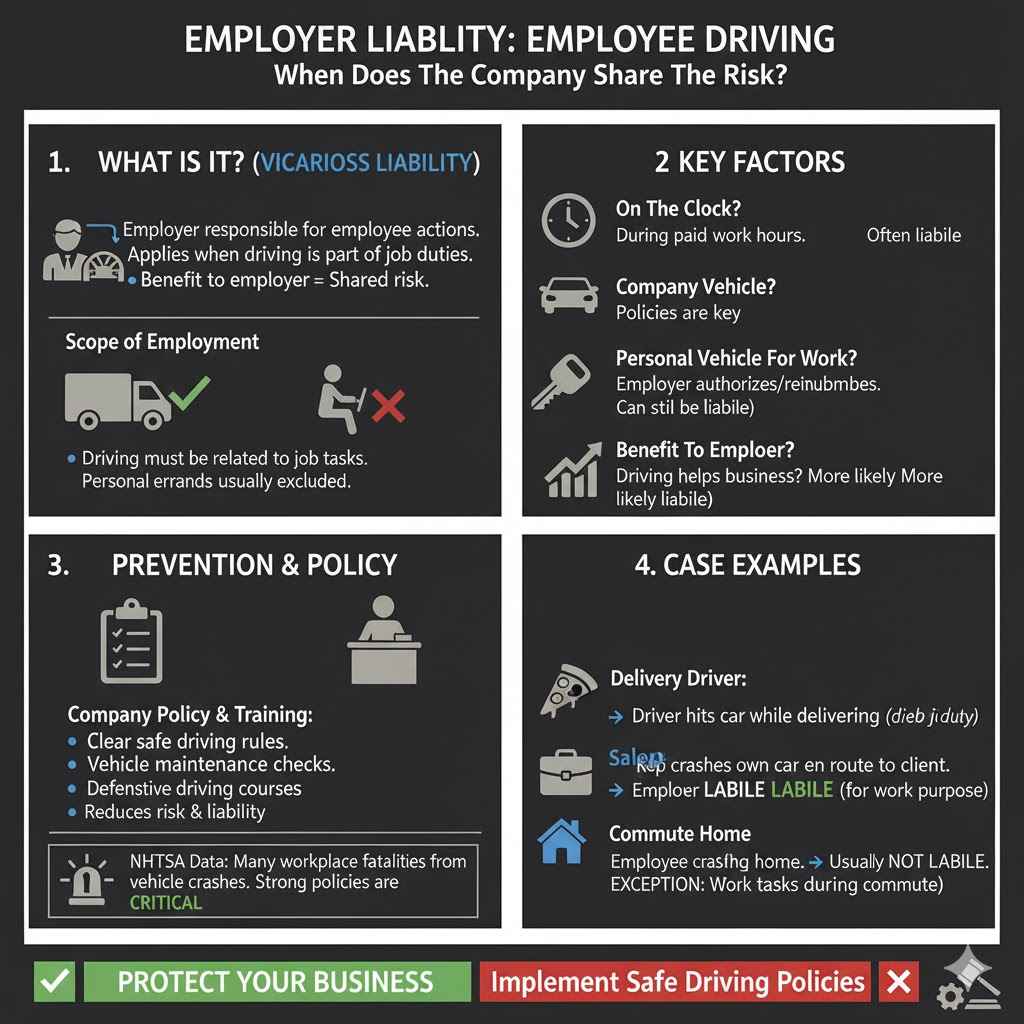
Companies can be responsible for their employees’ driving when that driving is done as part of their job. This is often called “vicarious liability” or “respondeat superior,” which is a fancy way of saying “let the master answer.” It means the employer can be held responsible for the actions of their workers if those actions happen while the worker is doing their job duties. The main idea is that if the employee’s driving benefits the employer in some way, the employer shares in the risk.
Scope of Employment
For an employer to be responsible, the employee must be acting within the “scope of employment” when the accident occurs. This means the driving must be related to the employee’s job tasks. For example, if a delivery driver hits another car while making a delivery, the employer is likely responsible.
If that same delivery driver causes an accident while driving to a personal appointment on their day off, the employer is probably not responsible.
Company Policy and Training
A company’s policies on driving and the training it provides play a big role. If a company has clear rules about safe driving, vehicle maintenance, and when employees should and shouldn’t drive for work, it can help protect them. Providing good training on defensive driving and company vehicle use also shows the employer is taking steps to prevent accidents.
This can be important evidence if something does go wrong.
Nature of the Work
Some jobs inherently involve more driving than others. Salespeople, delivery drivers, field technicians, and construction workers often spend a lot of time on the road as a core part of their job. For these roles, the link between the employee’s driving and their employment is very clear.
Therefore, employers in these fields often face higher risks related to employee driving.
Statistics show that a significant number of workplace injuries and fatalities occur due to vehicle crashes. According to the National Highway Traffic Safety Administration (NHTSA), a large percentage of fatal crashes on the job involve work-related driving. This highlights the importance for businesses to have strong policies and procedures in place to manage driving risks.
Factors Determining Employer Responsibility
Several factors help decide if an employer is responsible for an employee’s driving accident. These include whether the employee was on the clock, if the vehicle was company-owned or personal, and if the driving was for a direct work purpose. Even minor deviations from work tasks can sometimes still fall under the employer’s responsibility if they are closely related to the job.
On The Clock
Being “on the clock” is a key factor. If an employee is driving during their paid working hours, it’s more likely that the driving is considered part of their job. This applies even if the employee is driving their own car, as long as they are doing it for a work-related reason.
The employer is usually responsible for accidents that happen during these times.
Company Vehicle Use
When an employee drives a company-owned vehicle, the employer’s responsibility is often clearer. The company owns the asset and dictates its use. However, responsibility can still depend on whether the employee was using the vehicle for approved work purposes or for personal reasons.
Strict policies on company vehicle usage are vital for managing this risk.
Personal Vehicle Use For Work
Many employees use their personal vehicles for work tasks, such as visiting clients or picking up supplies. In these cases, employers may still be liable. This often depends on whether the employer reimburses employees for mileage or has policies in place for using personal vehicles for business.
Proof of authorization for the trip is also important.
Benefit To The Employer
A significant factor is whether the employee’s driving provided a benefit to the employer. If the driving was done to complete a task that helps the company make money, serve customers, or achieve business goals, the employer is more likely to be held responsible for any accidents. This principle connects the employee’s actions directly to the employer’s interests.
A study by the Occupational Safety and Health Administration (OSHA) found that companies with comprehensive safe driving programs experienced fewer vehicle-related incidents. These programs often include driver training, vehicle maintenance checks, and clear policies on when and how employees should drive for work. The cost savings from avoiding accidents often far outweigh the investment in these programs.
Legal Precedents And Case Studies
Looking at past court cases can help us understand how responsibility is assigned. These cases provide real-world examples of how the law interprets “scope of employment” and other factors. They show that courts often look at the facts of each situation very carefully to determine who should be held accountable.
Case Example 1 The Delivery Driver
Imagine a delivery driver employed by a pizza company. While on duty, heading to a customer’s house, they run a red light and cause an accident. In this scenario, the driver is clearly acting within the scope of their employment.
The pizza company would almost certainly be held responsible for the damages caused by their driver. This is because the driving was directly for the benefit of the business – delivering a product to a paying customer.
Case Example 2 The Sales Representative
Consider a sales representative who drives their own car to visit clients. They are on their way to a client meeting, using a route approved by their manager, when they get into an accident. Even though it’s their personal car, the employer is likely responsible.
This is because the driving is directly related to generating sales for the company, which is a core job duty. The employer would be responsible for damages, especially if they reimburse for mileage.
Case Example 3 The Employee Commute
Now, think about an employee driving from their home to the company office. Generally, this “commuting” is considered the employee’s personal responsibility. However, there are exceptions.
If the employer requires the employee to pick up supplies or make a stop for work during their commute, then the employer might become responsible for the portion of the trip that involved the work-related task. The lines can get blurry here.
In a landmark case, a court ruled that an employer was liable when an employee, driving a company car home after working late, caused an accident. The court determined that the employee’s commute was considered part of their employment because they were subject to call for emergencies even after regular hours, and the company vehicle was essential for this. This shows that the interpretation of “scope of employment” can be broad.
Reducing Employer Liability For Employee Driving
Protecting your business from the financial and legal risks associated with employee driving is crucial. This section focuses on practical steps you can take to minimize liability. We will cover policies, training, and vehicle management strategies that help ensure safety and compliance, thereby reducing the chances of costly accidents and legal claims.
Developing A Comprehensive Driving Policy
A clear and well-communicated driving policy is the foundation for managing employee driving risks. This policy should outline expectations, rules, and procedures for all employees who drive for work purposes, whether in company vehicles or their own. It needs to be easy to understand and consistently enforced across the organization.
Clear Expectations for Safe Driving
Your policy must state that safety is the top priority. It should prohibit risky behaviors like speeding, driving under the influence of alcohol or drugs, and using mobile devices while driving. Explicitly mention that employees are expected to follow all traffic laws and drive defensively.
This sets a clear standard for employee conduct on the road.
Vehicle Use Guidelines
If company vehicles are involved, the policy should detail who is authorized to drive them, how they can be used (work vs. personal use), and rules for maintenance and reporting issues. For personal vehicles used for work, the policy should cover insurance requirements and how mileage will be reimbursed.
This helps to control how vehicles are operated and maintained.
Procedures for Accidents and Incidents
The policy needs to outline exactly what an employee should do if they are involved in an accident, no matter how minor. This includes steps like stopping immediately, exchanging information, reporting to the authorities if required, and notifying the employer promptly. Having a clear procedure ensures quick and accurate reporting, which is vital for managing insurance and legal matters.
Drug and Alcohol Testing
Depending on your industry and local laws, your policy may include provisions for drug and alcohol testing. This can be conducted before hiring, after an accident, or randomly. Such testing demonstrates a commitment to safety and can deter employees from driving while impaired, significantly reducing risk.
According to the National Safety Council, organizations with strong policies and training programs see a reduction in vehicle crashes by as much as 20%. These programs typically involve regular policy reviews, employee acknowledgments, and clear consequences for violations, reinforcing the importance of safe driving habits and business responsibility.
Employee Training and Education
Simply having a policy isn’t enough; employees must understand it and be trained on safe driving practices. Regular training reinforces the importance of safety and equips employees with the skills to avoid accidents. This proactive approach is one of the most effective ways to reduce liability.
Defensive Driving Courses
Offering defensive driving courses is highly recommended. These courses teach drivers how to anticipate potential hazards, react appropriately to dangerous situations, and avoid collisions. They cover topics like maintaining safe following distances, scanning the road, and managing distractions.
Many insurance companies also offer discounts for employees who complete accredited defensive driving programs.
Understanding Company Policy
Ensure all employees who drive for work fully understand the company’s driving policy. This can be done through orientation for new hires and regular refresher sessions for existing staff. Employees should sign a document acknowledging they have read, understood, and agree to comply with the policy.
This creates a documented commitment.
Distracted Driving Awareness
Distracted driving is a major cause of accidents. Training should specifically address the dangers of using cell phones, texting, eating, or engaging with passengers while driving. Educate employees on the legal implications and the severe risks associated with these distractions.
Reinforce the “hands-free” and “eyes on the road” principle.
Vehicle Inspection and Maintenance
Train employees on how to perform pre-trip vehicle inspections, especially if they are using company vehicles or their own for work. This includes checking tires, brakes, lights, and fluid levels. Emphasize the importance of reporting any mechanical issues immediately to ensure vehicles are always in safe operating condition.
Proper maintenance prevents many common roadside problems.
A report from the Center for Insurance Policy and Research indicated that companies investing in driver training experienced a 15% decrease in accident rates. This training often includes simulator-based exercises and real-world scenario discussions, helping employees build confidence and competence behind the wheel.
Vehicle Management and Monitoring
Effective management of company vehicles and monitoring of driver behavior can further reduce risks. This involves regular maintenance, tracking, and ensuring that vehicles are only used for authorized purposes. Implementing technology can also provide valuable insights into driving habits.
Regular Vehicle Maintenance
A proactive maintenance schedule is essential for company vehicles. This includes routine oil changes, tire rotations, brake checks, and ensuring all safety systems are functioning correctly. Regular inspections by qualified mechanics can identify potential problems before they lead to accidents.
Keeping detailed maintenance records is also important for demonstrating due diligence.
Vehicle Tracking Systems
Telematics and GPS tracking systems can provide valuable data on vehicle location, speed, and driving behavior. This technology can help identify areas where drivers may be speeding, braking harshly, or taking unauthorized routes. The data can be used to coach drivers, improve route efficiency, and ensure vehicles are used appropriately.
It also aids in accident reconstruction if an incident occurs.
Insurance and Coverage
Ensure that your business insurance coverage is adequate for the risks associated with employee driving. This includes commercial auto insurance, which should cover liability, collision, and comprehensive damage for company vehicles. For employees using personal vehicles for work, ensure your policy addresses this coverage, or confirm their personal insurance is sufficient and appropriate.
Fuel Card Policies
Implementing strict policies for fuel cards can help monitor vehicle usage and prevent unauthorized personal travel. Fuel card data can sometimes be cross-referenced with GPS data to verify routes and distances traveled for work purposes. This adds another layer of oversight and accountability.
Companies that implement robust telematics systems have reported a reduction in fuel costs by up to 10% and a decrease in accident frequency by 15%. These systems provide real-time data that enables proactive management of the fleet and driver performance, leading to improved safety and efficiency.
Sample Scenario: The Construction Site Visit
A project manager needs to visit multiple construction sites throughout the day. They use a company van. Their driving policy requires them to log all trips in a company app and report any vehicle issues immediately.
They also recently completed a defensive driving course.
- The project manager drives from the office to the first site.
- During the trip, they avoid using their phone, focusing on the road.
- They notice a potential hazard on the road and adjust their speed accordingly.
- Upon arrival at the site, they log the trip’s start time and destination in the app.
- If an accident were to occur on the way to any site, they know to stop, report to the police if necessary, exchange information, and immediately contact their manager and the insurance company.
This scenario illustrates a proactive approach where clear policies, training, and responsible behavior minimize risk for both the employee and the employer.
Types of Driving That Can Lead to Employer Responsibility
Not all driving by employees is the same. Some types of driving are more closely linked to job duties and therefore more likely to create employer responsibility. Understanding these distinctions helps businesses focus their safety efforts and policies where they are most needed.
We will look at specific activities that often fall under the employer’s watch.
Business Travel
Business travel encompasses any driving an employee does specifically to conduct company business. This is a broad category and a primary source of potential employer liability. It includes a wide range of activities that directly benefit the employer.
Sales Calls and Client Visits
When employees travel to meet with current or potential clients, their driving is directly tied to generating revenue or maintaining business relationships. This is a clear example of driving within the scope of employment. Employers are generally responsible for accidents occurring during these trips, whether the employee uses a company car or their own.
Site Inspections and Meetings
Employees like inspectors, engineers, or supervisors who travel between different work sites or to attend business-related meetings are engaged in work-related driving. The purpose of the travel is to perform their job duties or contribute to company operations. Any accident during these travels typically places liability on the employer.
Picking Up Supplies or Deliveries
Tasks such as collecting inventory, delivering products to customers, or transporting equipment are integral to many businesses. Driving for these purposes is a direct job function. The employer is responsible for ensuring these drivers are safe and that the vehicles are well-maintained, as the driving directly supports business operations.
A survey of fleet managers found that business travel accounted for over 60% of all vehicle miles driven by employees. This significant amount of travel underscores the need for robust safety protocols and clear policies to manage the associated risks effectively.
Company Vehicle Use
The use of vehicles owned or leased by the company is a direct area where employer responsibility is often magnified. The company has more control and, therefore, more obligation over how these vehicles are operated.
Employee Use of Company Cars
When employees use company-provided cars, the employer is generally responsible for any accidents that occur while the vehicle is being used for business purposes. If the company allows employees to take these vehicles home, the policy must clearly define the boundaries of personal use versus business use to manage liability. For example, a policy might state that the vehicle should only be used for commuting and not for extended personal trips.
Company Vans and Trucks
Larger company vehicles like vans and trucks often carry greater risks due to their size and potential for damage. Employers are responsible for ensuring these vehicles are driven by properly licensed and trained employees. Regular maintenance and adherence to traffic laws are paramount.
The employer must also ensure these vehicles are equipped with necessary safety features.
Specialized Work Vehicles
Some jobs require specialized vehicles, such as construction equipment, maintenance trucks, or service vans. Operating these vehicles often requires specific licenses or certifications. The employer has a heightened responsibility to ensure employees are qualified, trained, and adhere to strict operating procedures to prevent accidents.
Proper training on the unique handling characteristics of these vehicles is critical.
According to the Commercial Vehicle Safety Alliance (CVSA), a significant portion of roadside inspections result in out-of-service orders due to mechanical defects. This highlights the critical importance of rigorous maintenance for company vehicles, as failure to maintain them can directly lead to accidents and employer liability.
Employee Use Of Personal Vehicles For Business
Many employees use their own cars for work, and this practice can create a complex web of responsibility for employers. While the vehicle isn’t company-owned, the driving is still for business purposes, which can extend liability.
Reimbursement and Mileage Policies
When employers reimburse employees for using personal vehicles, they often implicitly accept some level of responsibility. The reimbursement process suggests that the driving is a necessary part of the job. Clear policies on how mileage is calculated and what expenses are covered are important.
Employers should also confirm that employees maintain adequate personal auto insurance.
Authorized Business Travel
Crucially, employers are typically responsible when an employee is authorized to use their personal vehicle for a specific business purpose. This authorization can be explicit, like a directive to visit a client, or implied, such as a job role that inherently requires travel. Documentation of these authorized trips is vital.
Independent Contractors vs. Employees
It’s important to distinguish between employees and independent contractors. Generally, employers are not responsible for the driving of independent contractors, as they do not have the same level of control over their work. However, misclassifying workers can lead to significant legal issues.
If an independent contractor is directed and controlled by the company in the same way an employee would be, courts may still find the company liable.
Data from the U.S. Bureau of Labor Statistics shows that millions of workers use their personal vehicles for business travel annually. A substantial percentage of these individuals are reimbursed for their mileage, indicating a common practice where employers share in the risk of employee driving.
Sample Scenario: The Field Service Technician
A field service technician drives their own car to customer homes to perform repairs. The company reimburses them for mileage and requires them to have their own valid auto insurance. The technician is provided with a list of appointments for the day.
- The technician drives from their home to the first customer’s house.
- On the way, they are involved in an accident caused by another driver.
- The technician follows the company’s accident reporting procedure, contacting their manager and providing details.
- Because the trip was authorized, the mileage was reimbursed, and the technician was performing a core job duty, the employer is likely responsible for any damages not covered by the technician’s insurance, depending on the specifics of their policy and relevant laws.
This scenario highlights that even with personal vehicles, employer responsibility can exist when the driving is for business and authorized by the company.
When Employers Are Generally NOT Responsible For Employee Driving
While employers can be responsible for employee driving, there are clear situations where liability does not extend. These exceptions are based on the principle that the employer should not be held accountable for actions completely unrelated to their business. We will outline these common exceptions so you can better understand the boundaries of employer responsibility.
The Commuting Exception
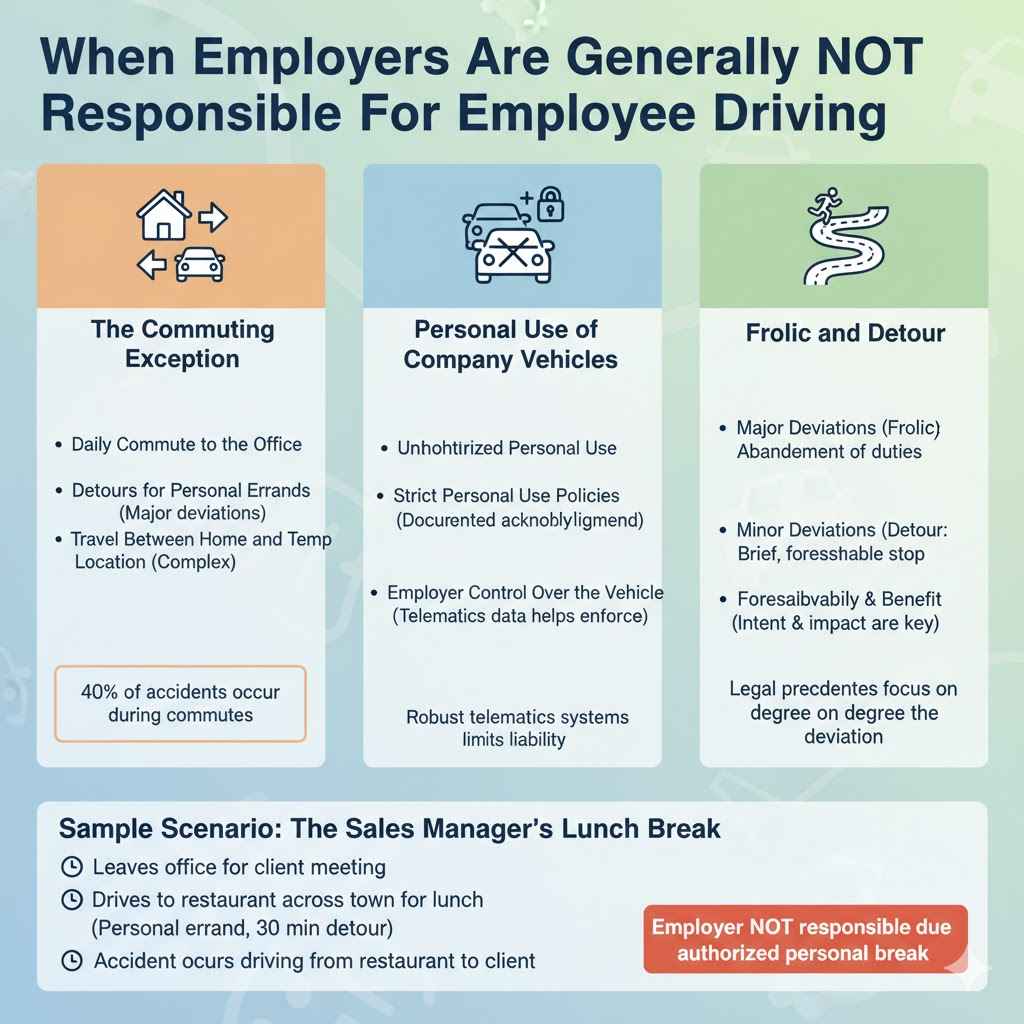
The most common situation where an employer is not responsible is during an employee’s regular commute to and from their place of work. This is often referred to as the “going and coming rule.” The reasoning is that the employee is in control of their own time and travel during this period, and it does not directly benefit the employer’s business.
Daily Commute to the Office
Driving from your home to your office each morning and back home each evening is generally considered a personal trip. The employer has no control over your route, your vehicle, or the timing of this commute. Therefore, if you cause an accident on your way to work, your employer is typically not liable.
This rule applies regardless of whether you drive your own car or a company car, as long as the car isn’t being used for a work task during the commute.
Detours for Personal Errands
If an employee deviates from their commute for a personal errand, such as stopping at the grocery store or picking up dry cleaning, they are usually considered to be outside the scope of employment during that personal detour. However, if the detour is very brief and the employee quickly resumes their commute, some courts might still consider the entire trip as part of the commute. The length and purpose of the detour are key factors.
Travel Between Home and a Temporary Work Location
The commuting exception can become tricky if an employee works at multiple locations or is temporarily assigned to a different site. Generally, travel from home to the primary place of employment is excluded. However, travel between temporary work locations or from home to a temporary location if it’s considered the employee’s base for that period could sometimes fall under employer responsibility.
The specific circumstances and established work patterns matter greatly.
A study on workplace traffic accidents indicated that approximately 40% of vehicle-related incidents occur during employee commutes. Understanding the commuting exception is therefore vital for both employees and employers to define personal responsibility during these journeys.
Personal Use of Company Vehicles
While employers are responsible for business use of company vehicles, they are generally not liable for accidents that occur when an employee is using the vehicle purely for personal reasons. This is especially true if the company has a clear policy prohibiting such use or if the personal use is unauthorized.
Unauthorized Personal Use
If an employee takes a company vehicle for a personal trip without permission, and an accident occurs, the employer is usually not responsible. However, if the employer was aware of such unauthorized use and did nothing to stop it, they might be held liable under certain circumstances. This emphasizes the need for strict enforcement of vehicle use policies.
Strict Personal Use Policies
Companies that have very clear and strictly enforced policies on personal use of company vehicles are better protected. These policies should explicitly state when and how company vehicles can be used for personal matters. For instance, a policy might allow employees to drive the company car home but prohibit using it for vacation trips or transporting non-employees for personal reasons.
Documented acknowledgment of these policies is crucial.
Employer Control Over the Vehicle
The degree of control the employer has over the vehicle plays a role. If the vehicle is only available during work hours and must be returned to the company premises at the end of the day, personal use is less likely. If employees are permitted to take vehicles home, the employer needs to ensure the policy addresses any potential risks associated with that extended use.
Industry surveys suggest that companies with robust telematics systems can track vehicle usage and identify personal trips. This data helps enforce policies and proves when a vehicle was being used for non-business purposes, thereby limiting employer liability in case of an accident.
Frolic and Detour
“Frolic and detour” are legal terms used to describe an employee’s deviation from their work duties. A “frolic” is a major departure from work, essentially an abandonment of employment for personal reasons. A “detour” is a minor deviation.
Major Deviations (Frolic)
If an employee completely abandons their work duties to pursue a personal interest, this is considered a “frolic.” For example, if a delivery driver decides to take a three-hour detour to visit a friend in another town during their delivery route, this is a frolic. Any accident occurring during this significant personal departure would generally not result in employer liability. The employee is acting purely for themselves, not the employer.
Minor Deviations (Detour)
A “detour” is a minor deviation from the work path for a brief personal reason. For instance, stopping to buy a cup of coffee on the way to a client meeting might be considered a minor detour. If an accident happens during such a minor deviation, an employer might still be held responsible, especially if the deviation is brief and doesn’t significantly extend the travel time.
Courts often look at whether the deviation was foreseeable or incidental to the employment.
Foreseeability and Benefit
The concept of foreseeability is important. Was the deviation something that could reasonably be expected to occur during the course of employment? Also, did the deviation, however slight, still confer some minimal benefit to the employer, or was it purely personal?
These questions help courts decide if the employer remains liable. A quick stop for gas might be foreseeable, while a visit to a theme park would not be.
In legal precedents, cases involving “frolic and detour” often hinge on the degree of deviation from the employer’s instructions and the primary purpose of the employee’s travel. An accident during a stop to use a restroom on a long drive might be seen differently than a stop to attend a concert. The intent and impact of the deviation are key.
Sample Scenario: The Sales Manager’s Lunch Break
A sales manager is driving to a client meeting. Their company policy allows for a one-hour lunch break during which they can use their personal car for personal errands. The manager decides to drive to a restaurant across town for lunch, which adds 30 minutes to their travel time to the client.
- The manager leaves the office with sufficient time to reach the client before the meeting, including their planned lunch break.
- They drive to the restaurant, order food, and eat their lunch.
- While driving from the restaurant to the client’s office, they are involved in an accident.
In this situation, because the manager was on an authorized lunch break and the deviation was for personal reasons, even though it added time to the journey, the employer would likely not be responsible for the accident. The driving was outside the scope of employment during that specific deviation.
Frequently Asked Questions
Question: Is an employer responsible if an employee gets into an accident while driving for personal reasons on company time?
Answer: Generally, no. If an employee is driving for purely personal reasons, even if it’s during their paid work hours, and the activity does not benefit the employer or is not related to their job duties, the employer is typically not responsible for any resulting accidents.
Question: What happens if an employee uses a company car for a personal trip without permission and has an accident?
Answer: If an employee uses a company car for unauthorized personal trips and has an accident, the employer is usually not liable. However, if the employer knew about the unauthorized use and did not take action, they could potentially be held responsible.
Question: Does the employer have to pay for damages if an employee’s personal car is damaged while used for work?
Answer: Employer responsibility for damage to an employee’s personal car used for work depends on company policy and insurance. Some companies may cover damages under their commercial auto policy or offer reimbursement. It is crucial to have clear policies addressing this.
Question: Are employers responsible for employees driving under the influence of alcohol or drugs while working?
Answer: Yes, employers are generally responsible if an employee drives under the influence while on duty and causes an accident. Employers have a duty to ensure a safe workplace, which includes preventing employees from driving while impaired for work-related tasks.
Question: What is the difference between a “frolic” and a “detour” in relation to employer responsibility?
Answer: A frolic is a major, personal abandonment of work duties, meaning the employer is not responsible. A detour is a minor deviation from work for a personal reason, where the employer might still be held responsible, depending on the circumstances and foreseeability.
Summary
Employers can be responsible for employee driving when it’s part of their job. This includes business travel and using company vehicles for work. Policies, training, and careful vehicle management reduce risks.
Commuting and purely personal use of vehicles generally do not create employer liability. Always check specific laws and company policies for full clarity.