Diesel Exhaust Regeneration Explained for Owners
Diesel exhaust regeneration burns soot out of the DPF. The usual move is to keep the vehicle moving at a steady road speed until the cycle ends. If the warning stays on after repeated drives, plan diagnosis. Ignoring or interrupting regen can raise soot loading, trigger limp mode, and eventually force a costly repair. This guide shows the signs of active regen, how to avoid stopping it, and when forced regen or cleaning is the correct next step.
What diesel exhaust regeneration does
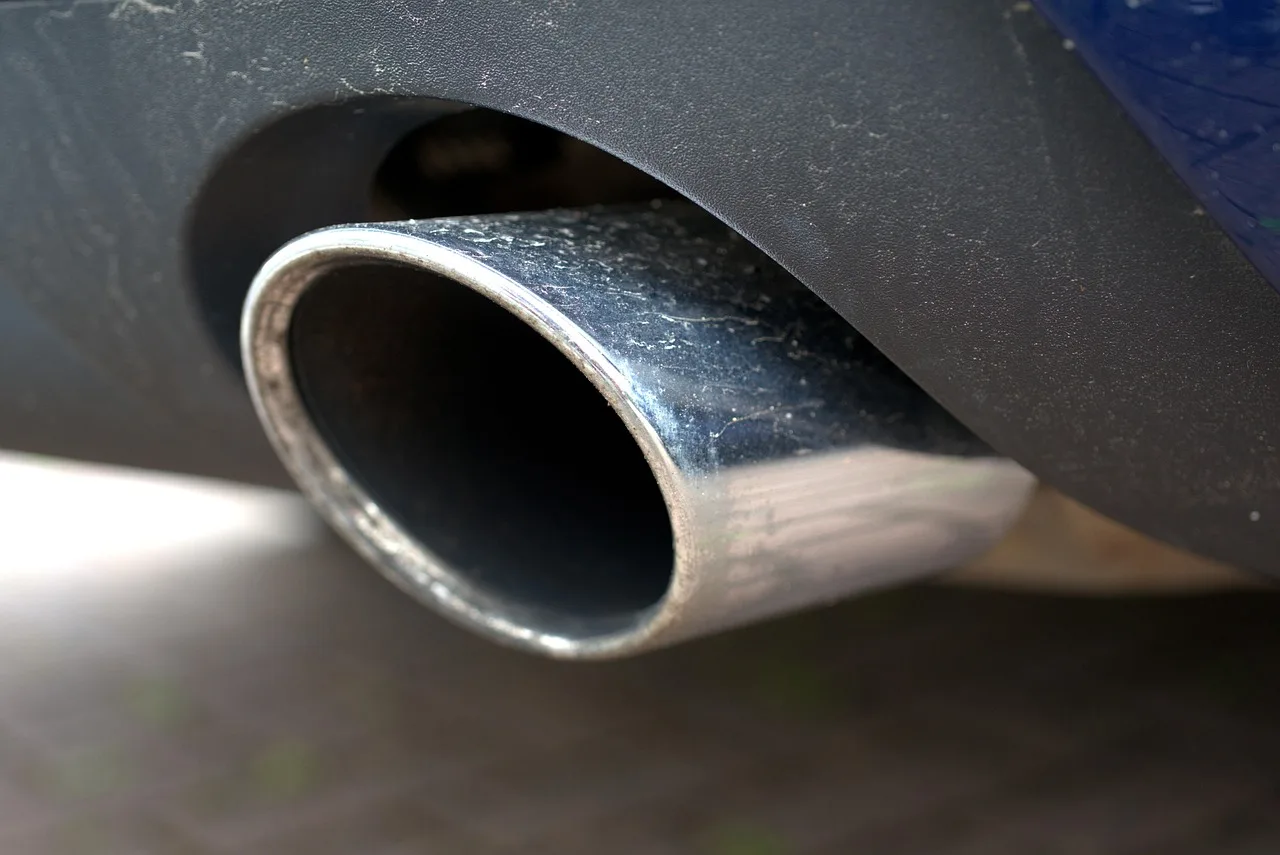


Regeneration burns soot inside the diesel particulate filter so the filter can keep trapping exhaust particles before they leave the tailpipe. Diesel engines used in freight and delivery trucks, trains, buses, boats, farm equipment, and construction vehicles rely on this aftertreatment because soot builds up during normal use.
The DPF traps soot before it exits the tailpipe. That soot does not disappear on its own. The engine control unit, or ECU, watches sensor inputs and decides when soot loading has reached a point where regeneration is needed.
Two problems get mixed up often. Soot loading can be burned off. Ash residue cannot. Ash is inert mineral residue from normal combustion and oil additives, and it stays behind even after a successful regeneration.
Soot loading versus ash residue
Soot loading is the burnable material that accumulates in the filter over time. If the soot load stays in the workable range, a regen cycle can clear it. Ash residue is different. It builds slowly over years and will not burn off, even if exhaust temperature stays high for a long drive or a forced regen.
That difference matters when the warning keeps coming back. A filter that keeps asking for regen after a proper drive may be dealing with repeated soot loading from short trips, or it may be reaching an ash limit that needs professional cleaning or component service.
What’s the difference between passive, active, and forced regeneration?
Passive regeneration happens automatically when exhaust temperatures are high enough, usually during longer motorway or dual carriageway drives. Active regeneration is commanded by the ECU when soot loading reaches a threshold, and the ECU adds a small post-combustion fuel charge into the exhaust stream to raise temperature. Forced regeneration is a workshop procedure using diagnostic equipment and ECU control when the normal process has not finished the job.
Passive regeneration during steady driving
Passive regeneration relies on heat that the engine already makes during steady, higher-load driving. DieselNet describes thermal regeneration as the oxidation of diesel soot to gaseous products, preferably carbon dioxide, and passive regen is dominated by NO2-based soot oxidation. The owner does not need special inputs if the drive keeps exhaust temperature high enough.
Active regeneration commanded by the ECU
Active regen starts when the ECU sees soot loading reach a threshold. It adjusts timing and fuel delivery, including a small post-combustion fuel charge, to increase exhaust gas temperature. Because that extra fuel is part of the process, fuel use can rise while the cycle runs.
Forced regeneration in a workshop
Forced regeneration is used after passive and active regen have failed or been interrupted too many times. A technician uses diagnostic equipment to command the cycle and monitor exhaust gas temperature and other inputs. It works best when soot loading is still moderate; a common workshop threshold is below around 60 to 70 percent capacity. Above that, the filter may need cleaning instead of another regen attempt.
How can you tell when a regen is happening?
An active regeneration is often visible if you know the pattern. The most common signs are a slightly raised idle speed, the cooling fan running harder than usual, a hotter exhaust smell, and a brief change in fuel use. The ECU is managing the cycle in the background, so the truck may feel normal apart from those clues.
Raised idle and cooling fan operation
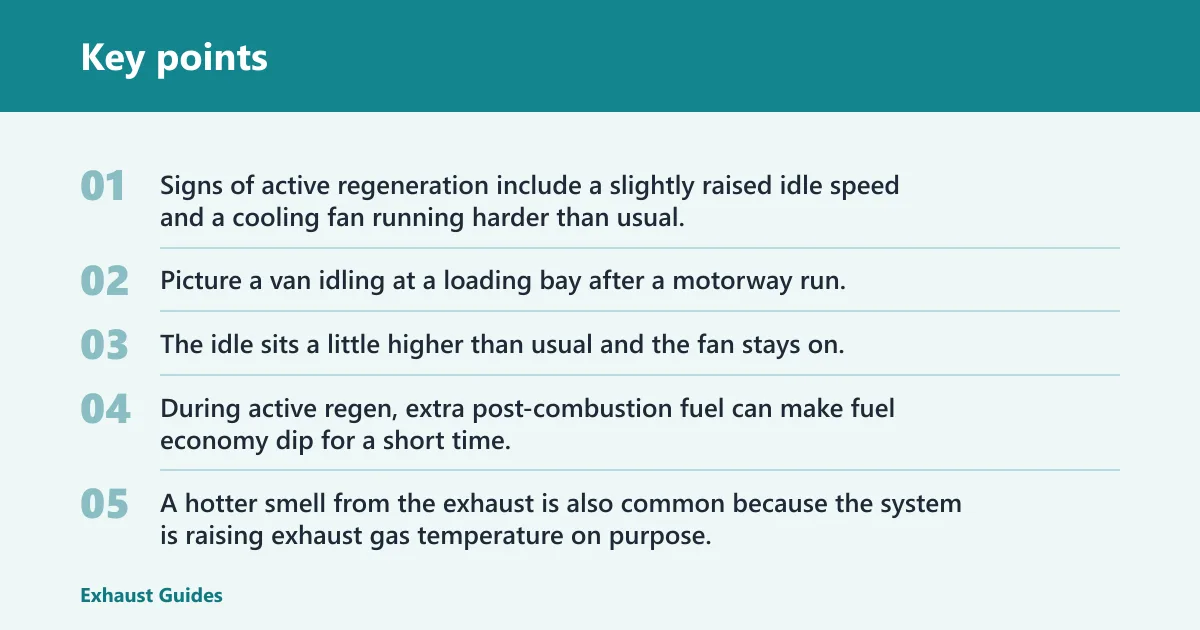
Signs of active regeneration include a slightly raised idle speed and a cooling fan running harder than usual. That does not mean the engine is in trouble by itself. It usually means the ECU is trying to hold exhaust gas temperature high enough for soot oxidation.
Picture a van idling at a loading bay after a motorway run. The idle sits a little higher than usual and the fan stays on. If the vehicle still drives normally and no separate fault symptoms appear, that pattern fits an active regen more than a breakdown.
Fuel-use changes and hotter exhaust smell
During active regen, extra post-combustion fuel can make fuel economy dip for a short time. A hotter smell from the exhaust is also common because the system is raising exhaust gas temperature on purpose. These signs are most useful when they appear together and then clear after the drive continues long enough.
Warning lights and repeat regen attempts
A DPF warning light by itself can mean the soot load is building but the filter is not yet in a serious state. If the light returns after several completed drives, the vehicle may be struggling to finish passive or active regen. Repeated attempts are a sign to plan diagnosis, not to keep ignoring the message.
DPF regeneration decision table
| Symptom | Likely regen stage | Safe action to take now | When to book service |
|---|---|---|---|
| Raised idle, fan running harder, hotter smell | Active regeneration | Keep driving if conditions are safe. Hold a steady speed and avoid shutting the engine off for 15 to 20 minutes, or until the journey is finished. | Book service if the same signs return often, or if the regen never seems to complete. |
| DPF light only | Soot loading near threshold | Complete a longer drive that keeps exhaust temperature up, such as sustained motorway or dual carriageway use. | Book service if the light stays on after repeated drives or if driveability changes appear. |
| Repeated regen attempts | Interrupted active regen or recurring soot buildup | Stop short trips for now and let the vehicle complete one uninterrupted drive cycle. | Book service if the warning keeps returning after a proper drive cycle, because a forced regen or diagnosis may be needed. |
| Limp mode | High soot loading or a separate fault | Drive only as needed to reach a safe place or workshop. Do not keep forcing long trips if power is already reduced. | Book service right away. Limp mode means the system may be beyond a normal regen window. |
| Heavy warning history after long use | Ash residue accumulation | Do not rely on another drive cycle alone. | Book cleaning or component service. Ash does not burn off during regen. |
What should you do if a regen starts while you’re driving?
If a regen starts while you are driving, keep the drive going if conditions are safe and avoid shutting the engine off too soon. That allows exhaust gas temperature to stay high enough for soot oxidation. Interrupting the cycle can leave soot loading higher than before and make the next regen harder to finish.
-
Keep driving steadily.
Stay on a road where speed can remain consistent for a while, such as a motorway or dual carriageway. Passive regeneration happens automatically at sustained higher exhaust temperatures, and active regen needs the same heat window to finish. -
Avoid short stops.
Do not switch the engine off until the journey is finished or 15 to 20 minutes have passed. That window matters because the ECU may still be raising exhaust temperature with post-combustion fuel. -
Watch for driveability changes.
If power drops sharply, a separate engine fault may be present. A normal regen may show higher idle or a stronger fan, but limp mode or harsh misfiring calls for diagnosis, not more road time. -
Book service if the light remains.
If the warning is still on after a proper uninterrupted drive, the vehicle may need scan-tool regen, forced regeneration, or physical cleaning. Do not keep repeating short trips and hoping the light clears itself.
Suppose a pickup starts a regen on the way home from a 40-minute drive, then the driver stops at a shop for five minutes and switches it off. That interruption can leave the cycle incomplete. If the same pattern happens twice, the problem is no longer the warning light itself; it is the driving pattern that keeps stopping the filter from clearing.
Why does regeneration keep failing?
Regeneration keeps failing when the drive pattern does not let exhaust gas temperature stay high long enough. Short trips, stop-start traffic, and early shutdowns are the common causes. A diesel can also struggle if soot loading has climbed too far, or if ash residue has filled enough of the filter that another regen cannot recover it.
Short trips and low exhaust temperature
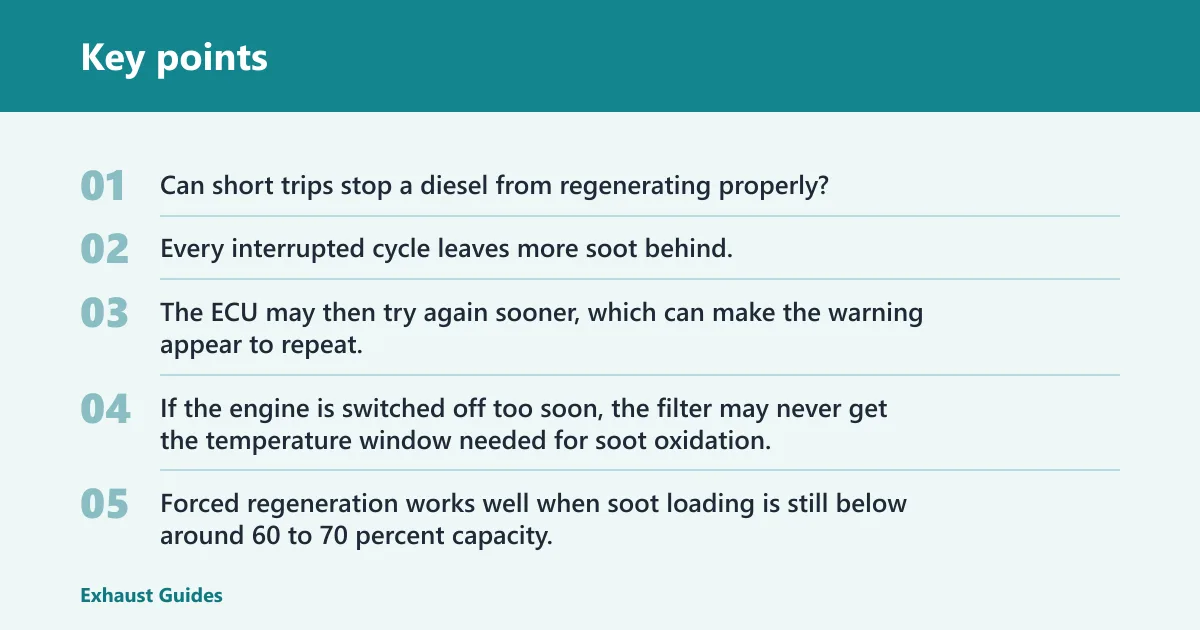
Can short trips stop a diesel from regenerating properly? Yes. Short urban runs often never keep the exhaust hot enough for passive regen, and they may cut active regen short before it finishes. That is why a vehicle used mainly for local errands can keep asking for regen even when no single fault is present.
Repeated interrupted cycles
Every interrupted cycle leaves more soot behind. The ECU may then try again sooner, which can make the warning appear to repeat. If the engine is switched off too soon, the filter may never get the temperature window needed for soot oxidation.
When soot load is too high for a normal cycle
Forced regeneration works well when soot loading is still below around 60 to 70 percent capacity. Above higher soot loading, a workshop regen may fail or stop partway through. At higher loading, the filter can be too restricted for a normal controlled burn, and diagnosis becomes more important than another attempt.
When ash buildup points to cleaning or service
Ash residue is the limit that drives often miss. It may not burn off completely, so a vehicle with years of use can keep showing the same warning even after a completed regen. That is the point where a physical clean or component service is the correct next step.
A common first-timer mistake is to keep resetting the warning and making only five-minute trips. The DPF may clear soot, then refill quickly because the pattern never lets passive or active regen finish. The problem is not solved by more resets.
Frequently asked questions
What is DPF regeneration and why does my diesel need it?
DPF regeneration is the controlled burning of soot inside the diesel particulate filter. The DPF traps soot before it leaves the tailpipe, but that soot must be cleared to keep exhaust flow and emissions control working. Without regen, soot loading rises until warnings, reduced power, or service limits appear.
How can I tell when an active regeneration is happening?
Look for a slightly raised idle, a cooling fan that runs harder than usual, a hotter exhaust smell, and a short change in fuel use. Those signs usually mean the ECU has started an active cycle and is adding post-combustion fuel to raise exhaust gas temperature.
What should I do if a regen starts while I’m driving?
Keep driving if it is safe, and avoid shutting the engine off until the journey is finished or 15 to 20 minutes have passed. That gives the filter time to reach the temperature needed for soot oxidation. If the warning stays on after that, book diagnosis.
Why does my DPF keep trying to regenerate and failing?
Repeated failure usually points to short trips, interrupted drives, or a soot load that is getting too high for a normal cycle. If the warning returns after a proper motorway or dual carriageway run, the vehicle may need scan-tool regeneration or a workshop check for a separate fault.
Can short trips stop a diesel from regenerating properly?
Yes. Short trips often do not keep exhaust temperatures high enough for passive regeneration, and they can interrupt active regeneration before it completes. Over time, the filter keeps collecting soot faster than it can clear it, which is why urban-only use can trigger frequent DPF warnings.
When does a DPF need cleaning instead of another regen?
A DPF needs cleaning when ash residue has built up or when soot loading is too high for a forced regen to work well. If the filter keeps warning after repeated completed drives, or if the soot load is beyond the normal forced-regen range, physical cleaning or component service is the better next step.