Do Resonators Affect Cam Chop? A Genius, Essential Guide
Yes, resonators do affect cam chop, but not by removing it. Instead, a resonator refines the exhaust note by canceling out harsh, high-pitched frequencies (drone). This process can make the deep, rhythmic sound of the cam chop sound cleaner, more defined, and more noticeable. It doesn’t kill the chop; it cleans up the noise around it.
Have you ever heard a car with that incredible, lumpy idle? That aggressive, rhythmic “thump-thump-thump” sound is called cam chop, and it’s music to any car enthusiast’s ears. But when you start modifying your exhaust, you might worry about losing that perfect sound. A common question I get is whether adding a resonator will ruin the chop. You’re in the right place for an answer!
Don’t worry, this isn’t as complicated as it sounds. We are going to break down exactly what cam chop is, what a resonator does, and how they work together. I’ll guide you through everything you need to know to make your car sound amazing without any annoying side effects. Let’s dive in and tune your car’s voice perfectly.
First, What Exactly is Cam Chop?
Before we can talk about how an exhaust part affects a sound, let’s understand the sound itself. Cam chop” is the term for that aggressive, rhythmic idle you hear from a performance engine. It’s not just noise; it’s a direct result of how the engine is built to make power.
Think of your engine’s camshaft as its brain for breathing. It opens and closes the valves that let air and fuel in, and exhaust out. In a standard car, the timing is smooth and efficient for everyday driving.
However, in a high-performance engine, you use an “aggressive” or “lumpy” camshaft. This type of cam is designed to keep the intake and exhaust valves open for longer, and sometimes they are both open at the same time for a split second. This is called valve overlap.
- Why does it happen? At high RPMs, this overlap helps to shove more air and fuel into the engine, making a lot more power.
- What’s the effect at idle? At low RPMs, like when you’re stopped at a light, this overlap gets a little messy. A tiny bit of the fresh air/fuel mix escapes into the exhaust. This creates an uneven, powerful pulse in the exhaust flow.
That pulse is what you hear as cam chop. It’s the signature sound of a powerful, modified engine that’s ready to go. It’s not a fake sound—it’s the sound of raw potential.

Understanding the Role of a Resonator
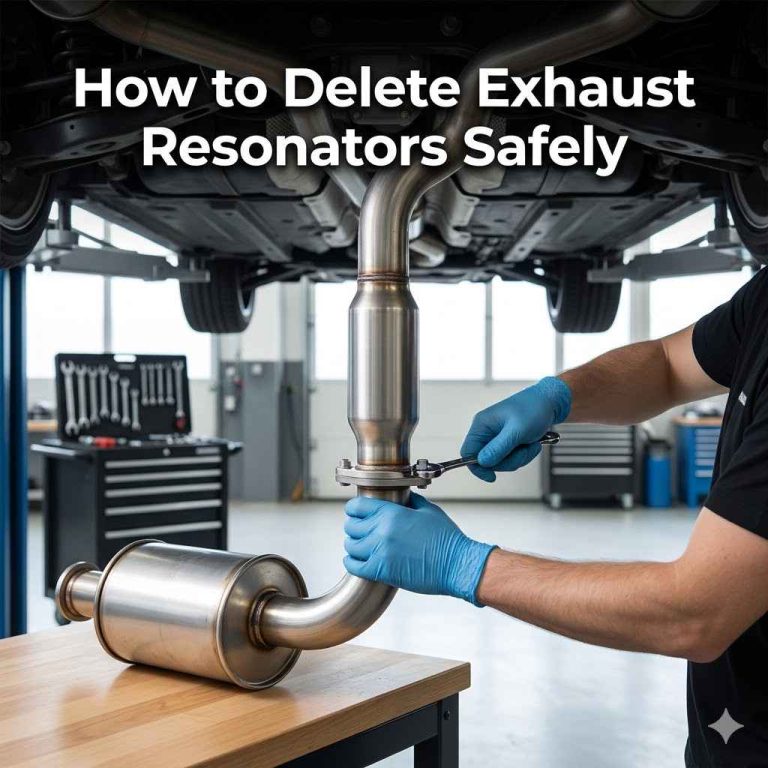
Now, let’s look at the exhaust system. Many people confuse resonators and mufflers, but they do two very different jobs. A muffler’s main job is to reduce the overall volume of your exhaust. A resonator, on the other hand, is a sound-tuning device.
Imagine you’re listening to a song, but there’s a really annoying, high-pitched buzzing sound in the background. A resonator is like an audio engineer that specifically removes that one annoying buzz, letting you hear the music more clearly.
Inside your exhaust, the resonator is basically a steel tube with sound-absorbing materials. It’s designed to target and cancel out a very specific range of sound frequencies. The most common frequency it targets is what we call “drone” or “rasp.”
What is Exhaust Drone?
Exhaust drone is that irritating, low-humming vibration you hear when you’re cruising at a steady speed on the highway, usually between 2,000 and 3,000 RPM. It can be so annoying that it gives you a headache and makes conversations in the car impossible. This is the exact problem a resonator is built to solve.
By eliminating these unwanted frequencies, the resonator “cleans up” the overall exhaust sound, leaving behind the more desirable tones—like the deep rumble and, you guessed it, the cam chop.
The Main Event: How Resonators and Cam Chop Interact
So, we’ve established that cam chop is a deep, rhythmic pulse and a resonator is a tool for removing annoying, high-pitched drone. How do they work together?
A resonator does not eliminate cam chop. In fact, it often makes it sound better.
Here’s why: Cam chop is a low-frequency sound. Exhaust drone is typically a mid-to-high-frequency sound. Since a resonator is designed to cancel out those higher frequencies, it leaves the low-frequency chop untouched. Think of it like this:
- Your engine with a performance cam produces a wide range of sounds: the deep thump of the chop, the mid-range roar, and some raspy, high-pitched notes.
- Without a resonator, all these sounds mix together. The rasp and drone can sometimes overpower the clean sound of the chop, making the exhaust sound messy or “tinny.
- When you add a resonator, it filters out that raspy drone.
- What’s left? The pure, deep, and powerful sound of your cam chop, now much clearer and more defined because the annoying static has been removed.
By removing the sonic clutter, the resonator effectively “unmasks” the cam chop, allowing its rhythm and depth to be the star of the show.
Resonators vs. Mufflers: A Clear Comparison
To really understand this, it helps to see how resonators and mufflers differ. Both are key parts of your exhaust system, but they have different goals. Using the wrong one can completely change your car’s sound, for better or worse.
Here’s a table breaking down their differences:
| Feature | Resonator | Muffler |
|---|---|---|
| Primary Job | To tune the sound and eliminate specific, unwanted frequencies (like drone and rasp). | To reduce the overall volume (loudness) of the exhaust. |
| Effect on Volume | Slightly reduces overall volume, but its main effect is on tone. | Significantly reduces overall volume. This is its main purpose. |
| Effect on Tone | Removes high-pitched, harsh noises, making the sound deeper and cleaner. | Muffles all frequencies, which can sometimes dull the character of the sound. |
| Impact on Cam Chop | Preserves and often enhances the clarity of the low-frequency chop by removing drone. | Can soften or quiet the cam chop along with all the other sounds. A high-flow muffler will have less impact. |
As you can see, if your goal is to have a loud and clear cam chop without the annoying highway drone, a resonator is your best friend. A muffler controls how loud the party is, while a resonator is the bouncer that kicks out the annoying guests.
Choosing the Right Resonator for Your Cammed Engine
Not all resonators are created equal. The type you choose can have a big impact on the final sound. When you have a cammed engine, you want to pick a resonator that is good at killing drone without affecting that beautiful chop.