Is Super T10 Flowmaster Exhaust Loud?
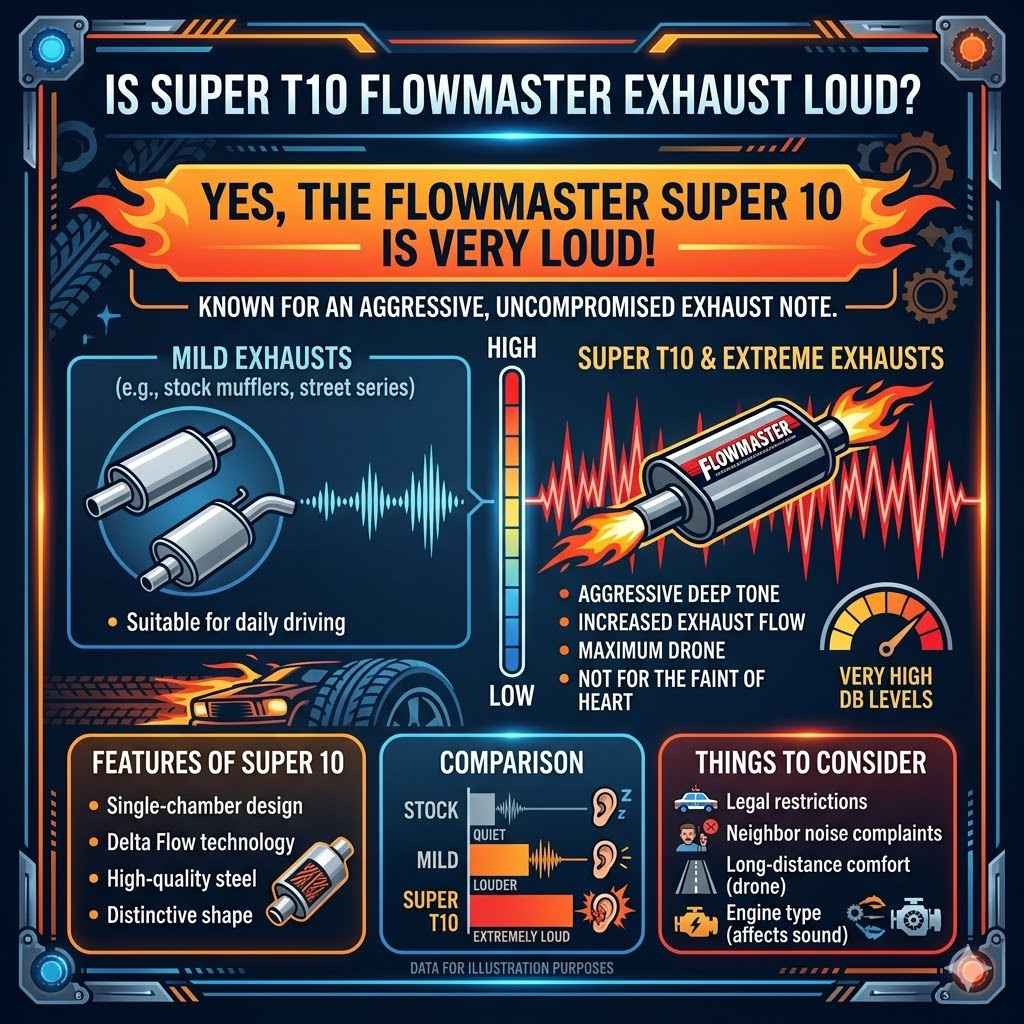
Many people wonder if the Super T10 Flowmaster exhaust is loud. This question can be tricky for newcomers because exhaust noise is a big deal for car fans. It’s not always easy to know what to expect just from a name. Don’t worry, we’re here to make it super simple. We’ll walk you through everything you need to know about how loud the Super T10 Flowmaster exhaust really is, step by step. Let’s figure this out together.
Super T10 Flowmaster Exhaust Sound Profile
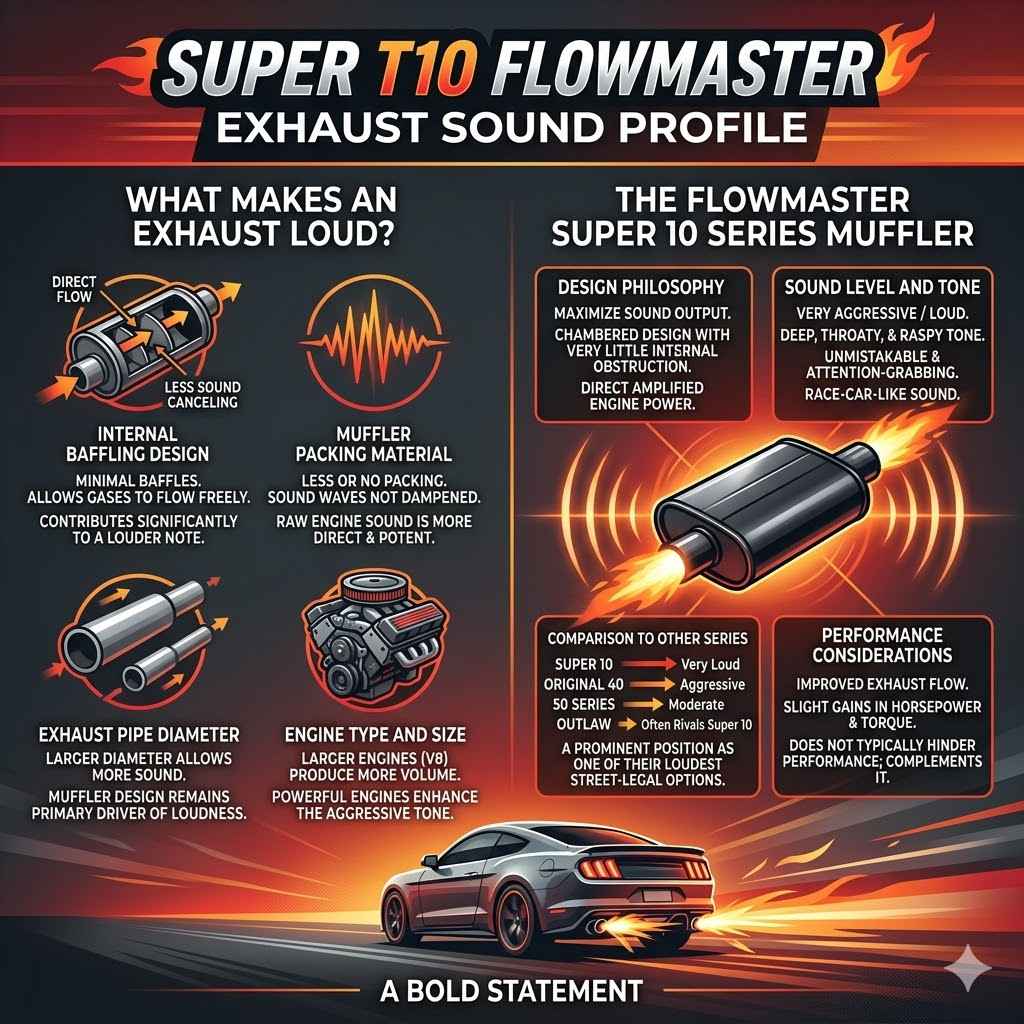
Understanding the sound of a performance exhaust system like the Flowmaster Super 10 Series is key for any car enthusiast. This section looks at what makes the Super 10 distinct and why it gets the reputation for being loud. We will explore how the design of the muffler creates its signature sound. It’s not just about being loud; it’s about the quality and tone of that loudness.
What Makes an Exhaust Loud?
The loudness of an exhaust system is determined by several factors, but primarily by the muffler’s design and how it handles sound waves. A muffler’s job is to reduce the noise produced by the engine’s combustion process. However, performance mufflers often achieve this with less restrictive internal baffling, allowing more sound to escape.
Internal Baffling Design
The internal structure of a muffler plays a huge role in its sound. Mufflers use baffles, which are plates or chambers inside, to redirect exhaust gases. These redirecting actions create sound-canceling waves. A less restrictive design, common in performance mufflers, means fewer baffles or baffles that are designed to allow a more aggressive sound. The Super 10 Series is known for its minimal baffling. This allows exhaust gases to flow more freely, but it also means less sound is absorbed or canceled out. This direct flow is what contributes significantly to a louder exhaust note.
Muffler Packing Material
Some mufflers use packing materials like fiberglass or steel wool to absorb sound. High-performance mufflers often use less or no packing material to maintain flow and sound projection. The Super 10 Series typically uses minimal or no packing material. This choice means the sound waves are not dampened as much by absorbent materials. The raw sound from the engine is therefore more direct and potent when it exits the exhaust pipe.
Exhaust Pipe Diameter
The diameter of the exhaust pipes also affects sound. Larger diameter pipes can sometimes lead to a deeper tone but can also allow for more sound to pass through. However, for a system like the Super 10, the muffler’s design is the primary driver of loudness. While pipe diameter matters for overall flow and tone, the Super 10’s aggressive sound is mainly a product of its muffler engineering.
Engine Type and Size
The engine itself greatly influences the exhaust sound. Larger engines with more cylinders and a higher displacement generally produce more exhaust volume and therefore a louder sound. A V8 engine will naturally sound louder than a 4-cylinder engine, even with the same exhaust system. The Super 10 is often paired with larger, more powerful engines where its aggressive tone can be fully appreciated.
The Flowmaster Super 10 Series Muffler
The Flowmaster Super 10 Series is a specific type of muffler designed by Flowmaster. They are known for being one of the loudest options in Flowmaster’s product line. This series is built for those who want their vehicle to be heard. It’s not a subtle sound; it’s a bold statement.
Design Philosophy
Flowmaster’s design philosophy for the Super 10 Series is centered around maximizing sound output while maintaining some level of engine performance. They achieve this through a chambered muffler design that has very little internal obstruction. This means exhaust gases are not slowed down or muffled extensively. The sound that comes out is a direct reflection of the engine’s power and its combustion cycle, amplified.
Sound Level and Tone
The Super 10 is classified as a very aggressive or “loud” muffler. It produces a deep, throaty, and often raspy tone that is unmistakable. Many users describe the sound as intense and attention-grabbing. It’s not just loud; it has a distinct character that appeals to enthusiasts seeking a race-car-like sound. This tone is especially noticeable at idle, during acceleration, and under load.
Comparison to Other Flowmaster Series
Flowmaster offers various muffler series, such as the original 40 Series, 50 Series, and Outlaw. The Super 10 Series is generally considered louder than the 40 Series, which is already known for its aggressive sound. The 50 Series is typically quieter, offering a more moderate performance sound. The Outlaw series can sometimes rival or exceed the Super 10 in loudness, but the Super 10 holds a prominent position as one of their loudest street-legal options.
Performance Considerations
While loudness is a primary feature, performance mufflers like the Super 10 are also designed to improve exhaust flow. Better flow can lead to slight gains in horsepower and torque. However, the main benefit for most users of the Super 10 is the sound. For those focused on raw power gains, other exhaust components might be more critical, but the Super 10 doesn’t typically hinder performance and often complements it.
Is Super T10 Flowmaster Exhaust Loud for Daily Driving?
This is where the real question comes into play for many drivers. What sounds exciting on a track might be too much for your daily commute. We’ll look at how the Super 10 performs in everyday situations and if it’s manageable or even enjoyable for regular use.
Volume Levels at Different Engine Speeds
The perceived loudness of an exhaust system changes significantly depending on how fast the engine is running. At low RPMs, it might be a rumble, while at high RPMs, it can be a roar.
Idle Sound
When an engine is idling, the Super T10 Flowmaster exhaust typically produces a deep, low rumble. It’s definitely louder than a stock exhaust, but many people find this idle sound to be pleasant and indicative of a powerful engine. It’s a sound that announces the presence of the vehicle without being obnoxious. This low frequency sound at idle is often what enthusiasts are looking for.
Cruising Speeds
At steady cruising speeds, like on the highway, the sound of the Super 10 becomes less intrusive. While it’s still present and noticeable, the continuous hum of the road and wind noise tend to mask some of the exhaust’s volume. Many users report that highway cruising is quite bearable. However, some drone can occur, which is a constant, low-frequency noise that can become tiresome on long drives.
Acceleration and Full Throttle
This is where the Super T10 truly shines for those who want noise. When you accelerate or floor the gas pedal, the exhaust sound becomes very loud and aggressive. It emits a deep, roaring sound that is exciting and performance-oriented. This is the sound that turns heads and lets everyone know you have a powerful machine under the hood. The tone can be described as raw and powerful.
The Drone Factor
Exhaust drone is a common concern with performance exhaust systems. It’s a resonant, low-frequency sound that can be heard inside the car, often at specific RPM ranges.
What is Exhaust Drone?
Exhaust drone occurs when the exhaust system resonates at certain frequencies. This resonance creates a persistent, vibrating noise that can be heard inside the cabin. It’s not the sharp roar of acceleration but a steady hum that can be annoying, especially on long drives. It is caused by the way the exhaust pulses interact with the exhaust system’s pipes and chambers.
Does the Super T10 Drone?
Yes, the Flowmaster Super 10 Series is known to produce drone. Because it is designed for maximum loudness and minimal sound suppression, it is more prone to droning than quieter exhaust systems. The specific RPM range where drone occurs can vary depending on the vehicle and the rest of the exhaust setup. For some, this drone is an accepted part of the aggressive sound package. For others, it can be a significant drawback.
Mitigating Drone
There are ways to reduce exhaust drone. Adding a resonator can help cancel out some of the low-frequency sounds. Resonators are essentially mufflers designed to cancel specific frequencies without significantly reducing the overall volume. Some aftermarket companies offer drone-canceling kits or specific resonators designed to work with certain exhaust systems. Choosing a different muffler, like a Flowmaster 40 Series or 50 Series, would also result in less drone.
Driver Experiences and Opinions
Hearing directly from other car owners can give you the best idea of what to expect. Many forums and car enthusiast groups discuss the Super T10’s sound.
Enthusiast Reviews
Car enthusiasts generally agree that the Super T10 is very loud. They often praise its aggressive tone and the attention it draws. Many consider it the “go-to” exhaust for a loud, performance sound. Reviews often highlight the satisfaction of hearing the engine’s raw power through the exhaust note. The sound is frequently described as a “screaming” or “roaring” tone.
Daily Driver Concerns
However, many drivers who use their vehicles for daily commutes express concerns about the loudness and drone. Some find the constant noise tiring over time. Others mention that it can be difficult to have conversations inside the car or listen to music at normal volumes without the exhaust being overly dominant. The drone at highway speeds is a common complaint.
Installation Scenarios
The Super T10 is often installed as a muffler-only replacement or as part of a cat-back exhaust system. When installed as a muffler-only, its full loudness potential is usually unleashed. When part of a larger cat-back system, other components like resonators or pipes might slightly alter the sound profile but the core aggressive nature of the Super 10 remains. The vehicle’s exhaust manifold and catalytic converter also play a role in the final sound.
Factors Affecting Super T10 Flowmaster Exhaust Loudness
It’s not just the muffler itself. Several other things influence how loud your Super T10 Flowmaster exhaust will actually be on your specific vehicle.
Vehicle Specifics
The car or truck you put the exhaust on matters a lot. A sports car will sound different from a large SUV.
Engine Displacement and Configuration
A larger engine, like a V8, will produce more exhaust gas volume and pressure than a smaller 4-cylinder engine. This inherently leads to a louder sound, especially with a performance muffler. The number of cylinders and how they are arranged (e.g., V-shape, inline) also affect the exhaust pulse timing and frequency, contributing to the overall tone and loudness. For example, a 5.0L V8 will sound much more potent with a Super 10 than a 2.0L inline-4.
Exhaust Manifold and Catalytic Converter
The stock exhaust manifold and catalytic converter are designed to reduce emissions and noise. They can muffle some of the sound before it even reaches the muffler. Removing or replacing these components can significantly increase exhaust loudness. A performance exhaust manifold might have a different design that allows more sound through. Similarly, some catalytic converters are more restrictive and dampen sound more than others.
Pipe Routing and Length
The path the exhaust takes from the engine to the tailpipe also affects sound. Longer exhaust systems can sometimes slightly reduce the perceived loudness due to the exhaust gases cooling and slowing down. The diameter and material of the pipes themselves also play a minor role. For the Super 10, the muffler is the dominant factor, but these other elements contribute to the overall sound signature.
Installation and System Configuration
How the Super T10 is installed and what other parts are on the exhaust system make a difference.
Muffler-Only Swap
When you
Cat-Back Systems
A cat-back system replaces the exhaust from the catalytic converter back to the tailpipe. This typically includes a new pipe section and the Super T10 muffler. If the cat-back system is designed for maximum flow, it will likely result in the loudest possible sound from the Super T10. Some cat-back systems might also include a resonator or other tuning elements, which could slightly alter the final loudness or tone.
Full Exhaust Systems
A full exhaust system replaces everything from the exhaust manifold forward. This includes headers, high-flow catalytic converters, and the Super T10 muffler. This setup generally yields the most aggressive sound and potentially the best performance gains. However, it is also the most expensive and complex option. The combination of performance headers and the Super 10 can create an exceptionally loud and aggressive exhaust note.
Aftermarket Modifications
Adding other aftermarket parts can change the sound.
Resonator Deletion
Removing a factory or aftermarket resonator will make the exhaust system louder. Resonators are designed to cancel out specific sound frequencies, particularly drone. If your Super T10 system includes a resonator, removing it will allow more of the raw exhaust sound to pass through. This is a common modification for those seeking maximum loudness.
X-Pipes vs. H-Pipes
In V-engine vehicles, an X-pipe or H-pipe is used to connect the two exhaust banks. An X-pipe tends to produce a higher-pitched, more “exotic” sound, while an H-pipe creates a deeper, more traditional muscle car rumble. Both can affect the overall loudness and tone when paired with a Super T10 muffler. The choice between them can fine-tune the sound character.
Tailpipe Design
The style and length of the tailpipe can also influence the sound. Dual exhaust tips, for example, can contribute to a more aggressive appearance and sometimes a slightly different sound. Straight-cut, rolled-edge, or slash-cut tips can also have subtle effects on the sound quality and direction. However, the muffler remains the primary determinant of loudness.
Is Super T10 Flowmaster Exhaust Loud for Car Shows?
For car shows, sound is often a key part of the appeal. We’ll see how the Super T10 fits into that world.
Making a Statement
At car shows, drivers often want their vehicles to stand out. The Super T10 Flowmaster exhaust can definitely help with that.
Auditory Appeal
The loud, aggressive sound of the Super T10 is perfect for attracting attention at car shows. It’s a sound that many car enthusiasts appreciate and associate with performance and power. When the engine is revved, the Super T10 delivers a commanding sound that is sure to impress. It creates a memorable auditory experience for spectators.
Impressing Judges and Fans
In some car show categories, the sound of the vehicle can be a factor. A powerful exhaust note can contribute to the overall impression of a well-tuned and performance-oriented vehicle. It adds to the excitement and visual appeal of the car. Fans often flock to cars that have a distinctive and impressive exhaust sound.
Streetability vs. Show
While great for shows, it’s important to remember that a loud exhaust might not be ideal for everyday driving. At shows, the engine is usually only revved for short periods. This contrasts with prolonged driving where the loudness and drone can become tiresome. It’s a trade-off that many show car owners are willing to make.
Real-World Examples and Scenarios
Let’s look at how the Super T10 performs in actual use.
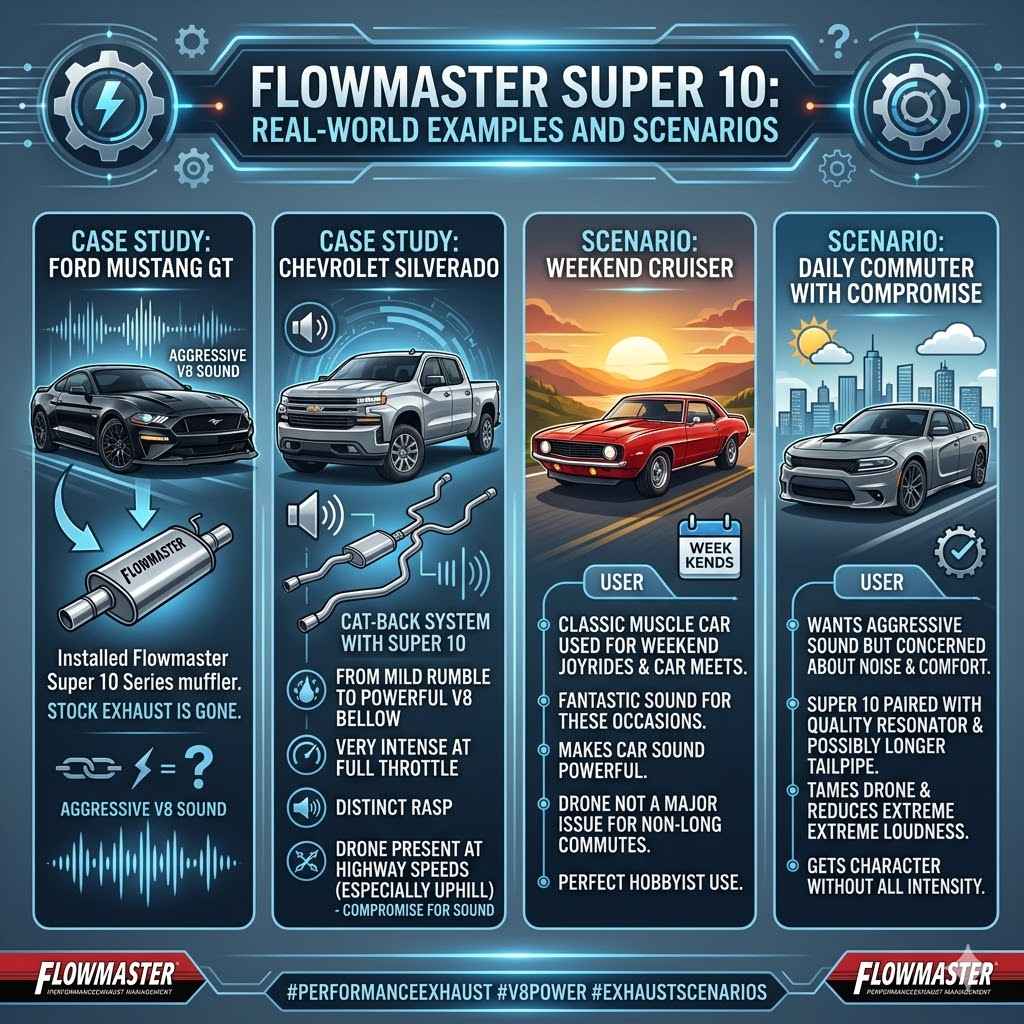
Case Study: Ford Mustang GT
A Ford Mustang GT owner installed a Flowmaster Super 10 Series muffler. The stock exhaust was
Case Study: Chevrolet Silverado
A Chevrolet Silverado owner with a 5.3L V8 engine opted for a cat-back exhaust system featuring the Super 10 muffler. The truck’s exhaust note transformed from a mild rumble to a powerful V8 bellow. At full throttle, the sound was very intense, with a distinct rasp. The drone at highway speeds was present, especially when going uphill, but the owner felt the aggressive sound was worth the slight compromise in cabin quietness.
Scenario: Weekend Cruiser
Imagine someone who uses their classic muscle car primarily for weekend joyrides and occasional car meets. They installed a Super T10 Flowmaster exhaust. The sound is fantastic for these occasions. It makes the car sound as powerful as it looks. They don’t drive it for long commutes, so the drone at highway speeds is not a major issue. This setup perfectly suits their hobbyist use.
Scenario: Daily Commuter with Compromise
Consider a driver who wants the aggressive sound of a Super T10 for their daily driver but is also concerned about noise complaints and personal comfort. They might opt for a Super 10 paired with a good quality resonator and possibly a longer tailpipe. This combination can help tame the drone and reduce some of the extreme loudness while still delivering a much more aggressive sound than stock. It’s a way to get some of the Super 10’s character without all of its intensity.
Frequently Asked Questions
Question: Is the Super T10 Flowmaster exhaust loud for a 4-cylinder car?
Answer: While the Super T10 is designed to be loud, its effect will be more pronounced on larger engines like V6 or V8. On a 4-cylinder car, it will be significantly louder than stock and offer a more aggressive tone, but it won’t typically reach the same level of ear-splitting volume as it would on a V8. It will still be a noticeable and aggressive sound.
Question: Will the Super T10 Flowmaster exhaust pass emissions tests?
Answer: The loudness of an exhaust system does not directly affect emissions testing. Emissions tests focus on the gases produced by the engine. As long as the Super T10 Flowmaster exhaust system does not involve removing or tampering with the catalytic converter or other emissions control devices, it should pass emissions tests.
Always ensure local regulations are met.
Question: How much does a Flowmaster Super 10 exhaust typically cost?
Answer: The cost can vary depending on whether you buy just the muffler or a full cat-back system. A Flowmaster Super 10 muffler alone might range from $150 to $300. A complete cat-back system featuring the Super 10 can cost anywhere from $400 to over $1000, depending on the vehicle and the brand of the full system.
Question: Is the Super T10 Flowmaster exhaust legal in all states?
Answer: Noise ordinances vary significantly by state, county, and city. While the Super 10 is often sold as a street-legal muffler, its loudness may exceed local noise limits in some areas. It’s crucial to check your local regulations regarding exhaust noise levels before installing it.
Some areas have strict decibel limits that a Super 10 might violate.
Question: Can I make my Super T10 Flowmaster exhaust quieter if it’s too loud?
Answer: Yes, it’s possible to reduce the loudness. Adding a resonator to the exhaust system is a common way to do this. A resonator is designed to cancel out specific sound frequencies, especially drone.
You could also consider adding a secondary muffler or even replacing the Super 10 with a less aggressive Flowmaster series like the 40 or 50 if it’s unmanageable.
Summary
The Flowmaster Super 10 exhaust is indeed very loud. It offers an aggressive, deep, and attention-grabbing sound, especially during acceleration. While it provides a thrilling auditory experience for enthusiasts, potential buyers should be aware of its pronounced drone at highway speeds. Factors like engine size and other exhaust components will influence the final noise level. For those seeking a bold statement and a powerful engine note, the Super 10 delivers. If quiet cruising is a priority, other options might be more suitable.