

Does A Polaris Slingshot Have Enough Ground Clearance For Rear Exhaust? (Essential Guide)
Yes, with careful planning and the right components, a Polaris Slingshot can accommodate a rear exhaust system, but ground clearance is a critical factor. Proper management of exhaust routing and component selection is essential to avoid scraping or damage.
Thinking about upgrading the exhaust on your awesome Polaris Slingshot? It’s a fantastic way to boost performance and give your ride a killer sound. One of the biggest questions on many owners’ minds, especially beginners, is “Will a new rear exhaust actually fit without dragging on the ground?”
It’s a super common worry, and it’s smart to think about! You want that aggressive look and sound without the fear of damaging your exhaust every time you go over a bump or even just drive normally. This guide is here to break down exactly what you need to know about ground clearance for your Slingshot’s rear exhaust. We’ll cover the basics, the challenges, and how to make sure your upgrade is safe and sounds amazing.
Understanding Polaris Slingshot Ground Clearance
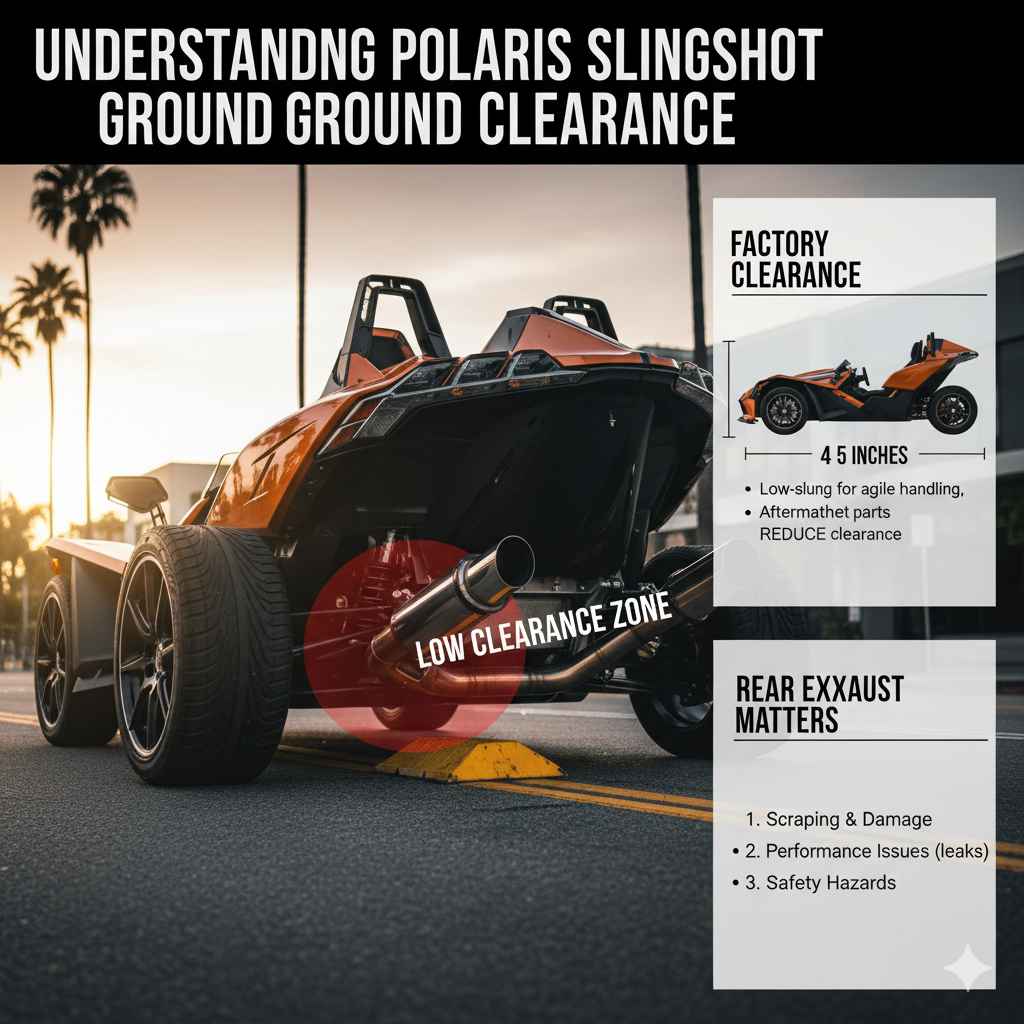
The Polaris Slingshot, by its very design, is a low-slung vehicle. This sport-style trike is built for agile handling and a connected-to-the-road feel, which means its factory ground clearance is quite limited. This is crucial to understand when considering any modification, especially one as prominent as a rear exhaust system. Lowering a vehicle compromises its ability to clear obstacles, and the Slingshot is already starting from a low baseline.
The Factory Clearance: A Starting Point
Stock Polaris Slingshots typically have a ground clearance of around 4 to 5 inches. This might seem adequate for most driving conditions, but when you start adding aftermarket parts, especially exhaust systems that often involve larger pipes and mufflers, that clearance shrinks. The exact amount varies slightly depending on the year and specific Slingshot model, but it’s consistently a factor to be aware of.
Why Rear Exhaust Clearance Matters
A rear exhaust system typically exits at the back of the vehicle, often low down. When you’re talking about ground clearance, it’s the lowest point of your exhaust that matters most. This lowest point is what will encounter speed bumps, parking lot entrances, driveways, and any other uneven terrain before the rest of your vehicle does. A system that is too low can lead to:
Scraping and Damage: The exhaust pipe can drag and scrape against the ground, causing cosmetic damage and potentially compromising the integrity of the exhaust system (pipes, welds, muffler).
Performance Issues: A damaged exhaust can lead to leaks, affecting sound quality, performance, and potentially allowing harmful exhaust fumes to enter the cabin.
Safety Hazards: In severe cases, significant damage could cause exhaust components to detach, posing a danger to the vehicle and other road users.
Challenges of Rear Exhaust Installation on a Slingshot
Installing a rear exhaust on a Slingshot presents unique challenges primarily due to its compact design and the need to route piping. Unlike a traditional car with a separate undercarriage, the Slingshot’s structure is more integrated, leaving less room for maneuvering exhaust components without compromising clearance.
Limited Chassis Space
The undercarriage of the Slingshot is relatively tight. This means there’s not a lot of extra space to tuck exhaust pipes and mufflers up high and out of the way. Designers often prioritize performance and aesthetics, which can lead to exhaust routing that is as low as possible to the ground for simplicity or sound management.
Heat Management
Exhaust systems generate significant heat. When trying to route pipes in a confined space, especially near sensitive components like the fuel tank, body panels, or differential, proper heat shielding and clearance are paramount. A rear exhaust, by its nature, places the hottest part of the system towards the very back.
Custom vs. Bolt-On Systems
Bolt-On Systems: These are designed specifically for the Slingshot model and are generally engineered with ground clearance in mind. However, even “bolt-on” systems can sometimes be lower than stock depending on the manufacturer’s goals for sound and performance. Always check specification sheets.
Custom Fabrication: This offers the most flexibility but requires a skilled fabricator who understands the clearance limitations. A custom job can be tailored perfectly to your needs, but it’s often more expensive.
Assessing Ground Clearance for Rear Exhausts: What to Look For
When selecting or considering a rear exhaust for your Slingshot, you need to be proactive in assessing its potential impact on ground clearance. This involves looking at the product specifications, understanding where the lowest point will be, and considering your typical driving environment.
Key Measurement Points to Consider
1. Lowest Point of the Muffler: This is often the largest and lowest component of the exhaust system.
2. Exhaust Pipe Diameter and Routing: Larger diameter pipes might sit lower. The way the pipe bends and tucks under the chassis is critical.
3. Exit Tip Placement: While the tip is the very last part, its positioning relative to the lowest point of the system is important. Some tips might extend lower than the muffler itself if not carefully designed.
Checking Manufacturer Specifications
Reputable aftermarket exhaust manufacturers will provide detailed specifications for their products. Look for information on:
Overall Height/Profile: Some may state how much lower or higher their system sits compared to stock.
Clearance Advisories: They might include notes about potential ground clearance issues or recommendations for specific Slingshot models.
Installation Guides: These can offer clues about how the system is intended to be mounted and routed.
The “Stance” and its Impact
If you’ve modified your Slingshot with lowering springs or coilovers, your stock ground clearance is already reduced. This makes selecting an aftermarket exhaust even more critical. You’ll need to factor in your vehicle’s current lowered state when evaluating an aftermarket exhaust’s potential clearance.
Tools and Techniques for Measuring and Installing
Before you buy and install a rear exhaust, or to verify clearance after installation, having the right tools and knowing how to use them is key. This ensures a safe and successful upgrade.
Essential Tools for Measurement and Installation
Tape Measure: A standard, reliable tape measure is your best friend for checking clearances before and after.
Jack and Jack Stands: To safely lift your Slingshot and get underneath it. Ensure you use high-quality, load-rated jack stands. Never rely solely on a jack.
Torque Wrench: Crucial for tightening exhaust clamps and bolts to the manufacturer’s specifications, preventing leaks and ensuring components stay securely fastened.
Socket Set and Wrenches: For removing old exhaust components and installing the new one.
Penetrating Oil (e.g., WD-40 or PB Blaster): To loosen rusted bolts and nuts on the old exhaust system.
Safety Glasses and Gloves: Always protect your eyes and hands.
Breaker Bar: For stubborn bolts that a standard ratchet can’t budge.
Exhaust Hangers and Clamps: You might need new or adjustable hangers to achieve optimal routing and clearance.
Step-by-Step Installation (General Guide)
While specific instructions vary by kit, a general process for installing a rear exhaust system on a Slingshot typically involves these steps:
1. Safety First: Park your Slingshot on a level surface. Engage the parking brake.
2. Lift and Secure: Safely lift the rear of the Slingshot using a jack and support it securely with jack stands placed on stable points of the frame.
3. Locate and Loosen: Identify the existing exhaust system’s mounting points and clamps. Apply penetrating oil to bolts if they appear rusted.
4. Remove Old Exhaust: Carefully unbolt and remove the muffler and any associated piping. You might need to work it out from underneath.
5. Prepare New Exhaust: Unpack your new rear exhaust kit. Familiarize yourself with all components and the installation manual.
6. Initial Fitment (Dry Fit): Before applying any sealant or permanent fixtures, loosely attach the new system. This allows you to adjust positioning and check for clearance issues.
7. Check Ground Clearance at Key Points: With the new exhaust loosely in place, use your tape measure to check the clearance at the lowest points (muffler, pipe bends) from the ground. Compare this to your factory measurements or desired clearance.
8. Adjust Hangers/Mounts: If the clearance is insufficient, you may need to adjust the exhaust hangers. Some aftermarket kits come with adjustable hangers, or you might need to purchase different ones to raise the system closer to the chassis. This is where custom fabrication might be considered if off-the-shelf solutions don’t work.
9. Tighten Securely: Once you’re satisfied with the fit and clearance, tighten all clamps and bolts according to the manufacturer’s instructions. Use a torque wrench where specified.
10. Final Inspection: Lower the vehicle. Walk around and visually inspect the exhaust for any potential contact points. It’s also good practice to measure the lowest point again with the vehicle on the ground.
Best Practices for Maintaining Rear Exhaust Clearance
Once your rear exhaust is installed, ongoing maintenance and mindful driving habits are key to preserving its clearance and longevity.
Regular Inspections
After Installation: Perform a thorough inspection immediately after installation, and again after your first few drives, to ensure nothing has shifted and no new contact points have emerged.
Periodic Checks: Make it a habit to check your exhaust clearance during routine maintenance, like oil changes or tire rotations. Look for any signs of scraping, dents, or loose components.
Mindful Driving Habits
Approaching Obstacles: Slow down significantly when approaching speed bumps, steep driveways, or uneven terrain. Critically, approach them at an angle rather than straight on if possible. This allows one wheel to go over the obstacle before the other, reducing the overall angle of attack and thus the stress on your lowest point.
Parking Lots: Be extra cautious when entering and exiting parking lots, as they often have high lips or uneven transitions.
Load Management: Avoid overloading your Slingshot, as extra weight can cause the vehicle to sag, reducing ground clearance.
Considering Protective Measures
For those in areas with particularly challenging roads or who plan to drive aggressively, consider:
Exhaust Heat Shields: Ensure all heat shields are properly installed and in good condition. They can sometimes act as a sacrificial layer, though they are not designed for direct ground impact.
Reinforced Hangers: Using heavy-duty or custom-fabricated exhaust hangers can provide more stability and prevent excessive droop.
Skid Plates (Advanced): While not common for exhaust systems themselves, sometimes custom underbody protection can indirectly help shield the exhaust from direct impacts, though this is typically for more extreme modifications.
Impact on Performance and Sound
Choosing a rear exhaust system isn’t just about physical fit; it’s also about the performance and sound enhancements you desire.
Performance Gains
A well-designed rear exhaust system can improve performance by:
Reducing Backpressure: With less restriction, exhaust gases can exit the engine more efficiently, leading to potential increases in horsepower and torque.
Lighter Weight: Aftermarket systems are often made from lighter materials like stainless steel or titanium, reducing overall vehicle weight.
Sound Characteristics
Rear exhaust systems significantly influence the sound profile of your Slingshot.
Aggressive Tone: Typically, a rear exit system with a larger muffler or straight-through design will produce a deeper, sportier, and more aggressive sound.
Volume Control: Manufacturers offer various designs—from straight pipes for maximum volume to systems with resonators and baffles for a more controlled, albeit still sporty, sound. Always check local noise ordinances.
Choosing the Right System for Your Needs
When looking at rear exhaust systems, consider these factors alongside clearance:
Material: Stainless steel is durable and corrosion-resistant. Titanium is lighter but more expensive.
Muffler Design: Straight-through mufflers offer free flow and aggressive sound. Chambered mufflers can offer different sound profiles and potentially more torque at lower RPMs. Perforated core mufflers provide a balance.
* Single vs. Dual Exit: Dual exit systems can offer a more balanced look and sound, but might require more complex routing. Single exit systems are often simpler and lighter.
It’s wise to listen to sound clips online (from reputable sources) or speak to other Slingshot owners to get an idea of the sound each system produces.
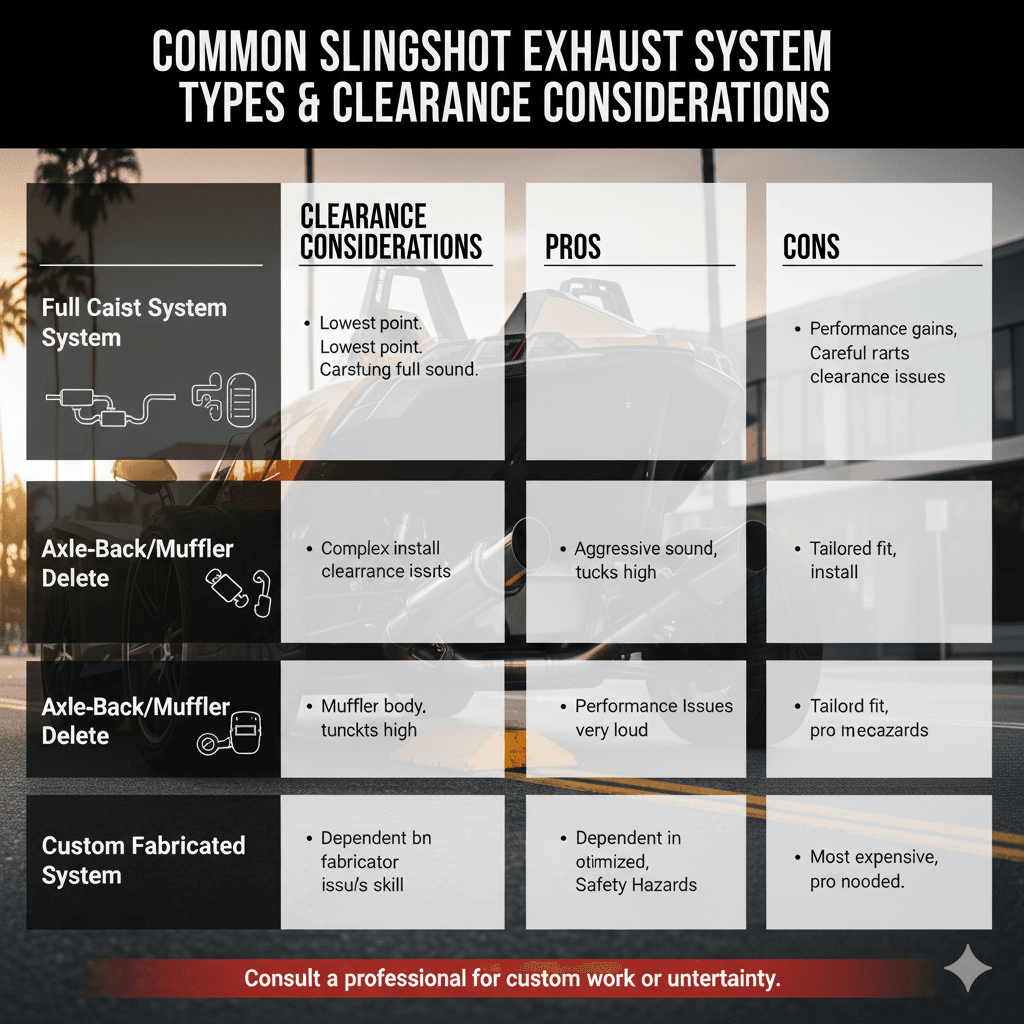
Table: Common Slingshot Exhaust System Types & Clearance Considerations
Here’s a table summarizing common types of aftermarket exhaust systems for the Slingshot and their general implications for ground clearance:
| Exhaust System Type | Typical Exit Location | Key Clearance Considerations | Pros | Cons |
|---|---|---|---|---|
| Full Cat-Back System | Rear (often center or side exit) | Can be the lowest point. Careful routing necessary. | Performance gains, complete sound solution. | Most complex installation, potential clearance issues if poorly designed. |
| Axle-Back/Muffler Delete | Very rear | Muffler body is the main concern; often designed to tuck high. | Aggressive sound, simpler installation, potentially less impact on clearance. | May not offer significant performance gains, can be very loud, may affect emissions compliance. |
| Custom Fabricated System | Any location | Entirely dependent on fabricator’s skill and client’s needs. | Tailored fit, optimized for clearance and performance. | Most expensive, requires skilled professional. |
FAQ Section
Q1: What is the typical ground clearance of a stock Polaris Slingshot?
A1: A stock Polaris Slingshot generally has a ground clearance of about 4 to 5 inches. This is quite low when compared to standard cars and necessitates caution with any modification.
Q2: Can I install a rear exhaust on my Slingshot if it’s already lowered?
A2: Yes, but it becomes significantly more challenging. If your Slingshot has been lowered, you’ll need to be even more diligent about measuring and selecting an exhaust system specifically designed to maximize ground clearance, or consider custom fabrication.
Q3: How can I tell if an aftermarket exhaust will have enough ground clearance?
A3: Always check the manufacturer’s specifications for the exhaust system. Look for details on its profile and any notes regarding ground clearance. If possible, consult reviews or forums from other Slingshot owners who have used that specific system.
Q4: What’s the biggest risk of an exhaust system being too low on a Slingshot?
A4: The biggest risk is scraping and damaging the exhaust system on the road. This can lead to leaks, reduced performance, exhaust fumes entering the cabin, and in severe cases, broken exhaust components.
Q5: If an aftermarket rear exhaust is too low, can it be adjusted?
A5: Sometimes, yes. Exhaust hangers can often be adjusted to raise or lower the system. If the kit comes with non-adjustable hangers or if adjustments aren’t sufficient, you may need to purchase different, potentially adjustable or custom-fabricated, hangers.
Q6: Are there specific brands known for having good ground clearance on their Slingshot exhausts?
A6: While brands can vary by model year and market, generally, manufacturers focusing on performance and track-oriented setups often pay close attention to maintaining usable ground clearance. It’s always best to research specific products within any brand rather than relying on brand reputation alone, as designs can change. Companies like MagnaFlow, Borla, and specialty Slingshot aftermarket parts providers are good places to start research.
Q7: Is it worth getting a custom exhaust for my Slingshot if clearance is a major concern?
A7: If you have specific clearance needs that off-the-shelf options can’t meet, or if you’re dealing with a significantly lowered vehicle, a custom-fabricated exhaust is often the best, though most expensive, solution. A skilled fabricator can ensure optimal fit, clearance, sound, and performance. You can find resources for performance exhaust fabrication at sites like ExhaustVideos.com which often discusses fabrication nuances for various vehicles.
Conclusion
Upgrading your Polaris Slingshot with a rear exhaust can be a rewarding experience, offering enhancements in both sound and performance. The key to a successful installation, especially for beginners, lies in understanding and prioritizing ground clearance.
By carefully assessing the stock height, scrutinizing aftermarket product specifications, and employing proper installation techniques, you can confidently choose and fit a system that avoids the dreaded scrape. Remember, always measure twice, install once, and drive mindfully. Your Slingshot deserves an exhaust that not only sounds incredible but also maintains its integrity and your peace of mind on every journey. Happy modding!

