
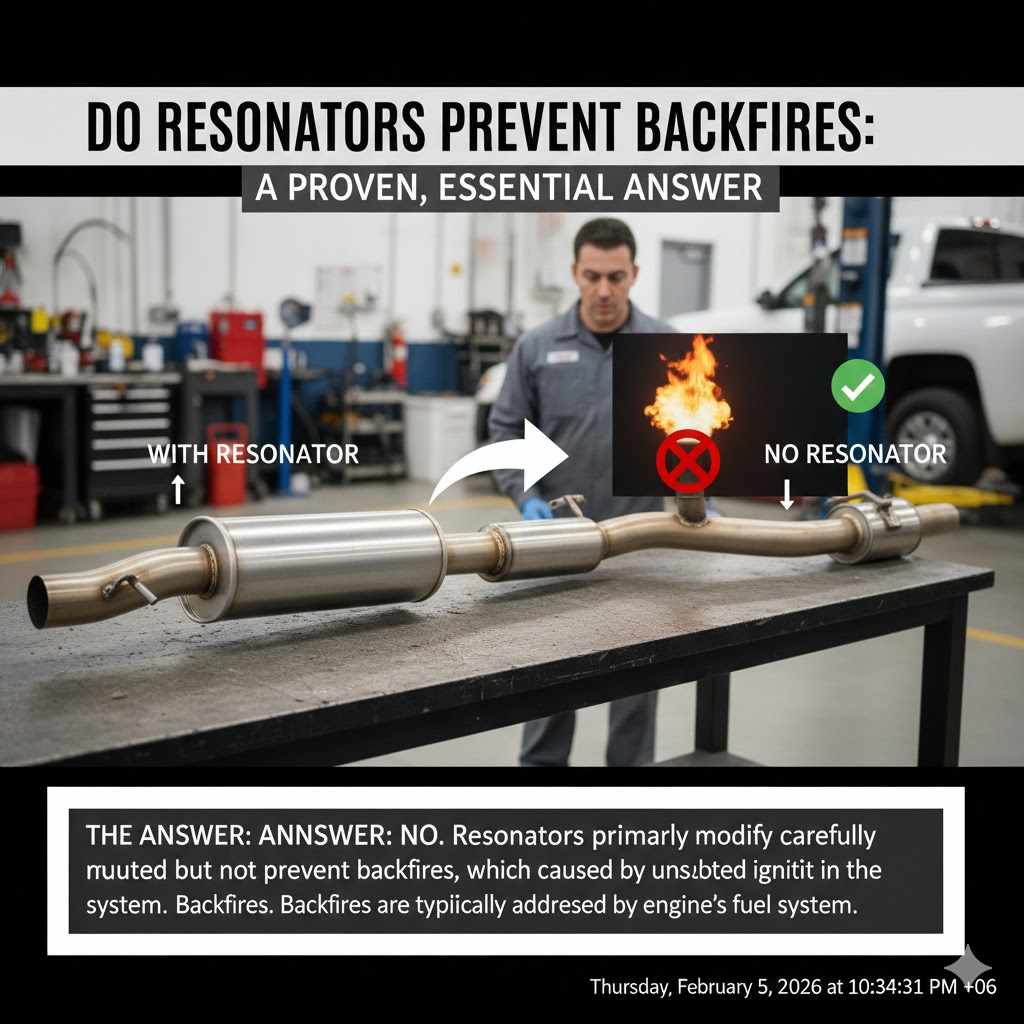
Do Resonators Prevent Backfires: A Proven, Essential Answer
A resonator’s main job is to cancel out specific, unpleasant sound frequencies, like droning on the highway. While it might slightly muffle the sound of a small backfire, it does not prevent or fix the root cause. Backfires are caused by unburnt fuel igniting in the exhaust, an issue related to your engine’s tuning, not the resonator.
Have you ever heard a loud POP or BANG from a car’s exhaust? It can be startling and make you wonder if something is seriously wrong. This noise, known as a backfire, is a common concern for many drivers. You might have heard people talk about different exhaust parts, like resonators, and wonder if they hold the key to stopping this issue. It’s a frustrating problem, but don’t worry, you’ve come to the right place for a clear, simple answer.
I’m Monowar Shohag, and I’m here to guide you through your car’s exhaust system without any confusing jargon. Today, we’re going to uncover the truth about resonators and backfires. We’ll explore what causes those loud bangs and, most importantly, how to address them correctly. Let’s get you the confidence to understand and care for your car.
What Exactly is a Backfire? A Simple Breakdown
Before we can talk about fixing it, let’s understand what a backfire is. In simple terms, a backfire is a small explosion of unburnt fuel that happens inside your car’s exhaust system instead of inside the engine where it belongs. Your engine is designed to burn a precise mix of air and fuel in a controlled way to create power. When that process gets disrupted, leftover fuel can escape into the hot exhaust pipes. Once it hits the hot metal and fresh air, it can ignite suddenly, creating that loud, startling pop or bang sound.
Think of it like a tiny, misplaced firecracker. It’s not supposed to happen there, and while an occasional gurgle on a performance car might be normal, consistent and loud backfires are a sign that something needs your attention.

Understanding the Resonator: Your Exhaust System’s Sound Tuner
Now, let’s talk about the resonator. Many people get this part confused with a muffler, but they have very different jobs. A resonator is essentially a sound-canceling device. It’s an empty metal chamber in your exhaust pipe designed to target and eliminate specific sound frequencies.
Imagine you’re listening to music, but there’s an annoying, constant humming noise in the background. A resonator is like a special filter that specifically removes that hum without changing the rest of the music. In your car, this “hum” is often called “drone” or “rasp”—that irritating, buzzing sound you might hear when driving at a steady speed on the highway. The resonator makes your ride quieter and more pleasant by canceling out those specific sound waves.
So, Do Resonators Stop Backfires? The Direct Answer
Here is the essential answer: No, a resonator is not designed to prevent backfires.
A resonator’s job is to manage sound frequencies, not to fix problems with your engine’s fuel or ignition system. Since a backfire is caused by unburnt fuel igniting, a resonator does nothing to stop that fuel from getting into the exhaust in the first place. It doesn’t change your engine’s timing or air-to-fuel ratio.
However, it can sometimes change how you hear a backfire. Because a resonator dampens sound, it might make a small pop or gurgle sound quieter. But for a loud, powerful backfire, a resonator won’t do much to hide it. Relying on a resonator to fix a backfire is like using earplugs to ignore a smoke alarm—you’re masking the symptom, not solving the underlying problem.
Resonator vs. Muffler vs. Catalytic Converter: What’s the Difference?
It’s easy to mix up the different parts of an exhaust system. They all look like metal cans attached to a pipe! But each has a unique and important role. Understanding the difference is key to knowing how your car works.
| Exhaust Part | Primary Job | How It Works | Effect on Backfires |
|---|---|---|---|
| Resonator | Cancels specific sound frequencies (drone/rasp). | Uses an empty chamber to reflect and cancel out sound waves. | Does not prevent them. May slightly muffle the sound of small pops. |
| Muffler | Reduces the overall volume of the exhaust noise. | Uses chambers, baffles, and sound-absorbing material to quiet all sounds. | Does not prevent them, but significantly muffles the sound. |
| Catalytic Converter | Reduces harmful emissions from the exhaust. | Uses precious metals (like platinum) to convert toxic gases into less harmful ones. | Can be damaged or destroyed by frequent backfires due to the intense heat and unburnt fuel. |
As you can see, none of these parts are designed to stop a backfire from happening. In fact, a bad backfire can seriously damage your catalytic converter, which is an expensive part to replace. This is why it’s so important to find and fix the real cause.
The Real Culprits: What Actually Causes a Car to Backfire?
If the resonator isn’t the issue, then what is? Backfires are almost always linked to a problem in one of three areas: the air/fuel mixture, the ignition system, or timing. Let’s break down the most common causes in simple terms.
- Rich Air-Fuel Mixture: This is the most common cause. It means there is too much fuel and not enough air in the engine’s cylinders. The extra, unburnt fuel gets pushed into the exhaust, where it ignites. This can be caused by a faulty oxygen sensor, a clogged air filter, or leaky fuel injectors.
- Lean Air-Fuel Mixture: This is the opposite—too much air and not enough fuel. While it sounds less likely to cause a backfire, it can cause small pops and gurgles, especially when you take your foot off the gas pedal (deceleration). This can happen due to a vacuum leak or a weak fuel pump.
- Incorrect Ignition Timing: Your spark plugs need to fire at the perfect moment to ignite the fuel. If the timing is off (either too early or too late), the fuel might not burn completely in the cylinder. The leftover fuel then explodes in the exhaust manifold or pipes. This is common in older cars with distributors but can also happen in modern cars if a sensor fails.
- Worn-Out Spark Plugs or Wires: If your spark plugs are old or the wires are damaged, they might create a weak spark that can’t ignite all the fuel. Again, this leads to unburnt fuel in the exhaust.
- Exhaust Leaks: A leak in the exhaust system, especially near the engine, can let fresh air in. This oxygen can help ignite any unburnt fuel that passes by, causing a backfire.
A Beginner’s Guide to Fixing Backfires (The Right Way)
Now for the hands-on part. You don’t have to be a master mechanic to start investigating a backfire. By following these simple steps, you can often identify the problem or at least give your mechanic a great head start. Safety first: always work on a cool engine and in a well-ventilated area.
Step 1: Listen Carefully and Take Notes
Your car is trying to tell you something. Pay attention to when the backfire happens. This is your most important clue.
- Does it happen when you accelerate? This often points to a rich fuel mixture or ignition timing issue.
- Does it happen when you let off the gas (decelerate)? This is a classic sign of a lean fuel mixture or an exhaust leak.
- Does it happen when you start the car? This could be related to timing or a sticky fuel injector.
Step 2: Check for Warning Signs on Your Dashboard
The easiest check of all! Is your “Check Engine” light on? If it is, your car’s computer has already detected a problem. You can buy an inexpensive OBD-II scanner online or go to most auto parts stores, and they will scan the codes for free. A code can point you directly to a faulty sensor or system, saving you a lot of guesswork. The Environmental Protection Agency (EPA) explains how these systems help monitor vehicle health.
Step 3: Perform a Basic Visual Inspection
You can spot many issues just by looking under the hood. Here’s what to look for:
- Air Filter: Is it dirty or clogged? A clogged air filter restricts airflow, leading to a rich fuel mixture. This is an easy and cheap part to replace yourself.
- Spark Plug Wires: Look for any cracks, burns, or loose connections on the wires running to your spark plugs.
- Vacuum Hoses: Check all the small rubber hoses around the engine for cracks or disconnections. A tiny leak in a vacuum hose can cause a lean mixture.
- Exhaust Manifold: Look for any black, sooty marks around the area where the exhaust pipes connect to the engine. This is a tell-tale sign of an exhaust leak.
Step 4: Inspect Your Spark Plugs
If you feel comfortable, checking your spark plugs is a great next step. You’ll need a spark plug socket and a ratchet. Carefully remove one spark plug and look at its tip. A healthy plug should be a light tan color. If it’s black and sooty, it’s a sign of a rich fuel mixture. If it’s white and blistered, it could mean the engine is running too hot or too lean.
Step 5: When to Call a Professional
If the simple checks don’t reveal the problem, or if the issue involves ignition timing, fuel injectors, or internal engine sensors, it’s time to visit a trusted mechanic. These are more complex jobs that require specialized tools and knowledge. Trying to adjust timing yourself without experience can cause serious engine damage.
| Symptom | Common Cause | Beginner-Friendly Fix? |
|---|---|---|
| Backfire on acceleration | Rich fuel mixture, bad spark plugs, wrong timing. | Yes (check air filter, spark plugs). No (timing). |
| Popping on deceleration | Lean fuel mixture, exhaust leak. | Yes (check for vacuum/exhaust leaks). |
| Check Engine Light is on | Faulty sensor (e.g., O2 sensor, MAF sensor). | Maybe (scanning codes is easy; replacing sensors varies). |
| Rough idle with backfiring | Vacuum leak, ignition system issue. | Yes (check hoses and spark plug wires). |
When Does a Backfire Signal a Serious Problem?
An occasional, small pop might not be a major concern, especially on older cars or performance vehicles. However, you should never ignore frequent, loud backfires. A loud bang indicates a significant amount of fuel is igniting, which can cause serious damage over time.
Pay close attention if the backfire is accompanied by:
- A noticeable loss of power.
- A flashing Check Engine light (this is critical!).
- Black or blue smoke from the exhaust.
- A strong smell of gasoline.
These symptoms, especially a flashing Check Engine light, mean you should stop driving the car and have it inspected immediately. A flashing light often signals a severe misfire that can quickly destroy your catalytic converter, leading to a very expensive repair.

Frequently Asked Questions (FAQ)
1. Will removing my resonator cause backfires?
No, removing a resonator will not cause a backfire. It will only change the sound of your exhaust, making it louder and potentially adding more drone or rasp. If you start hearing backfires after removing it, the issue was likely already there, but the resonator was muffling the sound enough that you didn’t notice it.
2. Is backfiring bad for your engine?
Yes, consistent backfiring is bad for your vehicle. The uncontrolled explosions can damage exhaust valves, the exhaust system itself, and especially the catalytic converter. It’s also a sign that your engine is not running efficiently, which wastes fuel and increases emissions.
3. What’s the difference between a backfire and an afterfire?
Technically, a “backfire” happens when the explosion occurs backward through the intake system (out the carburetor or throttle body). An “afterfire” is when it happens in the exhaust system. However, most people use the term “backfire” to describe any pop or bang from the exhaust, so we use it that way too for simplicity.
4. Can a cheap or modified exhaust system cause backfires?
A poorly designed exhaust system can contribute to the conditions that cause backfiring (or at least make it more noticeable). A system with a drastically different pipe diameter or less backpressure can alter the air-fuel mixture, sometimes leading to popping on deceleration. Proper engine tuning is often required after a major exhaust upgrade.
5. Is it expensive to fix a backfire?
The cost can vary greatly. If the cause is a dirty air filter or a worn-out spark plug, the fix could cost less than $50. However, if the problem is a faulty fuel injector or a bad engine sensor, the repair could be several hundred dollars. This is why diagnosing it early is so important.
6. Can I drive my car if it’s backfiring?
If it’s a very minor, occasional pop, it’s likely okay to drive to a mechanic. If the backfire is loud, frequent, or accompanied by a loss of power or a flashing Check Engine light, you should pull over safely and have the car towed to avoid expensive damage.
Conclusion: Your Next Steps to a Healthier Exhaust
So, we’ve learned that a resonator is a sound-tuning tool, not a backfire prevention device. While it shapes the tone of your exhaust note, it has no power over the real culprits behind those startling bangs: your engine’s air-fuel mixture and ignition system.
The key takeaway is to treat a backfire as a message from your car. It’s an indicator that something needs attention. By following the simple diagnostic steps we’ve covered, you can approach the problem with confidence. You now know to check your air filter, inspect your spark plugs, and listen for when the backfire happens. This knowledge empowers you to either fix the simple issues yourself or have a much more informed conversation with your mechanic.
Taking care of your car’s exhaust system is about more than just noise; it’s about safety, efficiency, and performance. Don’t let a backfire intimidate you. See it as an opportunity to learn more about your vehicle and keep it running smoothly for years to come.


