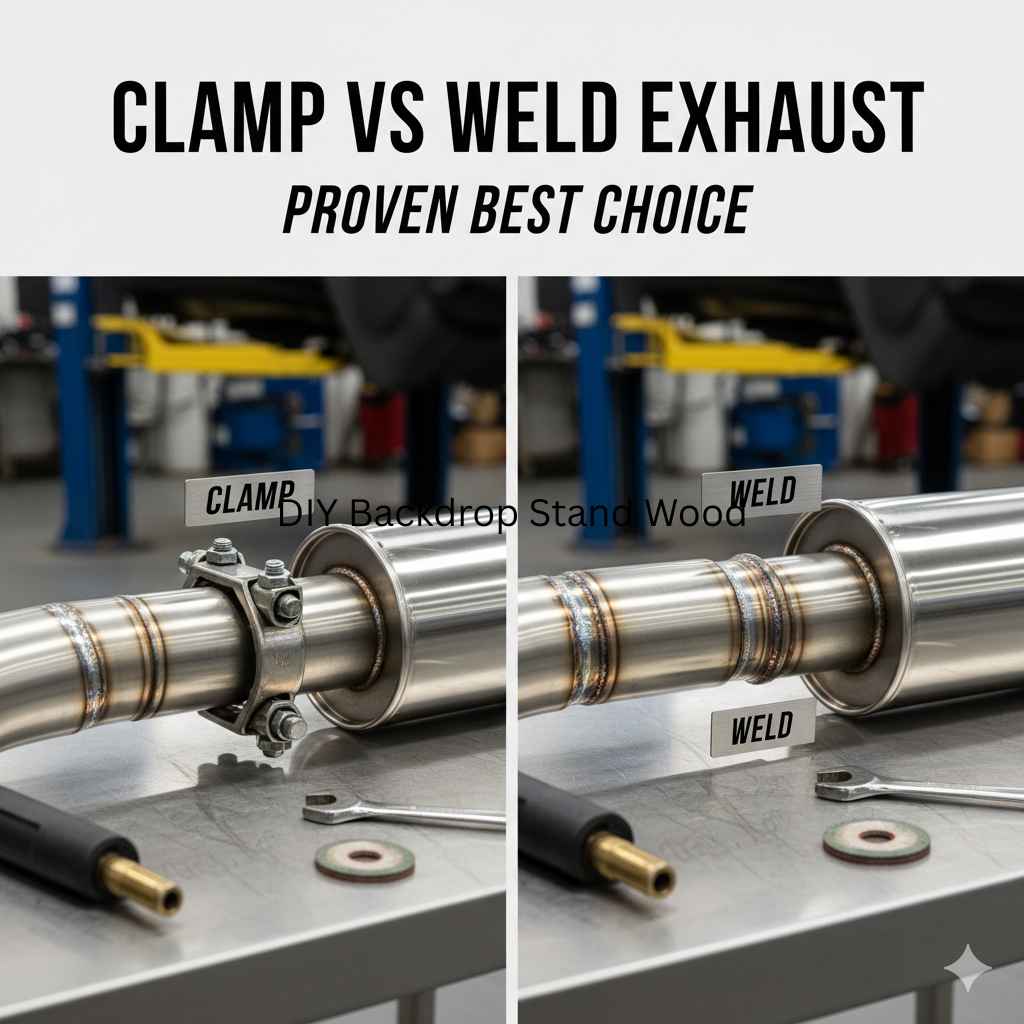
Clamp vs Weld Exhaust: Proven Best Choice
For most everyday car owners, using exhaust clamps is the proven best choice over welding for repairs and modifications. Clamps offer a faster, easier, and often reversible solution that doesn’t require professional welding skills or equipment, making them ideal for DIY enthusiasts looking to save time and money.
Hey there, fellow car enthusiasts! Ever stared at your car’s exhaust system, wondering if a small leak or a bit of rattle needs a quick fix, or a major overhaul? It’s a common question for many of us: how should we reconnect or modify exhaust pipes? Two main ways come to mind: clamping and welding. For many everyday car owners, figuring out the best method can feel a bit daunting. Will it be solid? Will it last? Will it cost a fortune? Don’t worry, we’ve all been there! This guide is here to make it crystal clear. We’ll break down clamp vs. weld exhaust so you can confidently choose the right path for your car, saving you time, hassle, and potentially a lot of cash.
Clamp vs Weld Exhaust: Making the Right Connection
When it comes to joining exhaust pipes, especially for common repairs or minor modifications, you’ll often face the decision between using an exhaust clamp or welding. Both methods have their place, but for most home mechanics and even many professional shops for certain jobs, one often stands out as the more practical and accessible choice. Let’s dive into what each method involves and why one might be your “proven best choice.”
What is Exhaust Welding?
Exhaust welding is a permanent method of joining exhaust pipes. It involves using a welding machine to melt and fuse metal pieces together, creating a strong, airtight seal. This is typically done by a professional mechanic or a skilled welder.
Pros of Welding:
- Durability: A properly welded exhaust system is incredibly strong and can last for many years, often outlasting the vehicle itself.
- Leak-Proof Seal: Welding creates a continuous, seamless join, which is excellent at preventing exhaust leaks, ensuring optimal performance and safety.
- Clean Aesthetics: Welded joints often look cleaner and more integrated, appearing as if they were part of the original factory setup.
Cons of Welding:
- Requires Professional Skills: Welding exhaust pipes accurately and safely requires specialized tools and significant skill. It’s not a typical DIY job.
- Permanent: Once welded, it’s very difficult to separate or modify the exhaust system without cutting. This makes future repairs or upgrades more complicated.
- Cost: Professional welding services can be expensive, adding to the overall repair or modification cost.
- Heat and Fire Risk: Welding generates extreme heat, posing a fire risk if not done in a controlled environment with proper safety precautions. More information on welding safety can be found on the OSHA website’s standard on welding fumes, which highlights the importance of safety and ventilation.
What are Exhaust Clamps?
Exhaust clamps are metal bands, often made of steel, that are tightened around two sections of exhaust pipe to join them. They work by applying pressure to create a seal. There are several types, including U-bolt clamps, band clamps, and split clamps, each designed for different applications.
Pros of Clamping:
- Ease of Installation: Exhaust clamps are designed for straightforward installation. Most can be tightened with basic hand tools like a wrench or socket set.
- DIY Friendly: This makes them perfect for car owners who like to do their own maintenance and repairs.
- Reversibility: Exhaust clamps allow for easy disassembly, making it simple to replace parts, adjust your exhaust system, or perform other repairs.
- Cost-Effective: Clamps are generally much cheaper than welding services. The clamps themselves are inexpensive, and you save on labor if you do it yourself.
- No Special Skills Needed: You don’t need to be a professional welder to use a clamp. Just tighten it correctly.
- Less Risk: Compared to welding, clamping involves minimal heat and virtually no fire risk, making it a safer option for home use.
Cons of Clamping:
- Potential for Leaks: While effective when installed correctly, clamps can sometimes develop minor leaks over time, especially if the pipes are not perfectly aligned or if the clamp loosens.
- Aesthetics: Clamped joints can look less professional or “DIY” than welded joints.
- Durability (over time): In very high-stress or extreme heat areas, clamps might loosen or degrade faster than a weld. They might require occasional re-tightening.
- Pipe Condition Matters: Clamps work best on pipes that are in good condition; rusted or damaged pipes can make a secure connection difficult.
The “Proven Best Choice” for Most Car Owners
When you weigh the options, especially for the average car owner looking for practical solutions, clamping is generally the proven best choice for exhaust repairs and modifications. Here’s why it wins out for most situations:
- Accessibility: Anyone can buy an exhaust clamp and install it without needing a specialized workshop or advanced training.
- Speed and Convenience: A clamp can often be installed in minutes, saving trips to the mechanic and downtime for your vehicle.
- Cost Savings: The combination of buying an affordable part and doing the labor yourself offers significant cost benefits.
- Flexibility: If you decide to change your exhaust setup later, a clamped system is easy to take apart and reconfigure.
Think of it this way: if you have a small hole in your exhaust pipe or a section that has come loose before the muffler, a clamp is usually the quickest, cheapest, and easiest fix. Welding is fantastic for building custom exhaust systems from scratch or for permanent fixes on performance vehicles where absolute sealing and strength are paramount and cost is less of an issue. But for everyday drivers and DIYers, clamping offers a reliable and manageable solution.
When to Choose Which: A Practical Guide
While clamping is often the go-to, understanding when each method truly shines can help you make the best decision for your specific needs.
Situations Where Clamping Shines:
- Temporary Repairs: Need to get your car to a mechanic without loud exhaust noise? A clamp can be a quick fix.
- DIY Muffler/Pipe Replacement: Replacing a rusted muffler or section of pipe is often easiest with a clamp.
- Resonator or H-pipe Installation: If you’re adding or replacing these components, clamps are usually the standard and easiest method.
- Aftermarket Cat-Back Systems: Many bolt-on exhaust kits are designed specifically to be joined using clamps.
- Budget Repairs: When you need to fix an exhaust issue without breaking the bank.
Situations Where Welding is Often Preferred:
- Full Custom Exhaust Systems: Building a unique exhaust from headers back often involves extensive welding for strength and custom fit.
- Performance Applications: High-performance vehicles often demand the absolute strongest, leak-proof joints a weld can provide.
- Exhaust Manifold Repairs: Welds can be necessary for certain repairs to exhaust manifolds, which get extremely hot.
- Permanent Fixes on Critical Components: For areas where leaks could cause significant air quality issues or damage, a permanent weld is ideal.
- Restoration Projects: Maintaining the original look and integrity of classic cars might call for welding.
Types of Exhaust Clamps Explained
Not all exhaust clamps are created equal. Understanding the different types can help you pick the right one for the job.
1. U-Bolt Clamps
These are probably the most common you’ll see. They consist of a U-shaped bolt, a saddle, and two nuts. You slide the saddle over the two pipes you want to join (often with one pipe inside the other) and then tighten the U-bolt around them. They’re simple, effective, and good for medium-duty applications.
Best for: Pipe-to-pipe connections, mufflers, and connecting pipes where one slides into another.
2. Band Clamps (or Exhaust Band Clamps)
These are like a strong, wide metal band that wraps completely around the two pipes. They often have a sleeve or ferrule that bridges the gap between the pipes. You tighten them with bolts. They offer a more even distribution of pressure than U-bolts and often provide a better seal, especially on pipes with the same diameter.
Best for: Joining pipes of the same diameter, exhaust tips, and situations where a very clean seal is desired.
3. Split Clamps
These are similar to band clamps but are designed to “pinch” a pipe to reduce its diameter. They are useful when you need to connect a pipe of a slightly larger diameter to one of a smaller diameter, or to secure a new section onto an existing piece.
Best for: Connecting pipes of slightly different sizes, or securing pipes that might slip over each other.
4. H-Pipe/X-Pipe Clamps
These are specialized clamps designed to join the two sides of an H-pipe or X-pipe to the rest of the exhaust system. They often have a unique shape to fit the contours of these crossover sections.
Best for: Connecting H-pipes and X-pipes to your exhaust system.
How to Install an Exhaust Clamp: A Simple Step-by-Step Guide
Ready to tackle an exhaust repair yourself? Here’s how to use a clamp like a pro.
Tools You’ll Likely Need:
- Your chosen exhaust clamp
- A socket wrench or adjustable wrench
- Penetrating oil (like WD-40) if bolts are rusty
- Safety glasses
- Gloves
- Wire brush (for cleaning pipes)
- A jack and jack stands (if working under the vehicle)
Step-by-Step Installation:
- Safety First: Ensure your vehicle is parked on a level surface. If you need to work underneath, use a reliable jack and securely place jack stands. Never rely solely on a jack. Let the exhaust cool completely before touching it.
- Inspect the Pipes: Check the ends of the pipes you need to join. They should be relatively clean and free of excessive rust or damage. If they are dirty or corroded, clean them with a wire brush.
- Lubricate (if needed): If the pipes are difficult to slide together or if bolts on an old clamp are rusted, spray penetrating oil on the connection points or bolts and let it sit for a few minutes.
- Position the Pipes: Slide the pipes together. If one pipe slides inside another, ensure it’s inserted far enough for a secure fit. If you’re using a clamp to join two pipes end-to-end, ensure they are perfectly aligned.
- Place the Clamp: Position the exhaust clamp around both pipes. For U-bolt clamps, ensure the saddle bridges the gap between the two pipes and the U-bolt goes around them. For band clamps, wrap the band securely around the joint.
- Tighten the Clamp:
- For U-bolt clamps: Hand-tighten the nuts onto the U-bolt first. Then, use your wrench to tighten them incrementally, alternating between nuts to ensure even pressure. Tighten until snug and the pipes are held firmly. Avoid overtightening, which can crush the pipes.
- For band clamps: Tighten the bolts with your wrench, again tightening them evenly and incrementally until the clamp is secure and creates a tight seal.
- Check for Leaks: Start your engine and listen for any unusual exhaust noises. You can also gently feel around the clamped area (once it’s cooled slightly!) for any escaping exhaust gases. A tiny puff of smoke from a heat source (like a damp rag waved carefully) can help visualize leaks.
- Final Tightening (if needed): If you detect a small leak, carefully tighten the clamp a little more. If the leak persists, you may need a different size clamp, a clamp designed for the specific pipe shapes, or the pipes might be too damaged for a clamp to work effectively.
Important Considerations for Exhaust Repairs
When dealing with exhaust systems, safety and proper function are paramount. Here are a few extra things to keep in mind:
Exhaust Leaks and Your Car’s Health
Exhaust leaks are more than just noisy annoyances. They can:
- Reduce Fuel Efficiency: If exhaust gases escape before they reach sensors, your engine’s computer might not get accurate readings, leading to poorer fuel economy.
- Increase Emissions: Leaked exhaust contains harmful pollutants. Proper sealing ensures these are directed to the catalytic converter for treatment.
- Pose Health Risks: Exhaust fumes contain carbon monoxide, which is odorless, colorless, and deadly. Leaks in the cabin area can be extremely dangerous.
- Impact Performance: Backpressure is crucial for engine performance. Leaks can disrupt this.
According to the U.S. Environmental Protection Agency, a properly functioning exhaust system is vital for controlling vehicle emissions. Ensuring your exhaust is sealed tight helps the catalytic converter work effectively.
When to Call a Professional
While DIY clamping is great, there are times when professional help is necessary:
- Structural Damage: If large sections of your exhaust are rusted through or physically broken, especially near the engine or catalytic converter, it may require welding or replacement of larger components.
- Safety Concerns: If you’re uncomfortable working under your car or unsure about the repair, it’s always best to let a professional handle it.
- Complex Systems: Highly integrated exhaust systems on newer or performance vehicles might require specialized tools and knowledge.
- Persistent Leaks: If you try clamping and still can’t achieve a proper seal, there might be an underlying issue the clamp can’t fix.
Comparing Clamp vs. Weld Exhaust: A Quick Reference Table
Here’s a handy table summarizing the key differences to help you decide.
| Feature | Exhaust Clamping | Exhaust Welding |
|---|---|---|
| Installation Difficulty | Easy, DIY-friendly | Difficult, requires professional skills |
| Tools Required | Basic hand tools (wrenches, sockets) | Welding machine, safety gear, specialized tools |
| Permanence | Temporary/Reversible | Permanent |
| Cost of Repair | Low (part cost + DIY labor) | High (part cost + professional labor) |
| Time to Repair | Fast (minutes to an hour) | Slower (requires shop time, potentially hours) |
| Leak Potential | Can occur if not installed perfectly or over time | Very low with a proper weld |
| Durability | Good, may need re-tightening | Excellent when done correctly |
| Aesthetics | Can look less finished | Sleek, integrated appearance |
| Safety Risk | Low (minimal heat) | High (extreme heat, fire risk, fumes) |
Frequently Asked Questions (FAQ)
Q1: Can I use exhaust clamps on a cracked exhaust pipe?
A: For small hairline cracks, a clamp might provide a temporary fix, but it’s not ideal for long-term use. For larger cracks or holes, clamping won’t create a proper seal. You’ll likely need to replace the section of pipe, or have it professionally welded if it’s a repairable area.
Q2: How often should I check my exhaust clamps?
A: It’s a good idea to check your exhaust clamps periodically. If you notice any new rattles or exhaust noise, inspect them. Vibrations can sometimes loosen clamps over time, so giving them a quick tighten every 6 months to a year, or whenever you do other maintenance, is wise.
Q3: What is the best type of clamp for a muffler connection?
A: For connecting a new muffler to an existing pipe, a U-bolt clamp or a band clamp is usually best. Many muffler shops use U-bolt clamps for their ease of use and secure grip. Ensure the pipes fit snugly together before clamping.