
Can You Make Your Exhaust Sound Like an F1 Car?
Many car lovers dream of that roaring, high-pitched sound that Formula 1 cars make. It’s a sound that gets your heart racing! If you’ve ever wondered, “Can You Make Your Exhaust Sound Like an F1 Car?” you’re not alone. It can seem like a really big, technical challenge, especially if you’re new to car modifications. But don’t worry, it’s more achievable than you might think. We’re going to walk through it step-by-step, making it easy to follow. Get ready to explore how you can get closer to that dream sound.
Understanding F1 Car Exhaust Sounds
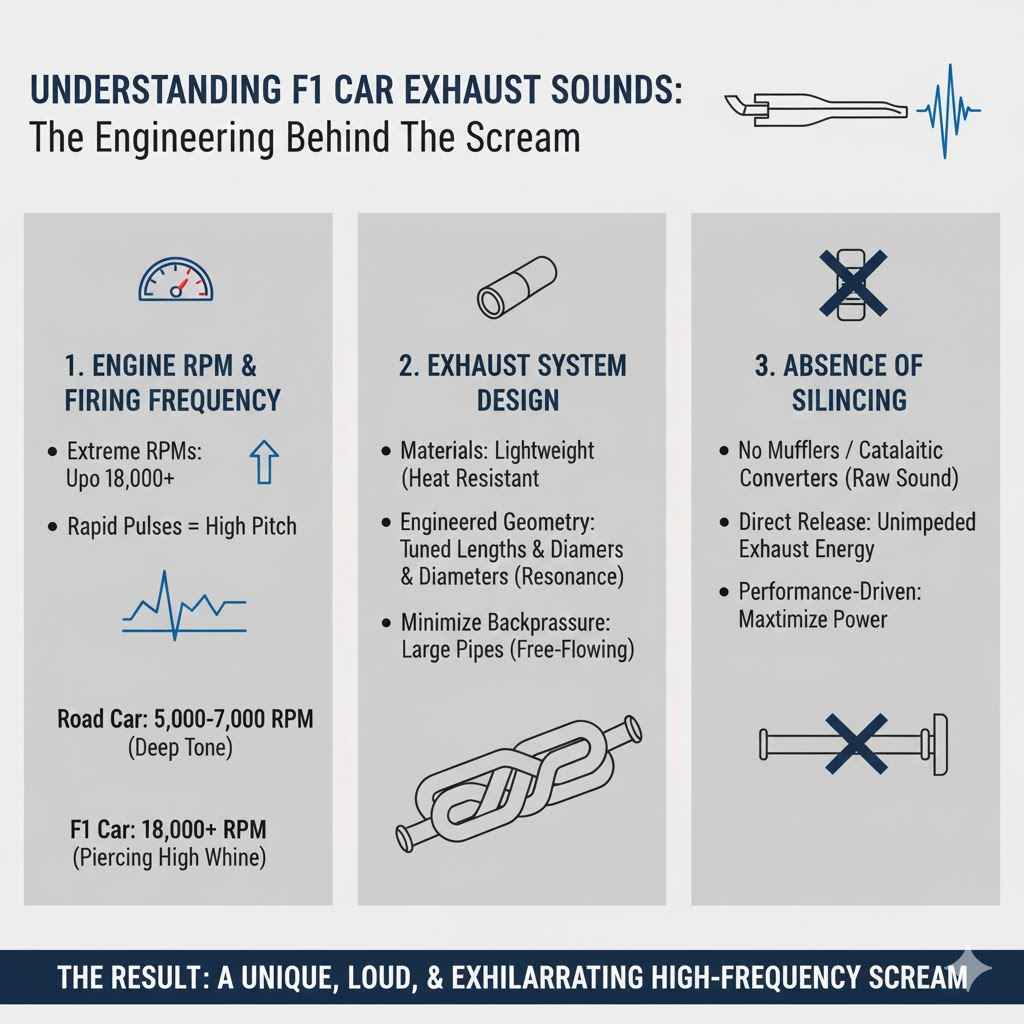
The distinctive sound of a Formula 1 car is not just about being loud. It’s a complex blend of engineering, engine design, and exhaust system tuning that creates a high-frequency, sharp, and powerful note. F1 engines operate at extremely high RPMs, often exceeding 18,000 revolutions per minute, which is far beyond what most road cars achieve. This rapid firing of cylinders at such high speeds is the primary source of the signature scream.
Beyond the engine’s RPM, the exhaust system itself plays a critical role. F1 cars use highly specialized exhaust manifolds and pipes designed to manage exhaust gases efficiently and to contribute to the overall sound profile. These systems are crafted from lightweight, high-temperature-resistant materials and are shaped to enhance specific acoustic frequencies.
The absence of mufflers or catalytic converters in their purest form also allows the engine’s raw sound to be heard, unhindered by noise reduction systems common in street vehicles. The combination of these factors – extreme RPMs, specialized exhaust geometry, and minimal silencing – results in the unique and exhilarating F1 sound. It’s a sound that has been honed over decades of racing technology.
Engine RPM and Firing Frequency
An engine’s revolutions per minute (RPM) is a measure of how many times the crankshaft completes a full rotation in one minute. For standard road cars, typical maximum RPMs might range from 5,000 to 7,000 RPM. In contrast, Formula 1 engines are designed to rev much higher, often reaching beyond 18,000 RPM during a race.
This incredibly high RPM directly impacts the sound produced. Each time a cylinder fires, it releases a pulse of exhaust gas. The faster the engine spins, the more frequently these pulses occur. This rapid succession of exhaust pulses creates a continuous and very high-pitched sound wave. Imagine a drumbeat; a slow beat is deep and resonant, while a very fast beat becomes a continuous hum or whine. The F1 engine’s rapid firing creates this high-pitched whine.
The frequency of these pulses is directly proportional to engine RPM and the number of cylinders. For example, a V8 engine firing 8 times per revolution (on a 4-stroke cycle, each cylinder fires every two crankshaft revolutions) at 18,000 RPM produces exhaust pulses at an astonishing rate, contributing significantly to that piercing F1 sound. This is why achieving a similar sound often involves modifications that allow an engine to rev higher or replicate the effect of such high RPMs.
Exhaust System Design and Materials
The materials used in F1 exhaust systems are chosen for their ability to withstand extreme heat and pressure while being as lightweight as possible. Typically, these systems are constructed from high-grade titanium or specialized stainless steel alloys. Titanium is exceptionally strong and lightweight, and it can handle the intense temperatures generated by F1 engines without deforming or degrading.
The design of the exhaust pipes, manifolds, and tailpipes is crucial. Instead of simple straight pipes, F1 exhausts often feature carefully engineered lengths and diameters. These dimensions are calculated to resonate at specific frequencies, harmonizing with the engine’s firing order and RPM to produce the desired sound. The shape of the exhaust manifold, which collects exhaust gases from each cylinder, can influence how these gases merge, affecting the final sound.
Furthermore, F1 exhaust systems are designed to minimize backpressure. Backpressure is the resistance the exhaust gases face as they exit the engine. While some backpressure can be beneficial for low-end torque in road cars, F1 teams aim for minimal backpressure to allow the engine to breathe freely at high RPMs, contributing to both power and sound. This often means using larger diameter pipes and fewer bends.
The Absence of Silencing Components
A key factor in the raw, unadulterated sound of F1 cars is the deliberate omission of traditional silencing components found in road vehicles. Standard mufflers are designed to absorb sound energy, using chambers and baffles to reduce noise levels. Catalytic converters, while primarily for emissions control, also have some muffling effect.
Formula 1 regulations, while stringent on emissions, permit exhaust systems that are essentially straight pipes or feature minimal baffling solely for performance tuning, not noise reduction. This means that the sound produced by the high-speed combustion within the engine and the rapid expulsion of exhaust gases travels almost unimpeded to the outside world.
This direct release of exhaust energy is what gives F1 cars their incredibly loud and piercing sound. It’s a sound that is a byproduct of maximizing engine performance, rather than a deliberately engineered feature solely for audio appeal. For enthusiasts aiming for an F1-like sound, this implies a significant departure from standard road car exhaust setups, which are designed with noise limits in mind.
Modifying Your Car For An F1 Sound
Achieving an F1-like exhaust note on a road car is a popular goal for many automotive enthusiasts. While replicating the exact sound is virtually impossible due to the specialized nature of F1 engines and regulations, significant steps can be taken to get remarkably close. This involves understanding the core components that contribute to the sound and making strategic modifications.
The primary areas of focus are the exhaust system, and to a lesser extent, engine characteristics. This means looking at the exhaust manifold, the exhaust pipes, and the muffler (or lack thereof). Different types of exhaust systems offer varying degrees of sound alteration, from subtle enhancements to dramatic changes. For a truly F1-esque tone, the goal is often to create a less restrictive path for exhaust gases, allowing the engine to breathe and sound more freely.
It’s important to approach these modifications with a clear understanding of local laws regarding noise emissions and vehicle modifications. Safety and legality should always be the top priorities. By carefully selecting parts and considering the overall impact on your vehicle, you can embark on this exciting project.
Choosing The Right Exhaust System Components
The exhaust system is the most direct route to altering your car’s sound. It’s a series of pipes that carry exhaust gases from the engine to the rear of the vehicle. Each part of this system, from the manifold to the tailpipe, plays a role in the final sound. For an F1-like roar, you’ll want to consider upgrades that reduce restriction and enhance higher frequencies.
Aftermarket Exhaust Systems
Aftermarket exhaust systems are designed to
These systems often use larger diameter piping and smoother bends than stock exhausts. This allows exhaust gases to flow more freely, which can increase horsepower and produce a louder, more aggressive sound. The material of the exhaust system also matters; stainless steel is durable and common, while titanium is lighter and can offer a different tonal quality but is more expensive.
When choosing an aftermarket system, pay attention to reviews and sound clips. Many manufacturers provide audio samples of their products. Consider the specific type of sound you’re after – a raspy high-pitched scream or a deeper rumble. It’s also a good idea to consult with experienced auto mechanics or exhaust specialists to ensure the system is compatible with your car and meets any local regulations.
Performance Mufflers And Resonators
Mufflers are designed to reduce noise, while resonators help to tune the sound, often by canceling out unwanted frequencies or accentuating desirable ones. For an F1 sound, the goal is usually to minimize muffling and potentially remove or
A performance muffler is often straight-through in design. Instead of using chambers that reflect sound waves to cancel them out, it uses a perforated core surrounded by sound-absorbing material. This allows exhaust gases to pass through with much less restriction, leading to a louder and more aggressive sound.
Resonators can be tricky. Stock resonators are often tuned to reduce drone at cruising speeds. For an F1 sound, you might choose to remove the stock resonator entirely or
Exhaust Headers And Downpipes
Exhaust headers (or exhaust manifolds on some engines) are the first component of the exhaust system, directly connected to the engine cylinders. They collect exhaust gases from each cylinder and channel them into a single pipe. Performance headers are designed to optimize this collection process.
Headers often feature “equal-length” runners, meaning each pipe from a cylinder to the collector has the same length. This ensures that exhaust pulses arrive at the collector at the same time, creating a smoother flow and a more consistent sound. They also typically have larger diameters than stock manifolds.
Downpipes connect the exhaust manifold (or catalytic converter) to the rest of the exhaust system. Performance downpipes are often larger in diameter and designed to be less restrictive. On some cars, removing or replacing the catalytic converter with a high-flow or cat-delete pipe can drastically increase volume and alter the sound. However, this is illegal in many regions due to emissions regulations.
Engine Modifications To Enhance Sound
While the exhaust system is the most impactful modification for sound, certain engine modifications can complement and amplify the desired F1-like tone. These changes focus on allowing the engine to perform and sound its best, particularly at higher RPMs. They often involve improving the engine’s ability to breathe and rev freely.
Cold Air Intakes
A cold air intake system is designed to replace your car’s stock air intake. The stock system often draws air from inside the engine bay, which can be warm. Warm air is less dense than cold air, meaning it contains fewer oxygen molecules. This can limit engine performance.
A cold air intake pulls air from a cooler location outside the engine bay, often through a dedicated duct or filter positioned behind the front bumper or in the fender well. This cooler, denser air allows the engine to burn fuel more efficiently, potentially leading to a slight increase in horsepower and torque.
More importantly for sound, a cold air intake can change the engine’s induction noise. The intake sound is the noise the engine makes as it draws air in. By changing the shape and filter of the intake system, you can alter the pitch and volume of this noise. Some aftermarket intakes are designed to amplify the engine’s growl or whistle, which can blend with the exhaust note to create a more aggressive overall sound.
Performance Spark Plugs And Ignition Systems
Spark plugs are vital for igniting the air-fuel mixture in your engine’s cylinders. Performance spark plugs are often made from different materials and have a more robust construction than standard plugs. They can be designed to provide a stronger, more consistent spark.
A stronger spark can lead to more complete combustion of the air-fuel mixture. This can result in a slight improvement in engine performance and efficiency. For sound, the effect is more subtle. However, a more efficient burn at higher RPMs can contribute to a sharper, cleaner engine note.
Ignition system upgrades, such as high-performance ignition coils or wires, can further enhance the consistency and strength of the spark. These components ensure that each ignition event is powerful and precise. While not directly creating an F1 sound, a well-tuned engine with a strong ignition system will sound more refined and potent, especially when paired with an aggressive exhaust.
Engine Tuning (ECU Remapping)
Engine tuning, often referred to as ECU (Engine Control Unit) remapping or chip tuning, involves altering the software that controls your engine’s performance. The ECU manages parameters like fuel injection, ignition timing, and air-fuel ratios based on programmed maps.
By remapping the ECU, you can adjust these parameters to optimize engine performance for specific modifications, like a new exhaust system or intake. For sound, tuning can often be adjusted to make the engine rev more freely and to alter the fuel delivery during acceleration and deceleration.
For instance, a tune might be set to provide a brief “pop” or “crackle” on overrun (when you lift off the throttle). This is a characteristic sound associated with some high-performance engines and can add to the F1-like experience. The tune can also ensure that the engine operates at its peak potential with the new exhaust components, leading to a more harmonious and aggressive sound profile overall.
Understanding Legal And Practical Considerations
Modifying your car to sound like an F1 racer is an exciting prospect, but it’s crucial to be aware of the legal and practical implications. Many regions have strict regulations on vehicle noise levels and emissions. Ignoring these can lead to fines, failed inspections, and even the confiscation of your vehicle.
Beyond legality, consider the long-term effects on your car. Some extreme modifications can put extra strain on engine components or other parts of your vehicle. It’s also worth thinking about the everyday usability of your car. A car that is excessively loud might be enjoyable for short bursts but can become tiring or even problematic for daily commuting or longer journeys.
Noise Regulations And Emissions Standards
Noise regulations vary significantly by country, state, and even local municipality. These laws typically set maximum decibel (dB) limits for vehicles, often specifying different limits for stationary (at idle) and in-motion measurements. Exceeding these limits can result in tickets and penalties.
For example, in many parts of Europe, there are strict noise limits for vehicles, especially those with aftermarket exhausts. Similarly, in the United States, while regulations can be more varied, most states have laws against excessively loud exhaust systems. It’s essential to research the specific laws in your area before making any modifications.
Emissions standards are also critical. Modifications that involve removing or altering catalytic converters, such as a “cat-delete” pipe, are often illegal because they increase the release of harmful pollutants into the atmosphere. These modifications can also cause your car to fail emissions tests required for registration renewal. Always ensure your modifications comply with environmental regulations.
Drone And Daily Driveability
One of the most common unintended consequences of aggressive exhaust modifications is “drone.” Drone is a persistent, low-frequency humming or buzzing sound that can be heard inside the car, especially at certain RPMs or cruising speeds. It’s caused by the way exhaust gases resonate through the exhaust system.
While a loud exhaust can sound exciting, constant drone can be incredibly annoying and lead to fatigue, headaches, and discomfort on longer drives. Many performance exhaust systems are designed to minimize drone, often through the use of resonators or specific muffler designs. However, achieving an F1-like sound without any drone can be challenging.
When considering modifications, think about how you use your car. If it’s a weekend toy, extreme loudness might be acceptable. If it’s your daily driver, you’ll want to balance aggressive sound with comfort and drivability. Some systems offer adjustable baffles or valves that allow you to control the exhaust volume, offering a compromise between quiet cruising and loud performance.
Insurance And Resale Value
Modifying your car, especially its exhaust system, can have an impact on your car insurance. Many insurance policies require you to declare significant modifications. Failure to do so could lead to your claim being denied if an accident occurs. Some modifications, particularly those that increase noise or performance dramatically, might lead to higher insurance premiums.
Regarding resale value, highly modified cars can sometimes be harder to sell or may fetch a lower price than stock vehicles. Potential buyers might be wary of heavily modified cars due to concerns about reliability, maintenance history, or potential legal issues. However, for certain niche markets, a well-executed, tasteful modification can increase appeal.
If you plan to sell your car in the future, consider if the modifications are easily reversible. For instance, keeping the original exhaust system can allow you to easily return the car to its stock condition, which often appeals to a wider range of buyers.
Real-World Examples And Case Studies
Many car enthusiasts have pursued the dream of an F1-like exhaust note. These efforts range from simple muffler replacements to full custom exhaust builds. Examining some real-world examples can offer valuable insights into what’s possible and the challenges involved.
One common scenario involves owners of high-performance sports cars like the Porsche 911 or certain BMW M-series models. These cars already have powerful engines capable of producing exciting sounds. Enthusiasts often opt for performance exhaust systems from brands known for their aggressive tones, such as Akrapovič or Capristo.
These systems typically feature lightweight materials like titanium, race-inspired muffler designs (or muffler deletes), and optimized piping. The result is a dramatic increase in volume and a sharper, more metallic tone that, while not identical to F1, captures some of its high-frequency character. For instance, a Porsche 911 equipped with a full titanium exhaust system and headers can produce a searing, high-pitched wail at redline that is incredibly exhilarating.
Another example can be found with owners of V10 or V8 naturally aspirated engines. These engines naturally have a sound profile that can lean towards the F1 character when modified appropriately. For instance, a Lamborghini Gallardo with a specific aftermarket exhaust system can achieve a deafening and thrilling shriek, especially when revved high. The key here is the engine’s inherent ability to produce high frequencies and the exhaust system’s role in unleashing it.
In less common but interesting cases, some owners of smaller displacement, high-revving engines have experimented with exhaust configurations that simulate higher RPM sounds. This might involve specialized tuning and very specific muffler bypass valves. While these might not achieve the raw power of an F1 car, they can capture some of the high-pitched sonic elements.
DIY vs. Professional Installation
Deciding whether to tackle exhaust modifications yourself or hire a professional depends on your skill level, tools, and the complexity of the job. Simple component swaps might be manageable for a DIY enthusiast, but more involved work often requires specialized expertise and equipment.
DIY Installation Considerations
If you’re considering a DIY approach for an exhaust upgrade, ensure you have the necessary tools. This typically includes jack stands, wrenches, socket sets, and potentially exhaust hanger removal tools. Safety is paramount; always work on a level surface with the car securely supported.
For component swaps like mufflers or cat-back systems, the process can be straightforward. However, removing rusted bolts or dealing with seized clamps can be challenging. Always follow the manufacturer’s instructions carefully.
Modifications like header installation or exhaust manifold
Professional Installation Benefits
Hiring a professional exhaust shop or performance mechanic offers several advantages. They have the experience, specialized tools, and lifts necessary for complex installations. They can also ensure that everything is fitted correctly, preventing leaks and ensuring optimal performance.
Professionals are also knowledgeable about local laws and regulations, helping you choose modifications that comply with noise and emissions standards. They can advise on the best systems for your car and budget, and their work is usually guaranteed.
If your goal is a significant transformation, like a full custom exhaust system, professional installation is highly recommended. They can fabricate custom pipes, ensure proper fitment, and weld components securely. This level of expertise is hard to replicate in a home garage.

Frequently Asked Questions
Question: Can I make my normal car sound exactly like an F1 car
Answer: Replicating the exact sound is nearly impossible because F1 cars have highly specialized engines that rev much higher than standard road cars, along with unique exhaust designs that aren’t street-legal. However, you can get very close to the F1 sound character with the right modifications.
Question: What is the most important part of the exhaust for sound
Answer: The muffler is the most significant component for controlling exhaust sound. Replacing a restrictive muffler with a straight-through performance muffler or removing it entirely (if legal) will dramatically increase volume and alter the tone.
Question: Will changing just the exhaust tips make it sound like an F1 car
Answer: Changing only the exhaust tips will have a very minimal impact on the sound. The tips are mostly aesthetic. Real sound changes come from the muffler, resonators, pipes, and headers.
Question: Are there any electronic solutions to make my exhaust sound like an F1 car
Answer: Yes, there are electronic exhaust sound systems available. These use speakers mounted in the exhaust to play synthesized engine sounds, which can mimic an F1 car. They offer a sound change without major mechanical modifications, but the effect is artificial.
Question: Is it legal to remove the catalytic converter for a louder exhaust
Answer: In most places, removing or tampering with the catalytic converter is illegal. It’s a key component for reducing harmful emissions, and doing so can lead to significant fines and prevent your car from passing emissions tests.
Conclusion
Achieving a sound reminiscent of an F1 car from your road vehicle is a journey of strategic modifications. By focusing on performance exhaust systems, carefully selecting components like headers and mufflers, and considering engine upgrades for better breathing, you can significantly alter your car’s acoustic character. Always remember to balance your desired sound with local laws regarding noise and emissions, and the practicalities of daily driving. With the right approach, you can get a thrilling, aggressive roar that echoes the spirit of motorsport.