Are Hot Dog Mufflers Legal? Essential Truths
The legality of “hot dog mufflers”—which are extremely short, straight pipes—varies widely by state and local jurisdiction. Most often, they are illegal because they violate noise pollution ordinances and federal anti-tampering laws regarding emissions equipment. Always check local vehicle codes before installing one.
Have you ever seen a car zoom by with an exhaust system that sounds more like a race car than a daily driver? That loud, rumbling sound often comes from short, aftermarket exhausts sometimes nicknamed “hot dog mufflers.” As a car owner, you might wonder if this popular, aggressive look and sound are actually allowed on public roads. It’s a common question, especially when upgrading your exhaust system.
Dealing with confusing local laws can be frustrating. You want your car to look and sound great, but you certainly don’t want a ticket or an expensive repair bill. Don’t worry; we are going to break down exactly what hot dog mufflers are, why they cause so much controversy, and the essential truths about their legality across the country. By the end of this guide, you will know exactly what you need to check before making any changes to your exhaust setup.
What Are “Hot Dog Mufflers” Anyway?
The term “hot dog muffler” isn’t an official mechanical term. It’s a fun, informal name used by car enthusiasts for a very specific type of exhaust modification. Think of it as the shortest, most direct exhaust setup possible.
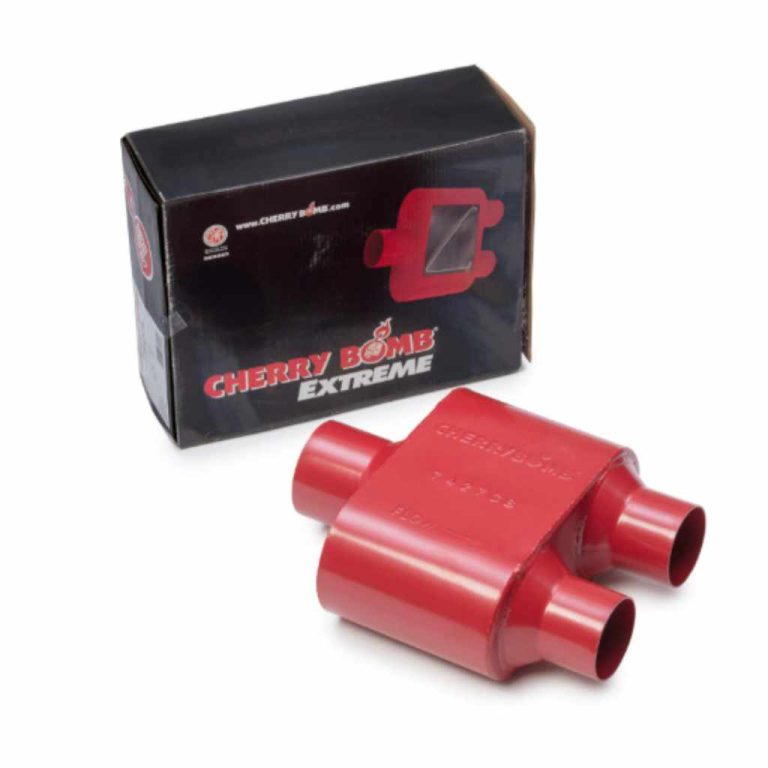
Essentially, a hot dog muffler is a small, compact muffler—often resembling a small can or cylinder—that replaces the much larger, standard muffler located near the rear of your vehicle. In some extreme cases, people remove the muffler entirely and replace it with a short pipe, which is technically a “straight pipe” setup, but the term is often used interchangeably with overly loud, short mufflers.
Why People Install Them
The appeal of this modification is usually twofold:
- Sound: They produce a much louder, deeper, and often more aggressive exhaust note because there is less baffling material to quiet the sound waves.
- Aesthetics: They offer a minimalist, sleek, or “tuner” look, tucking neatly under the bumper and sometimes exposing the pipe tip more dramatically than stock mufflers.
While these reasons sound appealing, the consequences—especially legal ones—are significant and need careful consideration before you even look at purchasing parts.

The Big Question: Are Hot Dog Mufflers Legal?
If you are searching for “are hot dog mufflers legal,” the short answer is: It depends, but usually, they are not legal for street use.
Legality is determined by a combination of federal laws that govern vehicle emissions and state or local laws that govern noise levels. When you install a hot dog muffler, you are almost certainly tampering with federally mandated emission control equipment or violating noise limits.
Federal Regulations and Emissions Tampering
In the United States, the Environmental Protection Agency (EPA) has strict rules regarding vehicle exhaust systems. These rules primarily focus on ensuring that pollution control devices remain intact and functional.
Most modern vehicles are equipped with catalytic converters and resonators designed to reduce harmful emissions. A major issue with very short or straight-pipe setups is that they can sometimes interfere with or remove secondary air injection systems or other noise/emission baffles built into the factory system.
The EPA explicitly prohibits the sale, installation, or use of any device designed to defeat or bypass emission control systems. If your hot dog muffler setup causes your car to fail a required emissions test, or if it removes factory equipment designed to curb pollution, it violates federal law. You can find more details on the EPA’s vehicle and engine emissions regulations, which govern these requirements.
State and Local Noise Ordinances
This is where most drivers get into trouble with hot dog mufflers. Almost every state, county, and city has specific laws regarding how loud a vehicle’s exhaust system can be while operating on public roads.
These laws are usually enforced using decibel limits. Factory mufflers are engineered to keep vehicle noise well below these established thresholds. Hot dog mufflers, by design, do very little to quiet the engine, often resulting in noise levels far exceeding legal limits.
| Factor | Typical Status with Hot Dog Mufflers | Legal Implication |
|---|---|---|
| Noise Level | Almost always too high | Violation of local noise ordinances (ticket risk) |
| Emissions Compliance | Risk of removing/bypassing factory equipment | Violation of federal EPA regulations |
| Vehicle Inspection | Often fails safety/emissions inspection | Inability to register or legally operate the vehicle |
Understanding Noise Laws: The Decibel Dilemma
To truly understand why a hot dog muffler is risky, you need to understand how sound is measured and regulated. The measurement unit is the decibel (dB).
Different areas have different cutoffs, but here are some general guidelines for context:
- Normal Conversation: Approximately 60 dB.
- Lawnmower/Busy Street: Around 90 dB.
- Typical Factory Exhaust (Cruising): Often between 70–80 dB.
Many state and municipal laws set the maximum allowable exhaust noise for passenger vehicles between 90 dB and 100 dB when measured at a specific distance from the vehicle, usually while accelerating. A hot dog muffler can easily push a standard four-cylinder engine into the 105 dB range or higher, which is loud enough to cause hearing damage over time.
How to Check Your Local Laws
Since laws change based on location, you must investigate your specific jurisdiction. Here are the best places to start your research:
- State Vehicle Code: Search your state’s official website for “vehicle noise regulations” or “muffler specifications.” Often, these codes will quote specific decibel limits or describe illegal modifications (like lack of a muffler or resonator).
- City/County Ordinances: Local police departments or municipal clerk websites often list ordinances specific to noise control within city limits. These can sometimes be stricter than state laws.
- Emissions Inspection Manuals: Check the guidelines for your state’s required safety or emissions inspections. If the manual specifies that all factory exhaust components must be present, a hot dog muffler setup will fail inspection.
For example, in some states, like California, aftermarket parts must carry an Executive Order (EO) number to prove they are street legal and meet emission standards. A basic, straight-pipe “hot dog” setup will never have this certification.
The Consequences: Tickets, Fines, and More
Installing an illegal exhaust modification carries real-world consequences that go beyond just an annoying sound. As your friendly automotive guide, I want you to avoid these headaches.
1. Traffic Stops and “Fix-It” Tickets
The most immediate consequence is getting pulled over. If a police officer deems your exhaust too loud, they can issue a citation. Depending on the state, this might be:
- A standard moving violation ticket: This comes with a fine and potentially points on your license.
- A “Fix-It” Ticket (Correctable Violation): You are given a timeframe (often 30 days) to correct the violation (i.e., put a legal muffler back on) and have the fix verified by law enforcement. If you fail to correct it, the fine increases significantly.
2. Failed Inspections
If your state requires periodic safety or emissions inspections, an aggressively loud exhaust is a guaranteed failure. You cannot renew your registration or legally drive the car until the exhaust is brought back to legal standards. This forces you to pay for labor and parts twice—once to install the hot dog muffler and again to remove it.
3. Insurance Complications
While rare, if you are involved in an accident and the investigating officer notes an illegal modification like a loud, non-standard exhaust, it could potentially complicate insurance claims, suggesting the vehicle was not maintained according to law.
4. Noise Complaints and Civil Issues
Loud vehicles attract unwanted attention. Constant noise complaints from neighbors can lead to municipal fines unrelated to traffic stops. This is especially true in residential areas governed by strict local noise ordinances.
Hot Dog Mufflers vs. Other Exhaust Mods: A Legality Comparison
It is important to distinguish between the extremely loud, short-pipe setup (the hot dog muffler) and other common, often legal, modifications. Not all aftermarket mufflers are illegal.
The key difference is Baffling and Intent. Legal aftermarket mufflers are designed to alter the sound tone while still using internal chambers or packing materials to reduce decibels below the legal limit and maintain factory emissions integrity. Hot dog mufflers usually prioritize sound volume above all else.
| Exhaust Modification | Typical Sound Level | Street Legality (General) | Primary Purpose |
|---|---|---|---|
| Stock Muffler | Quiet | Always Legal | Noise reduction & emissions control |
| Performance Muffler (e.g., Borla, MagnaFlow) | Moderately louder, deeper tone | Usually Legal (if EPA-certified) | Improved flow and sound tone |
| Resonator Delete | Slightly louder, deeper drone | Varies by location; often borderline | Slight sound tuning |
| Hot Dog Muffler / Straight Pipe | Extremely Loud | Rarely Legal for Street Use | Maximum volume and minimal cost |
A Safer Alternative: Getting a Great Sound Legally
As your guide, my goal is to help you achieve an enjoyable driving experience safely and legally. If you want a louder, throatier sound than stock but want to avoid fines, there are excellent legal pathways.
Step 1: Choose an EPA-Certified Muffler
Look for reputable brands that sell “street-legal” mufflers. These are engineered to provide an aggressive tone without exceeding noise limits. When purchasing, look for documentation that states the muffler is 50-state compliant or designed to meet federal noise standards.
Step 2: Install a Resonator (Keep It!)
The resonator is the component often located before or after the main muffler. It is excellent at canceling out high-pitched droning sounds that get annoying on long highway drives. If you are replacing your main muffler, keep the resonator or install a high-flow one.
Removing the resonator in favor of a short pipe is often the reason a car fails the noise test—it gets rid of the component that smooths out the sound waves.
Step 3: Consider a Cat-Back System
The safest and most effective upgrade is often a “cat-back” system. This means replacing everything from the catalytic converter (“cat”) back to the tailpipe. These systems are engineered as a complete unit to match the factory flow characteristics while providing the desired sound profile without tampering with essential emissions hardware.
Step 4: Consult a Professional Installer
A good local exhaust shop knows the local laws better than anyone. When you ask them to install an aftermarket muffler, be direct: “I want a performance sound, but it must pass inspection and meet local noise ordinances.” They can recommend products guaranteed to meet regulations in your area.
If you are considering welding or cutting your existing exhaust, please remember that exhaust work involves high heat. Always wear appropriate personal protective equipment (PPE), including safety glasses and gloves. Ensure the car is securely supported on quality jack stands if you are working underneath it.
Can I Run a Hot Dog Muffler on a Race Track?
This is a common question for those who use their cars for dedicated performance driving events. The rules here are different from public roads.
Yes, usually. Race tracks, drag strips, and autocross courses are private property, and they set their own noise regulations, which are often much higher than public road limits.
- Track Noise Limits: Many race circuits use sound meters at track boundaries. If you exceed this limit (which can be 95 dB or 105 dB depending on the event), you might be asked to stop running until you quiet down, or in extreme cases, asked to leave the event for the day.
- No Emissions Concern: Since you are not driving on public roads, federal EPA emissions tampering laws do not apply.
If you plan to use a loud exhaust setup primarily for the track, you might consider installing a high-flow muffler for street driving and swapping to a very short, loud setup (like the hot dog muffler) just for track days. This requires welding skill or an exhaust cut-out system.

FAQs: Beginner Guide to Exhaust Legality
Q1: What is the main reason hot dog mufflers are illegal?
The main reasons are noise violations and potential tampering with federally required emission control equipment. They almost always produce more noise than local laws permit on public streets.
Q2: Will I get a ticket just for having one installed?
It depends on visibility and noise. If an officer notices the modification or hears the car from a distance, they can certainly pull you over. However, most tickets are issued when the vehicle is actively being driven and is excessively loud.
Q3: Can I get a hot dog muffler if my car is old and has no emissions test?
Even if you are exempt from annual emissions testing, noise ordinances still apply. Most municipalities enforce noise limits regardless of the vehicle’s age or emissions requirements.
Q4: What is the difference between a hot dog muffler and a performance muffler?
A performance muffler (like one from Flowmaster or MagnaFlow) is designed with internal baffling, sound-dampening material, and proper sizing to meet noise laws while improving exhaust flow. A hot dog muffler is typically a very short, straight-through pipe with minimal or no internal baffling, making it significantly louder.
Q5: How can I quiet my exhaust if I already installed a short pipe?
The easiest fix is to have a mechanic weld in a proper, full-sized performance muffler or add a high-flow resonator in front of the short pipe. This restores some of the necessary baffling to bring the decibel level down.
Q6: Do tuner cars with these get pulled over often?
Yes, they often become targets, especially if they are excessively loud or driven aggressively. Once an officer notices a non-factory, loud exhaust, they are more likely to look for other violations (like tinted windows or improper license plate mounting).
Conclusion: Drive Loudly, But Responsibly
Understanding the question, “Are hot dog mufflers legal?” brings us to a clear conclusion: while they are physically easy to install and offer that signature aggressive sound, they carry significant legal risks on public roads across the vast majority of the United States. These risks involve noise pollution citations, failure of mandatory vehicle inspections, and potential violations of federal EPA guidelines.
As your automotive guide, my best advice is to pursue performance sound through proven, legal channels. Invest in an EPA-certified, street-legal performance muffler or a full cat-back system. This approach allows you to enjoy a unique tone, improve your exhaust flow slightly, and maintain the confidence that your vehicle complies with the law, keeping your wallet safe from unnecessary fines and avoiding the hassle of mandatory repairs.
Keep your passion for your vehicle alive, ensure your modifications are smart modifications, and you’ll enjoy the ride safely for years to come. Always check your local codes—knowledge is the best tool in your garage!